Archive for Free Agent Signing

Soroka to Maricopa on One-Year Deal

David Banks-Imagn Images

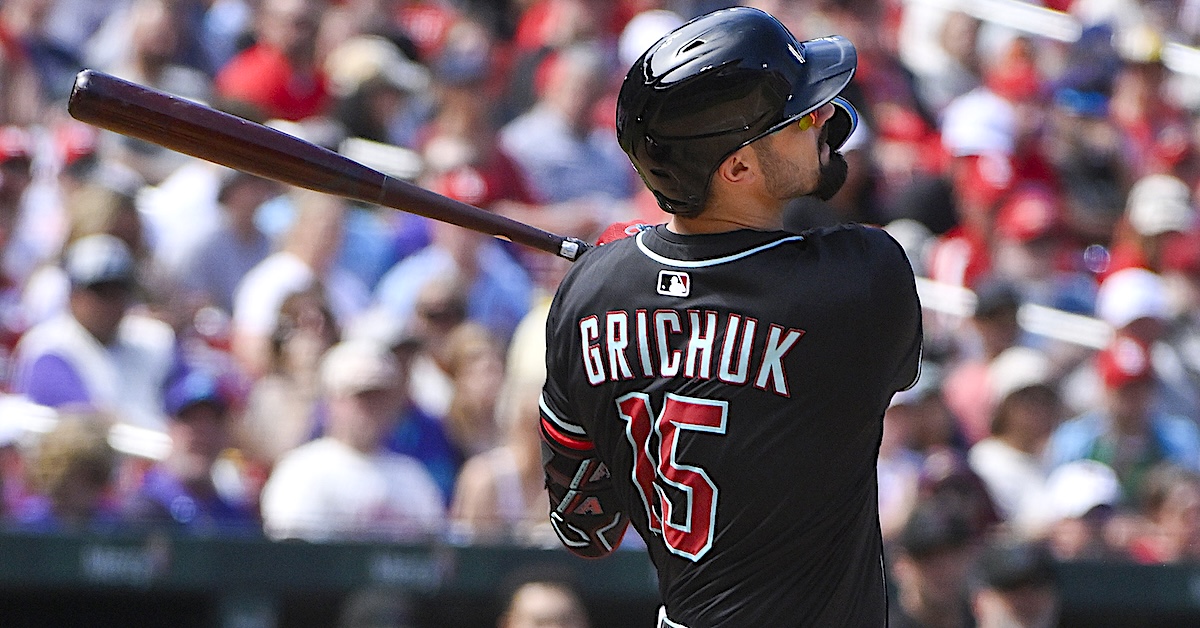
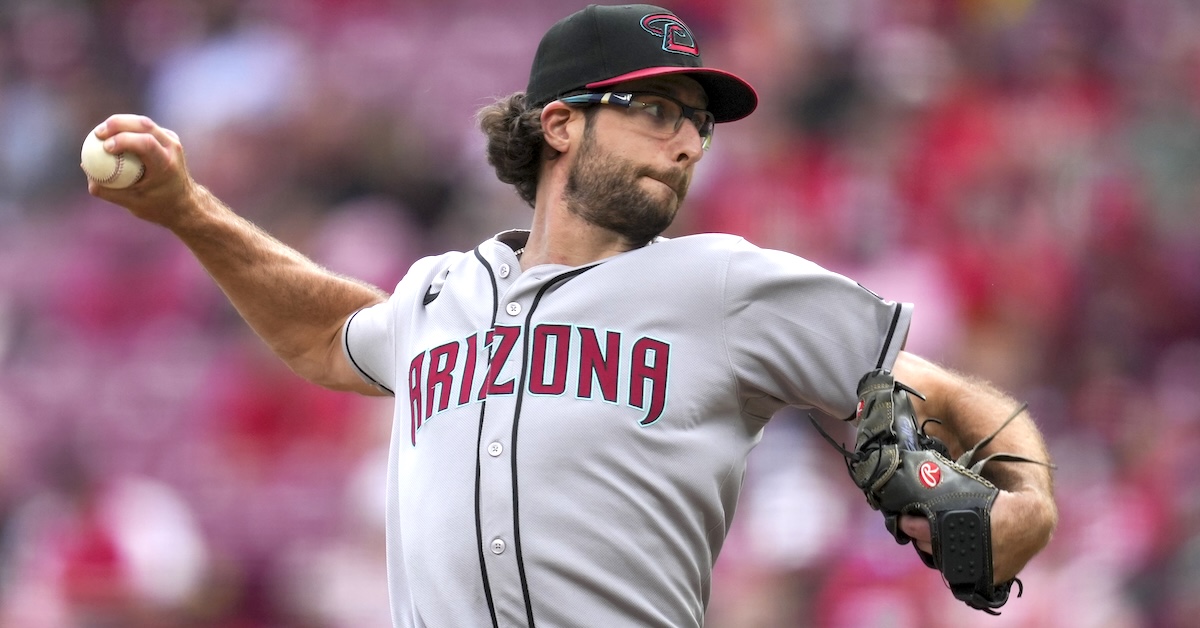
Michael Soroka is getting another chance to start. Bright and early on Monday morning, Jesse Rogers and Jeff Passan of ESPN kicked off the Winter Meetings with news that the right-handed former sinkerballer has agreed to a one-year deal with the Diamondbacks. Nick Piecoro of the Arizona Republic reported that the deal is for one year and $7.5 million, along with up to $2 million in incentives. Soroka slots into a new team as a starter for the second year in a row after struggling in the rotation and then pitching better out of the bullpen. He’ll now do so for a Diamondbacks team in desperate need of starting pitching, as both Zac Gallen and Merrill Kelly have entered free agency. It’s a small gamble on a pitcher whose upside isn’t necessarily set in stone.

Still just 28, Soroka has already walked a long road. The Braves’ first-round pick out of high school in 2015, he debuted in 2018 at the age of 20. He dominated in 2019, going 13-4 with a 2.68 ERA and 3.45 FIP, and finishing second in the Rookie of the Year voting and sixth in the Cy Young voting. A sinkerballer by trade, he ran a 51% groundball rate and allowed just 0.72 homers per nine innings. He was one of the most promising young arms in the game. Then he tore his Achilles tendon in both 2020 and 2021 and followed those up with shoulder injuries. From 2020 to 2023, he made just 10 major league appearances, missing the 2021 and 2022 seasons entirely. Read the rest of this entry »


God Has a Plan for All of Us. Do the Rays Have a Plan for Cedric Mullins?

Brad Penner-Imagn Images

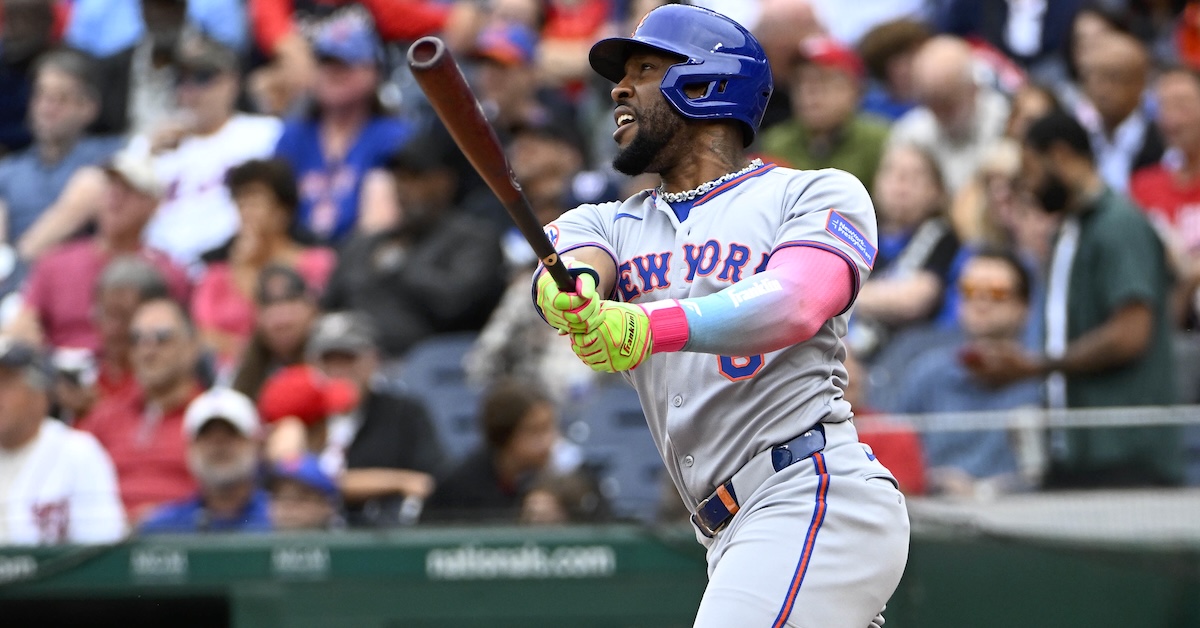
The Tampa Bay Rays have signed outfielder Cedric Mullins, late of the Mets and Orioles, to a one-year contract worth $7 million. This deal makes a lot of sense if you look at Mullins’ overall numbers from 2025: 17 home runs, a 10.0% walk rate, and a 94 wRC+ from a guy who can run well enough to play center.

That sounds like a pretty good player, and for just $7 million. Inflation’s so bad these days that $7 million is reliever money on the free agent market — not even good reliever money — and for that the Rays got themselves a fringe-average center fielder. Read the rest of this entry »


Emilio Pagán Returns to Cincinnati

David Banks-Imagn Images

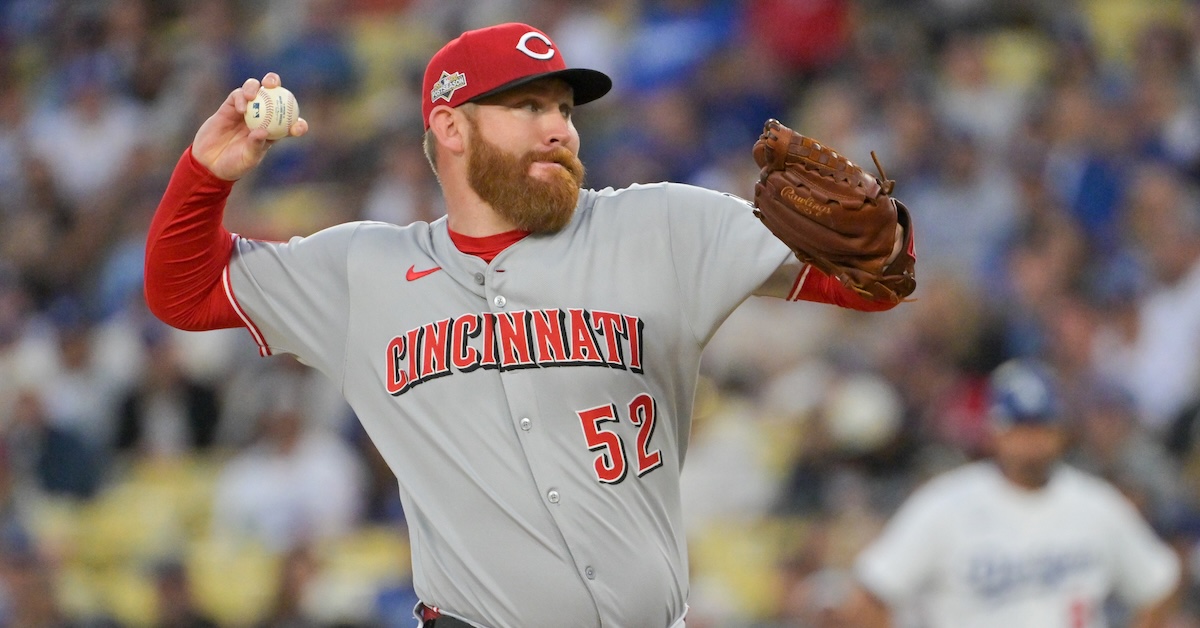
It’s been a busy December for free agent relievers. Ryan Helsley and Devin Williams, two of the most interesting names on the market, each signed with new clubs, and they each got multi-year guarantees despite shaky 2025 results. The next shoe to drop wasn’t quite as heralded of an option, but he too got multiple years and beat market consensus. The signing in question: Emilio Pagán and the Reds agreed to a two-year, $20 million deal, with an opt out after the first year.

Pagán was a far more effective reliever in 2025 than either of the two splashier names ahead of him. He had one of the best seasons of his career at age 34, in fact: 68 2/3 innings pitched, a 2.88 ERA and 3.72 FIP in hitter-friendly Cincinnati, and 32 saves in his first full-time closing job since 2019. He bounced back from an injury-interrupted 2024 with better fastball velocity and better pitch shape across the board, and got richly rewarded for it with a 30% strikeout rate. Is he homer-prone? You bet, thanks to a 0.51 GB/FB ratio. But a .200 BABIP and a solid HR/FB% (10.8%) meant that he actually allowed fewer homers per nine innings (1.31) than his career mark (1.51), and not by a small amount, despite pitching in a launching pad.

When things are going well for him, Pagán makes everyone think they can hit a home run, then pulls the rug out. He runs his four-seamer high and spots a heavy splitter off of it, a classic fly ball pitcher mix. It’s one of those strategies that looks awful when it isn’t working, and yet seems to come through most of the time anyway. More specifically, Pagán went through a three-year stretch of terrible form from 2020-2022, posting a 4.61 ERA and 4.71 FIP. Then he broke out in 2023 and has been solid since. The weirdest part of it all? His stuff and command metrics barely budged between those two wildly different stretches.

Reversals like that go a long way toward explaining why reliever performance is so difficult to predict. When Pagán has it, he’s a worthy late-inning reliever. His ERA- was 40th among relievers last year, and it’s 60th over the past three years, even with his ineffective 2024 in the mix. He’s pitched like you’d expect a closer or setup man to, in other words. His FIP tells a broadly similar story, and I’m willing to believe that pitchers with his extreme tendencies outperform their FIP in the long run. If you get good Pagán, he’s a very useful bullpen piece, the kind any team would love to have in the bullpen and many fringe contenders would love to have as a closer.

That’s the calculus from the Reds’ perspective. They’ve managed their payroll tightly in the early years of Elly De La Cruz’s team control window, hovering around the $100 million mark with wiggle room in either direction. With that budget constraint in mind, the top five or so relievers in this free agency class were presumably off the board. The next tier down is a mixture of interesting pop-up arms, aging closers, and reclamation projects. Would you rather have Kenley Jansen or Pagán? Seranthony Domínguez? Kyle Finnegan? Phil Maton? Maybe Drew Pomeranz? I think I’d take Pagán or Jansen over the field – I ranked them that way in my Top 50 Free Agents list – and as an added bonus, he’s already familiar with Cincinnati. I’d take Raisel Iglesias over him – rankings, again – but he signed for one year and $16 million, probably outside of this team’s price range. The Reds probably could’ve gotten some solid lefty specialists for the $10 million or so annual salary that they gave Pagán, but that’s not what they were in the market for this winter. They needed a bankable closer, and in the aisle they were shopping in, there weren’t that many options.

This team really does need relief arms. The Reds didn’t have to cover many bullpen innings in 2025, but even then they struggled to piece it all together. Pagán, Tony Santillan, and Graham Ashcraft formed an effective three-headed monster at the top, but the rest of the pen was ineffective even in limited time. With a bandbox for a home stadium, it’s hard to expect a similarly limited need for relief pitching in 2026. This was the path of least resistance for a team that really does need to do something to challenge for the NL Central title in 2026 and build on its surprising 2025 Wild Card berth.

Now, the risks? They’re real. It was only a year ago, after his down 2024 performance, that Cincinnati fans were lamenting Pagán’s decision to pick up his player option for 2025. More innings and a .200 BABIP turned that frown upside down, but it’s not like it’s impossible to imagine an ineffective Pagán. Would you be shocked if he had an uneven, homer-prone 55 innings in 2026 and then picked up his option? I certainly wouldn’t be. We just saw that!

That leaves me in the situation of liking this deal more for Pagán than for the Reds, and yet I’d make this offer if I were in their shoes anyway. Figuring out which relievers will be good in a year’s time is incredibly difficult. If it were easy to solve, the Dodgers wouldn’t have signed Tanner Scott and Blake Treinen last winter and then spent this entire October hiding them. Despite that difficulty, relievers are integral to a contending club. If you aren’t winning the close games, it’s hard to make the playoffs. The Reds likely wouldn’t have done that last year if not for Pagán.

With that backdrop, what were the Reds supposed to do? Sign a different, similar guy for slightly less? Sign two reclamation projects on one-year, $5 million deals? It’s not even like the second year is that much of a disaster; in a year’s time, they’re going to be contending with a core built around De La Cruz and looking for relievers, and I don’t think the market rate is likely to plummet in the meantime or anything. Sure, you might get bad Pagán in 2026 and then have him opt in, but the inherent volatility of relievers means that even that isn’t a tragedy. It worked out last time!

There’s some chance that Cincinnati could have waited longer, negotiated more stingily, and reached a slightly more team-friendly deal with him. So far, Pagán is the early signing whose market has most outstripped my projections. But who cares? What were the Reds going to do, save a million dollars or two? From their perspective, the risks were greater, because if they dragged their feet in negotiating with Pagán and he signed elsewhere, they’d suddenly be sifting through a variety of relievers they’re presumably less interested in with a strong need to find a deal. I’d prefer to overpay slightly for a guy I’m comfortable with than hunt for unknown bargains to fill an essential role, and it seems the Cincinnati front office thinks similarly.

I’m not convinced that this is a great long-term way to run a team. It certainly wouldn’t be my preference in a vacuum; I’m a Rays/Dodgers/Brewers-style bullpen guy at heart. I love reclamation projects and throwing a lot of relievers at the wall to see what sticks. I love betting on guys with elite stuff and seeing if they can figure out how to throw strikes, or betting on guys with elite command and seeing if they can figure out how to throw harder.

I’m also not running the Reds, staring at two superstars in De La Cruz and Hunter Greene and trying to make the playoffs again after a miracle run. Sure, it would be great to build an incredible pitching development system from the ground up. But it’s December, and the season starts in four months, and that’s not enough time to overhaul an entire organization, not even close. The Reds needed a reliever. They got a guy they’re comfortable with at a rate that won’t force them to cut back elsewhere. Maybe it’s a slight overpay, and maybe he’s more volatile than his 2025 results would suggest, but for the Reds? He’s just what they needed.


White Sox Bring Anthony Kay Home From Japan

Brad Penner-USA TODAY Sports

The Chicago White Sox got on the board in free agency on Wednesday morning, inking left-handed pitcher Anthony Kay to a two-year, $12 million contract with a $10 million mutual option for 2028. Kay will make $5 million in each of the next two seasons, with a $2 million buyout due if the mutual option isn’t exercised.

It’s been a huge week for the trans-Pacific starting pitching exchange, with Matt Manning going over to the KBO and Cody Ponce coming back in the other direction. Kay spent the past two seasons pitching for the Yokohama DeNA BayStars of NPB — and pitching quite well, it bears mentioning: In 24 starts and 155 innings this past season, Kay posted a 1.74 ERA and a 2.55 FIP. That ERA is a couple tenths better than what Tatsuya Imai, this offseason’s hot Japanese pitching import, posted this season. Read the rest of this entry »


Ponce Upon a December: Jays Sign Reigning KBO MVP

Charles LeClaire-USA TODAY Sports

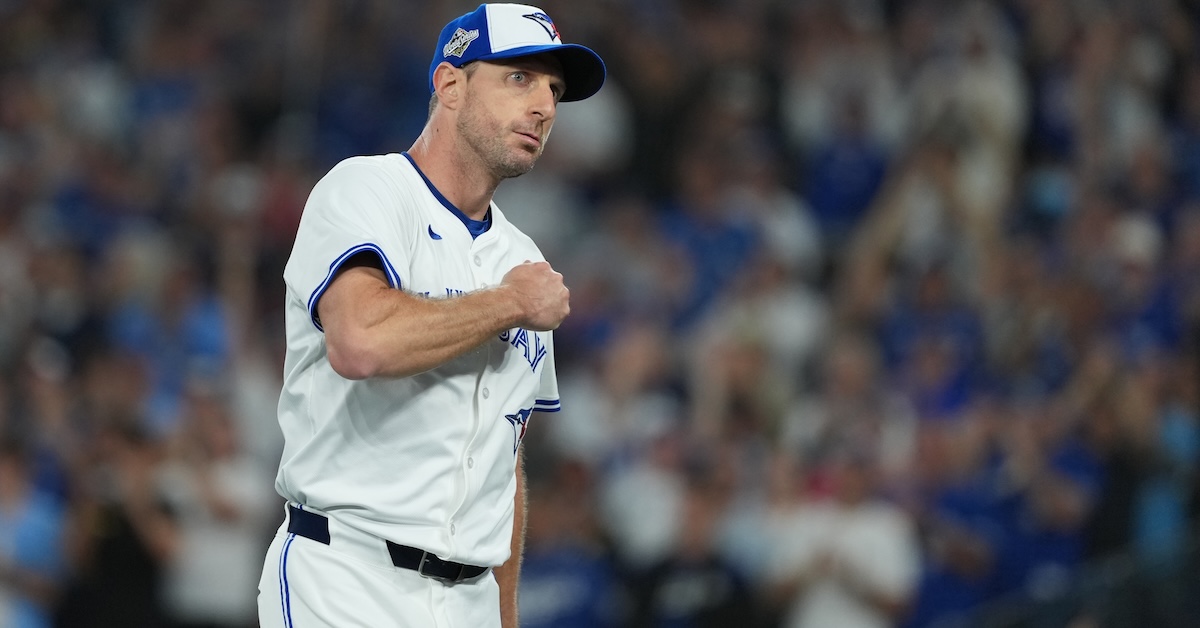
While 29 American teams sit around twiddling their thumbs, the Toronto Blue Jays continue to run up their bill on the free agent market. After spending $210 million (with deferrals) to bring Dylan Cease in on Thanksgiving Eve, Toronto has now landed one of the top international free agents: right-handed pitcher Cody Ponce, late of the Hanwha Eagles of the KBO.

Even those of you who vaguely remember Ponce from his first stint in the majors might have trouble distinguishing him from any other of the dozens of big, replacement-level relievers the Pirates have thrown out there over the past decade. On some level, Ponce’s stint in Asia is just a chapter in a Sisterhood of the Traveling Pants-type deal he’s stuck in with John Holdzkom, Nick Kingham, and Colin Holderman.

If that guy is getting $30 million guaranteed over three years (to say nothing of his own blog post here to commemorate the signing), there must be quite a story. Read the rest of this entry »


A Changeup Is Gonna Come to Queens

Brad Penner-Imagn Images

Devin Williams, the lights-out reliever with the M. Night Shyamalan changeup, has agreed to a three-year deal with the Mets. A two-time All-Star, Williams earned NL Rookie of the Year honors in 2020 and scored a down-ballot MVP vote as recently as 2023. Even after a disastrous 2025 season kicked his career ERA all the way up from 1.83 to 2.45, he still has a career ERA of – you guessed it – 2.45. Here’s my first piece of analysis: That’s so good, you guys! Assuming he won’t keep running a 55% strand rate from here on out, the Mets just signed up for three years of one of the best relievers in baseball; meanwhile, Williams just signed up for a quick ride from the Bronx to Flushing, but it’s important to note that the ride is always going to be longer than Google Maps predicts, because the odds of actually catching an express 7 train rather than the local are vanishingly small.

Let’s start with the terms of the deal and the credit for who reported which parts of those terms, and then we’ll take a nap and perform some more light analysis. Cool? Cool. Read the rest of this entry »


Matt Manning Is Going to Korea

Wendell Cruz-USA TODAY Sports

The Samsung Lions of Daegu, South Korea, have entered the free agent market, scooping up former Detroit Tigers prospect Matt Manning on a one-year, $1 million deal. All Manning needs to do now is find a team called the Bears, and he’ll have the whole set.

Manning, 27, has a career 4.43 ERA in 50 starts in the majors, none since 2024. But he’s more famous than most players with those credentials, on account of being Detroit’s no. 1 pitching prospect for multiple years. Being a team’s no. 1 pitching prospect is not always as impressive as it sounds; at the moment, there are multiple teams without any minor league pitchers with a future value grade over 45 on The Board.

But for the Tigers, in the early 2020s, being no. 1 was a big deal. On the 2020 list, Manning was the no. 12 prospect in all of baseball, followed by Casey Mize, Riley Greene, Tarik Skubal, and Isaac Paredes in Detroit’s system. In 2021, Manning fell behind the previous year’s top draft pick, Spencer Torkelson, but still rated ahead of Skubal and Mize, in that order. Read the rest of this entry »


Ryan Helsley Is Primed For a Baltimore Bounce Back

Brad Penner-Imagn Images

Rest in peace, starting pitcher Ryan Helsley (November 23, 2025 — November 29, 2025.) Last Sunday, a trio of staffers at The Athletic reported that the Tigers, among other teams, were interested in converting Helsley into a starter. Even by the open-minded modern standards of reliever-to-starter conversions, this seemed like a stretch. As Michael Baumann noted when he pondered the possibility, Helsley’s arsenal, comprised almost exclusively of four-seamers and sliders, is about as limited as it gets, and his extreme over-the-top arm angle leaves little room for projection.

On Saturday afternoon, Helsley’s illustrious starting career came to a close. ESPN’s Jeff Passan reported that the Orioles and Helsley had agreed on a two-year, $28 million pact, with an opt-out after the first year. According to Passan, Baltimore expects Helsley to handle the closer job.

Given the Orioles’ competitive ambitions and their considerable payroll space, they were all but a lock to spend a little cash on a backend reliever. President of baseball operations Mike Elias said as much earlier in the offseason, telling reporters that they were working to acquire an “experienced ninth-inning guy.” Following a season in which their bullpen delivered a 4.57 ERA, their top internal options to handle the late innings were Keegan Akin and Kade Strowd — fine pitchers, but not the leverage arms of a team with division-winning aspirations. After swinging a trade for setup man Andrew Kittredge in early November, Baltimore landed its “experienced ninth-inning guy” in Helsley.

Whether he’s up for the task is a reasonable question. After three straight dominant seasons with the Cardinals — book-ended by All-Star selections — Helsley had himself a nightmarish 2025, particularly after St. Louis traded him to the Mets at the deadline; he had a 7.20 ERA and a 5.19 FIP with New York after posting a 3.00 ERA and a 3.55 FIP before the trade. His 89-mph bullet slider was as effective as ever, racking up a 41.6% whiff rate and staying off barrels, but the fastball got rocked. In an interview with The Athletic’s Katie Woo a few days prior to his signing, he gave his theory for why his season went off the rails.

“I felt great, and the Mets’ models showed I was actually having the best stuff of my career, so it didn’t make sense for me to struggle as bad as I did,” Helsley told The Athletic. “But I was being really predictable in certain counts. It was almost a double-confirmation for hitters. They see it with their eyes, and they also had a stat behind it saying I’m more likely to throw this pitch in a certain count. It just gave them that much more comfort in the box, and more conviction.”

When hitters put his fastball in play, they slugged .667. And they had no issues putting it in play. His 17.8% four-seam whiff rate ranked in the 26th percentile of all pitchers with at least 300 fastballs thrown, surrounded by names like Jake Irvin, Miles Mikolas and Bailey Ober. That’s not ideal company.

Assuming his slider is fine, the merit of the Helsley deal boils down to whether his triple-digit fastball is still a good pitch. The way I see it, there are three possible explanations for its poor performance in 2025. The first is that Helsley was tipping with some sort of visual cue. Helsley told Woo that he believed his hand position “as he was becoming set” revealed whether the pitch would be a fastball or a slider.

“It was pretty obvious,” Helsley told The Athletic. “I’m not the greatest at (spotting pitch tipping), and even I could see it (on film with) the majority of the pitches.”

For whatever it’s worth, it didn’t look that obvious to me. For those on the public side, pitch-tipping analysis often looks like paranoid pattern-matching, like Charlie Day’s Pepe Silvia red string board. There’s little from the center field cameras, at least, that makes it clear. Here’s Helsley’s setup on a fastball that Harrison Bader launched 109 mph to the pull side:

And here is the previous pitch, a slider. Do you see any difference in the setup? To me, there’s no there there.

Here they are right next to each other:

(Helsley changed his setup after this game for the rest of the season, bringing his hands down and holding the ball closer to his body. The results weren’t much better; as Helsley himself said in that interview, it’s hard to make an in-season adjustment.)

While the physical tipping evidence is ambiguous, the count-level predictability is pretty clear-cut. In a broad sense, Helsley maintained a roughly 50/50 usage of his slider and fastball, occasionally tossing in a curveball as a wrinkle. But looking at the overall usage patterns belies the predictability of his pitch selection.

In 0-0 counts, Helsley opted for the heater 57% of the time. In deep hitter counts (2-0, 3-1, and 3-0), that leapt to 75%. Heavy fastball usage in these contexts is somewhat excusable, but Helsley’s full count approach underlined his reliance on the heater in tight spots. Of the 50 pitches thrown in 3-2 counts, 37 (74%) were four-seamers. (Perhaps another reason Bader smashed that 3-2 heater into the stratosphere.)

A similar story could be told with the slider. Heavy slider use in two-strike counts is to be expected, but even in 1-1 counts, Helsley threw it 72 times in 99 opportunities. For a pitcher with essentially two pitches, this type of predictability is lethal, no matter the nastiness of the stuff.

If Helsley’s ineffectiveness comes down to pitch-tipping and count issues, the Orioles have good reason to be confident in a bounce back. But if his stuff is starting to decline, they may have a problem on their hands.

Is there evidence this is the case? If you squint, maybe. Helsley broke out in 2022 with a superhuman 39.3% strikeout rate while tag-teaming the closer role with Giovanny Gallegos. The breakout was fueled by a massive velocity jump — from 2021 to 2022, Helsley’s fastball gained over two ticks, jumping to an average of 99.6 mph. In 2025, that dropped all the way down to… 99.3 mph.

The case for Helsley’s fastball losing its juice, then, would need to be about something other than velocity decline. Here, there is a bit more to latch onto. In that 2022 season, Helsley’s average arm angle on his four-seamer was around 52 degrees. By 2025, that had climbed all the way to 62 degrees with no concurrent improvement to the pitch’s vertical movement.

A fastball’s effectiveness can be largely explained by its vertical movement relative to its release point; more movement from a lower release or lower arm angle makes it tougher for a hitter to pick up. Because the excellent induced vertical break (18 inches) on Helsley’s fastball now comes from a more “vertical” arm angle, it doesn’t have the same deceptive qualities. Once near the top of the scale in terms of Alex Chamberlain’s dynamic dead zone measurements, his fastball has declined to merely “very good.” If Helsley needs to keep hiking his arm angle up each year to maintain the same level of induced vertical break, that could start to look like a concern.

As it stands, this seems to be more of a minor concern than a red flag. The stuff models on FanGraphs — Stuff+ and PitchingBot — both still consider Helsley’s fastball to be a well above-average pitch, even if they agree that the quality has declined slightly from 2022 or 2023. He’s sitting 99 mph, after all — even with poor shape, a four-seamer with that velocity should still play.

Overall, I’m inclined to say that both sides found a good deal here. The reliever market is the first of any position group to take shape in this early offseason, with both Phil Maton and Raisel Iglesias inking deals prior to Helsley. Iglesias is older, but received $16 million for a single year’s work; Maton, a solid middle reliever, got two years and $14.5 million. If this is the range for the second-tier relievers, and if the three top guys — Edwin Díaz, Devin Williams, and Robert Suarez — are in line for a good chunk more, Helsley’s signing starts to look pretty reasonable for the Orioles, especially because he is only one year removed from being in that elite group. For Helsley, it’s another shot at ninth-inning duty, with a chance to hit the market again next offseason, assuming all goes well.

From 2022-2024, Helsley ranked fourth among all relievers in FIP. His stuff is essentially the same as it was during that run. Assuming he sorts out the tipping issues and gets a little less predictable in certain count contexts, the Orioles just signed a high-end closer at an eminently reasonable price – even if it only proves to be for one year.


Blue Jays Render Unto Cease What Is Cease’s: $210 Million

David Frerker-Imagn Images

The stove was already hot the week before Thanksgiving. But on Wednesday evening, the Toronto Blue Jays threw some logs on the fire and aimed a leaf blower at the damn thing, and now the proverbial stove is hot enough to melt soda cans into aluminum ingots.

Dylan Cease has signed with the reigning AL champions, and for what they offered him — $210 million over seven years — you’d be packing your bags for Canada, too. Looks like someone can shell out for the fancy cranberry sauce this Thanksgiving. Read the rest of this entry »


Braves Re-Sign Iglesias, Upgrade at Utility Infielder

Jay Biggerstaff, Jordan Godfree and Cary Edmondson – Imagn Images

I don’t want to overstate the value of raw financial power in baseball. The Mets spent more than $320 million on player salaries, not counting luxury tax penalties, and they finished four games over .500. Money can’t buy happiness, or even a spot in the playoffs.

It can, however, buy you a closer and a major upgrade to your bench. So the Braves demonstrated Wednesday, when they re-signed closer Raisel Iglesias for one year at $16 million, and swapped utility infielders with the Astros, sending Nick Allen west in a 1-for-1 trade for Mauricio Dubón.

The Braves went into last season as one of the favorites to win the NL pennant only to tumble to fourth place behind the Marlins (the Marlins!) after befalling a series of farces and calamities that recall A Serious Man. Jurickson Profar got popped for PEDs, Spencer Strider and Ozzie Albies lost their juice, half the roster got hurt, it was a huge mess. Read the rest of this entry »