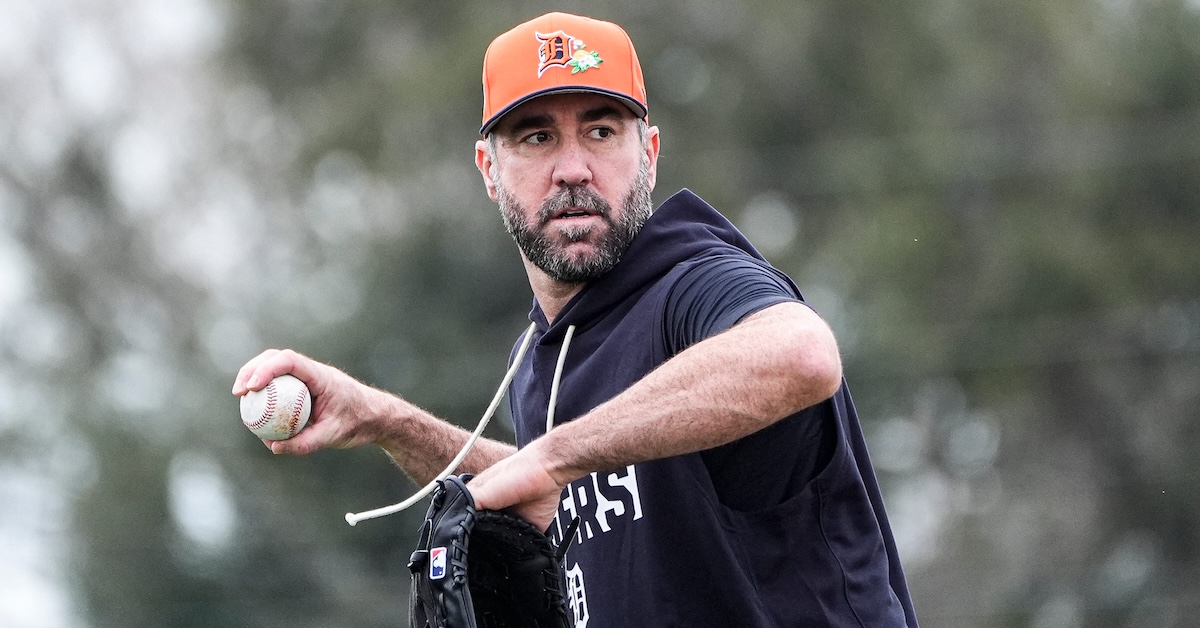
Last week was a huge one for the Tigers’ rotation. First, Framber Valdez agreed to terms on a three-year, $115 million deal, and then Tarik Skubal won a record-setting $32 million salary in arbitration. On Tuesday, the day before the team’s pitchers and catchers were scheduled to report to the Tigers’ spring training facilities in Lakeland, Florida, that rotation was in the news again, as Justin Verlander agreed to a reunion via a one-year deal. Shortly afterwards, the team revealed that Reese Olson, who was already reportedly behind schedule, recently underwent surgery for a torn labrum and will miss the season. Additionally, the Tigers added free agent outfielder Austin Slater on a minor league deal.
First and foremost, this is both a homecoming for Verlander, the best right-handed pitcher in team history by WAR (57.9), and potentially his last lap, as he’ll turn 43 on February 20, and will be the majors’ oldest player so long as Rich Hill doesn’t mount a comeback. Drafted out of Old Dominion with the second overall pick in 2004, Verlander debuted with a pair of starts for the Tigers in July 2005, then spent nearly 12 full seasons in Detroit (2006–17) before being traded to the Astros on August 31, 2017. During that time, he won the American League Rookie of the Year award (2006), as well as the AL MVP and the first of his three Cy Youngs (both 2011), while helping the Tigers to four division titles, a Wild Card berth, and two pennants (2006, ’12); he also threw the first two of his three no-hitters for them, in 2007 and ’11. He collected more hardware in Houston in the form of two Cy Youngs and two World Series rings, but while he may have cemented his Hall of Fame credentials elsewhere, odds are a Tigers cap will adorn his plaque.
According to USA Today’s Bob Nightengale, Verlander’s contract is for $13 million, though $11 million of that is deferred on a schedule that begins paying out in 2030. While that will bring the average annual value of the deal down a bit, the Tigers now project to pay the Competitive Balance Tax for the first time since 2017; according to RosterResource, their $256.3 million estimated luxury tax payroll is squarely over the first threshold of $244 million. Read the rest of this entry »
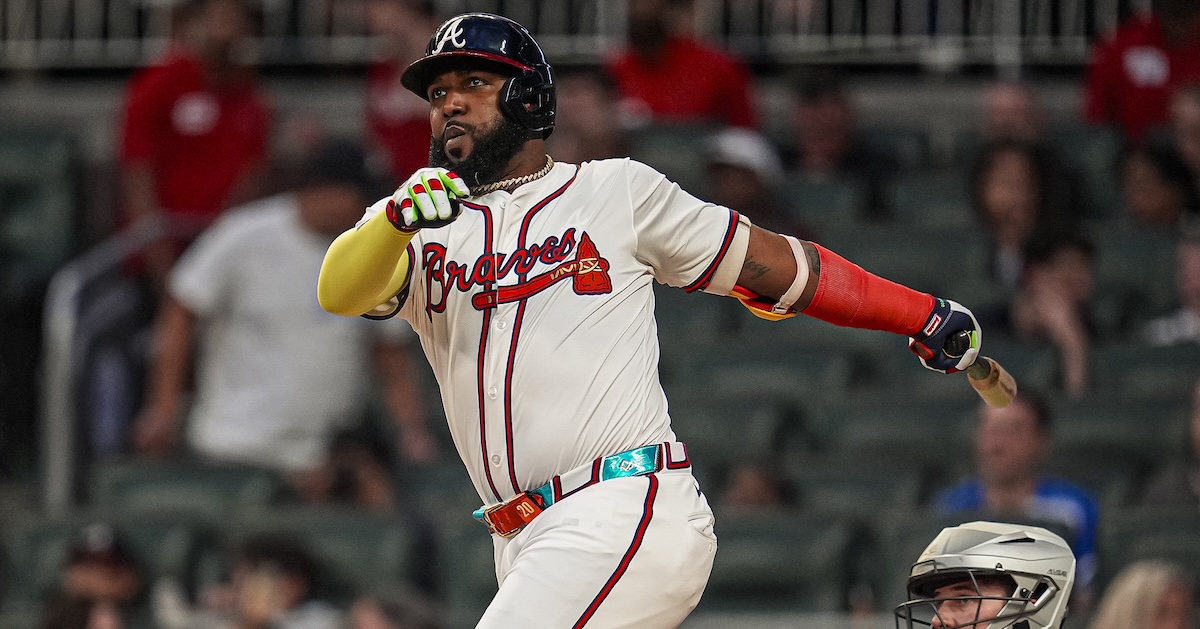
As you read this, baseball players across the world are flocking to Florida and Arizona. Pitchers and catchers have started reporting. Another annual rite: The last hitter among our Top 50 free agents just signed. Marcell Ozuna and the Pirates are in agreement on a one-year deal worth $12 million, as Jeff Passan first reported. The 35-year-old DH is the latest in a string of mid-market acquisitions, both in free agency and trade, as Pittsburgh improves its lineup in support of Paul Skenes and a dynamic pitching staff.
Allow me to say the obvious thing first: Even with their other moves, the Pirates needed another bat, and it’s great they got one. We project Ozuna as the best hitter on the entire roster. That’s not the kind of acquisition you generally make with a one-year deal in February. The Pirates might be starting from a low base, but that doesn’t make it any less important that they improve. They only have Skenes under team control for so long! This deal makes them better by more than anything else they could have done this week. There are no better free agents remaining, no likely trade targets with greater potential impact. But that’s not an entire article, so let’s consider this deal more deeply.
Ozuna is coming off of a down 2025 where he played through a serious hip injury. It was the latest dip in a career of highs and lows, both on and off the field. In 2024, he finished fourth in NL MVP voting after a majestic offensive season, posting a .302/.378/.546 line and a 154 wRC+. That was his second straight season of offensive success, and for Ozuna, a strong rebound from two years in the doldrums. In 2021, he missed most of the season with a broken hand. That season ended with a 20-game suspension under the league’s joint domestic violence policy, and Ozuna then struggled through a below-replacement 2022 that also saw him arrested for a DUI; he later pled no contest and paid a fine. The Braves looked for alternatives – and then of course, two years later, he nearly won MVP. Read the rest of this entry »
For pitchers, it’s really not optimal to show up late to spring training. Roll up to Arizona or Florida sometime in early March, and then you’re behind all your friends, still ramping up when it’s supposed to be go time. Maybe you find your form sometime in May. Maybe your season never gets off the ground. Such a fate is to be avoided, if at all possible.
And so with pitchers and catchers reporting Tuesday, Monday was, in effect, the final day to sign to ensure a regular build-up. Appropriately, there was a predictable run on the straggling starting pitchers of the free agent market. Nick Martinez went to the Rays; Erick Fedde returned to the White Sox; Chris Paddack found a life raft with the Marlins. Also, even though José Urquidy signed with the Pirates last Thursday, we’re bringing him to the party, too. Let’s talk about each of these signings in that order.
Nick Martinez Signs With Rays (One Year, $13 Million)
Martinez is the biggest name of the bunch, and he accordingly received the largest deal — $13 million for a year’s work — as reported by MLB.com’s Mark Feinsand. Of the remaining pitchers available, his 2.1 ZiPS projected WAR was third best.
It’s unclear if he’ll assume his typical swingman role in Tampa Bay. The RosterResource crew sees him slotting into the back of the rotation, a place he thrived in the second half of 2024 with the Reds. Despite averaging just 92.6 mph on his four-seam fastball that season, Martinez leveraged a wide mix and impeccable command to deliver a 3.21 FIP over 142 1/3 innings, good for 3.4 WAR. On the strength of that campaign, he received (and accepted) the qualifying offer, bequeathing him a hefty $21.05 million for 2025.
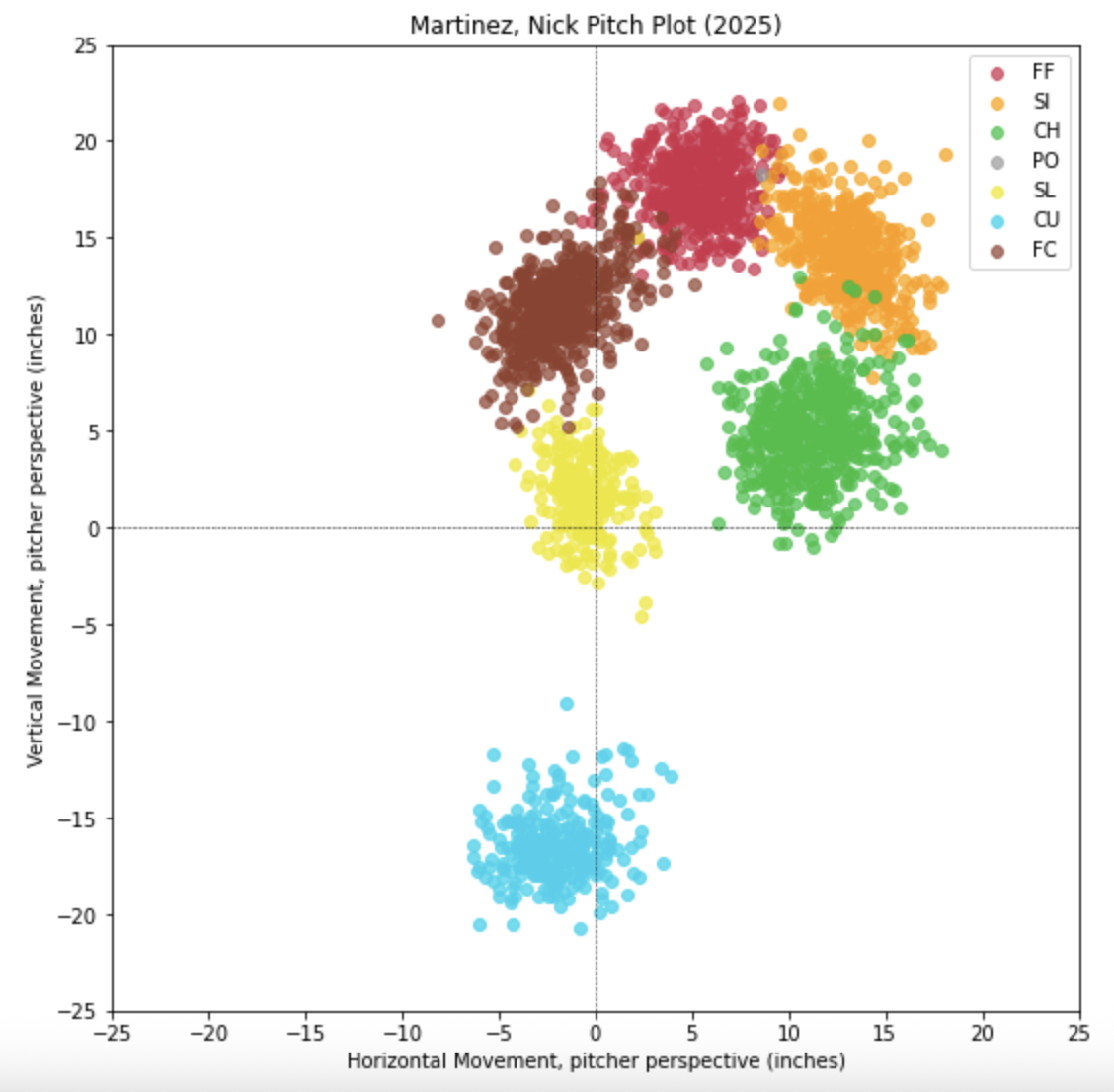
Last offseason, I speculated that Martinez was a good candidate to repeat his surprising success due in large part to his ability to blend his pitches together. These arsenal effects, I thought, would lead to sustainable soft-contact generation, allowing for continued success in spite of a so-so strikeout rate.
In some sense, I was half-right: New arsenal metrics from Baseball Prospectus, introduced months after the publication of that article, reinforced my thesis. Martinez’s 2025 Pitch Type Probability (a measure of unpredictability) ranked in the 94th percentile among pitchers with at least 1000 pitches thrown; his Movement Spread and Velocity Spread also clocked in well above average. True to form, he limited damage on contact, holding hitters to a 34.5% hard-hit rate (90th percentile) and a .275 BABIP.
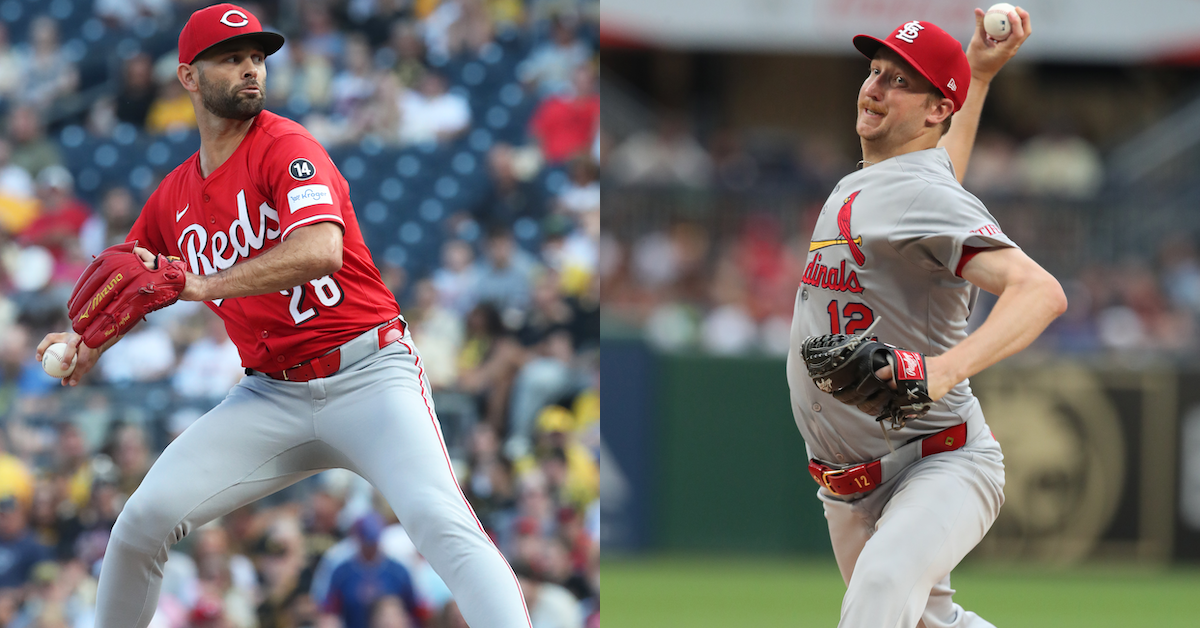
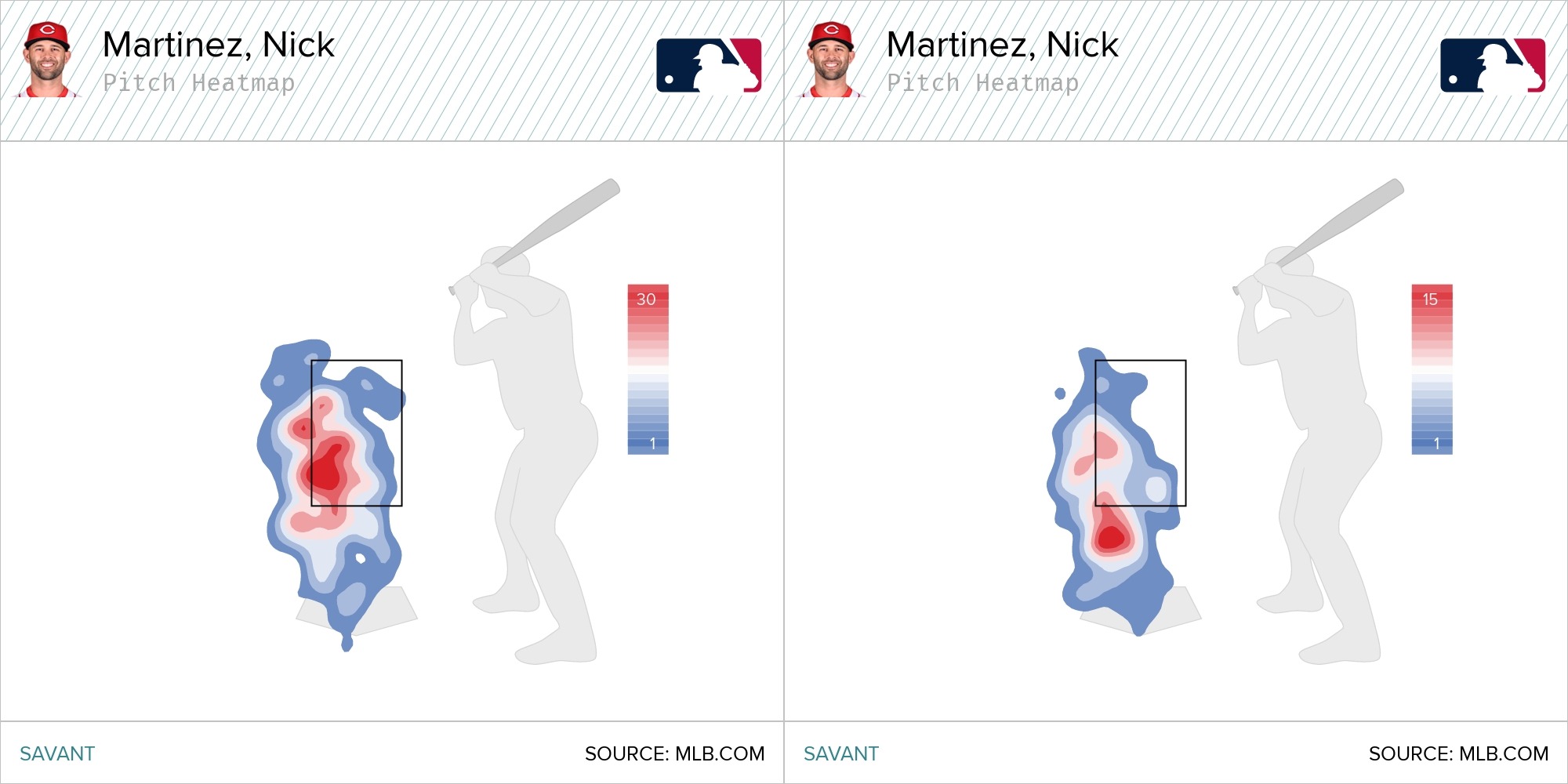
And yet Martinez’s 2025 season was a bust; his ERA jumped from 3.10 to 4.45, with the poor peripherals to back it up. After running a 3.2% walk rate in 2024, some control regression was expected. But his bat-missing went from acceptable to dire, his strikeout rate dropping nearly four percentage points. The main culprit was the changeup, which generated a huge amount of chase in 2024 and fell all the way back to Earth in 2025. The shape did not change significantly, but his command of the pitch slipped considerably. Check out how much more plate his changeup caught against left-handed hitters this season (left) versus last (right):
The changeup unlocks the entire Martinez experience, and its performance will determine whether the Rays will be getting a durable but unexciting innings-eater or a guy you might trust to start Game 3 of a Divisional Series. Either way, he improves the Tampa Bay staff for 2026, giving the team insurance against the wild whims of Joe Boyle. And in the case of a Boyle breakout, Martinez can easily shift back into his familiar swingman role.
Erick Fedde Signs With White Sox (Contract TBA)
It was mad ugly for Fedde in 2025. He started the year in St. Louis, pitching a little over 100 innings of exactly replacement-level ball; at the trade deadline, the Braves picked him up for a handful of gumballs, hoping he’d hoover up some innings in a lost season. Three weeks later, they straight up released him; the Brewers brought him in for a few mopup opportunities before hitting him with a DFA on the final day of the regular season.
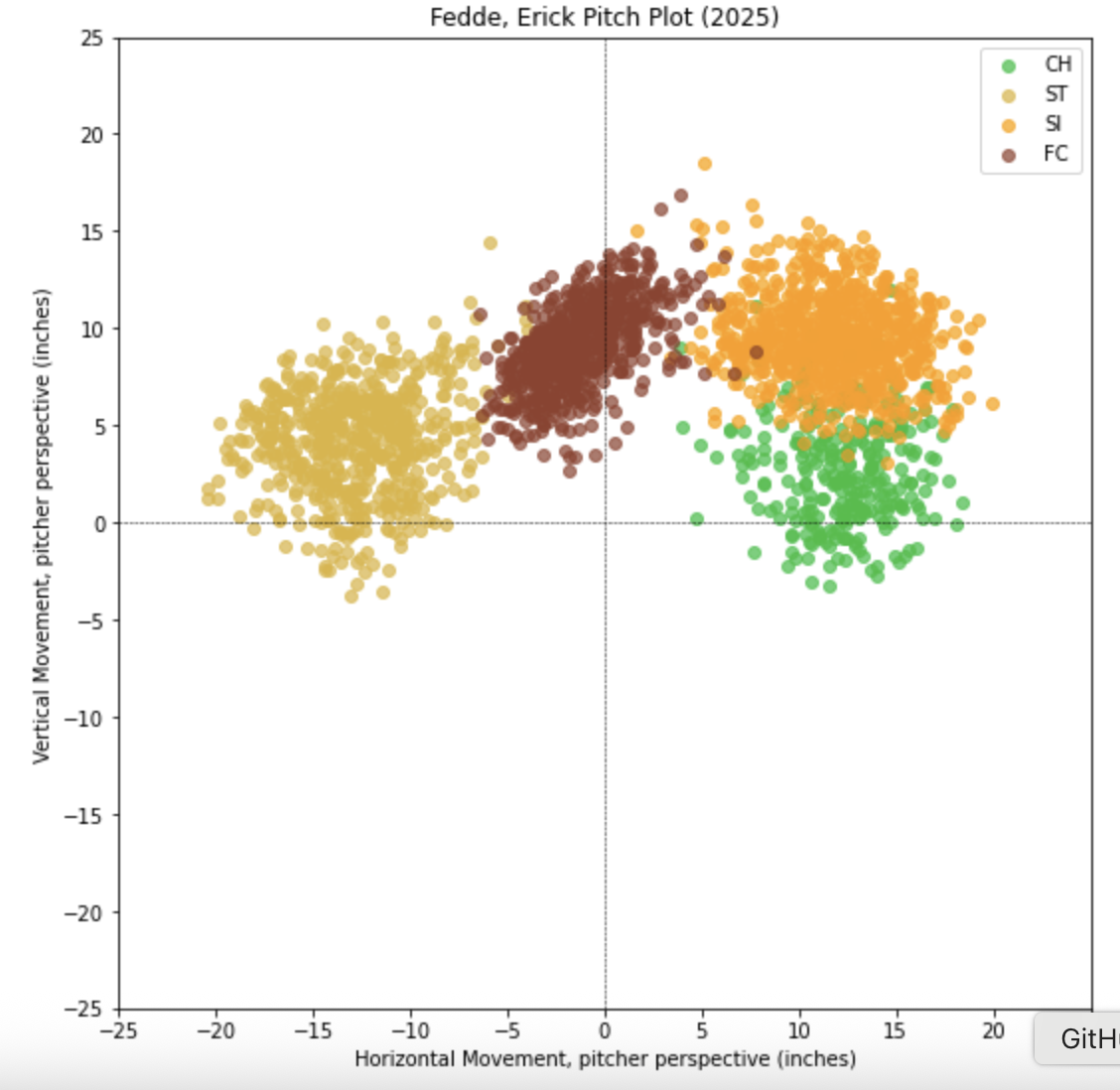
That’s not what you want. Fedde’s east-west attack fell apart in 2025; excluding Rockies hurlers, his 13.3% strikeout rate was worst in baseball (minimum 100 innings pitched.) Perhaps fatally, his walk rate ballooned as he opted to pitch around hitters instead of challenging them in the zone.
But what better place to resurrect his career? Those handful of months on the South Side in 2024 were the best he’s pitched since his triumphant return from the KBO. In 21 pre-trade deadline starts that year, Fedde bullied righties with his sinker-sweeper combo, and jammed enough lefties with his cutter to viably work his way through lineups. A 3.11 ERA earned him a deadline promotion to a contender, and he proceeded to pitch roughly as well as a Cardinal, though the team ultimately missed the playoffs.
Fedde was still pretty good against righties in 2025, but lefties smoked him to the tune of a .389 wOBA. His cutter lost a crucial couple inches of glove-side bite, and so the pitch tended to finish middle-up instead of on the inner edge. A perfectly straight 90-mph cutter is fodder for tanks; with no four-seam option on the table, Fedde was faced with the difficult choice of getting aggressive with subpar stuff or aiming at too-fine targets.
If getting back with pitching coach Brian Bannister can help Fedde gain back those two inches of break on the cutter, the White Sox can expect him to deliver on his presumably modest deal.
Chris Paddack Signs With Marlins (One year, $4 million)
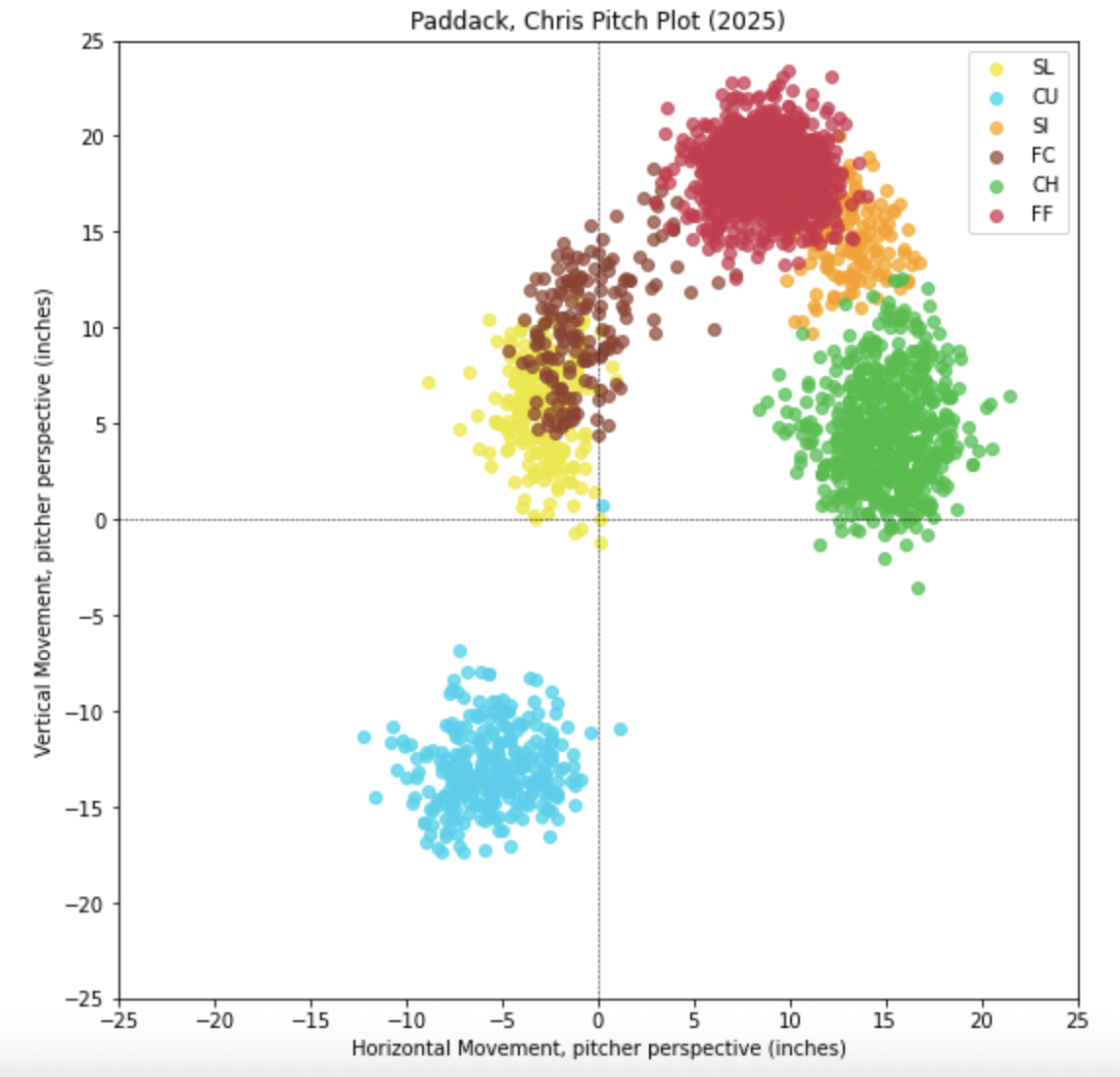
Paddack’s plan of attack is pretty straightforward, venturing not much further than a carry fastball and a butterfly changeup. When you throw a carry fastball nearly half the time at mediocre velocity, you’re going to give up a lot of home runs. So it’s been for Paddack his entire career, and never more so than in 2025, when he gave up a career-high 31 chucks across his 158 2/3 innings of work.
With Martinez and Fedde at least, you can squint at them and see an unlikely path to a 3-WAR season. Paddack, however, presents no such upside. He is what he is: a guy with reliably excellent command and not enough stuff to miss bats or stay off barrels. This blurb is already pretty negative, but still, I must admit that I am surprised that he received a guaranteed big league deal. (And for $4 million, no less.)
I’m not even really sure I understand this signing for the Marlins. RosterResource projects this signing to kick Janson Junk into a long relief role. Junk is, to my eye, a better version of Paddack, featuring similarly excellent command and a carry fastball from a high arm angle. But Junk can throw a pretty good breaking ball; Paddack’s extreme pronation bias prevents him from spinning the ball with any effectiveness. Unless the Marlins are planning to imminently ship out Sandy Alcantara, I don’t see what Paddack brings to their club at present. Perhaps he could work as an unconventional relief arm, throwing only fastballs and changeups.
José Urquidy Signs With Pirates (One Year, $1.5 million)
Remember him? Urquidy’s last full season of work was all the way back in 2022, when he racked up 164 1/3 innings for a World Series-winning Astros club. In the three years hence, he’s battled shoulder problems and then, finally, a torn elbow ligament, causing him to miss the entire 2024 season and nearly all of 2025.
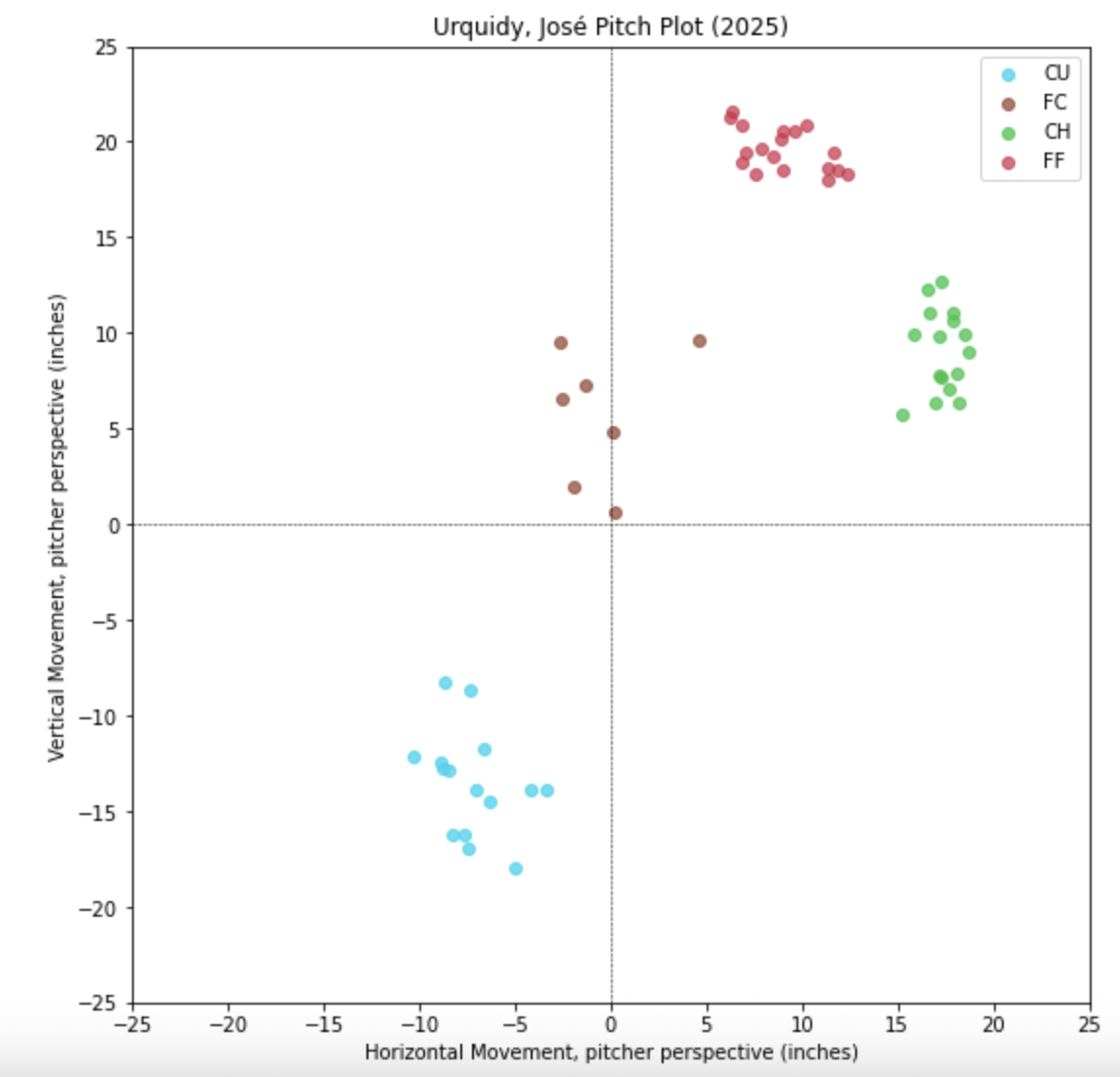
Crucially for the purposes of providing analysis in this blurb, Urquidy did briefly resurface in Detroit for 2 1/3 innings of work in September, allowing us to compare his stuff to where it was before the injury. Surprisingly, it was mostly the same. Both before and after, Urquidy possessed a four-seam fastball with crazy carry (nearly 20 inches of induced vertical break), a changeup with respectable vertical separation, and a slow two-plane curveball, and his fastball velocity was nearly identical, 93.1 mph in 2023 and 93.0 mph in 2025. But there was one pivotal difference: Urquidy’s sweeper, which was completely incongruous with the rest of his arsenal and racked up a bunch of whiffs in 2023, did not resurface in his brief big league stint last year.
Like Paddack, the arsenal characteristics (93-mph carry fastball) will ensure a bushel of tanks. Can Urquidy limit damage around the homers enough to hold the fort down until the return of Jared Jones? I think it might come down to the state of that sweeper. Otherwise, I’m not sure he has an out pitch against same-handed hitters. As far as backend bets go, there are worse ideas than giving $1.5 million to a guy who reliably beat his FIP for years prior to the injury. The Pirates aren’t asking for much, and Urquidy seems reasonably likely to meet those low expectations.
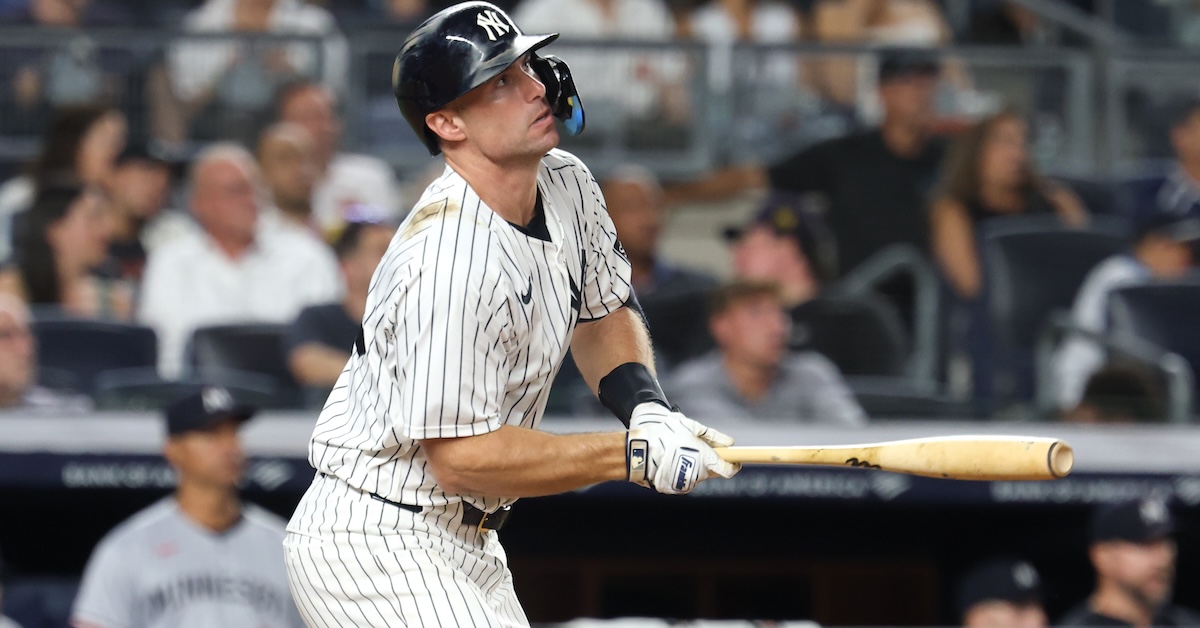
On Friday afternoon, the Yankees and Paul Goldschmidt agreed to a one-year deal worth $4 million, as ESPN’s Jeff Passan first reported. Friday in the early evening, I began contemplating how I’d like my career to end. These are related incidents.
Three years ago, Goldschmidt stood at the pinnacle of the game. He’d just won NL MVP on the back of a spectacular all-around offensive season, carrying the Cardinals to the playoffs in a rousing capper to his long, decorated career. It was his eighth straight season receiving MVP votes, and brought his career WAR total to 52. Have you ever considered retiring at the top of your game? With two years left on his contract, Goldschmidt must have given the idea some thought. Finish those two out well, get a bit more hardware, and ride off into the sunset toward Cooperstown.
The next two years didn’t cooperate, however. In 2023, Goldschmidt managed 3.4 WAR, a gentle decline, but the Cards collapsed, finishing last in the NL Central for the first time in 33 years. The following season was even worse; Goldschmidt hit .245/.302/.414, for a 100 wRC+, easily the worst mark of his career. The Cardinals missed the playoffs again and tilted toward a rebuild. Goldschmidt didn’t fit in St. Louis anymore. But he couldn’t go out like this, with an outlier down season, the worst of his career, closing out his time in the majors. And so he departed for New York in free agency on a one-year, $12.5 million contract. Read the rest of this entry »
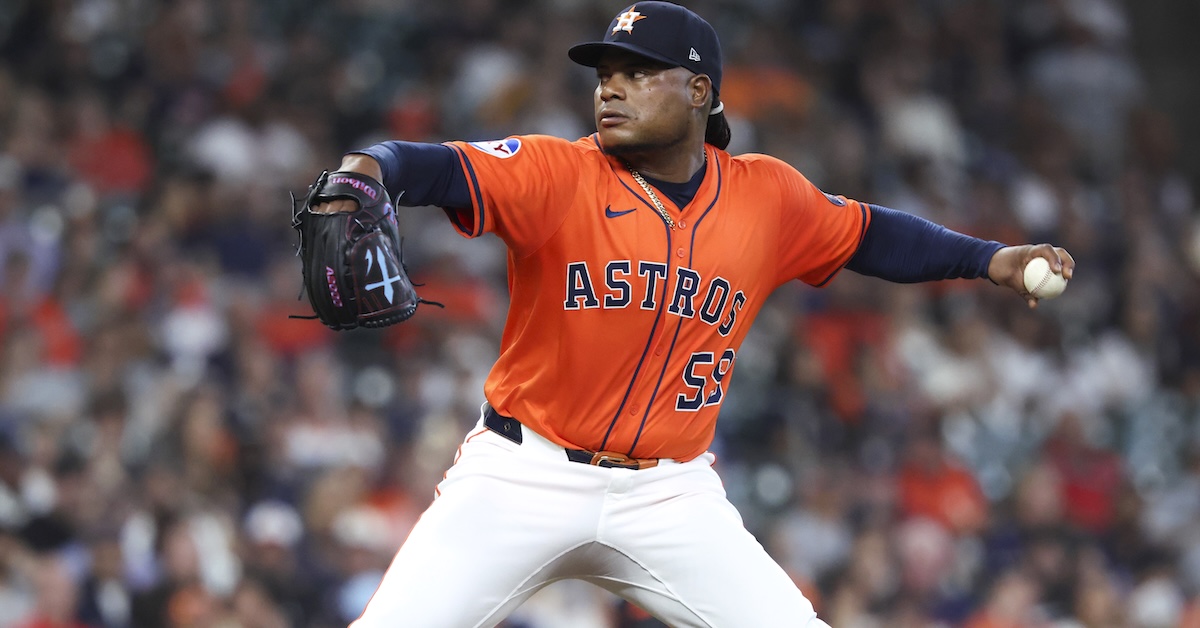
The biggest name remaining in free agency is now off the board, as Framber Valdez agreed to a three-year, $115 million contract with the Detroit Tigers on Wednesday night. The 32-year-old lefty, who ranked fourth on our Top 50 Free Agents list, hit the open market for the first time in his major league career this winter after parts of eight seasons with the Astros. In his final season in Houston, Valdez put up a 3.66 ERA and a 3.37 FIP in 31 starts over 192 innings, good enough to reach the 4.0-WAR mark for the third time in his career. His new deal with the Tigers comes with an opt out after the 2027 season, $20 million of the deal in the form of a signing bonus, and some unknown amount of deferred money, which will reduce the overall value of his contract by, well, an unknown amount.
For the Tigers, the benefits of adding Valdez to the rotation are quite clear. Of course, he would improve any team, since having too many good pitchers has been an actual problem zero times in baseball history, but he fits Detroit’s needs like a glove. The Tigers have managed to get their rotation through the season successfully over the last two years despite a lack of depth, but come playoff time, they have basically gone with a starting staff of Tarik Skubal and a trio of shrug emojis. Don’t believe me? Detroit has played 15 games across the last two postseasons, and I will now run down the full list of five-inning starts by Tigers pitchers with last names that aren’t Skubal:
[…]
[…]
Oh, sorry, I was eating tacos. There aren’t any players on that list. Signing Valdez gives the Tigers a dependable no. 2 starter, one who is better and with a better health record than Jack Flaherty. While I’m chaotic-neutral enough to get a thrill out of A.J. Hinch’s admitting in press conferences that he and the front office were basically coming up with the pitcher assignments as they went along, I’m sure that’s not an ideal scenario for making decisions. Read the rest of this entry »
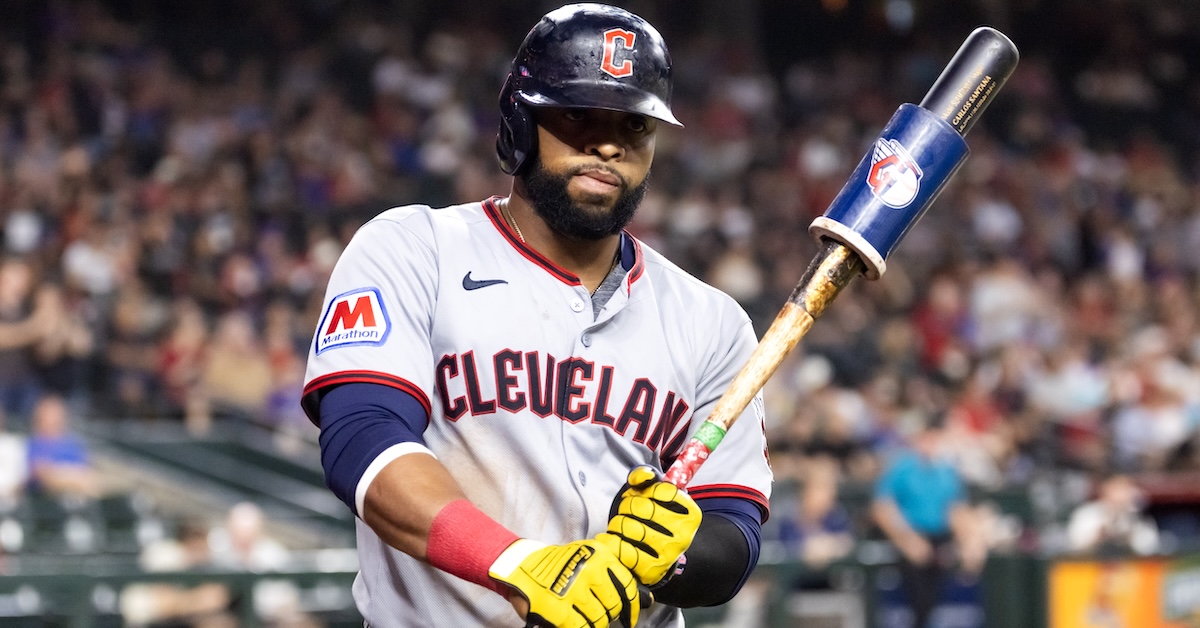
Carlos Santana is well into the immaculate grid portion of his 16-year career. After spending 10 of his first 11 seasons in Cleveland, Santana has played for seven teams over the past five seasons (including one last stint with the Guardians last year). On Tuesday, we learned that he will be joining his newest, and southernmost, franchise in 2026, as the veteran first baseman has agreed to a one-year, $2 million deal with the Diamondbacks.
With just 0.3 WAR and a wRC+ of 81, Santana is coming off the second-worst season of his storied career. He will turn 40 a week after the season starts. All of that makes him a perfect fit for a Diamondbacks team whose mantra was announced by owner Ken Kendrick back in September: “We will not be spending at the same level.” Kendrick has so far lived up to his word. RosterResource currently has Arizona projected for a payroll of $173 million, down from $188 million in 2025. Santana said last year that the Diamondbacks were interested in him before he decided to return to Cleveland, and he is a reasonable bounce-back candidate and a cheap option for a team that’s only interested in cheap options. Read the rest of this entry »
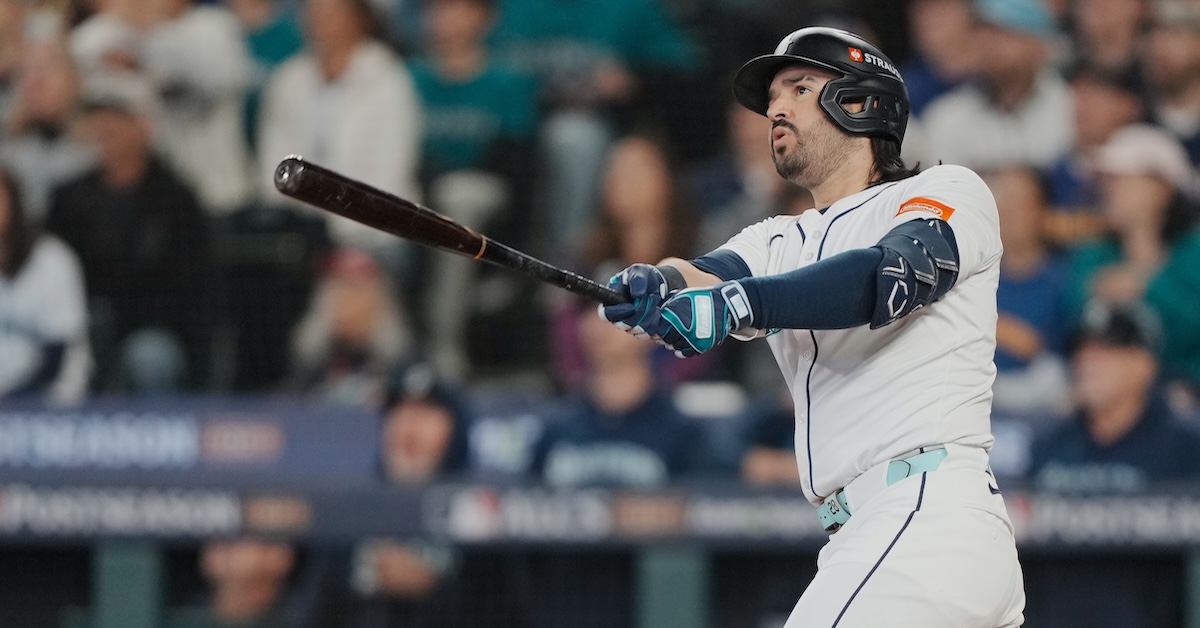
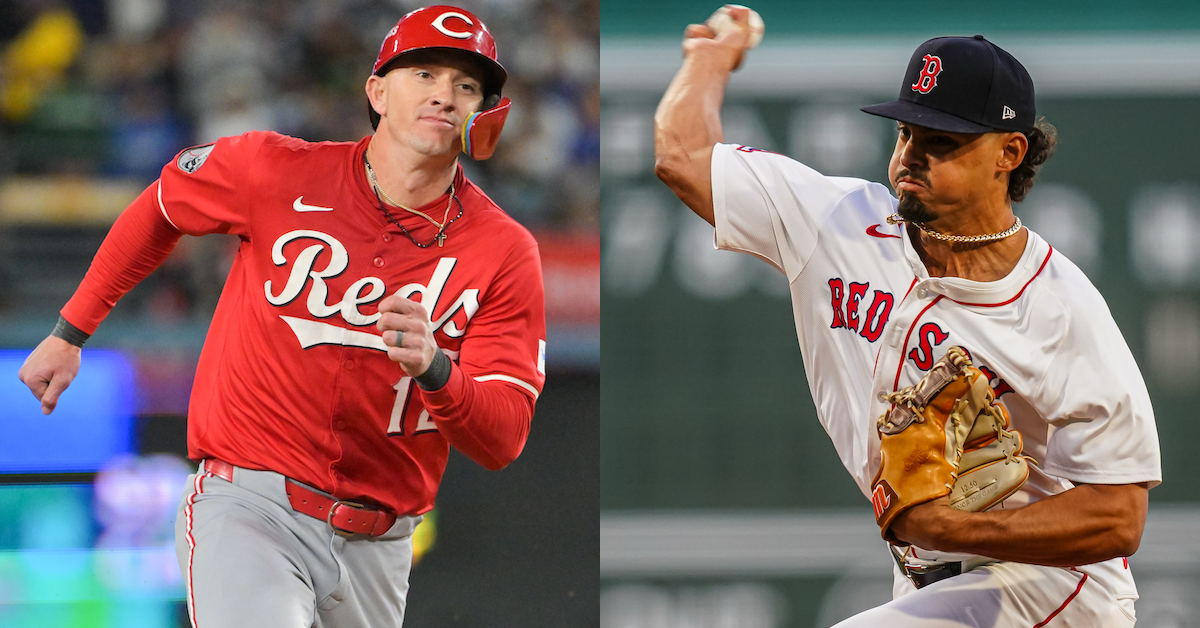
It took all the way until February, but the last few free agency dominos are starting to fall. The Reds were one of the first teams to dip their toes into the market this winter, signing Emilio Pagán to a two-year deal at the start of December. Now they’ve made it a bookend set – over the weekend, they signed Eugenio Suárez to a one-year, $15 million deal, as first reported by Jeff Passan.
I missed high on my contract estimate for Suárez. I had him down for two years at $25 million a year, while our crowdsourced projections thought he’d get three years at $20 million each. The lowest public-facing projection I found for him was two years at $22.5 million per. In other words, Suárez settled for less than predicted, and he signed late as a result. It’s a classic example of the fact that free agents who sign later sign for less.
At a top-line level, seeing Suárez sign for this little is surprising. He isn’t some flash in the pan seeking a 10-year deal. He’s been one of the best power hitters in baseball for quite a while now. The 2025 season was the fourth out of the last five where he’s topped 30 homers. He socked 49 while spending half the year in a home run graveyard in Seattle, though he did most of his damage before the trade; he posted a 91 wRC+ as a Mariner. Teams pay for projection, not performance, but Suárez’s wRC+ over the last three years is better than his career mark. But that power didn’t overwhelm a host of other question marks. Read the rest of this entry »
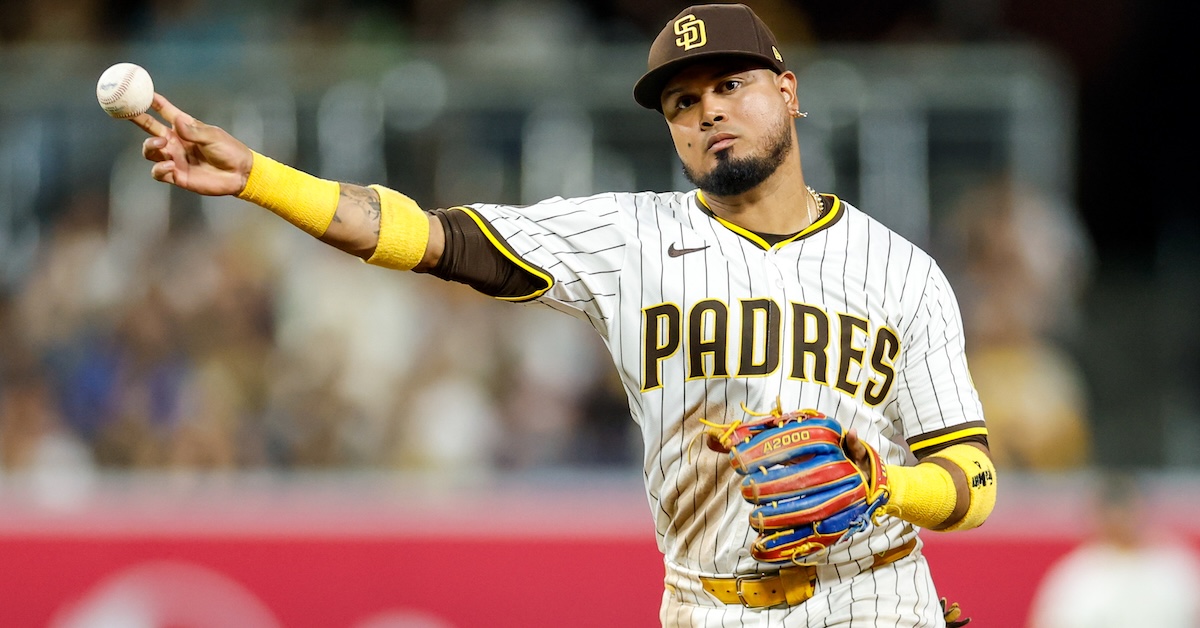
After getting what amounted to replacement level production at second base last season, the Giants have a new man for the keystone. The good news is that he’s a three-time batting champion, and he’s not outrageously expensive. The bad news is that lately he hasn’t been an incredibly productive hitter despite his high batting averages, and what’s more, second base could be a stretch. However it shakes out, on Saturday the Giants agreed to terms with free agent Luis Arraez on a one-year, $12 million deal.
Arraez, who will turn 29 on April 9, spent last season and most of the previous one with the Padres after being acquired from the Marlins in a May 4, 2024 trade. While he won his third straight batting title in 2024 and made his third consecutive All-Star team, his time with San Diego was one of diminishing returns on both sides of the ball. Last year again he led the NL with 181 hits, but his .292/.327/.392 slash line only amounted to a 104 wRC+, the lowest mark of his career and down from a 109 wRC+ (on .314/.346/.392 hitting) in 2024. By comparison, he hit for a 130 wRC+ (.316/.375/.420) when he won the AL batting title with the Twins in 2022 and a 131 wRC+ (.354/.393/.469) when he won the NL batting title in ’23. He slipped from being more or less a three-win player (6.1 WAR in 2022–23) to a one-win player (2.0 WAR in 2024–25).
Arraez is an odd duck, an anachronism in that the things he’s best at don’t fit this historical moment particularly well. At a time when home run and strikeout rates are near their all-time highs and batting averages closer to an all-time low, he’s the game’s most contact-oriented hitter, as well as the active leader in batting average (.317). That makes him a fun player to theorize about, as colleague Davy Andrews did when he recently pondered the possibility of Arraez signing with the Rockies, whose spacious ballpark would’ve provided him with the most room to run up his batting average on balls in play by dumping single after single in front of outfielders playing deep. Read the rest of this entry »
Jayne Kamin-Oncea and David Butler II-Imagn Images
Not every team shows up for spring training with a reasonable hope of winning the World Series, but there is a grand, overarching narrative to follow in every camp. For the Chicago White Sox, it’s whether they can achieve an all-Sean-and-Shane starting rotation — they’re currently 60% of the way there.
That might sound like a modest goal, but it’s a lot more ambitious than what they set out to achieve just last year: Avoid losing 120 games. Again. The White Sox will sink or swim (or at least sink more slowly) based on how their young homegrown players perform, but Chicago’s supporting cast is looking relatively OK.
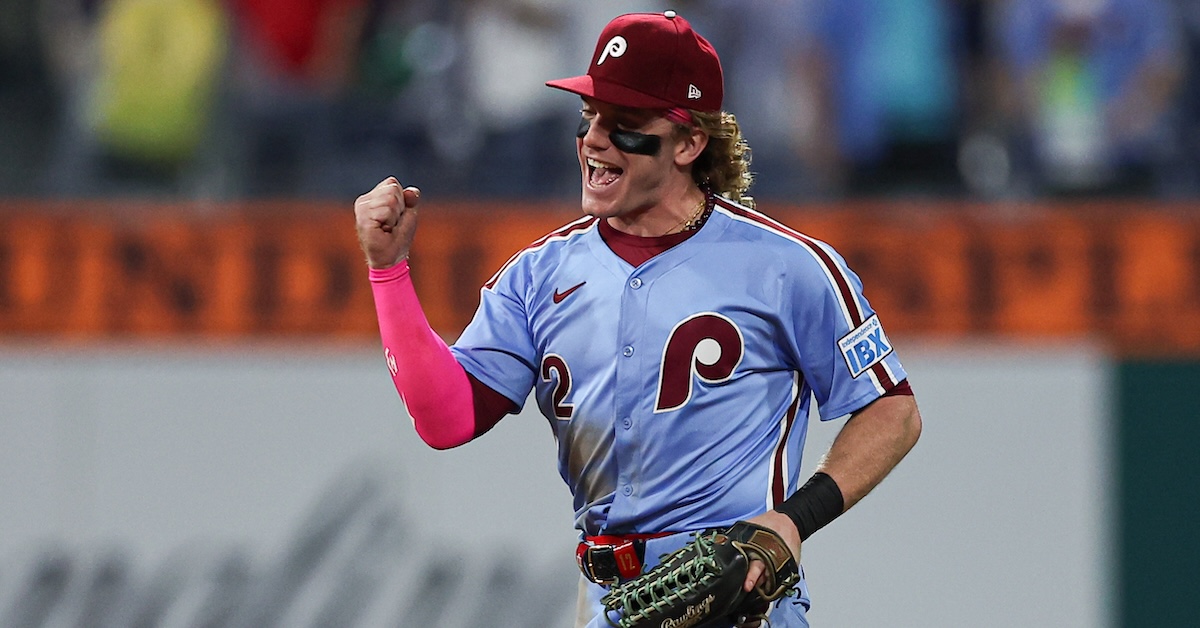
The San Francisco Giants, with their unique front office leadership and unconventional manager, have gone the traditional route. “Acquire Harrison Bader” is a tried-and-true team-building strategy for a would-be contender; the former Florida Gator is on his way to his seventh organization in the past four-and-a-half years.
The Giants, unlike Bader’s previous employers, seem interested in keeping him around long enough to unpack all his furniture: Bader’s new contract is for two years and $20.5 million.
Regardless of any analysis to follow, this move makes the Giants stronger in 2026. Bader is a legitimate center fielder who’ll relieve the defensive pressure on the freshly emancipatedJung Hoo Lee (who’s stretched in center) and Heliot Ramos (who’s stretched at any position that requires him to wield a glove). Guys who can play center field comfortably and have a clue at the plate are harder to find than you’d think — especially in free agency — and the Giants got one. Read the rest of this entry »