Archive for Prospects

Mariners Swap a Ford for a Ferrer(i)
Daniel Kucin Jr. and Steven Bisig Imagn Images

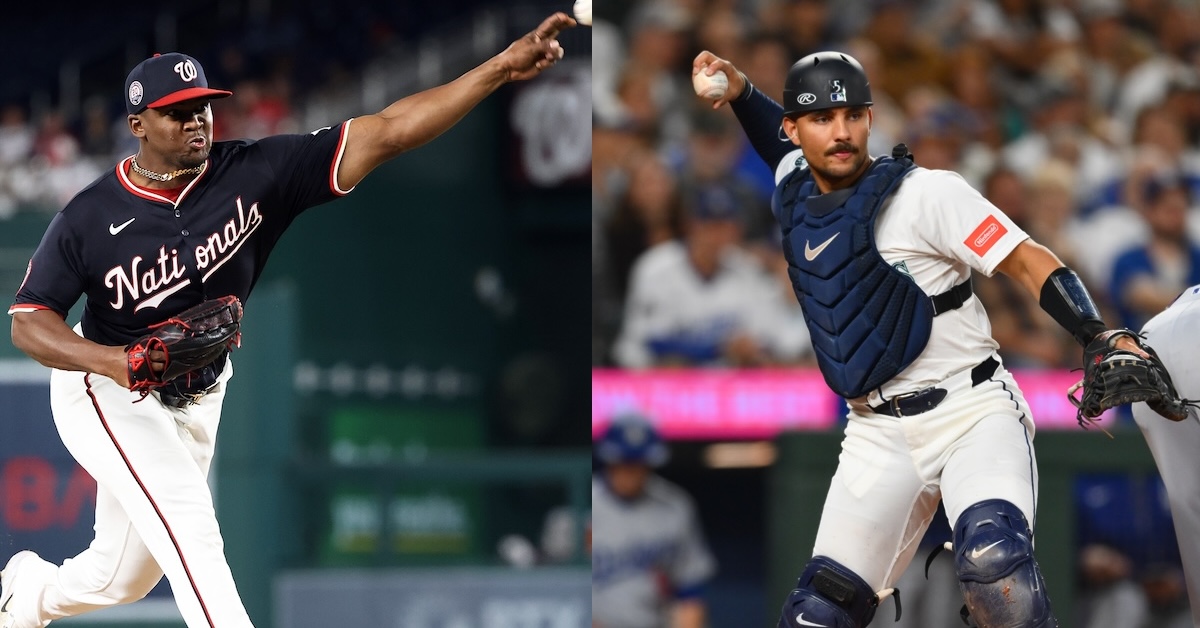
On Saturday afternoon, the Mariners traded catching prospect Harry Ford to the Nationals in exchange for Jose A. Ferrer; the Mariners also sent right-handed pitcher Isaac Lyon, their 10th-round pick from this year’s draft, to Washington. Robert Murray of FanSided had the news first.

This is a trade that raises a few eyebrows. While Ford moved through the minor leagues slowly by modern standards, he’s been a consensus Top 100 prospect for nearly three years now. It’s a little jarring to see someone of that caliber dealt for a reliever, particularly one with pedestrian surface-level numbers and good but not sterling peripherals. My initial reaction was that Seattle sold low on Ford, though further review has changed my thinking a little. Let’s dive in.

The Mariners’ side of this takes a little more nuance to work through, so we’ll start with their situation. Ford is a good, if not great prospect. He’s been on our Top 100 list for a couple seasons now on the strength of a well-rounded game, finishing the 2025 season ranked 43rd overall as a 50 FV. He can hit a little bit, there’s average power that he’s learning to tap into, and he’s growing into a reliable, if unspectacular defender behind the plate. There isn’t much star potential here, and I’ll say more on why that is in a bit, but he does project as a regular.

But Ford was also as blocked as any prospect in the minors, stuck behind MVP runner up Cal Raleigh. Raleigh is durable, excellent, and thoroughly entrenched after inking a six-year extension this past March. The Mariners had experimented with Ford in the outfield to see if they could find something else for him to do, as it’s been clear for a while now that his future would not be behind the plate in Seattle. He’s been an obvious trade candidate for at least a year, and the only surprise is that it took so long for the M’s to move him. They’ve reportedly been shopping him for impact relievers elsewhere; frankly, this is a swap that would have made a ton of sense four months ago, when Ford was just as blocked and the Mariners could have used more relief depth in front of Andrés Muñoz and Matt Brash for their playoff push. Oh well, not like it bit them in the butt during October.

So, trading Ford makes sense. But for Ferrer? A guy with a 4.36 career ERA? Don’t they have holes around the infield, ones they may need to fill via trade since it seems like their off-season budget is pretty modest? What gives?

As readers likely know, Ferrer’s numbers under the hood are much better than his ERA. His FIP over the last two years is under 3.00, thanks to tiny walk and home run rates. He’s also one of the league’s foremost groundball generators. His groundball rate is just over 60% for his career, and of the pitchers who threw at least 50 innings in 2025, only José Soriano, Jhoan Duran, and Tim Hill topped Ferrer’s 62.6% mark. As you’d expect, it’s really hard to drive the ball against him, and he only allowed five long balls in 76.1 innings of work in 2025. He takes full advantage of his ability to dampen damage on contact, pounding the zone to the tune of a 2.21 career BB/9 rate and an in-zone pitch rate of nearly 60% (roughly the 90th percentile for the league).

And of course, the Mariners aren’t just acquiring those numbers. They’re trading for the chance to unlock more, and you can see compelling paths forward here.

This season, Ferrer mostly just pounded the zone with his sinker while mixing in a changeup about 20% of the time and a slider once or twice an outing. His sinker is quite good, as it sits in the upper 90s, touches 100, and features plus tail. It’s a quick and reliable way for him to generate outs, and you can see why he leans on it. But like most pitchers who spam the fastball, there’s an argument for a usage adjustment here. The changeup performed very well in 2025, generating big whiff and chase rates, and hitters didn’t do much with it even on contact. He could probably stand to use it more.

The real path forward may be the slider, though. Ferrer’s sits in the low 90s and has tight, two-plane movement, not quite cutterish but in the neighborhood. His command of it isn’t great, generally in the dirt to the glove side, but whether it’s because guys don’t expect the Spanish Inquisition or they’re just not seeing his spin very well, opponents did absolutely nothing with it and whiffed more than half the times they swung. The Mariners have had a lot of success getting fastball-heavy arms to diversify their arsenal — Logan Gilbert and Bryce Miller are two obvious examples — and it would come as no surprise if they have Ferrer lean on the bender a lot more going forward.

Put everything together, and you can imagine why Seattle sees Ferrer as an impact reliever, the kind worth parting with a top prospect for. Sources from around the game like Ferrer as an upside play. He throws hard, he pounds the zone, he has three pitches that flash plus, and there’s a relatively straightforward adjustment that could unlock more. With four years of team control left, he’s not even expensive. He lengthens the bullpen and gives the Mariners a left-handed weapon of a magnitude they didn’t have last season. There’s always risk in acquiring relief pitching, but this looks like a safe way to add 1-1.5 WAR to the bullpen, and with his skills, a nutty, sub-2.00 ERA season is not outside the realm of possibility.

On Washington’s side, this also makes plenty of sense. Ferrer’s a tough guy to lose, but good relievers are a luxury on a rebuilding club and swapping bullpen arms for bats with everyday upside is a sound idea. That’s especially true behind the plate. Nationals catchers produced -1.4 WAR in 2025, last in the majors, and were awful on both sides of the ball. Led mostly by Riley Adams and Keibert Ruiz, the club’s backstops hit .225/.270/.322, good for a 65 wRC+ that was 29th in baseball. Thanks in part to Ruiz’s horrible framing numbers (his mark of -5.3 runs prevented was third from the bottom among all catchers, in 65 games no less), Washington’s catchers were also the league’s worst collective on defense as well. Ruiz was once a top prospect, but he’s now 27, has no approach, and is not exactly an asset defensively. It’s time to move on.

Enter Ford. A first round pick in 2021, Ford progressed slowly and steadily toward the big leagues before making his debut in September. His approach has been awesome: He has a very good eye, he recognizes soft stuff out of the hand, and while he doesn’t swing a ton, he reliably turns it loose on pitches he can drive. If you put a ton of stock in swing decisions, this is your guy.

Statistically, all is well. His production has been strikingly consistent, with Ford notching a wRC+ between 125 and 135 at each full-season level. He’s also posted very small deviations in his walk, strikeout, and — aside from 2024, which he spent in a huge, homer-suppressing yard — ISO numbers, all of which were encouraging. If you value consistent minor league production, this is your guy.

Scouts and evaluators are not universally sold on Ford’s ability to translate that production to the big leagues, though. His bat speed is average and he’s periodically struggled getting his bat to fastballs up in the zone. In his most recent prospect write-up, Eric covered an adjustment Ford made with his feet and timing that seems to have helped this season, but obviously the big leagues will provide a different stress test. I see an average bat with a chance to grow into average game power, but there are scouts who would take the under on both.

Ford’s defensive growth has mirrored his ascent through the minors. His framing has improved but is still fringy, and he may benefit from an ABS assist (though he was actually pretty bad at challenging pitches this season). He shines more in spots where his athleticism takes center stage. He’s quick on plays where the ball is tapped out in front of the plate, and he’s going to catch his share of baserunners. He has an above-average arm, his throwing accuracy has improved, and he caught nearly 25% of would-be-thieves in 2025. Early-career reports questioned whether he had too much trouble simply catching the ball, but his passed-ball figures have plummeted since 2023. I’m projecting an average defender, though again, there are evaluators who will take the under.

It all adds up to a 50 FV report, albeit one where there isn’t a lot of wiggle room if one of the tools doesn’t reach its projection or Ford’s approach buckles against better stuff. In truth, part of that projection is a reflection of the state of catching throughout the league; the bar for being an average regular isn’t very high right now. Still, if he’s average on both sides of the ball, that’s a good player, and he’s the kind of risk Washington should be taking at this stage. Ford could be part of the next good Nationals team, and even if he falls a little short of where we have him here, he’s likely steady enough to be a real upgrade over what they’ve trotted out in recent seasons.

Let’s quickly touch on the other player in the deal. Lyon, the son of former big leaguer Brandon Lyon, signed for nearly $200,000 this summer. He’s a good strike thrower with a bad fastball, a slider and change that flash average, and a delivery with some deception in it. He sat in the low 90s in short starts with Low-A Modesto, and could have another gear as he fills out. He projects as an up-down type and has a low-leverage relief ceiling if he can find a way to throw harder in shorter stints.

One other thing to note: With Ford now in Washington, Seattle will be in the market for a backup catcher. The club is reportedly open to a reunion with Mitch Garver, who hit 24 homers amidst otherwise disappointing production over the past two years as the club’s primary backup catcher; he also started at DH 22 times this season. While Raleigh plays nearly every day, he does DH fairly often, so whoever Seattle signs will probably start about 25% of the time behind the plate.

Ultimately, the deal helps both parties, and one exec I spoke with called it a “win win” move. The more I look at Ferrer, the more he seems like a reliever with another gear, a guy with closer stuff who is a plenty good fit for Seattle’s bullpen as is. Still, I think Washington did well here, getting a high-floor position player at an area of desperate need. The Paul Toboni era is here now, and Nationals fans should be enthused about his first big trade as president of baseball operations with the club.
Eric Longenhagen Prospects Chat: 12/5/25

12:17
Eric A Longenhagen: Good afternoon from my mom’s breakfast nook in Port Charlotte! I fly to Florida a few days early to see family before trekking up to Orlando for Winter Meetings. I can’t wait to do Disney character voices for my peers.

12:17
Eric A Longenhagen: I expect chat will be closer to 45 minutes today because I have to wrap up my analysis of last night’s Pirates/Red Sox trade.

12:17
Eric A Longenhagen: SO let’s get to it.

12:18
AB: Curious to know if you have anything on Seojun Moon that the bluejays signed earlier?

12:19
Eric A Longenhagen: Yeah, really well-built Korean kid sitting about 93. Prototypical 6-foot-3 frame, good-looking delivery, command is kind of erratic. Probably would have been a top three pick in the KBO draft, looks like a million dollar arm to me. Maybe got a little more because late-market guys tend to, not a terrible consolation prize for being the Roki runner up.

12:19
AB: Wondering if you know anything about the Florida bridge league, any Jays standout and how was Jojo Parker?

Read the rest of this entry »


Los Angeles Dodgers Top 53 Prospects

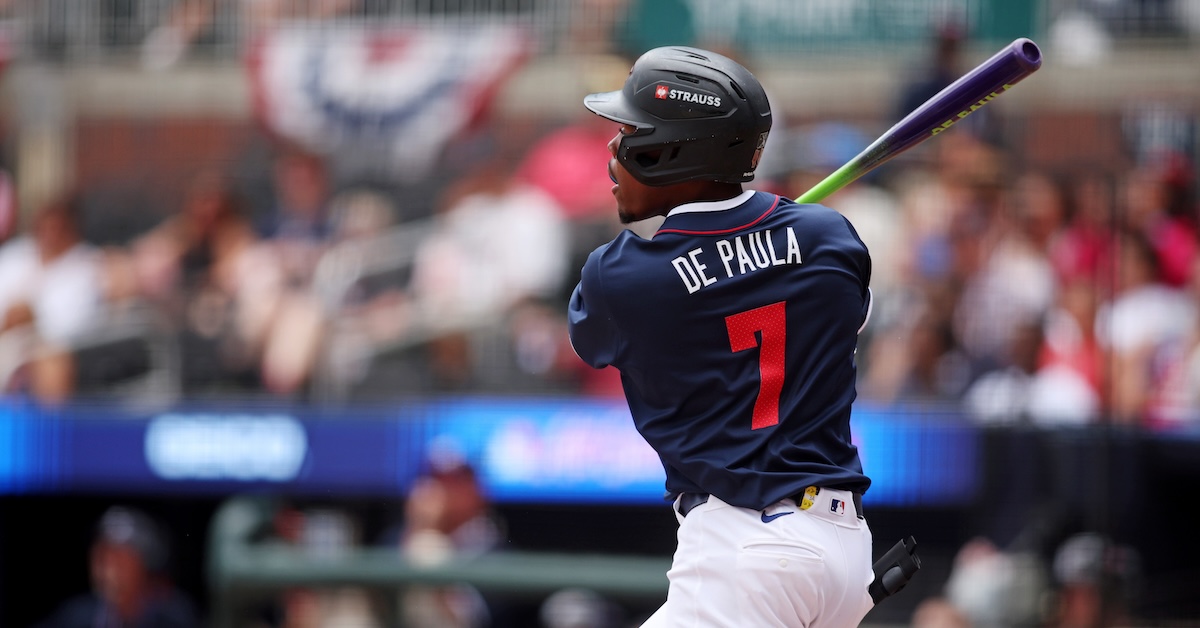
Josue De Paula Photo: Brett Davis-Imagn Images

Below is an analysis of the prospects in the farm system of the Los Angeles Dodgers. Scouting reports were compiled with information provided by industry sources as well as our own observations. This is the sixth year we’re delineating between two anticipated relief roles, the abbreviations for which you’ll see in the “position” column below: MIRP for multi-inning relief pitchers, and SIRP for single-inning relief pitchers. The ETAs listed generally correspond to the year a player has to be added to the 40-man roster to avoid being made eligible for the Rule 5 draft. Manual adjustments are made where they seem appropriate, but we use that as a rule of thumb.

A quick overview of what FV (Future Value) means can be found here. A much deeper overview can be found here.

All of the ranked prospects below also appear on The Board, a resource the site offers featuring sortable scouting information for every organization. It has more details (and updated TrackMan data from various sources) than this article and integrates every team’s list so readers can compare prospects across farm systems. It can be found here. Read the rest of this entry »


Milwaukee Brewers Top 53 Prospects

Jesús Made Photo: Brett Davis-Imagn Images

Below is an analysis of the prospects in the farm system of the Milwaukee Brewers. Scouting reports were compiled with information provided by industry sources as well as our own observations. This is the sixth year we’re delineating between two anticipated relief roles, the abbreviations for which you’ll see in the “position” column below: MIRP for multi-inning relief pitchers, and SIRP for single-inning relief pitchers. The ETAs listed generally correspond to the year a player has to be added to the 40-man roster to avoid being made eligible for the Rule 5 draft. Manual adjustments are made where they seem appropriate, but we use that as a rule of thumb.

A quick overview of what FV (Future Value) means can be found here. A much deeper overview can be found here.

All of the ranked prospects below also appear on The Board, a resource the site offers featuring sortable scouting information for every organization. It has more details (and updated TrackMan data from various sources) than this article and integrates every team’s list so readers can compare prospects across farm systems. It can be found here. Read the rest of this entry »


Eric Longenhagen Prospects Chat: 11/21/25

12:03
Eric A Longenhagen: Howdy howdy from cloudy Tempe, where we skipped the 70s and went straight to winter. Thanks for coming to another prospect chat. Your boy is sick with something flu-like and had to cancel plans with the neighbors for tonight so I’m just banging away at prospect lists and watching the Robert Altman stuff that will leave Criterion at the end of the month. Nice long chat today, let’s see if I can answer questions as fast as you ask them….

12:03
Guards! Guards!: Any update on that oft injured Guardians pitching prospect that everyone keeps asking you about? I, of course, mean Justin Campbell.

12:05
Eric A Longenhagen: I texted a few people about this after folks asked just before Halloween and was told a scap strain and wrist stuff prevented him from throwing. I was told by a different source he threw some live bp at the end of September, but wasn’t told how he looked.

12:05
Jim: What do you need to see to become a Henry Bolte believer?

12:07
Eric A Longenhagen: I guess I’m wondering to what degree are you asking me to believe? I think his tools will allow him to be a useful extra outfielder. I don’t think he’ll hit enough to be a regular. Too late on fastballs, too much whiffing overall. I’d ask you to reflect on what you thought about Colby Thomas twelve months ago and whether you thought I was light on him, too.

12:07
Tacoby Bellsbury: What are your thoughts on the Rodriguez-Ward trade?

Read the rest of this entry »


White Sox GM Chris Getz on His Team’s Top Pitching Prospects

Kamil Krzaczynski-USA TODAY Sports

The Chicago White Sox have two of baseball’s most promising pitching prospects. Noah Schultz, a 22-year-old left-hander who was drafted 26th overall in 2022 out of an Oswego, Illinois high school is currently no. 22 on The Board with a 55 FV. Hagen Smith, himself a 22-year-old southpaw, was drafted fifth overall in 2024 out of the University of Arkansas and is no. 81 with a 50 FV. Each possesses a power arm, and both have a lot to prove in the forthcoming season — albeit for different reasons. Schultz was limited to 73 innings this year due to injury, while Smith dealt with command issues and lacks a solid third pitch.

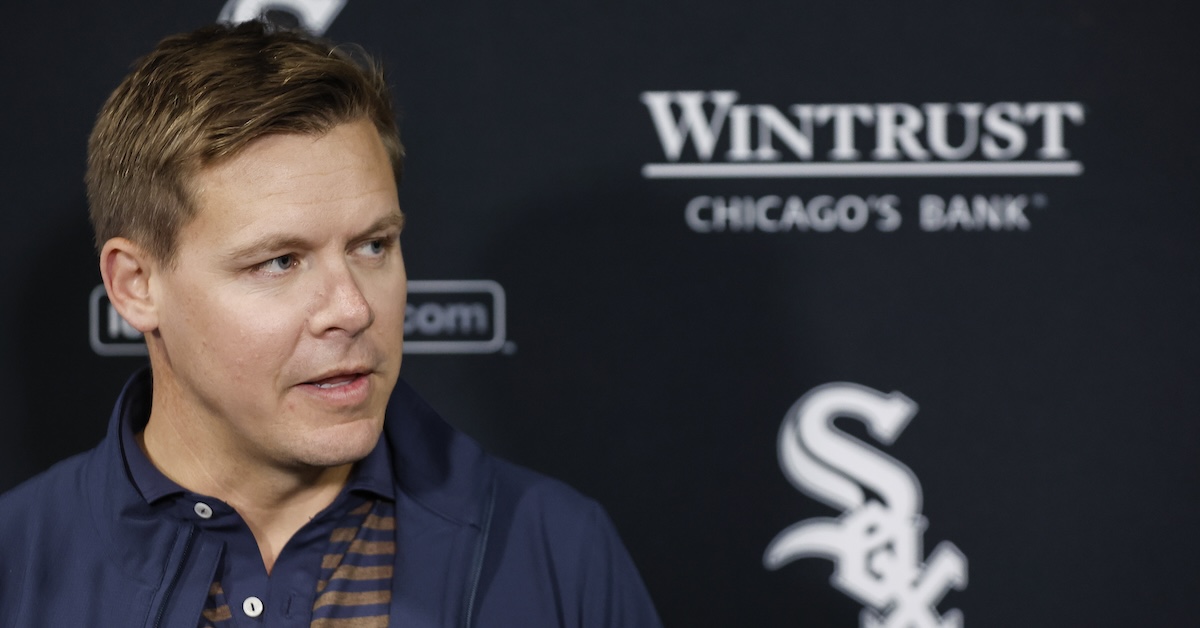
I asked White Sox executive vice president/general manager Chris Getz about the young pitchers during last week’s GM Meetings in Las Vegas.

“For Noah, it was an inconsistent year,” Getz said of the 6-foot-10 Schultz, who struggled to the tune of a 4.68 ERA between Double-A Birmingham and Triple-A Charlotte. “Much of that was related to his knee — he had patellar tendonitis — and he needed be to shut down. He’s doing [physical therapy] and strengthening right now. I anticipate that once the knee is completely healed, once it is healthy and completely strong, we are going to get the version of Noah that made him a top prospect in our game. Read the rest of this entry »


Eric Longenhagen 2025 Arizona Fall League Championship Chat

3:23
Eric A Longenhagen: Hello from Salt River Fields at Talking Stick where the starting lineups for today’s championship game are coming through the PA.

3:24
Eric A Longenhagen: I’ll likely post it periodically in chat, but here is the link through which you can watch the stream of the game. Live Streams | Arizona Fall League | MLB.com

3:25
Eric A Longenhagen: We’re about to get the anthem so I’ll likely step away for, what do we wanna say, over under 1:20 on the anthem?

3:26
Eric A Longenhagen:

National Anthem Length

Over 1:50 (16.6% | 3 votes)
 
Under 1:50 (83.3% | 15 votes)
 

Total Votes: 18
3:27
Eric A Longenhagen: I’ll be taking your questions as we all watch the game and put the 2025 season…not quite to bed because it feels that way already… more like into R.E.M. sleep

3:28
Eric A Longenhagen: Meg is going to time the anthem for us.

Read the rest of this entry »


2025 American League 40-Man Roster Crunch Analysis

Angel Genao Photo: Lisa Scalfaro/USA TODAY NETWORK via Imagn Images

One of my favorite annual exercises is a quick and dirty assessment of every team’s 40-man roster situation. Which prospects need to be added to their club’s 40-man by next Tuesday’s deadline to be protected from the Rule 5 Draft? Which veterans are in danger of being non-tendered because of their projected arbitration salary? And which players aren’t good enough to make their current org’s active roster, but would see the field for a different club and therefore have some trade value? These are the questions I’m attempting to answer with a piece like this. Most teams add and subtract a handful of players to their roster every offseason — some just one or two, others as many as 10. My aim with this exercise is to attempt to project what each team’s roster will look like when the deadline to add players arrives on Tuesday, or at least give you an idea of the names I think are likely to be on the table for decision-makers to consider.

This project is completed by using the RosterResource Depth Charts to examine current 40-man occupancy and roster makeup, and then weigh the young, unrostered prospects who are Rule 5 eligible in December against the least keepable current big leaguers in the org to create a bubble for each roster. The bigger and more talented the bubble, the more imperative it is for a team to make a couple of trades to do something with their talent overage rather than watch it walk out the door for nothing in the Rule 5.

Below you’ll see each team’s current 40-man count, the players I view as locks to be rostered, the fringe players currently on the roster whose spots feel tenuous, and the more marginal prospects who have an argument to be added but aren’t guaranteed. I only included full sections for the teams that have an obvious crunch or churn, with a paragraph of notes addressing the clubs with less intricate roster situations at the bottom. I have the players listed from left to right in the order I prefer them, so the left-most names are the players I’d keep, and right-most names are the guys I’d be more likely to cut. I’ve italicized the names of the players who I believe fall below the cut line. As a reminder, players who signed at age 18 or younger must be added to the 40-man within five seasons to be protected from the Rule 5, while those signed at age 19 or older must be added within four. Brendan Gawlowski examined the National League yesterday, so be sure to check that out too. Let’s get to it. Read the rest of this entry »


2025 National League 40-Man Roster Crunch Analysis

Edwin Arroyo Photo: Angelina Alcantar/News Sentinel/USA TODAY NETWORK via Imagn Images

We’re less than a month from the Winter Meetings and the Rule 5 Draft, which means it’s a good time to evaluate every team’s 40-man roster situation. This is the time of year when teams have one final chance to protect Rule 5 eligible players by placing them on the 40-man. Eligibility is determined by a mix of how long a player has been with their parent organization and how young they were when they signed: Players who signed at 18 or younger must be added to the 40-man within five seasons, while everyone else must be added within four. RosterResource monitors Rule 5 eligibility, if you’re curious to see the lay of the land.

During the season, teams can free up roster space by placing an injured player on the 60-day IL. In the offseason, teams don’t get extra slots for injured players, which tends to put pressure on the back of the roster. The Diamondbacks are a good example of how space can tighten quickly, as they’ve currently got six pitchers battling long-term injuries occupying a spot. You may have noticed a flurry of moves immediately following the World Series, with many teams outrighting players off the 40-man in order to make room for all the guys who were on the IL.

Below, I’ve assessed every National League team’s 40-man roster situation (Eric will sort through the American League tomorrow). Some teams, like the Braves, have plenty of roster space, and thus a lot of flexibility in adding whoever they like. Others, like the Cardinals and Marlins, will face some tough choices as they seek to balance protecting interesting prospects with retaining players already on the roster, as well as finding room for prospective additions via trade or free agency. Some clubs don’t have many impact players to add, while others may need to protect a half-dozen or so guys. I’ve tried to identify which players are most likely to be added, which guys on the 40-man are vulnerable to getting lopped off in a roster crunch, and who could be moved in a deal to free up roster space. Let’s dig in. Read the rest of this entry »


Hello, Everybody

Peter Aiken-USA TODAY Sports

Hello, my name is Brendan Gawlowski. I could do the Troy McClure thing and list all of my previous bylines, but I’d prefer to just say that it’s a pleasure returning to FanGraphs after nearly four years away. Back in early 2022, I took a job as a pro scout for the Pittsburgh Pirates and I’ve been scouting minor leaguers ever since. In a few cases, I had a role in bringing players to Pittsburgh. It was a blast and I am grateful for the experience.

But for as much fun as I had, the job wore on those around me. I spent more than 80 nights on the road last year, a grueling schedule that’s rough on families in any situation and was increasingly unreasonable in mine. When I joined the Pirates, I was 30, childless, and ready to stretch my legs after two years of lying low and masking up. In the intervening years, a series of significant events made it hard to balance my passion for scouting with my responsibilities at home. My wife and I had a baby. A year later, we found ourselves facing a cancer diagnosis and long-term treatment. Our parents started battling their own medical problems. Through it all, I tried to be around as much as I could, but the realities of my schedule led to stressful compromises. The logistics of doing the job while being more than a replacement-level family member were hard to manage. This past July, I pulled an all nighter and drove from Corpus Christi to Houston to catch a 6 AM flight back home to Seattle, stepped inside for a quick shower, and then bolted two hours north to Bellingham for a birthday party. During that last stretch, my wife made her annual gentle suggestion that another path was possible.

And what a path this is. FanGraphs’s reputation as a leader in baseball analysis is well earned, particularly in the prospect space. For as long as he’s been at it, Eric has done an incredible job of covering the landscape. From my perspective, the breadth, depth, and nuance of his analysis is worth the price of a Membership all by itself. I learned plenty from him before, during, and after our time working together in my first stint here. The listing for this position came at the perfect time and I applied with gusto: I loved working as a scout, but the opportunity to join Eric in a full-time capacity, to continue evaluating baseball players while also getting another couple of months at home, was too enticing to pass up. Read the rest of this entry »