Spike, Spook, Rollie, Patsy, and Nasim Nuñez

Last week, Jake Mailhot wrote about the complete overhaul that has turned Keibert Ruiz from one of the worst players in baseball to, as of now, the 12th-best catcher in the game according to WAR. I’m particularly jazzed about this success story because I wrote about Ruiz’s chance to do something like this last year. It’s not often you come across a six-year veteran with a wRC+ of 65 and see real potential for improvement, but Ruiz was demonstrating some gifts that sure seemed like they could start bringing some value.
In an article about players who pull the ball significantly more often specifically when they square it up, I noted that Ruiz ran some of the highest pull and contact rates in the game, up with José Ramírez, Alex Bregman, and Isaac Paredes. He didn’t fit in with that group, though, because he mainly used those great contact skills to pull weak grounders. I figured that he was caught in between. He might be able to find success following the path of Luis Arraez and Steven Kwan, using his contact skills to wait back and shoot line drives the other way, or he could follow the lifter-pullers and start trying to do some actual damage with all that pull-side contact. The Nationals chose the latter path, increasing his bat speed and encouraging him to do damage, and it sure seems like it’s working so far.
Jake’s article went hand in glove with a deep dive from The Athletic’s Spencer Nusbaum that described the all-hands-on-deck nature of the turnaround: “This season, the Nationals have started to implement ‘player plan’ meetings, an individual gathering with every member of the roster every six weeks. First, they tell players how they’re being evaluated by the organization. Then, they talk through a plan to tweak their routines accordingly.”
Between executives, coaches, and trainers, Nusbaum reported, these individual player meetings have nearly 20 people in them. His article also mentioned the specific areas of improvement the Nationals identified for Jacob Young, Curtis Mead, José Tena, and Luis García Jr. Today, we’re going to talk about Nasim Nuñez, who went unmentioned in the article and is one of the few Nationals hitters who isn’t having a career year.
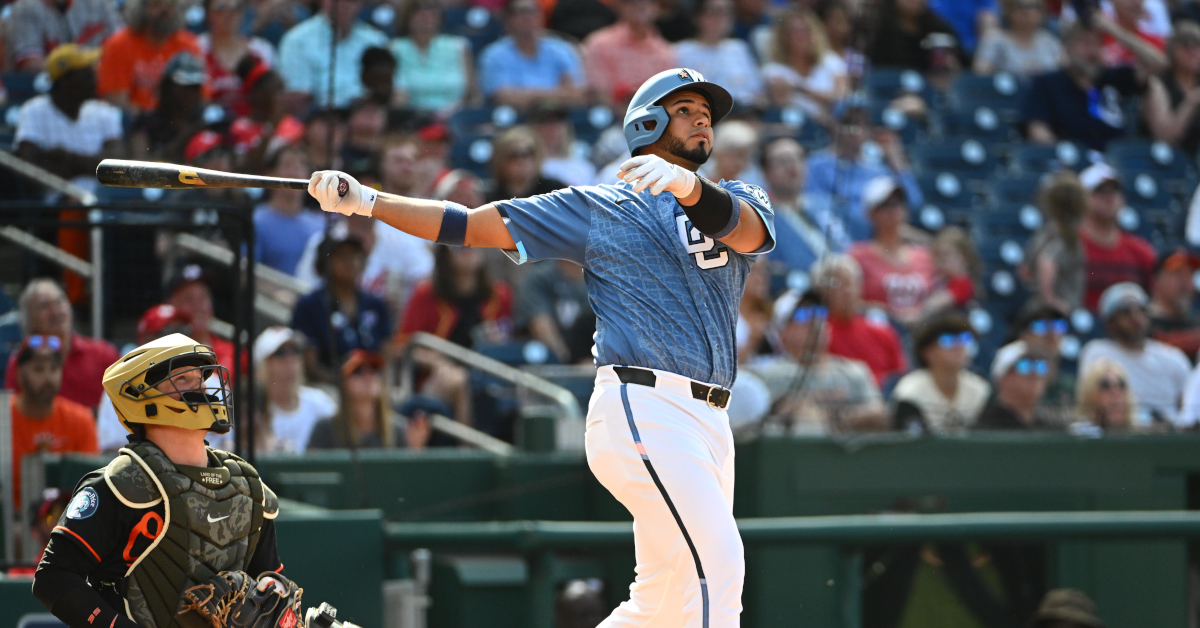
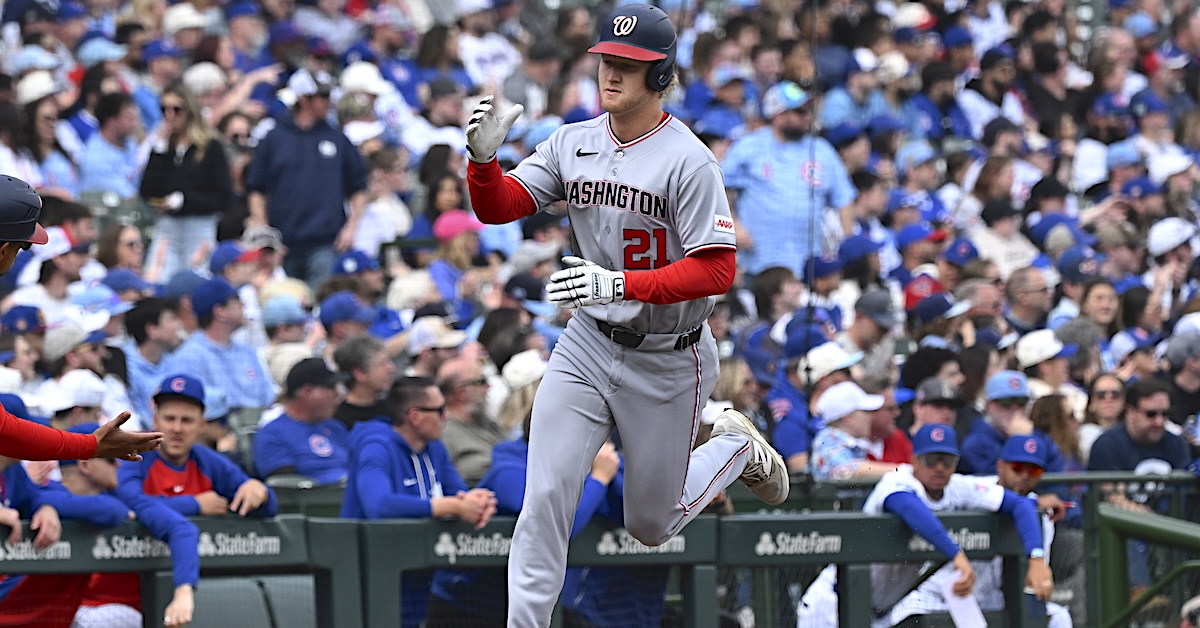
Nuñez is a 25-year-old switch-hitting middle infielder. This is his third major league season, and it will be his first full one. To some degree, things are going as expected for him. In 2024, Eric Longenhagen and Travis Ice wrote that Nuñez possessed “virtually no power,” but predicted a “John McDonald-esque career” based on “his incredible hands, range, athleticism, and infield versatility.” Last year, Ben Clemens echoed that sentiment, calling Nuñez “the platonic ideal of the light-hitting utility infielder.” This season, Nuñez is getting everyday reps at second base with occasional days at shortstop. He possesses blistering speed, and that part of his game is going great. He leads the majors with 22 stolen bases and his 3.4 baserunning runs rank fifth. He’s also running a tidy 11% walk rate thanks to good plate discipline and a league-average contact rate. Lastly, his defense isn’t lighting up the advanced metrics just yet, but it is grading out as solidly above average.
That’s it. Those are the things that are going right for Nuñez, and if he were posting something approaching the 93 wRC+ he put up across the 90 games of his career entering this year, they would be enough to make him an above-average second baseman. Great baserunning and middle infield defense along with a good walk rate really should really be enough. Unfortunately, the rest of Nuñez’s offensive profile is dragging him way, way down. He is batting .193 with a 50 wRC+, second worst among all qualified hitters. I made a list of 12 categories where Nuñez ranks in the bottom octile of all qualified players, and another list of 10 categories where he ranks dead last, but I think just telling you about the two lists is enough to get the point across. He has looked like the worst hitter in baseball, and as a result, he’s been sub-replacement level so far this season.
As you’d expect for anybody hitting this badly over a relatively short sample, Nuñez has been the victim of some bad luck. His .270 xwOBA, execrable though it is, is still 30 points above his actual wOBA. Likewise, his DRC+ of 84, while dreadful, at least pushes him up out of the bottom 30 among qualified hitters. Still, a lack of power is the main thing dragging Nuñez down, and it’s hard to argue that he’s getting jobbed in that department. He is at or near the bottom of the league in every exit velocity metric. He has not yet homered. He has not yet notched a barrel. He’s last among all qualified hitters in both doubles and triples. In fact, I put all of his extra-base hits in the GIF below. Anytime you can put a player’s entire highlight reel for two months of a season into a single GIF, that’s definitely a bad sign.

That’s right. Nuñez has two doubles and both of them were hustle doubles. The one and only time this season he has hit the ball past the defense, it was on a fly ball with a 60% catch probability. Luckily Nuñez hit it toward Matt Wallner, whose -9 defensive runs saved rank last among right fielders. A decent right fielder catches that ball, and most non-Wallner right fielders avoid misplaying it into a triple.
Nuñez’s slugging percentage is 50 points below his expected slugging level, but that’s almost entirely because of singles not falling in. He’s hit just four balls this season with an expected slugging percentage above 1.000. One was the first double in the GIF above, where he lined the ball toward (but not all the way into) the right field corner against the Brewers. Three were little bloopers that always go for singles and occasionally get stretched into doubles. This is the ball with the highest expected slugging percentage he’s hit all year.
It’s also the hardest-hit ball he has hit all year, but it is the most routine single in the world. You’d expect a speedster like Nuñez to be getting lots of hustle doubles, so is it possible that he’s just been unlucky on that front, getting thrown out trying to stretch singles into doubles? That ain’t it either. He’s only been cut down once trying to advance to second on a single, and amazingly, it was on a freak bunt play where the Brewers tried their best to throw the ball away but were foiled by the wayward torso of the umpire:
So why am I spending so much time showing you that a player we all expected to be light on power is, in fact, light on power? First, because things are so extreme that Nuñez is in danger of making some dubious history. He has an isolated slugging percentage of .023. You won’t be shocked to learn that it’s the lowest mark among all qualified players, but you might be surprised to learn that the next-lowest ISO is more than double Nuñez’s mark. (You might also be surprised to learn that it belongs to Fernando Tatis Jr. What a world.)
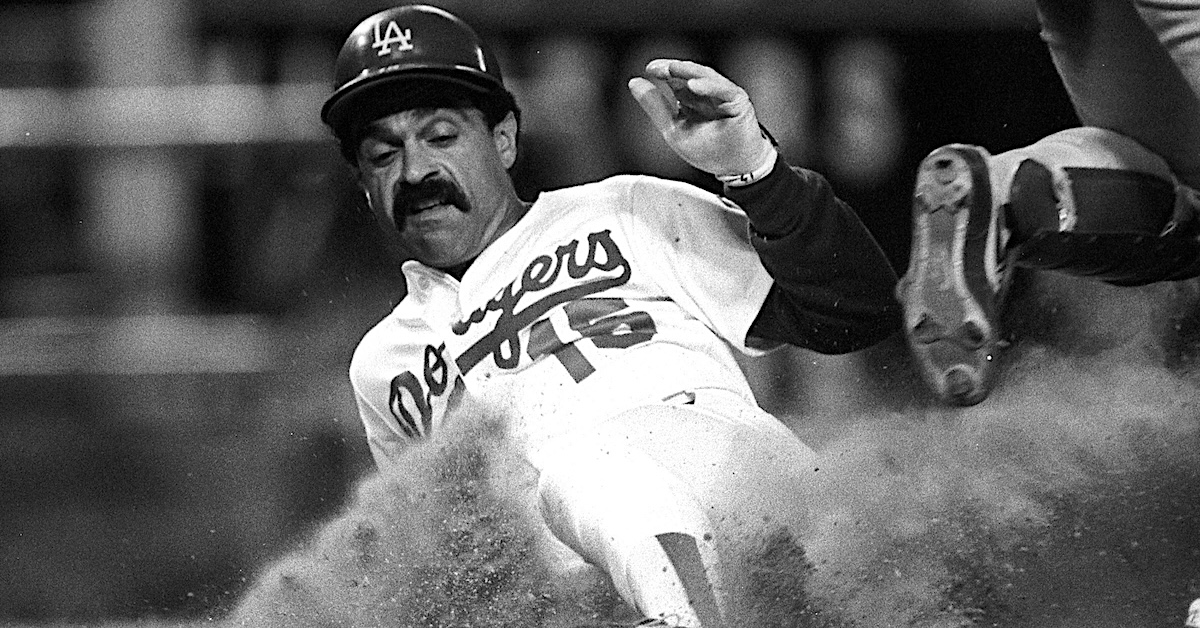
Nuñez isn’t just failing to slug, but he’s also been historically bad at it. Among qualified AL/NL position players since 1901, Nasim this year is currently tied for the ninth-lowest single-season ISO, and he has the third-lowest single-season slugging percentage. Of course, the game is very different now, and the names around Nuñez at the bottom of these leaderboards are nearly all from the turn of the last century. (You can tell because the first names include Spike, Spook, Patsy, Rollie, and, of course, Goat.) If we look at plus stats in order to compare Nuñez to the league average for historical context he drops even lower. His 15 ISO+ and 55 SLG+ are the very lowest. In AL/NL history. Since 1901.
| Season | Name | ISO | SLG | Season | Name | ISO | SLG | |
|---|---|---|---|---|---|---|---|---|
| 1902 | Pete Childs | .012 | .206 | 1907 | Al Bridwell | .024 | .242 | |
| 1906 | Spike Shannon | .019 | .275 | 1906 | Al Bridwell | .024 | .251 | |
| 1900 | Roy Thomas | .019 | .335 | 1968 | Horace Clarke | .024 | .254 | |
| 1973 | Sandy Alomar Sr. | .019 | .257 | 1901 | Roy Thomas | .025 | .334 | |
| 1907 | Goat Anderson | .019 | .225 | 1943 | Eddie Mayo | .025 | .244 | |
| 1908 | Bobby Byrne | .021 | .212 | 1954 | Spook Jacobs | .026 | .283 | |
| 1904 | Hunter Hill | .022 | .226 | 1914 | Jack Barry | .026 | .268 | |
| 1969 | Hal Lanier | .022 | .251 | 1900 | Patsy Donovan | .026 | .342 | |
| 1989 | Felix Fermin | .023 | .260 | 1910 | Rollie Zeider | .026 | .243 | |
| 2026 | Nasim Nuñez | .023 | .216 | 1945 | Mike Tresh | .026 | .275 |
Now, it’s not quite fair to compare Nuñez to full-season marks. We’re catching him over a shorter, noisier sample. It’s a long season, and he’s sure to pick up the pace some. He’ll hit better and he’ll get luckier, if for no other reason than that he couldn’t get much worse. But even if we just look at partial seasons from this century, Stathead tells us that only 14 players have ever run a slugging percentage this low over a span of 50 games and at least 190 plate appearances.
My goal in writing this article was not to drag a player who’s having a rough season and who only has 244 career plate appearances under his belt. I really like Nuñez’s game. His true talent level isn’t this low, and even if it were, he could still be a useful player. He’s always been better-suited for a utility role, and on a better team, that’s what he’d be. He’d get to rack up value as a pinch-runner, show off his glove, minimize the percentage of his overall value that came at the plate, and specifically minimize his time facing right-handed pitching. The Nationals are, very understandably, playing Nuñez in front of Jorbit Vivas and José Tena, whose bats aren’t much better and who don’t possess Nuñez’s glove or speed. But I still think Nuñez could be better.
As I hinted at in the previous paragraph, he has some serious splits. Over his short career, he’s got a 42 wRC+ hitting left-handed and a 120 mark batting righty. This season, those marks are 23 and 110. Even in this dreadful, dreadful season, Nuñez has been a legitimately good hitter from the right side. His bat speed is two ticks higher from the right side, his exit velocity is more than three ticks higher, and his strikeout rate is a full seven points lower. It’s very tempting to look at his profile and wonder whether he’s just miscast as a switch-hitter, but I don’t want to go that far. For one, I don’t know him nearly as well as the Nationals do, and they’ve had three years to consider that option. For another, according to Statcast, he actually put up a higher wOBA as a lefty in the minors (at least when the fancy cameras were watching). What I will say is that Nuñez needs to figure out how to unlock his left-handed swing.
I have no idea what the Nationals told Nuñez to work on during his player plan meeting. It’s hard for me to imagine they gave him the same Do Damage advice they gave to Ruiz, Young, and García. Nuñez is 5-foot-8 and he’s never given the faintest sign that he possesses the ability to hit for power. Then again, his average bat speed even in this powerless year is higher than Ruiz’s was last year, and he outhomered Ruiz last year despite playing in 19 fewer games. Maybe swinging hard is good advice for everybody.