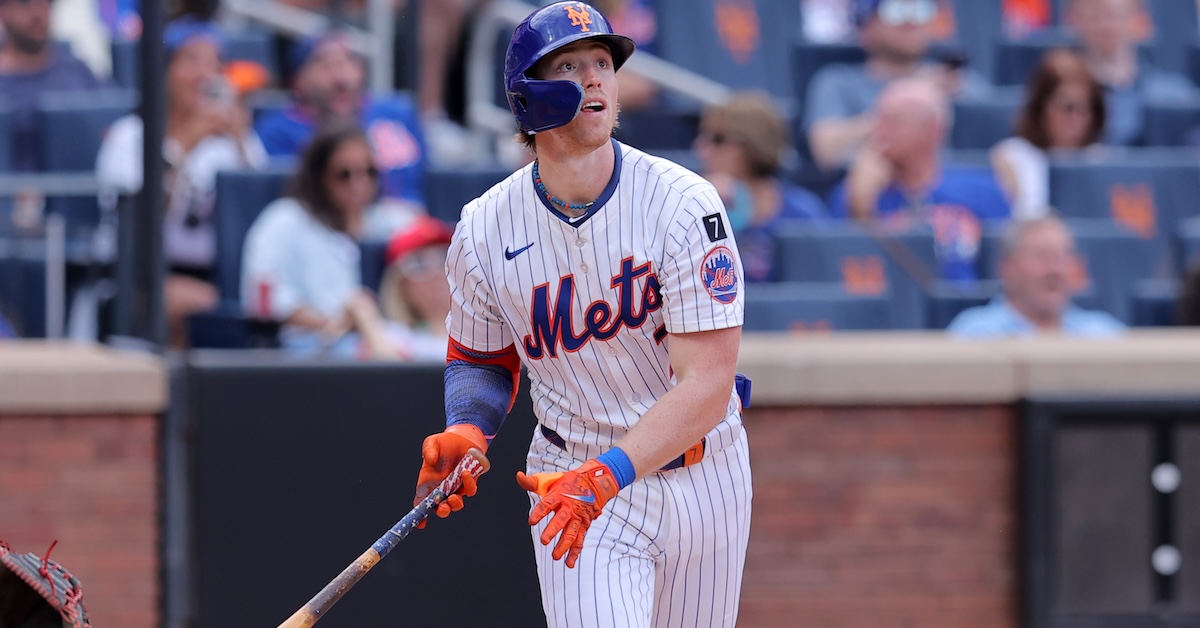
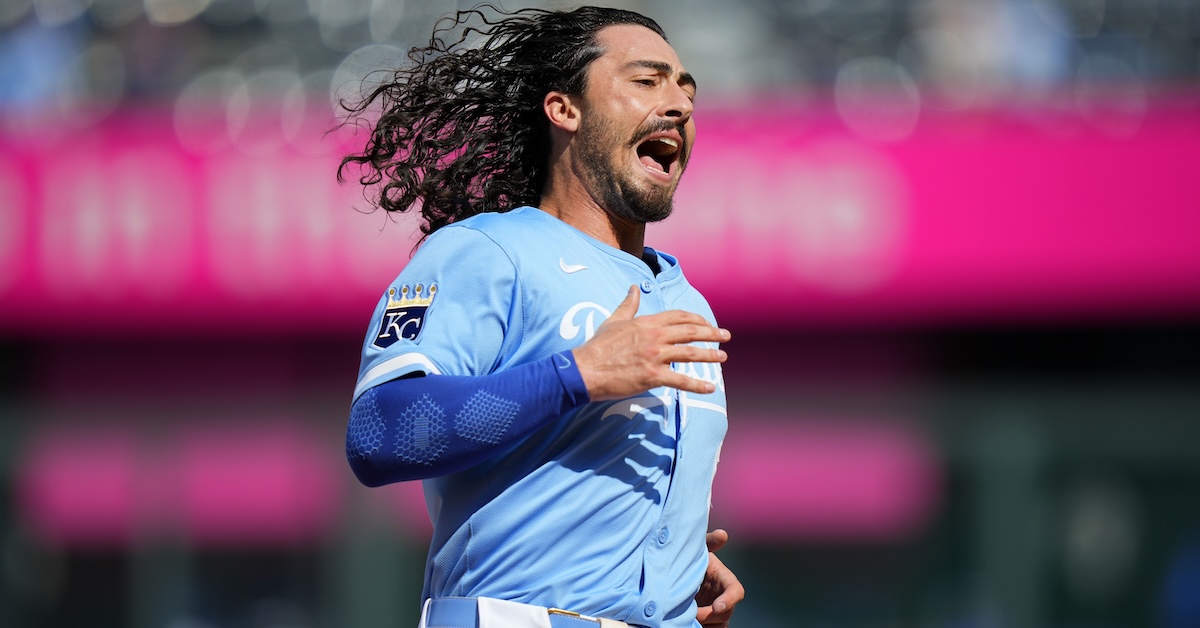
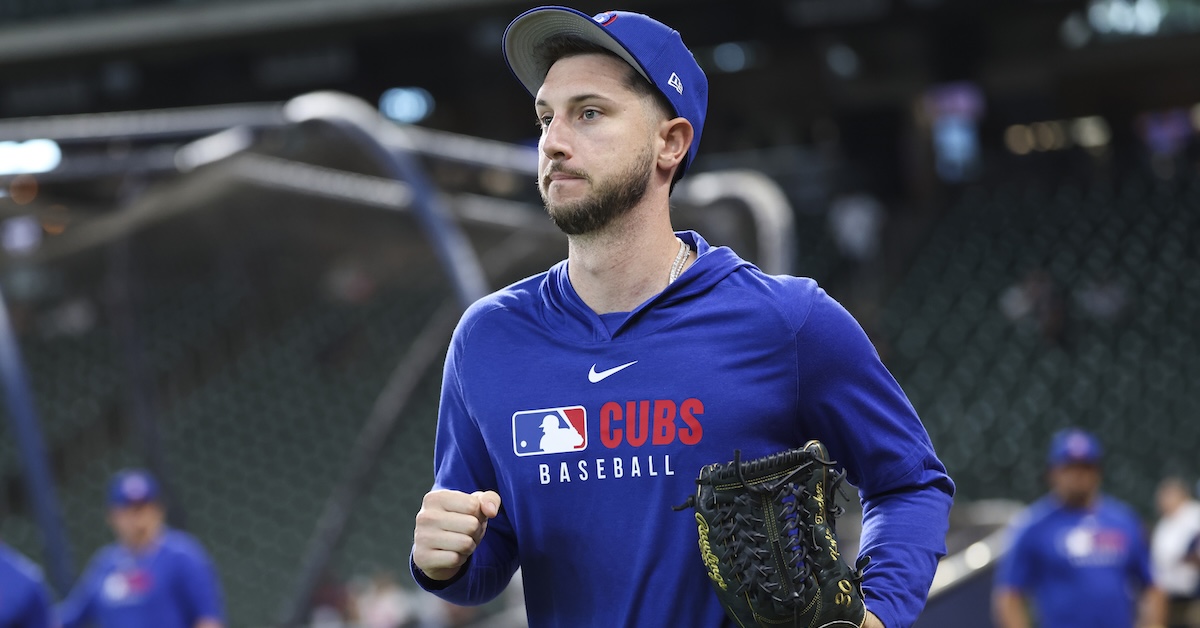
We spend a lot of time here at FanGraphs writing about breakouts. A player who’s suddenly figured it out represents both an exciting piece of news and a chance to dive into the nuances of pitching or hitting. Reading and writing about that subject so often makes you pick up on certain patterns. Today, our subject is Mets infielder Brett Baty, who hasn’t played enough to qualify and who hasn’t broken out in a big way, yet who is fascinating because his breakout doesn’t quite match the patterns we’re used to seeing.
A former 55 FV prospect who ranked 19th on our 2023 Top 100 list, Baty came into the season with a 71 wRC+ over three seasons and 602 total plate appearances. He’s 25, and he’s had an up-and-down career, mashing his way up the Mets system and then struggling upon his promotion to Flushing. He’s got an .889 OPS in the minors and .654 in the majors. If you were to ask a Mets fan what Baty needed to do in order to succeed this season, they probably would have said he needed to put the ball in the air more and he needed to stop striking out so much.
Over 326 plate appearances this season entering play Thursday, Baty has 15 home runs, matching his career total from the start of the year, and a 107 wRC+. These are huge improvements. But he’s done that despite continuing to strike out too much and running a career-low launch angle. That’s not the only mystery. Baty is hitting the ball harder, going from an average exit velocity of 88.8 mph from 2022-24 to 90.8 mph in 2025. Adding two ticks of EV is huge. His hard-hit rate has also jumped from 40% to nearly 47%. But once again, his increased contact quality doesn’t fit the patterns we’re used to seeing. Read the rest of this entry »
Welcome to another edition of Five Things I Liked (Or Didn’t Like) This Week. August is a month I like to use for rest and recovery. After the chaos of July, there’s a natural lull in the season before the drama of September. Both deadline buyers and sellers are figuring out their new rosters and allocating playing time to new arrivals and minor league call-ups. No race is down to the wire, and yet many races are already decided. That’s a great time to relax – and what I like to do to relax is watch baseball. This week’s set of five things doesn’t have a lot of pivotal plays or playoff squads on the brink. It doesn’t have walk-offs or game-ending defensive plays. It’s just guys doing cool things, and sometimes that’s the best part of baseball. So with a quick programming note – Five Things is off next week while I go to the US Open – and a nod to Zach Lowe of The Ringer, let’s get started.
1. Ultimate Reversals
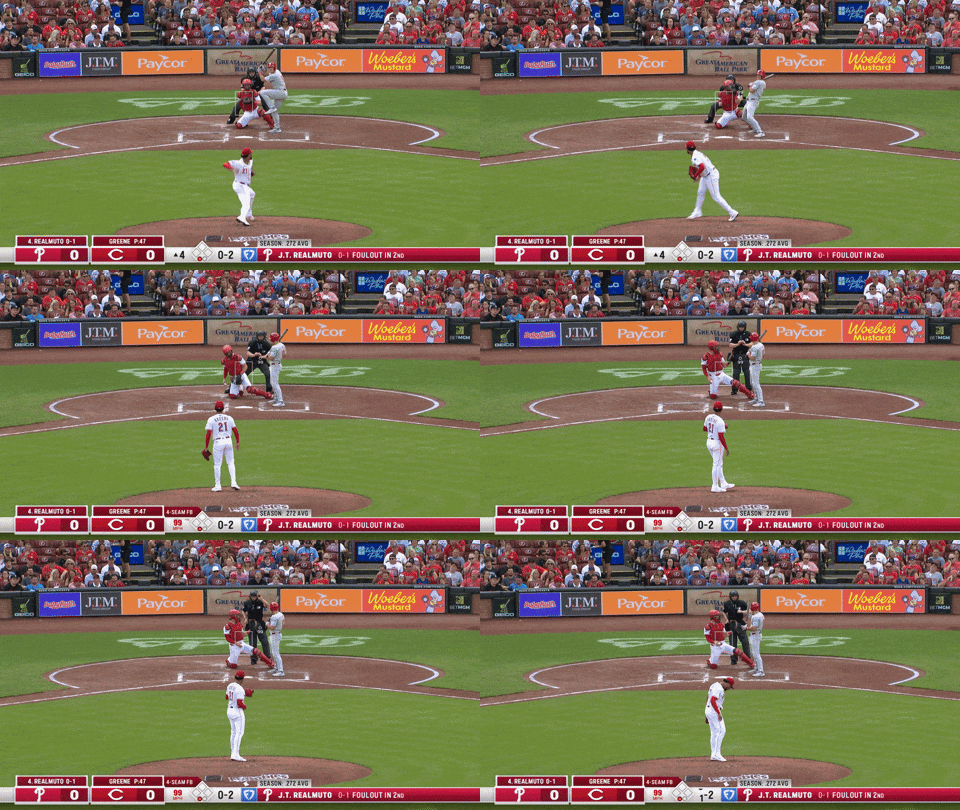
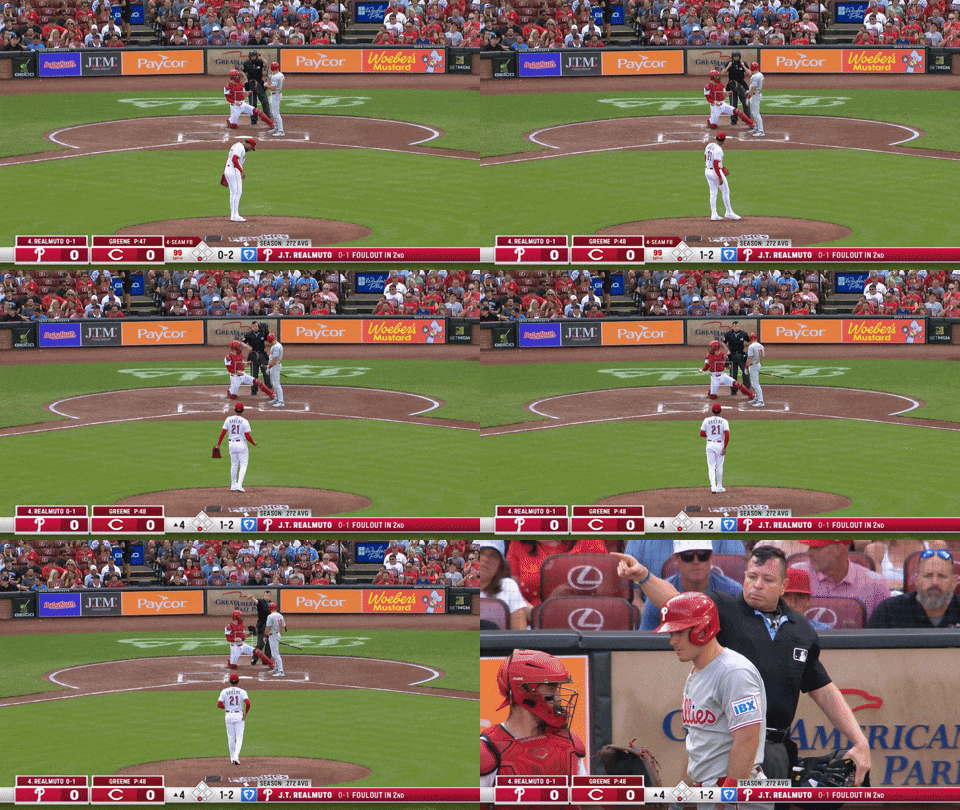
In an 0-2 count in his first start off the IL, Hunter Greene lost control of a fastball:
Hey, it happens. It was an 0-2 count, so no big deal, get ‘em next pitch. Only, wait, something was going on:
Hit… by pitch? I’m not sure anyone at the plate was sure what happened. J.T. Realmuto said something to umpire Carlos Torres. Torres thought about it and then eventually awarded Realmuto first base. Tyler Stephenson went full John Travolta behind home plate, looking around in vain for someone to make this make sense to him.
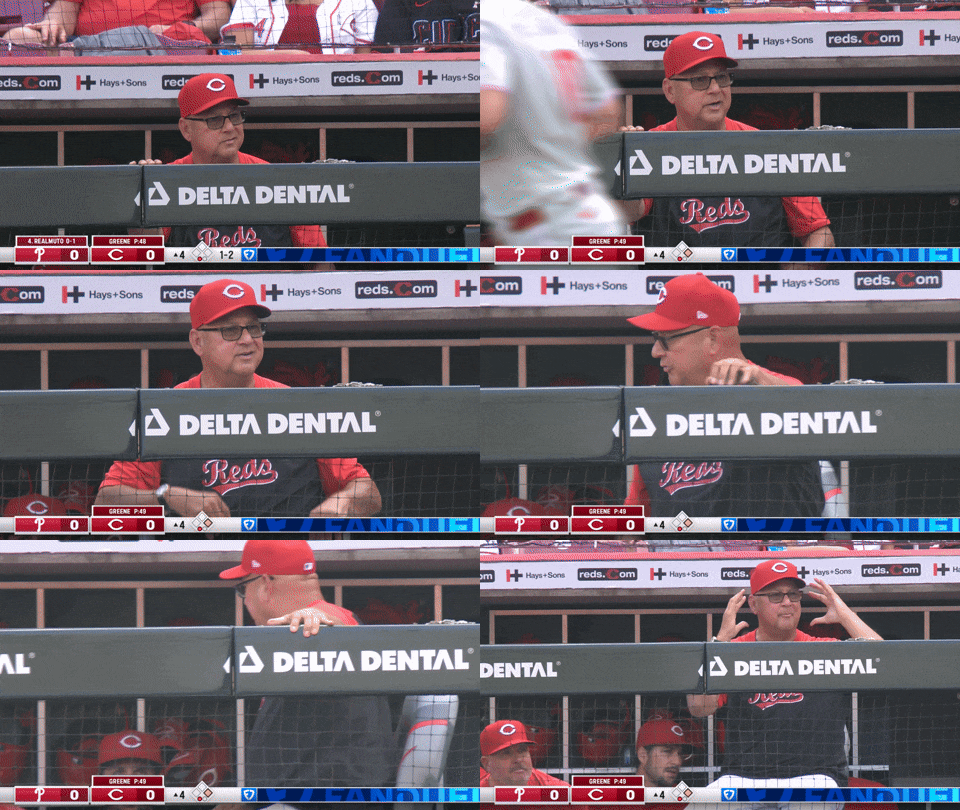
How did Reds manager Terry Francona feel about this? The same way I did, and the same way you do right now, presumably:
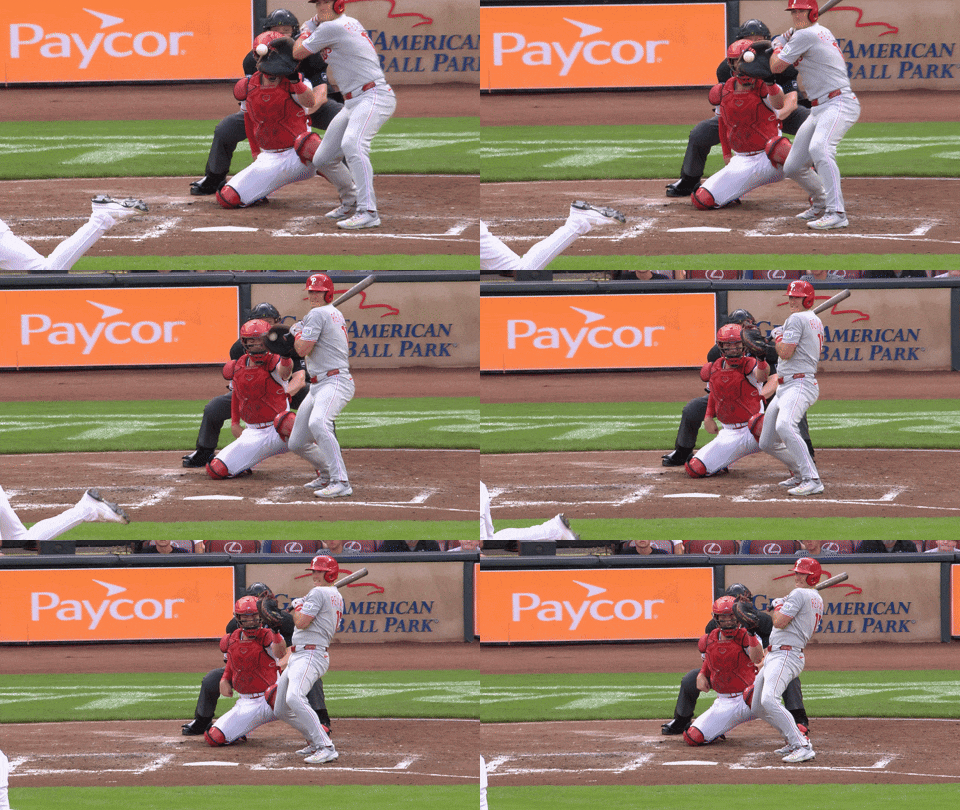
When the first slow-motion replay came in, everything started to make a little more sense:
Realmuto wasn’t hit by the pitch; his bat was. It’s an easy overturn. Why didn’t anyone notice? Well, Stephenson had his eyes closed and his glove blocked Torres’ view of the butt of Realmuto’s bat. No one noticed the deflection right away either; after all, Stephenson stuck up his glove trying to catch it and the ball landed in the mitt.
The replay review was short and conclusive. The call on the field was overturned; instead of a hit-by-pitch, it was a foul ball. Only, that’s not quite right – there were two strikes. The ball landed in Stephenson’s mitt after making contact with the bat. That’s a textbook foul tip strikeout. Instead of strolling to first base, Realmuto trudged back to the dugout.
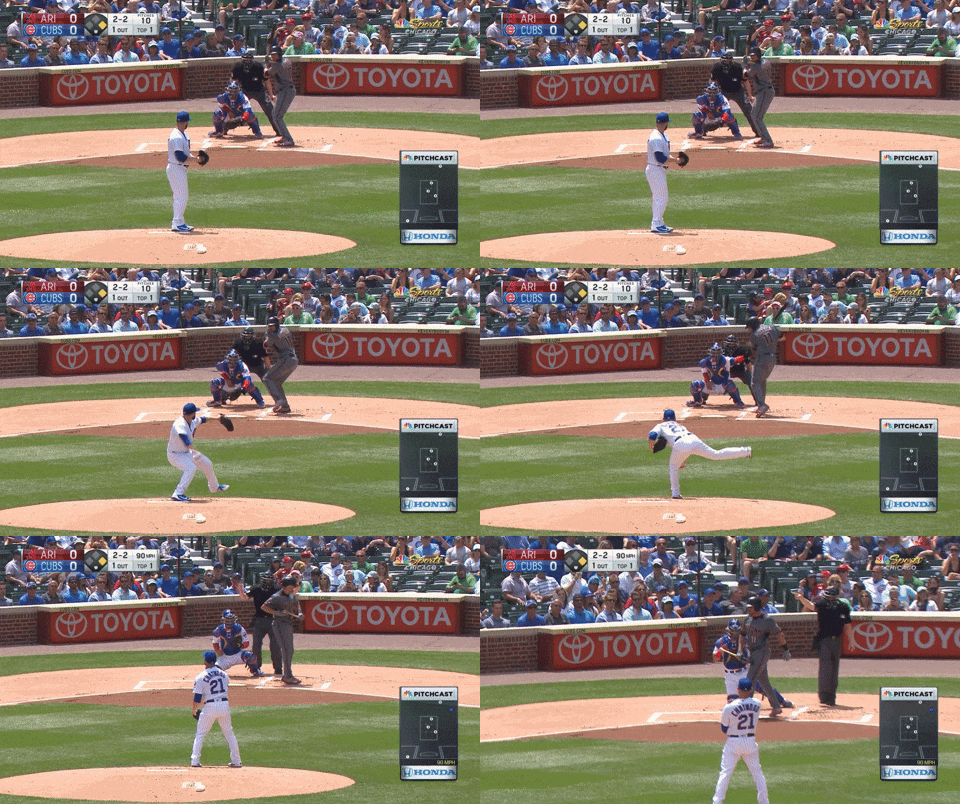
There have only been five other HBP-to-strikeout overturns in the replay review era. I watched video of all of them. The one this week was the strangest. Here’s AJ Pollock getting “hit” by Tyler Chatwood in the first one I found:
See the umpire’s quick and decisive reaction? That’s normal. Call a dead ball, determine what happened, point to first to signal a hit-by-pitch – it’s standard operating procedure. Torres didn’t even call a dead ball, because he didn’t realize he needed to.
In fact, I think Realmuto might have inadvertently done this to himself. It’s feasible that if he didn’t say anything to Torres, that would have just been a ball. No one saw the ball deflect off the bat in real time, and it was such a glancing blow that no one seemed to hear it. You can tell because of their reactions; Torres doesn’t call the ball dead right away and Stephenson definitely has no idea what’s going on. Also? Change this rule! That has to be one of the hardest-luck strikeouts of all time.
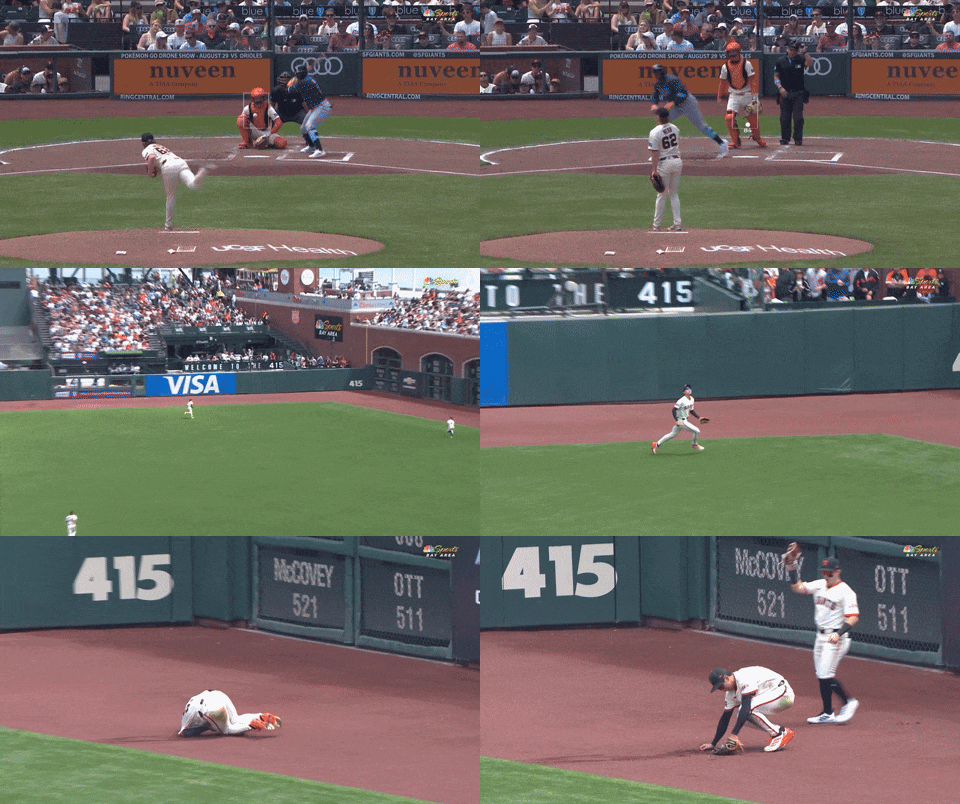
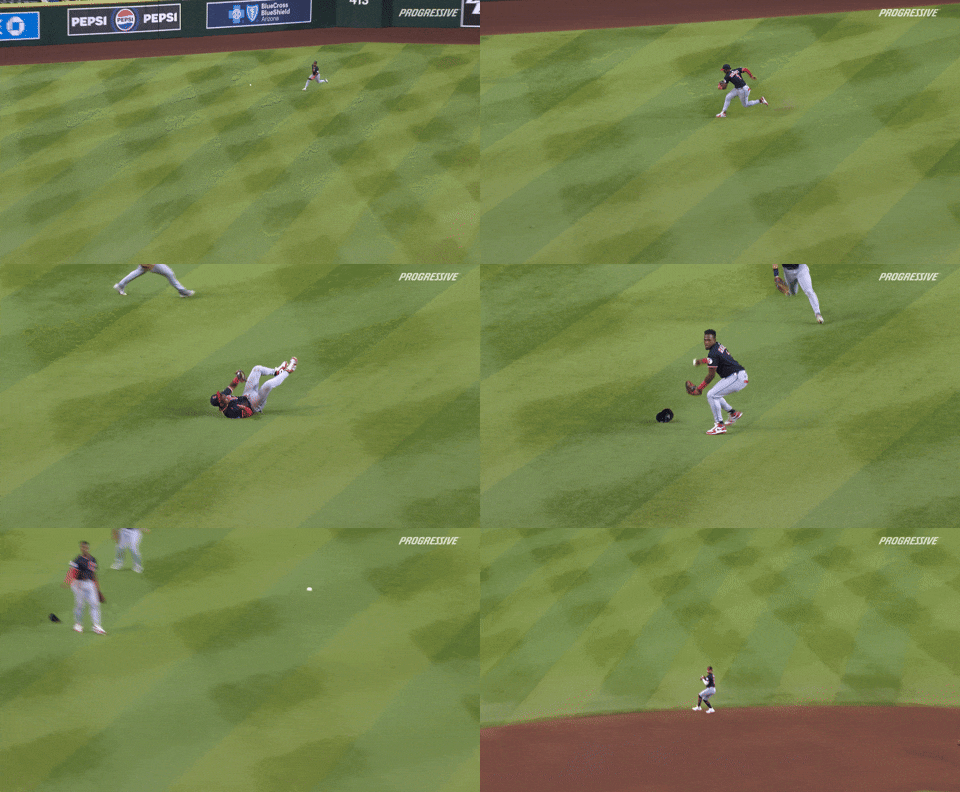
2. Coordination Jung Hoo Lee’s second year in San Francisco has gone much better than his first. He’s healthy, for one thing: After an injury limited him to just 158 plate appearances in 2024, he’s been active for the entire season and has already crested 500 plate appearances this year. He’s improved across the board offensively, flashing gap-to-gap power and consistently working counts and avoiding strikeouts. It’s been more of a struggle defensively, where he’s been somewhere between blah (per OAA) and quite poor (per DRS and Baseball Prospectus’ DRP). It’s tough having your fielding compared to the ridiculous monsters who roam center these days. But how many of them can do this?
What’s that, you say? That was a standard play, catch probability 99%? The wind looked a little swirly, which made it slightly more difficult, but you’re not wrong. Lee took a meandering route to the ball and still had time to flatten his route and more or less come to a complete stop to judge the wind; he probably could have caught it standing up if he’d gotten a better read initially. That’s all true! But wait for the reveal:
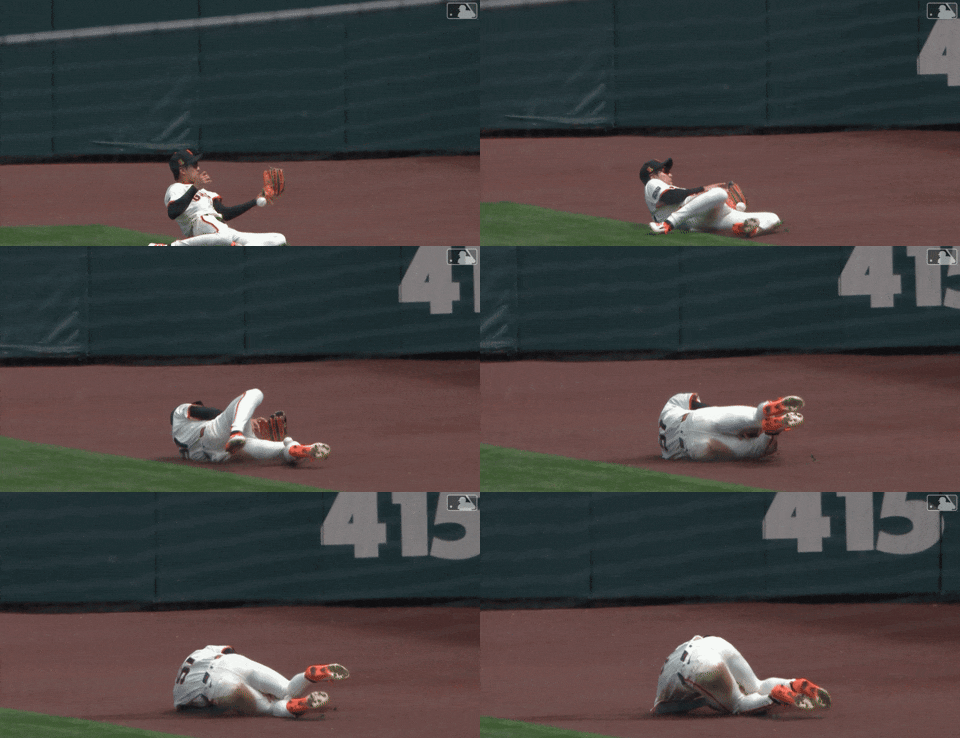
It’s like a magic trick, pulling a coin out from behind a kindergartener’s ear only in baseball form. Oh, you’d expect the ball to be in my glove? No, of course it’s somewhere else. See, the ball actually kicked out of Lee’s glove, but he made a spectacular instinctual adjustment:
Lee’s right leg made that entire play. He lunged and missed with his hand, the normal thing you’d use to catch a baseball. For most players, that would be the end of the play. But Lee somehow flipped his hips to get in position, drove his right knee past the ball without bumping it away, and then pincered it into the hollow between his knees to protect it from falling to the ground.
Don’t try this at home. I say that out of personal experience – my dog looked at me funny for about five minutes while I tried to replicate it on my living room floor. There’s no practicing or teaching this. No one works on it in spring training. For nearly every outfielder in baseball, the play would have been over after it kicked out of their glove. Lee might be a below-average outfielder when you take the sum of his defensive contributions into consideration. His coordination and ability to make last-minute adjustments, though? It’s certifiably excellent.
3. Necessity Ryan O’Hearn doesn’t face lefties. In his entire Orioles career – 1,223 plate appearances – he faced only 137 lefties. It’s no secret why: He posted an 89 wRC+ against them, as compared to a 126 wRC+ against righties. That’s a huge platoon split, more than double the major league average for lefties. The O’s had a surfeit of righty platoon options, and even this year, when O’Hearn put up his best season yet, they generally didn’t let him face lefties, and he hit poorly against them when he did get the chance.
In theory, the Padres are similarly capable of sheltering O’Hearn. They’ve only given him six plate appearances against lefties, and they’ve pretty much all been out of necessity rather than desire. Your bench isn’t always as full as you’d like, the other team can sneak in lefty relievers at almost any time late in the game, and no hitter avoids facing lefties altogether. In fact, the Padres have given him those opportunities at about the same rate as the O’s. But let’s just say he’s not hitting southpaws quite so poorly with San Diego:
That’s 4-5 with a walk, and all four hits have gone for extra bases. It’s far too small of a sample to make substantive conclusions, of course, but O’Hearn has already socked as many homers against lefties in a Padres uniform as he did in Baltimore, where he played for 20 times as long.
The last one, a two-run blast against All-Star Robbie Ray, came after Mike Shildt pinch-hit with O’Hearn against a lefty. It wasn’t exactly a normal decision – Jake Cronenworth was hit in the hand in his previous plate appearance, and while he played the field afterwards, he didn’t appear to be capable of swinging a bat. Since the Padres had already juiced their lineup with righties against Ray, the only bench hitter with a platoon advantage was Elias Díaz, and your light-hitting backup catcher isn’t a real pinch-hitting option. O’Hearn was the logical play even if “pinch-hit with the guy we never let face lefties against a dominant lefty” isn’t normally a good decision.
So, is O’Hearn suddenly a lefty killer? I don’t think so, but I definitely hope so. The Padres are going to run into many more chances to either let O’Hearn hit against a lefty or replace him with an inferior hitter (Jose Iglesias? Bryce Johnson?) who stands on the other side of the plate. Previously, the decision has rarely been interesting – get the righty in there. In the last 20 days, though, O’Hearn is making it hard to pull him from the game. Yes, it’s six plate appearances. Sure, that’s not how sample sizes work. But since coming to the Padres, he’s slashing .800/.833/2.400 against lefties. Can you really turn that down in favor of Candelita? It’s gonna be a great subplot to watch down the stretch.
4. Thievery Alejandro Kirk doesn’t steal bases. In his entire minor league career, he swiped five bags, all in 2018 and 2019. He’s never so much as attempted one at the major league level. He’s listed at 5-foot-8 and 245 pounds, kind of the reverse of a prototypical base stealing frame. His 24.2 ft/sec sprint speed is in the second percentile league-wide. Could you, personally, beat Alejandro Kirk in a footrace? Probably not, but it’s at least closer than it would be for pretty much every other major leaguer.
Anyway, here’s Alejandro Kirk stealing a base:
This play was a perfect storm of pro-stealing factors. With only one out and a runner on third in a one-run game, the Rangers infield was all the way in. That meant Jake Burger couldn’t hold Kirk on first base because he was off the line and on the grass. It wasn’t a big deal, though. Is there a runner less important to hold on than the guy with 2,000 plate appearances and zero stolen base attempts? Meanwhile, with Daulton Varsho on third base, Kyle Higashioka had no interest in throwing down to second and letting Varsho maraud home. The Rangers knew there was no throw coming to second. Look at their positioning with the ball already in Higashioka’s glove:
In other words, they were more or less daring Kirk to go. Why wouldn’t they? Kirk batted 1,946 times before attempting his first steal. Second place in the majors for most plate appearances without attempting one? Spencer Horwitz with 723. The post-integration record for career plate appearances without a stolen base attempt is 2,224, by Johnny Estrada from 2001-2008. Very few batters reach 1,000 plate appearances without trying to steal at least once. Kirk was a true standout in his field of standing around.
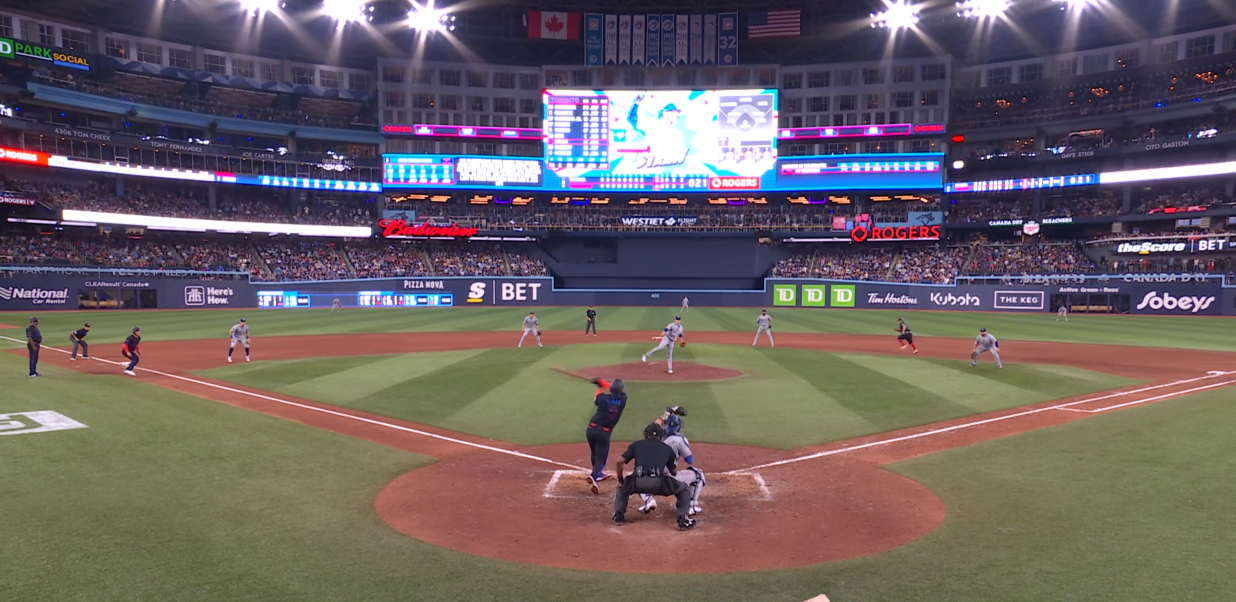
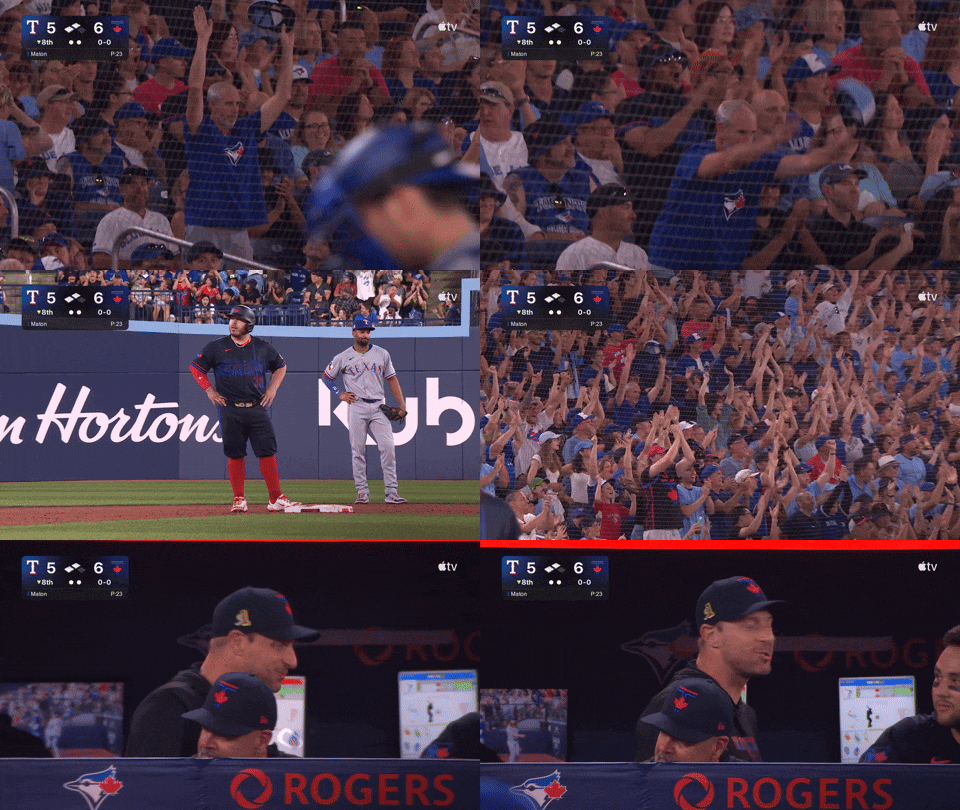
Now he’s got a swipe in his back pocket. Estrada’s record is safe; the odds of Horwitz getting to that milestone are negligible. He’s not even a catcher! But more importantly, Kirk is on the board. He tried to act casual after stealing the base, but the crowd wouldn’t let it go (the Jays posted that it was his first career stolen base on the scoreboard). You know you’ve done something fun when you get Max Scherzer to react like this:
5. Pratfalls With Happy Endings
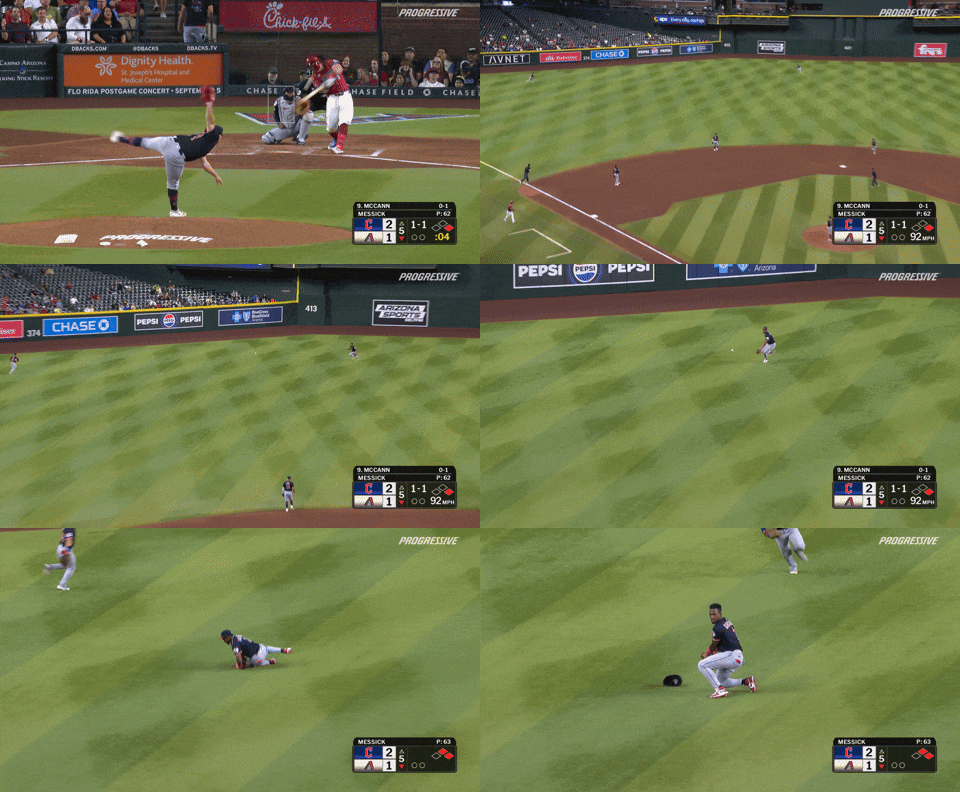
If your only understanding of outfield defense came from this column, you might think that falling over was a key part of the job:
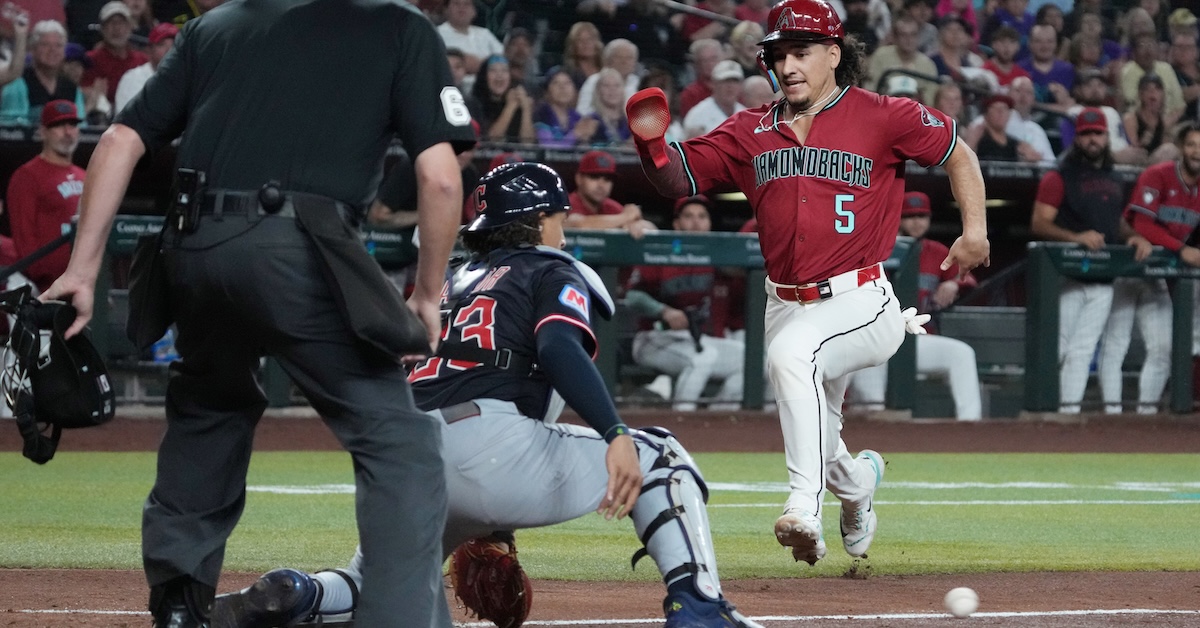
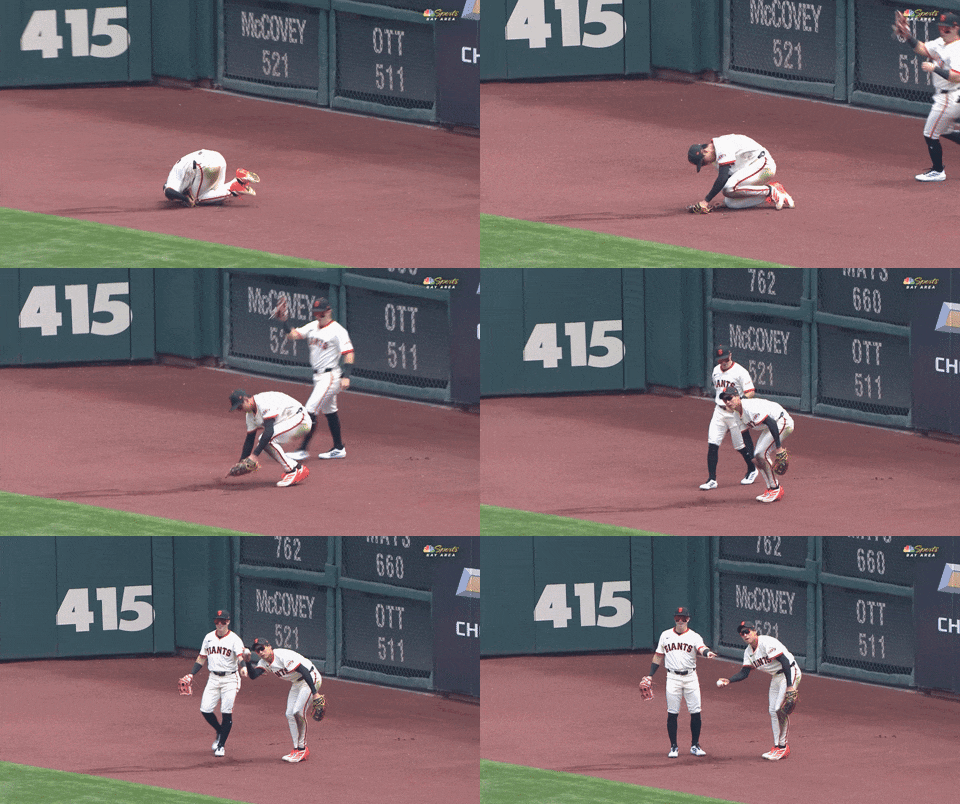
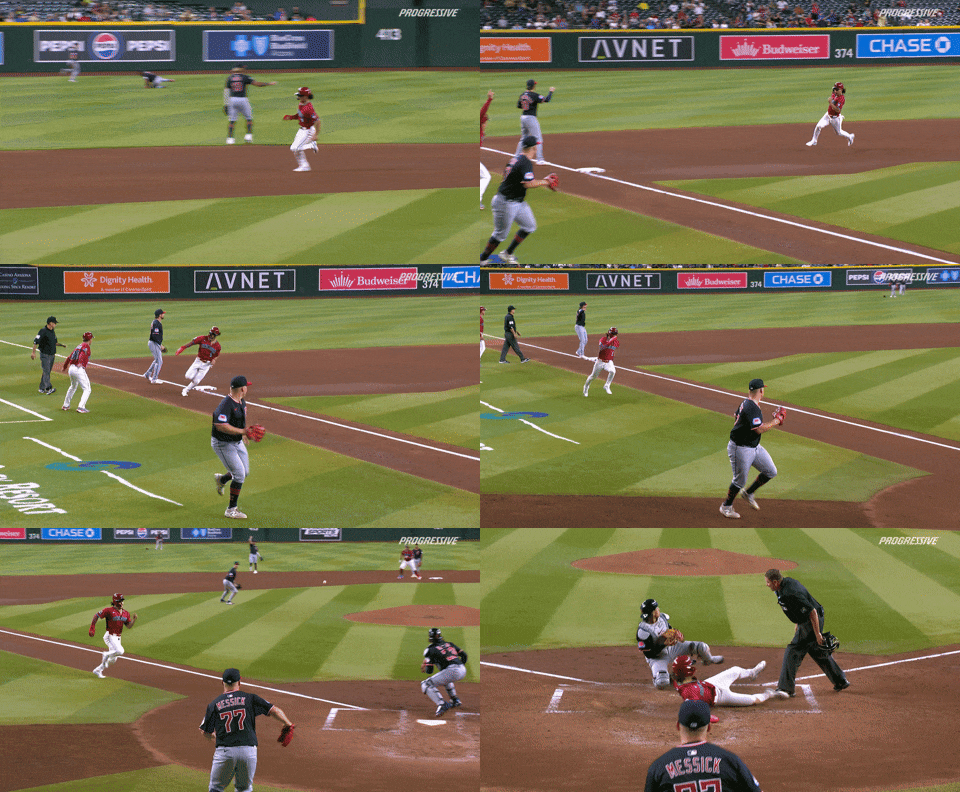
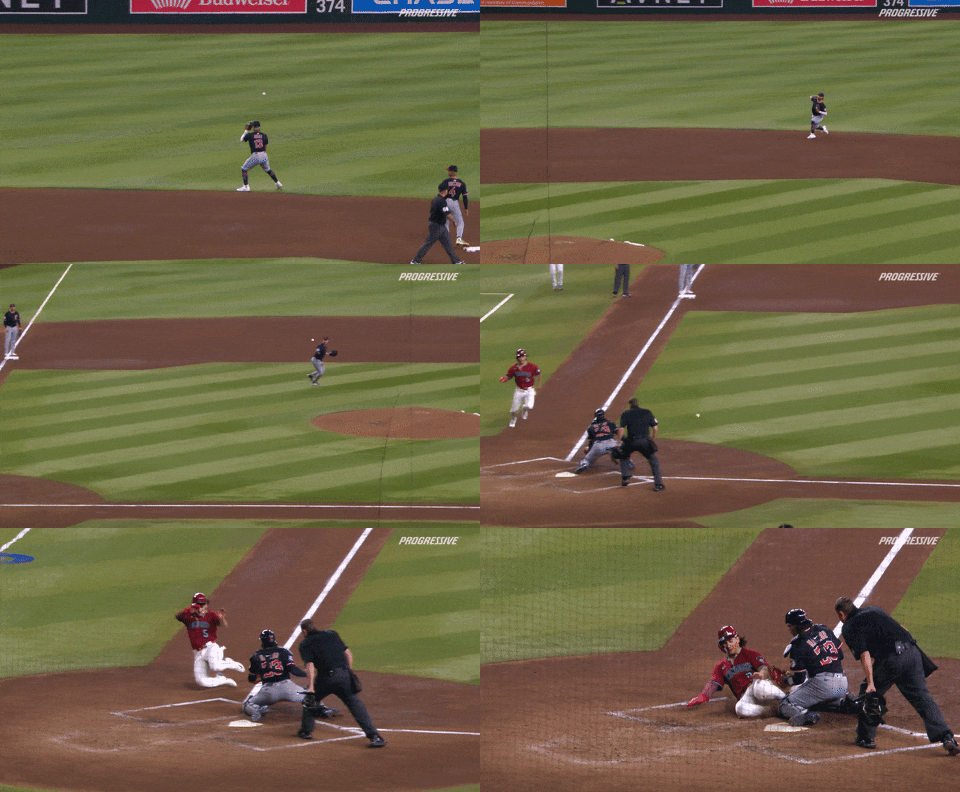
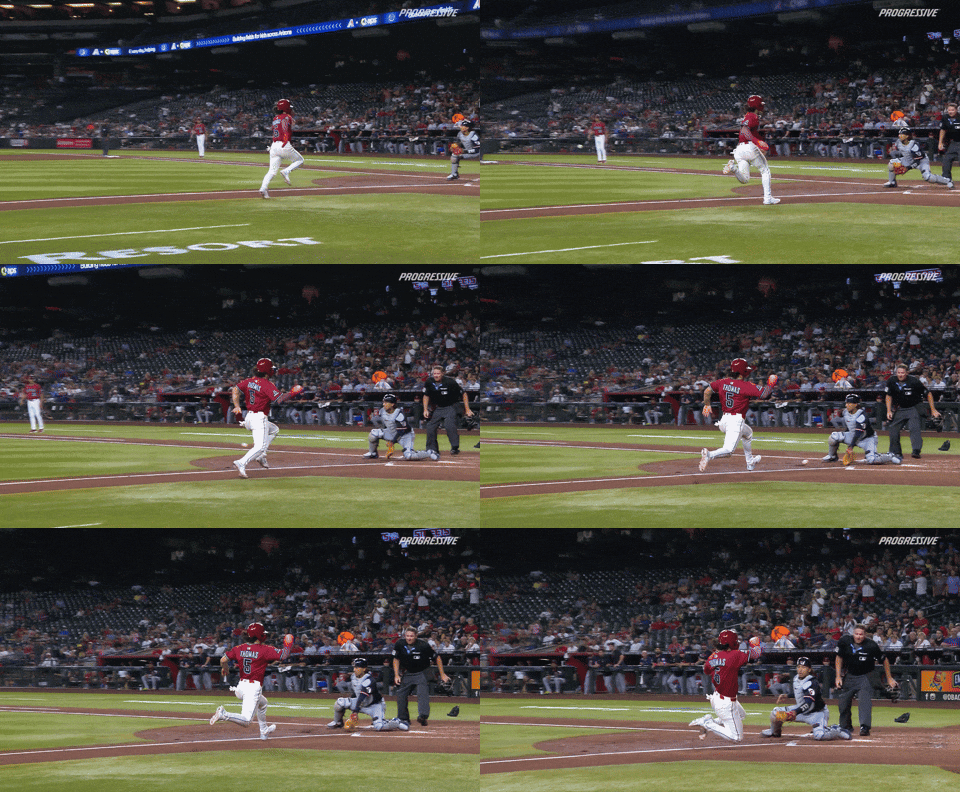
Sorry for the camera angle; it’s all both broadcasts had. But in any case, what a disaster. You can’t fall down there. That’s Alek Freaking Thomas on the basepaths. He’s maniacally aggressive and has the speed to make it work; he’s 10 runs above average on the basepaths in his career even without taking stolen bases (he’s not a great base stealer) into account. He was on his horse right away and had eyes on home plate. Watch Thomas clock what’s going on in center, pick up third base coach Shaun Larkin waving him on, and book it home:
Wait, what? He got thrown out?!? Yeah, and by a lot, as it turns out. See, Angel Martínez fell, but it was fairly graceful as falls go. He didn’t lose the ball, didn’t panic, and was back on his feet quickly to toss in the relay. It took him about a second-and-a-half to recover, which isn’t great, but it’s a lot better than staying down or losing his grip:
That was a decent relay throw, perfectly on line but without a ton of vigor. Martínez has a cannon arm, but he didn’t show it off there; he was just thinking of getting the ball to the infield. When Gabriel Arias received the throw, though, he had maximum effort on his mind. Arias has an incredibly strong throwing arm, too. He knew there was going to be a play at the plate. He received the relay throw while already stepping into a throw home:
Don’t overlook Bo Naylor’s role in that play. The throw beat Thomas by plenty, but it reached Naylor on a short hop. Without perfect concentration, that ball would probably skip away. It hit so close to Naylor that he had to make a first-base-style scoop:
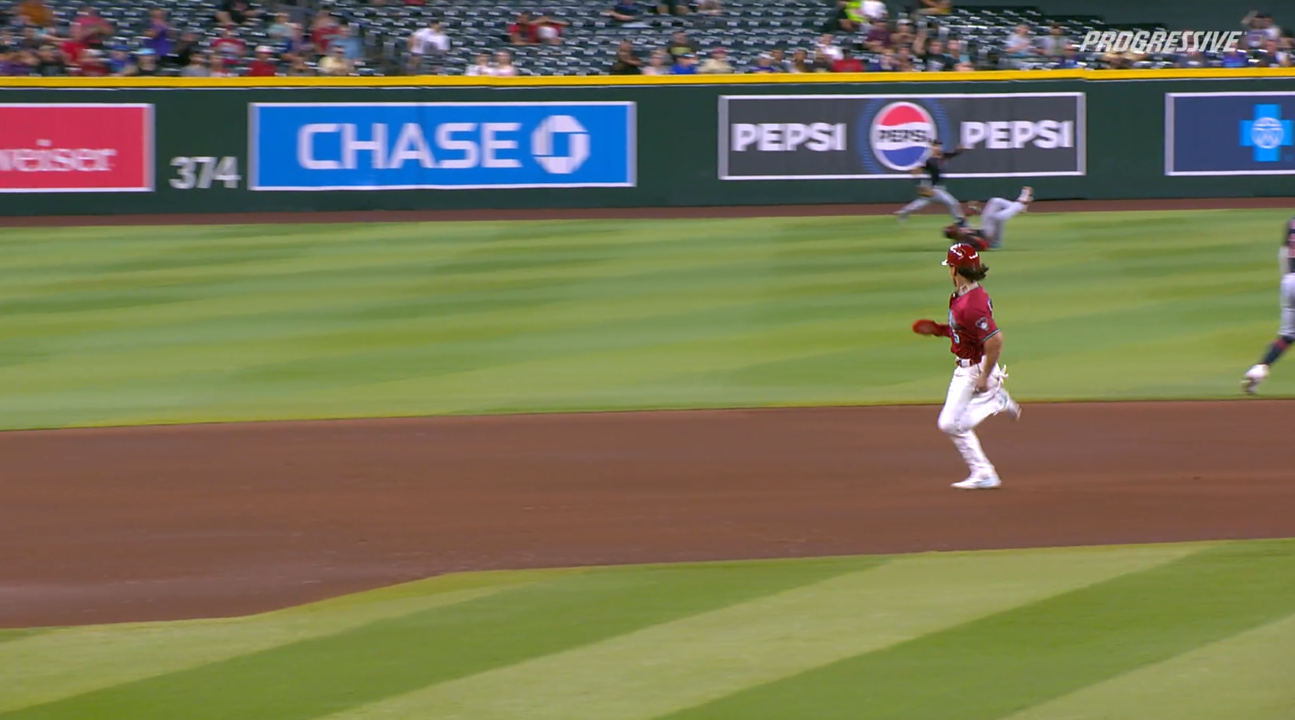
Meanwhile, though, even with an outfielder falling down and then feathering in a relay throw instead of ripping one, Thomas was out by quite a bit. I think I can show you what went wrong. Here’s Thomas with Martínez sprawled out in the outfield:
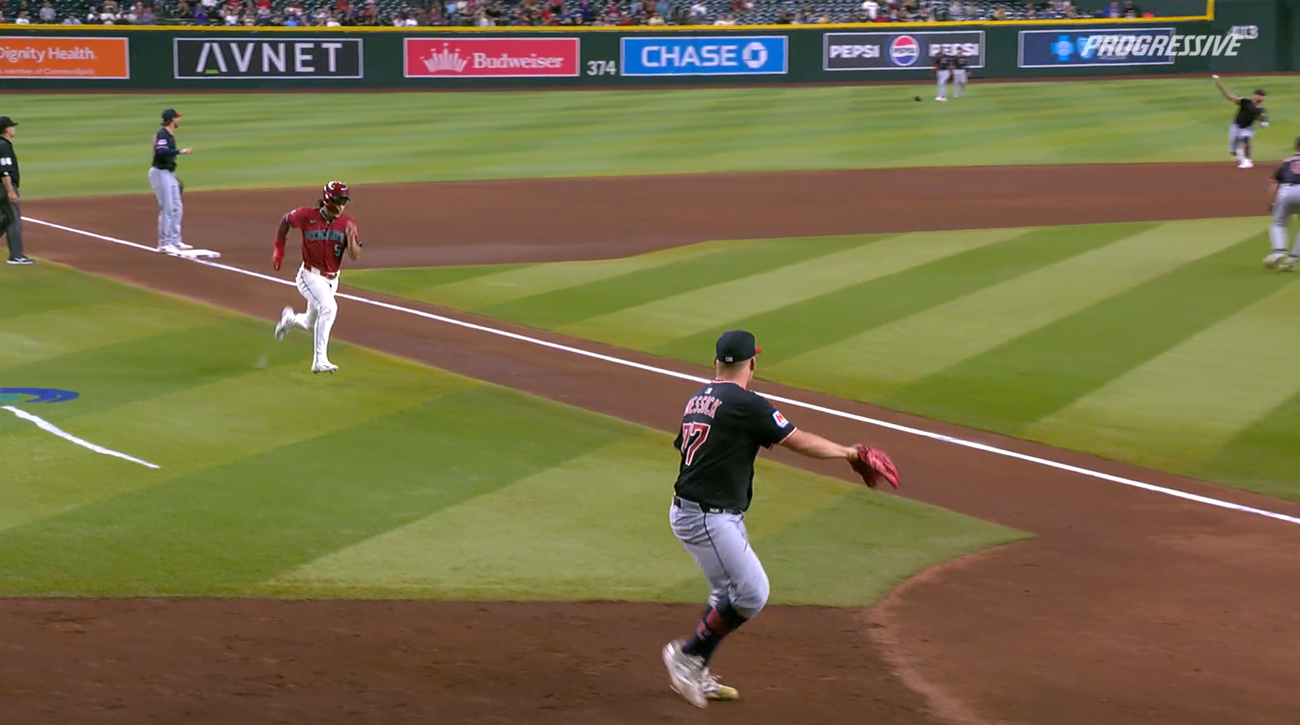
He’s nowhere near third base. Forget how hard Arias threw the ball on his relay; there aren’t many players who are making it home safely from this position:
The play wasn’t in front of Thomas; he noticed that Martínez fell, but he had to turn his head to run at maximum speed after that. But the timing just wasn’t right for even a fast runner to score. Martínez was throwing the ball in before Thomas reached third base. Arias was releasing it from shortstop before he was halfway home. Major league fielders are great. This just wasn’t a safe time to score, even after Martínez’s stumble.
It’s perhaps not a coincidence that Shaun Larkin isn’t coaching third base for the Diamondbacks anymore. Manager Torey Lovullo removed him after this very game, in fact. It was a straw-that-broke-the-camel’s-back situation, but I think it’s emblematic of how hard it is to wrap your head around just how athletic major leaguers are. Angel Martínez was on his back in the outfield, and then he made a natural-looking, low-effort move and just wasn’t. He didn’t have to make a hero throw. He didn’t have to try to whip it home on the fly to make up for his stumble. He just kept his head about him and let his natural coordination plus his team’s competence make up for the trip. Martínez has been quite bad in the outfield this year. He’s a shortstop by trade and hasn’t adapted to the broad expanses of grass all that cleanly. But making an athletic, tumbling play, and having the rest of the Guardians turn it into an out? He looks pretty good doing that.
Bryan Woo is due to start this evening against the Athletics in Seattle. I expect he’ll go six innings. Why? Because he’s gone at least six innings in all 24 of his starts this season. Woo’s streak, as you’ve probably guessed, is the longest in baseball by some distance. Only two other active pitchers — Cristopher Sánchez and Spencer Schwellenbach — have gone six or more in their 10 most recent starts. (Schwellenbach will keep that streak going through the end of the year, having fractured his elbow in June.)
The fact that Woo has completed six innings every time he’s taken the mound this year is self-evident proof that he’s been consistent. But at the same time, this yearlong run of metronomity has not been interrupted by bursts of transcendence. He’s only recorded one out in the eighth inning all season. He hasn’t posted back-to-back scoreless starts since June of last year, and he’s still looking for the first double-digit strikeout game of his entire major league career.
On April 12, Woo allowed one run across seven innings in a 9-2 win over the Rangers, lowering his ERA to 2.84. Ever since then, his ERA has always been within half a run in either direction of 3.00. It hasn’t been more than a quarter of a run from 3.00 since the second week of June. The man is a machine. Read the rest of this entry »
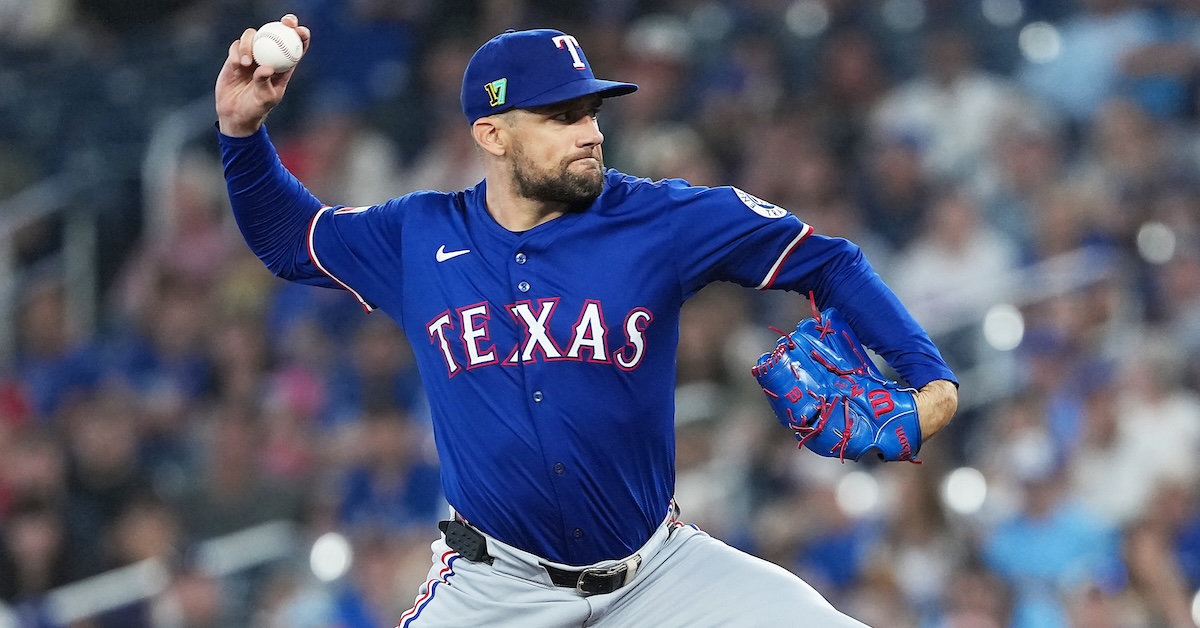
Nathan Eovaldi is flying under the radar. Unless you’re particularly attuned to the Rangers’ battle to get back to .500 — they’re 63-65 after a recent 1-8 skid — or doing more than a casual perusal of our leaderboards, you might miss that the 35-year-old righty is carrying a 1.76 ERA into the final third of August. A bout of elbow inflammation that sidelined him for a month has left him just short qualifying for the American League lead, but even so, he’s in the midst of one of the best seasons of his career.
It’s an unlikely, out-of-nowhere season, at that. Eovaldi has e(o)volved a great deal since he debuted with the Dodgers in 2011, but even in the second, more successful leg of his career — the years since his 2017 Tommy John surgery (his second), during which he’s won a pair of World Series rings and made two All-Star teams — he’s never posted a full-season ERA lower than 3.63 (2023 with the Rangers) or an ERA- lower than 82 (2021 with the Red Sox). From 2018–24, he put up a 3.94 ERA (91 ERA-) for the Rays, Red Sox, and Rangers, including a 3.80 mark for Texas last year, which was right at the park-adjusted league average (100 ERA-). That recent work led the Rangers to re-sign him to a three-year, $75 million deal this past winter.
Eovaldi has been on this particular run for a while. After his six-inning, two-run effort against the Red Sox on Opening Day, the highest his ERA has been at any point (setting aside in-game fluctuations) was 2.64, on April 19. Beginning with his next start on April 25 against the Giants and running through his turn on August 5 again the Yankees, he put up an 0.90 ERA and a 2.16 FIP while allowing just 52 hits in 80.1 innings. That stretch probably would have garnered more attention had he not departed his May 27 start after two innings due to what was initially described as right triceps fatigue and later diagnosed as posterior elbow inflammation. He didn’t pitch in the majors again until June 27, when he allowed three runs in three innings against the Mariners, the only time during that 3 1/2-month span in which he allowed more than one run. Read the rest of this entry »
We thought we knew what to expect from Maikel Garcia. Coming into his third full season in the majors, the Royals third baseman had a career wRC+ of 77, but thanks to his 17 OAA, he’d put up 3.4 WAR. That added up to a story as old as time – or at least as old as Ke’Bryan Hayes – a good-not-great, all-glove everyday third baseman. This season, Garcia is blowing up that narrative.
Garcia came up as a shortstop, but with Bobby Witt Jr. set to lock that position down for the next decade or two, he quickly settled in as one of the best defensive third basemen in the game. As for the bat, well, he didn’t chase, he made tons of contact, and he hit the ball hard. He just couldn’t get it in the air. A total of 303 batters made at least 1,000 plate appearances between 2021 and 2024. Garcia’s 45.7% hard-hit rate ranked 60th among them, but his average launch angle of 6.2 degrees ranked 285th. As a result, his .344 slugging percentage ranked 293rd. The package worked, especially after Garcia became one of the best baserunners in the game in 2024, but it was hard to look at him without fixating on that one big thing he couldn’t seem to do.
Hayes is just three years older than Garcia, but after spending so much time waiting for him to start lifting the ball, maybe it was a little too easy to write off Garcia’s offensive potential too. The high groundball rate wasn’t his only flaw. Garcia didn’t just have a low chase rate; he was one of the most passive players in all of baseball. With little fear that he’d swing at all, much less somehow turn a groundball into a home run, pitchers absolutely pounded the zone, racking up called strikes and keeping Garcia from turning all that patience into walks. Then 2025 happened. Read the rest of this entry »
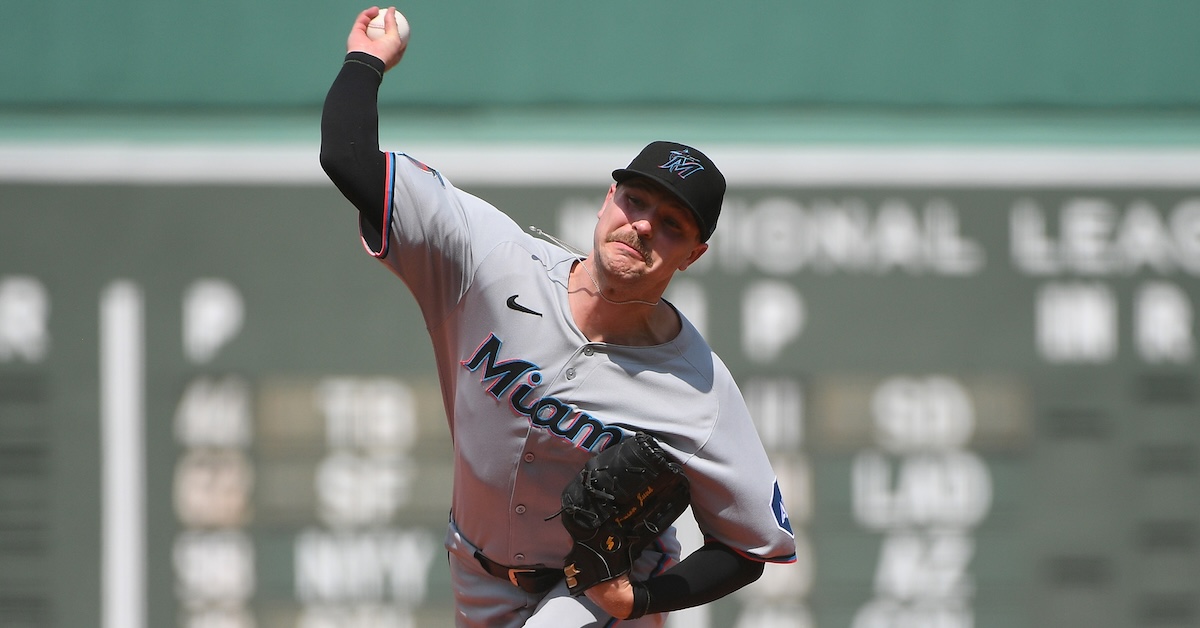
Janson Junk is making the most of his opportunity in Miami. Inked to a minor league contract by the Marlins in February, the 29-year-old right-hander joined the big league club in late May and has since gone 6-2 with a 4.04 ERA and a 3.08 FIP over 82 1/3 innings. And while his 17.5% strikeout rate is rather pedestrian, it is accompanied by a 2.7% walk rate — the lowest among major league hurlers who have tossed at least 60 frames. Indeed, pounding the zone has become Junk’s M.O.
Not bad for someone whose track record is that of a well-traveled pitcher who’d done little to impress at baseball’s highest level. Prior to being signed off the scrap heap by the Marlins, Junk had logged a 6.75 ERA over 40 innings while toeing the rubber for the Los Angeles Angels, Milwaukee Brewers, and Oakland Athletics across the 2021-2024 seasons. Before then, he spent parts of five years and four seasons (because there was no minor league baseball in 2020) in the Yankees’ system. New York selected him out of the University of Seattle (where his teammates included Tarik Skubal) in the 22nd round of the 2017 draft.
Junk entered my radar in 2021 when he was pitching with the Yankees’ Double-A affiliate, the Somerset Patriots. That summer, Junk appeared as guest, along with big league veteran Clayton Richard, in a pitching-nerd episode of FanGraphs Audio. With that conversation in mind, I made it a point to catch up with Junk when the Marlins visited Fenway Park last weekend.
I began by asking Junk a question that has led to interesting conversations with other hurlers when we’ve talked later in seasons: What is the worst pitch you’ve thrown this year? Read the rest of this entry »
I thought the Astros made a nifty pickup at the deadline by sneaking Jesús Sánchezthrough the door while everyone was paying attention to theCarlos Correa trade. Sánchez is by no means a transformative player, but he fixes a platoon imbalance in Houston’s outfield and he can theoretically play center field. At least he can stand out there for nine innings without maiming himself.
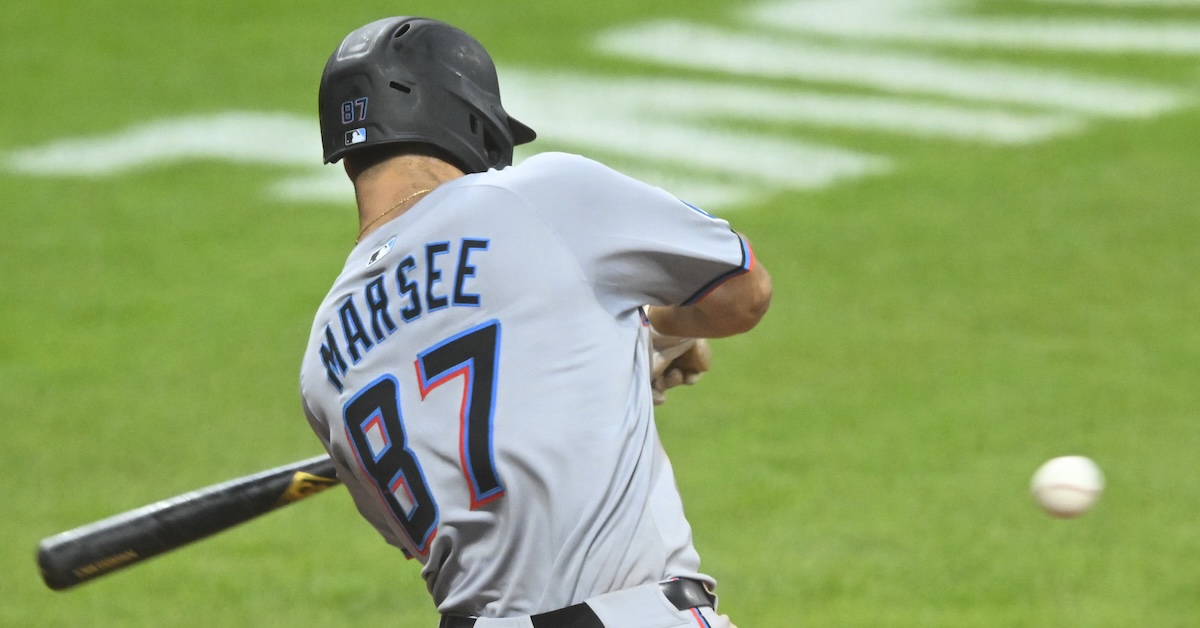
But apparently the Marlins are the real winners in that deal. Sánchez has had a slow start in Houston, but I have faith that he’ll come around eventually. Either way, that’s not especially relevant. By moving this perfectly fine outfielder out of the way, Miami has made room for 24-year-old Jakob Marsee. Never heard of him? I don’t blame you. But since the deadline, he’s been the best position player in baseball. Read the rest of this entry »
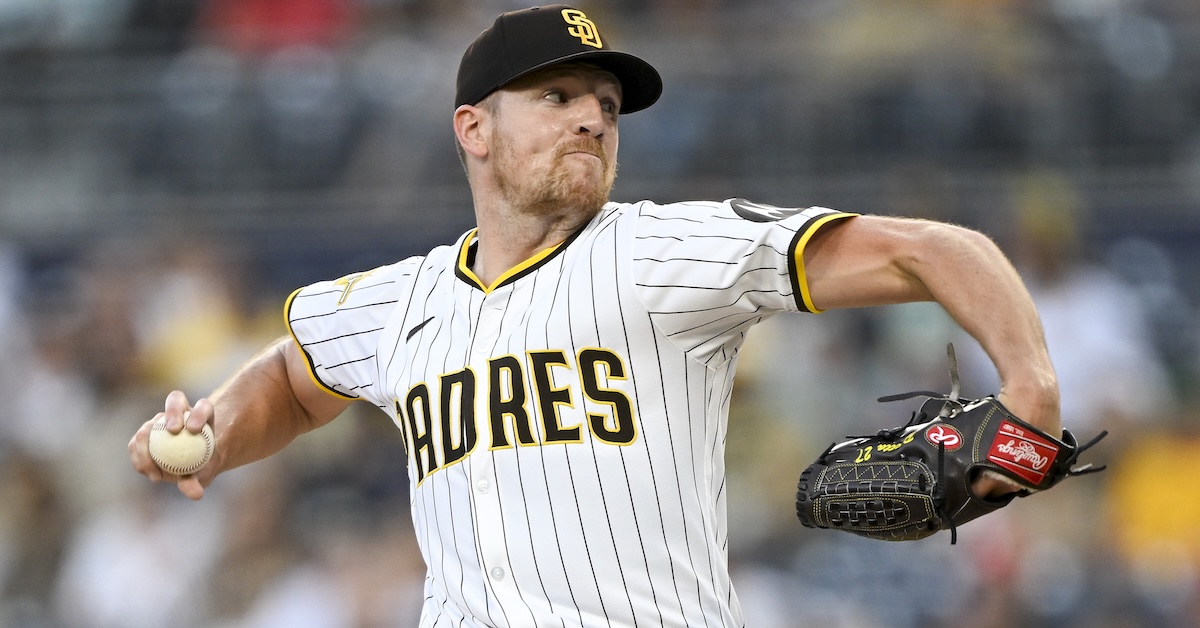
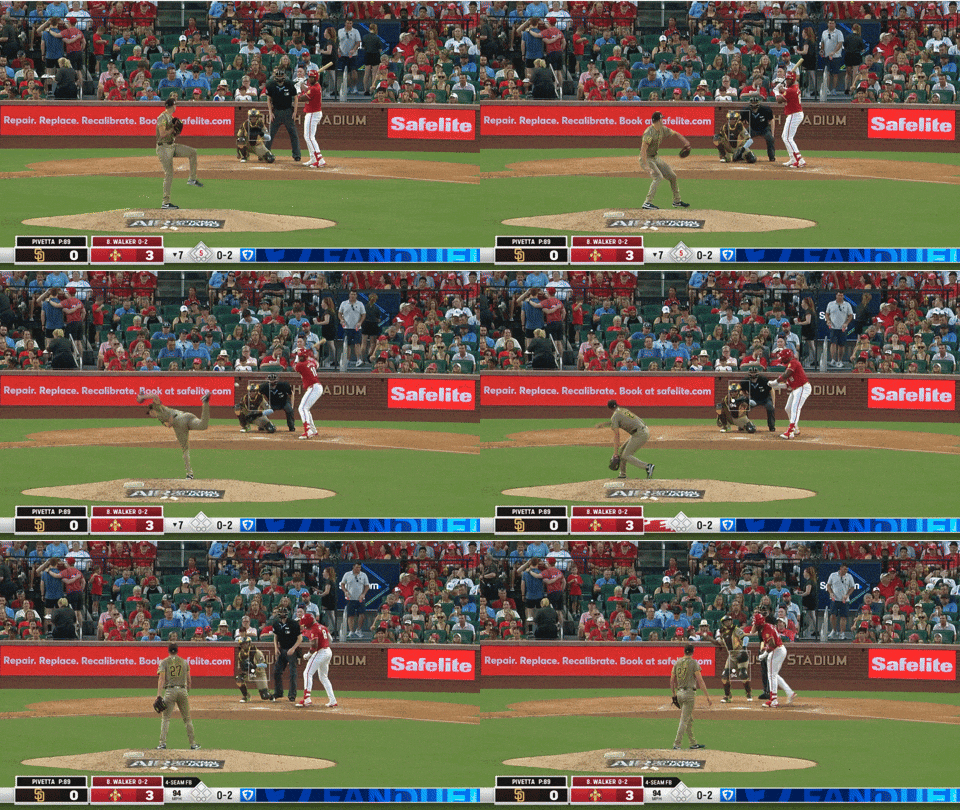
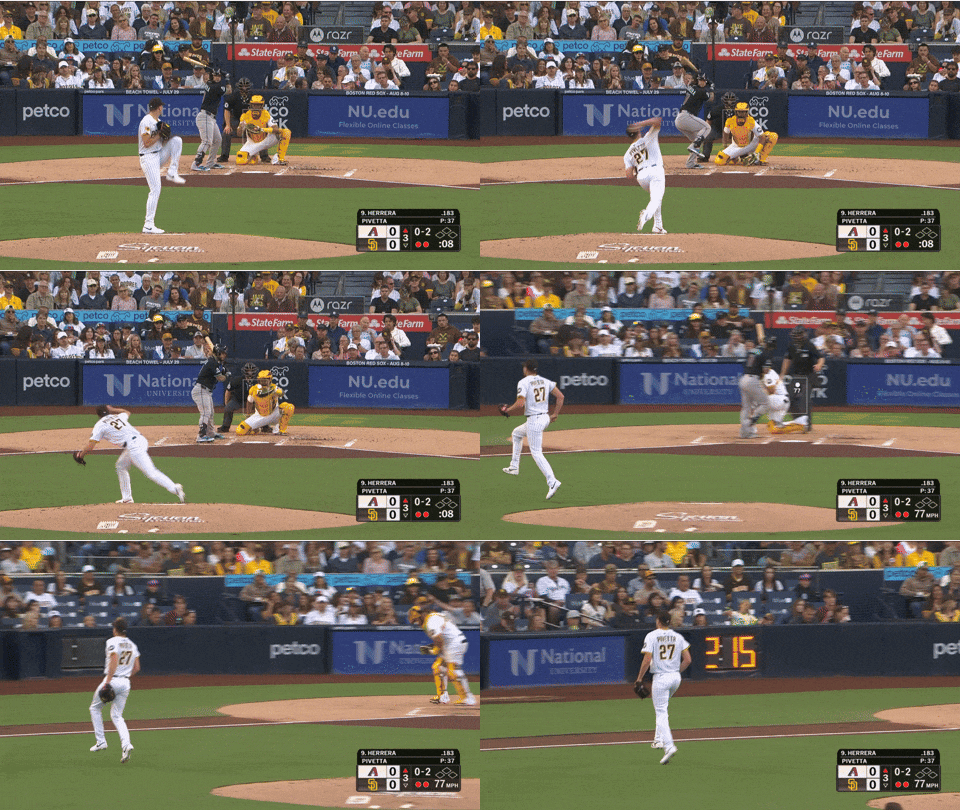
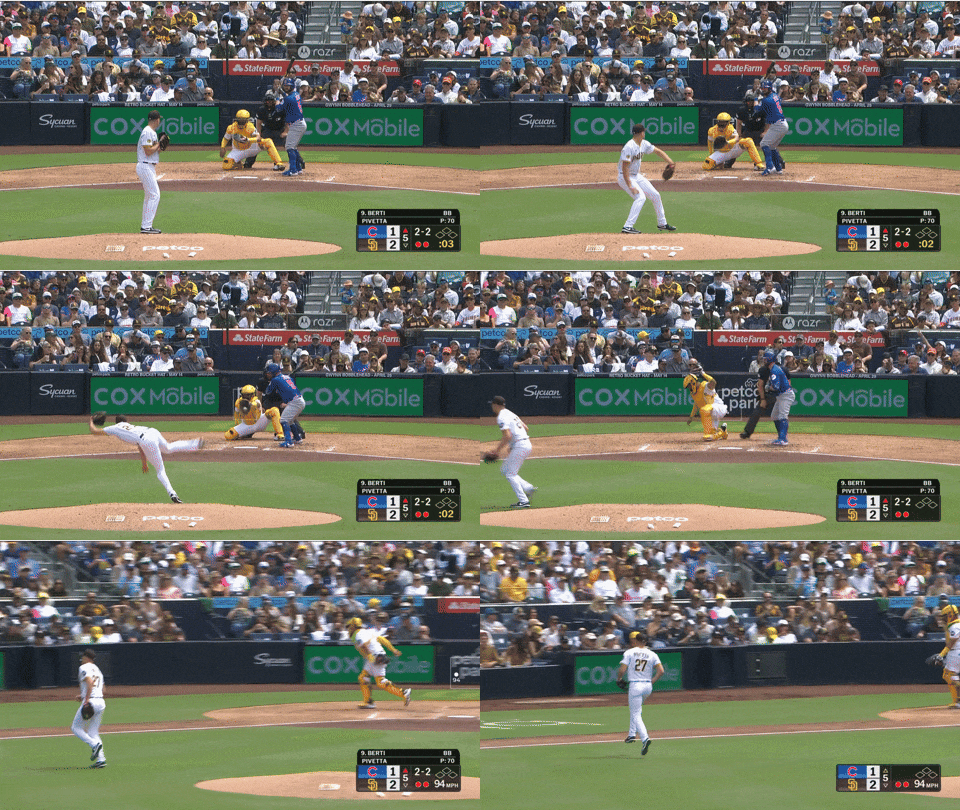
You might wonder why all of his signature pitches are tossed down the middle for called strikeouts. That’s because Pivetta is the league leader in a statistic I didn’t know I loved until I looked it up: called strikeouts on pitches right down the pipe. He’s the 2025 leader. He’s the leader over the past five years, in fact. Keep your reality-distorting sweepers and letter-high four-seamers; Pivetta gets the job done more simply.
This feels like an impossible skill to cultivate. You hear all the time about pitchers going into a lab somewhere and adding velocity or spin. New pitches? They’re a dime a dozen these days. A starter who hasn’t added a sweeper and cutter sticks out like a sore thumb now that technology and training make it easier than ever to branch out. Every year, the sliders get slidier, the curveballs get curvier, and the fastballs get faster. Meanwhile, Pivetta throws 94-mph “heaters” down the middle for strike three. How?? Read the rest of this entry »
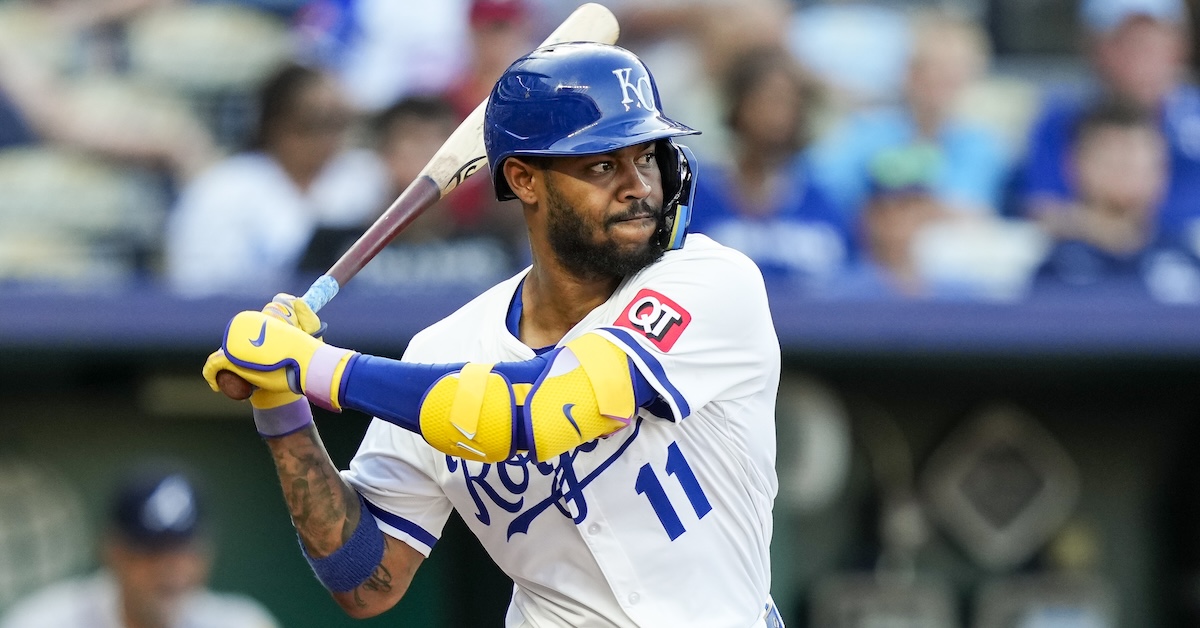
Jonathan India was highly regarded when our 2019 Cincinnati Reds Top Prospects list was published in December 2018. Drafted fifth overall out of the University of Florida earlier that summer, India was ranked fourth in the system, with Eric Longenhagen and Kiley McDaniel assigning him a 50 FV. Two months later, the reigning SEC Player of the Year came in at no. 75 in our Top 100.
He’s gone on to have a solid career. India made his major league debut on Opening Day 2021, proceeded to win Rookie of the Year honors, and he has since been a lineup mainstay in both Cincinnati and Kansas City. This past November, the Reds traded India to the Royals, along with Joey Wiemer, in exchange for Brady Singer. Assuming more of a super-utility role with his new team, India’s performance has taken a considerable step back. After putting up 2.9 WAR last year, he’s batting .237/.324/.352 with eight home runs, an 89 wRC+, and -0.3 WAR, though he’s been much better since the start of August (113 wRC+). Over four-plus big league seasons, India has 71 home run, a 104 wRC+, and 7.9 WAR.
What did his December 2018 FanGraphs scouting report look like? Moreover, what does he think about it all these years later? Wanting to find out, I shared some of what our former prospect-analyst duo wrote and asked India to respond to it.
———
“India was a well-known prep prospect in South Florida, but the combination of a solid, but not spectacular, tool set and seven-figure asking price sent him to Florida.”
“That would have been 2015, 10 years ago,” replied India, who spent his prep years at American Heritage School in Delray Beach. “I wasn’t mentally ready, I guess. I wanted to go to college, learn how to be on my own, learn how to be a man. So, it was really about personal development. There was no baseball involved. It was more that I wanted to grow up and enjoy college. Live life.”
“His first two years were about as expected; India got regular at-bats but didn’t have any performative breakthroughs. In his draft year, India lost bad weight and added some strength, made some offensive adjustments, and exploded, torching the best conference in the country.”Read the rest of this entry »
Kyle Tucker needs to learn how to manage expectations better. He’s having a good season on paper: .261/.374/.447 with 18 home runs. He has a 131 wRC+, more walks than strikeouts, and 25 stolen bases in 27 attempts. His WAR, 3.9, is a tenth behind Kyle Schwarber, who’s getting MVP chatter, and two tenths ahead of Juan Soto.
But right now, the Cubs star is really going through it, and nobody is happy.
Tucker is 2-for-25 in his past seven games and just 8-for-54 in August. He hasn’t hit a home run in 31 days, and most incredibly, his last extra-base hit of any kind came in July. Tucker is taking it about as well as you’d expect; on Sunday, he didn’t run out a groundball to first base, and on Monday he slammed his helmet into the ground in frustration after flying out to end the eighth inning of a 7-0 loss to Milwaukee. Both incidents drew boos from the Wrigley Field fans. Read the rest of this entry »