
JAWS and the 2024 Hall of Fame Ballot: Gary Sheffield
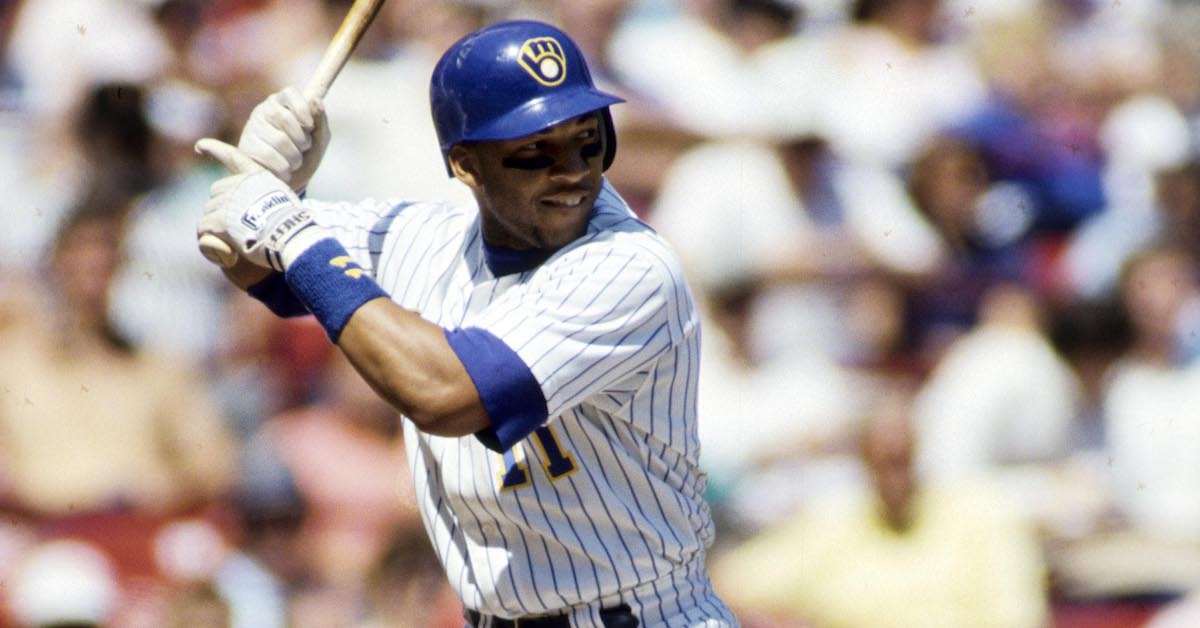
The following article is part of Jay Jaffe’s ongoing look at the candidates on the BBWAA 2024 Hall of Fame ballot. Originally written for the 2015 election at SI.com, it has been updated to reflect recent voting results as well as additional research. For a detailed introduction to this year’s ballot, and other candidates in the series, use the tool above; an introduction to JAWS can be found here. All WAR figures refer to the Baseball-Reference version unless otherwise indicated.
Wherever Gary Sheffield went, he made noise, both with his bat and his voice. For the better part of two decades, he ranked among the game’s most dangerous hitters, a slugger with a keen batting eye and a penchant for contact that belied his quick, violent swing. For even longer than that, he was one of the game’s most outspoken players, unafraid to speak up when he felt he was being wronged and unwilling to endure a situation that wasn’t to his liking. He was a polarizing player, and hardly one for the faint of heart.
At the plate, Sheffield was viscerally impressive like few others. With his bat twitching back and forth like the tail of a tiger waiting to pounce, he was pure menace in the batter’s box. He won a batting title, launched over 500 home runs — he had 14 seasons with at least 20 and eight with at least 30 — and put many a third base coach in peril with some of the most terrifying foul balls anyone has ever seen. For as violent as his swing may have been, it was hardly wild; not until his late 30s did he strike out more than 80 times in a season, and in his prime, he walked far more often than he struck out.
Bill James once referred to Sheffield as “an urban legend in his own mind.” Off the field, he found controversy before he ever reached the majors through his connection to his uncle, Dwight Gooden. He was drafted and developed by the Brewers, who had no idea how to handle such a volatile player and wound up doing far more harm than good. Small wonder then that from the time he was sent down midway through his rookie season after being accused of faking an injury, he was mistrustful of team management and wanted out. And when he wanted out — of Milwaukee, Los Angeles, or New York — he let everyone know it, and if a bridge had to burn, so be it; it was Festivus every day for Sheffield, who was always willing to air his grievances.
Later in his career, Sheffield became entangled in the BALCO performance enhancing drug scandal through his relationship with Barry Bonds — a relationship that by all accounts crumbled before he found himself in even deeper water. For all of the drama that surrounded Sheffield, and for all of his rage and outrageousness, he never burned out the way his uncle did, nor did he have trouble finding work.
Even in the context of the high-scoring era in which he played, Sheffield’s offensive numbers look to be Hall of Fame caliber, but voters have found plenty of reasons to overlook him, whether it’s his tangential connection to PEDs, his gift for finding controversy, his poor defensive metrics, or the crowd on the ballot. In his 2015 debut, he received just 11.7% of the vote, and over the next four years, he gained barely any ground. But from 2019 to ’21, he jumped from 13.6% to 30.5% to 40.6%, with the fifth-largest and third-largest gains on the ’20 and ’21 ballots. After repeating with the same percentage in 2022, he jumped to 55% in ’23, with the cycle’s fourth-largest gain. His share of the vote is now larger than any player who’s been linked to PEDs via BALCO, the Mitchell Report, or a suspension except for Bonds or Roger Clemens. Still, as he enters his final year of eligibility on the writers’ ballot, he’ll need a Larry Walker-like jump to get to 75%.
| Player | Career WAR | Peak WAR | JAWS |
|---|---|---|---|
| Gary Sheffield | 60.5 | 38.0 | 49.3 |
| Avg. HOF RF | 71.1 | 42.4 | 56.7 |
| H | HR | AVG/OBP/SLG | OPS+ |
| 2,689 | 509 | .292/.393/.514 | 140 |
Born in Tampa on November 18, 1968, Sheffield grew up in the Belmont Heights section of town, a baseball-rich area that from 1981 to ’90 produced seven first- or second-round draft picks, including Sheffield, Derek Bell, Carl Everett, Floyd Youmans, and, most notably, Gooden. Four years older than Sheffield, Gooden was more like a sibling than an uncle, regularly dragging his six-year-old nephew out of bed to face his already-searing fastball, either with the bat or the glove.
Playing for the Belmont Heights Little League All-Stars, Sheffield (along with Bell) was part of the 1980 team that advanced all the way to the finals of the Little League World Series before falling to Taiwan. Amazingly, a partial video of the finals is online; Sheffield started at catcher, batted third and, according to the chyron, entered the game hitting .600 in the tournament. In the condensed video below, he flies out to right field around the 17:30 mark, ropes a double down the left field line at the 43:15 mark, and scores on a Bell groundout after an aggressive tour around the bases.
Sheffield missed a chance to return to the Little League World Series the following year because he was “suspended for raising a bat to his coach during a disagreement,” according to a 2004 New York Times story by Jack Curry. “It took me years to get over that,” Sheffield recounted. “I made a mistake, but I paid the biggest price you could ever pay for it.” He went on to star at Hillsborough High, where he pitched — some scouts preferred his 90-mph fastball to his bat — and played third base. In 1986, he was named the Gatorade National Player of the Year, one of many future major league stars to win the award. The Brewers chose him with the sixth pick of that year’s draft, signing him for a $142,500 bonus. In the pages of Sports Illustrated, Peter Gammons noted in a 1989 profile that Sheffield used some of the money to have his initials inlaid in gold on his front teeth and buy a gold Mercedes.
As a 17-year-old, Sheffield tore up the rookie Pioneer League in 1986 (.365/.413/.640 with 15 homers and 14 steals in 57 games) and won both the league’s Player of the Year honors and Baseball America’s Short-Season Player of the Year prize. Trouble found him that winter, however, when he was arrested along with Gooden and three others. As the group was returning home from a University of South Florida basketball game, police officers stopped their cars for driving erratically; the confrontation soon turned physical, with Gooden — who by that point had collected Rookie of the Year and Cy Young awards as well as a World Series ring in his three big league seasons — “beaten to the ground with nightsticks and flashlights before being handcuffed and shackled,” according to The New York Times. Sheffield was charged with a pair of third-degree felonies for battery on a police officer and violently resisting arrest; he pleaded no contest and was given two years probation.
The incident began Gooden’s legal troubles — he would test positive for cocaine in spring training just a few months later — which spilled over to Sheffield, who was soon subjected to not-so-random drug testing. Beyond that, his baseball life returned to normal. At 18 in 1987, he earned spots on both the California League and Baseball America All-Star teams. At 19, he hit a combined .327/.395/.579 in hitter-friendly environments at Double-A El Paso and Triple-A Denver, earning a late-season call-up. He debuted on September 3, 1988 against the Tigers in a lineup that included future Hall of Famers Paul Molitor and Robin Yount, though he did not make an official plate appearance as a defensive replacement for Dale Sveum. He went 0-for-4 the next day and ran his hitless string to 0-for-11 before homering and collecting a single off Seattle’s Mark Langston on September 9.
While Sheffield opened the 1989 season as the Brewers’ starting shortstop, he struggled both at the plate and in the field, where the team accused him of “indifferent fielding.” He complained of a right foot injury, but when the team’s doctors found nothing, he was demoted to Triple-A. After initially refusing to play, he was diagnosed with a broken bone in his right foot and filed a grievance with the Players Association, saying he was unjustly demoted. His trust in the Brewers was shattered, and when he returned to the majors two months later, tensions were ratcheted even higher by a forced move to third base — one that he believed was racially motivated. “When a reporter wondered whether I thought the decision had racial overtones, I wasn’t about to lie,” wrote Sheffield in his 2007 memoir, Inside Power. “The white man was given preference, and that was that.” He finished his tumultuous season hitting just .247/.303/.337 with five homers in 95 games and was 12 runs below average defensively, according to Total Zone.
Though Sheffield became angry over what he later claimed was the revocation of a $7 million long-term contract offer from Brewers owner Bud Selig, his bat perked up the following year (.294/.350/.421 with 10 homers) as did his glove (-3 runs via Total Zone), and he finished with 3.1 WAR, a strong showing for an age-21 season. Nonetheless, he was growing unhappier in Milwaukee. In the spring of 1991, he charged general manager Harry Dalton with “ruining this team” — one that slid from 91 wins and a third-place finish in 1987 to successive seasons of 87, 81 and 74 wins. Later, he would be accused of causing Dalton’s heart attack. Between his frustration and shoulder and wrist injuries, he hit just .194/.277/.320 in 50 games. Dalton, who had refused to trade Sheffield, was fired at season’s end, so the job of sending him out of town was left to successor Sal Bando, who dealt him to the Padres in exchange for three players in late March.
Sheffield’s Milwaukee headaches (and Milwaukee’s Sheffield headaches) weren’t quite over, however. In June, he told the Los Angeles Times‘ Bob Nightengale:
“The Brewers brought out the hate in me … I was a crazy man,” Sheffield said. “I hated (Dalton) so much that I wanted to hurt the man. I hated everything about that place. I didn’t even want to come to the ballpark. If I missed a ball or something, so what?
“If the official scorer gave me an error that I didn’t think was an error, I’d say, ‘OK, here’s a real error,’ and I’d throw the next ball into the stands on purpose. I did it all.”
Sheffield recanted the statement in a follow-up with Nightengale: “What I said was out of frustration. They want to take something and run with it. Why would a player purposely make mistakes? I’d never do anything to hurt the team. You get paid to play.” Nightengale did add, “Sheffield said the only time he may have made an error purposely out of anger was when he was in the Brewers’ minor-league system.”
Despite his inflammatory words, there’s no evidence to suggest that Sheffield made intentional errors during his time with the Brewers; many (including me and Sports Illustrated’s Tom Verducci) have explored the matter and found nothing to support the idea that he may have done so. As to the possibility that he may have done so in the minors, in a 2012 Sports on Earth profile, Sheffield told Jack Dickey of an incident that happened in Class A in 1987:
Future major leaguer Darryl Hamilton threw a ball that short-hopped Sheffield, and Sheffield took the error. He was upset. He yelled at the scorer. This made his manager, Dave Machemer, mad. The next inning, Sheffield threw a ball from short to first as hard as he could, and it sailed into the stands. Machemer walked out onto the field and pulled Sheffield from the game, accusing him of sabotage.
Sheffield says his manager apologized to him in front of the whole team later that night, but the damage had been done.
Free of Milwaukee, Sheffield broke out with the Padres in 1992, hitting .330/.385/.580; he won the National League batting title, led the league in total bases (323), and ranked second in slugging percentage and OPS+ (168), third in homers (33), fourth in WAR (6.2), and sixth in on-base percentage. He earned All-Star honors for the first time and placed third in the NL MVP voting behind Bonds and Terry Pendleton. But his stay in San Diego wasn’t long: Along with Fred McGriff, he was part of owner Tom Werner’s infamous salary purge and was dealt to the expansion Marlins in a five-player trade that brought back Trevor Hoffman.
In Florida, Sheffield’s batting line slipped to .294/.361/.476, his fielding percentage to .899 (the only time it’s truly acceptable to cite fielding percentage is when it reaches the Hobson Line). Nonetheless, the Marlins wanted to keep him around, signing the 24-year-old to a four-year, $22.45 million deal that made him the game’s highest-paid third baseman and its 10th-highest-paid player overall. As a concession to keeping him at the hot corner, the team wrote a clause into his contract allowing him to play pickup basketball (obviously, Aaron Boone didn’t take note).
Between the players’ strike, a bruised left rotator cuff suffered while diving for a ball in 1994, and torn ligaments in his left thumb that required in-season surgery in ’95, Sheffield played in just 150 games over the next two seasons. In October 1995, he sustained a minor gunshot wound to his left shoulder in a failed carjacking while en route to picking up one of his children. Nonetheless, he was healthy in 1996, playing in 161 games, hitting .314/.465/.624 and leading the league in on-base percentage and OPS+ (189); he ranked second in slugging percentage, homers (42), and walks (142, against just 66 strikeouts) and ninth in WAR (5.9), a total suppressed by terrible defense (-16 runs) in right field.
The following spring, the Marlins signed Sheffield to a six-year, $61 million contract, the largest in baseball history at the time. The move was of a piece with the team’s two-year stockpiling of high-paid free agents, a list that included Moises Alou, Bobby Bonilla, Kevin Brown, Alex Fernandez, and Devon White. Under manager Jim Leyland, Florida earned a Wild Card berth in 1997 and went on to upset Cleveland in a thrilling seven-game World Series. Sheffield, dealing with further problems in his surgically-repaired thumb, collected more walks (121) than hits (110) that year en route to a .250/.424/.446 line with 21 homers, but he hit .324/.430/.592 in September and .320/.521/.500 with 20 walks in the postseason.
The champagne had barely dried when owner Wayne Huizenga and general manager Dave Dombrowski began gutting the Fish, trading Alou, White, Jeff Conine and Robb Nen by Thanksgiving, Brown the next month, and Al Leiter in January. They saved their biggest blockbuster until six weeks into the 1998 season. On May 14, Sheffield, Bonilla, catcher Charles Johnson, and two other players were traded to the Dodgers for the face of the franchise, Mike Piazza (who was flipped to the Mets eight days later), as well as Todd Zeile.
Sheffield scorched opponents in Los Angeles’ notorious pitchers’ park, batting .316/.444/.535 in 90 games as a Dodger before an ankle sprain shelved him. Over the next three seasons, he averaged 38 homers and annually topped the .300/.400/.500 thresholds, something that only four other Dodgers had done since Dodger Stadium opened in 1962. Inevitably, he grew disgruntled about money in light of the Dodgers committing $105 million to Brown and $55 million to the less-established Darren Dreifort; Sheffield first agitated for an extension, then for a trade (Brown dissuaded him). In December 2001, the Dodgers attempted to trade him to the A’s in a deal involving Jermaine Dye. After that fell apart, he was shipped to the Braves for Brian Jordan, Odalis Perez, and a prospect.
Sheffield put up monster numbers in two seasons with the Braves, including a .330/.419/.604, 39-homer season in 2003; his 162 OPS+ and 6.8 WAR both ranked fourth in the league, and he finished third in the MVP voting. Although he helped Atlanta continue its long-running streak of postseason appearances, he went a combined 3-for-30 in their two Division Series losses.
Reaching free agency for the first time at age 35, Sheffield signed a three-year, $39 million deal with the Yankees. Despite an early-season thumb injury, a muscle tear in his left shoulder, and the backdrop of BALCO (more on which below), he turned in another MVP-caliber season, hitting .290/.393/.534 with 36 homers, 28 of them coming in the 77 games he played in June, July, and August. Ultimately, the torrid September of the Angels’ Vladimir Guerrero — a free-agent alternative to Sheffield the previous winter — kept Sheffield from winning the MVP award; he finished second in the voting, though to be fair, his 4.2 WAR was nowhere near the league’s best. While he had another strong postseason overall (.292/.404/.500 with two homers), he slipped into a 1-for-17 funk just as the Yankees made history by blowing their 3–0 advantage to the Red Sox in the ALCS.
Sheffield put up similar numbers in 2005 (.291/.379/.512 with 34 homers), albeit with less fanfare, then was limited to 39 games in 2006 due to torn ligaments and tendons in his wrist suffered in a collision at first base. Again, he agitated for an extension, but having traded for Bobby Abreu during his absence, the Yankees simply exercised Sheffield’s $13 million option, then dealt him to the Tigers, who obliged by tacking on a two-year, $28 million extension. He started slowly in Detroit, but a three-month hot streak lifted his final line to .265/.378/.462 with 25 homers. Stung by his exile from New York, he accused Yankees manager Joe Torre of treating Black players harshly and inequitably during an HBO Real Sports segment, but stopped short of calling him racist.
Amid bilateral shoulder woes and an oblique strain, Sheffield slumped to .225/.326/.400 in 2008, his age-39 season. Had he not been under contact and one homer shy of 500, he might have retired, but after the Tigers released him in spring training, he caught on with the Mets — for whom his uncle had starred — and hit a respectable .276/.372/.451 with 10 homers in 100 games. Home run no. 500 came against the Brewers, a pinch-hit shot off reliever Mitch Stetter on April 17, 2009:
After sitting out 2010, Sheffield briefly entertained the thought of a comeback with the hometown Rays before announcing his retirement in February 2011. Later that year, he opened shop as an agent, with reliever Jason Grilli his first client.
…
On the surface, Sheffield’s stats (including 2,683 hits and 509 homers) appear Hall-worthy, particularly when accompanied by his exhaustive credentials, such as nine All-Star appearances, three top-three finishes in the MVP voting, a World Series ring, a batting title, and prominent all-time rankings in walks (21st with 1,475, against just 1,171 strikeouts), homers (27th), and RBIs (30th). Among players with at least 7,000 plate appearances, his career 140 OPS+ is tied for 49th with Alex Rodriguez, Miguel Cabrera, and Hall of Famers Guerrero, Jesse Burkett, and Duke Snider. He scores 158 (“a virtual cinch”) on the Bill James Hall of Fame Monitor. His total of 561 batting runs above average — the offensive component of Baseball-Reference’s version of WAR, adjusted for ballpark and era — ranks 28th all-time, higher than numerous no-doubt Hall of Famers such as Mike Schmidt, Rickey Henderson, Eddie Mathews, Willie McCovey, Harmon Killebrew, Reggie Jackson, and Carl Yastrzemski.
The bad news is that Sheffield’s defensive numbers — a mix between Total Zone and (from 2003 onward) Defensive Runs Saved — are all-time awful. His -195 fielding runs rank as the second-lowest total of all-time, ahead of only Derek Jeter (-243). That whopping total suppresses Sheffield’s career and peak WARs, as well as his JAWS: His 60.5 career WAR ranks 19th among right fielders, 10.6 wins below the average Hall of Famer; his 38.0 peak WAR ranks 27th, 4.4 wins below the standard; and his 49.3 JAWS is 24th, 7.4 points shy of average. His career WAR is higher than 14 of the 28 non-Negro Leagues right fielders, and his peak and JAWS are higher than 13 of 28. The shape of Sheffield’s line strongly resembles that of Hall of Famer Dave Winfield (64.2/37.9/51.0), a 12-time All-Star who put up huge counting stats (3,110 hits, 465 homers) but with defense (-91 runs) that bumps him below the bar on all three fronts.
Is that a Hall of Famer? I’m troubled by the extent to which those outlying defensive stats — largely estimates from the pre-batted-ball-type era — nuke Sheffield’s value. That goes double when they’re compared to his defensive numbers via alternative methodologies. Baseball Prospectus‘ Fielding Runs Above Average pegs him at -89 runs for his career. Michael Humphreys’s Defensive Regression Analysis, which was available at the now-bygone Baseball Gauge and has been used for Negro Leagues defensive data and incorporated into the sabermetric component of the past decade of Gold Glove voting, puts him around -108 runs. Both are bad, but neither is as extreme an outlier, and such figures push him much closer to the JAWS line for right fielders; my back-of-the-envelope estimate using DRA’s defensive numbers lifts him to 68.2/39.7/54.0, 2.7 points below the JAWS standard.
Beyond that is the PED issue. In the October 11, 2004 issue of Sports Illustrated, Verducci reported that Sheffield told the grand jury that he was introduced to BALCO by Bonds, a casual friend who invited him to train with him in San Francisco before the 2002 season. Trainer Greg Anderson gave Sheffield what the slugger believed to be a cortisone-type cream to rub on his surgical scars, but it was in fact the testosterone-based steroid known as “the cream.” He was not told it was an illegal steroid:
“I put it on my legs and thought nothing of it. I kept it in my locker. The trainer saw my cream,” he told the grand jury. Though he soon broke off ties with Bonds due to an unrelated matter, he used the cream during the season, a relatively down one in which he hit a representative .307/.404/.512 but with just 25 homers. He was shocked to find out it was a steroid.
In 2014, Verducci, whose stance on PEDs with regards to Hall of Fame candidates is much more hard line than mine, revisited Sheffield’s unique situation:
Sheffield is the only star I know who, as an active player, without provocation admitted to using steroids; he did so in a 2004 SI story I wrote. Why would he make an admission? Because, he told me, he had testified under oath that he had been duped into using them.
Sheffield said he told the BALCO grand jury the previous year that Bonds arranged for him to use “the cream,” “the clear” and “red beans,” which prosecutors identified as steroid pills from Mexico. Sheffield, however, said he was told the substances were legal arthritic balms or nutritional supplements…. When he later learned that the BALCO products were steroids, he told me, “I was mad. I want everybody to be on an even playing field.”
That’s it; we have no evidence that ties Sheffield to steroids other than those several weeks before the 2002 season when Sheffield lived at Bonds’s home. Even during 2002, when players were resisting the idea of steroid testing, Sheffield spoke out in favor of it [see here], saying, “I would like to see testing. I mean you see how much guys are using it. Unless you’ve got something to hide, you won’t mind testing, right?”
My own stance with regards to PED-linked candidates, which I spell out annually, is to distinguish between what came before the introduction of testing and suspensions in 2004 (though the initial effort was so weak that the first suspensions didn’t come until a year later) and what came afterwards. The PED problem was the result of a complete institutional failure that implicated the commissioner, the owners, the Players Association, and even reporters (don’t forget, the guy who broke the news about androstenedione in Mark McGwire’s locker was initially ostracized within the industry). If baseball couldn’t punish users during that “Wild West Era,” then voters shouldn’t apply a retroactive morality. That’s not to say that they need to rubber stamp every alleged user, but those allegations should be viewed in context.
Thus, I don’t see Sheffield’s BALCO link as disqualifying, and having investigated his throwing error issue and seen my findings corroborated by others, I’m satisfied that it’s no reason to strike him down either, though Brewers fans will never let the matter rest, and some voters have refused to do their homework. And if I haven’t ruled out candidates such as Bonds and Clemens on the grounds of their prickly natures, I’m in no position to hold Sheffield’s penchant for being an occasional pain in the ass against him; the man showed up to play and played well enough to establish himself as one of the best hitters in the game’s history. In the 2019 Bill James Handbook, James wrote of Sheffield:
“In all the years that I have been with the Red Sox, 16 years now, there has never been a player the Red Sox were more concerned about, as an opponent, than Gary Sheffield. Sheffield was a dynamite hitter and a fierce competitor… When he was in the game, you knew exactly where he was from the first pitch to the last pitch. He conceded nothing; he was looking not only to beat you, but to embarrass you. He was on the highest level.”
For years, Sheffield’s BALCO connection and the error thing made him a hard sell to voters, particularly in light of some incredibly crowded ballots:

That crowd and Sheffield’s subpar JAWS made it difficult to justify fitting him onto my own virtual ballot, but the strength of his offense, which is far easier to measure than defense, left me open to considering him, particularly once the traffic thinned out. I’ll concede that he was also a personal favorite, as my voluminous writing on the subject attests.
On the 2020 ballot, his sixth, I fit Sheffield onto my virtual ballot for the first time; meanwhile, many actual voters did the same. The 13.6% he received on the 2019 ballot had been his highest share that point, but a net gain of just 1.9% from his debut four years earlier. Faced with a less crowded slate than any since 2012, Sheffield made a net gain of 57 votes — 60 flips from no to yes, with just three going in the other direction — from among the 329 ballots published in Ryan Thibodaux’s Ballot Tracker, a total exceeded among that year’s candidates only by the since-elected Scott Rolen (+64) and Walker (+55).
Sheffield built upon that by gaining 10.1% on the 2021 ballot, to 40.6%; I even included him on the first actual ballot that I cast. His progress stalled in 2022, which may well have sealed his fate on the writers’ ballot, but he did gain 14.4% last year, pushing him to 55% entering his final year of eligibility on the writers’ ballot. As I noted when the election results were announced in January, to get elected in this format, at a minimum he’ll need the fourth-largest jump to 75% of any candidate in modern voting history, though the good news is that the precedents are recent:
| RK | Player | Yr0 | Pct0 | Yr1 | Pct1 | Gain |
|---|---|---|---|---|---|---|
| 1 | Barry Larkin | 2011 | 62.1% | 2012 | 86.4% | 24.3% |
| 2 | Larry Walker* | 2019 | 54.6% | 2020 | 76.6% | 22.0% |
| 3 | Vladimir Guerrero | 2017 | 71.7% | 2018 | 92.9% | 21.2% |
| Gary Sheffield | 2023 | 55.0% | 2024 | ≥75% | ≥20% | |
| 4 | Yogi Berra | 1971 | 67.2% | 1972 | 85.6% | 18.4% |
| 5 | Luis Aparicio | 1983 | 67.4% | 1984 | 84.6% | 17.2% |
| 6 | Eddie Mathews | 1977 | 62.4% | 1978 | 79.4% | 17.0% |
| 7 | Ralph Kiner* | 1974 | 58.9% | 1975 | 75.4% | 16.5% |
| 8 | Tony Perez | 1999 | 60.8% | 2000 | 77.2% | 16.4% |
| 9 | Roberto Alomar | 2010 | 73.7% | 2011 | 90.0% | 16.3% |
| 10 | Tim Raines* | 2016 | 69.8% | 2017 | 86.0% | 16.2% |
With the exception of Bonds, Clemens, and Curt Schilling, every candidate who has received at least 50% before falling off the writers’ ballot has eventually been elected by a small committee. The bad news for Sheffield is that all three — including the PED-linked Bonds and Clemens — fared poorly in their first appearance on the Contemporary Baseball Era Committee last December. Between the institution’s ability to control who serves on such committees and the potential loss of any nuance when it comes to lumping Sheffield in with other players from BALCO, a future election for him via that route is hardly a foregone conclusion.
Like Dick Allen, who passed away three years ago and who fell just short via the 2022 Golden Days Era Committee, Sheffield ranks among the game’s greatest hitters, but his case requires some additional digging to appreciate. Both players were particularly mishandled by their original teams, and both were portrayed in ways that rarely afforded them the benefit of the doubt thereafter, which carried ramifications for how they comported themselves and how they were perceived. It’s worth reconsidering how that happened. Fortunately for Sheffield, he had a longer career than Allen, putting up numbers that more easily speak for themselves. Here’s hoping they get him to Cooperstown in a more timely fashion.
Brooklyn-based Jay Jaffe is a senior writer for FanGraphs, the author of The Cooperstown Casebook (Thomas Dunne Books, 2017) and the creator of the JAWS (Jaffe WAR Score) metric for Hall of Fame analysis. He founded the Futility Infielder website (2001), was a columnist for Baseball Prospectus (2005-2012) and a contributing writer for Sports Illustrated (2012-2018). He has been a recurring guest on MLB Network and a member of the BBWAA since 2011, and a Hall of Fame voter since 2021. Follow him on BlueSky @jayjaffe.bsky.social.
He is “linked via … the Mitchell Report” in that a witness said that Greg Anderson said that Barry Bonds said that Gary Sheffield wanted Bonds to get him steroids from Greg Anderson. The witness also happened to be a federal judge that Anderson just happened to be sitting next to on an airport shuttle. That whole report is a wild read.
While I’m just SGOTI (some guy on the internet), Sheffield is an easy yes for me. I’m generally a big hall guy, and I’m sympathetic to the ‘defense is hard to measure’ arguments.
I’m not a “big hall guy” and I’m still a yes on Sheffield. I’ve basically concluded that unless there are some serious questions about cheating there’s almost no way anyone could be that good a hitter for that long and not get in the Hall. He would have to be somehow even worse than his defensive metrics say he is. And I’m pretty sure he is not.
Just to hammer this home a bit more: Gary Sheffield’s offensive WAR is 13th since 1951. Thirteenth. Not too far behind Pujols and Bagwell* and clearly ahead of Jim Thome, Edgar Martinez, Reggie Jackson, Willie McCovey, etc. He was an absolute monster.
—
*and Trout, but Trout is probably going to leave these guys in the dust unless he’s too hurt.
He was a bit of a dick. But he is an easy yes for me. And I am a Small Hall Guy and someone very unsympathetic to PED users getting into the Hall. Hope he gets in there. If not, the Veterans Committee will surely select him, but it is better getting voted in the front door…
I actually think his whole attitude is a massive plus for me in hall voting. His dickishness (which to my understanding never crossed the line) makes him infinitely more interesting as a character in the game and burnishes what is already a hall level career.
And his “dickishness” was almost always directed outside the locker room..to the media if he felt he was treated unfairly or to front offices he thought didn’t respect him/pay him enough.
I never heard of him as dividing a team or creating lockerroom division..It was more of an “us players vs them” deal.
There is an instructive difference between what Sheff did & what Dick Allen did. Allen was certainly the target of terrible racism & deserves sympathy due to that, but, he used his anger inside the clubhouse & created team disharmony instead of directing it outward.
“he would be accused of causing Dalton’s heart attack”
Source: Gary Sheffield.
A whole lot of things around Sheffield.
1) The other half of the story about him almost being traded the A’s after the 2001 season was that Barry Bonds was a free agent coming off his 73-bomb season. Billy Beane tried to get him to sign a one-year deal to pair him with Sheffield and create the most insane 2002 squad one can imagine. I really wish we lived in that timeline, because it would have been nuts.
2) The “I made throwing errors on purpose” bit has haunted Sheffield his entire life, and is (I believe) at the root of why he isn’t in the Hall now. If he never makes that comment the narrative about him is very different/much milder.
3) The BALCO connection seems tenuous to me. And the fact that he advocated for testing is a feather in his cap regardless.
He’s not in the hall because of BALCO. I think that is obvious and basically unarguable.
He should be in, more so than Ortiz who smiled and pulled a half-Sammy Sosa to hand wave away his connection to steroids.*
*By this I mean that to the extent you use PED connections as a disqualifier, Ortiz’ connection is worse.
Any argument about defense seems weak to me. Even if you believe the worst possible evidence about his defense, his offense still should carry him into the hall. And believing the worst possibility seems awfully convenient.
I think we mostly agree. Sheffield wasn’t forgiven for his tenuous connection to BALCO, even though others have been forgiven for connections to roids (Ortiz, Bagwell, Pudge, etc.) because everyone hated him. And that hate in very large part stemmed from the comment about making errors on purpose. Baseball and more specifically baseball writers never forgave him for that. It defined his persona/image/was the lead thing written about him for his entire career, and kept writers from “forgiving” him the way they did others.
I think part of it could be because we know for certain that Sheffield used, and we don’t know for certain about the others.
What was Bagwell’s connection?
He hit home runs in the 1990s.
rumors..was a big body builder guy that got huge..No proof of anything, but, circumstantial evidence.
Yeah – Bagwell and his mentor, Ken Caminiti, got huge and doubled their power output on the same team, the same year.
Unfair to assume, obviously – it could be like when Robbie Cano was suspected of using, just because he trained with A-Rod, his best friend is Melky Cabrera, and someone from his foundation was listed as a Biogenesis client!
I almost added the Ken Caminiti ties to my email, but, then couldn’t remember the details of if/when they crossed paths & whether they both “blew up” at the same time, so I left it out.
Certainly, that is a red flag.
Yeah I mean let’s be honest, from a legal perspective they must be provided the benefit of the doubt, but all these guys used and everyone knows it. Bagwell used, Ortiz used, Clemens used, Sosa used, etc. They all used. It’s fine. They’re all still all-time greats who deserve all the accolades (IMO).
Biggio doubled his power output at age-27, a year before Bagwell and Caminiti did, set a career-high in ISO at the age of 39…and fell off a cliff the next year.
Which was 2006.
I believe he was reported as using andro around the same time McGwire did before it got classified as a steroid and banned.
I have spent a long time trying to puzzle through whether Sheffield was telling the truth about the steroid situation, and I think he was. There was independent evidence linking him to BALCO beyond what he said, and I finally took the time to look at it. It lines up perfectly with the story Sheffield told.
My impression of Sheffield is that he thought he could beat everybody no matter what, and didn’t need to use drugs. The fact that he also publicly advocated for testing also goes a very long way.
Telling someone in public you think players should be tested is meaningless. It isn’t going to affect whether you’re tested or not. That half a dozen commenters think this is suggestive is distinctly odd, when if anything it’s excellent cover.
Curious that so few players did so in that case.
An “urban legend in his own mind”? So James thought Sheffield saw himself as a guy who didn’t actually exist? I think he tried to spin the cliché a bit too much and bounced it in the dirt.
Look, if Jim Rice can get in for being “the most feared hitter” of his era, how is Sheffield not already in? Sheffield was at least as feared as Rice and also, you know, just better.
Sheffield seems to be getting the shaft IMO because of the “likeability.” During his career whenever I watched a game with him, the announcers never had anything nice to say about him as a person. I obviously don’t remember details from decades ago, but it was prevalent enough that when people bring up Sheffield in my adult years, my first thought was “great baseball player but crappy dude.”
All the allegations and stuff against him were vague enough where if baseball reporters like the dude, they can easily gloss over them. But if they hate the guy, then these things can be easily amplified as to why they don’t vote him in.
I do wonder how many HoF voters aren’t voting for him, in part because of his reputation for being a jerk – but then are also voting for Omar Vizquel, a far lesser player.
And a far, far worse human being.
It’s entirely possible the number is close to zero.
I will add this to Gary Sheffield’s “likeability”:
-I don’t recall his teammates complaining much about him. Maybe I’m wrong about this, but I think he was mostly just a jerk to the media.
-Gary Sheffield’s entire list of off-field transgressions are (1) one DUI and (2) getting beat up as a teenager alongside his drug-addled uncle by the cops.
I think that the people still holding “likeability” against Sheffield are probably reporters who are being big babies. Vote him in.
It’s hard to know the truth of these attitude issues especially back in the days before social media when most stuff stayed in house. But yeah it does seem like there were no actual tangible stuff to stick him with. Things that are actually deemed evil by societal standards rather than being an a-hole.
Did you mean by (2) the two felony counts against him?
Then there’s calling one manager a racist and directly implying another manager was a racist–apparently without a shred of evidence beyond hurt feelings. But sabotaging managers’ careers is… fine, somehow?
The criticisms of Sheffield’s character/likeability kind of remind me of Anthony Rendon. Just a bit prickly and hostile with the media and the occasional minor incident, but because the people who shape the general perception are the ones that he doesn’t get along with it all gets amplified.
This sort of denial always struck me as unconvincing. Sheffield asks why a player would do something that he had previously said that he did. And when he said that he did it, he gave a detailed explanation as to why. He was “crazy.” He “hated” Dalton and wanted to “hurt the man.” He didn’t care about making bad plays because he hated being their so much. He intentionally misplayed balls because he was angry at the official scorer.
On the other hand, Sheffield seems to be a bit of a blowhard. The first quote to Nightengale was probably him venting with maybe some tiny kernel of truth or maybe referencing the minor league incident without clarifying.
Jay actually did a ridiculously deep dive on this at some point (I think he links to it in the article) and he can’t find any evidence that Sheffield did it. Sheffield came by his bad defense honestly.
If you have any lingering affection for Bill James, reading some of his comments back in the day about Black ballplayers will take care of that for you.
The interesting thing about James is he has been very vocal about supporting Sheffield for the HOF..made multiple comments on how he was the only guy that Boston really worried about & had to game plan for when Sheff played for NY.
He was also one of the 1st people to rate Negro league players where they likely deserve to be in the New Historical Abstract.
I don’t think James is some kind of closet racist..I just think he’s politcally incorrect to a fault.
Wouldn’t even say it’s about being intentionally “Politically Incorrect” so much as being a white dude born in the 40s.
My dad is a white dude born in the 30s, but he doesn’t still live in them.
Fair play to him! My grandfather was born in ‘31, and doesn’t act like that either.
I’m not trying to excuse the ignorance, just drawing a line between it and malice…just like I do when reading a 20-30 year old Roger Ebert review of a film starring a teenage girl.
I’m not always comfortable with comparing a Hall candidate to the JAWS averages for his position. A lot of HOFers are below average HOFers (probably more than half for RF I think guessing the median is higher than the average given Ruth had a 182 career WAR). In summarizing his JAWS #s, BR only lists his rank for WAR (24th of 28 RF), what were his ranks for RF in 7yrPeakWAR, JAWS and WAR/162?
I agree about the averages being used a standard for inclusion. Electing a below average HOF is fine.
As for Baseball Reference, you can click on “Right Field 24th” on Sheffield’s page and it will take you to a page that lists RFs ranked by JAWS. Click on any column and it will sort by that column. To answer your question:
Sheffield vs other RF
WAR7: 27th
WAR/162: 73rd
Definitely agree with this. The average HOFer is probably closer to a “no doubt” guy than a borderline guy. The line seems something like it should be about third from the bottom of each position. If you are a RF and your career was better than 3 HOF RF you should probably be in. This method wouldn’t work for relievers.
For me personally the line is somewhere between the bottom third and bottom half of HoF RFs for new inductees. The bottom 3 HoF RFers are probably Tommy McCarthy, Ross Youngs, and Sam Thompson. If Thompson is the line, then many others deserve to be in, including Giancarlo Stanton and Dave Parker.
I would put those three plus King Kelly, Tony Oliva, Chuck Klein, Sam Rice, Harry Hooper, Kiki Cuyler, Enos Slaughter, and Willie Keeler all below the line for new inductees.
Vlad Guerrero, Dave Winfield, Gary Sheffield, and Bobby Abreu are all right at the line for me, where anyone comparable or better deserves to be in. I would also view Reggie Smith, Sammy Sosa, and Dwight Evans in that cutoff tier.
Honestly, I would be fine with every single guy you mentioned here getting in These are all fairly major names in the history of the sport who had excellent careers and if all of these guys got in I don’t think it would lessen the Hall in any way.
Still cray to me that Evans isn’t in – if he’d scraped 15 more bombs or 55 more hits in a couple sub-replacement level seasons, he’d have been a no-doubter.
It is pretty hard to believe that he’s not in. Not sure that 2,500 hits gets him there but 400 HR probably does. It doesn’t help that his best season was the strike-shortened 1981. A full season there gets him easily over 2,500 hits and probably gets him another 10 or so HR. So a big what-if comes into play here: if he’s at 390+ HR after 1990, do the Red Sox hold onto him and give him a full-season to try to reach 400?
This list always makes me laugh/cry/something:
Red Sox Outfielders of the 1970s:
Dwight Evans 67.2 WAR
Reggie Smith 64.6 WAR
Fred Lynn 50.2 WAR
Jim Rice 47.7 WAR
Only one of those guys is in the Hall of Fame. 🙂
The David Cone of hitters, ace hitter on loan.
Dude produced everywhere he went, for his prime, he played in six home parks, had average home/road splits. He had a mixed bag of playoff performance, but he was huge in helping the Marlins win the 1997 title.
Easy HOFer based on his numbers.
Sheff belongs in the Hall.
The steroid connection is tenuous, and he advocated for testing.
The defensive metrics are too fuzzy, and there are only two plausible ways of looking at it. Either he was a middling defender but not as bad as some looks suggest, or he was an all-time horrible defender but his bat was so fearsome that he kept getting signed because owners wanted him in the lineup. If he had solely played DH he’d be in the Hall and we wouldn’t be having the argument. To ding him because he played the field is ludicrous; if he was that bad as to detract from his offensive value, then NL clubs wouldn’t have keep acquiring him and sending him out there.
I hope he makes it.
On BB Ref, Sheffield ranks 6th among RF in oWAR (offensive WAR). Those ahead of him are inner circle HOFers, Ruth, Aaron, Musial, F Robinson, and Mel Ott. Of the top 15 RF in oWAR, 14 are in the HOF; on,y Sheffield remains out.
Sheffield’s bad defensive numbers test the logic of the fringes of WAR. If you substitute all of his defensive numbers with what he would get as a DH (this takes into account the position penalty), he would have a higher WAR. According to WAR, David Ortiz was a more valuable defender than Sheffield.
Sheffield is a pretty easy yes for me at this point.
Yet he did play terrible defense and cost his teams a lot of runs that way, whereas a DH technically provides a team with neutral defensive value.
I just don’t think all the runs he gave up on defense compared to the much, much bigger offensive value he provided is enough to justify keeping him out of the Hall of Fame.
His BIS defensive stats also say that he dramatically improved in his mid-30s…which seems to indicate that his pre-threading stats were too harsh.
Just dropping in what I wrote on Twitter
His regular season WPA was crazy high. He had a lot of big, clutch hits. 59.9 WPA
21st ALL TIME
16th Since Integration
5th Since 1985
I think how tough an out he was when it counted most offsets his defense issues which drag his WAR down
Stathead report https://stathead.com/tiny/Ox1LW
I’ll continue to point out that retroactive morality is perfectly acceptable when acquiring steroids has been a federal crime in the United States since the early ’90s.
I’m willing to give Sheffield a pass on the PED if there’s being no evidence he knowingly used them and that they didn’t help his stats rise to a Hall of Fame level, but not if the only defense had been because he used them only before there was enforced testing.
Yes, acquiring steroids has been a Federal crime for a while.
However, a lot of stuff has been reclassified as steroids retroactively. Androstenedione, the supplement of choice for McGwire, was reclassified by the federal government from “supplement” to “steroid” in 2004. So, some of what we now call “controlled substances” were NOT illegal when they were taken.
Sheffield has admitted to briefly using the cream and the clear during the Bonds incident in the 2002 offseason.
Parsing the PED question takes a level of nuance that most aren’t interested in attempting. Some PEDs have long been illegal federally in the United States, some weren’t banned until recently, well after the athletes used them. Many were banned in other sports well before baseball. What lines do we draw?
Take Stanozonol for instance, which is what Palmeiro and Cano tested positive for and was reportedly used by Bonds and Clemens. It was banned by the IOC in 1974 (it was what Ben Johnson tested positive for back in the 1988 Olympics), but was legal and available in the US until 1990. It wasn’t banned by MLB until 2004. But as tomerafan points out, Androsteneione wasn’t classified as an illegal anabolic steroid in the US until 2004 when it was also banned in baseball.
THG (the clear), was completely unregulated, mostly because no regulatory body knew of it’s existence until 2003, when it was quickly banned at basically every level of sport and classified as an anabolic steroid legally.
I personally think the lines are pretty clear. If it had gone through the testing channels (i.e. the FDA) and was legal at the time you took it (i.e. Andro), then you were perfectly justified taking it at the time.
If it had not gone through testing (i.e. the clear), you were not justified taking it at the time. Ditto of course if it had gone through the testing channels and been regulated (i.e. stanozolol et al).
Agree with this – steroids were always against rules, since by US law they could not be within the rules. The 2005 agreement merely added punishments MLB could levy on top of the criminal punishments one would face by the US government for acquiring steroids illegally.
That being said, I still think most of the guys who put of HOF-level stats and used steroids should be in the HOF.
I definitely think Sheffield should be in, as it seems he used them unintentionally AND pushed for testing.
I’d be willing to let them all in the Hall of Fame (given they had a Hall of Fame level career) as long as there is consistency to it. I just don’t want guys like Bonds and Clemens to get in if it means several of the other guys still don’t get in.
If Gary Sheffield isn’t in the hall of fame and Harold Baines is, let’s just burn the whole thing down and be done with it.
Sheffield should have been in on the first ballot. These sanctimonious writers should all be thrown over Niagara falls.
It’s not quite an apples to apples comparison but the fact that David Ortiz is a first ballot HOF (and deservedly so imo) and Sheffield is struggling to get in on his tenth ballot makes no sense to me. Sheffield’s offensive numbers are similar if not better than Ortiz’s and his WAR totals are hampered by atrocious defensive metrics that go beyond the DH penalty. It seems to me that Ortiz waltzed into the Hall because he has a reputation as lovable Big Papi, while Sheffield is on the outside looking in because he’s considered a jerk. I hope Sheffield gets in.
Sheffield, for most of his career, didn’t have the ability to play DH. And, yet, it didn’t hamper him from finding employment playing right field in National League cities. Even the Yankees decided to play him in the field at 35. It wasn’t until he was 38 that he became a DH.
And while there may not be empirical of this, it does seem that “noisy” people of color find the bar set a bit higher than others.
Huh, why didn’t NY DH him? Lets go find out!
38 year old Ruben Sierra was the primary DH for the 2004 Yankees https://www.baseball-reference.com/teams/NYY/2004.shtml 104 games, 94 OPS+. Don’t think he was an option to run out there as he hadn’t played outfield regularly since 1994. Feels like a missed opportunity to sign a slightly above average defensively 100 OPS+ right fielder, DH Shef, and use Sierra off the bench, but people didn’t think that way in 2004.
The Yankees signed Tino Martinez to replace the Tony Clark John Olerud combo from the playoffs and moved Jason Giambi (who returned after missing the second half of 2004) to DH. I guess getting Shef, Tino, and Giambi in the lineup was important and better than Tony Clark getting all those games at first.
In 2006 Andy freaking Phillips and his 7 home runs played more games at first than Giambi.
Some wild roster construction for a team that was winning a bunch of games. Seems like maybe they could have kept Shef and played Giambi more at first (instead of Doug Mientkiewicz and his “I can’t believe its actually that high” 106 OPS+), or Abreu in LF (and Damon in CF) instead of Melky Cabrera’s 88 OPS+.
These Yankee rosters in this period are pretty funny in hindisght. These teams were the 2022-2023 Phillies of their time.
The 2000’s Yankees didn’t care about defense, like at all. Look who they had at SS, CF, and C all those years
The worst defensive team of the UZR era was the 2005 Yankees and it wasn’t even close. This was their opening day lineup:
C: Posada (DRS= 0)
1B: Giambi (UZR= -6.8)
2B: Cano (UZR= -21.8)
3B: A-Rod (UZR= -2.5)
SS: Jeter (UZR= -13.4)
LF: Matsui (UZR= -5.7, but another -8.4 in CF. He played CF?!)
CF: Bernie Williams (UZR= -29.2)
RF: Sheffield (-26.0)
When Matsui was in CF, it looks like they played Tony Womach (-29.3) in LF.
Also, that team had a wRC+ of 116 and won 90 games.
And while there may not be empirical of this, it does seem that “noisy” people of color find the bar set a bit higher than others
Yeah like Pettitte, Clemens, Schilling…
Literally the most egregious case in the Hall’s history is a person of color: Harold Baines
Dear God.
Harold Baines isn’t even the most egregious induction in the Integration Era, haha.
Also there might not be a guy farther from the classification of “noisy” as it is being used here than Harold Baines. If anything Baines’ induction reinforces booond’s claim.
Do me a favor and look up Lloyd Waner’s Hall of Fame stats sometime.
I know why it’s more important to be a Hall of Famer than someone who earned that quote, but Bill James saying that makes Sheff seem like the biggest badass. I’m a firm yes on Sheff for the Hall, and I really hope he gets in. The guy was iconic and belongs in there as a part of the game’s history.
I have two recollections of Sheffield as a Brave to share.
First, at the press conference announcing his trade to Atlanta, stuffed into a Braves’ jersey over his suit, fielding a question about his wishes to hit cleanup given that was Chipper’s preferred spot, the notoriously surly Sheffield replied evenly, ‘I’ll hit wherever Mr. Cox wants me to hit.’ Thinking back now, that remark probably said as much about Bobby Cox as Gary Sheffield.
Second, has there ever been a batter who hit the ball so consistently hard? He was absolutely fearsome with a bat in his hands. Nobody relaxed when Sheff was batting, not fielders or coaches or fans. A Sheffield ground ball could hurt you and a Sheffield line drive had the potential to maim. I saw him several times hit shots hard enough to handcuff the left-fielder in the same way normal power pull hitters could tie up a third baseman, only three times farther away. I’ve never seen anything like it before or since.
Can you imagine if he played in the Statcast ERA ? Those exit velo’s would be top 5 every year.
hofer
Sheffield is the only caught steroid user I could support because of the way he genuinely seemed to want testing.
the baseball numbers scream yes.
Easy choice. If Harold Baines is in the Hall, Sheffield should be as well.
While I agree that Sheffield belongs in the Hall, please let’s not use the “is he better than Harold Baines” test because Baines, while an excellent player, don’t get me wrong, clearly does not belong in the Hall. If that was the test, we would dhave to triple the size of the plaque room.
I kind of feel sorry for him in that he gets disrespected because the voters made a mistake in selecting him. It’s not his fault! But then he DOES have a plaque in the darn HOF…
^^This x 1000. Never make a case based on the worst-possible entrant, unless you want about 4,000 players in the hall.
A/k/a “Harold Baines is in? Well c’mon then Chuck Finley and Brian Giles and Robb Nen and Dave Justice and Juan Gonzalez and Kevin Appier and…and…and…”
If Baines deserves to be there I want a whole wing of recent dudes who are just fun to remember for brief periods of narratively entertaining excellence.
Rick Ankiel, Yoenis Cespedes, Jose Bautista, Bartolo Colon, etc
I realize that the reason Baines gets this sort of attention is because of recency bias, but I’d much prefer to have this kind of energy for High Pockets Kelly because it opens up a whole new level of funny takes.
If High Pockets Kelly is in the hall, how can you not induct Placido Polanco?
If Bill Mazeroski is in the Hall, how can you not induct Dustin Pedroia???
Baines must throw the best parties cause the hall of famers seemed to really want him in, but his numbers did not.
For as much as the advanced stats don’t frame Baines as a HOFer, we don’t need to pretend that the traditional stats that are valued by old school players aren’t in Baines’ favor. He’s 47th in career hits and 34th in career RBIs. The only eligible player ahead of him on the hits leaderboard with no PED connection that isn’t in is Vizquel. Everyone ahead of him on the RBI leaderboard who is eligible and outside has PED ties (Sheffield is there, but he probably would already be in if not for the PED connections). He isn’t just barely ahead of the non-HOFer pool in either category either. He’s 97 hits ahead of Damon and 110 RBIs ahead of Kent (skipping Beltran since he will likely be inducted in the next year or two) as the next non-HOFer.
Baines was a good hitter for a very, very long time. Players value that even if our modern stats indicate that he was being overvalued by traditional stats.
“His share of the vote is now larger than any player who’s been linked to PEDs via BALCO, the Mitchell Report, or a suspension except for Bonds or Roger Clemens.”
Wasn’t Ortiz mentioned in the Mitchell Report? Among other implications. Seems like Sheffield was a little better than Ortiz over their entire careers.
Ortiz was never identified in the Mitchell Report. It leaked that he tested positive in the 2003 survey test.
When I think Sheff I think HOF player. He is right near the borderline, but he deserves to be in.
When I hear “Gary Sheffield” my first two or three thoughts do not include “he’s a hall of famer”. Pass for me.
Just for fun, I prorated Sheffield’s counting stats based on Barry Bonds’ Plate Appearance count:
586 HR, 1884 R, 1930 RBI, 291 SB
Everything else lags Bonds by a fair margin (obviously), but he’s only 66 off in RBI.
If you only knew Gary by reading about him, you’d leave him off the ballot.
If you only knew Gary by watching him play, you’d be shocked that anyone could leave him off their ballot.
It’s not the hall of great role modes who also played baseball – its the hall of great at baseball.
Sheffield is an easy yes for me. I would always stop what I was doing to watch one of his at bats. The most powerful, exciting, complete hitter I have had the pleasure to watch hit the ball. Only Bonds was better, but y’know steroids. Sheffield is like a reverse Andrew Jones argument, just an amazingly skilled hitter. Similar to Billy Wagner for me, just amazing. Baseball fans 100 years from now need to know about Sheffield. His strikeout rate is insane. That’s like video game numbers.