Ben Lindbergh and Meg Rowley banter about Meg’s recovery from illness and her ongoing emotional distress as a postseason spectator, then share their takeaways from the first two games of each ALDS and the first game of each NLDS. After that (51:15), Ben Gibbard of Death Cab for Cutie joins to talk about how he’s handling postseason stress, his thoughts on the Mariners season and playoff performance so far, the team he would root for if he weren’t an M’s fan, and whether he’d write a Mariners victory song, plus a postscript (1:31:15) on how Guardians fans are feeling.
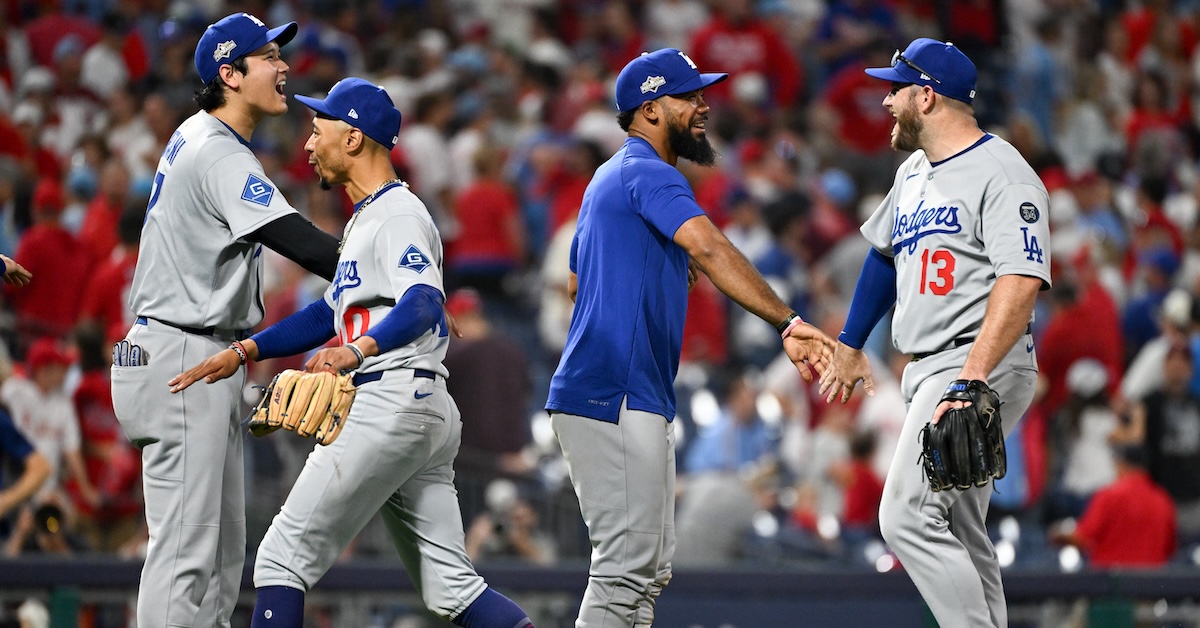
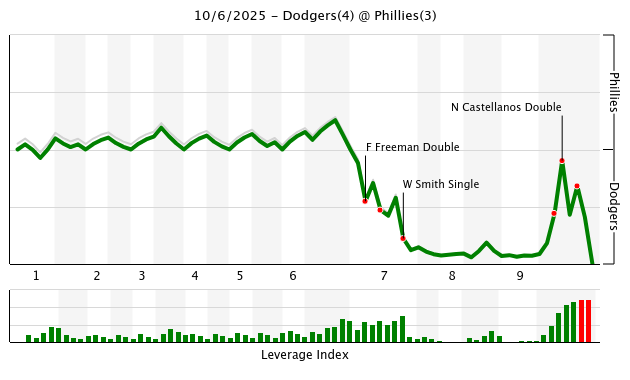
PHILADELPHIA – If the lesson to learn from Game 1 of the NLDS is that nobody’s perfect, the lesson to learn from Game 2 is that some pitchers come close. Blake Snell and Jesús Luzardo delivered the kind of pitchers’ duel to warm the hearts of dyspeptic ex-pros who should have to drop a quarter in the swear jar whenever they start a sentence with, “Back in my day…” Snell allowed only a single hit against four walks and nine strikeouts in six innings of work; Luzardo, after a tricky first inning, recorded 17 straight outs.
After watching a blank scoreboard for the first two-thirds of the game, both teams cracked under the strain in the endgame. The two clubs followed this pair of near-perfect pitching performances with a manifestly imperfect bottom of the ninth, as both teams committed blunders in tactics and execution that threw a settled game into chaos.
The final score: Dodgers 4, Phillies 3. In this heavyweight bout, the Dodgers are one win away from a knockout victory. Read the rest of this entry »
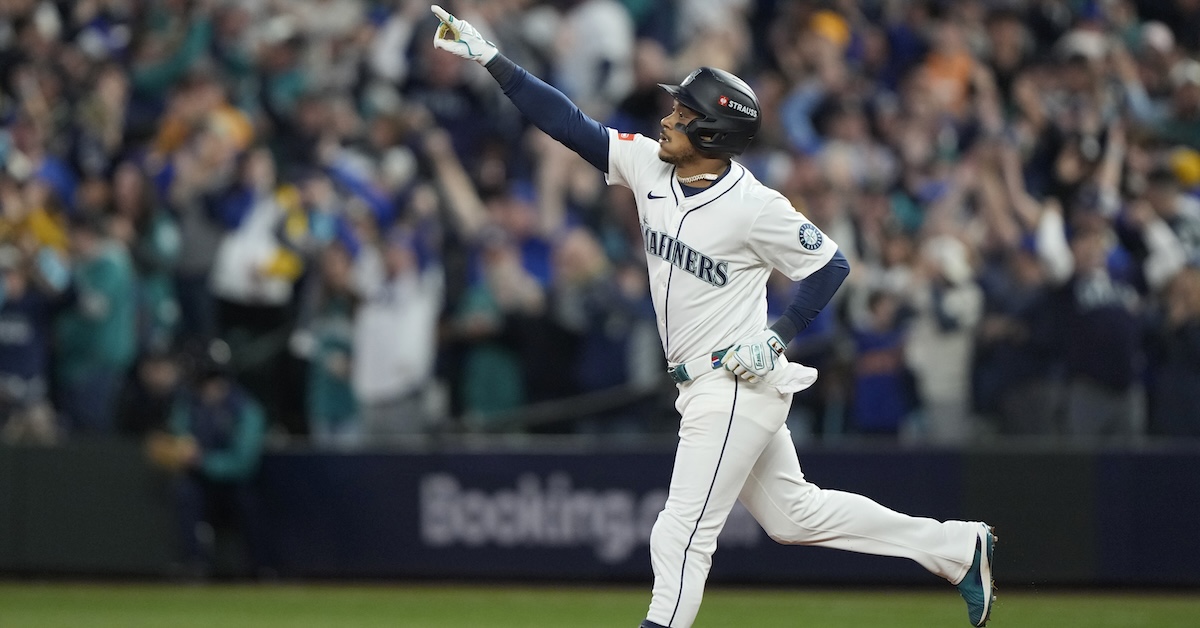
The key decision point in Saturday night’s Mariners-Tigers game came in the fifth inning, when manager Dan Wilson left righty George Kirby in the game to face a dangerous lefty, a third time through, with a runner on base. Kerry Carpenter smacked a 400-foot homer, erasing a Seattle lead, and the Tigers won 3-2 in 11 innings. So on Sunday, when righty Luis Castillo found himself in a similar pickle, Wilson found himself in a bind of his own.
The situation: a Gleyber Torres single put runners on first and third with two outs in the fifth inning. The next batter? None other than Carpenter. For the second straight day, the Mariners held a 1-0 lead, and this time, further runs didn’t feel likely, not with Tarik Skubal on the mound. Castillo had bobbed and weaved his way through the Tigers lineup two straight times, but he’d thrown 85 pitches to do so, scattering four walks and that Torres hit through his 4 2/3 innings.
This was no easy decision. Each choice had several points in its favor, but several downsides as well. Why pull Castillo? The situation greatly disfavored him. He’s far better against righties than lefties, and his platoon splits have only increased since he moved to Seattle and started weaning the changeup out of his arsenal. Even worse, Carpenter was up for a third time and had already seen 10 pitches from Castillo, including everything in his arsenal. Carpenter himself has huge platoon splits; in his career, he’s faced righties six times as often as lefties, with a 138 wRC+ against righties and a 69 wRC+ against lefties. Gabe Speier, Seattle’s middle-inning lefty of choice, is outstanding against lefties, and generally just outstanding overall. Finally, Castillo didn’t have his best stuff, and certainly didn’t have his best command. A change would meaningfully improve the matchup for Seattle, in the biggest spot of the game. Read the rest of this entry »
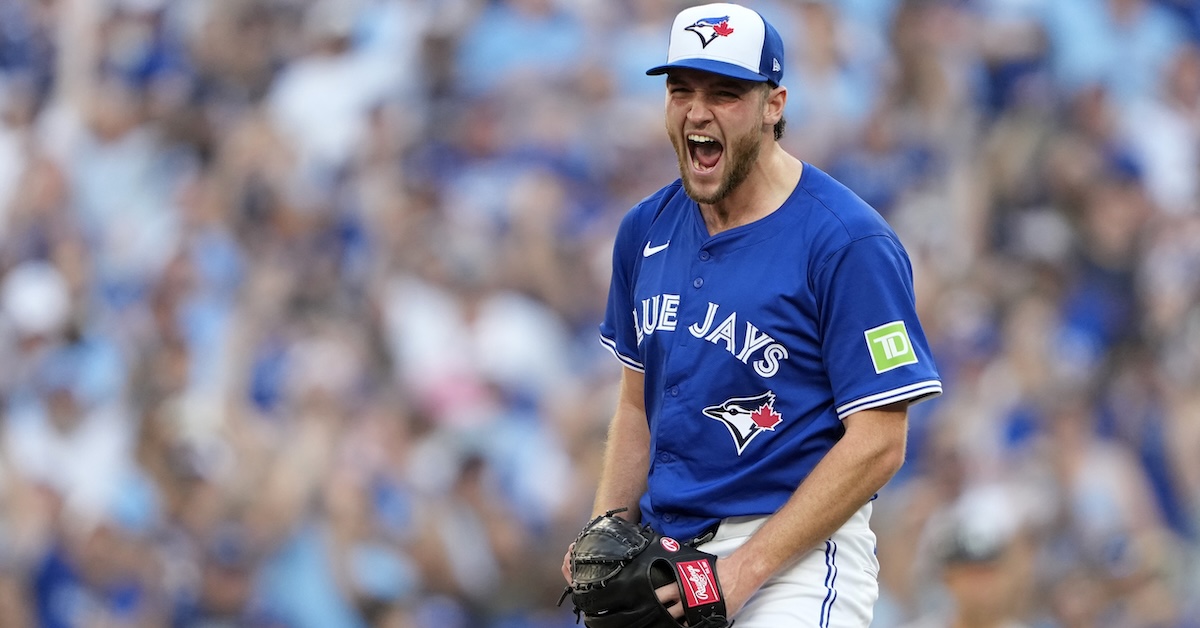
The pitching matchup favored the Yankees. With all due respect to one of baseball’s best young arms, Toronto’s Trey Yesavage came into the contest having thrown just 14 big league innings. Conversely, New York starter Max Fried is a three-time All-Star who finished the season 19-5 with a 2.86 ERA. While Yesavage has a bright future — he’s currently the Blue Jays’ top prospect — his mound opponent seemed a better bet to perform under the pressure-packed lights of the postseason.
That didn’t happen. Yesavage, who began the year in Low-A and didn’t make his major league debut until September 15, not only kept the Yankees off the scoreboard, but he did so in spectacular fashion. As for Fried — ditto his teammates who followed him on the bump — it was a veritable horror show. He got rocked. When all was said and done, Toronto had bombarded the Bronx Bombers to the tune of a 13-7 rout that wasn’t as close as the final score suggested. The win gave the Blue Jays a 2-0 lead in the best-of-five Division Series.
That Canada’s team launched four home runs and took a 12-0 lead before the Yankees recorded their first hit — a sixth-inning single after Yesavage had left to a huge ovation — isn’t exactly a footnote to what transpired at Rogers Centre. It was an impressive onslaught. Even so, what the 22-year-old right-hander with the power arsenal did was the story of the day. Read the rest of this entry »
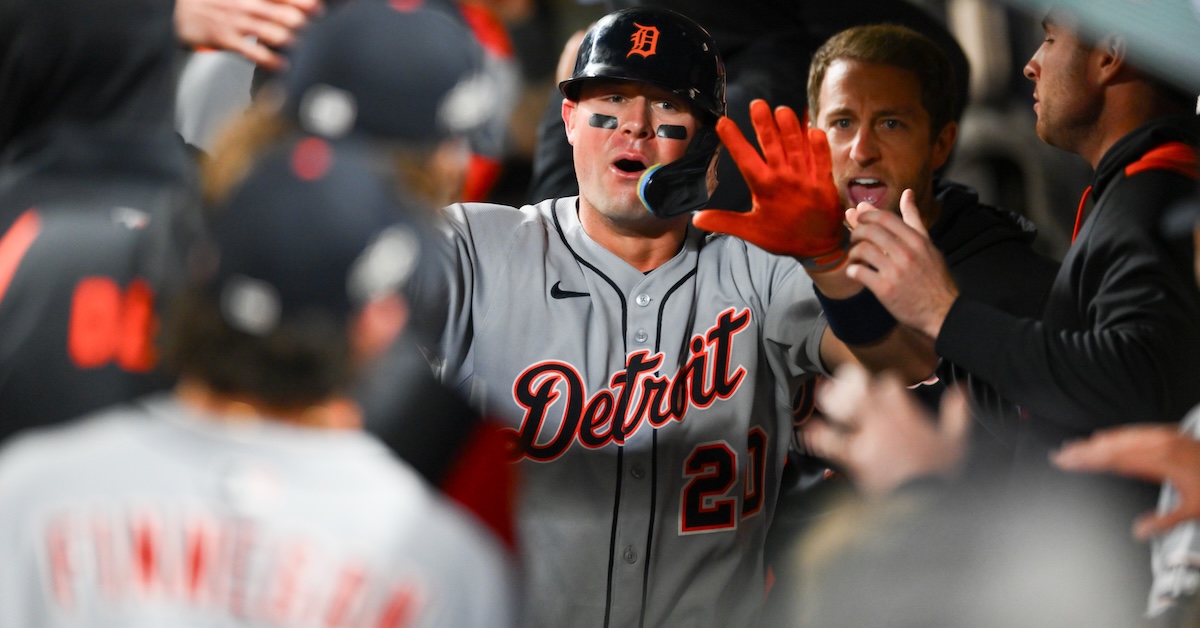
SEATTLE — “We didn’t steal one. We earned it.” Those were the first words spoken by Tigers manager A.J. Hinch following Game 1 of the ALDS at T-Mobile Park on Saturday night. Hinch took umbrage with a reporter’s characterization of a 3-2 victory that spanned 11 innings in a road ballpark as “stealing one.” Managers should bring that type of bravado to the press conference. Especially Hinch, who is tasked with imbuing confidence in a squad that has been dogged by tales of its epic collapse for over a month.
But with all due respect to Hinch, to describe any one-run, extra-inning game as one where either team definitively earned the win, or on the flip side deserved to lose, places all the emphasis on the final result and glosses over exactly how that result came to be. The Tigers got the win, and now they enjoy a 1-0 series lead with Tarik Skubal, the reigning (and presumptive) AL Cy Young award winner, taking the mound for them in Game 2. They get to bask in the glow of that advantage, and they absolutely should. But if Hinch gets to quibble with verbiage, so do I. Read the rest of this entry »
He doesn’t garner much press — at least not outside of Tigers territory — but Will Vest has developed into one of baseball’s better relievers. The 30-year-old right-hander has appeared in 181 games for Detroit over the past three seasons and logged a 2.93 ERA and a 2.71 ERA over 187-and-a-third innings. Moreover, he is currently the team’s closer. Vest’s 2025 ledger includes 23 saves to go with a 3.01 ERA and a 2.71 FIP, and he recorded the final out in both of the club’s Wild Card wins over Cleveland. If the Tigers go on to beat the Mariners in the ALDS, Vest will likely have played a key role.
He could easily be pitching for Seattle. As related by Dan Hubbs in a piece that ran here at FanGraphs two weeks ago, the Mariners took Vest in December 2020’s Rule-5 draft, only to return him to the Tigers the following July. Hubbs had departed as Detroit’s director of pitching development by the time Vest was reacquired, but he was, and remains to this day, bullish on the righty’s raw ability.
Vest was one of three pitchers (Casey Mize and Tarik Skubal were the others) whose development process the now-Athletics’ bullpen coach looked back on in the September 23 article. Spin rates that were “off the charts” was an attribute Hubbs saw in the then-under-the-radar prospect, as were “good movement profiles on everything he threw.” For the young hurler, success at baseball’s highest level “was just a matter of him getting comfortable competing in the strike zone.“
What are Vest’s memories of working with Hubbs, and in which ways has he continued to develop in the years that have followed? Read the rest of this entry »
PHILADELPHIA – It’s dangerous to draw conclusions from one game of a playoff series, but after Game 1 of the NLDS, you can take this lesson to the bank: Nobody’s perfect.
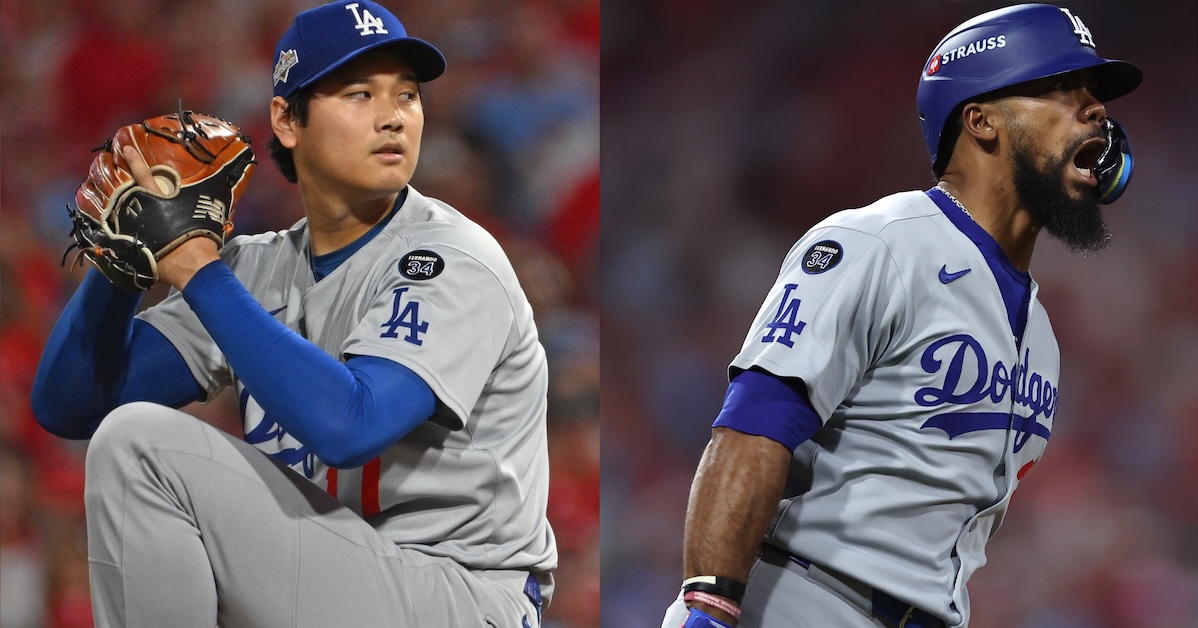
Cristopher Sánchez was on the verge of completing six imperious innings, until the last three batters he faced — the last pitch he threw, really — sent the Phillies into a spiral. Teoscar Hernández committed a borderline-unforgivable defensive gaffe, then atoned with interest by the end of the night with a game-winning three-run homer.
Shohei Ohtani, making history by leading off a playoff game as a starting pitcher, looked not just like a two-way player but like two different people. Ohtani has seldom looked so hapless at the plate, striking out in each of his first four plate appearances. He made a slightly less glorious brand of history, becoming the sixth player in the pitch tracking era to strike out looking three times in a playoff game.
But on the other hand. Ohtani came out the winning pitcher: nine strikeouts in six innings, with just four baserunners allowed. Hernández’s seventh-inning homer off Matt Strahm made the difference in a 5-3 Dodger win. Read the rest of this entry »
At this time last year, the Blue Jays faced some serious uncertainty. They’d just finished last in the AL East, and they had only one more season guaranteed with both Vladimir Guerrero Jr. and Bo Bichette on their roster. The future became even murkier during the winter, when the Yankees and Red Sox were both beefing up, the Orioles were still expected to be good, and the Rays were, well, the Rays. Both Guerrero and Bichette became the subject of trade rumors; really, there were questions about whether or not Toronto would just blow it all up.
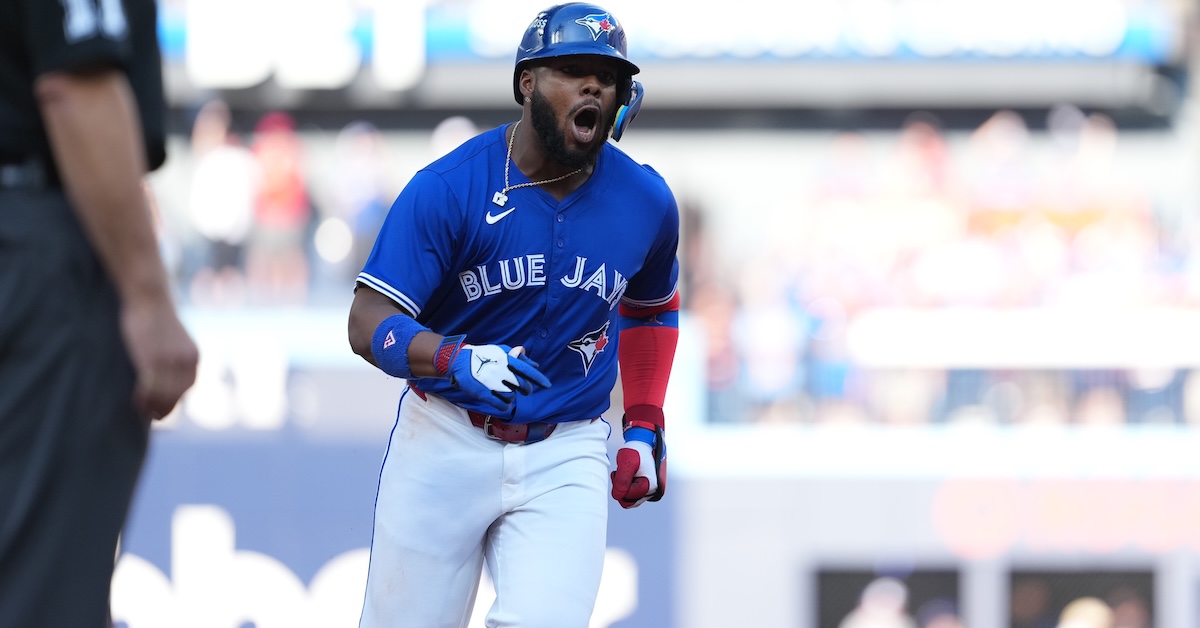
Oh, how things have changed. In early April, the Jays extended Vladito through the end of the next decade, and then they caught fire. And now, one year after coming in last, they finished tied with the Yankees for the best record in the American League and took the division because they won the season series between the two teams. For that reason, Toronto hosted Game 1 of the Division Series against the New York on Saturday, and after the Jays bludgeoned the Yankees, 10-1, maybe it’s the boys from the Bronx who should be feeling a bit of self doubt.
As a franchise, the Yankees have played 441 postseason games; this loss ranks as one of their worst playoff humiliations ever:
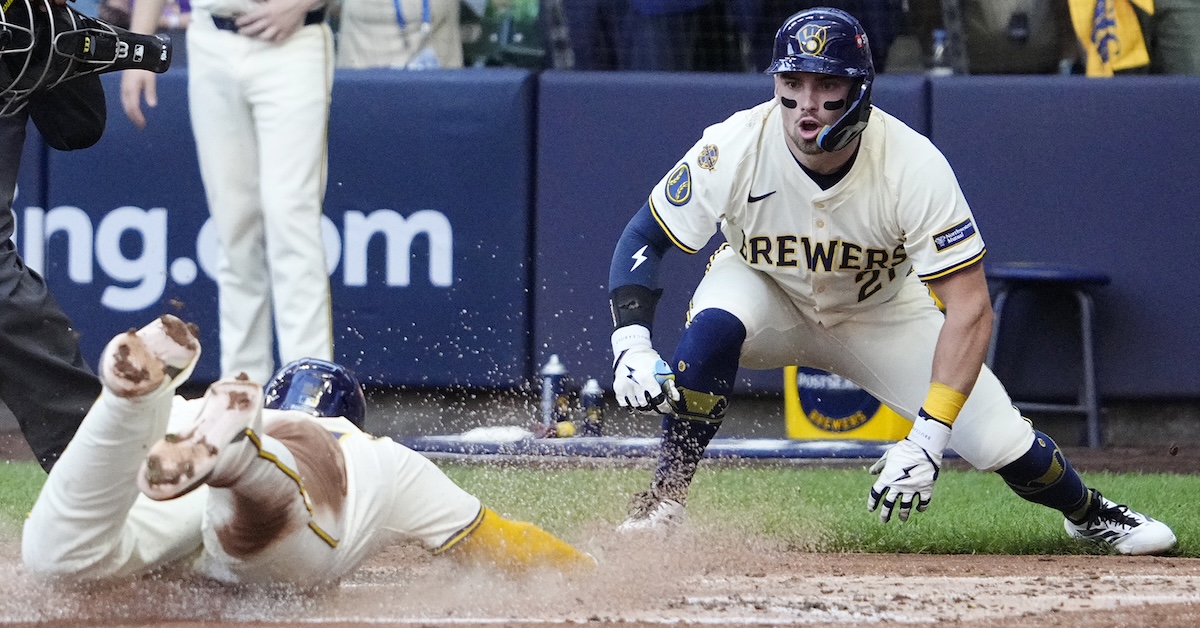
The Brewers and the Cubs played nine innings of baseball on Saturday, but Game 1 of the National League Divisional Series was decided before the end of the first. Every series starts off with its share of questions. Did the Brewers have enough pitching to withstand injuries to Brandon Woodruff and Shelby Miller? Could Kyle Tucker and Pete Crow-Armstrong locate the MVP form they’d showed earlier this season? How would a Brewers offense that loves to work the count fare against a strike-throwing Cubs pitching staff? Would the Brewers be rusty after a five-game layoff? Would the Cubs regret starting Matthew Boyd on short rest after he threw just 58 pitches against the Padres on Tuesday? In Game 1, those last two questions were all that mattered.
The Brewers were not rusty, and Boyd may well have been. The Cubs jumped out to an early lead, but in the bottom of the first, the Brewers exploded on Boyd like they’d spent the past five days packing themselves into a cannon. During the regular season, the Brewers scored only 9% of their runs in the first inning, the third-lowest rate in baseball. Maybe they were saving it all up for the playoffs. Milwaukee raced to a 6-1 lead in the first and extended it to 9-1 in the second. “I’m proud they came out ready,” said manager Pat Murphy during the game. “The guys came out ready to swing, and when they’re ready to swing, a lot of good things can happen. They’re a great bunch.”
By virtue of their first-round bye, the Brewers lined up ace Freddy Peralta to pitch Game 1. After an early hiccup, Peralta looked every bit the guy who led the NL with 17 wins and notched three of them against the Cubs. He missed well outside with a 95-mph fastball on the first pitch of the game, then came back with a belt-high heater over the center of the plate, which Chicago leadoff hitter Michael Busch fouled off. Peralta repeated the pattern: four-seamer well outside, belt-high four-seamer over the middle. Busch was ready for the second one. He turned on it and sent it 389 feet over the right field fence. Four pitches in, the Cubs had a 1-0 lead. Peralta recovered quickly, retiring the next three batters in order. He’d allow just one more base hit over the next four innings.
In the bottom of the second, Jackson Chourio squared to bunt on the first pitch from Boyd, then took it for a ball inside. Looking back, it’s tempting to wonder what would have happened had Boyd put the pitch in the strike zone. Maybe if Chourio would have actually bunted the ball, and maybe the whole game would have gone differently. But it was tight and Chourio pulled the bat back, then ripped the fourth pitch he saw down the third base line for a double. Brice Turang knocked Chourio in with a double of his own, lining the first pitch he saw on a hop off the right field fence. The Brewers had tied the game at one after five pitches. William Contreras ripped the next pitch just past a diving Ian Happ for a double into left field, scoring Turang. With doubles on three consecutive pitches, the Brewers grabbed a 2-1 lead. They were far from done.
Chicago pitching coach Tommy Hottovy walked out to settle down Boyd, who induced a grounder to short from Christian Yelich, then deepened his trouble by walking Andrew Vaughn. Much earlier than the Cubs would have liked, Michael Soroka started warming up in the bullpen.
Boyd broke Sal Frelick’s bat, inducing a weak grounder to second base. Nico Hoerner, who may well end up winning his second Gold Glove this winter, charged the ball and then inexplicably biffed an easy hop. The ball kicked past him, allowing Contreras to score. The Brewers still had runners on first and second with one out, now with a 3-1 lead. Boyd struck out Caleb Durbin with a four-seamer above the zone, then got ahead of Blake Perkins, 1-2. He was one strike from ending the inning, but Perkins worked an incredible 12-pitch at-bat, fouling off pitch after pitch, then ripping a line drive right back up the middle – the thing that both he and the Brewers love the most in the world – scoring Vaughn and moving Frelick to third. The Brewers had a 4-1 lead and Boyd’s day was over after 30 pitches and two-thirds of an inning.
Soroka came into the game with a simple mandate: stop the bleeding and keep the game close. Instead, he walked ninth hitter Joey Ortiz on four pitches, loading the bases and bringing Chourio back to the plate. This might be a good time to note that Chourio ran a 307 wRC+ with two homers in last year’s Wild Card Series, his only previous playoff games. He pushed that career postseason mark even higher, rocking a single through the left side of the infield to drive in two more runs. The Brewers led 6-1. Mercifully, Soroka got Turang to chase a high fastball for strike three.
The Brewers hit for 26 minutes in the first inning. They saw 45 pitches from two pitchers. They notched five hits, walked twice, and reached once via error. They put seven balls in play with a 72% hard-hit rate. Curt Hogg of the Milwaukee Journal Sentinel pointed out that it was the first time they’d scored six runs in the first inning all season. The incomparable Sarah Langs noted that teams to score at least six runs in an inning had gone 113-1 in postseason history. With that last single off the bat of Chourio, Soroka’s job changed. It was no longer to keep the game within reach. It was to eat as many innings as possible in order to keep the Cubs from annihilating their bullpen in addition to falling behind in the best-of-five series.
Peralta allowed a single to Crow-Armstrong, but he needed just 12 pitches to retire the Cubs in the top of the second and give the Brewers the chance to get right back to hitting. After leading off the first with three straight doubles, Milwaukee led off the second with three straight singles.
Contreras singled to left, Yelich singled to right, and Vaughn singled to center. The bases were loaded and Aaron Civale got warm in the Cubs bullpen. Frelick lined out to left field on a ball that was too shallow for Contreras to tag up on, then Durbin dropped a duck snort into shallow center field, knocking in two. Seventeen Brewers had come to the plate. Thirteen had reached safely. Eight had scored. Perkins grounded out to first base, pushing the runners to second and third with two outs. Ortiz walked on four pitches, loading the bases again, and Counsell made the slow walk out to the mound. Soroka lasted just one third of an inning longer than Boyd. The job of eating innings fell to Civale, whom the Brewers traded to the White Sox for Vaughn back in June and whom the Cubs claimed off waivers at the end of August.
Chourio greeted Civale with another grounder right down the third base line, this one for an infield single to push the score to 9-1. However, it came with a price. Chourio missed nearly the entire month of August with a right hamstring strain, and he aggravated the injury as he hustled to beat the throw from Matt Shaw. Visibly distraught, he spoke to a trainer, then left the field, and walked back to the clubhouse. The Brewers announced that he would be evaluated further after the game. Turang struck out to end the inning, and the TBS broadcast announced that Brewers were the first team in playoff history with nine runs and 10 hits in the first two innings.
The Cubs and Brewers played seven more innings of more baseball. Peralta pitched brilliantly, though he surrendered another solo homer to Happ in the sixth inning. He left one out shy of a quality start, and the Milwaukee faithful rewarded him with a standing ovation. He gave up three earned runs over 5 2/3 innings, striking out nine, walking three, and allowing four hits. Civale filled his role excellently too, scattering three hits over 4 1/3 innings and allowing Counsell to ask the bullpen for just two more innings. Hoerner added another solo homer off Jared Koenig in the eighth inning before Nick Mears closed things out in the ninth.
The questions going into Game 2 will revolve around Chourio’s health and Chicago’s ability to bounce back from such a thorough drubbing. The Brewers possess a capable fill-in in Isaac Collins, who ran a 122 wRC+ as a rookie this season, but Chourio is an awfully hard player to replace. His three hits pushed his career wRC+ in the playoffs to 361, and if the hamstring injury is anywhere near as serious as it looked, it’s hard to imagine him returning in time to play against the Cubs. With the 9-3 victory, the Brewers drew the season series with the Cubs even at 7-7. The good news for the Cubs is that they’ll have a day off before Game 3, allowing their bullpen to get some rest. Although Boyd threw just 30 pitches, he seems unlikely to go on short rest in Game 4.
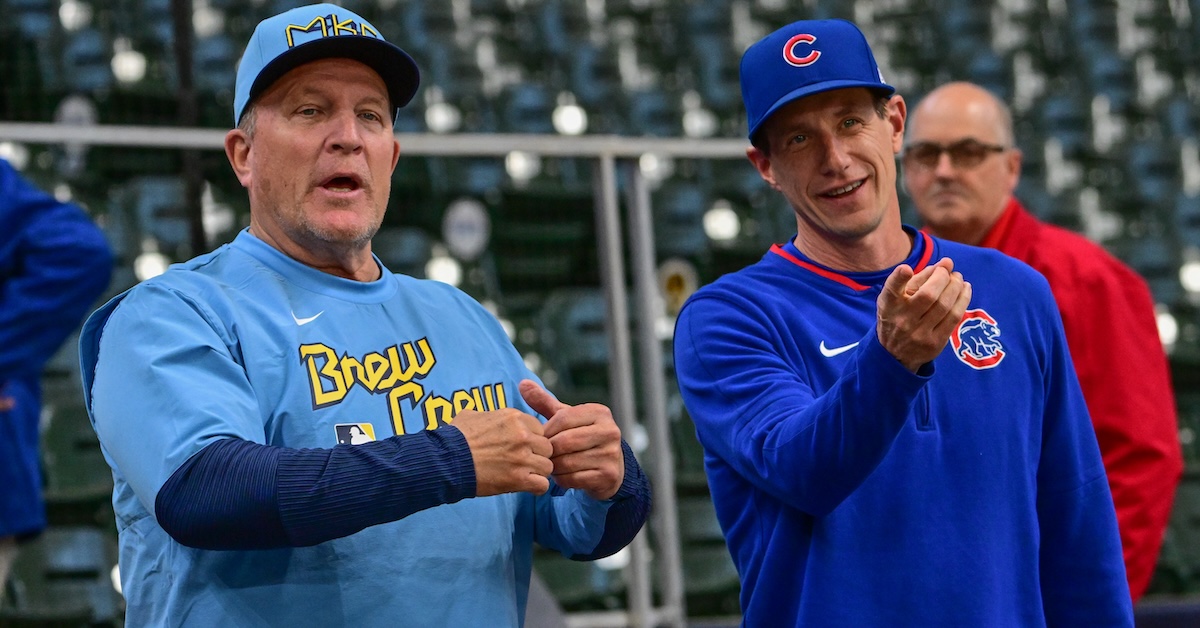
Favorable conditions for a dramatic and explosive era of the Cubs-Brewers I-94 rivalry have been percolating for a while. And now they come to a head as the two clubs meet each other in the playoffs for the first time ever, even though it’s been 27 years since the Brewers changed leagues. Fan friction invariably occurs when two sports-loving cities are proximate to one another (you can drive from Milwaukee to Chicago in roughly 90 minutes along the southwest shore of Lake Michigan), but tensions grew here when Cubs manager Craig Counsell decided to jump ship from Milwaukee to Chicago after the 2023 season.
Spurned and abandoned by Counsell (and David Stearns) even though the team has been consistently (and seemingly sustainably) competitive, Milwaukee has carried on as a scrappy throwback squad built on contact, speed, and defense. Despite dealing with an April blight of pitcher injuries so bad that it gave us a week of needless torpedo bat discourse, the Brewers finished with the best record in the majors, won the NL Central by five games, and made the postseason for the seventh time in the last eight years, though they have just one NLCS appearance in that mix. The Cubs are fresh off a down-to-the-wire Wild Card Series win in a decisive Game 3 against the Padres in which their deep lineup tallied 13 hits, many off of excellent (if taxed) San Diego relievers. Let’s examine the component parts of each team in greater detail to remind ourselves how each team was assembled, and how they arrived at this part of the postseason. Read the rest of this entry »




 Sponsor Us on Patreon
 Give a Gift Subscription
 Email Us: podcast@fangraphs.com
 Effectively Wild Subreddit
 Effectively Wild Wiki
 Apple Podcasts Feed
  Spotify Feed
 YouTube Playlist
 Facebook Group
 Bluesky Account
 Twitter Account
 Get Our Merch!