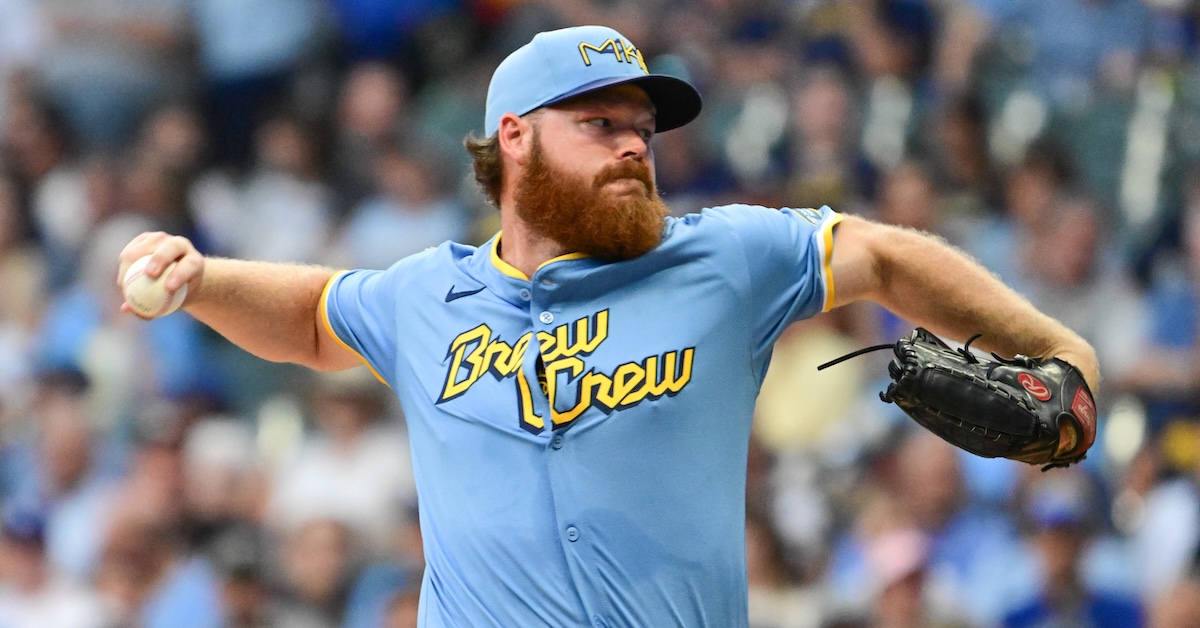
Pitching analyst Lance Brozdowski has been on Brandon Woodruff since the Brewers right-hander returned from a 2023 shoulder surgery on July 6. Brozdowski has written about Woodruff twice, first breaking down the ways that he looks like a different pitcher this season. His second piece was titled “How Is Brandon Woodruff Doing This?” I’d like to really dig in and answer that question, both because when Brozdowski asks a question it’s usually a good one and because Woodruff’s numbers really are confusing. As Michael Baumann noted a few weeks ago, Woodruff’s return coincided almost exactly with Milwaukee’s recent unbeatable stretch. “If Woodruff is well and truly back,” Baumann wrote, “for my money he’s a bigger add than any starter who’s likely to get moved at the deadline.” Woodruff has gone 4-0 with a 2.29 ERA, a 3.73 FIP, and a 34.9% strikeout rate over his six starts, and he’ll likely be a huge part of the team’s playoff rotation, but whether he’s back is still very much an open question.
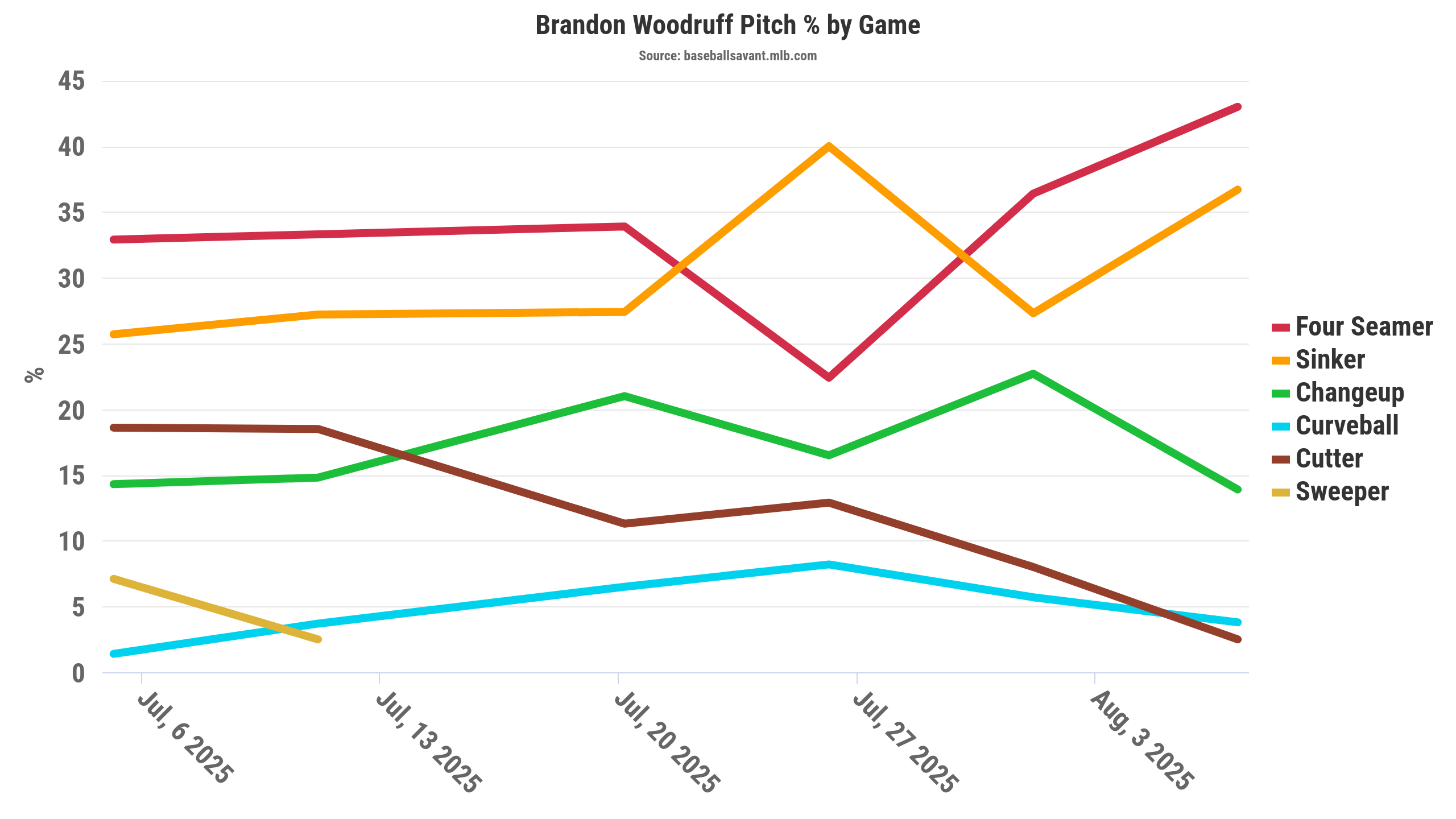
Before we get into everything, we should talk about Woodruff’s arsenal, which at least for a little while looked pretty different this season. A month ago at Brewer Fanatic, Matthew Trueblood analyzed Woodruff’s repertoire during his minor league rehab assignment, and wrote that in order to be successful, “Woodruff will need to reinvent himself.” The pitcher seemed to agree, at least at first. This season in the majors, he has thrown a four-seamer, sinker, changeup, cutter, curve, and sweeper. The cutter is new, with the sweeper replacing his traditional slider. However, he hasn’t thrown the sweeper since his second start (likely because it was the second game in a row the other team homered on the pitch), and he’s also drastically reduced his cutter usage over his last two starts. He’s also nearly evened out his fastball usage. In recent years, Woodruff led with his four-seamer, but now he’s throwing it 34% of the time and his sinker 31%, leading with the sinker against righties and the four-seamer against lefties. His curveball is down to 5% and his changeup has held steady at 17%. In other words, Woodruff is throwing a fastball 65% of the time, and that number jumps to 77% of the time if you count the cutter:
Let’s start with the reasons for suspicion, and please note that this section makes up five full paragraphs. Luck is a big component here. Woodruff is currently running a .143 BABIP and a 100% strand rate. Eight of the nine earned runs he’s allowed have come on home runs. Those are massively unsustainable numbers. The league averages a .289 BABIP and 72.5% strand rate. Even though he’s spent his entire career pitching in front of an excellent Milwaukee defense, Woodruff has never run a BABIP below .269 or a strand rate above 82% (except in 2023, when he only made 11 starts). No matter what else happens, we should expect his BABIP to add at least 100 points and his strand rate to drop by at least 20% going forward. Read the rest of this entry »
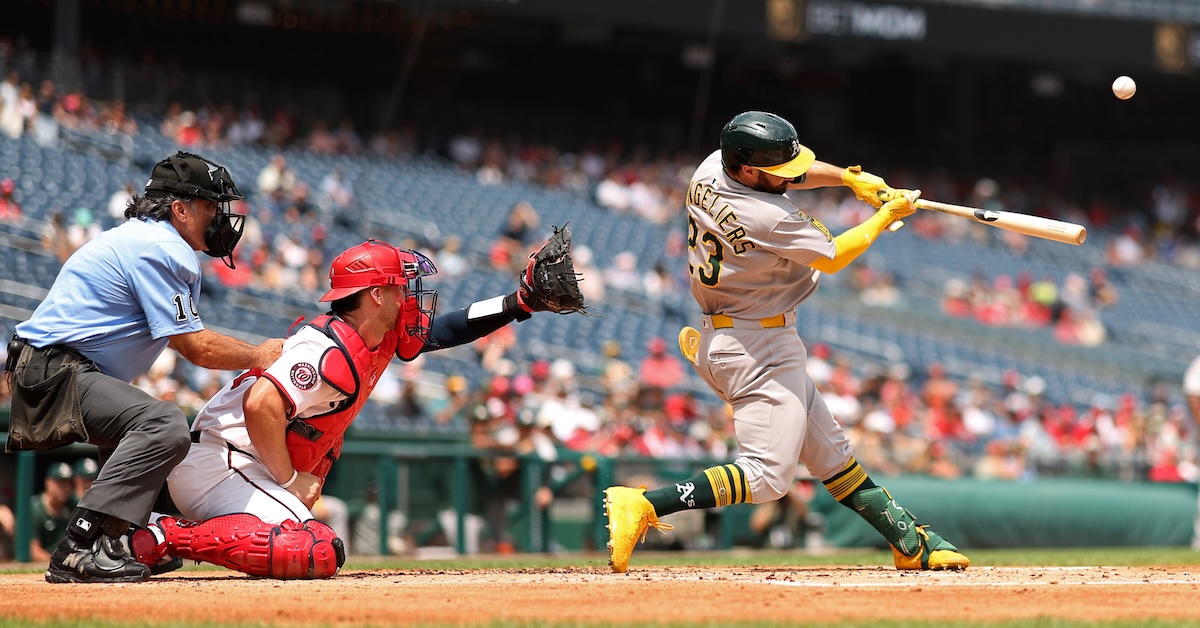
We’re 10 years or so into the launch angle revolution, and the reasoning behind it hasn’t changed much. Groundballs have a .228 wOBA this season, while all other balls in play are at .462. Hit the ball on the ground, and you’re Christian Vázquez. Hit it in the air, and you’re Aaron Judge. Players are gearing their swings for damage in the air. They’re optimizing their bat path for an upward trajectory. They’re meeting the ball farther out in front. They’re looking to hit the bottom third of the ball. Knowing all this, I doubt you’d be surprised to learn that 2025 is shaping up to set the record for lowest groundball rate since 2002, when Sports Info Solutions first started tracking such things. But you might be surprised to learn just how extreme the shift has been.
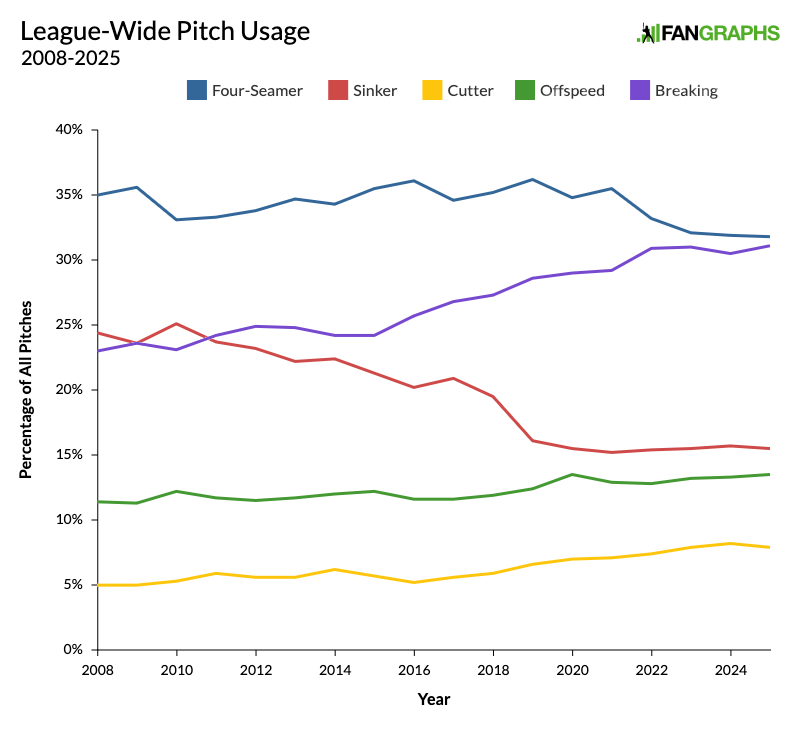
So far, I’ve talked about all the reasons that batters have tried to put the ball in the air more, but that’s only half the story. Five years ago, Ben Clemens wrote a great article in which he tried to determine whether batters or pitchers exert more control over groundball rates. After separating the batters from the pitchers, he split each group into quartiles based on their 2018 groundball rates and then looked at the results when each group faced off in 2019. He found that the effect was nearly identical. When you moved the batter up one quadrant, the groundball rate of the new pairing went up by an average of 5.2 percentage points. When the pairing moved up a quadrant in the pitcher pool, the groundball rate went up by 4.8 percentage points. Knowing that, let’s not blame this all on the batters. Are pitchers as responsible as batters for the shrinking groundball rate across the majors? Let’s start by updating my 2023 league-wide update on pitch mix.
Jose Altuve has been doing the same thing for a long time now. The 35-year-old Astro is closing in on 250 career home runs despite the fact that he’s never possessed the look, or even the swing, of a traditional slugger. Altuve has never hit the ball hard and has always chased a bit more than you’d like, but he’s excellent at making contact, which helps him avoid strikeouts, and he’s excellent at pulling the ball in the air, which helps him make the most of that contact. Altuve has ridden those pulled fly balls to a career 114 SLG+ and 101 ISO+. If we start in 2015, the beginning of the Statcast era and the year he really started to focus on lifting and pulling, those numbers are 119 and 113. This year, however, for the first time, I’m genuinely starting to wonder how Altuve is still doing it.
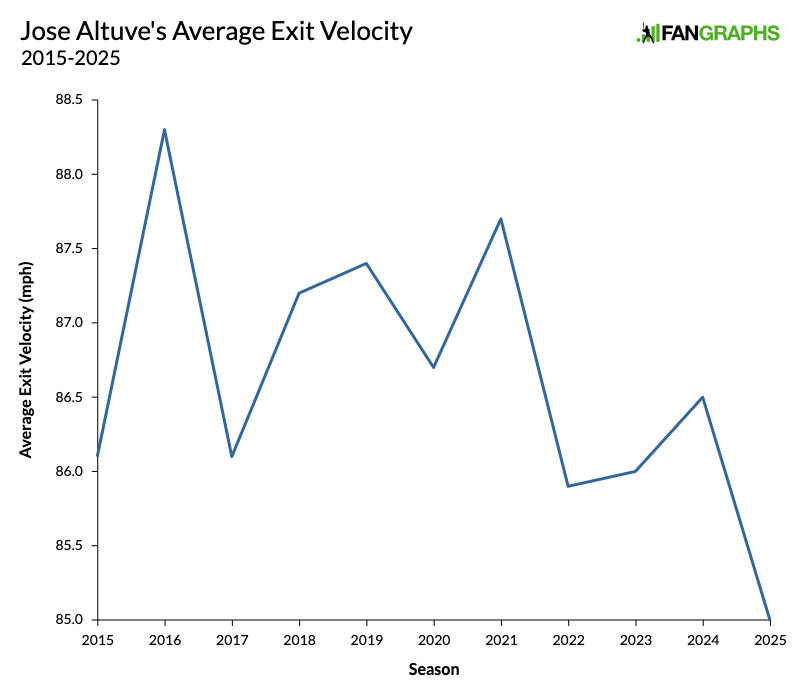
Altuve is running an average exit velocity of just 85 mph. Here’s what that looks like in the context of his career. It’s the lowest mark he’s ever put up by nearly a full mile per hour, and it’s 1.5 mph off the average he put up just last year:
Those numbers look even more stark when we put them in the context of the rest of the league. Altuve is running the second-lowest average exit velocity among all qualified batters. Think of any slap-happy contact hitter – Luis Arraez, Jacob Wilson, Sal Frelick, Geraldo Perdomo – Altuve has a lower average exit velocity than all of them. But like clockwork, Altuve is still running a 120 wRC+ and batting .280. With 19 home runs, he’s on pace for 27, the highest mark he’s put up since 2022. Altuve is still lifting and pulling, lifting and pulling, making contact, avoiding strikeouts, rinse and repeat, even though his contact quality has dropped to about as low as you can possibly imagine. Read the rest of this entry »
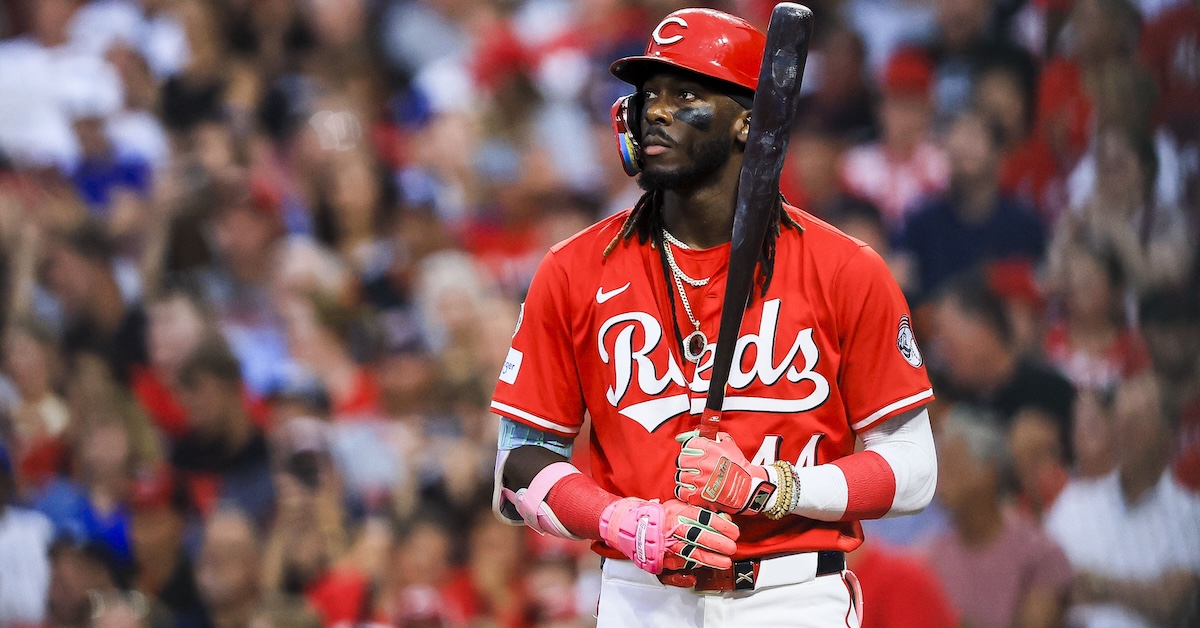
How likely do you think the Reds are to make the playoffs? I’m not asking you to guess what our Playoff Odds say about them. I’ll tell you that in the next paragraph. I’m asking you to put your own number on it, based on what you know and think about both the Reds and the playoff picture. They are 59-54 with 49 games to play. They’re three games back of the Padres for the final Wild Card spot and four behind the Mets for the second spot. Got a number in your head? Then we’re ready for another paragraph.
Thank you for playing. As of this writing, our Playoff Odds give the Reds a 12.4% chance of reaching the postseason. I imagine that feels a little light to at least some people. Baseball Reference gives the Reds a 36.3% chance of making the playoffs. They’re within four games of both the Mets and the Padres. They’re also within five games of the Phillies, the first-place team in the NL East. If the Reds keep playing like they’re playing and any one of those teams has a late-season swoon, they’re in. According to Pythagorean Win-Loss expectancy, they should have the same record as the Mets right now and a better record than the Padres. They just added at the deadline. Hunter Greene looks like he’ll be back soon, and Elly De La Cruz sure looks like the kind of player who can put a team on his back for a couple weeks and carry it over the finish line.
Then again, I’m sure that number feels high to some people. You can understand why the numbers don’t like the Reds. Baseball Reference gives them such a high chance because it ignores roster composition, and, well, the Reds have a weaker roster than the teams ahead of them. They rank 22nd in position player WAR, and they didn’t add as much at the deadline as the Phillies, Mets, or Padres. In fact, according to ZiPS, they actually became 3.2% less likely to make the playoffs when the deadline dust settled, because of doubts about Ke’Bryan Hayes and presumably because the other teams added so much more. They’ve had the fifth-easiest schedule in baseball to this point in the season, and they’ve got the toughest schedule in baseball from here on out. They’ve overperformed their xwOBA by six points, the second-highest such gap in baseball. Not only do our projections have the Reds missing the playoffs, they have them finishing at 82-80, one game above .500 for the season and seven games behind the Padres in the standings. Read the rest of this entry »
A lot has happened in the past week. When times were simpler, back when the Phillies signed David Robertson three lifetimes and somehow only two weeks ago, I raised the possibility that we might bring back the We Tried tracker for the trade deadline. It wasn’t a sure thing, because the trade deadline isn’t really the time for We Trieds. They tend to happen over the offseason, when news is slow and multiple teams are bidding on free agents – which is why Robertson had so many reported suitors – rather than when teams are trying to swing trades. Loose lips can sink the many relationships involved in trades, and in the aftermath of the draft and deadline, everyone’s too busy to reach out to a reporter with an unattributed attempt to assure fans they made an effort. At least that’s how it normally works. This deadline featured a record-setting number of trades, and a surprising number of We Trieds to go along with all the actual action.
I’m sure I didn’t catch every We Tried, mostly because I spent the entirety of the deadline with my head down writing up transactions, listening to intense film scores in order to push me to write faster. I didn’t have much time to comb headlines and social media, but I did have help from some friends. I offer special thanks to readers JD, Elizabeth, Joel, and Fox Mulder Bat Flip for sending We Trieds my way. If you’re aware of any that I missed, as always, you can let me know on Bluesky or by email at WeTriedTracker@gmail.com. Read the rest of this entry »
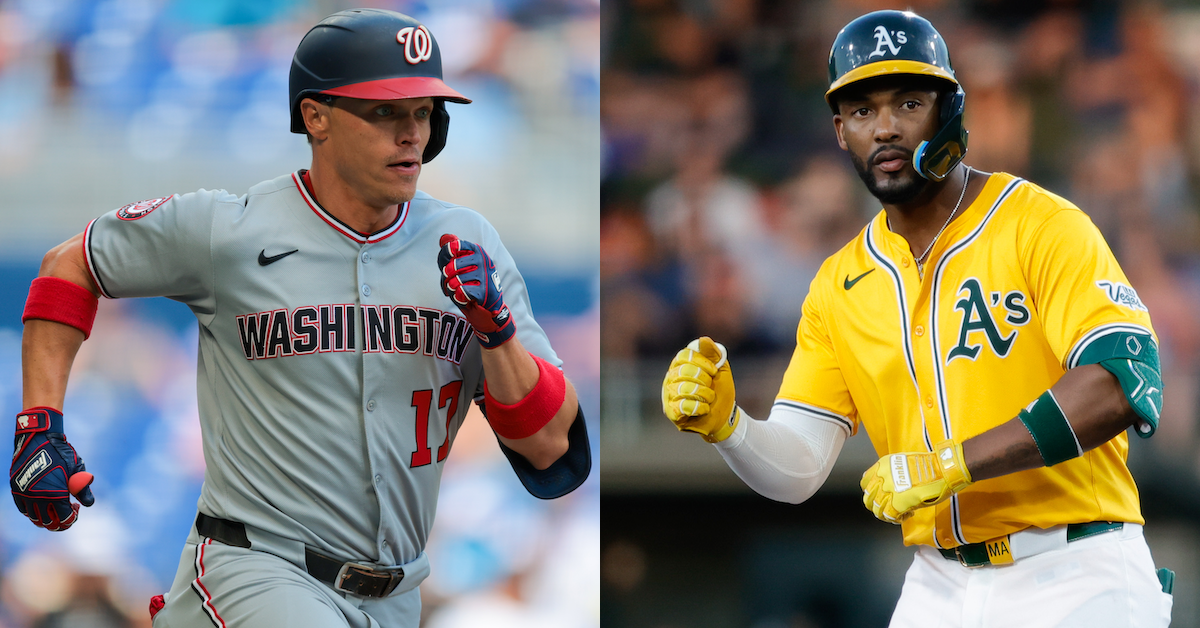
Well, here it is, folks. This is our final transaction analysis piece of the 2025 trade deadline, and we’re covering two outfielders who will now be in position to help playoff contenders. On Thursday, the Dodgers acquired outfielder Alex Call from the Nationals in exchange for pitching prospects Eriq Swan and Sean Paul Liñan. And the Reds traded with the A’s for veteran Miguel Andujar, sending back pitching prospect Kenya Huggins, so under no circumstances can we accuse Cincinnati of prospect hugging.
To the continued and possiblyeternalchagrin of Baseball Prospectus editor-in-chief Craig Goldstein, Call will not be simply taking over Michael Conforto’s spot in left field. Earlier on Thursday, the Dodgers traded the lefty-hitting James Outman to the Twins in exchange for reliever Brock Stewart, leaving a space for the right-handed Call as a fourth outfielder and likely platoon partner for Conforto. If you put the two trades together to compare apples to apples, you get Call for Outman (and Stewart for two prospects). Call is three years older than Outman, with roughly the same amount of service time. He’s hitting much better than Outman right now and allows the Dodgers to get another right-handed bat in the lineup, but he offers a bit less upside in the future.
Call is 30 years old, and he has a career 102 wRC+ in 920 plate appearances. He’s been significantly better this season, running a 118 wRC+. He doesn’t have wild platoon splits either. This season, he has a 124 wRC+ against lefties and a 115 wRC+ against righties. Over his career, those numbers are 110 against lefties and 97 against righties. Conforto has much better career numbers against righties, but this season, he only has a wRC+ of 85 against them. It wouldn’t be unreasonable at all to just plug Call in as the starting left fielder and call it a day, and it would make Craig so happy.
Call has a reputation for speed and defense, but it’s worth at least noting that his sprint speed has declined some this season, and his defense has graded out closer to average so far. It’s possible that he’ll get some of that speed back, as he’s less than a year out from a tear in the plantar fascia of his left foot. Regardless, he should be able to hold down all three outfield positions when called upon. With James Wood, Dylan Crews, and more recently, call-up Daylen Lile in the outfield, Call no longer looked like a part of Washington’s future. On the other side, the Dodgers have made a decent upgrade to an outfield that has come up just a bit short all season.
Swan is a 23-year-old right-handed starter, and at 6-foot-6 with a fastball that hits 100 mph and iffy control, he certainly looks like a Washington Nationals prospect. He didn’t put up good numbers in college, and he hasn’t put up good numbers in the minors due to wild walk totals, but did you hear me say that he was 6’6” and can throw a hundo? Swan’s 4.43 ERA and 4.34 FIP this season mark big improvements from 2024, but he’s still a big development project. Eric Longenhagen ranked him 13th in the Dodgers system with a 45 future value back in April, but he now downgraded Swan to a 40+ because he looks more likely to end up as a reliever.
That said, Swan could be a pretty good reliever. Right now, Eric has a 70-grade on Swan’s slider. He can hit the zone with it, and its whiff rate is approaching 50%. The fastball is sitting 96, but it’s playing down and he isn’t throwing strikes with it. It might end up as a pitch that’s only good for trying to attract whiffs above the zone. But that’s as a starter. If Swan ends up as a max-effort reliever, a plus-plus slider and a high-90s fastball could work just fine.
The Venezuelan-born Liñan is 20 years old, and you won’t read anything about him that doesn’t start and end with his changeup. Eric put a 55 present value on the pitch back in April, when he ranked Liñan 30th in the Dodgers system with a 40 FV. Liñan has moved around the minors a bit this season, beginning in Low-A, making two spot starts in Triple-A, then going down to High-A. He got shelled in one of those Triple-A starts, but even so, he’s got an overall ERA of 2.78 and FIP of 3.29 in 18 appearances and 14 starts across those three levels. He’s walking more than 10% of the batters he’s facing, but he’s also striking out nearly a third of them. It’s worth noting the environment, too, because they make Linan’s ERA- of 61 and FIP- of 74 look even better. Jeffrey Paternostro of Baseball Prospectus wrote a very fun article about how to evaluate Liñan back in May, and I strongly recommend it. For now the question is how Liñan will develop and whether he can come up with anything else to complement his changeup. Eric wrote up a new blurb for him today, so I’ll give it to you verbatim:
Liñan had a dominant start to his 2025 season and was promoted out of Low-A Rancho after just a half dozen starts. He made two emergency starts at Triple-A before heading to High-A Great Lakes, where he had been good (but no longer dominant) in 10 outings prior to the Alex Call trade. Liñan’s best pitch is his tail-action changeup, which moves enough to have overwhelmed A-ball hitters so far. He beats a lot of hitters with his fastball for a guy sitting 91-92, but Liñan’s command may not be fine enough for that to be true against big league hitters. Strike-throwers with great changeups like this tend to pan out in the fifth starter range, at least, and if Liñan can exceed this projection it’ll be because he’s either sharpened his fastball command to thrive with 40 velocity, or he’s found a much better breaking ball than the cutter he’s throwing now.
This seems like a pretty good haul for Call. He’s a good player, but he fits better in the Dodgers’ current plans than he does in the Nationals’ future plans. Swan and Liñan are genuinely intriguing prospects who could contribute in the majors, but they’ve both got a lot of developing to do.
Now let’s get to the other deal. After trading with the Pirates for third baseman Ke’Bryan Hayes and getting starter Zack Littell from the Rays, the Reds kept on adding, sending Huggins to the A’s in exchange for Andujar. Ari Alexander of KPRC2 first reported the deal. Andujar is a nine-year veteran, but he’s finally on the brink of free agency and is performing, which meant that at the deadline, the A’s could turn him into a pitching prospect, the highest level of reincarnation a being can attain according to the religion practiced by the baseball team in Sacramento.
Andujar is no one’s idea of a star, but he’s crushing left-handed pitching, and for a Reds team with a 79 wRC+ against lefties, sixth worst in baseball, he must look like a piña colada in the desert. Andujar put up a 129 wRC+ and 3.9 WAR with the Yankees as a 23-year-old rookie in 2018, finishing second in the Rookie of the Year voting behind some guy named Shohei Ohtani. In the seven years since, injuries and inconsistency have limited Andujar to fewer than two seasons’ worth of games, and he’s put up -0.4 WAR with a combined 86 wRC+. That said, Andujar has looked better recently. He’s running a 107 wRC+ in 2025 and a combined 105 wRC+ over the last three years. Andujar is batting .422 with a 186 wRC+ in 48 plate appearances against lefties this season. Those numbers will play in any lineup.
This season, Andujar has split his time between third base and left field. The Reds have gotten just 0.4 WAR from the third base position and 1.9 WAR from the three outfield positions, both of which rank 26th among all teams. With Hayes joining the club, Andujar won’t see too much time at third, but he can combine with Noelvi Marte, who has now been moved from third base to the outfield, to platoon with lefty batters Gavin Lux and Jake Fraley. Connor Joe or Will Benson will need to be sent down once TJ Friedl returns from the paternity list. It’s a lot of moving parts for a small upgrade, but it is an upgrade nonetheless.
The Reds drafted Huggins, a Louisiana Tech commit, out of junior college in 2022, and Eric ranked him 26th among the organization’s prospects this May, with a 40 FV. However, Eric now has a 40+ grade on him, because after recovering from Tommy John surgery that torpedoed most of his 2023 and 2024 seasons, Huggins looks more like a starter. His changeup improved in a major way, giving him a third pitch, but there’s more behind it. “This guy’s conditioning totally changed during his TJ rehab,” Eric said. “He’s not as big as Sean Manaea, but he’s built like young Manaea, just an absolute unit. The better conditioning might be why his delivery is more under control now and he’s throwing strikes.”
Huggins is 22, and after the injury, he’s in his third attempt at Low-A with fewer than 40 professional appearances under his belt. There’s still reliever risk here. However, he has a 3.69 ERA and 3.64 FIP through just over 63 innings so far this season in Low-A Daytona, which gives him an ERA- and FIP- of 87. “He’s a little behind the developmental curve and still at Low-A,” Eric said, “but Huggins hasn’t been shy about mixing in all of his pitches; he’s throwing his sinking changeup (which might end up being his best pitch) to righties, and he can land a backdoor slider for strikes reliably. He has a lot of No. 4/5 starter ingredients now.”
This is a minor deal, but it’s easy to see the appeal on either side. Andujar’s skill set is somewhat limited, but it fits in Cincinnati and he comes at a reasonable price. The injuries make it hard to know how much Huggins will be able to offer, but there’s certainly enough to dream on.
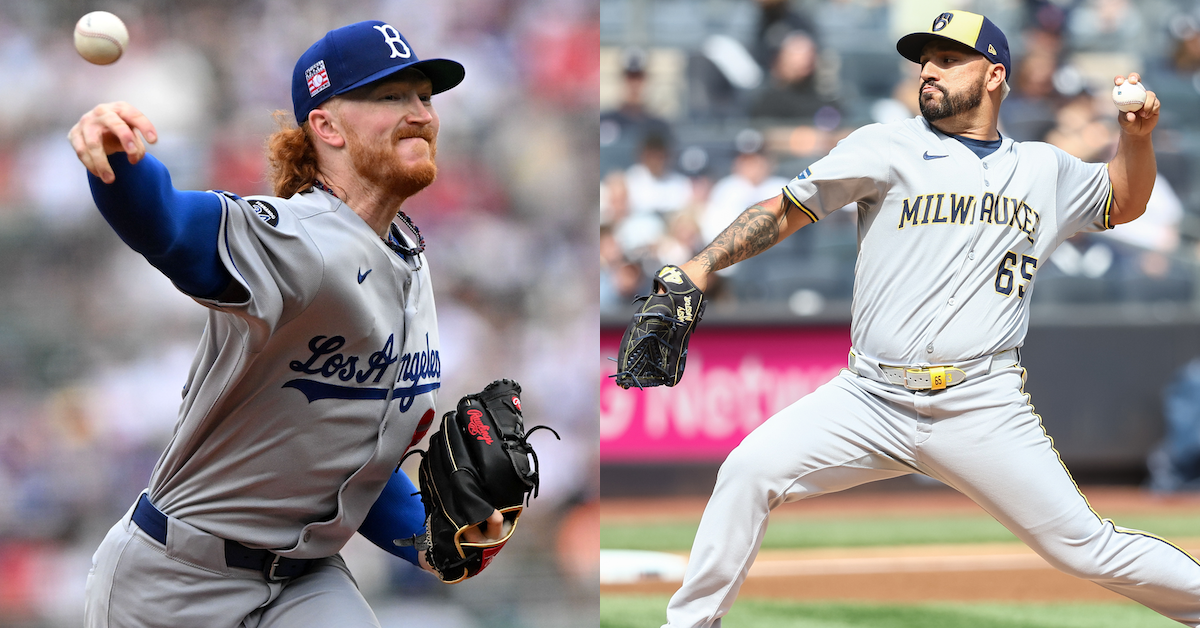
In the flurry of action just minutes before the trade deadline, two postseason contenders made moves to reinforce their starting rotations with starters looking to regain their previous form before hitting free agency. The Red Sox traded prospects James Tibbs III and Zach Ehrhard to the Dodgers in return for Dustin May, while the Padres continued their deadline fusillade by acquiring Nestor Cortes, 18-year-old infield prospect Jorge Quintana and cash, sending Brandon Lockridge to the Brewers. The Brewers will cover roughly $2.4 million of the money still owed to Cortes, with the Padres covering the prorated minimum salary for the rest of the season.
Let’s start in Boston. ESPN’s Jeff Passan reported that the deal was going down, while FanSided’s Robert Murray and MassLive.com’s Christopher Smith reported the prospect return. The Red Sox could certainly use rotation help. They rank in the middle of the pack in both ERA and FIP, but once you separate out ace Garrett Crochet, things look much less rosy; Brayan Bello is the only other starter with an ERA below 3.80. Offseason deals for Walker Buehler, Patrick Sandoval, and Justin Wilson made it clear that the Red Sox are eager to find upside in pitchers who are still finding their way after a recent injury, and May certainly fits the bill.
With palpable Walugi energy, upper-90s velocity, and pitch movement seemingly designed in a lab for maximum GIF-ability, May has been tantalizing Dodgers fans with ace potential ever since his debut in 2019. Injuries, most notably Tommy John surgery in 2021 and flexor tendon surgery in 2023, have kept him from turning into the ace it was so easy to envision him becoming. From 2019 to 2023, he got into just 46 games, an average of 9.2 per season, running a combined 3.10 ERA and 3.77 FIP. Unfortunately, flexor tendon surgery ended May’s season early in 2023, then in July 2024, right as he was getting ready for a rehab assignment, May tore his esophagus in a freak accident while eating dinner. It was a major injury that required a six-month recovery. Read the rest of this entry »
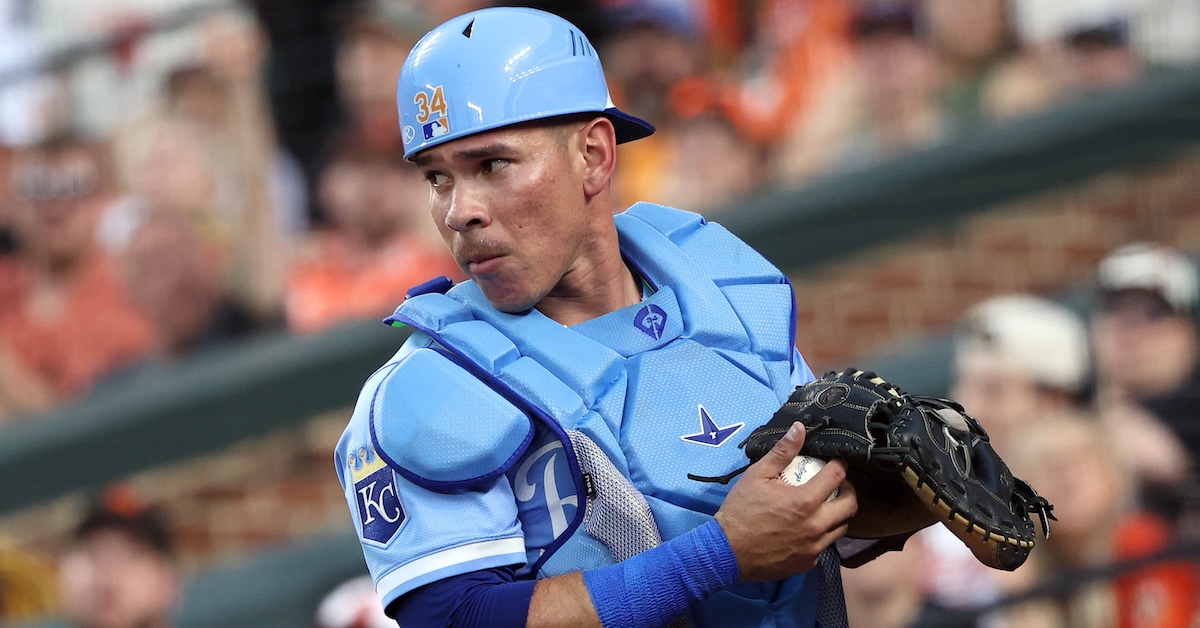
This, my friends, is the A.J. Preller we were promised. Mere hours after swinging a massive deal for closer Mason Miller and even fewer hours before trading for Ryan O’Hearn and Ramón Laureano, Preller made what you could argue – in one specific, absurd way – represented San Diego’s biggest upgrade of the day. Earlier this afternoon, ESPN’s Jeff Passan reported that the Padres have traded starters Ryan Bergert and Stephen Kolek to the Royals in exchange for catcher Freddy Fermin. How could Fermin, a 30-year-old catcher with roughly average framing numbers who’s underperforming his career 91 wRC+ this season, possibly be a bigger addition than Miller or O’Hearn, let alone worth the two major league pitchers the Padres gave up for him? Just you wait.
It would be hard to overstate both how ugly the catcher position has been for the Padres this season and how predictable that outcome was. Coming into the season, the Padres ranked dead last in our Positional Power Rankings at catcher. We expected them to get just 0.8 WAR from the catcher position, a hair behind the Rockies. And that was before our projections knew how bad things really were. Shortly after the those rankings came out, the Padres demoted Luis Campusano, who had the best projection on the team. Instead, they rolled with Elias Díaz and Martín Maldonado. (I’m sure the Padres have their reasons for being so out on Campusano, but I have no idea what they are. For what it’s worth, he has slashed .298/.410/.555 with 15 home runs in Triple-A El Paso this season, good for a 130 wRC+. In 27 PA as a designed hitter for the big club, he’s 0-for-21 with two walks, but even so, right now at this very moment, ZiPS sees him as the best catcher of the three.)
Díaz and Maldonado have caught every single inning for the Padres this season, and the results have been even worse than expected. (Following the initial publication of this piece, the Padres DFA’ed Maldonado.) Both players have put up negative WAR. Maldonado has a 62 wRC+, while Díaz is at 67. In all, the Padres have put up -0.6 WAR from the catcher spot, and the only reason that’s not the worst mark in baseball is that the Nationals spent the first half of the season challenging for the worst team catching season of the century. Things have been even worse lately, as Díaz has put up a 38 wRC+ in the month of July. Read the rest of this entry »
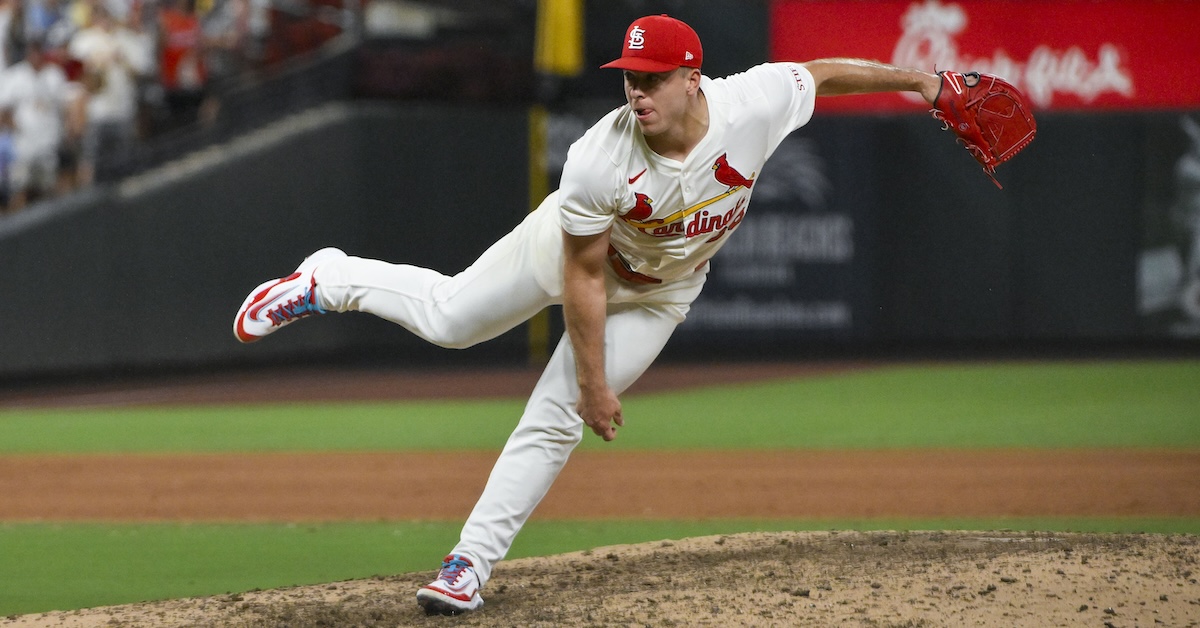
The National League East is shaping up into full-on sprint down the homestretch. Entering the day of the trade deadline, the Mets find themselves half a game ahead of the Phillies, but our playoff odds give Philadelphia a 51-49 edge at winning the division. Both teams have spent past two weeks reinforcing their bullpens, and on Wednesday night, just hours after the Phillies traded for a fireballing closer in Jhoan Duran, the Mets found their own slightly-less-fireballing closer in Ryan Helsley. The 31-year-old Helsley is a rental in his final year of arbitration, and for his services the Mets sent the Cardinals prospects Jesus Baez, Nate Dohm, and Frank Elissalt. After trading for Gregory Soto last week and Tyler Rogers earlier on Wednesday, the Mets have now completely reshaped the backend of their bullpen. Jon Heyman of the New York Post and Anthony DiComo of MLB.com were the first to report different parts of the deal.
Before we get into the trade, let’s take a moment to marvel at how quickly the Mets and Phillies have remade their relief corps. I should start by crediting the prolific Michael Baumann, who wrote up the Soto deal, the Rogers deal, and the Duran deal. I also wrote up the Phillies’ signing of David Robertson last week. Put all that together, and the Mets and Phillies have added the players who rank ninth, 12th, 37th, 54th, and 72nd in reliever WAR since the start of 2024. Impressively, Robertson comes in at 37th even though he hasn’t pitched in the big leagues yet this season, because his 1.9 WAR ranked ninth among all relievers last year. This measuring stick also underrates Rogers, who came in at 54th, because our version of WAR relies on FIP, and the submariner has made a habit of beating his through the mystical art of groundball induction; when using RA9-WAR, Rogers jumps all the way up to 10th. In other words, we’re talking about four of the most valuable relievers in all of baseball and Soto, who is also pretty good.
This is what it looks like when your goal is to win a World Series. The Phillies and Mets are paying heavy prices to give themselves the best possible chance of locking down games late in October. The Mets started out in a better position, as their bullpen currently ranks 11th in baseball with a 3.80 ERA and 4.02 xFIP, and eighth with a 3.70 FIP, and they’ve added one more reliever than Philadelphia. But the Phillies have now added the best reliever on the market (note: I wrote this sentence before the Mason Miller trade went down) and one of the best and most consistent setup men in the game. None of this guarantees that the division will come down to the wire or that these relief corps will actually shut down the opposition in October, but it’s awfully fun to watch them gearing up for a championship run.
Now to the deal! As Anthony Franco noted for MLB Trade Rumors, Helsley has $2.65 million remaining on his $8.2 million salary. Because the Mets are in luxury tax territory, they’ll actually pay something like $5.6 million in total for him over the next two months.
With Edwin Díaz ensconced in the closer role, Helsley and Rogers should slot in as shutdown setup men. After making his debut in 2019, Helsley really took off in 2022, running a 1.25 ERA and 2.34 FIP over 54 appearances and taking over the St. Louis closer role that July. Helsley led baseball with 49 saves last year, and that total represented more than half of the Cardinals’ wins. Though still excellent, it wouldn’t be unfair to say that he has taken a step back this season. He’s currently running a 3.00 ERA, though FIP, xERA, and xFIP all see him as deserving something closer to 3.50. This is a far cry from the combined 1.83 ERA, 2.35 FIP, and 3.04 xFIP he put up over the three previous seasons.
As for why this is happening, Helsley’s strikeout rate has fallen in each of the last three seasons, from a massive 39% in 2022 to a merely good 26% this season. After running absurdly low home run rates on his fly balls for the past two seasons, Helsley is up to a 2.5% home run rate. Because he’s a reliever, we’re only talking about four home runs this season. That could just be randomness evening out, but his hard-hit and barrel rates have also increased. Batters are having less trouble elevating and celebrating than they used to against him. That 2.5% home run rate is the same as his mark in 2022. The difference is that because he was striking out so many batters back then, a few home runs didn’t matter all that much. Dingers were all hitters were going to get, and I mean that literally. In 2022, Helsley allowed nine earned runs. All nine of those runs scored on homers.
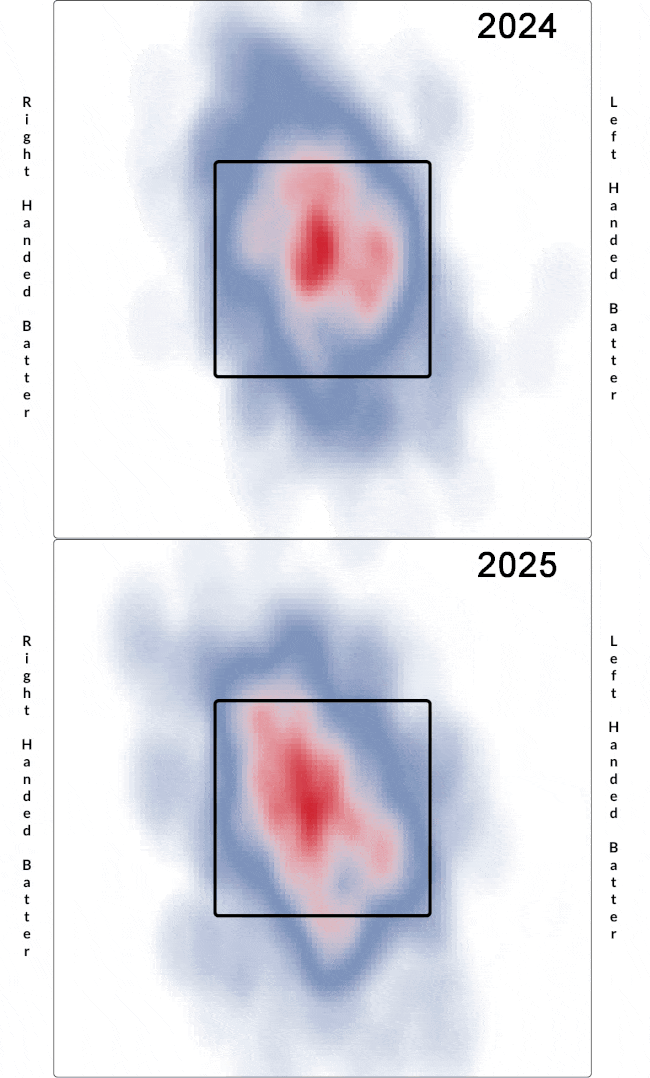
Home runs are always going to be a risk for a pitcher who depends on high four-seamers. When players aren’t swinging under them, they’re elevating them. Helsley is still averaging 99.3 mph on his fastball this season, and stuff models are still swooning over the slider that he throws nearly half the time and the curveball he throws 5% of the time. The issue is location. He has an extreme overhand delivery, averaging an arm angle of 63 degrees. That should make for a really fun contrast when Rogers pitches the seventh and Helsley pitches the eighth. It also means that Helsley’s four-seamer is almost pure rise, averaging 17.6 inches of induced vertical break and just 2.3 inches of arm-side break. A pitch like that plays best at or above the top of the zone, but he has struggled to keep the ball up there this season.
As a result, Statcast’s run values have the pitch going from being worth 0.7 runs per 100 pitches in 2024 to worth -2.0 runs this season. Its whiff rate has fallen, its hard-hit rate has risen, and its wOBA has climbed from .325 to .439.
This is still a dangerous pitch, and if Helsley can locate it better and pair it with his unhittable gyro slider, he instantly returns to being one of the best relievers in the game. Maybe the Mets think they can help him find his command or that it will come back in time anyway. Maybe they’ll just tell him to keep throwing hundos over the heart of the plate and trust in his stuff. No batter is dying to see a 100-mph heater, even if it comes in a couple inches lower than the pitcher hoped. If all Helsley does it keep pitching to a 3.00 ERA, he’ll still be very useful over the next couple of months.
That brings us to the prospects going back to the Cardinals. Baez is the main attraction here, and he happened to be on base when the trade went down, which meant that he learned the news when a pinch-runner came to take his place. Eric Longenhagen just wrote up the Mets top prospects a month ago, at which time Baez ranked 16th in the system with a future value of 40+. It’s at least worth noting that Baseball America had him ranked all the way up at sixth in the organization, though he was at least somewhat blocked in an organization with young infielders like Mark Vientos, Luisangel Acuña, Brett Baty, and Ronny Mauricio, along with two other infielders who came in ahead of him on our prospect rankings — Jacob Reimer and Elian Peña — and two 2024 draft picks: Mitch Voit and A.J. Ewing. Eric updated his blurb about Baez in light of the deal, so here it is in its entirety:
A $275,000 signee from 2022, Baez slashed .262/.338/.444 at St. Lucie last year and was given the quick hook up to Brooklyn after just a few games back there to start 2025. As of his trade to St. Louis for Ryan Helsely, he had a .740 OPS as a Cyclone, and is on his third consecutive season of a K% in the 15-17% range. This is a sensational hip-and-shoulder athlete who wows you with his ability to throw across his body, as well as his ability to rotate hard through contact. It’s a special, if specific, characteristic that creates some highlight reel plays on both sides of the ball, but doesn’t make Baez a great player or prospect on its own.
Let’s start with defense, where Baez continues to mostly play shortstop. He has the pure arm strength and actions to play short but nowhere near the requisite range, and his first step is slow enough that at times he looks lacking at third base, too. There is a subset of plays where Baez is forced to throw from a low arm slot that he appears most comfortable making, but he isn’t as consistent when he has to get on top of the baseball to throw long distance. This might make his best long-term position second base, where a lot of throws are made back across your body.
On offense, Baez has all-fields doubles power right now thanks to his lubricated hips, and he’s posting roughly average contact and power metrics under the hood. He has pull power even when his feet are early because he’s able to keep his hands back and rotate well through contact. The shaky Jenga block in Baez’s profile is his plate discipline, which gives his profile a Maikel Franco flavor that I can’t quite get out of my mouth. He’s been more patient in early counts this year than in seasons past, but he still expands too much with two strikes. Baez cuts his leg kick with two strikes to be in a better position to spoil tough pitches and grind out long at-bats, but this limits his pop; he had a paltry .490 OPS with two strikes at the time of the trade. This is a talented player who has performed like a future average everyday player on the surface, but who has some issues (defensive fit, strike zone judgment) that force one to round him down into a second division or bat-first utility FV tier.
Dohm and Elissalt are right-handed pitching prospects drafted out of college in 2024 who came in toward the end of the Mets list with future values of 35+. The Mets drafted the 23-year-old Dohm out of Mississippi State in the third round in 2024, and he has put up good results so far as a professional. He has looked solid this season, striking out nearly 30% of the batters he faced in seven games at Low-A and 11 games at High-A. He has a combined 2.87 ERA and 3.25 FIP over nearly 63 innings. Here’s what Eric wrote about him last month:
Dohm transferred from Ball State to Mississippi State, moved from the bullpen to the rotation, and had a hot start to his 2024 season before he was sidelined with an elbow injury. His mid-90s fastball has uphill angle and ride that helps it miss bats at the belt, and Dohm commands his slider (which isn’t especially nasty) to the bottom of the zone. He’s already blown through his career innings high in 2025 and is more of a dev project than the typical SEC arm. He projects as a fastball-heavy reliever.
The Mets took Elissalt in the 19th round of the 2024 draft out of Division-II Nova Southeastern. He was just promoted from Low-A to High-A, and he has a combined 3.04 ERA and 3.46 xFIP over 20 appearances and 56 1/3 innings. So far he’s also striking out right around 29% of the batters he faces. Elissalt can now touch 98, but Matt Eddy and Geoff Pontes of Baseball America have noted that he struggles with both command and maintaining consistent pitch shapes. Here’s what Eric wrote about him last month:
Elissalt went to high school in Miami but somehow ended up in Philly at LaSalle for his freshman season of college ball. It was his only one, as he would then transfer to Florida Southwestern and then Nova Southeastern before he was drafted. Elissalt has already experienced a four-tick bump to his fastball and an eight-tick bump to his primary breaking ball. He’s now averaging 95 mph and releasing from a low point that creates flat angle on a fastball with mediocre movement. Elissalt’s college curveball was scrapped in favor of a harder slider with plus length and bite. It’s the mix of a middle reliever if Elissalt can command his fastball to the location where it thrives.
In all, this is exactly the kind of deal we expect to see at the deadline. The Cardinals aren’t going anywhere with or without Helsley. He’s a pure rental who now has the chance to serve as a crucial piece in a playoff run. The Mets have built up their farm system to the point where they have enough players who may one day end up as good everyday infielders that they can afford to lose one. Dohm and Elissalt have a lot of developing to do for 23-year-old college arms, and they’re likely to get more chances as the Cardinals rebuild than they would have for a Mets team that is intent on building a dynasty.
Jim Rassol, Brad Penner, Michael McLoone-Imagn Images
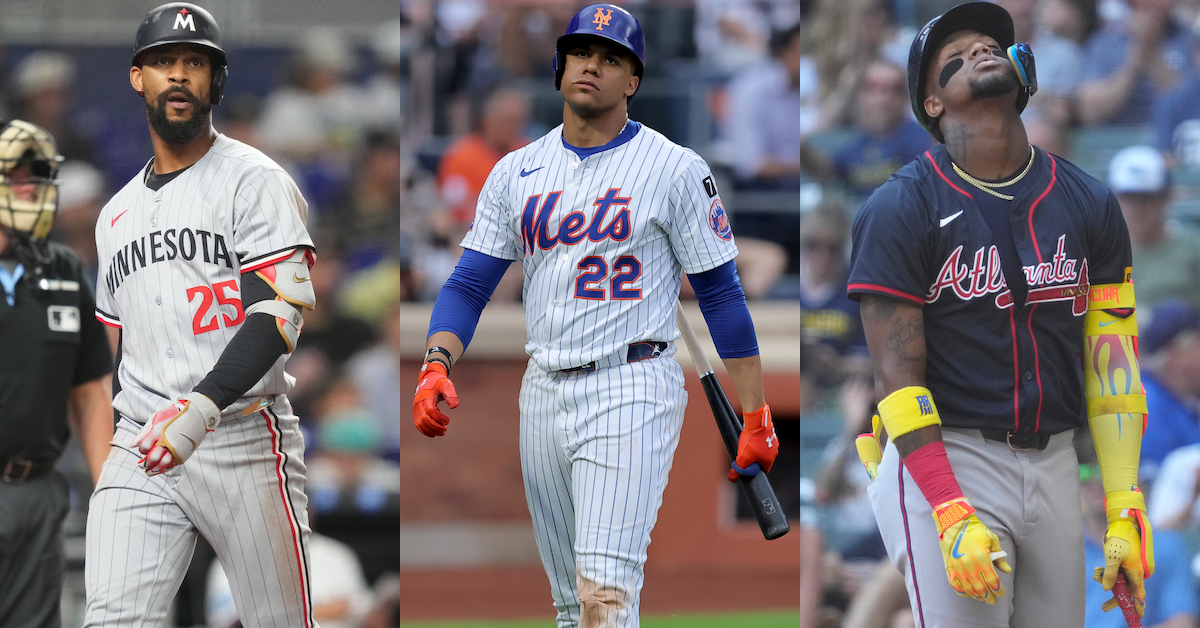
Happy Wednesday. Would you like some sad news? Are your cheek muscles getting tired from constantly smiling because everything in the world keeps humming along so smoothly? Let’s bring you down with a roundup of star outfielder injury news. We’ll go in ascending order of scariness, so if you don’t feel sufficiently depressed at the beginning, just stick with it. We’ll get you there.
We start in Minnesota, where Byron Buxton is headed to the IL with left ribcage inflammation. Buxton was removed from Saturday’s game after experiencing pain in his ribs while he was running. At the time, the Twins said Buxton would be day-to-day with “left side soreness.” He hasn’t spoken to the press since Friday, so all updates have come from manager Rocco Baldelli. On Saturday, Baldelli told reporters, “We’re just going to get an image tomorrow morning just to see what we’re dealing with. He actually felt it more running than anything else.” The MRI delivered good news, revealing only “cartilage irritation” rather than structural damage to the ribs. The team again classified Buxton as day-to-day. “It’s a good outcome,” said Baldelli. “We’ll see how he is tomorrow and so on, but to be day-to-day with what he left the game with, it’s a good thing. We’ll measure him out, get him looked at by the trainers each day, get him a lot of treatment and hopefully he’ll be back very soon.”
Unfortunately, Buxton hasn’t gotten back into a game and the Twins have lost three of four, cementing their status as deadline sellers. Harrison Bader has taken over in center field, but he’s widely expected to be moved at the deadline. Buxton has a no-trade clause and recently reiterated his stated desire to say with the Twins for life, but the injury seems likely to silence any remaining whispers about the possibility that he could be traded too. Read the rest of this entry »