Jay Jaffe: Good afternoon, folks! It’s a gorgeous day here in Brooklyn, and while that may not make a difference to you if you’re staring at a computer screen, it’s lightening my mood just a bit.
Jay Jaffe: Today I’ve got a piece on the Twins’ just-completed 13-game winning streak. That’s in the pipeline and should go up shortly.
12:04
Jay Jaffe: Tomorrow evening at 7 PM ET, I’ll be participating in a SABR roundtable on the subject of the recently reinstated Pete Rose and Shoeless Joe Jackson, along with Keith O’Brien (author of the recent Rose bio Charlie Hustle) and ESPN’s Don Van Natta Jr., who has reported on the reinstatement efforts regarding both Rose and Jackson. Jacob Pomrenke, an expert on Jackson and the 1919 Black Sox scandal, will serve as moderator. https://sabr.org/latest/this-week-in-sabr-may-16-2025#shoelessjoe
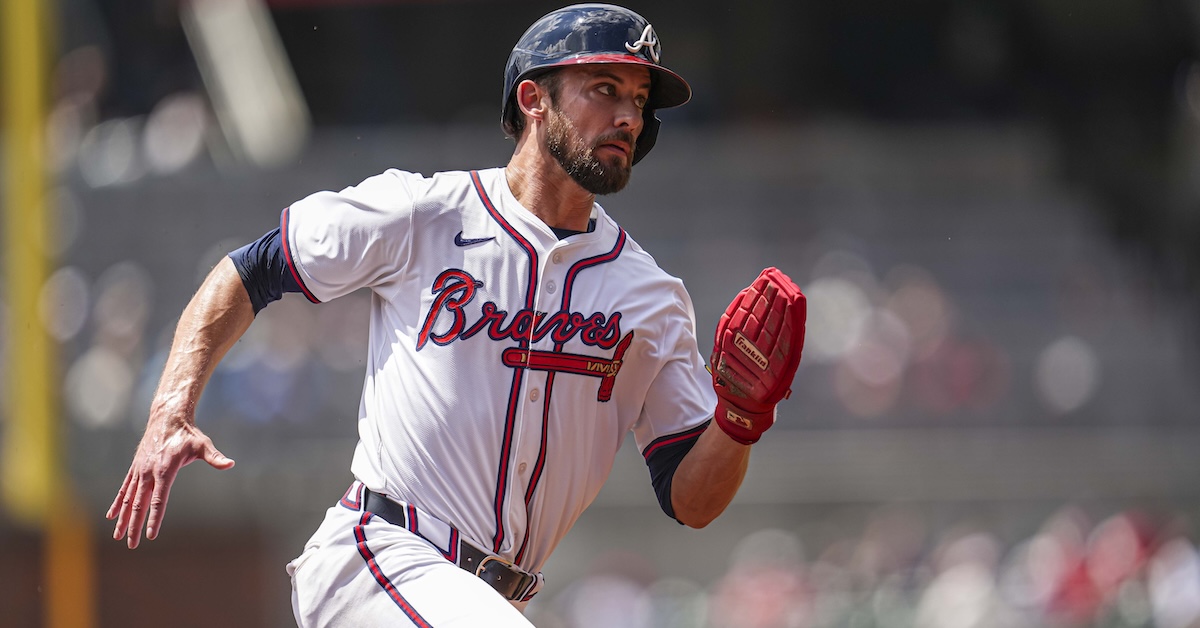
The Braves have limped through the first seven weeks of the season at far less than full strength, particularly within their outfield, where they lost Jurickson Profar to an 80-game PED suspension and have taken a very slow and deliberate approach to Ronald Acuña Jr.’s rehabilitation from his second anterior cruciate ligament repair surgery in three years. That outfield has ranked among the majors’ least productive, offset only by the emergence of Eli White. But at least help is on the horizon. Acuña’s rehab stint is finally underway, and he could return to the Atlanta lineup as soon as this weekend.
Acuña tore his left ACL on May 26, 2024 and underwent surgery to repair it on June 4. When he returned from his 2021 tear of his right ACL nine months and one week after surgery, he did not play up to his usual standard in ’22. The Braves resolved to take his rehab more slowly this time around, resisting the urge to accelerate his timeline even with Acuña reportedly hitting 450-foot bombs in batting practice early in spring training, and even with the team stumbling out of the gate by losing its first seven games and 13 of its first 18. The 27-year-old slugger finally returned to action last Tuesday with the Braves’ Florida Complex League affiliate, homering off Kevin Velasco, a 19-year-old righty on the Orioles’ FCL squad:
Acuña then moved up to Triple-A Gwinnett, where he went 3-for-6 with a homer and six walks in three games against the Charlotte Knights, affiliate of the White Sox, from Thursday through Saturday. The homer, a 102-mph, 420-footer to dead center, was hit off 25-year-old lefty Tyler Schweitzer. Read the rest of this entry »
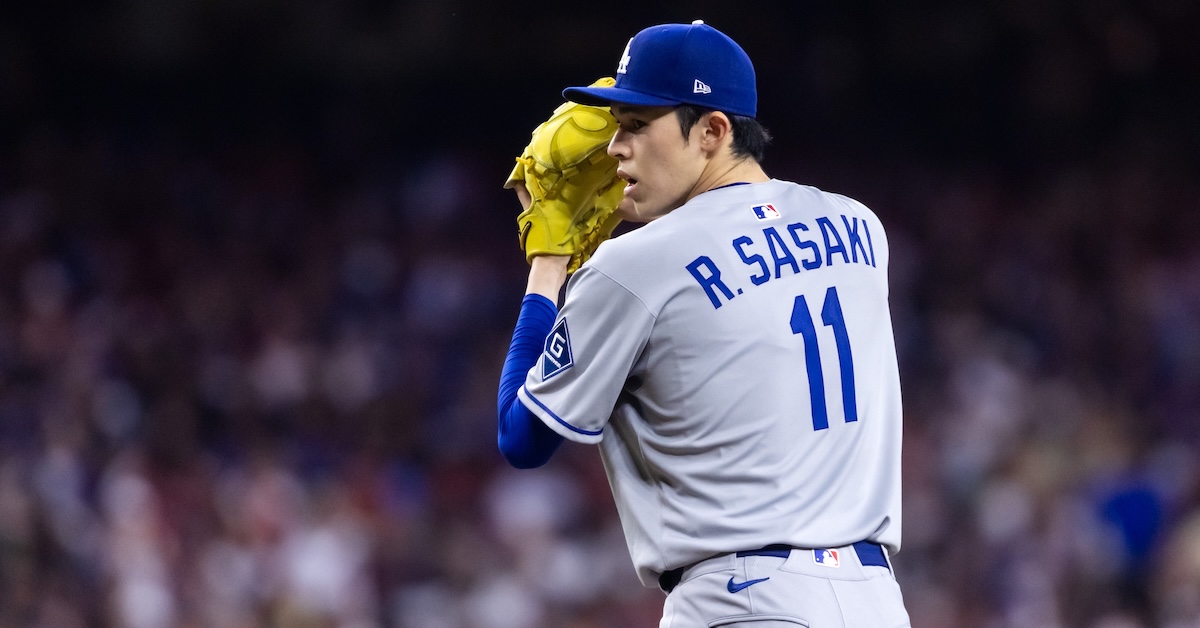
Though Roki Sasaki’s deal with the Dodgers wasn’t anywhere close to the winter’s biggest, few free agents were so coveted or came with as much hype attached. Known as “The LeBron James of Japanese baseball” for his exploits in high school, he was dominant — even transcendent — during his 2021–24 NPB run with the Chiba Lotte Marines. As he went through the posting process, his combination of youth and a tantalizing repertoire featuring an elite, 80-grade splitter as well as a fastball with triple-digit velocity generated widespread interest by teams, though a dip in that velo last year did rate as a cause for concern. Now, eight starts into his career with the Dodgers, the 23-year-old righty has been underwhelming, and now he’s hurt, too. On Tuesday, the team placed him on the 15-day injured list due to a shoulder impingement, continuing the dizzying level of turnover within the rotation of the NL West leaders.
This is the latest turn in what’s been a rocky rookie season for Roki. Through 34.1 innings — about 4 1/3 per start — he’s carrying a 4.72 ERA, a 6.16 FIP, and a 6.13 xERA. He’s struck out just 15.6% of batters, while walking 14.3% (the highest mark of any pitcher with at least 30 innings), and has served up 1.57 homers per nine. His 21.9% chase rate is the third-lowest at that 30-inning cutoff.
Batters have struggled to do anything with Sasaki’s splitter, which he’s thrown in the zone just 29.6% of the time; they’ve chased it 30.4% of the time, and overall have hit .137 and slugged .237 against it. Even so, his 35% whiff rate on the pitch is well off the 56.5% whiff rate it generated last year in NPB according to Sports Info Solutions. Batters have fared better against his slider (.250 AVG/.417 SLG, 33.3% whiff) and his four-seamer (.253 VG/.494 SLG, 10.1% whiff), rarely chasing either (14% of the time for the former, 15% for the latter). All six of his home runs allowed have been off of four-seamers, as have two would-be homers robbed by Andy Pages; his xSLG on that pitch is a worrisome .663. His 17.8% whiff rate on four-seamers in the upper third of the strike zone or higher is better, but batters have still slugged .692 on pitches there, with a .903 xSLG. Read the rest of this entry »
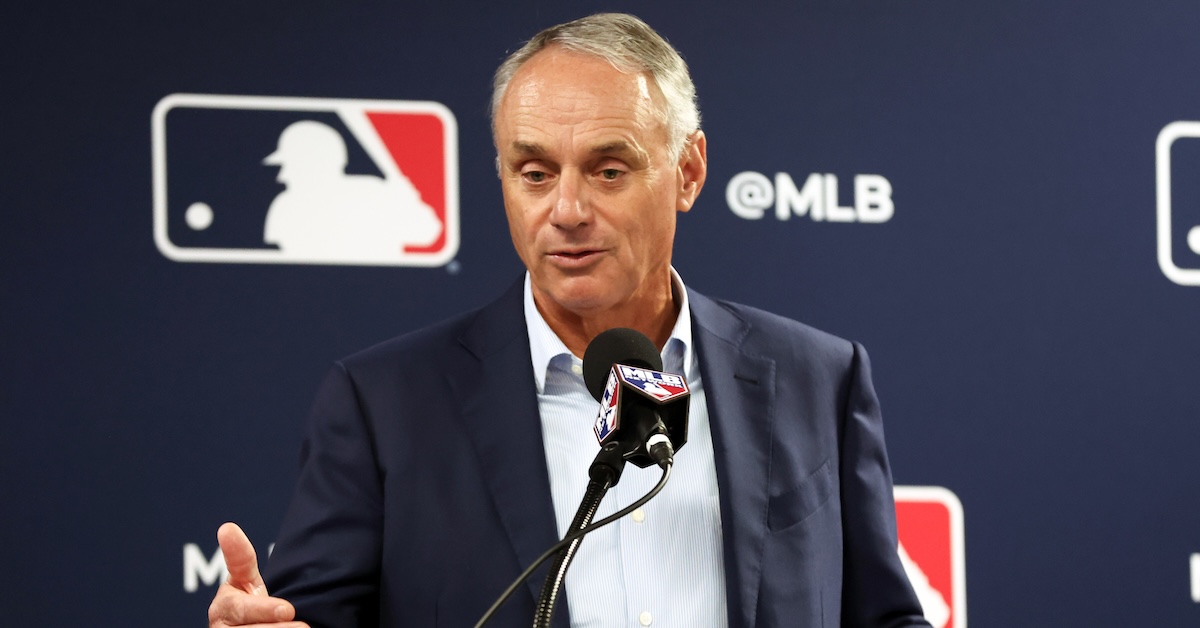
Roll over Pete Rose, and tell Shoeless Joe Jackson the news. In an historic decision that reversed over eight decades of precedent, on Tuesday commissioner Rob Manfred formally reinstated Rose, Jackson, and 15 other deceased individuals who had previously been placed on the permanently ineligible list for violating Rule 21, which bars players, umpires, and club and league officials and employees from gambling on baseball. The move opens the door for Rose (and Jackson) to be considered for election to the National Baseball Hall of Fame, but that opportunity won’t come until December 2027 at the earliest. Neither their placement on the Classic Baseball Era Committee ballot nor their election to the Hall is automatic even if they do become candidates, as the Hall’s heavy hand in committee proceedings — particularly with regards to players linked to performance-enhancing drugs — should remind us.
Given the extent to which Rose spent decades lying about his gambling and showing a lack of contrition even after he was banned — to say nothing of the allegations of statutory rape that surfaced in recent years — Manfred’s decision is a bitter disappointment, perhaps even a shock. While his decade-long tenure as commissioner has produced no shortage of grounds for criticism, he appeared to be hyper-conscious when it came to drawing a distinction between Major League Baseball’s recent embrace of legalized gambling, and the lines crossed by those who flouted Rule 21. Last June, Pirates infielder Tucupita Marcano was placed on the permanently ineligible list for making 387 baseball bets totaling $150,000 through a legal sports book, while in February, an arbiter upheld the firing of umpire Pat Hoberg for sharing legal sports betting accounts with a professional poker player who bet on baseball, and for impeding MLB’s investigation. Rose’s gambling, via bets placed through bookies, was illegal at the time as well as completely out of bounds given his role within baseball.
Manfred’s latest move was driven by the Rose family’s petition to remove Rose — who died last September 30 at the age of 83 — from the permanently ineligible list so that he can be considered for election to the Hall. Rather than just revisit Rose’s eligibility, however, the commissioner chose to issue a broader ruling that erased what had previously been a meaningful distinction between a popularly misunderstood “lifetime ban” (i.e, one ending with the death of the banned individual) and a permanent spot on baseball’s blacklist. Created by commissioner Kenesaw Mountain Landis in 1920, the permanently ineligible list was reserved for those found to have gambled on baseball (plus a few who committed other transgressions Landis viewed as grave) from future participation within the game. Read the rest of this entry »
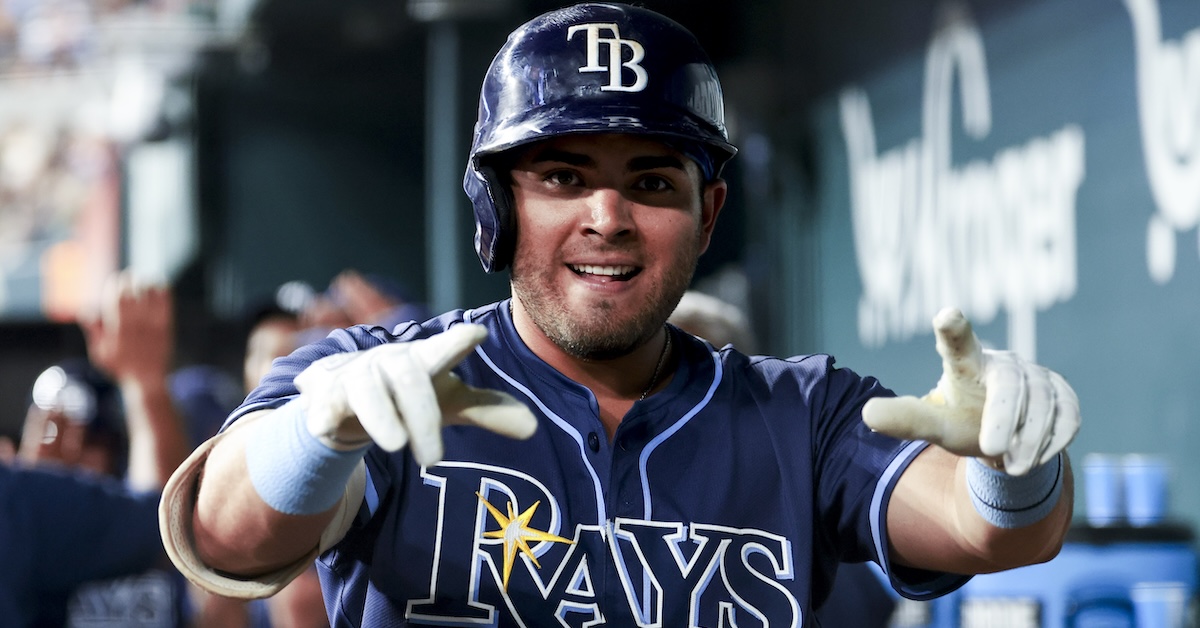
You could be forgiven for not noticing Jonathan Aranda until now. The former Top 100 prospect spent the past three years bouncing back and forth between Triple-A Durham and Tampa Bay without ever making more than 143 major league plate appearances in a single season. He missed substantial time due to injuries last year, and the majority of his time in the majors took place in September, once the Rays — a team that doesn’t get a ton of mainstream attention even when they’re successful — were out of the running. This year, the lefty-swinging 26-year-old has taken over the long half of a first base platoon for the Rays, and so far he’s been hitting the stuffing out of the ball.
After a trio of recent three-hit games — May 4 against the Yankees, May 8 against the Phillies, and May 11 against the Brewers — Aranda is currently batting .342/.429/.553, good enough to place among the AL’s top six in all three slash-stat categories. He ranks second in OBP and wRC+ (184), behind only Aaron Judge. His average exit velocity, hard-hit rate, sweet spot rate, expected batting average, expected slugging percentage, and expected wOBA all rank in the 94th percentile or above. Right now, he looks like the Rays’ next All-Star, filling the void left by the trade of Isaac Paredes, their lone 2024 representative at the Midsummer Classic. Read the rest of this entry »
Jay Jaffe: Good afternoon, folks! Welcome to another edition of my Tuesday chat, and apologies if the non-standard start time threw anybody for a loop; I needed to take care of some business after filing today’s piece a bit later than usual — a quick look at Jonathan Aranda’s breakout that took me a bit longer to complete than I expected because I had colleague Davy Andrews over for beers last night as ww watched some baseball. Anyway, that should go up at 1 pm ET.
You have weakened: Your reverse-jinx powers are no match for the supernova that is Judge. I swear, every night he doesn’t show up in the highlights, I’m like, well, guess he had a bad game. (Looks at last night’s box score – 2-3 with a double and 2 walks)
12:20
Jay Jaffe: We’re seeing one of the best runs — if not the best — by a hitter in the 21st century. He’s hitting .414/.500/.783 (255 wRC+) six weeks into the season! Caught a few of his at-bats in the last couple of days and it’s like he’s using a pool cue out there to place the ball where the fielders ain’t.
12:20
Sodo Mojo: Who ends up with more Career WAR Julio Rodriguez or Aaron Judge. I don’t think Julio ever approaches Judges single season rate stats but got a 4 year head start.
12:22
Jay Jaffe: I’m gonna go with the guy who looks like he might be on his way to his third 10-win season out of four.
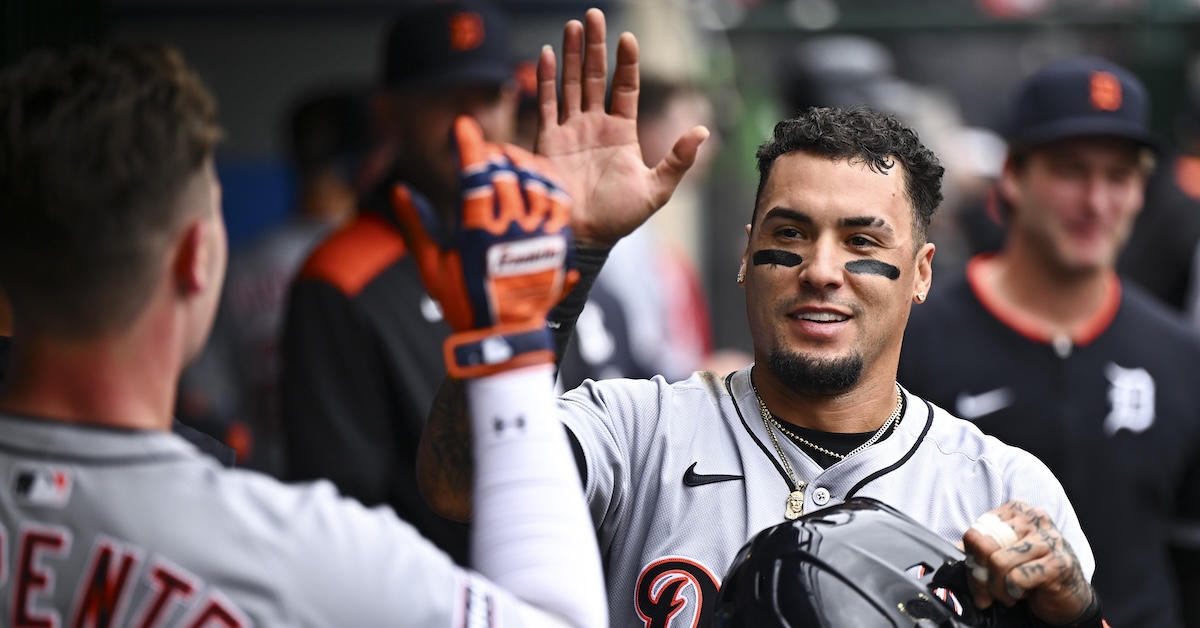
Through his first three seasons in Detroit, Javier Báez was largely a disappointment, with a combination of flashy defense and free swinging that yielded such diminishing returns that he sank below replacement level while battling injuries last year. He missed the late-season run that helped the Tigers capture a Wild Card spot, and as spring training opened, a full-time place in their lineup wasn’t guaranteed. Amid a rash of injuries to other Tigers, he’s not only split his time between center field — a position he hadn’t played in a regular season game before — third base, and shortstop, he’s been a productive hitter thanks to better health and some adjustments to his swing.
Even while going hitless on Friday and Sunday against the Rangers, the 32-year-old Báez is hitting .300/.336/.455 with three homers and a 127 wRC+. The peripherals underlying that are admittedly shaky, and he’s walking just 3.4% of the time, but thanks to positive defensive contributions at comparatively unfamiliar positions, he’s fourth among the team’s position players with 1.1 WAR — and he’s done it for a team that has the AL’s best record (26-15, .634) and largest division lead (2 1/2 games). For the first time in awhile, watching him is a whole lot of fun.
The Tigers signed Báez to a six-year, $140 million deal in November 2021, after he’d split his season between the Cubs and the Mets (who dealt awayPete Crow-Armstrong in the package to acquire him) — a strong one in which he posted a 117 wRC+ and 4.1 WAR. He was serviceable at best during his first season in Detroit (.238/.278/.393, 89 wRC+, 2.0 WAR) but sank to .222/.267/.325 (63 wRC+) with 0.8 WAR in 2023, then hit just .184/.221/.294 (43 wRC+) in 80 games last year. He missed nearly a month in June and July due to lumbar inflammation; the problem flared up again in August, accompanied by right hip inflammation. Under the belief that the Tigers were going nowhere at 62-66, he played his last game of the season on August 22 before undergoing surgery. Without their highest-paid player — a coincidence that was tough to miss given his underperformance — the Tigers went a major league-best 24-10 and snatched the third AL Wild Card spot, their first playoff berth in a decade. Read the rest of this entry »
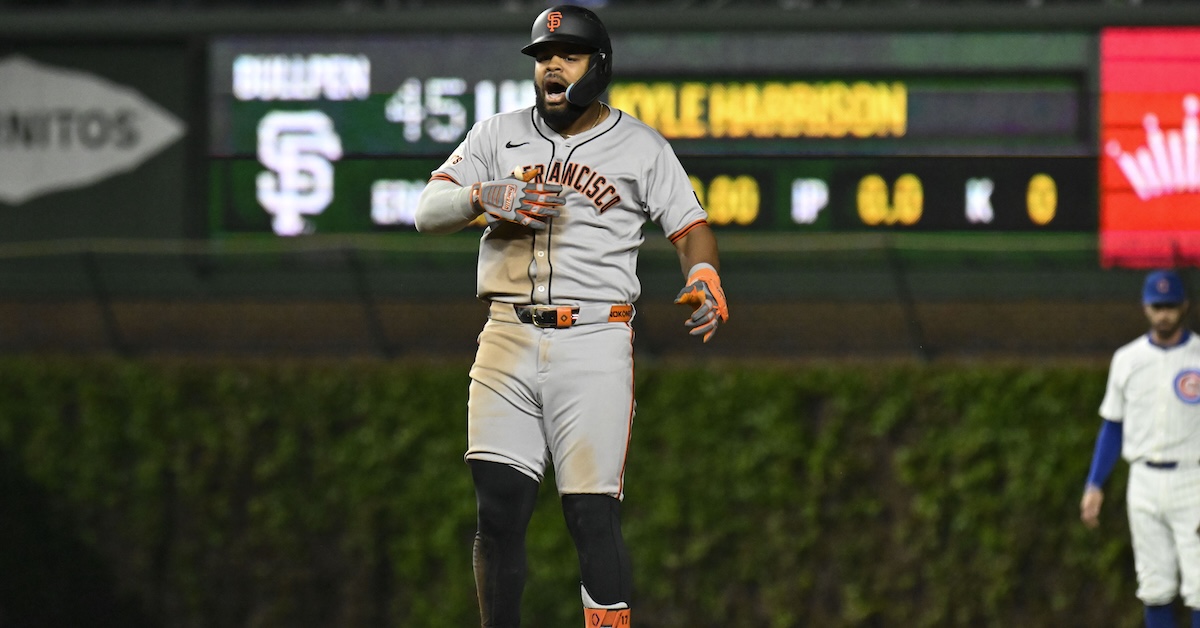
Things did not go well for the Cubs’ Ryan Pressly on Tuesday night against the Giants at Wrigley Field. Chicago had clawed its way back from a fourth-inning, 5-2 deficit, capped by a two-run, ninth-inning rally that sent the game into extra innings. After an uneventful 10th, all hell broke loose in the 11th, as Pressly failed to retire any of the eight batters he faced. By the time the dust settled, nine runs had scored, and unlike the Cubs’ April 18 game against the Diamondbacks, where they answered 10 eighth-inning runs with six of their own on the bottom of the frame and won 13-11, this time they fell 14-5.
As you might expect, it took a bad break or two to blow the doors open in that 11th inning. Following a double by Heliot Ramos and an RBI single by Patrick Bailey, Brett Wisely laid down a sacrifice bunt toward the first base side of the mound. Pressly fielded the ball and made an awkward, backhanded flip to Carson Kelly, but the ball dribbled under the catcher’s glove. Ramos was safe at home and Wisely reached first, still with nobody out. Mike Yastrzemski walked to load the bases, and then Willy Adames was hit by a pitch to force in Bailey. On the replay, it looked like a wild pitch that had gotten by Kelly, which would have advanced the runners and scored the run nonetheless, but home plate umpire Bill Miller ruled the ball had grazed Adames. The call was upheld after the Cubs challenged it, adding another baserunner to the mix, and consecutive singles by Jung Hoo Lee, Matt Chapman, and Wilmer Flores brought in four more runs (two on Chapman’s hit). With the score already a lopsided 11-5, Cubs manager Craig Counsell mercifully gave Pressly the hook.
The onslaught didn’t stop. Reliever Caleb Thielbar entered and finally recorded the first out by striking out Christian Koss before serving up an RBI double to Ramos. Bailey added a sacrifice fly before David Villar, pinch-hitting for Wisely, struck out. The Cubs went down in order against Kyle Harrison in the bottom of the 11th, and that was that. Read the rest of this entry »
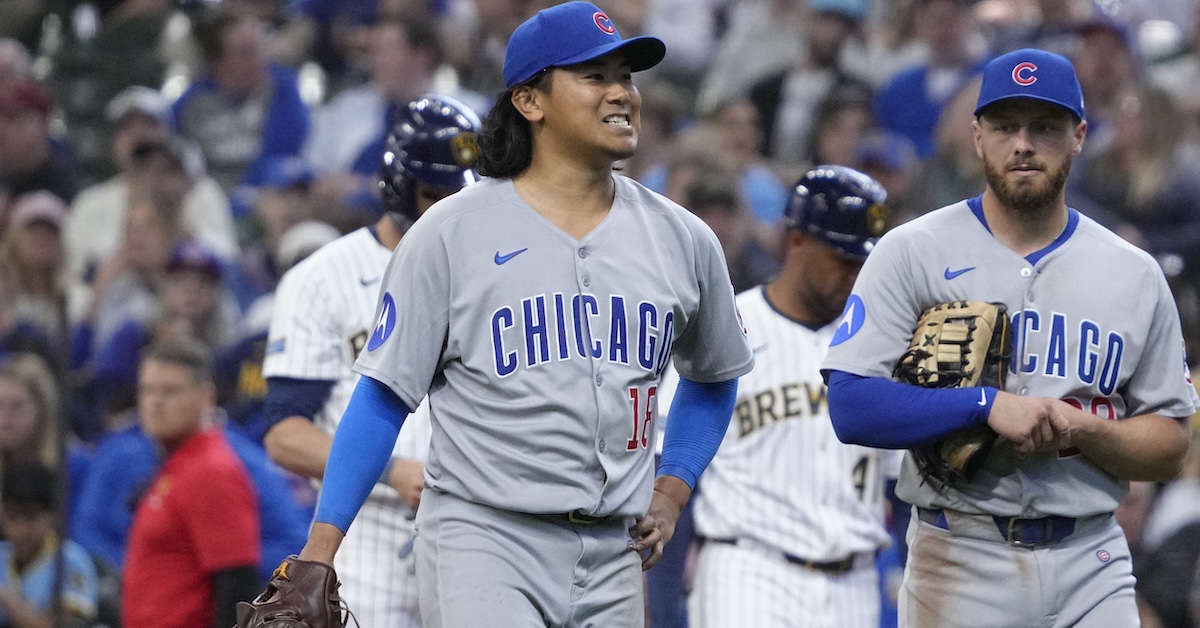
While the Cubs are 22-15 and own a three-game lead in the NL Central — the largest of any team at this writing — the rotation that’s helped them to that perch has taken its hits recently. Last month, 2023 All-Star lefty Justin Steele underwent surgery to repair his ulnar collateral ligament, and Javier Assad suffered a setback while rehabbing to return from an oblique strain. And then on Monday, the Cubs placed 2024 All-Star lefty Shota Imanaga on the injured list due to a left hamstring strain. While his injury isn’t considered to be major, his loss could tighten the division race and test the depth of the already-depleted rotation.
After leaving his April 29 start against the Pirates after five innings due to cramps in both quadriceps, Imanaga cruised through the first five innings against the Brewers on Sunday in Milwaukee, allowing just three singles while striking out four without a walk. The 31-year-old’s afternoon ended on a sour note, however. With the game still scoreless in the sixth, he yielded a leadoff single to Jackson Chourio and then a one-out walk to William Contreras. It looked as though he might escape unscathed when he got Christian Yelich to ground to first baseman Michael Busch, who started a potential 3-6-1 double play. Imanaga ran to cover first base, but not only was Dansby Swanson’s throw a bit late, the pitcher came up limping, forcing him out of the game.
Reliever Julian Merryweather entered, threw a wild pitch that allowed Chourio to score from third, and by the time he got the final out, three more runs had scored in what ended as a 4-0 loss for the Cubs. They suffered a much more gruesome defeat on Tuesday, when reliever Ryan Pressly allowed eight straight Giants to reach base in what became a nine-run 11th inning and a 14-5 drubbing. Read the rest of this entry »
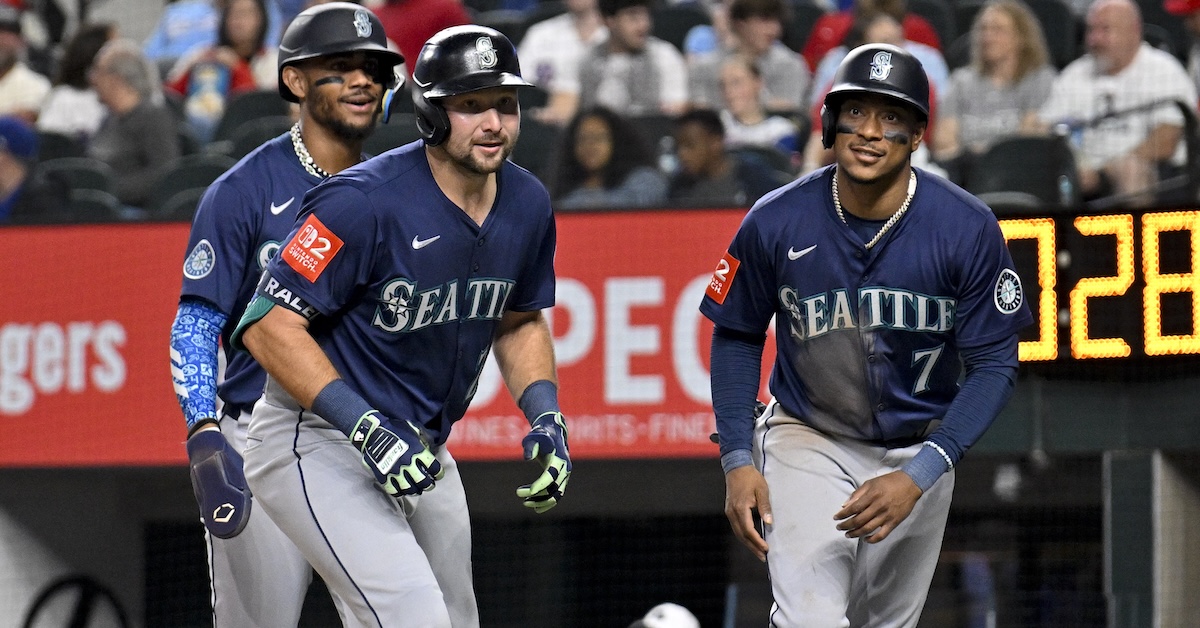
Though they’ve lost two straight to trim their AL West lead to a single game, the Mariners are a first-place team thanks to a recent 16-4 stretch that has boosted their record to 20-14. As I noted last week, their success for a change hasn’t been driven by the strength of their rotation, which has been without George Kirby thus far due to shoulder inflammation and is now without Logan Gilbert, who landed on the IL in late April with a flexor strain. Rather, Seattle been carried by an exceptionally potent offense, a marked contrast from recent years, particularly 2024, when the team’s failure to score contributed to the August firings of manager Scott Servais and hitting coach Jarret DeHart. These Mariners have benefited not only from Cal Raleigh’s heavy hitting, but from the ongoing presence of Randy Arozarena, who was acquired just before last year’s trade deadline, and rebounds from players who struggled due to injuries last season, such as J.P. Crawford and Jorge Polanco. The return of Hall of Famer Edgar Martinez to their coaching staff has helped, and it does appear as though T-Mobile Park has been a bit more forgiving than usual.
Raleigh and Polanco are the hitters getting the headlines. Raleigh is currently slashing .240/.359/.574 with a major league-high 12 homers, and he ranks third in the AL in slugging percentage behind only Aaron Judge and Alex Bregman, and fourth in the league in wRC+ behind those two and Jonathan Aranda(!). While Polanco doesn’t have enough plate appearances to qualify for the batting title because an oblique strain has limited him to swinging left-handed and to DHing instead of playing the field, he’s hit a ridiculous .369/.407/.750 (233 wRC+) with nine homers in just 92 plate appearances (14 short of qualifying). Crawford is batting .294/.417/.404 (151 wRC+) and Arozarena .224/.366/.414 (136 wRC+). Both players are walking over 15% of the time, with Raleigh drawing a pass 14.4% of the time; the team’s 11.2% walk rate leads the majors.
All of that has helped the Mariners withstand a comparatively slow start by Julio Rodríguez (.206/.308/.375, 103 wRC+) and a wave of injuries that has forced right fielder Victor Robles, outfielder-first baseman Luke Raley, utilityman Dylan Moore, and second baseman Ryan Bliss to the injured list alongside the aforementioned rotation stalwarts [Update: Moore was activated just after this article was published]. Even so, the Mariners have gotten a 100 wRC+ or better from every position besides first base (where Rowdy Tellez, Donovan Solano, Raley and Moore have combined for a 60 wRC+) and right field (where six players, among them the injured Robles, Raley and Moore, have combined for a 90 wRC+). Read the rest of this entry »

 Jay Jaffe: Good afternoon, folks! It’s a gorgeous day here in Brooklyn, and while that may not make a difference to you if you’re staring at a computer screen, it’s lightening my mood just a bit.