Below is an analysis of the prospects in the farm system of the Cleveland Guardians. Scouting reports were compiled with information provided by industry sources as well as my own observations. This is the third year we’re delineating between two anticipated relief roles, the abbreviations for which you’ll see in the “position” column below: MIRP for multi-inning relief pitchers, and SIRP for single-inning relief pitchers. The ETAs listed generally correspond to the year a player has to be added to the 40-man roster to avoid being made eligible for the Rule 5 draft. Manual adjustments are made where they seem appropriate, but I use that as a rule of thumb.
A quick overview of what FV (Future Value) means can be found here. A much deeper overview can be found here.
All of the ranked prospects below also appear on The Board, a resource the site offers featuring sortable scouting information for every organization. It has more details (and updated TrackMan data from various sources) than this article and integrates every team’s list so readers can compare prospects across farm systems. It can be found here. Read the rest of this entry »
Below is an analysis of the prospects in the farm system of the Cincinnati Reds. Scouting reports were compiled with information provided by industry sources as well as my own observations. This is the third year we’re delineating between two anticipated relief roles, the abbreviations for which you’ll see in the “position” column below: MIRP for multi-inning relief pitchers, and SIRP for single-inning relief pitchers. The ETAs listed generally correspond to the year a player has to be added to the 40-man roster to avoid being made eligible for the Rule 5 draft. Manual adjustments are made where they seem appropriate, but I use that as a rule of thumb.
A quick overview of what FV (Future Value) means can be found here. A much deeper overview can be found here.
All of the ranked prospects below also appear on The Board, a resource the site offers featuring sortable scouting information for every organization. It has more details (and updated TrackMan data from various sources) than this article and integrates every team’s list so readers can compare prospects across farm systems. It can be found here. Read the rest of this entry »
Below is an analysis of the prospects in the farm system of the Los Angeles Dodgers. Scouting reports were compiled with information provided by industry sources as well as my own observations. This is the third year we’re delineating between two anticipated relief roles, the abbreviations for which you’ll see in the “position” column below: MIRP for multi-inning relief pitchers, and SIRP for single-inning relief pitchers. The ETAs listed generally correspond to the year a player has to be added to the 40-man roster to avoid being made eligible for the Rule 5 draft. Manual adjustments are made where they seem appropriate, but I use that as a rule of thumb.
A quick overview of what FV (Future Value) means can be found here. A much deeper overview can be found here.
All of the ranked prospects below also appear on The Board, a resource the site offers featuring sortable scouting information for every organization. It has more details (and updated TrackMan data from various sources) than this article and integrates every team’s list so readers can compare prospects across farm systems. It can be found here. Read the rest of this entry »
Below is an analysis of the prospects in the farm system of the Chicago White Sox. Scouting reports were compiled with information provided by industry sources as well as my own observations. This is the third year we’re delineating between two anticipated relief roles, the abbreviations for which you’ll see in the “position” column below: MIRP for multi-inning relief pitchers, and SIRP for single-inning relief pitchers. The ETAs listed generally correspond to the year a player has to be added to the 40-man roster to avoid being made eligible for the Rule 5 draft. Manual adjustments are made where they seem appropriate, but I use that as a rule of thumb.
A quick overview of what FV (Future Value) means can be found here. A much deeper overview can be found here.
All of the ranked prospects below also appear on The Board, a resource the site offers featuring sortable scouting information for every organization. It has more details (and updated TrackMan data from various sources) than this article and integrates every team’s list so readers can compare prospects across farm systems. It can be found here. Read the rest of this entry »
Below is an analysis of the prospects in the farm system of the Milwaukee Brewers. Scouting reports were compiled with information provided by industry sources as well as my own observations. This is the third year we’re delineating between two anticipated relief roles, the abbreviations for which you’ll see in the “position” column below: MIRP for multi-inning relief pitchers, and SIRP for single-inning relief pitchers. The ETAs listed generally correspond to the year a player has to be added to the 40-man roster to avoid being made eligible for the Rule 5 draft. Manual adjustments are made where they seem appropriate, but I use that as a rule of thumb.
A quick overview of what FV (Future Value) means can be found here. A much deeper overview can be found here.
All of the ranked prospects below also appear on The Board, a resource the site offers featuring sortable scouting information for every organization. It has more details (and updated TrackMan data from various sources) than this article and integrates every team’s list so readers can compare prospects across farm systems. It can be found here. Read the rest of this entry »
The final installment of this week’s set of international player updates revolves around the amateur prospects who will begin to sign a month from now when the new international signing period begins on January 15. An overview of the rules that govern signing international amateurs can be found on MLB’s glossary here, while more thorough and detailed documentation can be found starting on page 287 of the CBA (forgive the 2017-21 version – the full text of the latest agreement isn’t publicly available yet), and page 38 of the Official Professional Baseball Rules Book. I pulled out portions of these documents for reference in the pieces published earlier this week and have done so again here, but I suggest readers familiarize themselves further. The international amateur arena is a procedural and ethical mess that has undergone wholesale structural changes several times during my time as a writer, most recently because of what the pandemic did to shift the timeline of each signing period.
Projected signing teams, scouting reports and tool grades on just over 30 players from the 2023 class can now be viewed over on The Board. Because the International Players tab has an apples and oranges mix of older pros from Asian leagues and soon-to-be first-year players, there is no explicit ranking on The Board, but I’ve stacked the class of anticipated 2023 signees in a table below with a ranking for reference should you need it. As has been the case with past classes, after these players sign, they will be pulled off the International Players section of The Board and warehoused in a ranking of their signing class for record-keeping purposes.
As always, the FV grade is a more important measure for readers to focus on than the ordinal rankings here. Because these players are so close in age to the younger prospects who participate in any given domestic draft, I like to use theoretical draft position as a barometer by which to grade the international amateurs. Scouting and comparing international players’ tools and athleticism to those of recent and upcoming domestic amateurs helps me to triangulate approximately where they’d go in a given draft, and assign them a FV based on that approximation. Players with a 40+ FV grade or above tend to be prospects who I think would go in the first two rounds of a draft, while the teenage 40 FV prospects are the sort I’d ballpark in the $700,000 to $1 million bonus range as draft prospects, basically the slot amounts just after the second round. Read the rest of this entry »
After being cancelled last offseason due to the lockout, on Wednesday, the 2022 Rule 5 Draft was completed in San Diego, with 15 players selected during the Major League phase. Below are our thoughts on those players; the numbers you see in parentheses are the 40-man roster counts that were recited by each team during the draft roll call. Remember that you can venture over to The Board for more information about several of these guys.
But first, our annual refresher on the Rule 5 Draft’s complex rules. Players who signed their first pro contract at age 18 or younger are eligible for selection after five years of minor league service if their parent club has not yet added them to the team’s 40-man roster; for players who signed at age 19 or older, the timeline is four years. Teams with the worst win/loss record from the previous season pick first, and those that select a player must not only (a) pay said player’s former club $100,000, but also (b) keep the player on their 25-man active roster throughout the entirety of the following season, with a couple of exceptions, mostly involving the injured list. If a selected player doesn’t make his new team’s active roster, he is offered back to his former team for half of the initial fee. After the player’s first year on the roster, he can be optioned back to the minor leagues. Read the rest of this entry »
I’ve made an end-of-season update to the top 100 prospects list, which you can now see on The Board. With the season is over, these rankings are frozen in the “2022 Updated” section of The Board, and aside from me pulling off some stray rookie graduates from this season, there will be no more changes until prospect lists start rolling out this offseason. As always, an arbitrary endpoint to the “top 100” list doesn’t make sense — the tier of players who are about as good as the 100th best prospect in baseball extends beyond that — so this is an ordinal ranking of the top 109 prospects in baseball at this time. This group will likely expand to close to 120 players throughout our offseason evaluations.
What might change now that the minor league season is over? We still have five weeks of Arizona Fall League, the tail end of instructs, and all of winter ball in Mexico, the Dominican Republic and Venezuela. Plus, whatever info and scout/industry opinions are on their way to my ears and brain are on a bit of a lag, which is especially relevant for the prospects who were in the DSL this year and at instructs in Florida.
This update was made with a focus on upper-level players, ones who are on the precipice of the big leagues and could conceivably play a role in 2023. I used a light touch on the Top 100 guys who are in the Fall League (you can see which prospects are playing there over on the Seasonal tab of The Board) since I’ll be evaluating that group in person over the next several weeks, and that includes players who had good seasons (like Jordan Lawlar) and guys who had rough ones (like Luis Matos). The Fall League is stacked, and I hope to see you out there. Read the rest of this entry »
Ranked and briefly analyzed below are the prospects who have been traded during the loosely defined “deadline season,” which for simplicity’s sake I consider all of July. Most of the deals these prospects were a part of have been analyzed at length on this site. An index of those pieces can be found here, or by clicking the hyperlink in the “Trade” column below, which will take you to the relevant article. I’ve moved all of the 35+ FV and above players listed here to their new orgs over on The Board, so you can click through to see where they rank among their new teammates and read their full scouting reports. Our Farm Rankings, which update live, also reflect these changes, so you can see where teams’ systems stack up following the draft and the deadline compared to prior to the draft and relevant 2022 prospect graduations.
I’ve included the compensatory draft pick the Cubs will receive after they extend Willson Contreras a qualifying offer and he signs elsewhere, as they will essentially be trading him for that pick if he signs with another team this offseason, which I think is the most likely outcome. Now, on to the rankings. Read the rest of this entry »
Over the last two and a half years, the Nationals’ World Series championship roster has deteriorated around Juan Soto, hollowed out by trades and underperformance. After rejecting a 15-year, $440 million extension offer, the club realized Soto’s camp was hellbent on him hitting free agency, an eventuality that put Washington at risk of only receiving draft pick compensation for him, and not until a few years from now. With new ownership looming, the Nationals were unlikely (and the team’s current owners seemingly unwilling) to build a contender around Soto before he hit the market; every passing day, arbitration year, and postseason spent in Washington diminished his trade value. Once the team decided to move on, it made sense to deal Soto now, while the club trading for him could enjoy him for three postseasons instead of two. Still, it’s a painful parting, just as it’s painful for it to have unfolded in public the way that it did, with information leaked to prime fans with the logic I outlined above in the hopes of avoiding blowback.
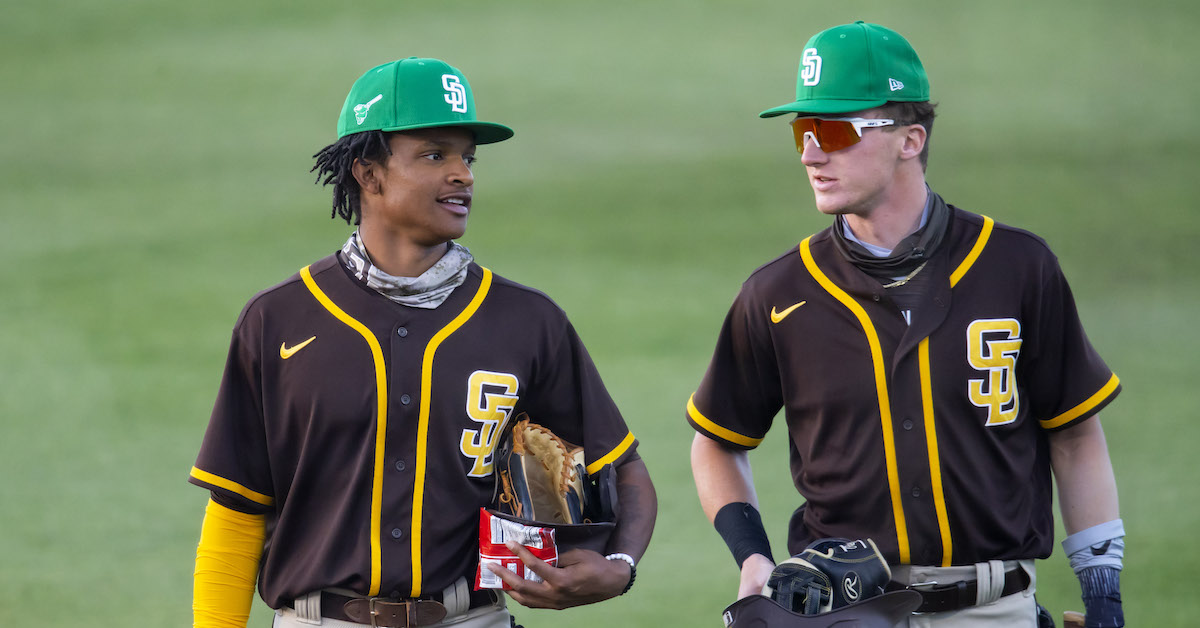
The Padres, meanwhile, obviously coveted Soto. A.J. Preller tends to press the gas pedal a little harder than other folks in the industry, both in terms of the players he asks for and what he’s willing to give up in return. There are alternate timelines in which this deal doesn’t get done. There are iterations of a Bryan Reynolds trade that could have occurred this past winter that would have put Soto out of reach; there’s a version of the 2020-21 offseason where Nolan Arenado becomes a Padre instead of a Cardinal. But because those (and other deals) didn’t happen, and thanks to James Wood’s emergence, the Padres still had enough at the top of their farm system to trade for a 23-year-old future Hall of Famer and carry several of the most exciting and talented players of this century on their roster at the same time while they’re at it. Soto, Fernando Tatis Jr., Manny Machado, and Yu Darvish all have enduring baseball significance. The Padres are no-doubt contenders and among the most exciting teams in pro sports.