Archive for Featured

Jacob deGrom, Command God

Kevin Jairaj-Imagn Images

In the introduction to their 2023 Saberseminar presentation, Scott Powers and Vicente Iglesias hit on a fundamental truth about pitching: The variable that bests predicts the outcome of a pitch is the location where it crosses the plate. For a case study, look no further than this tweet from MLB.com’s David Adler about Yoshinobu Yamamoto’s splitters.

If Yamamoto buries his splitter arm side, he’s probably getting a whiff. If it’s on the edge of the zone, it’s likely a foul ball. If it catches plate, it’s getting put in play. The location dictates the outcome.

Given this truth, pitchers who command the ball best ought to dominate. But there’s a catch. As Powers and Iglesias noted, the location is also the variable with the least predictive reliability. If you see a pitcher throw a fastball 98 mph, you can be pretty sure he is going to do it again. A dotted backdoor slider, on the other hand, does not guarantee an entire game of dotted backdoor sliders. Command is both the most important and the least reliable quality for a pitcher.

Scott Powers and Vicente Iglesias, 2023 Saberseminar

Nobody can nail the corners with every pitch. But pitchers can at least minimize the variance of their locations, finding relative reliability within the chaos of command. And in 2025, there is perhaps nobody more reliable than Jacob deGrom.

deGrom’s flat attack angle fastball and firm slider have (justifiably) built his reputation as a stuff monster. Even after easing up on the gas pedal this season, deGrom is still a darling in the eyes of the models. His overall Stuff+ is in the 80th percentile for starters with at least 30 innings pitched, fueled by his depth-y 89-mph slider. PitchingBot likes deGrom even more, ranking him in the top 10 among those pitchers. Over at Baseball Prospectus, the StuffPro model believes deGrom wields four pitches — his curveball and changeup, in addition to the heater and slider — that all grade out as plus.

But stuff is no longer deGrom’s carrying tool. Possibly as a function of his decision to throw slower, possibly as a positive outcome of aging, deGrom’s standout skill these days is his command.

deGrom’s unbelievable precision came to my attention while writing about Hunter Gaddis for a piece that was published on Monday. As part of my effort to discern whether Gaddis owed his early-season success to slider command (the verdict: inconclusive), I created a version of the Kirby Index for sliders to see where he landed. That metric measured the variance in release angles and release points and distilled those figures into a single score that captured command ability. Originally, it was designed for fastballs, which tend to be thrown to all parts of the strike zone. It perhaps works even better for sliders, which generally are thrown to fewer targets. Gaddis’ rank among his fellow pitchers was nothing remarkable, but deGrom’s name sitting at the very top caught my attention.

Kirby Index (Sliders)
Player Name VRA Pctl HRA Pctl Vert. Release Pctl Horiz. Release Pctl Kirby Index
Jacob deGrom 99th 97th 91st 79th 0.94
Merrill Kelly 97th 77th 78th 97th 0.89
Zac Gallen 97th 82nd 92nd 39th 0.84
Taijuan Walker 90th 66th 92nd 76th 0.82
Zack Littell 87th 96th 88th 17th 0.80
Jack Flaherty 94th 92nd 3rd 78th 0.76
Reese Olson 93rd 56th 49th 93rd 0.76
Scott Blewett 73rd 61st 95th 83rd 0.75
Corbin Burnes 92nd 90th 3rd 82nd 0.75
Bryce Elder 81st 99th 59th 28th 0.75
SOURCE: Baseball Savant
Minimum 50 sliders thrown to right-handed hitters.

As I wrote earlier this year, a more straightforward implementation of the Kirby Index would be to just measure the variance of the actual pitch locations. For this story, I calculated the standard deviation of the vertical and horizontal locations of a given pitcher’s sliders; once again, deGrom found himself at the top of the pack. Look at how much distance there is between him and the next closest pitcher:

Location Variation (sliders)
Player Name Horizontal Location (St Dev) Vertical Location (St Dev) Overall (St Dev)
Jacob deGrom 0.525 0.498 0.724
Merrill Kelly 0.595 0.586 0.835
Zac Gallen 0.616 0.565 0.836
Corbin Burnes 0.556 0.671 0.871
Jack Flaherty 0.575 0.659 0.874
Bryce Elder 0.514 0.713 0.879
Zack Littell 0.574 0.719 0.920
Luarbert Arias 0.543 0.755 0.930
Enyel De Los Santos 0.732 0.619 0.959
Dylan Lee 0.493 0.827 0.962
SOURCE: Baseball Savant
Minimum 50 sliders thrown to right-handed hitters.

Random tangent here, but you have to admire Luarbert Arias for refusing to throw his junky 82-mph slider anywhere but inside the strike zone.

Anyway, measuring location densities, ultimately, could just point at pitchers who fill up the strike zone; the real test of command is a pitcher’s ability to hit his actual target. To that end, Driveline Baseball provided me with a sample of their proprietary miss distance data. Using Inside Edge tracking data, Driveline measures the distance from the intended target to the actual location of the pitch.

No surprise — deGrom’s slider miss distance ranked first among all pitchers. The league-average miss distance for sliders is about 12.5 inches; this year, deGrom is missing his target by under nine inches, nearly three standard deviations below the average. Any way you slice it, deGrom is commanding his slider like no one else in the sport.

The outcomes have been unassailable. So far, deGrom’s slider has returned a run value of -3.2 per 100 pitches thrown, the best mark for any slider thrown by a starting pitcher. Not only is he getting a bunch of swing and miss — a 38.1% whiff rate, as of this writing — it’s also grabbing a ton of called strikes. When batters do manage to put it in play, they can’t do much with it. The average launch angle on the pitch is just 2°; the xwOBA is a meek .227.

The harmless outcomes on balls in play are a function of deGrom’s targets. To right-handed hitters, he targets the classic low-away corner, breaking off the plate. Note the bimodal distribution on the heatmap — there’s a large concentration of sliders he’ll throw in the zone for strikes, and then another cluster right below the zone that generate chase.

These intentions can be seen in the filtered heatmap clusters. When deGrom throws sliders to righties in zero-strike counts, he tends to be in the zone:

In two-strike counts, he chases the swing and miss:

To lefties, deGrom shows a similar bimodal distribution, but the pattern appears reversed. In early counts, he’s aiming just below the zone; in late counts, he’s looking for called strikes. This sequence to Athletics rookie Nick Kurtz, which featured four sliders, gives a sense of the approach. On 1-0 and 2-0, deGrom tries to bait a chase, but the big lefty resists.


Down 3-0, deGrom fires a middle-middle heater in an auto-take scenario, then returns to the slider in a 3-1 count. Here, deGrom dials in his robotic precision, dotting the lower edge of the strike zone to bring the count full.

On 3-2, he goes there again. Kurtz takes it and pays the price. Though the superimposed strike zone on the broadcast says this pitch is just low, my sense is he deserves that call; if he’s consistently landing pitches within inches of his intended target, you sort of just have to hand it to him.

deGrom isn’t just painting with the slider. I calculated the Kirby Index for four-seam fastballs thrown to righties in 2025; incredibly, he also sits in first place on that list.

Kirby Index (Fastballs)
Player Name VRA Pctl HRA Pctl Vert. Release Pctl Horiz. Release Pctl Kirby Index
Jacob deGrom 92nd 73rd 96th 94th 0.88
Bailey Ober 91st 99th 56th 72nd 0.85
Bryan King 95th 63rd 89th 81st 0.83
Spencer Schwellenbach 90th 95th 44th 88th 0.83
Trevor Williams 99th 56th 57th 92nd 0.80
Aaron Nola 83rd 91st 59th 68th 0.79
Joe Ross 96th 90th 43rd 50th 0.79
Ryan Gusto 70th 89th 76th 72nd 0.77
Colin Rea 86th 83rd 60th 52nd 0.76
Elvin Rodriguez 76th 78th 79th 55th 0.74
Kyle Freeland 88th 94th 18th 63rd 0.74
A.J. Puk 90th 54th 51st 91st 0.74
SOURCE: Baseball Savant
Minimum 50 fastballs thrown to right-handed hitters.

As nice as it would be to think that deGrom can be just as good even after dropping two ticks off the fastball, it just isn’t true. Absent improvement elsewhere, losing stuff will bring him back to Earth. But deGrom is far from stagnant. In 2019 — his last full big league season, amid the most dominant phase of his career — his fastball command measured as below average by miss distance. Six years later, it’s hard to argue his command is anything but 80-grade. And as long as the elbow cooperates, it will help him defy gravity.


Five Things I Liked (Or Didn’t Like) This Week, May 9

Brian Fluharty-Imagn Images

Welcome to another edition of Five Things I Liked (Or Didn’t Like) This Week. For once, I don’t have a fistful of double plays to show you. I don’t even have that many great catches. The baseball I watched this week was disjointed and messy, the regular season at its finest. Making the easy plays tough? We’ve got that. Bringing in your lefty to face their righty slugger? Got that too. Doubles that weren’t? Collisions between out-of-position players? Yes and yes. So thanks Zach Lowe for the wonderful article format, and let’s get started.

1. Tell ‘Em, Wash
I mean, how hard could first base be? Incredibly hard, of course. The Red Sox and Rangers are both on to their respective Plan Bs at first base after Triston Casas ruptured his patellar tendon and Jake Burger got sent down to Triple-A. No big deal defensively, right? Each team plugged in a utility player — Romy Gonzalez for Boston and Josh Smith for Texas — and moved on with life. Look how easy first is:

Read the rest of this entry »


Let’s Sign Some Contracts! 2025 Edition

Kamil Krzaczynski and Jeff Hanisch-Imagn Images

Spending your own money is fun, but spending someone else’s money is even better! When it comes to extending major league contracts, unless you’re a billionaire, or a millionaire with a lot of millionaire business partners, you pretty much have to live vicariously through those other parties. Keeping talent wearing your uniform, of course, has more utility than a simple splendiferous shopping spree, since the players you want to retain are unlikely to get less expensive when they hit free agency. The Toronto Blue Jays did their own impressive feat of cash-splashing last month, when they gave Vladimir Guerrero Jr. half a billion bucks or about $700 million puckaroos, maplebacks, or whatever it is that Canadians call their money. Yes, comments section, I’m aware they’re dollars.

For this year’s edition, I’ve chosen seven players to sign to long-term deals with their current clubs, and in all seven cases, I believe an extension would be mutually beneficial for both the player and his respective team. I’ve included the up-to-date ZiPS projections for each player, as well as the contract that ZiPS thinks each player should get, though that doesn’t necessarily mean that I think the player will end up with that figure or even sign an extension.

Tarik Skubal, Detroit Tigers – Seven years, $240 million

ZiPS Projection – Tarik Skubal
Year W L ERA G GS IP H ER HR BB SO ERA+ WAR
2026 13 7 2.79 29 29 174.0 141 54 14 33 193 149 4.7
2027 13 7 2.88 29 29 172.0 144 55 15 33 186 144 4.5
2028 12 7 2.99 28 28 165.3 143 55 15 31 174 139 4.1
2029 11 7 3.12 28 28 158.7 140 55 15 30 161 133 3.7
2030 10 8 3.26 28 28 154.7 141 56 16 29 153 127 3.4
2031 10 7 3.50 27 27 149.3 142 58 16 29 143 119 2.9
2032 9 8 3.56 26 26 144.0 139 57 16 29 135 117 2.7

After his unanimous selection as the AL Cy Young winner last season, Tarik Skubal isn’t doing anything in 2025 that would make him less expensive on a long-term deal. When I ran ZiPS late last summer, Skubal just barely beat out Logan Webb for the most rest-of-career projected WAR among active starting pitchers, and he has maintained a very slight edge since. The AL Central is just ripe for some team to dominate the rest, and even if the Tigers don’t spend like they did during the Mike Ilitch years, they don’t need to dish out $300 million a year to be the big dog in this division. Skubal gives Detroit a weapon that no other AL Central team can match, and at this point, he’s probably no more of an injury risk than is any other pitcher. Outside of Javier Báez, the Tigers have very little guaranteed money on the books (Colt Keith’s deal wouldn’t even hamstring the Pirates or A’s), and if they’re looking going to spend to keep one player on the team long term, who else could it be?

Wyatt Langford, Texas Rangers – Nine years, $239 million

ZiPS Projection – Wyatt Langford
Year BA OBP SLG AB R H 2B 3B HR RBI BB SO SB OPS+ WAR
2026 .272 .349 .488 522 84 142 28 5 25 89 57 112 19 134 4.1
2027 .270 .348 .488 541 89 146 29 4 27 93 60 113 19 133 4.2
2028 .269 .349 .489 555 92 149 30 4 28 96 64 112 18 134 4.3
2029 .270 .352 .490 560 93 151 31 4 28 97 66 111 17 135 4.4
2030 .268 .351 .485 557 92 149 31 3 28 96 67 109 15 134 4.3
2031 .266 .351 .479 549 91 146 30 3 27 93 67 107 14 132 4.1
2032 .265 .350 .477 535 87 142 29 3 26 90 65 105 13 131 3.9
2033 .265 .350 .477 516 84 137 28 3 25 86 62 102 11 131 3.7
2034 .265 .350 .471 516 82 137 28 3 24 85 62 103 10 130 3.5

ZiPS was famously in love with Wyatt Langford coming into 2024, projecting him for 2.6 WAR just a few months after he was drafted out of Florida. The projection looked cringe early on as Langford struggled, but after returning from the hamstring injury that cost him most of May, he went on a tear, hitting .261/.334/.452 for a 122 wRC+ and 3.0 WAR the rest of the way. He finished the year off with a flourish, hitting eight homers and putting up nearly a 1.000 OPS in September. Langford has a 145 wRC+ this season and is already at the 1.0-WAR mark, and with nearly two years until he hits even salary arbitration, this is the best time for he and the Rangers to come to a deal that buys out some of his free agent years. He is projected to be the Rangers’ most valuable player in the long term, and they have demonstrated a willingness to spend top dollar on their best guys.

Kyle Tucker, Chicago Cubs – Eight years, $203 million

ZiPS Projection – Kyle Tucker
Year BA OBP SLG AB R H 2B 3B HR RBI BB SO SB OPS+ WAR
2026 .260 .354 .474 546 89 142 27 3 28 92 79 92 22 128 4.4
2027 .260 .353 .471 535 86 139 26 3 27 88 77 90 20 127 4.2
2028 .252 .346 .447 519 80 131 25 2 24 82 74 88 17 119 3.4
2029 .249 .343 .436 497 76 124 23 2 22 75 71 85 15 116 3.0
2030 .245 .339 .423 468 68 115 22 2 19 67 66 82 12 111 2.4
2031 .240 .333 .401 434 61 104 20 1 16 59 60 78 10 104 1.7
2032 .238 .331 .397 391 54 93 18 1 14 52 54 71 8 102 1.4
2033 .235 .327 .389 345 46 81 15 1 12 44 47 63 6 99 1.0

ZiPS was notoriously grumpy about Kyle Tucker back in March, but it’s coming around on him fast, and the gap between ZiPS and Steamer from the preseason has narrowed by two-thirds. No, the Cubs aren’t going to be able to sign him for $203 million; if he were willing to sign for that amount of money, I suspect the congratulatory press conference announcing his signing would have been months ago. But there is a dollar amount that will do the trick, and while that figure almost certainly won’t be as high as what Guerrero Jr. signed for, the fact that so few impact bats will hit free agency over the next few years gives Tucker a great deal of leverage. Now that Guerrero’s off the market, ZiPS projects Tucker to have the best 2026-2028 wRC+ of any player who is set to enter free agency after either this season or next. The second-best outfielder is Cubs teammate Seiya Suzuki, who has a 10-point shortfall compared to Tucker, not to mention that Suzuki is a much worse defender.

MacKenzie Gore, Washington Nationals – Six years, $123 million

ZiPS Projection – MacKenzie Gore
Year W L ERA G GS IP H ER HR BB SO ERA+ WAR
2026 11 9 3.70 30 30 165.3 147 68 19 56 193 110 3.1
2027 10 10 3.77 29 29 160.0 146 67 19 52 184 108 2.9
2028 10 9 3.82 28 28 157.7 146 67 19 50 176 107 2.7
2029 9 10 3.90 28 28 152.3 144 66 19 48 165 104 2.5
2030 9 10 4.01 28 28 150.3 145 67 19 48 158 102 2.2
2031 8 9 4.16 26 26 138.3 137 64 18 44 141 98 1.9

The Nationals aren’t contenders yet, but when you look at their offensive core, you see the fuzzy edges of a lineup that will get Washington back to playing October baseball. While the rotation has actually been surprisingly solid so far this season, pitchers like Jake Irvin and Mitchell Parker are overperforming their peripheral numbers, and we can’t bank on either of them to be a true ace. MacKenzie Gore, on the other hand, has peripherals that are even better than his excellent early-season stats — and he currently leads the league in strikeouts. That’s no fluke, either, as hitters simply aren’t making much contact against the former first-rounder. Gore’s 66.3% contact rate, if maintained, would be the 11th-best number among ERA qualifiers over the last decade, just behind former teammate Patrick Cor… OK, let’s stop that sentence before it gets dark. That Gore has two more years of cost control remaining gives the Nats an opportunity to absorb some risk on the injury front in order to get a better deal for a pitcher who looks like he’ll get rather expensive in a couple of years.

Logan Gilbert, Seattle Mariners – Six years, $121 million

ZiPS Projection – Logan Gilbert
Year W L ERA G GS IP H ER HR BB SO ERA+ WAR
2026 10 7 3.41 31 31 184.7 155 70 24 43 193 114 3.6
2027 9 7 3.49 29 29 173.0 148 67 23 40 176 111 3.2
2028 8 7 3.56 27 27 162.0 143 64 22 38 159 109 2.8
2029 8 6 3.64 26 26 148.3 133 60 20 35 142 107 2.4
2030 7 7 3.80 26 26 144.3 135 61 21 34 134 102 2.1
2031 6 6 3.95 22 22 127.7 123 56 19 31 115 98 1.6

To paraphrase Saint Augustine of Hippo: Jerry Dipoto, give me a Logan Gilbert contract extension, but not yet. You should probably never sign a pitcher who is currently on the IL with a flexor strain to big deal, so unlike the other extensions here, I wouldn’t suggest that the Mariners do this tomorrow. But if Gilbert comes back without problems or red flags, Seattle should sign him long term, especially with pitchers like George Kirby and Bryan Woo farther away for free agency and Luis Castillo not the talent he was as few years ago. ZiPS projects Gilbert to rank 10th among pitchers in five-year WAR, and of the others in the top 10, only Gilbert, Skubal, and Webb are eligible for free agency within the next three years. ZiPS prices Gilbert a bit lower than Gore, simply because the former is older and comes with a little less upside.

Steven Kwan, Cleveland Guardians – Six years, $111 million

ZiPS Projection – Steven Kwan
Year BA OBP SLG AB R H 2B 3B HR RBI BB SO SB OPS+ WAR
2026 .297 .371 .413 560 86 166 24 4 11 65 61 60 15 124 3.8
2027 .292 .367 .404 552 83 161 24 4 10 63 60 58 13 120 3.4
2028 .286 .361 .396 536 79 153 23 3 10 60 58 56 12 116 3.0
2029 .282 .359 .389 514 75 145 22 3 9 56 56 54 10 114 2.7
2030 .276 .353 .379 485 69 134 20 3 8 51 53 51 9 109 2.2
2031 .272 .350 .370 449 62 122 19 2 7 46 49 49 8 106 1.8

Steven Kwan is not a traditional corner outfielder, but even with his lack of power, he’s blossomed into an All-Star left fielder. Kwan is one of the most valuable contact hitters in baseball, and he makes the most of his elite contact ability by not falling into what I call the David Fletcher trap: Being so good at making contact that you hit a lot of pitches that you shouldn’t swing at. On the contrary, Kwan is a rather disciplined hitter for someone with his bat-to-ball skills; his career walk and chase rates are better than the league average. He plays solid defense in left field and gets as much out of his middling speed as is possible. The Guardians don’t like signing big deals, but José Ramírez isn’t impervious to the effects of aging, and the Guardians will have serious issues if they have to replace the production of both J-Ram and Kwan at the same time.

Hunter Brown, Houston Astros – Six years, $105 million

ZiPS Projection – Hunter Brown
Year W L ERA G GS IP H ER HR BB SO ERA+ WAR
2026 11 7 3.35 28 25 153.0 133 57 15 50 153 123 3.2
2027 11 7 3.35 27 24 150.3 132 56 15 48 148 123 3.1
2028 10 7 3.44 26 23 149.3 133 57 16 47 143 120 2.9
2029 10 7 3.55 26 22 144.3 130 57 16 45 135 116 2.7
2030 10 7 3.66 26 22 142.7 131 58 16 45 131 113 2.5
2031 9 7 3.76 23 20 131.7 124 55 16 41 117 110 2.2

Is Hunter Brown an ace now? I get asked that question in my chats three or four times a week now, and for the most part, I’ve avoided answering it because I knew that this piece was coming. So the answer is: Yes, yes he is. We have yet to see him carry a workload of 180-200 innings in a season, but at the moment, he’s on track to get there this year. And besides, volume is becoming less and less a part of an ace’s job description. Over the last calendar year, Brown ranks sixth in baseball with 5.1 WAR. During that span, he’s totaled 185 2/3 innings in 30 starts and posted a 16-6 record with a 2.28 ERA and a 2.89 FIP. Brown makes less than a million this year, and he’s still a long way away from fabulous riches. Buying out a few of his free agency years could be a good idea for both Brown and the Astros.


The Wait Is Over. Liberatore Is at Hand.

Jeff Curry-Imagn Images

On Tuesday night, Paul Skenes — the most electric pitcher in baseball, the future face of the sport, the only reason (apart from potatoes or metallurgy) that anyone would want to go to Pittsburgh — took the mound and did his stuff. He struck out six Cardinals in six innings pitched, allowed just two runs, and threw 22 four-seam fastballs that clocked between 98.0 and 99.1 mph. If you watched the game, you got what you were promised.

But Skenes was outdueled on the evening, by a pitcher whose developmental track took substantially longer than Skenes’. Matthew Liberatore struck out eight batters over seven innings, allowed only one run, put six baserunners on to Skenes’ seven, threw 70 strikes on 99 pitches to Skenes’s 60 out of 102, and got 17 whiffs to Skenes’ 13. Read the rest of this entry »

Suddenly, the Mariners Are Mashing

Jerome Miron-Imagn Images

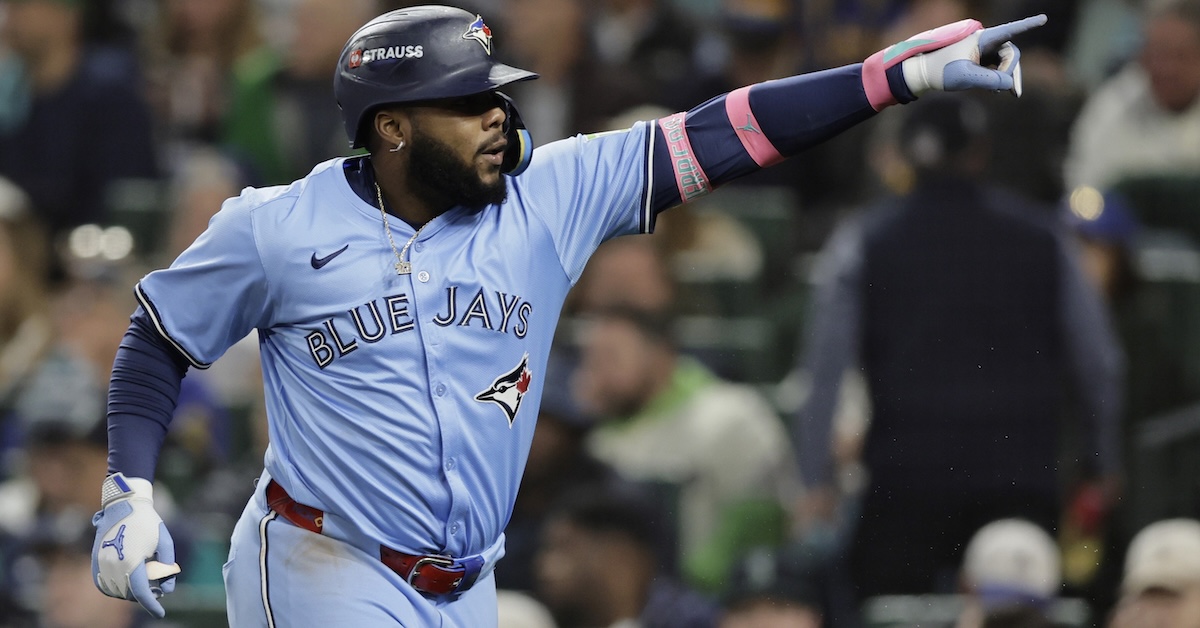
Though they’ve lost two straight to trim their AL West lead to a single game, the Mariners are a first-place team thanks to a recent 16-4 stretch that has boosted their record to 20-14. As I noted last week, their success for a change hasn’t been driven by the strength of their rotation, which has been without George Kirby thus far due to shoulder inflammation and is now without Logan Gilbert, who landed on the IL in late April with a flexor strain. Rather, Seattle been carried by an exceptionally potent offense, a marked contrast from recent years, particularly 2024, when the team’s failure to score contributed to the August firings of manager Scott Servais and hitting coach Jarret DeHart. These Mariners have benefited not only from Cal Raleigh’s heavy hitting, but from the ongoing presence of Randy Arozarena, who was acquired just before last year’s trade deadline, and rebounds from players who struggled due to injuries last season, such as J.P. Crawford and Jorge Polanco. The return of Hall of Famer Edgar Martinez to their coaching staff has helped, and it does appear as though T-Mobile Park has been a bit more forgiving than usual.

Raleigh and Polanco are the hitters getting the headlines. Raleigh is currently slashing .240/.359/.574 with a major league-high 12 homers, and he ranks third in the AL in slugging percentage behind only Aaron Judge and Alex Bregman, and fourth in the league in wRC+ behind those two and Jonathan Aranda(!). While Polanco doesn’t have enough plate appearances to qualify for the batting title because an oblique strain has limited him to swinging left-handed and to DHing instead of playing the field, he’s hit a ridiculous .369/.407/.750 (233 wRC+) with nine homers in just 92 plate appearances (14 short of qualifying). Crawford is batting .294/.417/.404 (151 wRC+) and Arozarena .224/.366/.414 (136 wRC+). Both players are walking over 15% of the time, with Raleigh drawing a pass 14.4% of the time; the team’s 11.2% walk rate leads the majors.

All of that has helped the Mariners withstand a comparatively slow start by Julio Rodríguez (.206/.308/.375, 103 wRC+) and a wave of injuries that has forced right fielder Victor Robles, outfielder-first baseman Luke Raley, utilityman Dylan Moore, and second baseman Ryan Bliss to the injured list alongside the aforementioned rotation stalwarts [Update: Moore was activated just after this article was published]. Even so, the Mariners have gotten a 100 wRC+ or better from every position besides first base (where Rowdy Tellez, Donovan Solano, Raley and Moore have combined for a 60 wRC+) and right field (where six players, among them the injured Robles, Raley and Moore, have combined for a 90 wRC+). Read the rest of this entry »

Jesús Luzardo Didn’t Add a Cutter

Kyle Ross-Imagn Images

It isn’t supposed to be this easy. When the Phillies traded for Jesús Luzardo over the winter, they did so with the understanding that he wouldn’t be an ace right from the jump. He was coming off a rough and injured 2024, he’d only hit 20 starts in a season once in his career, and every warning light you could possibly imagine was flashing – worst stuff model grades of his career, lowest strikeout rate, lowest whiff rate, highest hard-hit rate.

Those warning signs explain why the Phillies were able to acquire Luzardo for relative peanuts. It also explains why our projection systems were unenthused by him heading into this year, projecting a 4.19 ERA, a distant fifth among Philadelphia’s starters. No one doubts Luzardo’s potential, but after six seasons and 500 innings (itself not a great sign) of roughly league-average work, well, at some point you are what you are.

Right, yeah, Luzardo’s been the best pitcher on the Phillies this year and one of the best pitchers in baseball. I’m not as surprised as I thought I’d be. But given that we’re a quarter of the way through the season and his ERA and FIP are both below 2.00, I think it’s time to take a closer look at what he’s doing differently.
Read the rest of this entry »

Sunday Notes: Ty France Is Back To Being The Good Ty France

Ty France went into last season trying to be something he’s not, and the results reflected that. Over 535 plate appearances split between the Seattle Mariners and Cincinnati Reds, he slashed .234/.305/.365 with 13 home runs and a 93 wRC+. Statistically speaking, it was the worst year of his career.

Now with the Minnesota Twins after inking a modest $1M free-agent deal in mid-February, France went into yesterday with numbers more in line with what he did from 2019-2023. A month-plus into the campaign, the 30-year-old first baseman has a 118 wRC+ and a .271/.341/.407 slash line.

How has he rediscovered the better version of himself?

“My swing is simple and compact right now,” France told me prior to an 0-for-4 Friday night that included his being robbed on a diving catch and lining an at-em ball at an infielder. “Instead of trying to do too much, I’m just trying to get in my best position and take a good swing.

“Guys are getting paid for homers and doing damage, so a lot of my training last offseason was geared toward trying to hit the ball in the air and drive the ball,” France added. “I kind of lost touch with what I was best at, which is using the right side of the field just collecting hits. This past offseason was about getting back to the basics and rediscovering who I am as a hitter.” Read the rest of this entry »

Cincinnati Reds Top 45 Prospects

Frank Bowen IV/The Enquirer/USA TODAY NETWORK via Imagn Images

Below is an analysis of the prospects in the farm system of the Cincinnati Reds. Scouting reports were compiled with information provided by industry sources as well as my own observations. This is the fifth year we’re delineating between two anticipated relief roles, the abbreviations for which you’ll see in the “position” column below: MIRP for multi-inning relief pitchers, and SIRP for single-inning relief pitchers. The ETAs listed generally correspond to the year a player has to be added to the 40-man roster to avoid being made eligible for the Rule 5 draft. Manual adjustments are made where they seem appropriate, but we use that as a rule of thumb.

A quick overview of what FV (Future Value) means can be found here. A much deeper overview can be found here.

All of the ranked prospects below also appear on The Board, a resource the site offers featuring sortable scouting information for every organization. It has more details (and updated TrackMan data from various sources) than this article and integrates every team’s list so readers can compare prospects across farm systems. It can be found here. Read the rest of this entry »


Let’s Take a Peek at Some Early 2025 Pitch Usage Trends

Denis Poroy-Imagn Images

Every winter, pitchers step off the mound and into the lab. Sure, not every pitcher is in a wind tunnel with a high speed camera from October to January, but enough are that everyone seems to reap the benefits. You’ve got the sweeper, the kick change, the rise of the splitter, new fastball shapes – you name it, someone has tried it recently. That means that every year, I spend the first month or two of the season catching up to the new hot thing going on in the world of pitching.

But I have to level with you: On the whole, things haven’t changed as much this year as I expected. That won’t stop me from walking through what has changed, though, and the first shift to highlight is a subtle one – we’re seeing more bendy sliders and fewer gyro offerings:

Slider Usage By Year
Year Sweeper Slider
2020 1.1% 16.8%
2021 1.9% 17.2%
2022 3.9% 16.9%
2023 5.6% 16.3%
2024 6.5% 15.5%
2025 7.6% 14.9%

Why? Two things are happening. First, sweeping sliders do better against same-handed batters, so pitchers are choosing that as their secondary of choice when they have the platoon advantage. In 2021, 2.6% of pitches that righties threw to righties were sweepers. In 2025, that number has ballooned to 10.7%; it’s 10.9% for lefties against lefties. Usage is less than half as high when opposite-handed batters are at the plate.

Meanwhile, “regular” sliders are on the decline when pitchers have the platoon advantage. That makes good sense – they’re just throwing sweepers instead. And when pitchers aren’t facing same-handed batters, neither slider is particularly great; pitchers are staying away from both, more or less. That means that the traditional, gyro-spin slider is declining in prevalence overall. Read the rest of this entry »


Carlos Correa Is Keeping the GIDP Alive

Jesse Johnson-Imagn Images

Carlos Correa has grounded into six double plays this season. He doesn’t lead the league; that would be Junior Caminero, who has already racked up nine, putting him on pace for an even 50 by the end of the year. If Caminero keeps that up (he won’t), he would shatter the single-season record of 36, set by Jim Rice in 1984. Still, it’s Correa whose GIDP numbers I find most intriguing.

Correa has always been prone to double plays. Since the day of his debut, 10 years ago in June, only five major leaguers have grounded into more of them. However, in 2023, Correa took things to a new level. He set a single-season Twins record by grounding into 30 double plays. He did so in just 130 games and 580 trips to the plate. His 30 GIDPs were the most by any player in a season since Casey McGehee in 2014 (31) and the most on a per-PA basis (min. 500 PA) since A.J. Pierzynski in 2004 (27 GIDPs in 510 PA). Adjusted for era, Correa’s GIDPs-per-PA rate registered as the third highest of all time:

Era-Adjusted GIDPs-per-PA Leaders
Player Year GIDP PA GIDP Rate+
Jimmy Bloodworth 1943 29 519 281
Jim Rice 1985 35 608 276
Carlos Correa 2023 30 580 275
Complete AL/NL records date back to 1939. Pitchers excluded.

Correa’s historically pitiful GIDP performance in 2023 made what he did next all the more fascinating. In 2024, he produced an equally historical turnaround season. He hit just five groundball double plays, 25 fewer than the year before. Admittedly, he played significantly fewer games, but even on a rate basis, the difference was astounding. Never in his career had he grounded into two-outers at a lower clip. (Quick aside: Writers need synonyms, and if they don’t exist, it’s our job to make them up. Get ready.) Read the rest of this entry »