So many relievers have found new homes recently that we’ve written not one, but two reliever roundups! You can find the first one from Luke Hooper here. This is part two, containing four additional relief arms who bring interesting backgrounds, stuff, and deception to the table. Without further ado, let’s get a closer look.
Brewers Sign Brad Boxberger
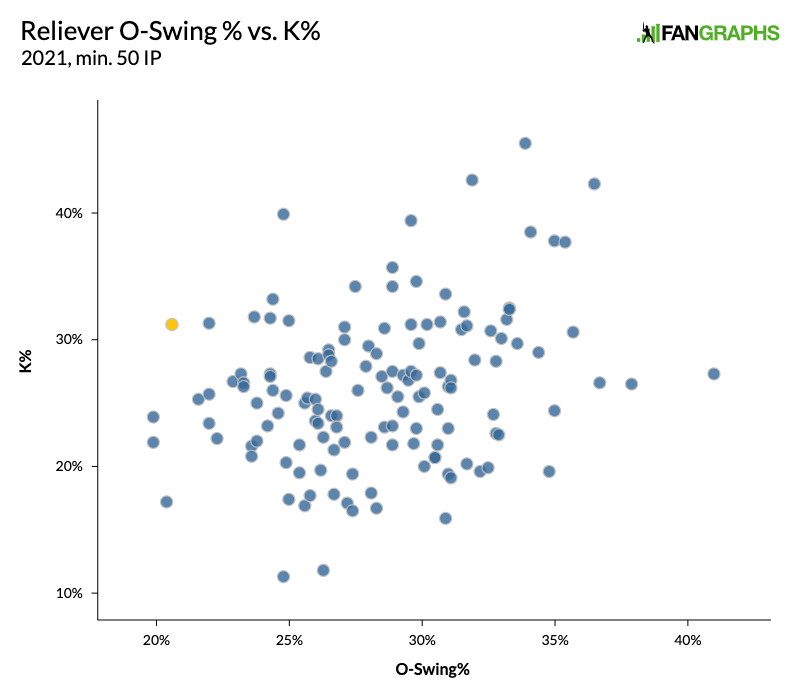
If you like weird, enigmatic relievers, then Brad Boxberger is the guy for you. He’s reuniting with the Brewers on a one-year, $2.5 million contract and looks to continue his success from last season. Let’s get into what makes Boxberger tick. Here’s a plot containing every reliever in 2021 who threw at least 50 innings. On the x-axis is chase rate, or how often batters swung against a reliever’s out-of-zone pitches. On the y-axis is overall strikeout rate:
That’s right. Boxberger, the point in yellow, generated an above-average strikeout rate for a reliever (31.2%) while having the fourth-lowest chase rate (20.6%). Not that more chases automatically equals more strikeouts, but this is still pleasantly odd. Boxberger doesn’t need to fish outside the zone to rack up strikeouts – he meets hitters in the middle, and more often than not, he emerges victorious. Read the rest of this entry »
As expected, the first weekend after the end of the lockout gave us a flurry of moves. Relievers in particular were a hot commodity, with teams trying to bolster their bullpens as the pool of quality pitchers continues to shrink. Let’s take a closer look at a few of these moves from over the weekend.
Kelly comes to Chicago on a two-year, $17 million deal with a club option for a third year. At 33, the veteran is coming off of a great season with the Dodgers, probably his best as a reliever. Underneath his 2.86 ERA, he posted a career-best swinging-strike rate (11.6%) and exit velocity (85.5 mph), as well as his lowest walk rate (8.2%) ever. Even with all the success, a pair of injuries raise questions about his durability moving forward. Kelly got a late start in 2021 because of an offseason surgery to clean up his shoulder, and his year ended with him walking off the mound in the playoffs after suffering a forearm injury. Luckily, he avoided the worst case scenario; all reports have him ready for the upcoming season.
Kelly’s successful 2021 came on the back of a dominant low-spin sinker. In each of the previous five seasons, his four-seam fastball was his most used heater, but after years of middling results with the pitch, he all but shelved it in 2021. A new sinker-heavy pitch mix helped increase his groundball rate over the years; his three primary pitches — sinker, curveball, and changeup — all generate grounders more than 55% of the time. Read the rest of this entry »
After acquiring José Berríos at last year’s trade deadline and signing Kevin Gausmanto a massive five-year deal in November, the Blue Jays put the finishing touch on remaking their starting rotation by signingYusei Kikuchi to a three-year contract on Saturday. The deal is worth $36 million, with $16 million of that total frontloaded in 2022. The lefty will slot into the back of Toronto’s rotation — one that suddenly looks like a strength for a team that came just a game shy of the postseason in 2021.
That Kikuchi was available as a free agent at all was a bit of a surprise. The Mariners declined what was a uniquely structured four-year option valued at $16.5 million per year at the end of last season, and he declined his $13 million player option. Looking at his season, you can understand why. Though he started off well last year, putting up a 3.48 ERA during the first half of the season and earning the Mariners’ lone All-Star selection, he fell apart after the break, with his ERA ballooning to 5.98.
The inconsistency is something the Blue Jays will need to figure out if they want to maximize the promising raw skills that Kikuchi possesses. After debuting in 2019 with a four-seam fastball that averaged just 92.5 mph, he spent the offseason optimizing his mechanics to unlock an increase in fastball velocity. It worked: During the shortened 2020 season, he came out throwing 95 mph — the fifth-hardest fastball thrown by a left-handed starter during these past two seasons — and was able to maintain that velocity jump in ‘21. With all that extra heat, the whiff rate on his four-seamer jumped up from 15.9% in 2019 to 30.5% over the last two years. Read the rest of this entry »
The itinerant gunslinger is a time-worn trope in Westerns, but baseball experienced a resurgence of its own version of it over the weekend. Andrelton Simmons and José Iglesias, two older free agents with sterling defensive reputations, are each headed to a new team. Simmons signed with the Cubs, a one-year, $4 million deal with incentives that could push his total payout higher. Meanwhile, Iglesias signed a one-year, $5 million deal with the Rockies. Rather than cover them both separately, let’s go through the deals together so that I can force some metaphors on you and compare two delightfully shrewd defensive wizards.
The glove-only shortstop isn’t what it used to be, particularly if you hit like Simmons did in 2021. He stumbled to a .223/.283/.274 batting line, and while his defense was predictably excellent, that’s simply not enough to lock down an everyday starting role. The Twins weren’t good last year, and even then, Simmons started to lose playing time as the season wore on. The Cubs will be his third team in the past three years, and he’s solidly into the short-term-stints-on-okay-teams phase of his career.
For his part, Iglesias must think Simmons is downright sedentary. The Rockies will be his sixth team in five seasons; he’s bounced around on one-year deals since 2019, and even got traded in-season last year. He wasn’t an offensive black hole to the extent that Simmons was in 2021, but he’s hardly Carlos Correa with the bat in his hands; he’s compiled a 93 wRC+ in his last four seasons. His defense doesn’t grade out as well as Simmons’ does, though; depending on who you listen to, he was somewhere between acceptable and quite bad defensively last year after being solid throughout his career. Read the rest of this entry »
On October 1, in the 160th game of the Los Angeles Dodgers’ 2021 season, Clayton Kershaw faced 10 Milwaukee Brewers batters and recorded just five outs. He didn’t look right, and it would soon be revealed that he was experiencing left forearm discomfort. Three weeks later, the Dodgers watched from the dugout as the Atlanta Braves celebrated winning the National League pennant. It marked the conclusion of a disappointing postseason run that did not feature an appearance from Los Angeles’ rotation stalwart.
The public speculation about his future began. Was that the last time we would see Kershaw in Dodger blue? Would the proud Texan and dedicated family man decide to spend the latter part of his career with his hometown Rangers? As it turns out, the answer to both of those questions was “no.” On Friday afternoon, the pitcher signed a one-year deal to return to the only team he’s ever known, per Ken Rosenthal of The Athletic. He’ll receive a base salary of $17 million, with incentives that could get him closer to the $20 million-plus AAV most projected for him. Read the rest of this entry »
After the end of the owners’ lockout on Thursday and the reopening of the offseason, the Giants wasted little time making a big splash in the second free agency period, signingCarlos Rodón to a two-year deal worth up to $44 million with an opt-out after the first season. The addition of the ex-White Sox lefty gives San Francisco the top-end talent that was missing from the rotation after the departure of Kevin Gausman earlier in the offseason. It’s a move filled with risk, but with the potential for great reward.
Rodón was a revelation in 2021. He threw a nearly perfect game on April 14, settling for a no-hitter instead; made the All-Star team for the first time; and set career highs in nearly every meaningful pitching metric, with his 2.37 ERA, 2.65 FIP and 4.9 WAR all leading Chicago’s pitching staff. And all this came after the White Sox had non-tendered him before the season, only to re-sign him on a one-year deal worth just $3 million.
As Rodón put it last March, getting cut by the team that had drafted him was a wake-up call. He committed to an improved offseason training program and diet to help him get into better shape, and the transformation of his body helped him fix his mechanics and improve his overall strength. He entered spring training throwing in the upper 90s regularly, and his fastball wound up averaging 95.4 mph last year, the hardest it had been in his career. All that additional velocity took his fastball from an average pitch to an elite weapon. His heater’s whiff rate had never topped 20% in his career but jumped to 29.7% in 2021, and opposing batters managed just a .264 wOBA off the pitch. It also paired nicely with his already excellent slider and changeup to form a trio of plus pitches to mow down opposing batters. Read the rest of this entry »
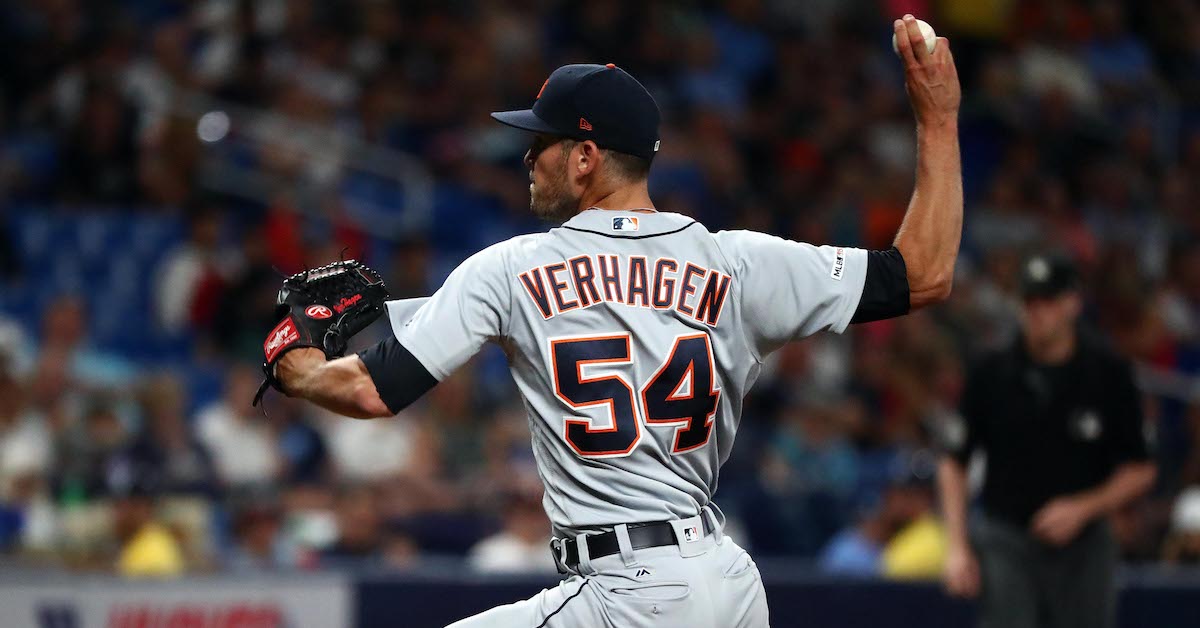
The first post-lockout signing is now in the books, with the St. Louis Cardinals agreeing to a two-year deal with 6-foot-6 righty Drew VerHagen, a former Detroit Tiger who had spent the last two seasons in Japan with the Hokkaido Nippon-Ham Fighters.
The deal is worth $2.5 million in the first year and $3 million in the second, with up to $1 million in performance bonuses in each season. VerHagen, 31, threw about 100 innings in each of his two seasons in Japan, and gives St. Louis another arm capable of making spot starts or providing length out of the bullpen, something the Cardinals needs since much of their 40-man roster is occupied by single-inning relievers and starting prospects with sketchy command, like Angel Rondón and Johan Oviedo. Read the rest of this entry »
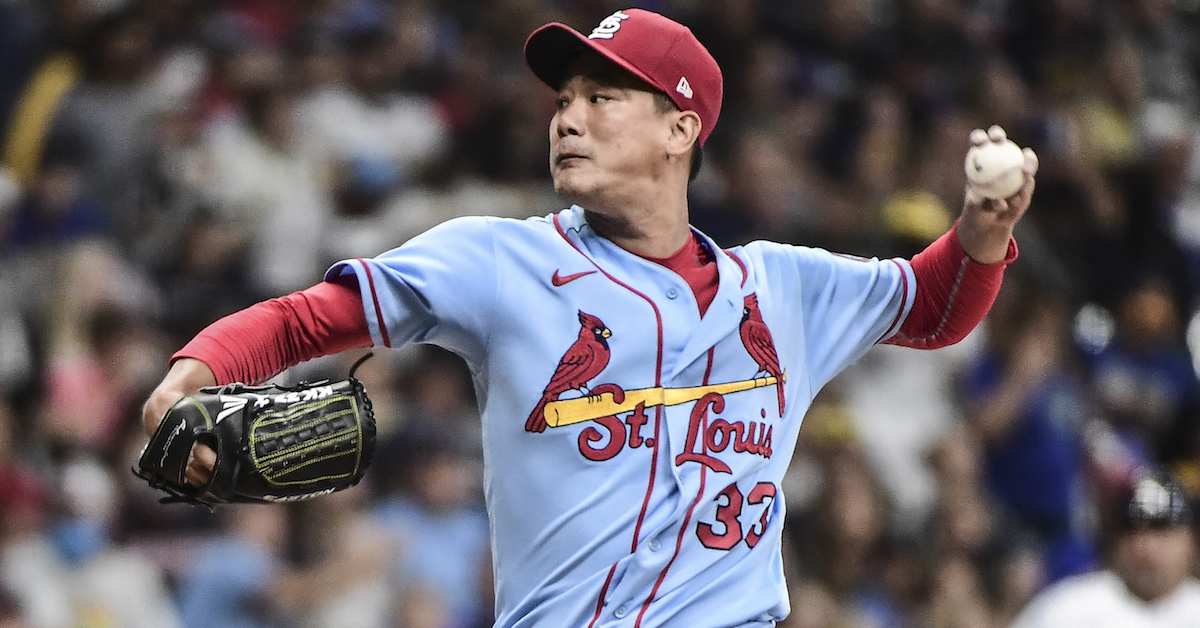
With no clear end in sight to the owner’s lockout, free agent Kwang Hyun Kim 김광현 has decided to return to Korea for the 2022 season. On Monday, Jeeho Yoo of Yonhap Newsreported that Kim has signed a four-year deal with the SSG Landers (previously the SK Wyverns). The deal is worth 15.1 billion won ($12.3 million dollars) and breaks the record for largest KBO contract that was previously held by Dae-Ho Lee 이대호 and Sung-bum Na 나성범. In a statement released by the Landers, Kim said, “I was able to challenge myself in the majors because of support from fans here. I decided I wanted to give back to them once I returned to the KBO. The Landers recognized my value with the biggest contract ever in the KBO — I didn’t have to think long and hard about the reunion.”
Kim returns to his old team in Incheon, a squad that has missed the playoffs both years since he made the jump to the major leagues after the 2019 season: They placed ninth in the 10 team league in 2020 but came up half a game short of qualifying for the Wild Card game in 2021. Kim solidifies a starting rotation that also includes former major league pitchers Iván Nova and Wilmer Font. Font led the Landers pitching staff with a 3.46 ERA and a 3.25 FIP, but the four pitchers in the rotation behind him all had ERAs and FIPs over five. With Kim back in the fold, the Landers are likely one of the preseason favorites heading into the regular season.
I asked former FanGraphs contributor Sung Min Kim for some additional context on Kwang Hyun Kim’s return to the KBO.
“Landers are now in a very good position, especially with their pitching staff. Not only do they get one of the better KBO pitchers back in their rotation, but they also bet highly on Wilmer Font, who pitched very well with them in ’21, and Iván Nova, and they also have two solid Korean-born starters in Jong Hoon Park and Seung Won Moon set to return mid-season from injuries. Those five pitchers would make up the best rotation in all of KBO, and make them instant pennant favorites for 2022. They will certainly be a very fun team to watch.”
Kim’s time in America was anything but easy. A club legend while playing for the Wyverns from 2007-19, he made the transition to the US prior to the 2020 season. Unfortunately, his introduction to the major leagues was interrupted by a global pandemic. The next season was a little more normal, but his two-year deal with the Cardinals expired at the end of 2021 and the 33-year-old again found himself in strange circumstances, with the owner’s lockout disrupting his foray into MLB free agency.
While pitching for St. Louis, Kim’s role was as settled as the circumstances around him these past two years. He began the 2020 season as the Cardinals closer, notching his first professional save in his first major league appearance. A COVID outbreak on the team forced him into the starting rotation soon after, and he made seven starts during the remainder of the abbreviated regular season with an additional start in the Cardinals Wild Card series against the Padres. He allowed just nine total runs to score against him in those eight regular season appearances, good for a 1.62 ERA.
Last year, two separate stints on the injured list limited Kim to 21 starts and six relief appearances. The second of those trips to the IL came in mid-August after the Cardinals had acquired J.A. Happ and Jon Lester to bolster their rotation for the stretch run. Kim returned after two weeks on the sidelines but had lost his spot in the rotation by then. He made two more starts through the end of the season but was mostly relegated to mop up duty in the bullpen over the last month of the season.
All told, he made 28 starts during his time with the Cardinals and seven additional relief appearances. He compiled 1.8 WAR with an excellent 2.97 ERA that outpaced a more middling 4.34 FIP. He never racked up big strikeout totals, instead relying on good command and a solid ability to limit hard contact. Just 25.6% of the plate appearances against him ended with a hard hit batted ball, right in line with the league average over the last two seasons. He allowed a 6.3% barrel rate during his time in the majors and just a .348 expected wOBA on contact.
On the pitcher’s decision to return to Korea, Sung Min Kim had this to say:
“I think he was always inclined to stay in the US and try to prolong his career in the US by signing with another team. He’s had a desire to challenge himself in the majors for a long while, even before he signed with the Cardinals. With his age and the decreased velocity he showed during his two seasons in St. Louis, I wasn’t sure what the market looked like for him, especially given that he was relegated to a bullpen role later in 2021. I think, with the lockout taking awhile, him missing his family being back in Korea, and definitely having a clearer role guaranteed back in KBO, it was very hard to say no to a lucrative deal to come back.”
Kim’s departure from the US creates an even bigger hole in the depleted free agent starting pitching market. Twelve of the 18 starters listed on our top 50 free agents list signed new deals prior to the lockout. That leaves very few options for teams looking to bolster their rotations once the offseason resumes. Kim was ranked 35th on that list of top free agents, ahead of Zack Greinke, Michael Pineda, and Yusei Kikuchi. Though he probably wasn’t likely to land a significant payday from an MLB club, he could have been a solid back-of-the-rotation option for a contending team that needs a bit more depth in their rotation. Those teams that might have been interested in Kim’s services are now limited to looking at starters like Pineda, Kikuchi, Tyler Anderson, and Garrett Richards.
This may also be the first instance of the ongoing owner’s lockout influencing a player to leave the US to find other opportunities abroad. Obviously, Kim returning to his home country to play for the same team he starred for previously is a unique circumstance, but the fact that there was no clear end to his free agent limbo in America had to have entered into his decision-making process when opting to return to Korea. Kim chose to leave behind the uncertainty of MLB for a record-setting KBO deal.
If negotiations between MLB and the Players Association continue to drag on, jeopardizing more and more of the regular season, it wouldn’t be surprising to see players consider signing with international leagues to give them some guarantee of earnings and playing time. Bryce Harper already joked about playing in Japan and Taiwan on his Instagram account:
It’s not hard to imagine a situation where MLB players start to seriously consider their options abroad if progress towards a new CBA deal hasn’t been made. Opening day in Korea is set for April 2, while the Nippon Professional Baseball season begins on March 25. That gives players an increasingly narrow window to make a decision. Established stars like Harper probably won’t be making the jump to Asia this year, but for players still mired in free agency or on the fringe of a major league roster and ineligible to play in minor leagues, a guaranteed paycheck and playing time in a foreign league could become increasingly enticing.
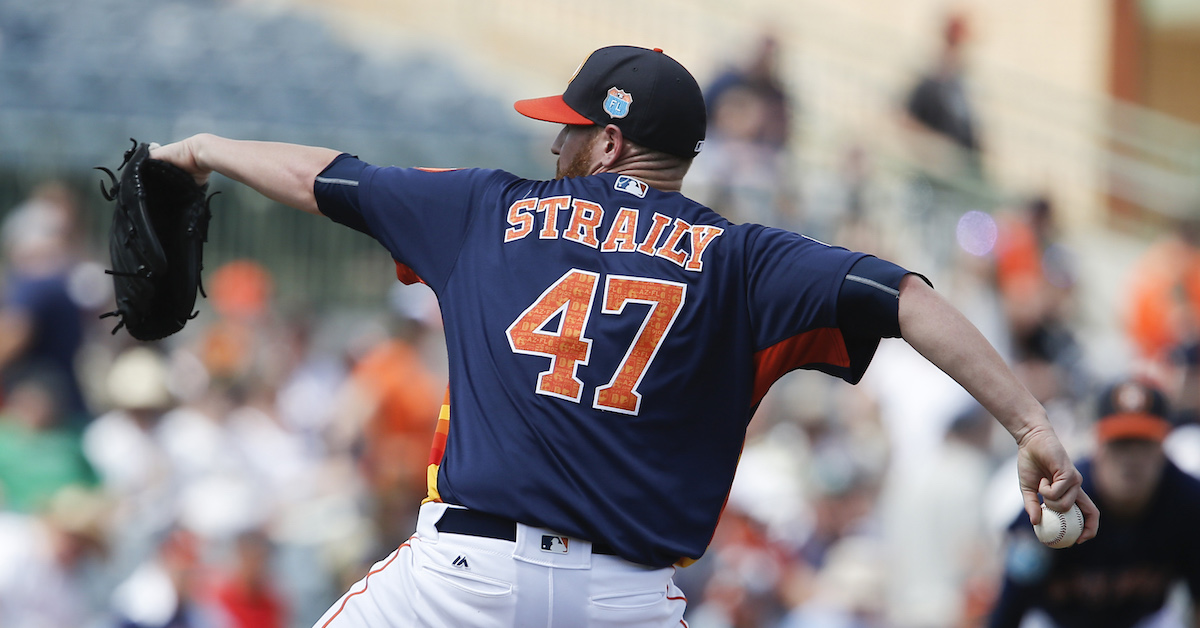
It might be overstating the case to say that for the second time inside of 24 months, Dan Straily has resurfaced to rescue us from the major league baseball-free doldrums. While the owners’ lockout has put a freeze on transactions that involve major league rosters, the Diamondbacks’ signing of Straily to a minor-league deal is comparatively eye-catching. The 33-year-old righty is returning to the States following a career-salvaging two-year stint with the KBO’s Lotte Giants.
Straily previously grabbed the spotlight, such as it was, on March 23, 2020. While MLB had recently shut down spring training due to the coronavirus pandemic, the KBO was able to proceed with its preparations for the season, albeit cautiously. Straily, who had signed a $1 million deal with the Giants, pitched opposite teammate Adrian Sampson in a surreal intrasquad game that was carried on YouTube. Not only did the stream offer a preview of what baseball in a mostly-empty ballpark would look like, it provided a flicker of hope that there would be at least some baseball into which fans could sink their teeth while so much of the world was shut down. Thanks to a last-minute deal with ESPN, the KBO found a stateside audience, and we had some fun at FanGraphs gettingup to speed on the league and then following along.
Straily landed in South Korea after spending parts of eight seasons (2012-19) in the majors pitching for six different franchises with mixed levels of success, accumulating 3.6 WAR via a 4.56 ERA and 5.05 FIP in 803.1 innings. He put up 1.9 WAR in 27 starts with the A’s in 2013, 1.2 WAR in 31 starts with the Reds in ’16, and a career-best 2.0 WAR in 33 starts with the Marlins in ’17. Those last two campaigns were the only ones in which he didn’t also pitch in the minors, though in 2018, he went down only for a rehab assignment following a forearm strain. Read the rest of this entry »
As last week’s free agent frenzy entered its final day in anticipation of a lockout by the owners, a pair of clubs entered the fray by filling clear needs for late-inning relievers.
Beginning with the move that is far more likely to impact the standings in 2022, the Philadelphia Phillies signed right-hander Corey Knebel to a one-year, $10 million deal. Knebel will seemingly replace the recently departed Héctor Neris as the club’s closer, but that makes quite an assumption about Knebel’s availability for a full 162-game schedule.
Knebel’s ability to close has never been in question, at least based on his pure stuff. In 2017, he had one of the most un-hittable seasons out of the ‘pen in recent memory, striking out 126 over 76 innings while allowing just 48 hits en route to 39 saves, a 1.78 ERA and a 2.53 FIP for the Milwaukee Brewers. He saw a minor decline in 2018 as he struggled with knee and hamstring issues, and just hasn’t really pitched that much since. Between Tommy John surgery in 2019 and an extended issue with a lat injury in ’21, Knebel has pitched just 39 innings over 42 games in the last three seasons combined, with mixed results: he fared poorly in 13.1 innings with Milwaukee in 2020, but when he was on the mound for the Dodgers last season, the results were good, posting a 2.45 ERA and a 2.90 FIP. Read the rest of this entry »