Archive for Q&As

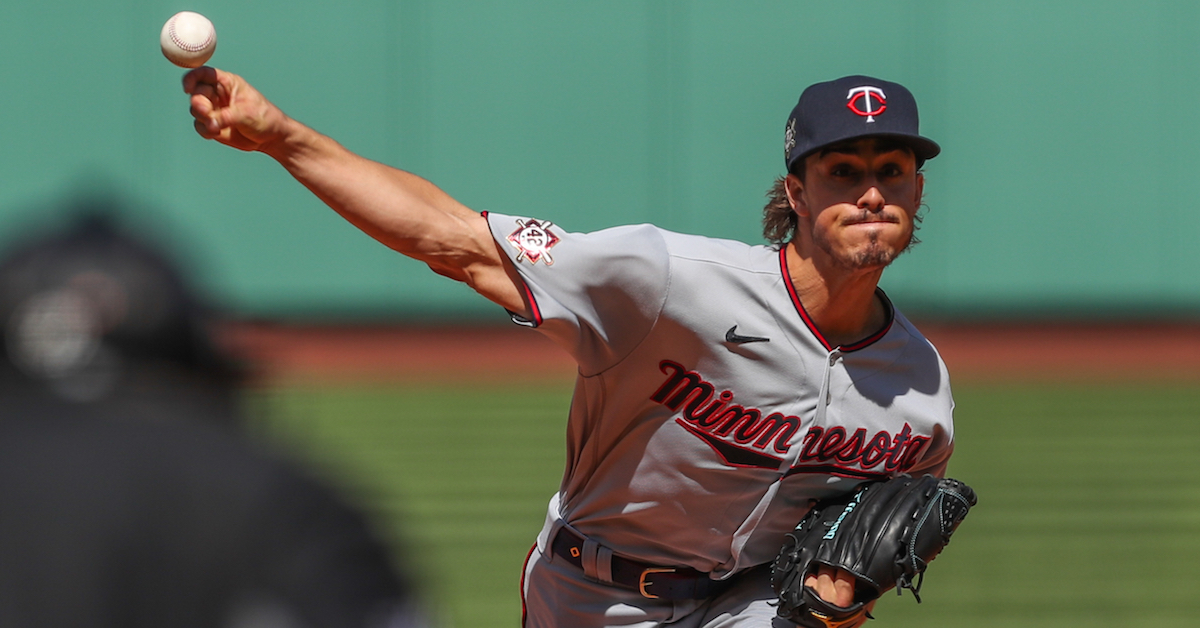
The Twins Joe Ryan Talks Sliders, Vertical Approach Angle… and Water Polo

© Paul Rutherford-USA TODAY Sports

Joe Ryan’s name is well-known to FanGraphs readers, particularly those who are into pitching analytics. As Jake Mailhot wrote when profiling him back in January, the 25-year-old Minnesota Twins right-hander succeeds in part because of an extreme vertical approach angle. Thrown from an atypical arm slot, Ryan’s four-seamer — despite averaging a modest 92 mph — is especially effective up in the zone. As Eric Longenhagen and Tess Taruskin wrote last month, “Throughout his time in the minors, Ryan’s strikeout rate has left many scratching their heads.”

His ability to miss bats has thus far translated to the big leagues. Since debuting with the Twins last September, the former Tampa Bay Rays prospect — Ryan came to Minnesota as part of last July’s Nelson Cruz deal — has allowed just 23 hits, with 41 strikeouts, in 36-and-two-thirds big league innings.

Ryan — No. 6 on our 2022 Minnesota Twins Top Prospects list — discussed his approach angle, and the repertoire that goes with it, prior to a recent game at Fenway Park.

———

David Laurila: The majority of FanGraphs readers are familiar with your pitching profile. That said, how would you describe it?

Joe Ryan: “I’m not sure. I don’t think about it too big-picture, or try to analyze myself in that way. Simplistically, I’m a strike-thrower that fills up the zone, tries to hit my spots, and pitches to my strengths. I’m also always trying to develop new pitches and make everything else better, and more consistent. I’m not trying to overhaul, but rather I tinker a lot. Maybe not a lot, but I am always wanting a little more.” Read the rest of this entry »


A Conversation With Cleveland Guardians Prospect Richie Palacios

© Fred Squillante/Columbus Dispatch / USA TODAY NETWORK

Richie Palacios barely missed a beat when he returned to action last year. Sidelined for two seasons due to a torn labrum followed by a minor-league summer that never happened, the 24-year-old Brooklyn-born infielder/outfielder came back to slash .297/.404/.471 over 428 plate appearances between Double-A Akron and Triple-A Columbus. His wRC+ was a healthy 141.

Palacios had gotten off to a strong start after being taken by Cleveland in the third round of the 2018 draft out of Towson University. Playing at the lower rungs of the minors, he batted .361 with a .960 OPS in his 45-game introduction to pro ball. He arrived with baseball bloodlines. His older brother, Josh Palacios, made his major league debut with the Toronto Blue Jays last year and is now with the Washington Nationals, while their uncle, Rey Palacios, played for the Kansas City Royals from 1988-90.

Richie Palacios — No. 32 our newly-released Cleveland Guardians Top Prospect list — discussed his post-injury learning curve, and his “Let The Kids Play” approach to the game he grew up with, during a November stint in the Arizona Fall League. Read the rest of this entry »


A Conversation With Toronto Blue Jays Pitching Prospect Hagen Danner

Nick Turchiaro-USA TODAY Sports

Hagen Danner has had a unique ride in our rankings. The 2017 second-round draft pick was No. 31 on our 2019 Toronto Blue Jays Top Prospects list, and after falling off completely in 2020 and ’21, he’s now a helium-filled No.14 on our ’22 edition. A position change has fueled the ascent; previously a catcher, Danner was moved to the mound in the months preceding the 2020 shutdown.

Last season saw the 23-year-old right-hander emerge as a shutdown reliever. Pitching against professional hitters for the first time, Danner logged a 2.02 ERA with 42 strikeouts in 35.2 innings with High-A Vancouver. Moreover, those numbers came courtesy of a power arsenal that has prompted our own Eric Longenhagen to proclaim that the Huntington Beach High School product is “on the fast track.”

Danner discussed his conversion — which wasn’t exactly a conversion — and the heater/slutter/curveball combination that he takes with him to the mound, following a spring-training outing against the Pittsburgh Pirates. He proceeded to break camp with the Double-A New Hampshire Fisher Cats.

———

David Laurila: You were a two-way player in high school. How much did you actually understand pitching at that time?

Hagen Danner: “A lot. It was my main position until senior year, at which time I decided to just swing the bat. That allowed me to get drafted as a hitter and let me try to live out my dream of being a hitter in the big leagues. When that wasn’t going right, it was an easy transition.”

Laurila: You were drafted as a catcher. Why that position?

Danner: “It was what I played in high school when I wasn’t pitching, although I also was a third baseman. I guess it was better [draft-wise] to be as a power-hitting catcher. It helped being able to play defense behind the plate, too.”

Laurila: Do you feel that you had potential as a hitter? There was a lot of swing-and-miss to your game, but you did have a [.409] OBP as a 19-year-old in rookie ball. Read the rest of this entry »


Robert Hassell III Talks Hitting

© Mark J. Rebilas-USA TODAY Sports

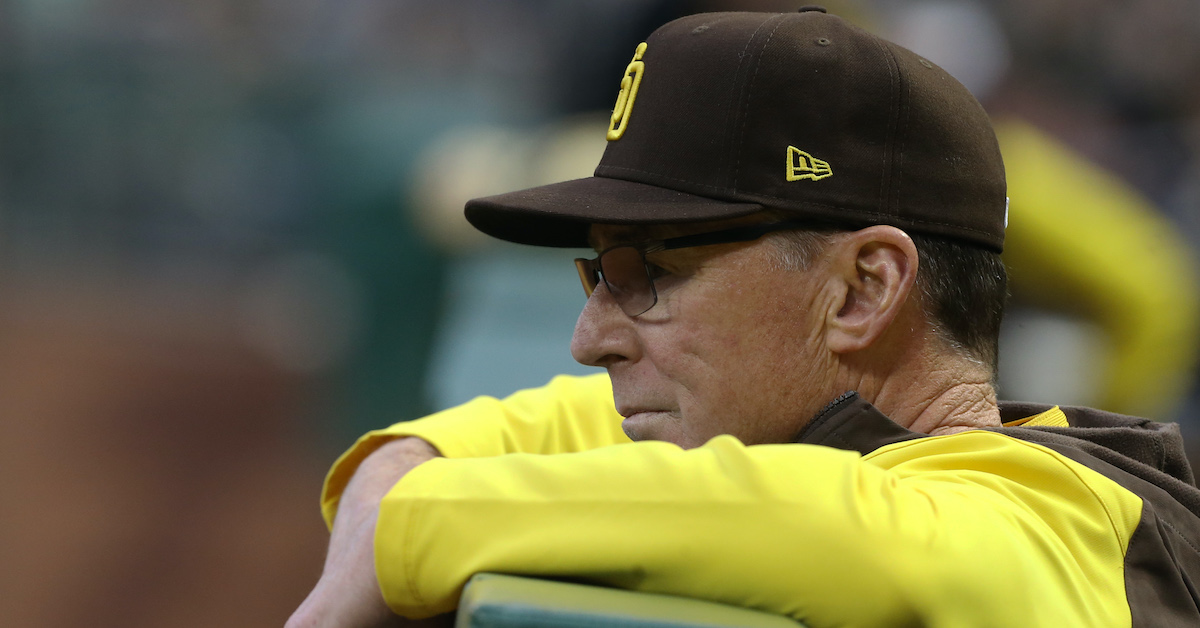
Robert Hassell III is a confident hitter, and for good reason. No. 50 on our 2022 Top 100 Prospects list, the 20-year-old outfielder — in the words of Eric Longenhagen — “arguably wielded the most advanced bat of the 2020 draft’s high school hitters.” Drafted eighth overall that summer by the San Diego Padres, he’s lived up to that billing. Playing last year at Low-A Lake Elsinore and High-A Fort Wayne, Hassell slashed .303/.393/.470, with his left-handed stroke responsible for 33 doubles, four triples, and 11 home runs. Moreover, he swiped 34 bases in 40 attempts.

Hassell — back at Fort Wayne to begin the current campaign — talked hitting prior to taking the field for the TinCaps opener last Friday.

———

David Laurila: In your own words, who are you as a hitter?

Robert Hassell III: “Last season was the first time I played more than 50 games in a season — I played 110 — and after that, I definitely had a good idea — if I hadn’t already — of what I do consistently. It didn’t take me long. Even through last spring training, just getting in the daily reps, I knew that I was going to be a barrel guy [and] an on-base guy. That’s kind of what I’ve been my whole life, so it’s what I would self-identify as, for sure.”

Laurila: Define “barrel guy.”

Hassell: “I would say that a barrel guy isn’t a dude that can only hit fastballs, or only hit curveballs, or that he excels at one thing way more than the other. I wouldn’t consider that guy a ‘barrel guy.’ I see myself being able to hit every pitch, in any count. That’s what I mean by that.” Read the rest of this entry »

A Conversation With Cincinnati Reds Pitching Prospect Carson Spiers

© Nigel Cook/News-Journal via Imagn Content Services, LLC

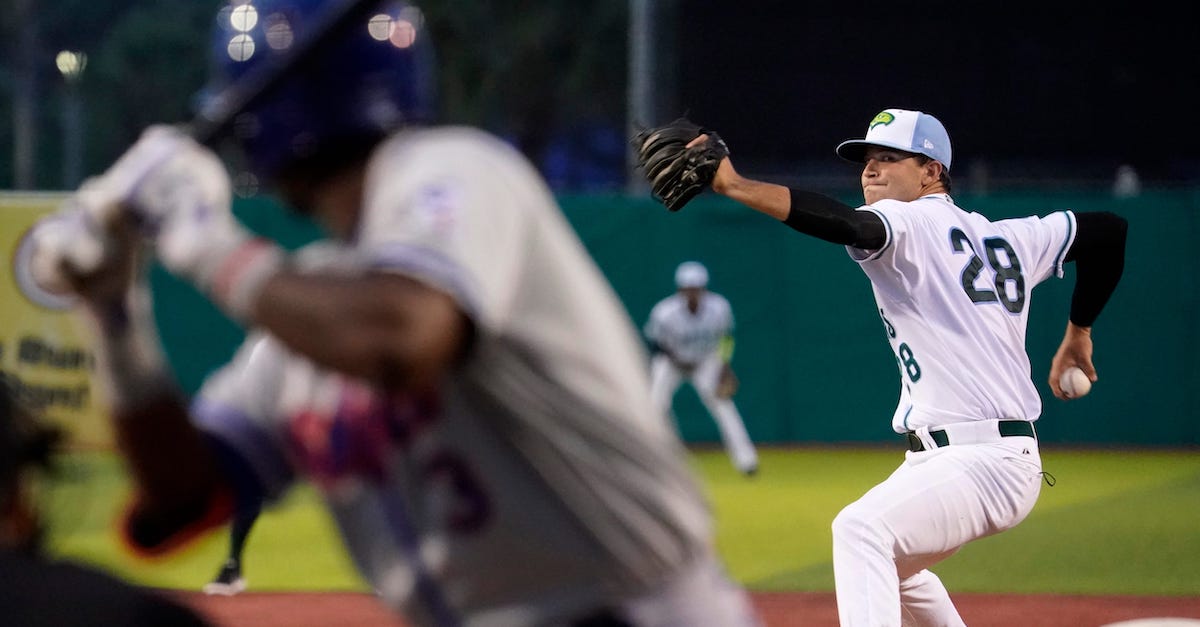
Carson Spiers has quietly thrived since being bypassed in the five-round 2020 draft. Signed that summer by a Cincinnati Reds team that at the time employed Kyle Boddy as their pitching coordinator, the 24-year-old right-hander has done so with a studious approach that he pairs with a bulldog attitude. Featuring a well-rounded pitch mix, Spiers is coming off a season where he logged a 3.55 ERA with 130 strikeouts in 111-and-two-thirds innings spent between Low-A Daytona and (primarily) High-A Dayton.

A senior-sign with a management degree from Clemson University, Spiers — currently on the roster of the Double-A Chattanooga Lookouts — is No. 15 on our newly-released Cincinnati Reds Top Prospects list. He discussed his development, and the debt he owes to Boddy, over the phone in mid-March.

———

David Laurila: Who are you as a pitcher? How would you describe yourself?

Carson Spiers: “I’d say that I’m a competitive guy who likes to attack. I’ll fill the zone with four different pitches and let my arsenal work for me. I wouldn’t say I’m the most overpowering guy on the mound, but I have a good enough fastball to play at any level. I also have some pretty good off-speed that I can throw in any count; I can create swings and misses with those pitches, as well. But I’d say that my best trait is my competitive edge. I have a strong will to want to win.”

Laurila: What is your best pitch?

Spiers: “My best pitch is strike one, for sure. My slider and my changeup are definitely my out pitches, but ‘best pitch’ is tough to say, because I can throw all four in any count. I wouldn’t say I have a best.”

Laurila: Baseball America has called your changeup your best pitch… Read the rest of this entry »


A Conversation With Yankees Rookie Right-hander Ron Marinaccio

Nathan Ray Seebeck-USA TODAY Sports

Much of the New York-market media attention that’s followed the announcement that Ron Marinaccio will be on the Yankees’ Opening Day roster has centered on his roots. A boyhood fan of the team that he now plays for, the right-hander was born and raised in Toms River, New Jersey.

There’s much more to his story. A 2017 19th-round pick out of the University of Delaware, Marinaccio has gone from a marginal prospect to the doorstep of a major-league debut in a little more than a year. As Eric Longenhagen put it when he wrote up the 26-year-old reliever for our 2022 Yankees Top Prospects list, “Marinaccio was a 2021 revelation.” In 40 outings comprising 66.1 innings between Double-A Somerset and Triple-A Scranton/Wilkes-Barre, Marinaccio logged a 2.04 ERA and allowed just 35 hits. Moreover, he fanned 105 batters.

A pitch that he hadn’t previously featured has played a big role in his ascent. Described by Longenhagen as a “trapdoor-action changeup,” the offering grades out at 60 on the 20/80 scouting scale — and it’s not his only effective weapon. Marinaccio has increased the velocity of his fastball, and he’s also revamped his slider, in the process adding a horizontal-in-the-opposite-direction component to his arsenal.

Marinaccio — No. 20 on on the aforementioned Yankees list — discussed the analytics-driven evolution of his repertoire prior to a recent spring training game.

———

David Laurila: What is the story behind your changeup?

Ron Marinaccio: “I’ve always had it, and the analytics kind of helped bring it out. With the boost of my velo last year, they moved me up a level, and from there we started diving a little bit deeper into the analytics. I realized that I’d only been throwing the changeup around 5% of the time, whereas last year it was probably closer to 40%, maybe even 50%. The usage went way up.”

Laurila: You said the analytics helped bring it out. Had you not known that it was good?

Marinaccio: “Yes, but in the past things were generally more fastball/slider. That was the way people thought righties should pitch to righties. I would throw it mostly to lefties, but once I started throwing it more to righties, I started to get more confidence in it. That’s when I was like, ‘Wow, I was only throwing this 5% of the time?’ My first outing, I threw over 50% changeups.”

Laurila: When and where did you first learn your changeup? Read the rest of this entry »


A Conversation With Philadelphia Phillies Southpaw Bailey Falter (Who Is Unique)

Jonathan Dyer-USA TODAY Sports

Bailey Falter is unique. As erstwhile FanGraphs scribe Devan Fink explained when he wrote about the 24-year-old Philadelphia Phillies left-hander last summer, Falter features a 92-mph fastball that is, for all intents and purposes, a 95-mph fastball. The effective velocity comes courtesy of extreme extension. A 6-foot-4, 195-pound native of Chino Hills, California, Falter has a delivery that puts him seven-plus feet off the mound when he releases the baseball.

Projected to be a valuable part of the Phillies bullpen this year — some evaluators feel he’ll ultimately secure a spot in the starting rotation — Falter is coming off of a rookie campaign where he logged a 5.61 ERA and a 3.79 FIP over 33.2 innings. He’s been impressive this spring; with the caveat that Grapefruit League performances need to be taken with a large grain of salt, the southpaw has been sharp, allowing just five baserunners in seven innings.

Falter discussed his delivery, and the repertoire that comes with it, following a recent game in Clearwater.

———

David Laurila: You’re known primarily for your delivery, particularly the amount of extension you get. Have you always thrown that way?

Bailey Falter: “Yes. I’ve had the same delivery and extension ever since I can remember. Honestly. I had a pitching coach back home, when I was growing up, named Steve Lefebvre. He tried to tweak me up a little bit — kind of shorten me up — because I was a guy that was never going to light up a radar gun, and we thought it could possibly be due to me having such a long stride. I ended up throwing the same speed.” Read the rest of this entry »


Rhys Hoskins Talks Hitting

© Bill Streicher-USA TODAY Sports

Rhys Hoskins hits for power. The 29-year-old Philadelphia Phillies first baseman went deep 27 times last year in 443 plate appearances; his home run totals in his previous full seasons were 34 and 29 respectively. Moreover, the most notable digits in his career .241/.360/.502 slash line are those of his slugging percentage. And then there is his average exit velocity. Last year, Hoskins ranked in the 83rd percentile for that particular metric.

Slugger bona fides aside, he’s no mere masher. Hoskins is a student of the art of hitting, and he has been since his days at Sacramento State University. That’s where he learned to hunt the heater, an approach that — as the numbers attest — has served him well.

Hoskins discussed his evolution as a hitter, and the mindset that helps him flourish in the batter’s box, at the Phillies’ spring training site in Clearwater on Wednesday afternoon.

———

David Laurila: How do you identify as a hitter?

Rhys Hoskins: “I think I’m a hitter with a pretty good understanding of the strike zone. High on-base guy. High power guy with always a chance to hit for more average. That’s the way I would describe myself.”

Laurila: Many people view you as a power hitter. Do you like that label?

Hoskins: “I feel like when you hear ‘power hitter,’ there’s a little bit of all-or-nothing attached to that. So I don’t know if I would necessarily say I’m a power hitter. I think I’d rather say that I’m a hitter with some power.”

Laurila: Where, and from whom, did you learn to hit? Read the rest of this entry »


A Conversation With Tampa Bay Rays Pitching Prospect Ian Seymour

© Kim Klement-USA TODAY Sports

Ian Seymour throws ugly, and he looks good doing it. Drafted 57th overall by the Tampa Bay Rays in 2020 out of Virginia Tech, the 23-year-old southpaw is coming off his first professional season, one in which he logged a 1.95 ERA with 87 strikeouts in 55-and-a-third innings. The dominance came at three levels, with 10 outings in Low-A and two starts each in High- and Triple-A. Especially eye-opening was his September stint at Durham: facing hitters one rung below the majors, he allowed four hits and one unearned run over 10 innings of work.

Augmenting Seymour’s unique delivery is a five-pitch mix that leans heavily on his high-riding heater and a fading changeup, with a sweeping slider emerging as a potential third plus pitch. Dotting corners isn’t part of his attack plan. The erstwhile biology major — Seymour graduated from Virginia Tech last fall — doesn’t dissect hitters so much as he rears back and dares them to make contact. It’s hard to argue with success: Opposing batters slashed .139/.239/.246 against him last season.

Seymour — No. 16 on our newly-released Tampa Bay Rays Top Prospects list — discussed his game over the phone last week.

———

David Laurila: What were your expectations going into the 2020 draft, and which teams did you feel would be the best fits for you development-wise? Read the rest of this entry »


A Conversation With Red Sox Pitching Prospect Brandon Walter

Paul Rutherford-USA TODAY Sports

Brandon Walter hasn’t come out of nowhere, but he has come a long way. A 26th-round pick in 2019 out of the University of Delaware, the 25-year-old southpaw went into last season a veritable unknown, and he left it as the fastest riser in the Red Sox system. Displaying elite movement from a low arm slot, Walter fanned 132 batters and allowed just 67 hits in 89.1 innings, between Low-A Salem and High-A Greenville. He’ll enter the 2022 campaign ranked No. 10 on our newly-released Red Sox Top Prospects list.

Walter discussed his repertoire, and his unexpected emergence in a steadily-improving system, last month.

———

David Laurila: Your Baseball America writeup said, among other things, “His stuff and pitch data suggest reason to believe in a big ceiling.” What does that mean to you, particularly the reference to data?

Brandon Walter: “I’ve learned a lot over the last couple of years, especially since Chaim Bloom came into our organization. They’re big on analytics and pitch data [and] they’re preaching it to us. To me, it mostly means that my stuff is plus, so I can simplify and just throw it in the zone. I can make hitters deal with what I’m throwing instead of trying to hit corners and risk falling behind in the count. Basically, I can just try to get ahead with with my three pitches and compete that way. Getting that information and knowing that my stuff is above average allows me to just attack hitters.”

Laurila: Has the data reinforced things you kind of already knew, or has any of it actually come as a surprise? Read the rest of this entry »