Archive for Q&As

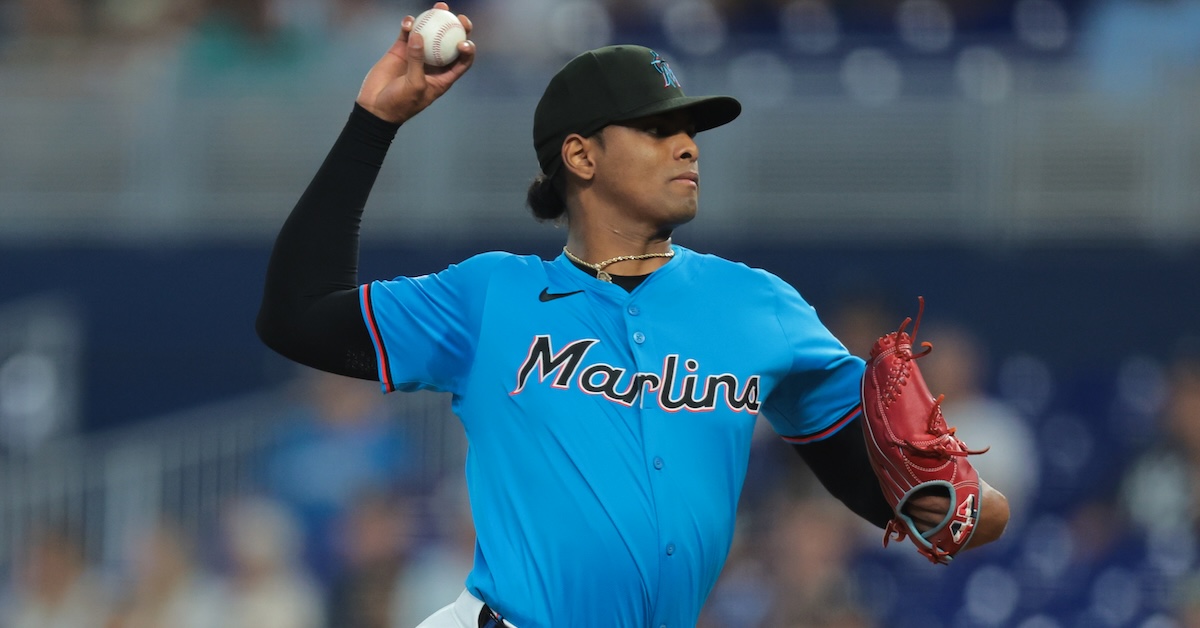
Brandon Mann Addresses a Bevy of Miami Marlins Changeups

Sam Navarro-Imagn Images

Brandon Mann’s playing career was coming to a close when he was featured here at FanGraphs in June 2020. A southpaw whose professional experience spanned 17 seasons — including part of 2018 with the Texas Rangers — he was soon to turn from hurler to tutor. Mann served as a pitching coordinator for the KBO’s Lotte Giants in 2021, then spent the next two years as a trainer and pitching coordinator at Driveline. His last two season have been in Miami. Mann joined the Marlins as a pitching strategist in 2024, and this year he is their bullpen coach.

Given his background and expertise, as well as my being intrigued by some of the talented arms on the Miami pitching staff, I made it a point to catch up with Mann when the Marlins visited Fenway Park in mid-August. I wasn’t sure exactly what we’d talk about, but I knew that it would be a good pitching conversation. We ended up focusing on changeups and splitters.

———

David Laurila: You just told me that Edward Cabrera has a unique changeup. What makes it stand out?

Brandon Mann: “The most unique part is how hard it is [94.2 mph, per Baseball Savant]. The movement profile is similar to a sinker, although it has a little bit more depth than sinkers in general. It’s really more of the spin. Say he throws a changeup and a sinker and both are 96 [mph]. The movement profiles would be almost identical, but the changeup is going to fall off more because it’s got as much as 600 fewer rpm. That’s super unique.

“I don’t know if the movement gives it justice when you actually see… say it’s three [inches] of induced vertical break and 16 [inches] horizontal — and then he throws a sinker at six and 18. They’re the same velo, and the sinker stays up, but the changeup falls off, and somebody swings and misses at it. A lot of that is the spin component. Again, it’s similar velo, but anywhere from 500 to 600 rpm less spin. Read the rest of this entry »


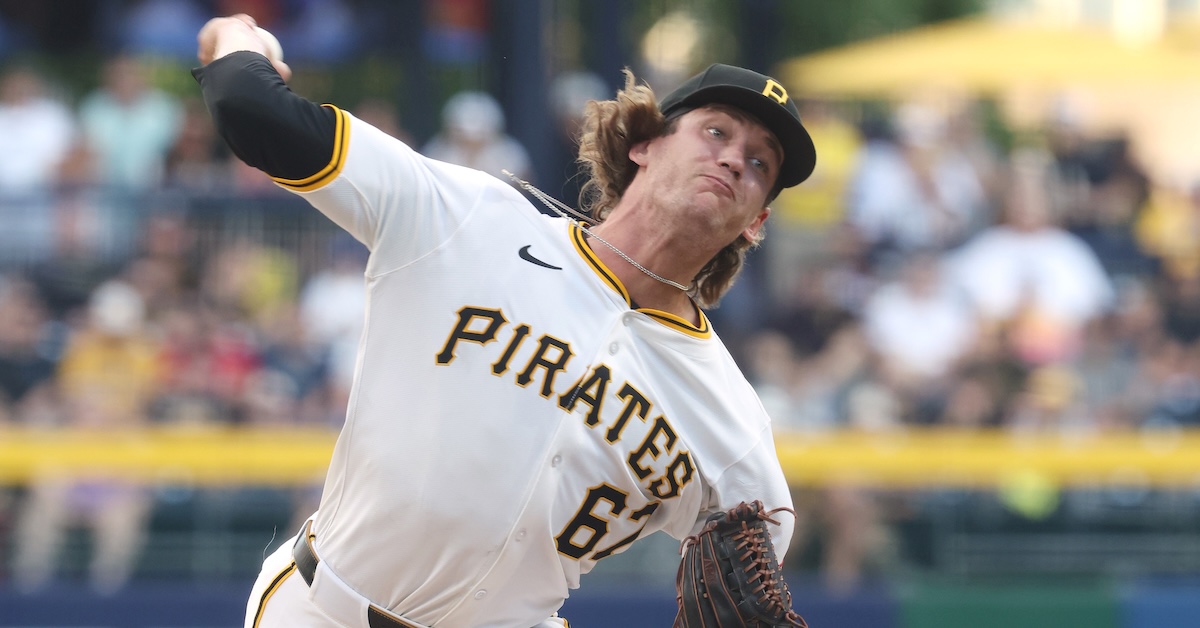
Braxton Ashcraft Is Angling Toward a Spot in the Pirates’ Rotation

Charles LeClaire-Imagn Images

Braxton Ashcraft is aiming to join the Pittsburgh Pirates rotation, hopefully as soon as next season. For now, the 25-year-old right-hander is putting up impressive numbers while being used prudently in his first taste of major league action. Since debuting in late May, Ashcraft has made 23 appearances — all but six of which have come out of the bullpen — while logging a 2.47 ERA and a 2.85 FIP over 58 1/3 innings. Moreover, he’s allowed just 49 hits, only two of which have left the yard.

His previous lack of durability is the reason behind the caution. When our 2025 Pirates Top Prospects list came out in the spring — Ashcraft was no. 2 with a 50 FV — Eric Longenhagen wrote that “injuries are an inescapable aspect of Ashcraft’s profile due to his history and the violent nature of his delivery.” Drafted 51st overall in 2018 out of Waco, Texas’ Robinson High School, the righty entered the year having thrown just 235 professional innings, including a career-high 73 frames a year ago. Counting his time in the minors, he is up to 106 2/3 in the current campaign.

His stuff is clearly plus, and not just because his heater averages 96.9 mph. The best of Ashcraft’s five pitches is his slider, which he’s thrown 32.6% of the time to the tune of a .202 batting average allowed and a 30.7% whiff rate. Delivered at 91.8 mph, it was aptly referred to by our lead prospect analyst as the talented young hurler’s bread and butter.

Ashcraft discussed his repertoire, including the angle that makes his pitches so effective, when the Pirates visited Fenway Park at the end of August.

———

David Laurila: When I talked to him back in February, Bubba Chandler said that you and he are similar in some respects. Do you agree?

Braxton Ashcraft: “In a lot of ways, yes. I think what drives a lot of our success is leveraging counts. His fastball is a lot different than mine in terms of the perception of hitters; his extension is longer than mine, and obviously the velo is a little bit higher. So is the vert. It’s just a different fastball, one that is pretty unique. Read the rest of this entry »


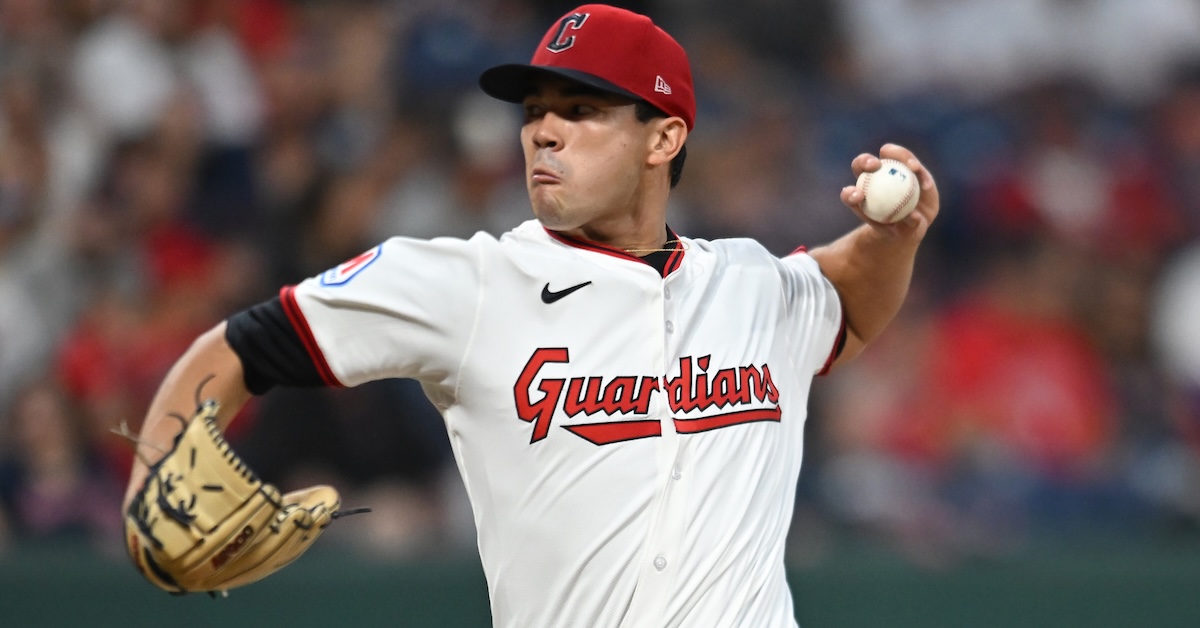
Mechanics Amiss, Tanner Bibee Is Working To Rediscover His ‘Honey Hole’

Kamil Krzaczynski-Imagn Images

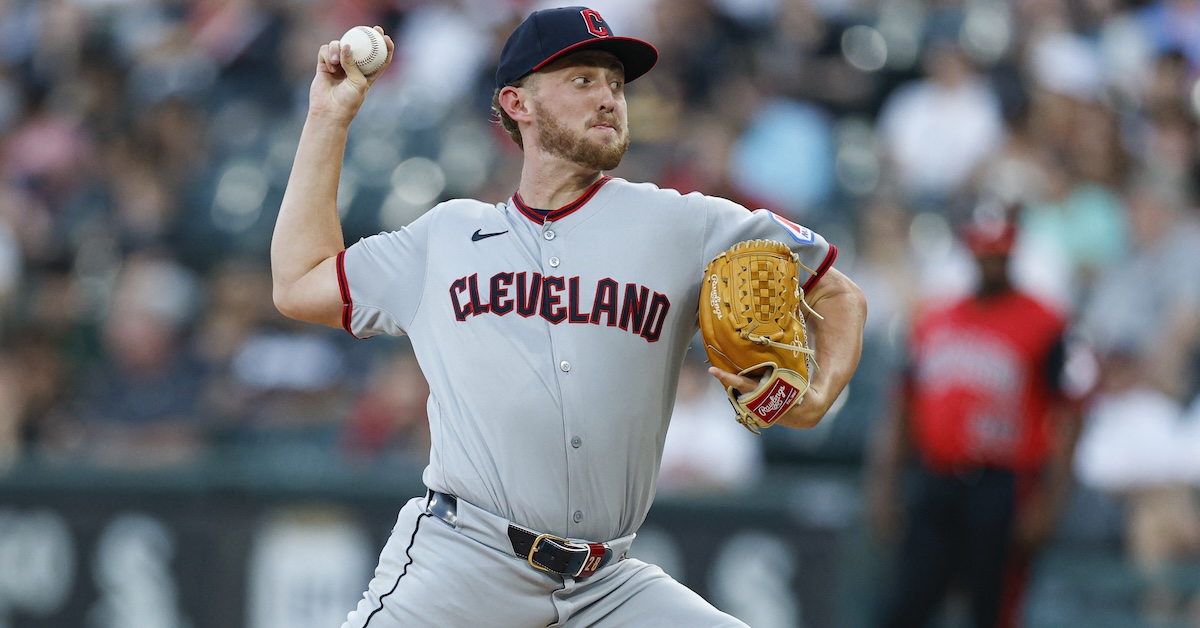
Tanner Bibee is having a down season. While he’s thrown a team-high 154 2/3 innings, the Cleveland Guardians right-hander has a 4.77 ERA and a 4.69 FIP, as well as a career-low 20.6% strikeout rate. Over the previous two seasons — his first two in the majors — he’d tossed 315 2/3 innings with a 3.25 ERA, a 3.54 FIP, and a 25.3% strikeout rate. Something has clearly been amiss.

Bibee believes that he knows what the issue has been; how to right himself during the season is the question at hand. With less than a month left on the schedule and the Guardians still holding out hope for October baseball — their playoff odds are a faint, but not impossible, 4.6% — Bibee can’t wait until the winter to get right. Much for that reason, he worked diligently in a bullpen session on Wednesday afternoon at Fenway Park, after which he expounded on his efforts to return to what he’s been at his best.

———

David Laurila: We talked a few days after you made your big league debut (in April 2023). How do you compare to the pitcher you were then?

Tanner Bibee: “Stuff-wise?”

Laurila: Stuff. How you approach the game. You’re two years older and presumably smarter now.

Bibee: “That doesn’t always mean better. It’s been an interesting first couple of years in the big leagues. I obviously had a lot of success in 2023. I had some success last year after a rough month or two. This year has definitely been… I’ve been through different movement patterns. In ’23, I came in with a really high slot, then kind of slowly got it back down.”

Laurila: Purposefully, or did that happen organically? Read the rest of this entry »

Catching Up With Emmet Sheehan, Who Is the Same (Yet Different) Since Surgery

William Liang-Imagn Images

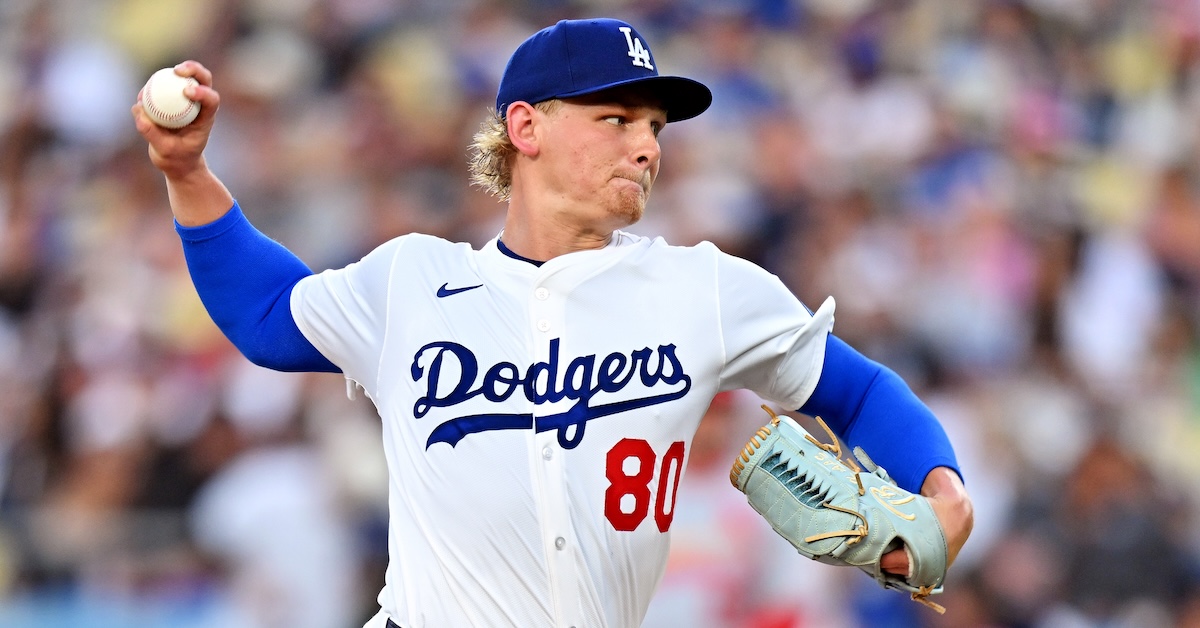
When he was first featured here at FanGraphs in August 2022, Emmet Sheehan was 22 years old and pitching for the High-A Great Lakes Loons. A sixth-round selection the previous summer out of Boston College, the right-hander had been assigned a 40 FV and a no. 25 ranking when our 2022 Los Angeles Dodgers Top Prospects list came out a few months earlier. But his stock was clearly rising. Sheehan boasted a 2.72 ERA, and he had fanned 93 batters while allowing just 39 over 59 2/3 dominant innings.

His ascent was rapid. Sheehan reached Los Angeles midway through the 2023 season, and enjoyed some immediate success. Debuting against the San Francisco Giants, he hurled six scoreless innings without surrendering a hit. He then went on to finish the year 4-1 with a 4.92 ERA and 4.85 FIP in 13 appearances comprising 60 1/3 innings. But the hard-throwing righty subsequently hit a speed bump. Sheehan opened last season on the IL due to forearm inflammation, and ultimately underwent Tommy John surgery in May. He didn’t return to the mound until this May.

He’s been rock solid since rejoining the Dodgers rotation. Over eight starts and a pair of relief outings, Sheehan has a 3.56 ERA, a 3.23 FIP, and a 27.6% strikeout rate over 48 innings. Moreover, he shoved his last time out. This past Monday, the erstwhile BC Eagle dominated the Cincinnati Reds to the tune of 10 strikeouts, allowing just three baserunners over seven scoreless innings.

Sheehan sat down to talk about his return to action when the Dodgers played at Fenway Park in late July. A night earlier, he’d allowed a pair of runs over five frames in a 5-2 win over the Red Sox.

——-

David Laurila: You’re back after missing a year due to Tommy John surgery. Has anything changed, or are you basically the same pitcher as before?

Emmet Sheehan: “I’m similar. With the rehab process and having a year to think about things, that has changed me in some ways. Obviously, learning from these guys up here has changed me, too. Getting to be around guys like Kersh [Clayton Kershaw], Glass [Tyler Glasnow], Yama [Yoshinobu Yamamoto]… all of them are amazing pitchers. I try to pick stuff up from them, just find little things. We’re all different, but we still do some things similarly.

“Pitch-wise, the one big change was my changeup. Before, it was really big. I was rolling it a lot, like really over-pronating and maybe dropping the slot a little bit, trying to get more depth on it. Coming out of rehab, pronating hard didn’t feel great in my elbow, so we tried the kick-change grip — I’m doing the little spike with my middle finger. And it’s been great. For one thing, I can sell it more like my fastball.” Read the rest of this entry »


Catching Up With Houston’s Hunter Brown, Who Continues To Evolve

Eric Canha-Imagn Images

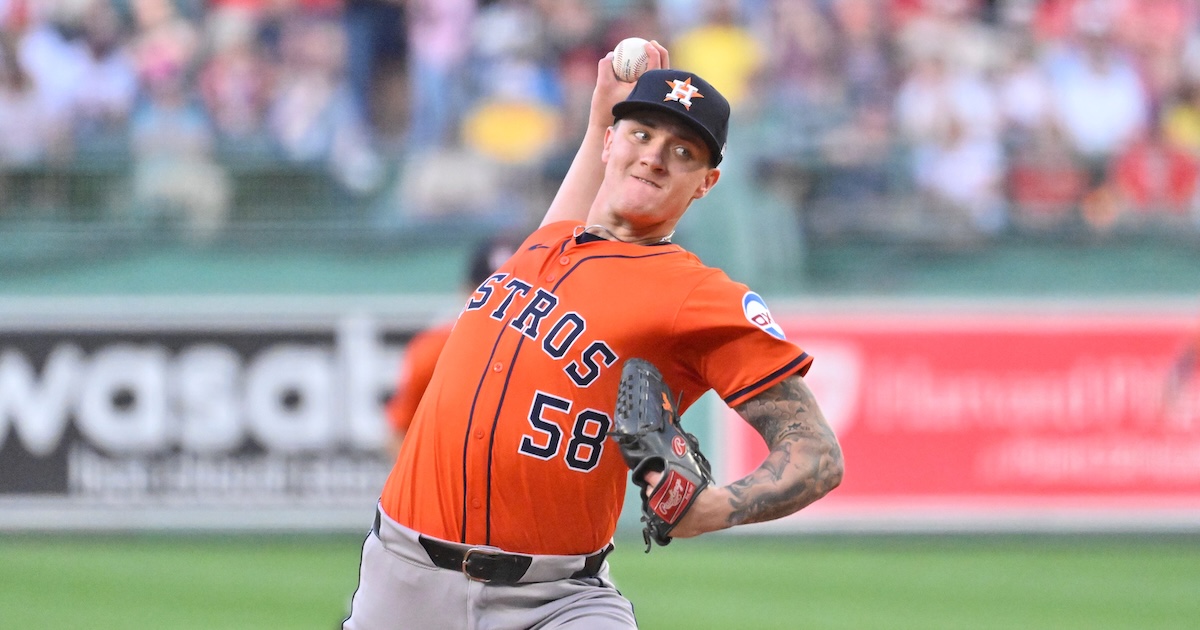
When Hunter Brown takes the mound tonight, he’ll do so with some of the best numbers in the junior circuit. Among qualified pitchers, the Houston Astros right-hander ranks third behind Tarik Skubal and Garrett Crochet in WAR, ERA, FIP, and strikeout rate. An All-Star for the first time this season, the 26-year-old Wayne State University product has established himself as a top-shelf starter.

When he was first featured here at FanGraphs in April 2021, Brown was still a prospect; our initial conversation centered around his background and repertoire. When I next caught up with him in August 2023 (Brown had made his major league debut in September 2022), we covered a recent change to his delivery.

What did we discuss when I sat down with Brown in Fenway Park’s visiting dugout during the Astros’ trip to Boston earlier this month? The answer lies below.

———

David Laurila: We last talked two summers ago. What has changed since then?

Hunter Brown: “Two years ago would have been before I started throwing a two-seam sinker and before I started throwing both cutters and sliders. That’s probably the biggest change.” Read the rest of this entry »


Red Sox Prospect James Tibbs III Talks Hitting

Cory Knowlton-USA TODAY Sports

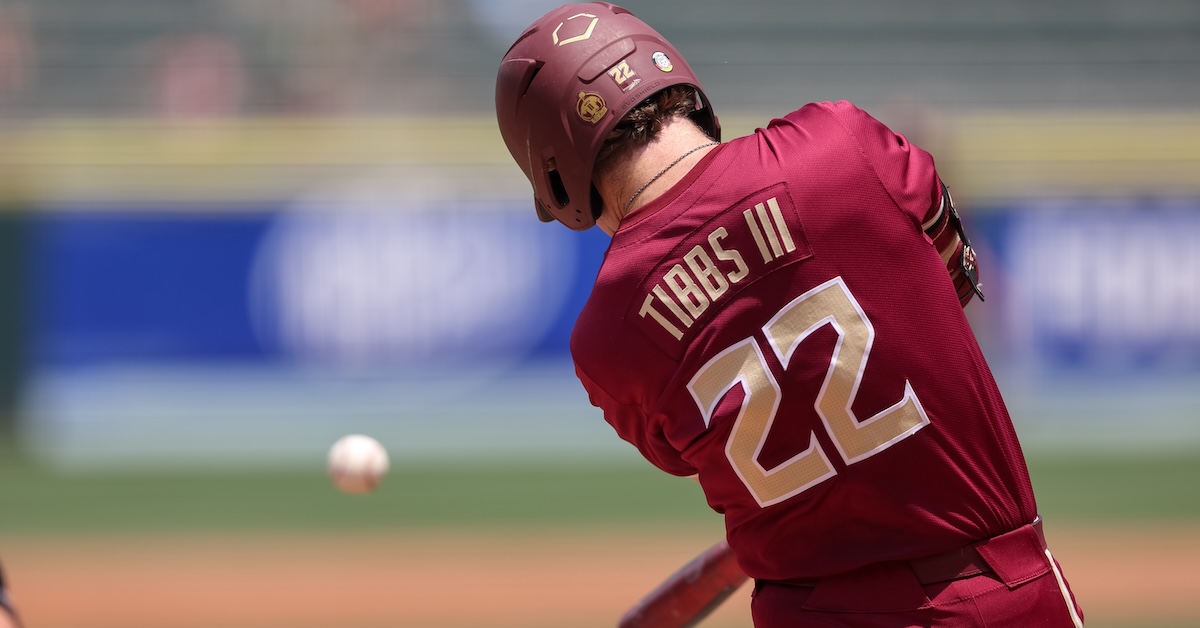
James Tibbs III might best be described as a hitting rat. Drafted 13th overall last year by the San Francisco Giants out of Florida State University, and subsequently shipped to the Boston Red Sox in last month’s blockbuster Rafael Devers deal, the 22-year-old outfielder lives and breathes baseball — particularly the part that entails standing in the batter’s box. From a young age, Tibbs has doggedly worked on honing his left-handed stroke.

An Atlanta native who attended high school in nearby Marietta, Tibbs excelled collegiately, slashing .338/.462/.685 over three seasons at the ACC school, with a 28-homer junior campaign further enhancing his profile. And he’s continued to hit in pro ball. He played just 26 games after inking a contract last summer, and his results were mixed; he posted a 153 wRC+ in nine games (42 plate appearances) in A-ball, earned a promotion, then went cold in High-A. Now in his first full professional season, he’s back to doing what he does best: bashing baseballs. Tibbs put up a 132 wRC+ with a dozen home runs in High-A prior to the trade, and since joining his new organization, he has logged a 107 wRC+ over 86 plate appearances while acclimating to Double-A.

Ranked 14th in what Eric Longenhagen called “the best farm system in baseball” when our Red Sox Top Prospects list was published in late June, the promising young outfielder was assigned a 45 FV, with raw power graded as his best hitting tool. Tibbs sat down to talk hitting prior to a recent Portland Sea Dogs home game.

———

David Laurila: You were drafted one year ago. Are you the same hitter now, or has anything meaningfully changed?

James Tibbs III: “I’m pretty much the same. It’s what’s gotten me this far, and I’ve kind of tried to replicate that as much as possible. I’ve never been one to try to make changes unless it’s absolutely necessary, because I play off of feel. I’ll make adjustments based off of that feel, but I’m doing it trying to get back to my base. My base has been pretty consistent for the last… three years? Two years? Something like that.

“I feel like I cover the plate well. I feel like I can see the ball well from where I stand and how I load. I feel like I use my body well in order to get to the spots that I can’t necessarily cover. So yeah, it’s been pretty consistent for the most part.”

Laurila: How would you describe your approach at the plate? Read the rest of this entry »


A Conversation With Jake Bird, the Pitching Nerd Conquering Coors Field

Isaiah J. Downing-Imagn Images

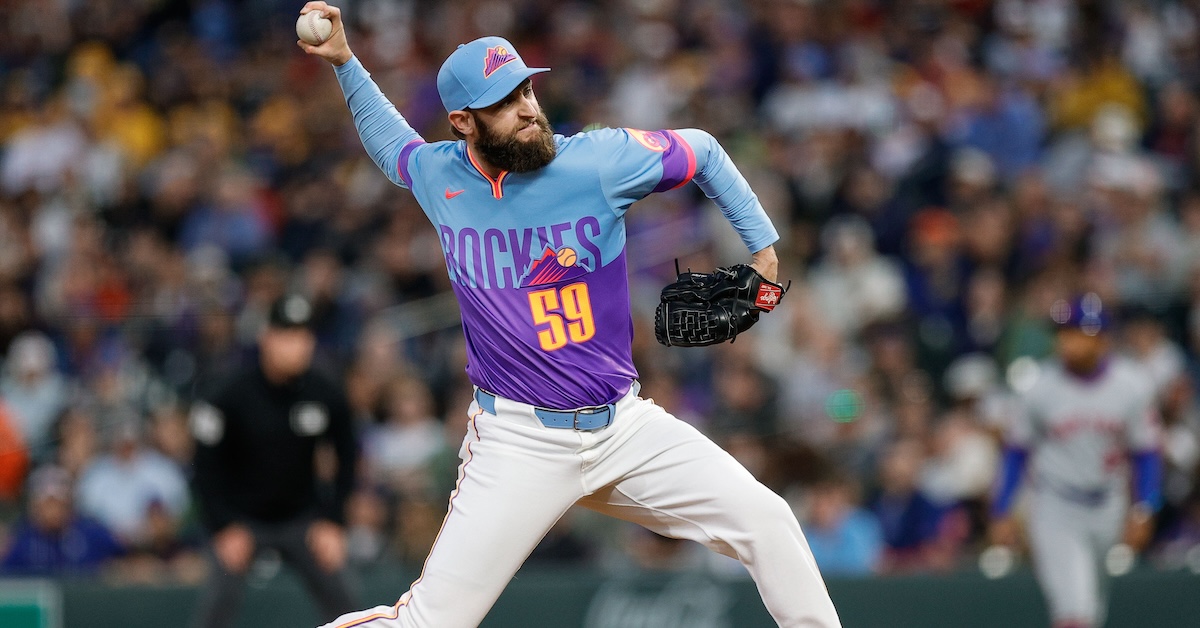
Jake Bird is having a career-best season, and conquering Coors Field has been a big part of the reason why. Over 21 relief appearances comprising 26 1/3 innings, the 29-year-old right-hander has held opposing hitters to a .196/.276/.217 slash line at home. His ERA at the notoriously hitter-friendly venue is 1.71, and his strikeout rate is a healthy 34.3%. Folding in his 18 road outings — including last night’s ERA-inflating, five-run debacle in Boston — Bird has a 3.70 ERA, a 2.92 FIP, and a 27.8% strikeout rate over 48 2/3 frames.

Prior to this year, he’d been a run-of-the-mill reliever on moribund Rockies teams. From 2022-24, Colorado’s fifth-round pick in the 2018 draft had a record of 7-9 with one save and a 4.53 ERA over 177 innings. An unranked prospect coming up through the system, Bird was in possession of an economics degree from UCLA, but boasted little in terms of big league upside. He came into the current campaign projected to essentially replicate the nondescript performances of his previous three seasons.

What is behind Bird’s unexpected emergence as a high-quality bullpen arm? Moreover, what is allowing him to have so much success in his home ballpark? I asked him those questions before Monday’s Rockies-Red Sox game at Fenway Park.

———

David Laurila: How are you having so much success at Coors this year? Can you explain it?

Jake Bird: “I think a lot of it is just the comfortability factor. After being here a few years, I’m realizing that Coors isn’t the big monster that everybody makes it out to be. It’s not that big of a deal. Sometimes [the ball] gets in the air, and the [pitches] move less, but as long as you have a plan of where you want to go with the ball, and sequence pitches, it doesn’t make too much of a difference. Read the rest of this entry »


A Conversation With Chase Burns

Bob DeChiara-Imagn Images

Chase Burns doesn’t need much of an introduction. The 22-year-old right-hander was featured here at FanGraphs prior to his much-anticipated June 24 major league debut, and when our Cincinnati Reds Top Prospects list was published in early May, he came in at no. 1, this after checking in at no. 28 overall as a 55 FV prospect on the offseason Top 100. And then there was the debut itself. With the eyes of the baseball world upon him, the second overall pick in last year’s draft fanned the first five New York Yankees batters he faced. With a fastball reaching triple digits and a razor-sharp slider to augment it, Burns has quickly established himself as one of the game’s most promising young arms.

Those things said, the flame-throwing Wake Forest University product is still a work in progress. Burns threw just 66 minor league innings before receiving his call-up, and while his initial frames were scintillating, he soon learned how challenging it is to face big league hitters. Not only did the Yankees go on to tag him for three runs, he failed to get out of the first inning in his second start, that against the Red Sox at Fenway Park.

How does Burns approach his craft, and what has he learned coming through not only Wake Forest’s pitching program, but also Cincinnati’s, which is likewise highly regarded? One day after his rocky outing in Boston, I sat down with Burns to find out.

———

David Laurila: What do you know now that you didn’t know when you were coming out of high school?

Chase Burns: “It’s kind of a growing process, really. You’re learning as you go. There is a lot I’ve learned about, including analytics, going from high school to college — and even now — about how can I make my stuff better, about what plays in the game today.”

Laurila: Pitching analytics and optimizing your stuff is important, but more than that goes into succeeding at this level…

Burns: “Yes. I was fortunate to go to Wake Forest, where we had the pitching lab, but the pitching coach there, Corey Muscara, kind of talked about that. He talked about how you don’t want to dive too deep into the analytics, because at the end of the day, you’ve got to go out there and get outs. That’s the biggest thing.”

Laurila: Is there any one thing you learned about yourself as a pitcher at Wake Forest that you feel is especially important?

Burns: “I think I figured out that I was more of a north-to-south pitcher, as opposed to an east-to-west pitcher. I kind of throw the ball middle and let my stuff move how it’s intended, instead of trying to make this big sweep right to left. I think that helps me a lot.”

Laurila: That wasn’t until you got to Wake Forest?

Burns: “Yes. When I was at Tennessee [where Burns spent his first two collegiate seasons], I was trying to go in and out more, rather than up and down with all my stuff.”

Laurila: I assume you know your pitch metrics?

Burns: “I do. I’m a cut-ride guy, and I feel like my vertical is pretty good. I’ve been up to 20-21 inches [with the fastball], but it averages around 18. When I was at Tennessee, the vertical was pretty low, and I realized that I could get more, so that was something I went after. Now I don’t really worry about it too much; I kind of just play into the cut-ride profile. I think that’s kind of another weapon for me.

“Nowadays a lot of people are chasing vertical and spin rate — stuff like that — and I think it could be a good thing, but at the same time, it could be bad with the amount of injuries that we have today.”

Laurila: The slider is your best secondary pitch. Has that always been the case?

Burns: “Yeah. It’s a pitch I’ve always had feel for, even when I was younger. Over the years, it’s kind of just progressed naturally.”

Laurila: You also have a curveball and a changeup…

Burns: “The curveball is something I’ve had since college, but I didn’t really have times where I needed to use it as much. But at this level, you’re going to have to use it. It’s still developing, but it’s been a weapon for me.

“My changeup isn’t very conventional. It’s the kick-change that everybody’s been talking about. I’m a supinator, so it’s kind of hard for me to throw a changeup. I started kicking it, and have had some success doing that.”

Laurila: When did you start throwing the kick-change?

Burns: “I starting kicking it this year, right before spring training. Some guys at Wake Forest helped me develop it. I told [the Reds] that I’ve been working on it, I threw it a lot, and they were pretty happy with it.”

Laurila: Your fastball and slider are plus-plus pitches, while the other two aren’t at that same level. How are you approaching pitch usage in terms of using your entire repertoire versus mostly just going with your best weapons?

Burns: “I mean, two pitches at this level can be hard. A hitter can eliminate one, and that makes it a lot easier for them, so having four is huge for me. That’s something I’ve been working on in my recent outing. My changeup has been a really good pitch for me, especially against lefties.”

Laurila: You’re a power pitcher. Is that accurate?

Burns: “Yes.”

Laurila: In a perfect world, a pitcher is more than just power. Along with having nasty stuff, he knows how to “pitch.”

Burns: “I mean, that’s the end goal. When you can match those two together, being a power pitcher who throws hard, but also be able to use finesse — go up and down, in and out, be able to paint the corners — that’s what makes a pitcher really dangerous.”

Laurila: Going from being more of a thrower to more of a pitcher is an important evolution. As young as you are, do you feel you’ve turned that corner?

Burns: “I think so. Maybe some people don’t agree with that, but I feel I’ve made huge improvements from being just a guy that just tries to throw it hard to a guy that actually goes out there and pitches. But like I said earlier, it’s a growing process.”


A Conversation With Max Scherzer on the Importance of Conviction

Nick Turchiaro-Imagn Images

Max Scherzer was an early adoptee of analytics. When I first interviewed him for Baseball Prospectus back in August 2010, the right-hander called himself “a very mathematical guy,” adding that “the advanced metrics that are coming out throughout the game… have helped me to understand and simplify the game.”

Fifteen years later, Scherzer is an elder statesmen — and a three-time Cy Young Award winner — who approaches his craft differently than he once did. That’s not to say he no longer values analytics — he does — but a decade and a half of facing big league hitters has altered his perspective. (He addressed that evolution in an interview that ran here at FanGraphs two summer ago.) Now with the Toronto Blue Jays and on the back stretch of a career that should land him in Cooperstown, the 40-year-old Scherzer highly values an aspect of pitching that can’t be quantified.

The subject at hand was one he volunteered. Knowing Scherzer possesses both a wealth of pitching knowledge and well-formed opinions, I approached him with an open-ended question: What should we talk about?

Here is the conversation that followed, edited lightly for better clarity.

———

David Laurila: You mentioned conviction…

Max Scherzer: “Yes. Guys now are flooded with information, and what they really need to be doing is going out there and competing, and understanding that when you do get beat, it’s not the shape of the pitch. It’s actually the sequence, or the conviction, or it could be 1,000 other things. Talking to lot of young guys, that’s what they care about, their pitch shapes. There’s so much more to pitching than that. Those are the discussions we need to have with the next generation.”

Laurila: Is there are a relationship between shapes and conviction? Do pitches that aren’t thrown with full conviction tend to be less sharp? Read the rest of this entry »


David Stearns on How Analytics Have Impacted a General Manager’s Job

Brad Penner-USA TODAY Sports

Earlier this month, an article titled “Executive’s View: How Have Analytics Impacted a General Manager’s Job?” was published here at FanGraphs. Featured were Ross Atkins, Brian Cashman, Jerry Dipoto, and John Mozeliak, with the foursome sharing their perspectives on this ever-evolving aspect of their shared position.

Shortly after the piece ran, two people suggested David Stearns as a followup interview subject. That’s understandable. Now in his second season as the president of baseball operations for the New York Mets, the 40-year-old Ivy League product has two decades of experience within the industry, almost all of it in front offices.

A summer intern with the Pittsburgh Pirates prior to graduating from Harvard University in 2007, Stearns subsequently worked in MLB’s central office, then served as co-director of baseball operations with Cleveland, became an assistant general manager with the Houston Astros, and, in 2015, was hired by the Milwaukee Brewers as general manager. His data-driven approach was a common thread throughout. Moreover, he has remained true to his analytic bent since assuming his current position following the 2023 season.

Stearns was at Fenway Park this past week when the Red Sox hosted the team whose front office he now leads, so I took the opportunity to get his perspective on the subject at hand. Here is our conversation, lightly edited for clarity.

———

David Laurila: I’ll start with the question I asked Atkins, Cashman, Dipoto, and Mozeliak: How has the continued growth of analytics impacted the job?

David Stearns: “Over the span of my career, we’ve been inundated with more and more sources of information — information sources that are increasingly granular in nature, increasingly have to do with the processes of playing baseball, and not necessarily the results or outcomes of playing baseball. Those lead towards more and more complex algorithms and models that require greater numbers of analysts, and really smart, creative people to have in a front office. So, one of the greatest changes is just the size of the departments within baseball. The information has grown to such a enormous extent that we need more and more people to manage the information. That’s the first thing that comes to my mind. And then we need to make all that information actionable.” Read the rest of this entry »