Archive for Q&As

Paul Molitor Talks Hitting

Tony Tomsic-USA TODAY NETWORK

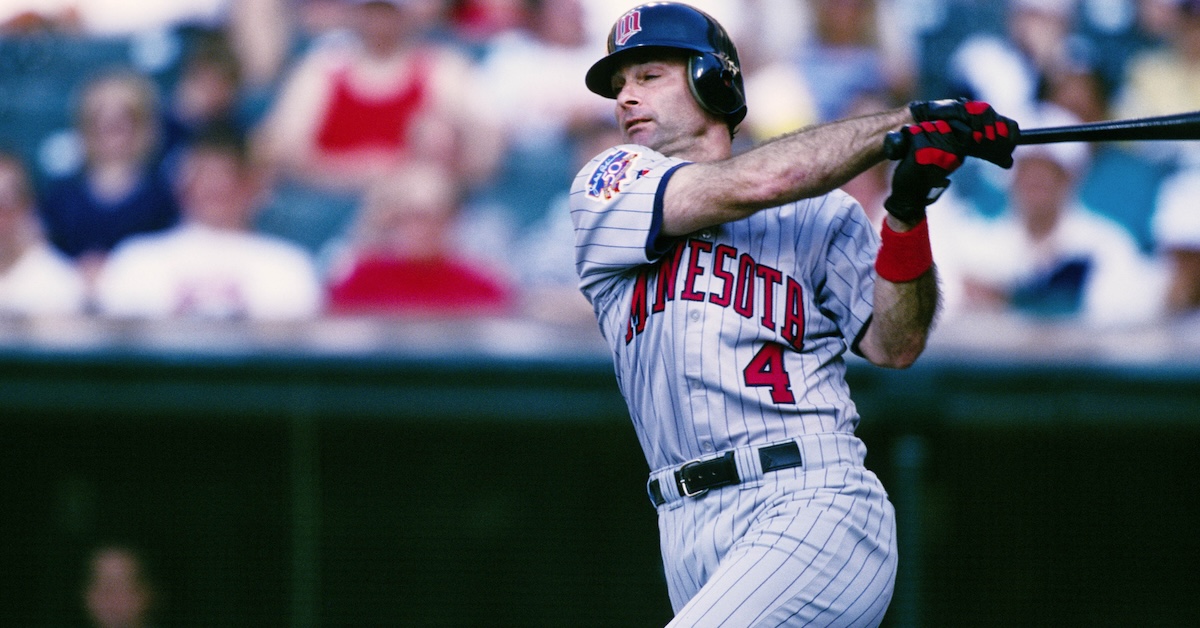
Paul Molitor was a maestro with the bat. Over 21 seasons — 15 with the Milwaukee Brewers and three each with the Minnesota Twins and the Toronto Blue Jays — he recorded 3,319 hits, the 11th-highest total in major league history. Moreover, Molitor’s 605 doubles are tied for 15th most, while his 2,366 singles are 12th most. Walking nearly as often as he struck out (1,094 BB, 1,244 K) the sweet-swinging corner infielder/designated hitter put up a .306/.369/.448 slash line and a 122 wRC+.

Elected to the Hall of Fame in 2004, the St. Paul, Minnesota native went on to manage the Twins from 2015-2018, and prior to that he served as the team’s bench coach and as the hitting coach for the Seattle Mariners. Now an analyst on Twins radio broadcasts, Molitor sat down to talk hitting on a recent visit to Fenway Park.

———

David Laurila: You played [from 1978-1998]. Did hitters and/or hitting change over the course of your long career?

Paul Molitor: “I don’t think as drastically as we’ve seen over the past 10 years or so. I don’t know if we’ve ever been through a period where the percentage of teams’ runs scored were as closely related to how many home runs they hit. The game is always evolving. Breaking down the game in terms of what plays, the numbers show how driving the baseball, getting extra-base hits, [produces runs].

“I do like the old-school. Trying to get hits is still a good thing. You’re obviously going to have guys in your lineup who are more prone to striking out, but they’re going to get you that two- or three-run homer every now and then. And then you have the guys who create the flow on the bases. If you can run the bases, you give yourself more opportunities to get in scoring position. A perfect example would be the 2025 Red Sox. They put a lot of pressure on teams defensively. I think both can work.

“So yeah, there have been changes, but again, not too much when I played. Guys were always trying to figure out how to get better, but the involvement of analytics has changed some of the approach — everything from uppercut swings to how pitchers are throwing the baseball, spinning the baseball. It all plays a part in the counter strategy that hitters are trying to employ.”

Laurila: What about you, personally? Did you change much over the years? Read the rest of this entry »


Matt Seelinger Is a Long Island-Raised Mud Hen With a Knuckle Drop

David Laurila/FanGraphs

Matt Seelinger has taken an atypical path to the doorstep of the big leagues. Drafted in the 28th round by the Pittsburgh Pirates out of Division-III Farmingdale State College in 2017, the 30-year-old right-hander subsequently played in the Tampa Bay Rays, San Francisco Giants, and Philadelphia Phillies organizations before getting released and hooking on with the Atlantic League’s Long Island Ducks before the 2024 season. His fortunes turned last summer. The Detroit Tigers signed Seelinger in late June, and since returning to affiliated ball he has logged a 1.26 ERA and a 38.4% strikeout rate over 29 relief appearances between Double-A Erie and Triple-A Toledo. So far this season, the Westbury, New York native has a 4-0 record to go with a 0.57 ERA and a 30.9% strikeout rate over nine appearances, the last five of them with the Mud Hens.

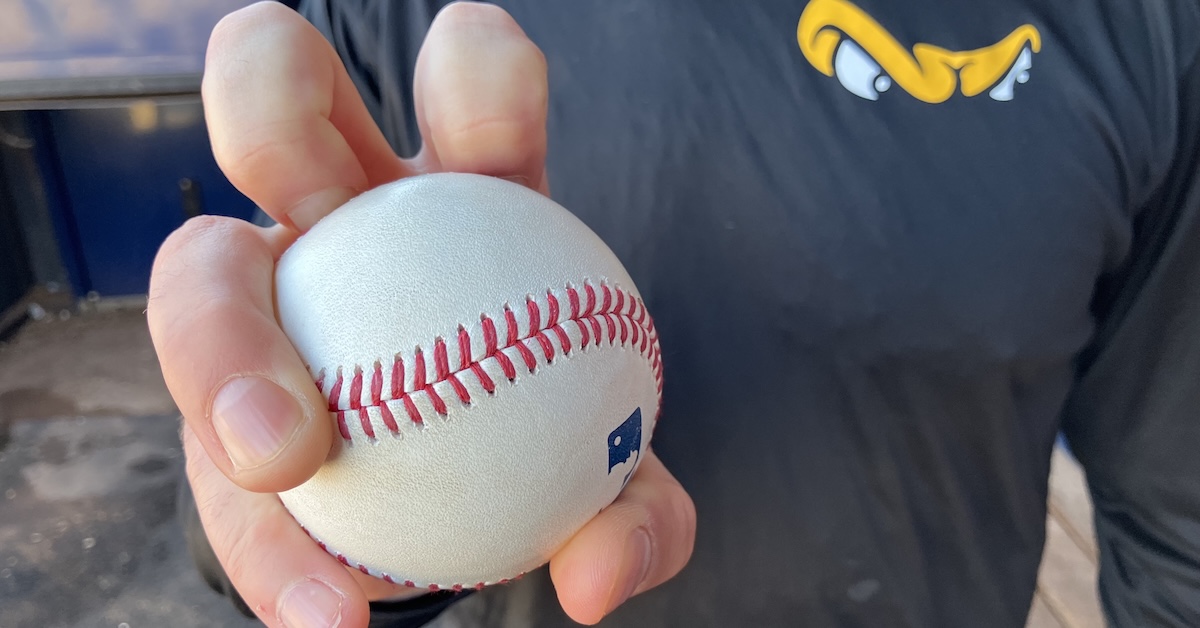
His signature pitch is every bit as notable as his late-bloomer success. Seelinger’s repertoire includes a four-seam fastball and a cutter/slider, but it is his unique offering with an unorthodox grip that most stands out. Seelinger shared the story behind it when Toledo visited Triple-A Worcester last week.

———

David Laurila: You throw a unique pitch. What exactly is it?

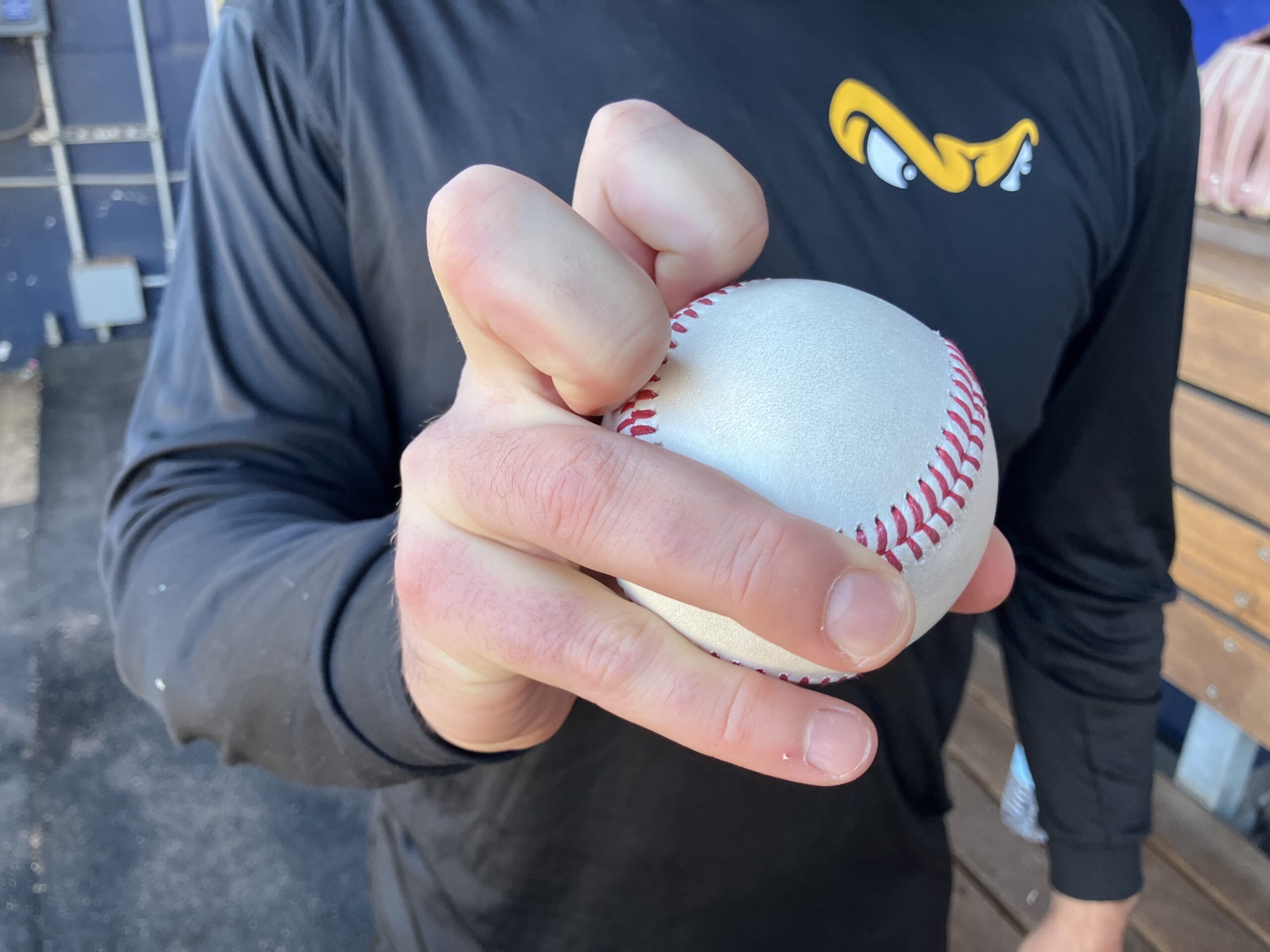
Matt Seelinger: “So, it was coined on Long Island, where I’m from. It’s called a knuckle drop. Basically, what I do is take a four-seam fastball grip and flip it so that the horseshoe is on the inside. I take my two fingers — my pointer finger and my middle finger — and bend them. I take the top lace, and put them on the bottom of it. I put my ring finger and pinky on the seams. The thumb, I try to get underneath as much as possible, although thumb placement isn’t as big of deal as long as it’s not too high up on the ball. From there, I throw it just like a fastball, only I’m pushing it out.”

Matt Seelinger demonstrates how he grips his knuckle drop.
David Laurila/FanGraphs

Laurila: The bent fingers are straightening as you’re releasing the ball… Read the rest of this entry »


A Conversation With Seattle Mariners Director of Pitching Strategy Trent Blank

Steven Bisig and Ryan Sun-Imagn Images

Trent Blank plays an integral role in one of baseball’s top pitching organizations. Now in his sixth season on the major league coaching staff, Blank is the director of pitching strategy for the Seattle Mariners. He’s well-suited for the job. The 35-year-old former minor league hurler holds an MS in Kinesiology and Exercise from Dallas Baptist University, and he previously worked at TMI Sports Medicine as a baseball performance specialist. Along with his current position, Blank has served as Seattle’s bullpen coach.

Blank sat down to talk about the Mariners’ pitching process prior to the start of the regular season.

———

David Laurila: Let’s start with a pitcher the Mariners [purchased from the Cincinnati Reds] shortly before spring training. What made Casey Legumina an attractive acquisition?

Trent Blank: “Whenever we sign anybody, we look at them through a lot of different lenses, and he popped for both our player development and analytics groups. From my perspective, we really liked some of the unique things that he does with the baseball. He has good uphill plane since he kind of changed his delivery. With his spin profile, we think we can add a couple of pitches. We’re also thinking about bringing a couple of pitches back, and repurposing them. He has a lot of raw materials we feel we can put together in a different way.”

Laurila: Can you elaborate on that?

Blank: “When we add stuff, it’s generally based on a certain spin profile we see. Then, when we talk about repurposing… with Casey in particular, it’s the sweeper. He’s had different versions of it, because he’s had different slots. We like the pitch. Adding some aggression is one thing. We’re still working through it, but the main thing is getting his fastball going at the top rail a little bit more.”

Laurila: Generally speaking, how does the organization approach introducing changes to a pitcher’s arsenal? Read the rest of this entry »


Chase Dollander Discusses His Arsenal

Isaiah J. Downing-Imagn Images

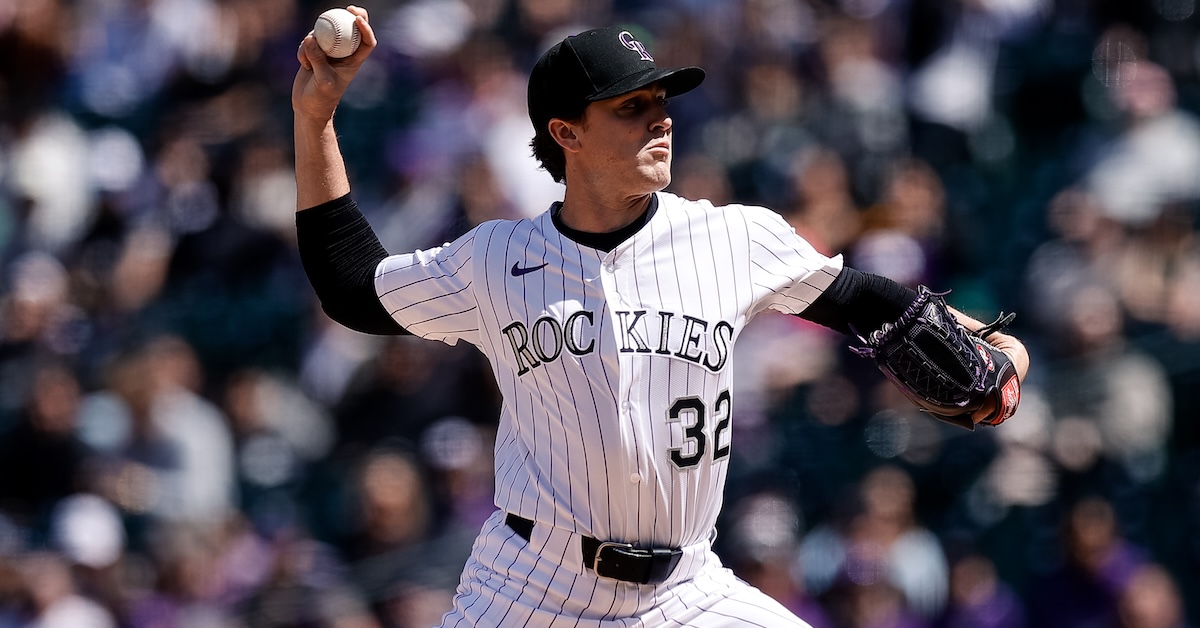
Chase Dollander made his much-anticipated debut with the Rockies on Sunday afternoon, allowing seven hits and four runs over five innings and earning his first big league win. Ranked no. 12 on our Top 100 Prospects list this spring, the 23-year-old right-hander fanned six, walked one, and surrendered a pair of home runs as Colorado outscored the Athletics 12-5 at Coors Field.

His power arsenal was on display throughout. Topping out at 99.3 mph with his high-octane heater, the 2023 first-round pick out of the University of Tennessee threw 34 four-seamers, 21 sliders (which Baseball Savant classifies as a cutter), 15 curveballs, and nine changeups. Undaunted by a premiere in the majors’ most hitter-friendly venue, he aggressively attacked the zone, throwing 49 of his 79 pitches (62.%) for strikes.

Dollander discussed his repertoire prior to the start of the regular season.

———

David Laurila: Scouting reports say you have a plus fastball, good secondaries, and that you usually command the ball well. Does that sound accurate?

Chase Dollander: “I would say so. I feel like my stuff is in a good spot right now. I do think that getting the slider a little harder and a little shorter would be good for me. But other than that, yeah, I feel like my stuff is in a good spot.”

Laurila: Do you identify as a power pitcher? Read the rest of this entry »


Austin Adams Is Slider-Reliant and Learning To Leverage Seams

Chris Tilley-Imagn Images

Austin Adams threw a higher percentage of sliders than any pitcher in baseball last season. In 56 relief outings comprising 41 1/3 innings, the 33-year-old right-hander relied on his signature offering 73.8% of the time. The heavy usage wasn’t an outlier for Adams. Since breaking into the big leagues in 2017, his 77.2% slider percentage is tops among hurlers to throw at least 100 innings.

His overall numbers have been solid. Pitching for five teams, including the Athletics last year, Adams has a 4.10 ERA, a 3.98 FIP, and a 31.6% strikeout rate over 155 2/3 career innings. He’s challenging to square up consistently, and he’s held opposing batters to a .199 batting average. Command has been the fly in the ointment, and not just because of his higher-than-ideal 13.9% walk rate. Adams plunked 13 batters last season, and in 2021 with the Padres, he outlandishly logged 24 HBPs in 52 2/3 frames.

Now in big league camp with the Red Sox after signing a minor league deal in January, Adams sat down to talk about his slider(s) at Boston’s spring training facility in Fort Myers.

———

David Laurila: You throw a ton of sliders. Why?

Austin Adams: “The reason I throw so many sliders is because I enjoy having a job in baseball. It’s my best pitch. I try to take each one of my pitches, individually, in a vacuum. For me, it’s not necessarily about setting things up. I’m not saying that’s not a thing. What I’m saying is that it’s harder to quantify. My highest-graded pitch is my slider — metrically it’s a really good pitch — so I’m going to throw it the majority of the time. It’s what gives me the best opportunity to get outs.”

Laurila: What are the metrics on your slider? Read the rest of this entry »


Minnesota’s Zebby Matthews Does More Than Just Throw Strikes

Chris Tilley-Imagn Images

There is more to Zebby Matthews’ game than an elite strike-throwing ability, though he certainly possesses that. As our lead prospect analyst Eric Longenhagen put it last summer, the 24-year-old Minnesota Twins right-hander “has barely walked anyone the last half decade.” That wasn’t an exaggeration. Matthews issued one free pass every nine innings as a collegian, and his walk rate over 205 1/3 minor league frames is a Lilliputian 2.7%. Called up to the big leagues last August, he proceeded to walk just 11 batters in 37 2/3 frames. That works out to 2.63 batters per nine innings, or nearly two more walks per nine than he had in the minors last year, but don’t get too hung up on the small-sample spike.

Besides, as I mentioned up top, there is more to Matthews than what has garnered him the most attention. Displaying better stuff than many give him credit for — his heater sits comfortably in the mid-90s — the 2022 eighth-round pick out of Western Carolina University logged a 30.5% strikeout rate last year in the minors, and in the majors that number was 27.8%. Still rookie eligible and with a chance to break camp in the Twins’ starting rotation, Matthews is the organization’s top pitching prospect.

Matthews discussed the development of his underrated arsenal prior to a recent spring training game.

———

David Laurila: Let’s start with your pitches. What is your full repertoire?

Zebby Matthews: “I have a four-seam fastball that has some decent carry on it, a cutter, a gyro slider, a curveball, and a changeup.”

Laurila: How much carry do you get on your fastball? Read the rest of this entry »


D-Backs Prospect Kyle Amendt Has an Over-the-Top Trebuchet Arm Action

Megan Mendoza/The Republic-USA TODAY NETWORK via Imagn Images

When our Arizona Diamondbacks Top Prospects list was published in December, Eric Longenhagen described 24-year-old Kyle Amendt as “a late-blooming illusionist righty with a cut/rise fastball and a deceptive delivery.” Our lead prospect analyst went on to say that the physically imposing 6-foot-5, 255-pound hurler had “a 15% swinging strike rate in 2024, among the best in the org, even though his fastball sits just 88-92 mph.” Not fully sold on the total package — command is among the concerns — Eric assigned Amendt a 35+ FV.

His unorthodox style of pitching and minor league numbers nonetheless suggest a future role in a big league bullpen. Along with the aforementioned 15% swinging strike rate, the 2023 ninth-round pick out of Dallas Baptist University logged a 2.86 ERA, a 2.38 FIP, and a 40.3 K% over 44 innings across High-A, Double-A, and Triple-A. And his delivery is indeed unique. Eric called it “over-the-top trebuchet arm action,” adding that Amendt “hides the ball forever.”

Currently a non-roster invitee at D-backs camp, Amendt discussed his delivery and three-pitch arsenal during the Arizona Fall League season.

———

David Laurila: I’ve heard that you have an unorthodox delivery. How would you describe it?

Kyle Amendt: “Like a high left-handed slot as a righty. My curveball is a left-handed curveball, and my fastball is anywhere from an 11:45 to a 12-[o’clock] tilt. Everything looks like it’s coming from directly over my head.”

Laurila: What is story behind your delivery? Read the rest of this entry »


Triston Casas Is Looking To Create Power From a Smaller Space

Eric Canha-USA TODAY Sports

Triston Casas is making some changes with his left-handed stroke, and he’s doing so with the Green Monster in mind. The Boston Red Sox slugger has historically used the entire field — his pull-center-oppo numbers last season were 38.5%, 38.5%, and 23.0%, respectively — but he wants to take even better advantage of his home park. Bashing with arms bent will be part of that process… at least for now. Compared to his many of his contemporaries, Casas can be a bit of chameleon when it comes to fine-tuning his swing.

Always engaging when discussing his craft — last summer’s Triston Casas Talks Hitting Training and August 2023’s Triston Casas Embraces the Science of Hitting are good examples — the 25-year-old first baseman discussed his current efforts at Red Sox camp earlier this week.

———

David Laurila: You’re making some adjustments at the plate. What are they?

Triston Casas: “It’s more an approach of keeping my swing inside my frame. I want to have the angles of my body — my hips and my shoulders — in alignment, and try to make sure that I’m making contact inside my body. I want to feel like I’m hitting with my arms bent at a certain point.

“As a hitter, you need that triple extension. Your wrists, your front leg, and your back hip are all perfect, at the right time, as you’re making contact. That’s where you get the power.”

Laurila: Can you elaborate on hitting with your arms bent? Read the rest of this entry »


Hunter Bigge Went From Studying Physics at Harvard To Throwing Heat With Tampa Bay

Erik Williams-USA TODAY Sports

Hunter Bigge’s baseball career was in limbo when he graduated from Harvard University in 2021 with a degree in physics. Drafted in the 12th round by the Chicago Cubs two years earlier, the 26-year-old right-hander had scuffled in High-A and was unsure if he should continue to pursue his boyhood dream or move on to a career outside of baseball. Returning to the Ivy League institution to complete his studies following that difficult season gave him options, but he still loved the game.

Fast forward to 2024, and Bigge was thriving in the big leagues.

Bigge debuted with the Cubs on July 9, then a few weeks later was dealt to the Tampa Bay Rays along with Ty Johnson and Christopher Morel in exchange for Isaac Paredes. He excelled in both uniforms. With 15 of his 19 appearances coming after the trade, Bigge worked 17 1/2 total frames, fanning 24 batters while allowing 17 hits and just five free passes. Moreover, he posted a 2.60 ERA, a 2.76 FIP, and a 32.9% strikeout rate. His heater played a huge role in his success. At 97.5 mph, it ranked in the 94th percentile among his contemporaries.

Bigge discussed his path to the big leagues, and his approach on the mound, during the final weekend of the 2024 season.

———

David Laurila: Let’s start with one of my favorite icebeaker questions: Do you approach pitching as more of an art, or as more of a science?

Hunter Bigge: “I approach it more as an art. I’m pretty analytical, but I don’t think the analytical part of my brain is the one that allows me to play the best. I try to come at it with a little more flexibility. I let the science inform the high-level decisions, but when I’m out there, I’m thinking of it more like a dance with the hitter.” Read the rest of this entry »


Bubba Chandler Addresses His Power Arsenal

Charles LeClaire-USA TODAY Sports

Bubba Chandler is on track to join Paul Skenes and Jared Jones in the power department of the Pittsburgh Pirates starting rotation. Equipped with an elite upper-90s fastball and a solid array of secondary offerings, the 22-year-old right-hander has emerged as one of baseball’s highest-ceiling pitching prospects. As Eric Longenhagen notes in our forthcoming Top 100, Chandler, who was a two-sport, two-way player as an amateur and began focusing solely on pitching in 2023, is still developing, but “so far, [it’s] going as well as could have been hoped when he was drafted, and he’s tracking like a mid-rotation starter.”

His 2024 season offered ample evidence of his ability to overpower hitters. In 119 2/3 innings between Double-A Altoona and Triple-A Indianapolis, Chandler fanned 148 batters while surrendering just 81 hits. Along with a 30.9% strikeout rate and a .187 batting-average-against, he logged a 3.08 ERA and a 3.10 FIP. Moreover, he displayed improved command. The 2021 third-round draft pick out of Bogart, Georgia’s North Oconee High School lowered his walk rate from 10.5% in 2023 to a stingier 8.6% last season.

Chandler discussed his developmental strides, and the bat-missing arsenal he takes with him to the mound, earlier this month.

———

David Laurila: What have you learned about pitching since getting to pro ball?

Bubba Chandler: “The number one thing has been command. You can have great stuff, but I’ve noticed that the more I’ve gone up [minor league levels], the less guys swing at crappy pitches. In Low-A, you can throw a slider way out of the zone, and a lot of times you’re going to get a swing. If you throw a slider way out of the zone in Triple-A, especially if you didn’t set that pitch up, you’re not even going to get a lean over, or a budge, on it.

“Learning how to set pitches up has been a big thing for me. Setting them up, tunneling, and just how pitches move… but really, the command part is really what has helped make me better.” Read the rest of this entry »