Archive for Q&As

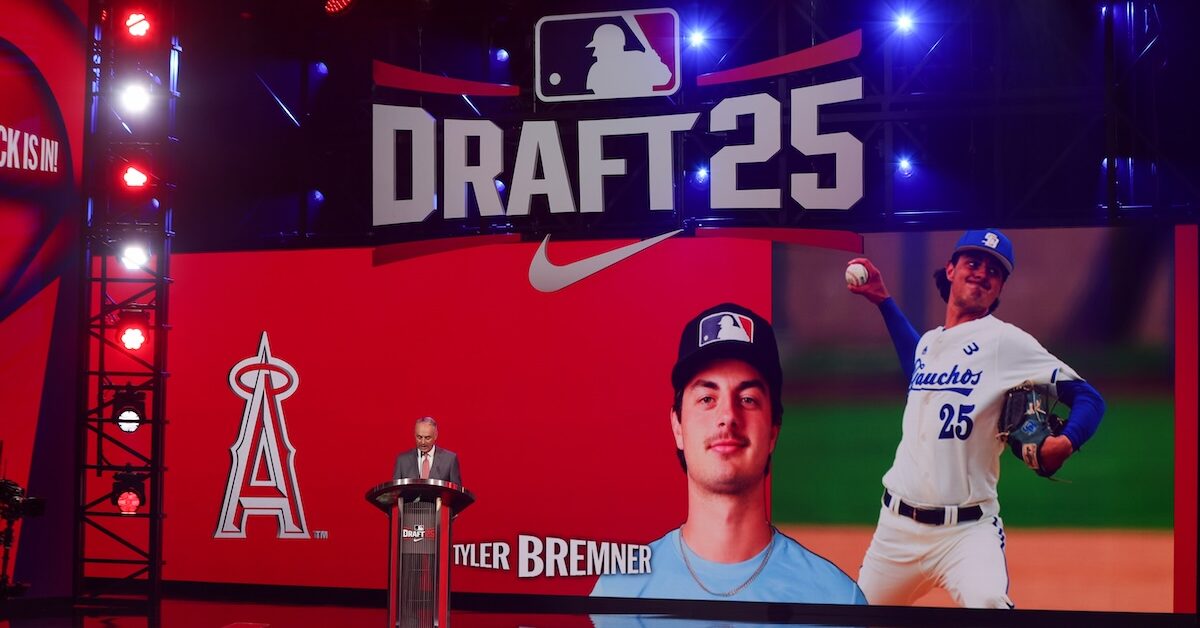
Angels Top Prospect Tyler Bremner Has a 70-Grade Changeup

Brett Davis-Imagn Images

Tyler Bremner is the top prospect in what is widely viewed as a below-average Los Angeles Angels system. Drafted second overall last summer out of UC Santa Barbara, the 21-year-old right-hander is anything but below average — and that is especially true when it comes to his signature offering. Bremner boasts one of the best changeups of any prospect, in any organization. Factor in a fastball that sits mid-90s and touches 98, and you can see why my colleague Brendan Gawlowski referred to Bremner as “the draft’s most big league-ready player.”

Premium strike-throwing is another of Bremner’s attributes. As Gawlowski pointed out in his January write-up, the 6-foot-2, 195-pound San Diego native not only averaged fewer than 2.5 walks per nine innings across three collegiate seasons, he also “missed a ton of bats.” His draft-year strikeout rate was a heady 35.8%.

Bremner discussed his high-spin changeup, his sometimes-sinking four-seamer, and what he’s been learning in big league camp, prior to a recent game at Tempe Diablo Stadium.

———

David Laurila: I’ve read that you have a 70-grade changeup. What can you tell me about it?

Tyler Bremner: “I’ve kind of had the same grip since high school. I wouldn’t say it’s the most conventional grip. It’s a circle change, but I’m sliding down from the two-seam, so my middle and ring fingers are both on the horseshoe. I also like to tuck my pinky under it. That’s maybe a little unconventional, I guess. Not many people tuck their pinky like that.

“The grip is one thing, but there is also how you throw it. I’ve been blessed with being able to pronate the ball pretty well. For me, it’s not about trying to kill spin. I’m basically making it spin hard the other way, so I get that diving action. My arm speed also helps make it look like a heater. At the end of the day, you can have a changeup that moves a lot, but if it comes out in a way that hitters can pick it up — they can see the circle, or the spin is different than the fastball — then it’s not going to be as effective as one that isn’t as nasty. A changeup plays well if it is deceptive off the heater, so I’m really just trying to keep the arm speed and make it look like a fastball.”

Laurila: How much does your changeup spin? Read the rest of this entry »


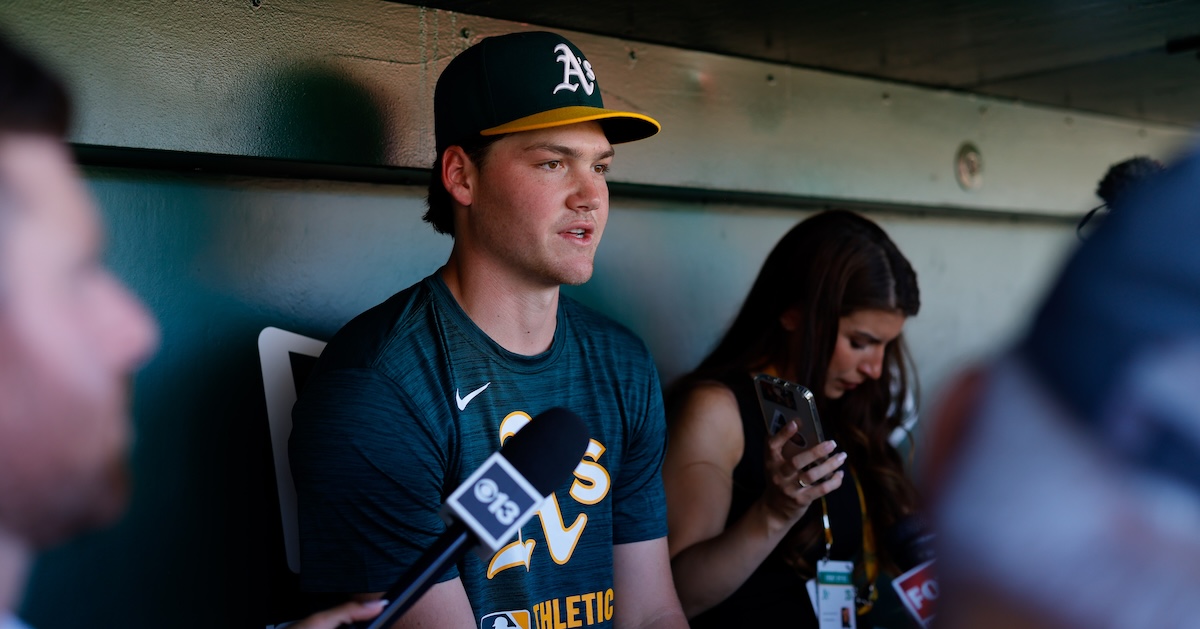
Athletics Prospect Jamie Arnold Has Two Changeups and a Major League Mindset

Sergio Estrada-Imagn Images

Jamie Arnold has a six-pitch mix that plays up thanks to outlier traits. He also has a lofty ceiling. Drafted 11th overall last year by the Athletics out of Florida State University, the 21-year-old southpaw will debut professionally this season having just missed out on our 2026 Top 100 Prospects list. And while he didn’t quite make that cut, Arnold did merit inclusion on the prospect team’s Picks to Click list, which highlights players expected to make next year’s Top 100. (Eric Longenhagen was present for Arnold’s spring training debut last Friday, video of which can be seen here.)

His delivery plays a role in his effectiveness. As Michael Baumann wrote prior to last summer’s draft, “Arnold’s long arm swing and extreme low release point make it hard to find an easy comp for him.” My colleague also referred to him as “a pitchability lefty,” which is notable given that the 6-foot-1 Tampa native possesses plus raw stuff. He certainly dominated at the amateur level. Over his last two collegiate seasons, Arnold went 19-5 with a 2.96 ERA while allowing just 153 hits over 190 1/3 frames. Moreover, he punched out 278 batters and issued just 53 free passes.

Arnold discussed his arsenal — which currently includes two changeups — as well as the mindset he takes with him to the mound, at the A’s spring training facility in Mesa, Arizona.

———

David Laurila: I’ve read the reports, but how would you describe yourself as a pitcher? How do you get guys out?

Jamie Arnold: “I’m in the zone a lot; I’m a strike-thrower and like to limit walks. You could say that I’m a groundball pitcher, but I also put up strikeout numbers. So I like to play both roles: a pitcher who gets quick outs, and a pitcher who punches guys out.” Read the rest of this entry »


Arizona Diamondbacks Top Prospect Ryan Waldschmidt Is a Student of the Art of Hitting

Jordan Prather-USA TODAY Sports

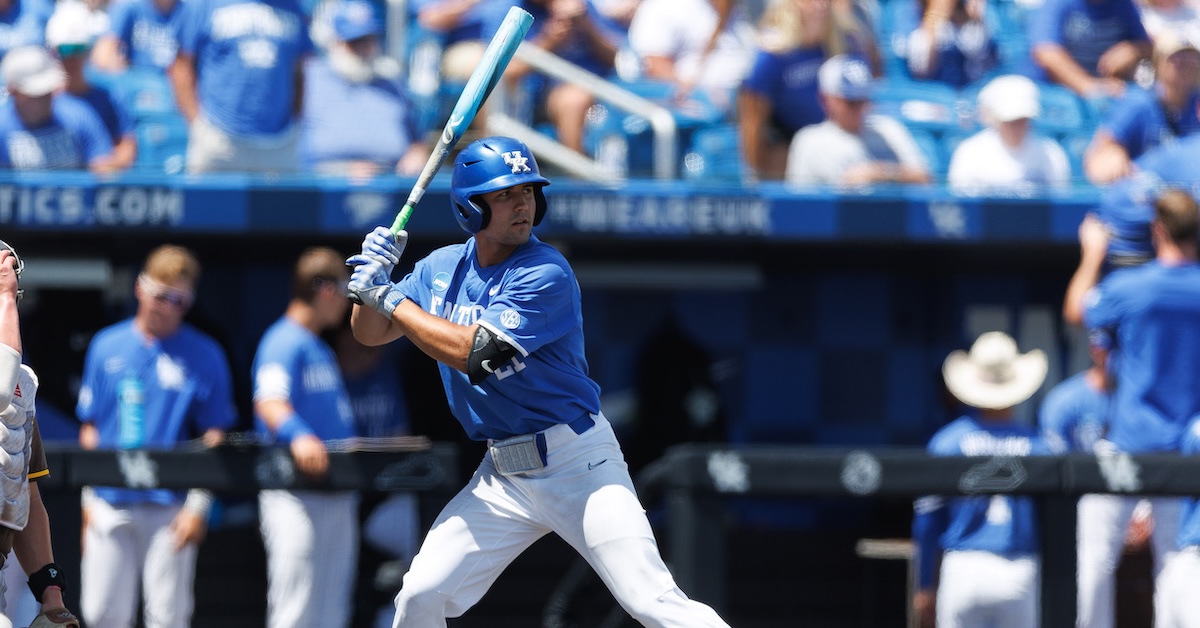
Ryan Waldschmidt is ranked 35th on our newly-released 2026 Top 100 Prospects list, and his right-handed stroke is a big reason why. Along with assigning him a 50 FV, our prospect team wrote that the 23-year-old outfielder in the Arizona Diamondbacks system “does just about everything you want at the plate and he looks the part of a bat-first future regular in the box.” Drafted 31st overall in 2024 out of the University of Kentucky, Waldschmidt is coming off of a 2025 season in which he put up a .289/.419/.473 slash line with 18 home runs and a 142 wRC+ between High-A Hillsboro and Double-A Amarillo.

The way he goes about his craft differs somewhat from his contemporaries. Waldschmidt’s setup is unorthodox, and his swing isn’t exactly what you would draw up in the lab. When it comes to mechanics, the 6-foot-2, 215-pound Sarasota native isn’t a poster child for the science of hitting, but rather an advocate of the art of hitting. Fitting a paint-by-numbers mold isn’t his goal, squaring up baseballs is — and that’s precisely what he does. As evidenced by his track record and presence in the top half of our Top 100, Waldschmidt’s way works just fine.

Waldschmidt discussed his atypical hitting profile earlier this month.

———

David Laurila: Your hitting mechanics have been described as “low maintenance.” What does that mean to you, and how long have your mechanics been in place?

Ryan Waldschmidt: “Throughout my whole entire life, I’ve had a pretty similar variation of what I do now. I mean, there was a time when I was younger that I had a little bit of a pick-it-up, put-it-back-down stride. Once I got to college… my freshman year, I even had a stride at Charleston Southern. Then once I got to Kentucky [as a sophomore] is when I kind of tapped into the no-stride from my setup. Read the rest of this entry »


Miami Marlins Top Prospect Thomas White Is Refining His Wipeout Arsenal

Corey Perrine/Florida Times-Union/USA TODAY NETWORK via Imagn Images

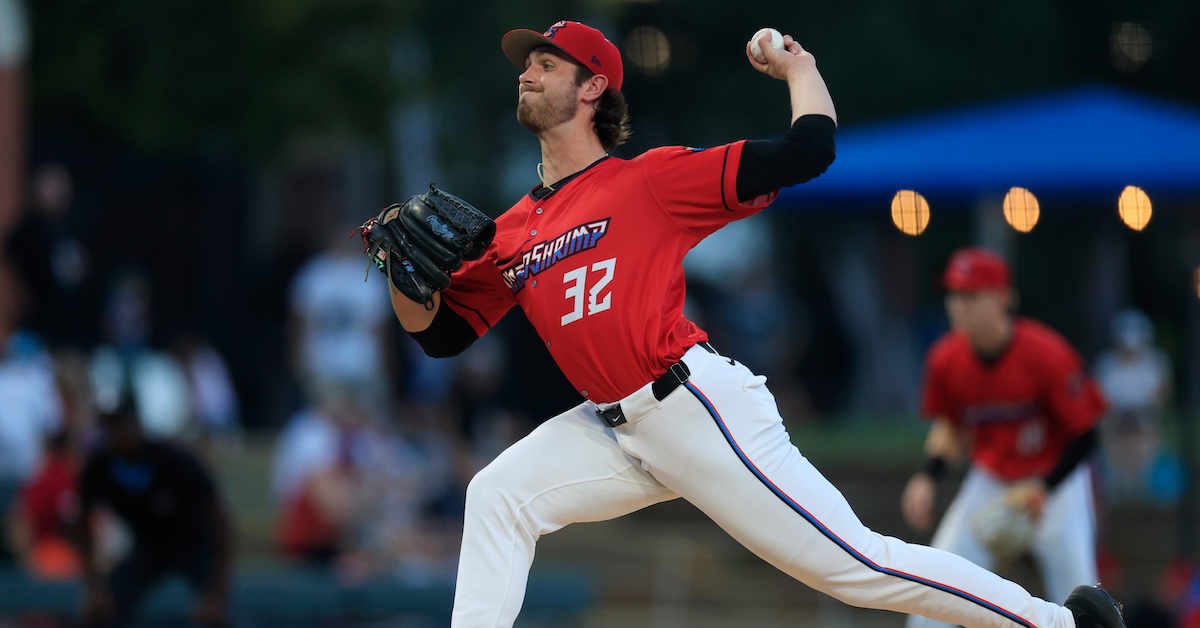
Thomas White is one of the game’s top pitching prospects. Drafted 35th overall in 2023 by the Miami Marlins out of an Andover, Massachusetts high school, the 21-year-old southpaw is ranked ninth on our newly-released 2026 Top 100 Prospects list as a 60-FV prospect. Moreover, only two pitchers rank in front of him, neither of whom throws left-handed.

The 6-foot-5, 240-pound hurler has grown as a pitcher since he was first featured here at FanGraphs in an August 2024 Sunday Notes column. Which isn’t to say he hadn’t already been making a name for himself. White, who was taking the mound for the High-A Beloit Sky Carp when I first spoke with him, ranked as Miami’s no. 4 prospect that summer, with Eric Longenhagen citing both his mid-90s fastball and plus slider when assigning him a 45+ FV. Our lead prospect analyst did include a caveat in that writeup: “He has impact starter upside and carries with him the risks typical of a volatile teenage pitching prospect.”

A year-and-a-half later, White is coming off of a 2025 season during which he dominated hitters to the tune of a 2.31 ERA, a 2.27 FIP, and an eye-opening 38.6% strikeout rate across three levels. He finished the year with the Triple-A Jacksonville, and while he is expected to return there to start the upcoming campaign, he shouldn’t be a Jumbo Shrimp for long. Possessing one of the highest ceilings among his prospect contemporaries, White is on the doorstep of the big leagues.

White discussed the continued development of his arsenal, and the mechanical tweaks he’s recently made to his delivery, in a recent phone conversation.

———

David Laurila: We first talked before a game at West Michigan, when you were playing in the Midwest League. Outside of being 18 months older and presumably 18 months smarter, has anything changed for you as a pitcher?

Thomas White: “I mean, there has been a lot of mechanical stuff and a little bit of approach. Other than that, nothing revolutionary, I would say.” Read the rest of this entry »


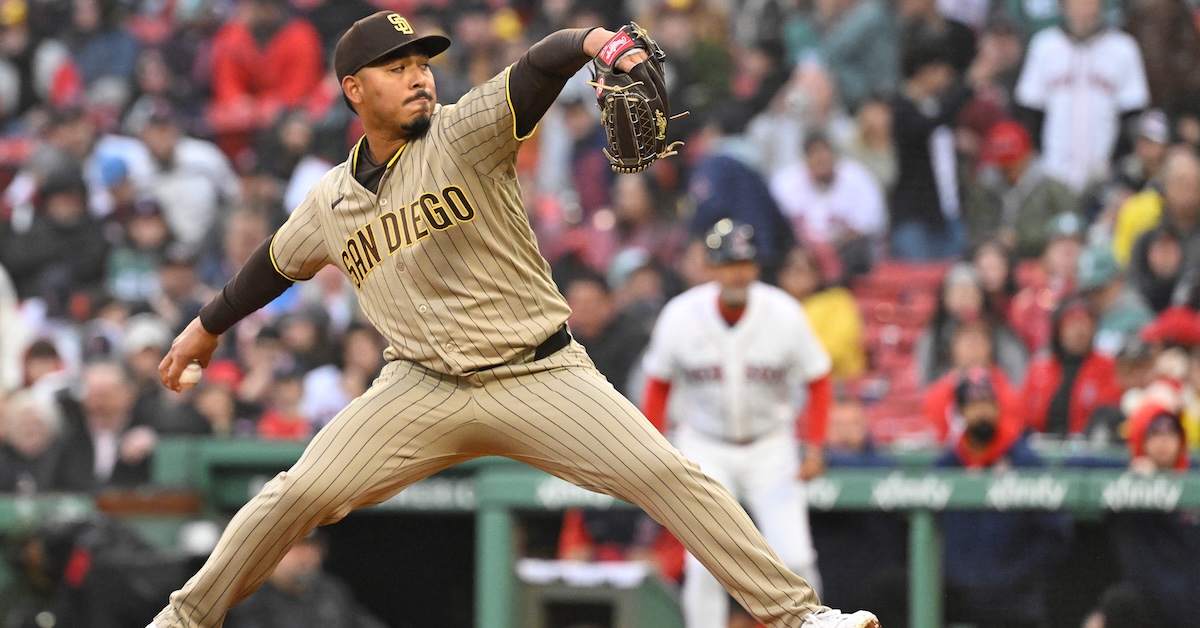
Padres Assistant Director of Player Development Mike Daly Sees Promise in a Depleted San Diego System

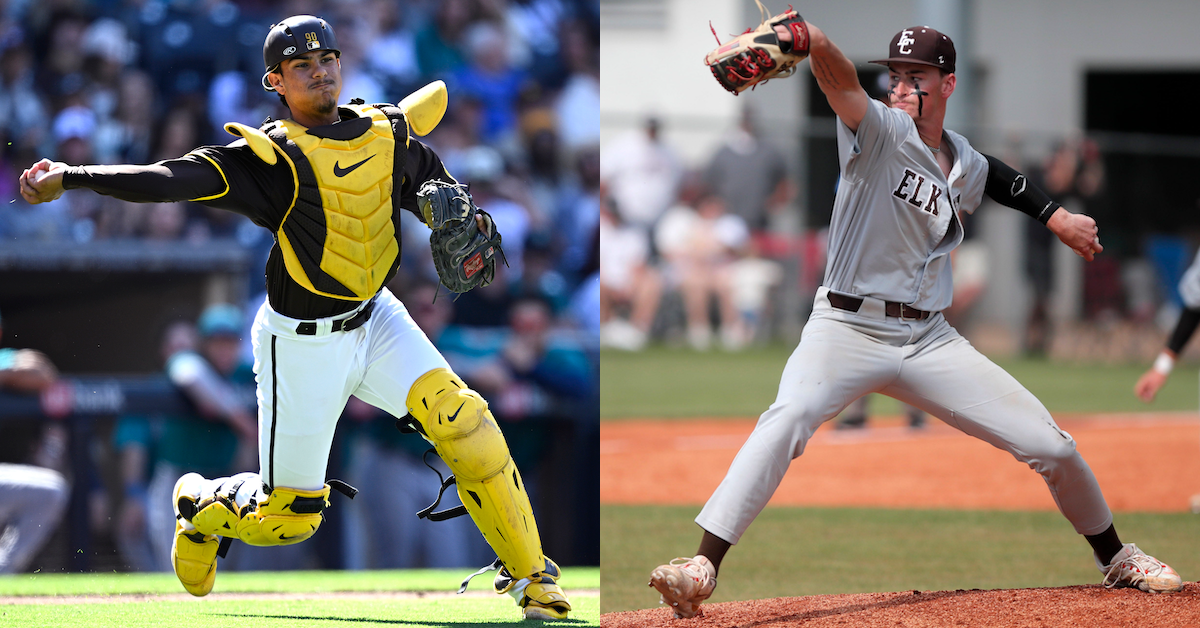
Ethan Salas and Kash Mayfield Photos: Orlando Ramirez-Imagn Images and Bryan Terry-The Oklahoman

The Padres farm system is currently ranked among the worst in the majors, but that isn’t the fault of their scouting or player development departments. Rather, it is because A.J. Preller keeps trading away quality prospects in an effort to boost the big league roster. Just last summer, San Diego’s president of baseball operations dealt Leo De Vries — the best prospect moved at the deadline in the opinion of Eric Longenhagen — as well as Braden Nett, Boston Bateman, Ryan Bergert, and several others. One year earlier, Jakob Marsee and Robby Snelling were among the youngsters moved.

That isn’t to say the cupboard has been left bare. While admittedly on the lighter side, the system does include a number of promising players. Mike Daly plays an important role in their development. Currently the club’s assistant director of player development, Daly has two-plus decades of experience in professional baseball, serving not only in player dev positions, but also as a scout and, for one season, a minor league manager.

Daly discussed the state of the Padres pipeline in a recent phone conversation.

———

David Laurila: A.J. trades a lot of prospects. What is the process when prospective deals are discussed? I assume the player development and scouting departments have at least some say?

Mike Daly: “I can’t speak for A.J., but there is a lot of continuity. There are a number of people that have been with A.J., with the organization, for a number of years: Josh Stein, Pete DeYoung, Chris Kemp, to name just a few of the leaders. A lot of scouts come into our system and are able to see our players, and spend time with our players and our coaches. Certainly, our R&D department has a heavy say on our players. They know their value. They know what their projections look like. And then there are a lot of conversations amongst the PD group. So, whenever decisions are made about trading players, there are many voices factored in as we try to make the best decision for the organization.” Read the rest of this entry »


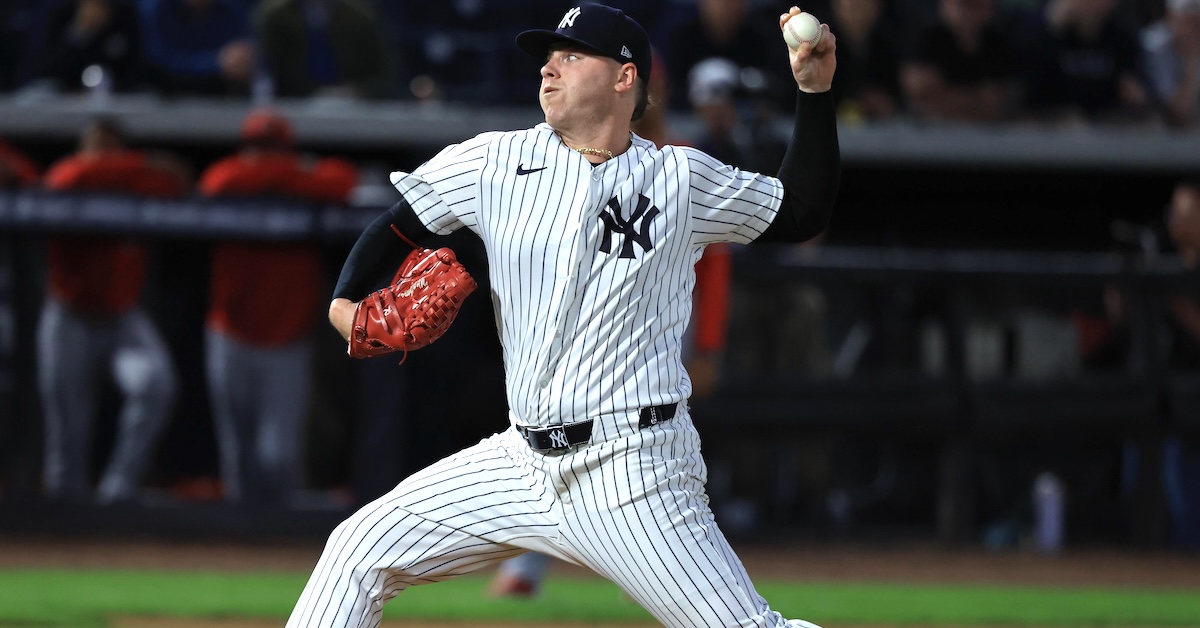
Cardinals Assistant General Manager Rob Cerfolio Discusses a Deep St. Louis System

Rich Storry-Imagn Images and Saul Young/News Sentinel-USA TODAY NETWORK via Imagn Images

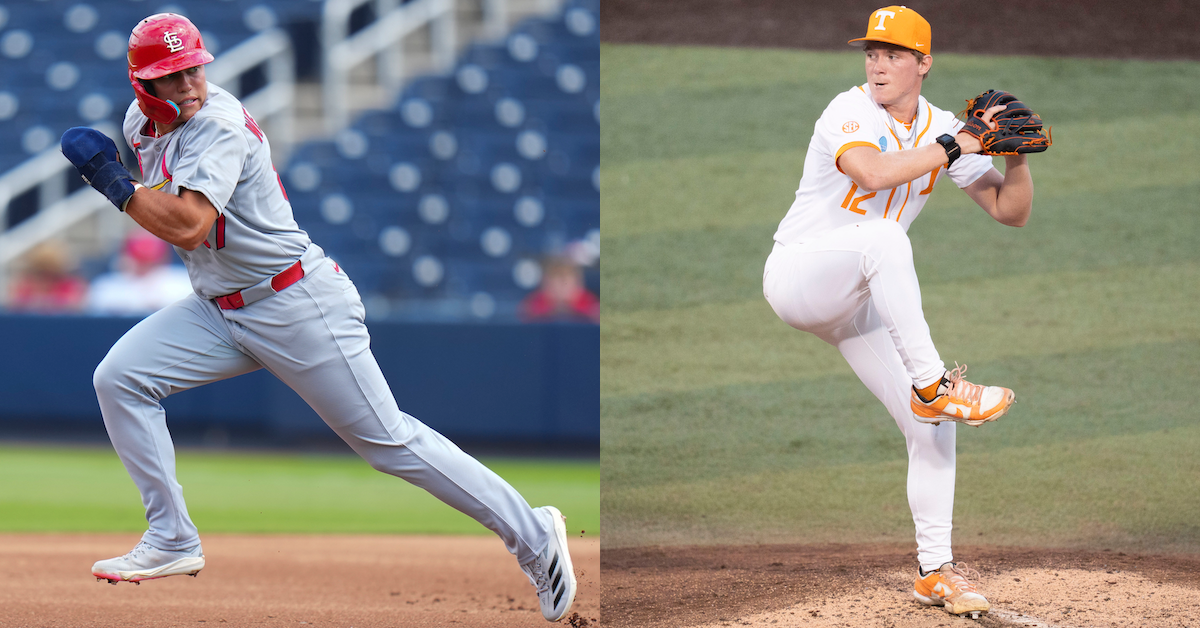
The St. Louis Cardinals boast one of the game’s best farm systems. Strong at the top and as deep as anyone’s — 53 players were profiled in yesterday’s rundown of the team’s top prospects — the pipeline possesses not only high-level talent procured through the amateur draft and international market, but also high-ceiling youngsters acquired via trade. Led by president of baseball operations Chaim Bloom, the NL Central club is firmly in rebuild mode, trusting its player development department to turn present-day promise into quality performance in the majors.

Rob Cerfolio is playing an important role in those efforts. Hired away from the Cleveland Guardians by Bloom — a fellow Yale University graduate — in October 2024, the 33-year-old holds the title of assistant general manager for player development and player performance. He profiles as a good fit for the job. Formerly Cleveland’s farm director, Cerfolio has been described by former Cardinals beat writer John Denton as someone who “prefers to operate while studying reams of biomechanical data, analyzing pitching arm angles and hitter swing paths and load profiles.”

Cerfolio discussed St. Louis’ player development philosophy, and some of the team’s most notable prospects, in a recent phone conversation.

———

David Laurila: Your club recently acquired Jurrangelo Cijntje from Seattle. I assume you and Matt Pierpont — he used to be with the Mariners — were part of the in-house trade discussions?

Rob Cerfolio: “Yes, our director of pitching, Matt Pierpont, had Jurrangelo for half a year before I hired him over here. We did have input. That’s a fun part of this job, and part of why I left Cleveland for the opportunity: to impact deals like this, to have a voice in the room. Obviously, Chaim is the final decision-maker, but we run a really collaborative acquisition process. Everybody from Matt, who you brought up, to myself and the rest of our senior leadership team is weighing in on the various concepts and packages. Read the rest of this entry »

For Tampa Bay’s Joe Boyle, Freedom and Repetition Are the Keys To Command

Nathan Ray Seebeck-Imagn Images

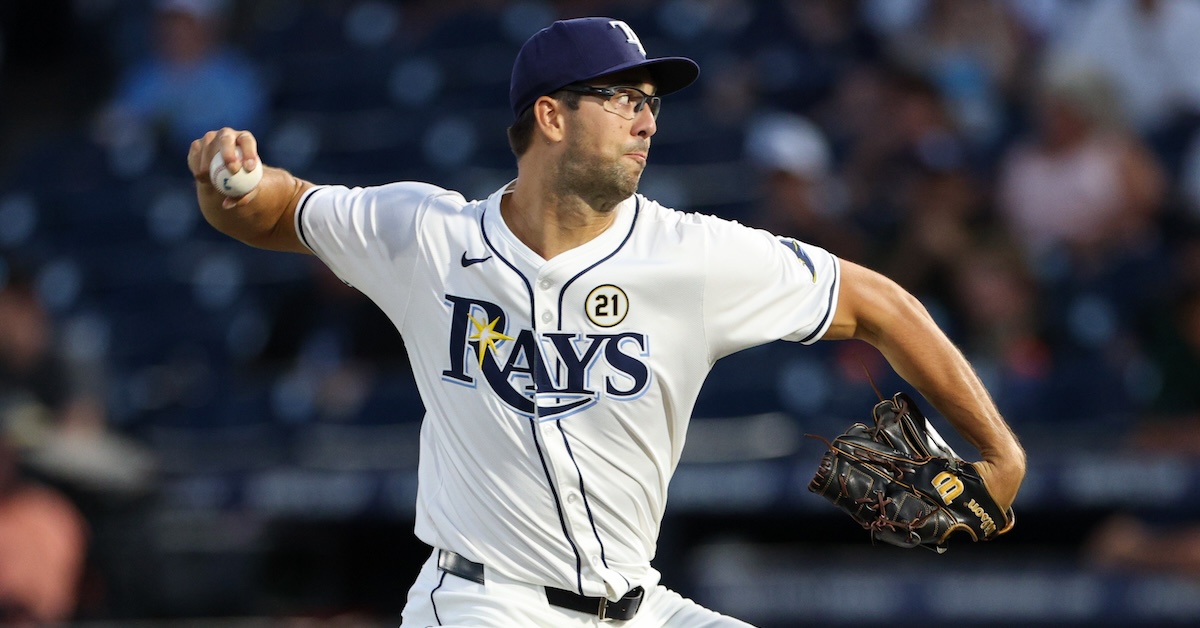
Joe Boyle is emerging as a late-bloomer success story. Now 26 years old, the Tampa Bay Rays right-hander is coming off a campaign during which he not only continued to display a power arsenal, but began to rein in his command as well. Over 86 innings with Triple-A Durham, Boyle paired a 32.9% strikeout rate with an 11.8% walk rate; across 52 innings with the big league club, those numbers were 25.7% and 12.4%. While admittedly far from George Kirby-esque, those free-pass percentages were nonetheless a meaningful step in the right direction.

Boyle’s relationship with the strike zone has long been tenuous. In May 2024, Eric Longenhagen wrote that while “Boyle has had huge stuff for his entire life as a prospect, [he has] also been very wild.” Fast forward to December of that same year, and our lead prospect analyst again cited the nastiness of the 6-foot-8, 250-pound hurler’s offerings, adding a caveat that he has “zero feel for location.”

Something else that Longenhagen wrote 13 months ago bears noting:

“It’s possible that the Rays will attempt to do with Boyle what they successfully accomplished with Tyler Glasnow: Simplify his delivery to make it more consistent and hope it’s enough for him to be a five-inning starter.”

Currently projected as the Rays’ fifth starter by RosterResource, Boyle is now with his third organization. Selected in the fifth round of the 2020 draft by the Cincinnati Reds out of the University of Notre Dame, he was subsequently swapped to the Oakland Athletics in 2023, and then to Tampa Bay the following winter. It is understandable that the pitching-savvy Rays were, and remain, enamored with his potential. While Boyle’s success at the major league level has been spotty — his ERA last season was 4.67 — his comps stick out like a sore thumb. Baseball Savant’s list of the pitchers most similar to Boyle based on velocity and movement comprises Chase Burns, Jacob deGrom, Dylan Cease, Hunter Greene, and Bubba Chandler. Read the rest of this entry »

A Conversation With Joey Cantillo, Who Has the Best Stuff on the Cleveland Staff

Ken Blaze-Imagn Images

“He has the best stuff on the staff. His pitches move all over the place.”

Those words, which were spoken to me in the Progressive Field press box in late September, came from someone who had not only seen the Cleveland Guardians on a regular basis throughout the season, but a person whose background also includes having played in the big leagues. His assessment of 25-year-old left-hander Joey Cantillo was based both on experience and expertise. (As we were chatting informally, I’m opting not to quote him by name.)

Cantillo’s numbers in is first full major league season suggest that he has a bright future. Initially pitching out of the bullpen, the Honolulu native moved into Cleveland’s starting rotation in early July and proceeded to log a 2.96 ERA, a 3.21 FIP, and a 25.9% strikeout rate over 13 outings comprising 67 innings. Counting his 21 appearances as a reliever, he put up 3.21 ERA, a 3.55 FIP, and a 26.9% strikeout rate over 95 1/3 frames in 2025. All told, Cantillo held opposing batters to a .217 average and a .289 wOBA.

The southpaw was originally drafted by the San Diego Padres in the 16th round of the 2017 draft out of a Kailua, Hawaii high school. (Coincidentally, two picks earlier, the Minnesota Twins took Cleveland reliever Cade Smith out of a British Columbia high school, only to have him eschew signing and attend the University of Hawaii). The Guardians subsequently acquired Cantillo in August 2020 as part of a nine-player trade that included Mike Clevinger, Austin Hedges, and Josh Naylor.

Cantillo sat down to discuss his development path and his four-pitch arsenal in the final week of the regular season.

———

David Laurila: How much have you changed since coming here from San Diego?

Joey Cantillo: “A bunch. When I first got here I wasn’t really throwing very hard. I was one of those guys where it was like, ‘Hey, if he can throw harder he could really do some good things.’ Getting here, it was, ‘Hey, let’s start to move the body faster, get the body in better positions and use it better.’

“That’s what we focused on those first couple years, and it was a struggle. When you’re out there on the mound thinking about things like body positions, it takes away from your over-the-plate focus at times. I needed to learn to balance that. Mechanics and competing are two different things.”

Laurila: What did you do mechanically to make your delivery better? Read the rest of this entry »


A Late-Season Conversation With Bubba Chandler

Jordan Godfree-Imagn Images

Bubba Chandler has a bright future. Currently ranked fifth on our Top 100 — he remains rookie-eligible — the 23-year-old right-hander broke into the big leagues with the Pittsburgh Pirates in late August and showed why he is one of the game’s top pitching prospects. Featuring a fastball that averaged 98.9 mph, Chandler fashioned a 4.02 ERA, a 2.66 FIP, and a 25% strikeout rate over 31 1/3 innings. Five of his seven outings were stellar. Bookending back-to-back bumpy efforts against the Brewers and Dodgers, he allowed just 10 hits and two runs over 24 2/3 frames, fanning 25 batters and issuing a lone free pass along the way. At his best, the 2021 third-round pick out of Bogart, Georgia’s North Oconee High School was flat out dominant.

Back in February, the personable flamethrower was featured here during our annual Prospect Week in an interview titled “Bubba Chandler Addresses His Power Arsenal.” We heard from him again in early September, that time learning why he is done playing catch with Paul Skenes. Today, we’ll hear from him on his initial impressions of pitching in the majors. Our conversation took place as the calendar was turning to September.

———

David Laurila: What have you learned since getting called up from Triple-A?

Bubba Chandler: “I don’t want to say the game is harder, but it is definitely a lot more thinking. Pitch-to-pitch thinking goes into it. Something I’ve learned is that at each level you go up, the less and less mistakes you can make. Up here, I’ve made a couple of mistake pitches that were hit pretty hard, whereas in Triple-A they might have gotten fouled off. So it’s kind of, how many mistakes can I limit myself to in a game? They’re going to happen, but when are they going to happen? Are they going to happen with guys on base? Are they going to happen with no one on base? Stuff like that.” Read the rest of this entry »


Eric Young Sr. Sits Down To Talk Managers and Managing

Troy Taormina-Imagn Images

Eric Young Sr. played for several well-respected managers while suiting up for seven major league teams across the 1992-2006 seasons. He’s since coached under a handful of others. His past two seasons were with the Los Angeles Angels, although that tenure has possibly come to an end. Ron Washington is no longer at the helm in Anaheim due to health reasons, and it is not yet known who newly named manager Kurt Suzuki will have on his coaching staff. At age 58 and with a wealth of knowledge gleaned from three-plus decades in the game — his resumé includes working as a broadcast analyst — Young is facing an uncertain future.

I had both his future and his past in mind when I sat down with him this summer. Young has the requisite experience and communication skills required to lead a big league team of his own, so I was interested in what he’s learned from the managers he’s played for and worked alongside throughout the years. Here is our conversation, lightly edited for clarity.

———

David Laurila: You played for a number of managers. What commonalities did the best of them share?

Eric Young Sr.: “From my point of view, they were leaders. They were also calm leaders, especially in difficult times. Each manager had a different, and a special, characteristic that I was able to observe. You had your quiet ones. You had your more vibrant ones. I could go through each of the managers I had and tell you something about them that stands out, and that people can relate to.”

Laurila: Tell me something about Tommy Lasorda. Read the rest of this entry »