
Padres Assistant Director of Player Development Mike Daly Sees Promise in a Depleted San Diego System
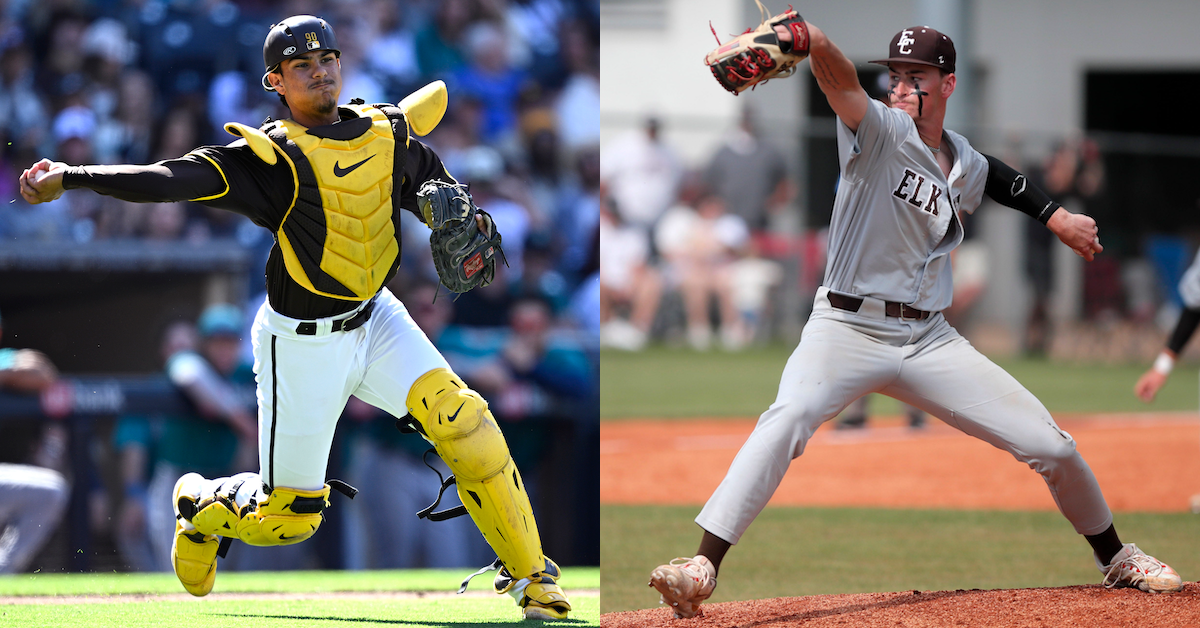
The Padres farm system is currently ranked among the worst in the majors, but that isn’t the fault of their scouting or player development departments. Rather, it is because A.J. Preller keeps trading away quality prospects in an effort to boost the big league roster. Just last summer, San Diego’s president of baseball operations dealt Leo De Vries — the best prospect moved at the deadline in the opinion of Eric Longenhagen — as well as Braden Nett, Boston Bateman, Ryan Bergert, and several others. One year earlier, Jakob Marsee and Robby Snelling were among the youngsters moved.
That isn’t to say the cupboard has been left bare. While admittedly on the lighter side, the system does include a number of promising players. Mike Daly plays an important role in their development. Currently the club’s assistant director of player development, Daly has two-plus decades of experience in professional baseball, serving not only in player dev positions, but also as a scout and, for one season, a minor league manager.
Daly discussed the state of the Padres pipeline in a recent phone conversation.
———
David Laurila: A.J. trades a lot of prospects. What is the process when prospective deals are discussed? I assume the player development and scouting departments have at least some say?
Mike Daly: “I can’t speak for A.J., but there is a lot of continuity. There are a number of people that have been with A.J., with the organization, for a number of years: Josh Stein, Pete DeYoung, Chris Kemp, to name just a few of the leaders. A lot of scouts come into our system and are able to see our players, and spend time with our players and our coaches. Certainly, our R&D department has a heavy say on our players. They know their value. They know what their projections look like. And then there are a lot of conversations amongst the PD group. So, whenever decisions are made about trading players, there are many voices factored in as we try to make the best decision for the organization.”
Laurila: Amateur scouts will occasionally pound the table for a player they want the organization to draft. Is there any pounding the table in trade discussions, either with someone saying, “We really need to get that guy,” or “We really shouldn’t give this guy up”?
Daly: “On the PD side, you really only have perspective on the players that are inside the organization; you don’t really have it for the players that A.J. and Josh are talking about potentially acquiring. What you are trying to do is be honest with your assessment of the players. And those guys also have really good feel for our players internally. They were a part of the process in terms of scouting, whether it was the draft or internationally, so I give A.J. and Josh — our entire leadership group — a ton of credit. They know our players well and are very good listeners, whether it’s the PD perspective, the R&D perspective, or wherever else in the organization.”
Laurila: Jorge Quintana is an 18-year-old shortstop prospect who wasn’t traded away from the organization, but rather was acquired from the Brewers at last summer’s deadline. What can you tell me about him?
Daly: “Good body. Good frame. He’s out in Arizona right now. We’re working with him to stay a little bit more square in the box, trying to keep the ball in the middle of the field — there were a few too many pull-side groundballs — and that’s something he’s working diligently on with our hitting group.
“We think he truly has a chance to be good. The bat is very interesting, and certainly the glove as well. He should go out to Low-A Lake Elsinore and play shortstop for us. He was a highly-valued player in the international market a couple years ago [who signed] for a little over $1 million, so we see him as a two-way player, and a middle-of-the-diamond player.”
Laurila: Looking at various rankings, the system is a little pitcher-heavy toward the top, with 2025 draftee Kruz Schoolcraft and 2024 draftee Kash Mayfield among the notables. How do the two compare?
Daly: “They were both the 25th pick in the draft as left-handed high school pitchers. Kash had a really nice year for us in Low-A. He made 19 starts and continued to pound the zone with a fastball, a changeup, and a slider. He has a three-pitch starter mix and should be in position to break camp with [High-A] Fort Wayne this year, where he will be challenged and continue to refine his arsenal.
“Schoolcraft should follow a similar path as Mayfield. He’s a very interesting, physical lefty — a 6-foot-8 lefty — that our scouting group really liked. He should go to Low-A this year with a focus on making his starts, pounding the zone, and refining his arsenal. We’re excited about both guys. We’re looking forward to seeing them go out there this year, at two different levels, and continue to improve.”
Laurila: Lan-Hong Su, who was signed out of Taiwan last year, isn’t nearly as big at 6-foot-1, nor as well known as Schoolcraft. What can you tell me about him?
Daly: “He’s a guy that our international group did a great job of identifying, scouting, and signing. He was at the 18U World Championships in Okinawa, in September. They had him pitching more out of the closer role. Our guys saw him three times in five days and really liked the mix: 90-93 [mph] with a slider and a curveball. He threw a ton of strikes and punched out 14 guys in 7 1/3 innings. We like the young combination of body projection, competitiveness, strikes, and ability to spin breaking balls. He should be in camp for spring training. Right now, he’s working through some of the paperwork.”
Laurila: How much do the terms like “high ceiling” and “high floor” get used when discussing players?
Daly: “That’s a good question. I don’t know that they get passed around too much, but there are certainly a lot of conversations about players. We spend a lot of time talking about how we can help them be the best versions of themselves. That goes for the scouting side, as well. Our group with the Padres — international, amateur, and pro — spends a lot of time evaluating, and it probably helps put things in context a little bit. You might use those terms — high ceiling, high floor — to try to capture the type of player you’re talking about.”
Laurila: Kale Fountain seems more high ceiling than high floor — he’s a fifth-round pick out of a Nebraska high school, plus raw power.
Daly: “He’s definitely a very interesting prospect, and one that our scouts really liked. He was going to go to LSU, and while he was a fifth-round pick, he was paid significantly more than fifth-round money. We think there is a power/bat combo. There is size and strength. Kale has the physical ingredients, along with the drive and mental aptitude to be able to reach his ceiling.
“There have been some injuries. He had Tommy John surgery — his arm is in a great shape now — and a little knee issue. He’s gotten 250-plus at-bats so far, and should be going back to Low-A this year. So, while he’s still far away, there is the combination of speed, size, and strength, and certainly the power component.”
Laurila: What is Ethan Salas’ status? Is he fully healthy?
Daly: “He’ll be in major league camp, fully healthy, and ready to go.”
Laurila: Is Salas basically big league-ready from a defensive standpoint?
Daly: “He’s continuing to develop on that path. Certainly, catch-and-throw and blocking are areas that he excels at. This will his second big league camp, and a lot goes into it beyond just the physical attributes, which he definitely has. There is a mental side to catching. The really good catchers at the major league level have the ability to help their pitchers work through games, to understand and recognize game situations. When Ethan was hurt this past year, we tried to take advantage of that in terms of helping him build out those areas.
“We’re lucky inside the Padres organization. We have a number of guys who have caught or coached at the major league level: Scott Servais, A.J. Ellis, Kevin Plawecki, Mike Borzello, just to a name a few. Those guys were involved a lot last year with helping Ethan watch games, in classrooms, advance reports, stuff like that. So, there has been a lot of focus on growing Ethan on the mental side of catching. We’re excited for him to go to camp healthy with what he’s learned over the past year.”
Laurila: What about his bat? Is there anything in Salas’ player plan specific to developing more power?
Daly: “I would say power isn’t the focus. He is 211 pounds and a good-size kid, so he’ll be able to hit for power. We’re working with him on controlling his moves, repeating his moves, and just getting a little more consistent with his contact point out in front. We’re all working together, and are excited for him to be able to take all of that hard work into spring training, and then into the season. He’s looked really good.”
Laurila: What would you say is the current strength of the system?
Daly: “I feel like we have a lot of good depth overall, especially at the lower levels. We’re coming off of a championship down in the DSL, with a number of players on that DSL team who are performing well and pushing their way to the states. They’re going to continue to advance, and we certainly have some promising guys at the higher levels as well.”
Laurila: A lot of young talent has been traded away in recent years, but like you said, there are still a lot of guys who show promise. Is the Padres system underrated right now?
Daly: “Where are we rated right now, 29th or 30th? I’ll just say that we’ve shown an ability to scout well — amateur, international, pro — and we feel really good about our systems and processes on the development side. We feel that we’re able to set the right environment and get the proper feedback for our players to take steps in their careers. We have a number of exciting players in the system, and we feel that they are going to continue to develop. We’re going to use every avenue possible to help make that happen.”
David Laurila grew up in Michigan's Upper Peninsula and now writes about baseball from his home in Cambridge, Mass. He authored the Prospectus Q&A series at Baseball Prospectus from December 2006-May 2011 before being claimed off waivers by FanGraphs. He can be followed on Twitter @DavidLaurilaQA.
These would be a lot more interesting if you asked a GM about another team’s farm system, in lieu of their own.
“We Have A Great Farm System” Says Guy Responsible For Farm System is like a headline out of the Onion or Babylon Bee.
Someone like Daly wouldn’t have too much insight on other teams farm systems; and if he did, he certainly wouldn’t offer it up.
I would be curious what type of info you could get from an interview like this about the process the team uses to evaluate other systems or other teams’ players. That could really add some more color to these already very interesting interviews