
Updating the 2026 Draft Rankings
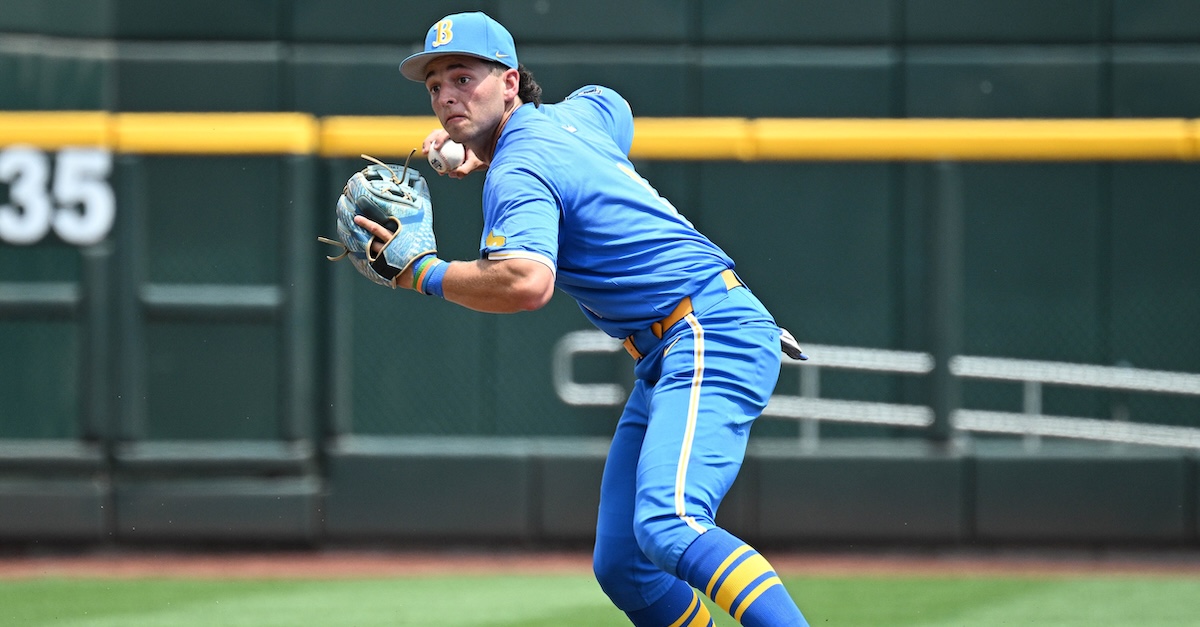
Today is the first day of the 2026 college baseball season, and to celebrate, I’m cutting the ribbon on our 2026 draft rankings and scouting reports. They’re now live on The Board, so head over there for all of these players’ tool grades and blurbs. In this piece, I’ll touch on several individual players who I think are among this year’s best and most interesting prospects for readers to watch and monitor over the next five months as we approach July’s draft in Philadelphia (I can’t wait). I’ll also discuss the class as a whole from a talent standpoint, as well as which teams are in position to have a huge draft.
First, some quick housekeeping on the rankings. I’ve got 51 players on The Board right now. I’ve hard-ranked the players with a 40+ FV and above, while the 40-FV players are clustered by demographic below them. Draft-eligible sophomores are denoted with an asterisks. At this stage in the draft process, players are more in neighborhoods or clusters. It’s too early to have many dozens of players ordinally ranked in a way that won’t change drastically between now and draft day, especially once we get beyond the players who fit within the first two rounds. More players will be added to The Board as the spring progresses.
This is also your reminder that we now have college leaderboards on the site, as well as college player pages, all of which I will be wearing out this spring as the class produces another season of data.
Overall Class Quality and Names to Know
This is a good draft class, one that is especially deep with college players. There isn’t a slam-dunk talent who’d go first in basically any draft, no Stephen Strasburg, Gerrit Cole, or Adley Rutschman, but UCLA shortstop Roch Cholowsky, whose scouting report reads like a bulkier Dansby Swanson’s, wouldn’t be out of place most years, and there is a healthy handful of players who could potentially join him in the 55-FV stratosphere between now and selection day.
This class is meaty with college players whose grades would ordinarily put them in the middle of the first round. Players who, on talent, might normally be drafted in the pick 10-15 range, give or take, will still be around at pick 25. The 2023 high school class was quite good, and now several of the unsigned players from that class make up this year’s first and second round group. Thanks to their embrace of modern training and pitch design, there are a number of college programs that have a track record of helping their arms improve pretty quickly. If there’s a player demo we can most reasonably hope will improve as a whole this spring, it’s the arms. Hopefully it’s enough to counterbalance the injuries that some of the players who we already know are good will inevitably suffer.
For what seems like the fourth year in a row, there is a lot of good high school pitching in this class. A good year tends to have eight to 10 high school pitchers who I would feel comfortable giving at least $1.5 to $2 million to in the draft; this year’s class might have as many as 12 or 15 of those guys. And these aren’t maxed-out, high-effort prepsters who just throw hard; these are enormous prospects whose listed heights range from 6-foot-4 to 6-foot-7 (again, there are a dozen of just this type of guy in this year’s class, not all of whom are yet on The Board) and sure look like they could work 160-plus innings in their physical prime. There is only so much bonus money to go around, however, and even in a normal year, there are good pitchers who don’t sign and end up going to school. Liam Peterson (who has top 10 stuff but a scary delivery — more on the Florida Gator below) and Joey Volchko (who transferred from Stanford to Georgia for this year) both fit that bill back when they were 2023 high schoolers, and the depth in this year’s high school group means that the 2029 college class is likely to have a few more top shelf pitchers than normal.
The high school hitting crop isn’t as star-studded, and there are very few of them who are poised to go in the early or middle part of the first round. Texas high schooler shortstop Grady Emerson (a good defender and contact hitter with modest physical projection) is a good bet to go inside the top five, and NorCal shortstop Tyler Spangler is talented enough to go high, though perhaps not high enough for him to sign. Sweet-swinging switch-hitting shortstop Rocco Maniscalco, who re-classified from the 2027 class, will only be 17.2 on draft day and has the look of a potential breakout guy who could join Emerson. Maniscalco’s showcase performance across the last two summers is only fair (72% contact rate and an OPS just shy of .700, per Synergy Sports), but his frame, lefty swing, and defensive actions are all very exciting scouting components.
Who Could Have A Huge Draft?
These teams have an abnormally high number of picks early in the draft. Trades have netted the Cardinals six (!) of the first 86 picks, and the Pirates (in part because of an unsigned pick from last year) have five of the first 80 picks and six of the first 108. Here are the clubs with lots of early picks, with that last Rockies pick representing the first pick in the fifth round:
- Atlanta Braves (9, 26, 48, 84, 112)
- Houston Astros (17, 28, 57, 93, 121, 134)
- St. Louis Cardinals (13, 32, 50, 68, 72, 86, 114)
- Tampa Bay Rays (2, 33, 49, 85, 113)
- Pittsburgh Pirates (5, 34, 44, 51, 80, 108)
- Colorado Rockies (10, 37, 38, 76, 104, 138)
The Pirates and Rays are primed to both add players who are Top 100 prospects from the jump and have a deep class. The Cardinals already has one of the deeper systems in baseball and might have 70 rankable players by the end of the year if they continue to shed big leaguers throughout the season.
Let’s Talk About A Few More Individuals Players
I’m going to be lower than the consensus on Gulliver Prep shortstop Jacob Lombard, the brother of Yankees prospect George Lombard Jr. Jacob is a physical, power-hitting infielder who puts on quite a show during BP, but he has struggled to hit in games. His contact rate, per Synergy Sports, has been 61% during tracked showcase events the last two years, which is not only below the big league average but is down in Gabriel Arias territory, at the very bottom of the big league scale. Player contact rates tend to either remain the same (the good outcome) or dip (the sometimes scary one) as hitters climb the minor league ladder. I left my first Jacob Lombard BP and infield experience thinking he was obviously one of the toolsier players in this class, but a sub-70% contact rate is an alarming starting point.
The aforementioned Peterson, who I had a $3 million grade on when he was in high school, has been sitting in the 94-98 mph range during tune-up outings the last couple of weeks. He might have the best fastball/breaking ball combo in the draft, but his delivery is violent.
One player scouts are excited to see this spring (and many already have) is Georgia high school righty Joseph Contreras, the son of former big leaguer Jose Contreras, whose velocity has been growing for the last couple of years. He was parked in the 94-97 mph range earlier this week and has his father’s forkball, which has devastating sink. Teams are focused on deciphering whether or not they think Contreras’ delivery is sustainable for a starter, and if not, how they might augment it.
And finally, a name to stash away that you’re unlikely to hear much during the next couple of months is Carson Wiggins, an Arkansas righty and the brother of Cubs prospect Jaxon Wiggins. Carson touched 102 last year, but then blew out and had elbow surgery in May. A typical return timeline puts him in play for pre-draft bullpens and hopefully an air-it-out session at the Draft Combine.
Eric Longenhagen is from Catasauqua, PA and currently lives in Tempe, AZ. He spent four years working for the Phillies Triple-A affiliate, two with Baseball Info Solutions and two contributing to prospect coverage at ESPN.com. Previous work can also be found at Sports On Earth, CrashburnAlley and Prospect Insider.
Wonder what made Drew Burriss drop so far down the rankings. I’ve seen a ton of lists that had him as a top 5 college bat coming into the season.
Eric thinks the tools are average despite the huge production. He’s got a 50 hit, 50 raw, 55 run, 45 field, 55 arm on him. I think other places have him a half grade higher across the board based on his stats but the stopwatch and exit velocities say otherwise.
I think he’s so fun and I’m really rooting for him, but they make a well reasoned case as to why may not be the fun outlier I want him to be.
A Brewers pick if I’ve ever seen one.
Brewers are typically fairly flexible with who they take. Sometimes going underslot to sign prep pitchers later, often going for polished college performer but occasionally going for HS tools bet.
Almost always a position player with the first pick though, and if Burress somehow manages to fall to 25 or wherever they pick I guess they would take him. But I don’t think he does if he keeps performing.
Of the college HS performers I assume Cholowsky (obviously), Gracia, Strosnider, Lackey, Burress, Curiel, Hacopian, and Strosnider will be gone before 25. And on the HS side I assume Lombard, Emerson , and Maniscalso (he’s going to light up models because of his age) will be gone, and if Spangler isn’t taken by then it’s because his bonus demands are too high and he won’t be an option.
Ace Reese is more likely to be there, but I suspect he lights up the scoreboard this year and is picked in the top 10-12. The college guys who I would guess will go in between 20 and 30 are (in roughly this order) Tyler Bell, Eric Becker, Caden Sorrell, Chase Brunson, Chris Rembert, Henry Ford, and Tre Broussard.
At the HS level it’s possible Aiden Ruiz is there but I think someone is going to fall in love with him in the Top 20. Aside from him the options look like Trevor Condon, Eric Booth, and maybe Blake Bowen or (and this is a real dark horse pick for a team in this range underslot) Landon Thome.
Eric name-checked Dansby Swanson in Cholowsky’s writeup. Which I think is a fair comp, because I think Cholowsky is probably the best college shortstop amateur prospect since Swanson in 2015 (and Alex Bregman if you thought he was a shortstop).
Usually guys like Cholowsky get drafted out of HS, and I recall that Eric had a mid-first round grade on him in HS. That early selection dramatically weakens the middle infield prospect pool in college.
In between Swanson / Bregman and Cholowsky the only college shortstops who looked like they could stick at short and were FV50 or higher were…Matt McLain, Brooks Lee, Zach Neto, Jacob Wilson, and Aiva Arquette? Nick Gonzales looks like he is going to stick there, but he didn’t at the time.
And Cholowsky is just way ahead of all those guys. Cool, you’ve got a 70 fielder with a 60 arm at short who had a .353 / .480 / .710 triple slash line? I know UCLA doesn’t play a super strong competition slate but he was great in other places too. This scouting report is like Willy Adames operating at his absolute peak at both the plate and in the field, a regular 4+ win player. And there’s upside for more if the hit tool isn’t as iffy as Eric thinks or he has more power, like in Troy Tulowitzki territory (or Carlos Correa if he could ever stay healthy).
He’s got a whole year to screw it up or solidify it, but I think he could be a full grade ahead of any college shortstop prospect between 2016 and 2025. He’s probably the best shortstop prospect period since Bobby Witt, and maybe the best draft prospect since the Skenes / Crews / Langford trio in 2024.
yay for my White Sox.
It’s a good year to pick #1.
If they pass on him because AJ Gracia shows up this year and suddenly has 65 grade raw while keeping his speed and generally looking like a Cody Bellinger or Jim Edmonds starter kit, that’s one thing.
If they pass on him because they already have Billy Carlson and no long-term solution in center field, that’s another.
It’s hard to see someone like Justin Lebron or Grady Emerson “popping” enough to be a plausible #1 pick.
If they pass on him because they have Billy Carlson, they should all be fired. Prospects fail all the time. Even when they don’t, you can never have too many shortstops. If you think you do have to many shortstops, you have forgotten that one of them can probably play 3rd, 2nd, CF, or RF. Or, at the very least, be traded for pitching.
ALWAYS take the best available player in the MLB draft. NEVER draft for need.
You forget that they should all already be fired
I think he’s Brandon Crawford not Swanson ie more glove less bat
Hard to comp anyone to Crawford because his home park swallowed left handed power.
My go to example of an elite shortstop defender with right handed power is JJ Hardy but he also hit better than what you’re describing. Maybe Nick Ahmed.
Fun with tools…
Eric has given:
Justin Lebron 60 raw, 60 speed, 60 field, 70 arm…and 30 hit
Jacob Lombard 70 raw, 55 speed, 60 arm…and 20 hit.
Aidan Ruiz 70 field, 60 speed, 50 hit…and 35 raw.
Not a single hitter has a hit tool grade higher than 60. Maybe Eric is feeling burned by Kayson Cunningham who got shredded after he was drafted and (although that’s not entirely fair, he was a teenager in A ball) and now has 60 hit.
Three players are listed with 70 grade speed (Tre Broussard, Trevor Condon, and Derek Curiel), two with 70 raw (Lombard, Henry Ford).
The guy whose tools diverge the most from his overall grade is probably Tre Broussard. He has 55 hit, 45 raw, 70 speed, and 60 field in CF but only an FV45. And the surface level stats are fine, although if you’re playing for Houston you probably need to slash more than .292 / .371 / .458 to really make a dent.
Mike Elias on line 1 for you
This is funny and I love it. But to be fair they also have taken polished college hitters too like Cowser and Bradfield. So they could look at Gracia, Curiel, Lackey, and Burress in addition to their high school toolshed types.
It feels like Lebron and maybe Lombard are going to be gone before the Orioles pick at #7 anyway, but Aidan Ruiz should still be there.
They could also go heavily underslot like they did with Kjerstad, and Henry Ford and Ryder Helfrick are guys with raw power and not-outstanding hit tools.
All we know for sure is that it won’t be a pitcher. And Tre Broussard is absolutely someone they want for their second pick.
That is an extremely hyperbolic statement about Kayson Cunningham and I think you know it. It was 52 PA for a kid out of a high school going straight to A ball, and even though the K/BB ratio was poor, he was only a tiny hair under an 80% overall contact rate. I see absolutely no reason to conclude that was a bad start.
Oh yeah I know it
nice write-up, thanks! The player page for Elmer Rodriguez won’t load today, how should I report it?
fixed, thx
Dansby didn’t hit for power till his junior year. For that reason I am def higher on Cholowsky, think he isn’t quite Strasburg/Harper level but I do think he’s at the Cole/Adley level. He’s an immediate top 10 prospect for me. And also a future 55 hit not 45 guy for me.
1 guy I am lower on than Eric and consensus is Justin Lebron. Too much whiff and while he has ideal pull/launch angle traits the exit velo numbers are merely just decent then spectacular. He’s a late first type for me.
Lebron is a classic four-tool player, but that missing tool is the most important one. Unless the hit tool is a binary “no” (like it is for Eric’s evaluation of Jacob Lombard) they’re going to give him a grade in excess of the median outcome because the upside is so high.
Roch is a clear #1 for me with the glove and above average power combo. But Gracia sounds really exciting as well from this write up if he can add more power and stay in CF. I really like Gracia’s approach at the plate.
Lebron seems like a Paul Dejong type and while 10 WAR isn’t bad, there is so much risk with guys that swing and miss so much and they fall off a cliff really fast even if they do make the bigs and succeed for a couple of years.
I like Spangler more than #11 here. It is easy to see a 6’3″ SS and think they will have to slide off the position, but teams now are much more willing to ride with a bigger guy there and trust their defensive ability. Offensively I like the contact rate, swing decision, power projection on his frame. With the Cardinals having so many picks and some extra money to work with, I wonder if someone like Spangler with his tough commit money may be an over target slot guy.
I know you need more time to finalize but figuratively dying to see the updated top 100 and having that next article pending publication with a whole weekend in between is just torture. Appreciate the prospects coverage though!
I get that these are “smaller” market teams, but MLB should get rid of the CB picks. I could see TB/PIT/COL getting them but enough of tanking in major league sports. Billionaires trying to save more money than other billionaires who have slightly less billions, sell the team to some other billionaire who wants to own a team that wins.
Competitive balance picks have nothing to do with tanking. They’re about addressing revenue and market disadvantages, something that is sorely needed in the sport as those gaps continue to widen.