
Cardinals Assistant General Manager Rob Cerfolio Discusses a Deep St. Louis System
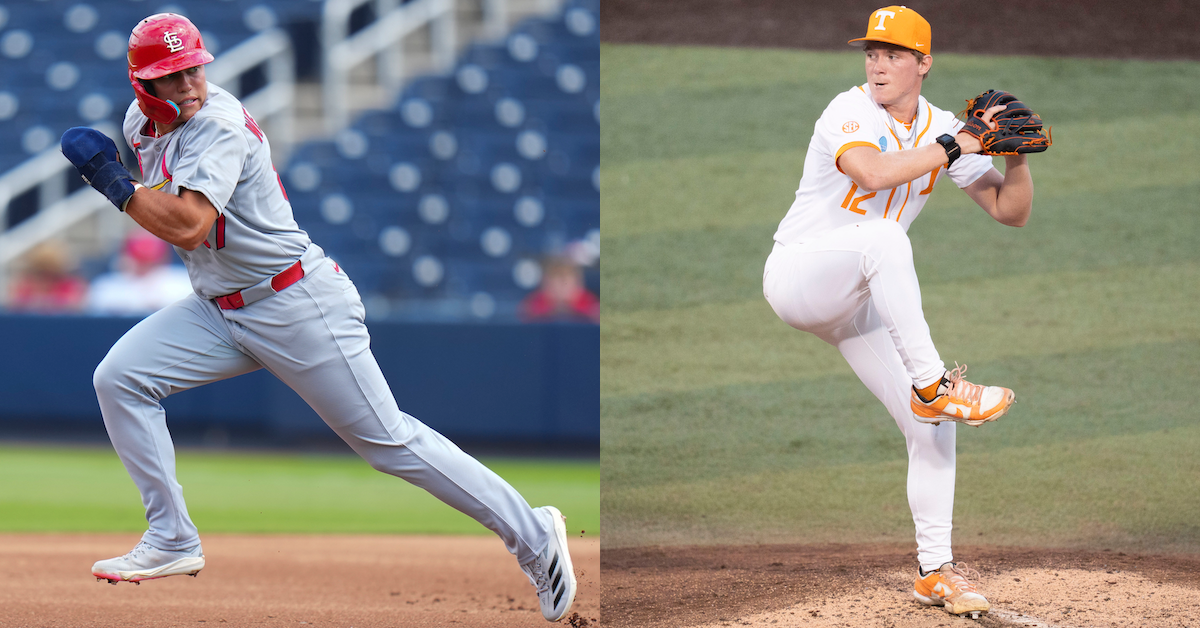
The St. Louis Cardinals boast one of the game’s best farm systems. Strong at the top and as deep as anyone’s — 53 players were profiled in yesterday’s rundown of the team’s top prospects — the pipeline possesses not only high-level talent procured through the amateur draft and international market, but also high-ceiling youngsters acquired via trade. Led by president of baseball operations Chaim Bloom, the NL Central club is firmly in rebuild mode, trusting its player development department to turn present-day promise into quality performance in the majors.
Rob Cerfolio is playing an important role in those efforts. Hired away from the Cleveland Guardians by Bloom — a fellow Yale University graduate — in October 2024, the 33-year-old holds the title of assistant general manager for player development and player performance. He profiles as a good fit for the job. Formerly Cleveland’s farm director, Cerfolio has been described by former Cardinals beat writer John Denton as someone who “prefers to operate while studying reams of biomechanical data, analyzing pitching arm angles and hitter swing paths and load profiles.”
Cerfolio discussed St. Louis’ player development philosophy, and some of the team’s most notable prospects, in a recent phone conversation.
———
David Laurila: Your club recently acquired Jurrangelo Cijntje from Seattle. I assume you and Matt Pierpont — he used to be with the Mariners — were part of the in-house trade discussions?
Rob Cerfolio: “Yes, our director of pitching, Matt Pierpont, had Jurrangelo for half a year before I hired him over here. We did have input. That’s a fun part of this job, and part of why I left Cleveland for the opportunity: to impact deals like this, to have a voice in the room. Obviously, Chaim is the final decision-maker, but we run a really collaborative acquisition process. Everybody from Matt, who you brought up, to myself and the rest of our senior leadership team is weighing in on the various concepts and packages.
“We’ve been digging into Jurrangelo and a handful of other players across different organizations for weeks. That’s the way we run any player assessment process, by understanding who the player is, what their developmental trajectory has been, and where we might be able to take that if we were to acquire him. Those are the baseline table stakes for any deal we might make. We’re doing that proactively ahead of any actual acquisition.”
Laurila: The organization you came from is well known for making pitchers better. In what ways is the Cardinals’ approach to developing pitchers similar?
Cerfolio: “That has been another fun aspect for me. I joined the Guardians right off the field and was there for a decade. A lot of the ways we did things were a direct result of [assistant general manager] Eric Binder and other people, including myself, co-creating what our philosophy was going to be, and tweaking that year over year.
“Bringing that to a new place, it was about learning what the Cardinals were doing and valuing, and trying to find what pieces of that I really liked. There are also people around me who come from different schools of thoughts, and from different productive organizations. That was a deliberate effort on my end. Last year, I was [Bloom’s] first hire, and after that my job was to hire people who are really smart, and build something great. It’s been really fun marrying up things from where our new staff came from, and trying to build an even better version of that philosophy. So there is definitely some Guardians influence, but also some Mariners influence, some Cardinals influence, some Orioles influence, and some Pirates influence. It is a lot of ‘What do we like from where we came from, and how do we leverage that going forward?’”
Laurila: Liam Doyle is prominent in the system, in part because he has big-time velocity. Where is he in terms of his secondary pitches?
Cerfolio: “Liam’s fastball, in a vacuum, is really high quality. And every pitcher is different, right? There are great pitchers that get to productive performance, year over year, by having a great secondary and an average fastball, and there are some pitchers who get to great production by way of having an elite fastball with an average or below-average secondary.
“The exciting thing about Liam is that we see potential for both a great secondary and a great fastball. He is at a different developmental stage with all those things currently, but we’ve already begun the developmental playbook with him to ensure that he’s got great options to beat both right-handed and left-handed hitters consistently. That’s what he is going to have to do as a starter. As a left-handed starter, you face about 75% right-handed hitters, generally. In order to be a really good consistent lefty starter, you need to have a complete arsenal in order to be able to really beat right-handed hitters. That’s kind of our goal with Liam. We think he’s got a great baseline to work off of.”
Laurila: What about the fastball itself? Are there characteristics beyond velocity that make it especially effective?
Cerfolio: “He creates some high-quality approach angles, some flatter angles over the plate, by way of how his fastball shape moves and some of the 3D release characteristics. More importantly, his secondary on its own, irrespective of his fastball, has the potential to be really good, whether that’s a firmer slider or a more horizontal, sweepier version on top of the splitter that he’s already displayed. So again, I think there are multiple avenues for him to have high-quality secondaries.”
Laurila: Does Doyle have lot of extension in his delivery?
Cerfolio: “He’s not a massive extension guy. He’s more around average, I would say.”
Laurila: Brandon Clarke, who came over from Boston in the Sonny Gray trade, does have plus extension. He also has plus velocity and a lower three-quarters slot. Extension aside, how similar is he to Doyle?
Cerfolio: “That’s a good question. There are some similarities in the sense that they are both left-handed and throw hard. How they create secondary shapes and plus-velocity fastballs is a little bit different. Doyle has a little more of a ride-run fastball shape, whereas Clarke is a little more cut-ride. Each of those creates opportunity for different secondary weapons around that.
“There being both similarities and differences is a fun part of player development, and pitching development specifically. What’s best for this player might not be best for a different player. Each guy is a case study. We try to use that individual player’s best movement signature, and the way that they release the baseball, to make our best guess on what that means for their current arsenal, and where we want to take it to get the best performance possible.”
Laurila: Handedness aside, does Tanner Franklin share similar characteristics to Doyle or Clarke?
Cerfolio: “He does. Tanner is another guy where velocity is his friend. I think Tanner, similarly to Liam, has a really strong fastball foundation to build off of. There are some interesting things with Tanner. If he would have been at a stock college program, he’s probably a Friday or Saturday night starter; he just happened to pitch on one of the deepest staffs in all of college baseball [at the University of Tennessee] last year. We’re really excited to see him in some extended outings this upcoming year.
“We think he has some opportunities to get to productive secondaries in a slightly different way than Liam does. But yeah, there are avenues there for him, just like Liam and Clarkie, to have multiple high-quality secondary shapes.”
Laurila: I’ve read that Franklin has a quality slider.
Cerfolio: “Yes. we’ve been putting in some good work on that this offseason. I wouldn’t be shocked if we see him with multiple slider shapes at some point in time. There could be a sweeper, more of a tighter, firmer slider. He’s a guy who can easily create multiple versions of a slider.”
Laurila: Jumping to the position players, JJ Wetherholt is widely regarded as the top prospect in the system. What makes his hit tool as good as it is?
Cerfolio: “There’s a tactical and technical component to that. When I say technical, there’s the way that he moves in the batter’s box, and the way that his bat path is adaptable to different shapes and different locations. Then there is the tactical side of this: how he prepares and what he is looking to execute each and every at-bat. If you do both of those things really well, generally you’re a pretty productive hitter. And that’s really hard to do, especially at the highest level.
“The best hitters I’ve been around, like the José Ramírezes of the world, have strengths in both of those buckets. We’ve really tried to continue to push JJ to be even better, and kind of go from great to excellent. But the care factor that he puts into both of those, and the way that he trains and works, always looking to improve as a hitter, both technically and tactically, really separates him. Hopefully that’s something we see for a long time at Busch Stadium in a productive way.”
Laurila: Has anything changed in the hitting development program since you came over to the organization?
Cerfolio: “Yes. It’s similar to how I framed it on the pitching side. It’s about bringing my experiences to the table and trying to hire high-quality, intelligent people from different organizations that have also had success. We exchange secrets and philosophies. What did we like? What did we not like? What does that mean for what we want to do moving forward? There are certainly things that are staples to what I believe in when it comes to a hitting development approach, just like the pitching side, and it’s been fun to have those conversations with people who come from different experiences. We combine those forces.”
Laurila: Ryan Mitchell is an intriguing young prospect who I’ve seen described as a pure hitter. How does he profile, and how would you define “pure hitter”?
Cerfolio: “That’s probably more of a scout term than it is a “me” term, so you might have to ask some other people what that actually means. But Ryan is obviously a really young hitter, right? He’s a young baseball player. All of these guys coming out of high school, you’re really just teaching them what it means to be a professional — how to establish a professional routine, how to prepare themselves physically for the demands of pro baseball. We haven’t really seen this guy play, or even practice a ton yet. What we have seen is the character and work ethic, the commitment to learning and investing in his career. When those boxes are checked right out of the chute, that’s generally a really good thing.
“We’re just all excited to see him in spring training and then for an extended first full season. There’s a lot of talent there. There are pitch recognition skills that our scouting staff was really excited about. We’ll see what happens over a couple-year development track.”
Laurila: Joshua Baez really stepped up his production last season. Did he make meaningful adjustments, or was it mostly a matter of his being fully healthy?
Cerfolio: “There were some pretty large things that we spotlighted. I think JB deserves the lion’s share of the credit for his willingness to attack them — he’s another really committed player — and some of it was movement in the batter’s box, posture by way of his setup, where his body was moving as his bat was working through the zone. Ultimately, how he’s moving in the box impacts the way in which his bat works through. So using those two things as our areas of intervention… we had a hypothesis, and worked closely with JB from last January all the way through the season to try to impact his body movements and posture so that those could influence the way that his bat path worked.
“This is a guy who creates elite bat speed. We wanted that to be able to show through by way of more consistent contact. It was a great collaborative process by our hitting group, by our high performance group, by all parties involved — especially the player — the willingness to dive in and get our hands dirty. We put a plan in place for last winter, all the way through the season, and now we get the opportunity to see if we can do that again, right? We’re not solving for Double-A performance. We’re solving for major league impact. We know there will be other adjustments that need to be made, but again, it’s just having an objective assessment process to try and link that all the way back to how we solve for future major league performance.”
Laurila: Where is Rainiel Rodriguez in terms of a player plan?
Cerfolio: “His is a little bit different from Joshua’s. Each of those guys has a very different set of movements and swing signatures in the batter’s box. There are things that they do similarly — both can really impact the baseball and create speed — but for Rainiel, it will be more about pitch coverage to different locations. He’s going to face a lot better pitching over the course of the next year, and we’ll be able to use that information to ensure, just like Baez, that we are pushing him, training-wise, in the direction that he needs to go to be able to handle upper level and major league pitching one day.”
Laurila: Rodriguez isn’t the only notable catcher in the system — you have guys like Jimmy Crooks and Leonardo Bernal. Does the organization place an emphasis on that position, or is it more or less happenstance that you have three catchers near the top of your system?
Cerfolio: “I think it’s probably a little bit of both. It is a huge credit to our acquisitions teams in the international and amateur spaces that they have been able to find attributes that lead to future prospect value and major league impact. It’s a credit to the organization for having a lineage of a high quality catching pipeline. That’s not by chance.”
Laurila: There are far more topics and players than we have time to talk about, so let me ask this: What would be a good question for me to close with?
Cerfolio: “You could ask a question like, ‘Why does it feel like the industry has maybe taken a step back on Quinn Mathews?’ Or you could ask about Tekoah Roby, who has a really special arm. He needed Tommy John surgery last year, but he’s a guy we’re really excited about on the pitching side. And then on the position player side, we talked a little bit of hitting, but how about defense and baserunning? Developing those skills, whether it’s versatility on defense or tactically on the bases, those are things that influence a major league baseball game. We take a ton of pride in teaching those things.”
Laurila: That’s sort of a throwback to “The Cardinal Way” — fundamentals are important.
Cerfolio: “We’re going to really teach, and spend time, doing real player development work in those spaces. That was one of the things that I liked most when I was first interviewed for this job. It’s something the Cardinals care about. There are no little things in a baseball game. There are just things that impact the scoreboard, impact the final score. We need to do all of those things really well.”
David Laurila grew up in Michigan's Upper Peninsula and now writes about baseball from his home in Cambridge, Mass. He authored the Prospectus Q&A series at Baseball Prospectus from December 2006-May 2011 before being claimed off waivers by FanGraphs. He can be followed on Twitter @DavidLaurilaQA.
Great interview, but I’d love to know how Cerfolio would answer his own question about Quinn Mathews.
I was thinking the same thing
I wouldn’t want to speak for Cerfolio, but Mathews had an early injury, then walked 15 men in his first 10 innings. That awful start stuck in people’s minds — understandably to a large extent. (The usually hyperbole-averse Keith Law very recently referred to Mathews’ 2025 season as “a disaster.”)
But when you get down to his final numbers, Mathews made 24 starts in 2025, 22 of them in AAA, where he actually posted an ERA one full run *lower* than the International League average. Righty bats slugged a meager .313 against the southpaw, and lefties just .296. That’s NOT a disaster by any stretch.
What truly *was* a disaster was Mathews’ walk tally, a nightmarish 74 free passes in 99 innings. If he can’t fix that, he obviously can’t be a 6-inning starter. Probably not even 5 innings.