Archive for Q&As

Pete Alonso Talks Hitting

Ray Seebeck-Imagn Images

Pete Alonso is known as a slugger, and for good reason. Now in his eighth major league season — and first with the Baltimore Orioles — the 31-year-old first baseman has 285 home runs and a .511 slugging percentage to go with a 132 wRC+ over 1,111 career games. His right-handed stroke produced 53 round-trippers in 2019, and he also boasts single-season totals of 45, 40, 38, and 37. Only in the truncated COVID campaign has he finished with fewer than 30.

It would be unfair to pigeon-hole the University of Florida product, and erstwhile New York Met, as simply a slugger, though. That’s especially true when it comes to Alonso’s approach at the plate, as well as his overall understanding of the craft. While the term “student of hitting” is arguably overused, it fits Baltimore’s top basher to a T.

In the latest installment of our Talks Hitting series — now 125 deep — Alonso addresses his self identity, the subtle adjustments he’s made over the years, and the studious manner in which he attacks pitchers. Our conversation took place at Fenway Park over the weekend.

———

David Laurila: How would you define yourself as a hitter?

Pete Alonso: “I’d like to consider myself a line drive hitter that has strength, puts up really good professional at-bats, and can spoil pitches. I can kind of set traps. Ultimately, I’m a line drive hitter with strength.”

Laurila: You’re generally viewed as a power hitter. Do you like that label?

Alonso: “I love the label. Power is based on results. If you hit a ton of home runs and a ton of doubles, consistently, you’re a power hitter. It doesn’t matter what your physical stature looks like. If you get the power results, then you’re a power hitter.

“Honestly, I’m just trying to hit a hard line drive. That’s really all it is. Hit a hard drive, and not necessarily out in front. I’m better at just meeting the ball where it’s pitched and putting a swing on that. I’m not trying to produce power. I’m just trying to produce pure contact. I think chasing and producing pure contact is the best thing anyone can do. All good things happen on the sweet spot of the bat.”

Laurila: You mentioned setting traps. Can you elaborate on that? Read the rest of this entry »


Cole Sulser Discusses Pitch Design and the Properties of Seam Shift

Eric Canha-Imagn Images

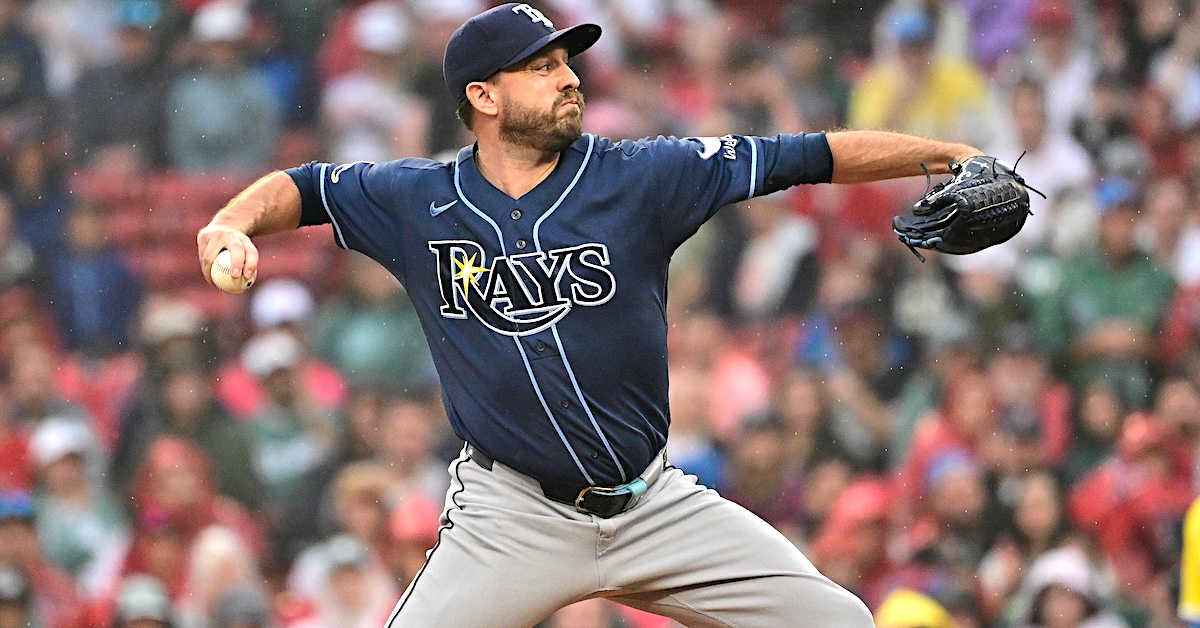
Cole Sulser has a future as a pitching coach — or coordinator — if he chooses to go that route. A graduate of Dartmouth College with a degree in Engineering Sciences, the 36-year-old right-hander has not only toed the rubber for five major league teams, but also his current club is the ever-progressive Tampa Bay Rays. As much as any hurler in the game, Sulser is well-versed in his craft.

His pitching education predates his July 2024 arrival in St. Petersburg. Ditto his providing insights here at FanGraphs. Then a Baltimore Oriole, Sulser shared thoughts on changeup development, and later on pitch design, in pieces that ran in August 2021. In want of further perspectives from the analytically savvy hurler, I caught up with him when the Rays visited Fenway Park this past weekend.

———

David Laurila: How much has pitch design grown since we spoke five years ago?”

Cole Sulser: “I think it has grown a ton. Our understanding is a lot more comprehensive than it was five years ago. Certain teams were maybe ahead of it more than others, but it was definitely a little more surface level. We were looking at some of the more generic aspects in terms of overall spin rate, and maybe just a little bit of efficiency. Now it seems like teams have gotten a lot more in depth in terms of the gyro degree, what your body naturally does, and which pitches may complement that. Instead of searching for specific pitches, they are more looking at what you do naturally, and try to complement that with pitches that would come easier to you.”

Laurila: Has that impacted you specifically? Read the rest of this entry »


Drew Rasmussen Developed a Two-Seam Runner Because of Bo Bichette

Jonathan Dyer-Imagn Images

Arsenals that include three variations of a fastball — four-seamer, two-seamer, cutter — are increasingly common in today’s game, and Drew Rasmussen is among the trend’s success stories. Relying heavily on a triad of heaters, the 30-year-old Tampa Bay Rays right-hander boasts a 2.96 ERA and a 3.65 FIP over 249 1/3 innings across the 2025-2026 campaigns. Moreover, he just represented the Rays on the American League All-Star team for a second year running.

How Rasmussen became three-heater reliant (just over 80% combined usage) isn’t itself atypical. The way he tells the story of how it happened is atypical… if not a bit curious. In explaining the advent of his most recent — and most impactful — fastball addition, he pinpointed a hitter against whom he’d struggled far less than his telling would suggest.

Rasmussen sat down to talk fastballs when the Rays visited Fenway Park over the weekend. As his responses were expansive — followup questions were few and far between — what he shared is being presented in monologue form.

———

Drew Rasmussen: “When I got traded here [in May 2021], I was four-seam and gyro slider — that’s basically what I was throwing in Milwaukee — and then I had a curveball that was very low usage, as well as a bad, bad changeup. Over here, when they transitioned me from the bullpen into the rotation, we learned that I can manipulate the gyro slider a little bit to create a little more lift and give it more of a true cutter profile. I can also manipulate it to get some depth and keep a true slider profile, which gives me the opportunity to pick and choose shapes depending on what I’m looking for. Situationally, what do I want to throw?

“They saw the movement profile of my changeup, so we scrapped that pretty quick. From there we started developing a sweeper — I have the ability to supinate through everything — and that worked pretty well for me in 2021. Then, in 2022, I kept running into Bo Bichette. I had nothing to get him out with. Nothing. I mean, he’s good at hitting balls the other way, and staying on everything. But if you missed in with a breaking ball, he could do pull-side damage. I would be out there frustrated, because the only thing I had to go in on him with was a four-seamer. And at the time, I was cutting it anyway.

“We started playing around with things. Because I had nothing that would work [inside] to him, we would take a shot with a four-seam up and away and he would hit a double into the gap. We would take a shot with a gyro slider down and away, and he would hit it through the four hole. We’d go sweeper and he’d shoot something down the line. I’d try to bounce a curveball and he would hit a line drive up the middle. Everything I threw worked right into his comfort zone, basically. Read the rest of this entry »


Athletics Southpaw Gage Jump Addresses His Studious, Low-Angle Approach

Patrick Gorski-Imagn Images

Gage Jump is no. 73 on The Board and no. 2 on our Athletics prospect rankings. Moreover, he is now a big leaguer. Called up from Triple-A Las Vegas in late May, the 23-year-old southpaw has since made nine starts and logged a 3.51 ERA, a 3.31 FIP, and a 23.5% strikeout rate over 48 2/3 innings. Selected in the second round of the 2024 draft out of LSU, he debuted professionally last season and played at both High-A Lansing and Double-A Midland.

His pitching knowledge stands out nearly as much as his plus raw stuff and what our lead prospect analyst Eric Longenhagen described back in April as a “super short arm action.” Jump is studious about his craft, and he has been since his days as a San Juan Capistrano prep player. Prior to joining the collegiate ranks, he was rated as the top left-handed pitcher in the state of California.

Jump discussed his data-influenced approach to pitching when the A’s played in Detroit this past week.

———

David Laurila: What have you learned about pitching — specifically about yourself as a pitcher — since coming to pro ball?

Gage Jump: “Interesting. That’s a tough question. I would say that I was very fortunate to go to a good private school, and that when I was young I was introduced to things like Plyo balls and Rapsodo. Our head coach at JSierra [Catholic High School] brought out Kyle Boddy [from Driveline]. I wasn’t a big kid and wasn’t throwing very hard, so I wanted to understand what everything meant and how to get the ball to move a certain way. Of course, just because I know certain things doesn’t mean I’m able to make them happen, which is why I think pitching is so much fun. You’re always trying to develop and get better, and while you could know the answers, it’s still super hard to put your hand in a certain position, know where your body is at, and get [the results] you want. Read the rest of this entry »


Dan Shulman Talks Broadcast Style

John E. Sokolowski-Imagn Images

Dan Shulman was featured here in Sunday Notes on June 21, the topic being broadcast traits he shares with his son Ben, who calls Toronto Blue Jays games on radio. Today we’ll hear from the TV play-by-play voice of “Canada’s Team” on non-familial matters, primarily how a club’s fortunes influence tone in the booth. The elder Shulman has been behind the mic in both good times and bad, but does the number of wins and losses — be they over a multi-week stretch or a much longer span — actually matter in terms of a broadcaster’s style?

Shulman addressed that subject, and more, on a recent visit to Fenway Park.

———

David Laurila: How well a team is doing impacts the mood of a fanbase. To what extent does it — or should it — influence how the games are called?

Dan Shulman: “I think every broadcaster has their own internal balance. Some sway more positive. Some sway more neutral or objective. My job is to keep people interested in watching the team, whether they’re playing well or they’re not playing well, but you certainly can’t have entirely the same tone when the team is having a bad year, as opposed to when they’re having a good year. In 2024, the Blue Jays finished last. In 2025, they made it to the World Series. The tone is very different.

“You do always try to find some positives. In 2024, after the deadline, they traded off a bunch of guys and had some younger players coming up who did pretty well and were interesting. You focus on that a little bit. But again, the overall tone is different. You can’t sugarcoat everything. You have to be pretty honest with the viewers. At the same time, you can’t go on the air and say, ‘This is bad; none of these players belong here.’ That’s not how the job is done.”

Laurila: Basically, it is fair to be critical, but only to a point… Read the rest of this entry »


Adversity Begetting Change, Bryce Elder Has Adapted His Arsenal and Approach

David Butler II-Imagn Images

Bryce Elder was thriving when he was featured here at FanGraphs in July 2023. Then in his first full season with the Atlanta Braves, the now 27-year-old right-hander was 8-2 with a 3.18 ERA, and he’d recently been named an NL All-Star. Killing worms was his M.O. Relying heavily on a sinker, Elder boasted a 53.6% groundball rate, which ranked fifth best among qualified pitchers.

Then things slowly started going south. From August 2023 through last season, Elder was on the winning end of just 14 decisions while putting up a 5.53 ERA over 48 starts comprising 259 innings. The University of Texas product had gone from a burgeoning frontline starter to profiling as more of a back-of-the-rotation arm.

Adversity has a way of begetting change, and much for that reason, Elder is no longer the same pitcher who struggled to record outs. The transformation has taken a bit of time — Rome wasn’t built in a day — but his current-season results are certainly pleasing to the eye. Over 14 starts, Elder has a record of 5-3 to go with a 2.66 ERA and a 3.46 FIP over 84 2/3 innings. Notably, his 45.0% groundball rate is the lowest of his career.

Elder discussed his evolution — one that has essentially brought him full circle in terms of success — when the Braves visited Fenway Park late last month.

———

David Laurila: It’s been three years since we first spoke. What has changed?

Bryce Elder: “A lot has changed. When we talked in 2023, I’d been on a roll; I’d had a good first half. But then the second half was pretty rough. It wasn’t all rough, but the numbers weren’t all that great. I was kind of like, ‘I’m tired of sucking, tired of not being very good, so I’m going to try to make some changes. I’d never worked on mechanics too much, and I’d never been a big, like, stuff chaser, but I got tired of dying on the hill of complete execution.

“I never thought I’d be saying that, even a year ago. But what I figured out is that if I could make my stuff a little better, that would only help. And then, if I was moving a little better on the mound, my execution was going to be just as good as it’s ever been, if not better. So, I think I’ve had a little tick up in stuff, as well as in my execution.”

Laurila: How did you go about accomplishing that? Read the rest of this entry »


Catching Up With Jesús Luzardo, Nine Years Later

Kiyoshi Mio-Imagn Images

Jesús Luzardo has been pitching better than you might think. The 28-year-old Philadelphia Phillies left-hander is an uninspiring 4-4 with a 4.56 ERA over 13 starts covering 73 innings, but his surface stats only tell part of the story. Luzardo has a 3.40 FIP — it was a sparkling 2.77 prior to his most recent outing — while his 26.7% hard-hit percentage ranks second lowest among qualified pitchers. Moreover, he misses his fair share of bats. His 25.6% strikeout rate ranks in the 73rd percentile, while his 30.7% whiff rate is in the 86th. Good fortune simply hasn’t been on his side. At .343, Luzardo has the highest BABIP among qualified pitchers.

The lefty’s lack of luck isn’t what I wanted to talk to him about when the Phillies visited Boston in mid-May. Rather, I was interested in how he has evolved as a pitcher since we first spoke nine years ago. At the time, Luzardo was a 19-year-old Oakland Athletics prospect who was playing for the New York-Penn League’s Vermont Lake Monsters. A lot of water having gone under the bridge, change was inevitable.

———

David Laurila: We talked back in 2017 when you were getting your feet wet in short-season ball. Just how much have you changed as a pitcher since that time?

Jesús Luzardo: “I have a little bit different repertoire now. I’ve added some pitches. I’ve fine-tuned my mechanics. Along the way, I’ve just matured as a pitcher. I mean, I feel like I still have a long way to go, that I can get even better. I haven’t reached my full maturity as a pitcher. But I’m definitely a lot more polished. I know more about myself, what makes me me.” Read the rest of this entry »


Spencer Arrighetti Addresses His High Curveball Usage

Eric Canha-Imagn Images

Spencer Arrighetti has twice been featured here at FanGraphs in standalone fashion, yours truly having interviewed the 26-year-old Houston Astros right-hander in April and August of his 2024 rookie season. On both occasions, he displayed an impressive knowledge of pitching analytics, as well as a thoughtful overall approach to his craft.

Our third conversation ended up focusing on his curveball. Arrighetti has been throwing the pitch at 31.4% clip this season, and not only has it been his most-used offering, it has been highly effective. As of this writing, it has yielded a .121 batting average and a .151 slugging percentage while eliciting a hefty 50.9% whiff rate. Arrighetti, who took the mound just seven times last season due to a fractured thumb and then right elbow inflammation, has made five starts this year to the tune of a 4-1 record and a 1.88 ERA over 28 2/3 innings. I spoke with him about his curve at Fenway Park earlier this month.

———

David Laurila: You’re throwing a lot more curveballs than in years past. Why is that?

Spencer Arrighetti: “Before I got hurt, it was a top-10 curveball in baseball. That makes me feel confident to throw it to whomever, and at any time in the count. Having a pitch like that goes a long way, especially as a starting pitcher. I’ve just leaned into it a little more this year. In the past, I had the thought process that to get a chase or a whiff on a curveball, you had to set it up with a fastball — something harder in the zone — in order to make a hitter be early on it, or to be off of the shape. I’ve kind of found that there are guys that I can just spam it to. I can throw it as many times as I want, in the zone, out of the zone, and get good results. Read the rest of this entry »


Jeremiah Estrada Doesn’t Need To Be Mad at the Cubs Anymore

Eric Canha-Imagn Images

Jeremiah Estrada’s path to big league success was bumpy. Drafted out of Palm Desert High School in California in 2017, the now-27-year-old right-hander battled multiple injuries, including one that required Tommy John surgery in 2019. There was non-health-related adversity as well. Estrada spent his first seven professional seasons in the Chicago Cubs organization, and he didn’t always see eye to eye with the club’s pitching coordinators and coaches. They were occasionally at cross purposes when it came to optimizing his repertoire.

Estrada reached the big leagues with Chicago in 2022, although it wasn’t until two years later that he found much success. Cast aside by the Cubs, with whom he’d thrown just 16 1/3 big league innings over parts of two seasons, he has thrived since being claimed off waivers by the San Diego Padres prior to the 2024 campaign. Over 145 appearances, Estrada has logged a 3.35 ERA, a 2.85 FIP, and a 36.1% strikeout rate over 139 2/3 frames. His Friars ledger also includes four saves and an 11-9 won-lost record.

Estrada discussed his nonlinear, and often frustrating, path to big league success over a pair of conversations. The first came in early March at the Padres’ spring training complex, while the second was conducted at Fenway Park this past weekend.

———

David Laurila: How much have you changed since coming to pro ball?

Jeremiah Estrada: “I’d say a lot, and not just what happens on the field. With the baseball side, you learn what’s important and what’s not important, but that’s pretty much like life. Right? Life starts to kick in. Even though many of our lives are different, we worry about the same things. Read the rest of this entry »


New Yankee Ryan Weathers Details His Splitter-Like Changeup

Kim Klement Neitzel-Imagn Images

Miami Marlins bullpen coach Brandon Mann was featured here at FanGraphs last September, the subject at hand being changeups thrown by the team’s hurlers. Mentioned at the end of the piece was a southpaw whose changeup Mann called “really, really good.” I was remiss in not asking for specifics. Ryan Weathers has one that is well worth knowing about.

I’ve since had an opportunity to hear about it straight from the horse’s mouth. Weathers is now wearing pinstripes — New York acquired him via trade back in January — and with Mann’s mention in mind, I broached the topic on my visit to Yankees camp in mid-March. Not only was the 26-year-old left-hander amenable to discussing his signature offering, he did so in nuanced detail.

Here is my conversation with Weathers, who is scheduled to make his first start with his new team tonight against the Mariners in Seattle.

———

David Laurila: Brandon Mann told me you have a good changeup. What is the story behind it?

Ryan Weathers: “When I got traded to the Marlins [from the San Diego Padres] in 2023, I didn’t really have a good changeup. Scott Aldred, who was the pitching coordinator at the time, showed me a grip. I kept playing with it, but it didn’t have the downward vertical break that I wanted, nor the separation from my fastball. But then, during the offseason going into the 2024 season, I had one bullpen on Trackman where — same grip — it just started bottoming out. I was like, ‘That looks like a splitter.’ Ever since that bullpen, my changeup has been around one vertical, one horizontal, more like a split-changeup than a traditional changeup. If I click one, it will go down into the negative. It kind of has a mind of its own.”

Laurila: What is the grip? Read the rest of this entry »