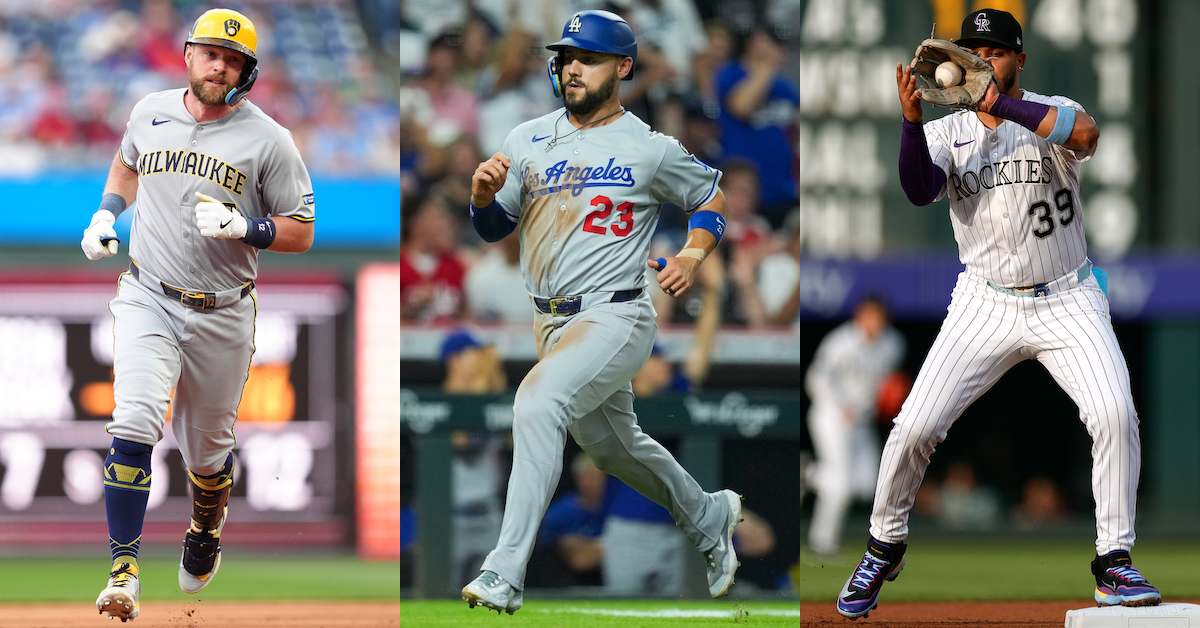
Kyle Ross, Aaron Doster, Isaiah J. Downing-Imagn Images
Spring training is underway and rosters are getting filled up. We’re now down to the part of the offseason where veterans whose recent performances have left them unable to find a guaranteed spot sign minor league deals with non-roster invites. Today we’ll break down the signings of Rhys Hoskins with the Guardians, Michael Conforto with the Cubs, and Thairo Estrada with the Orioles. All three have seen their production drop off over the past two years, but all three have a viable path toward sticking on the roster or even landing a starting spot.
We’ll start in Cleveland, where Hoskins will receive $1.5 million if he makes the roster. This move makes plenty of sense, but it’s important to note that the Guardians aren’t as desperate for a player like him as they would have been in years past. From 2021 to 2023, the only team with fewer than their 454 home runs was the Pirates (441). Cleveland’s 82 wRC+ against left-handed pitching was also the second-worst mark in baseball over that period. Back then, adding a big right-handed slugger who strikes out and hits homers would have been just what the doctor ordered. However, the Guardians are in a different spot right now. Over the past two years, they’ve ranked right around the middle of the league in home runs overall and in wRC+ against left-handed pitching. This is still a good fit, but Hoskins is no longer the slam dunk he would have been a couple years ago. Read the rest of this entry »
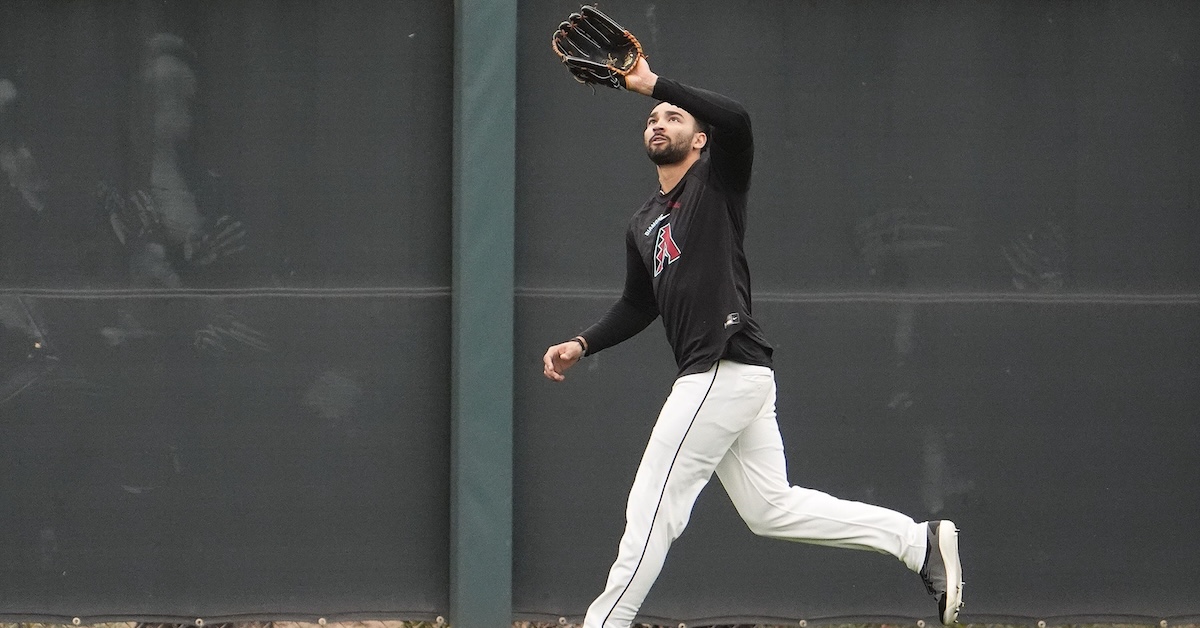
Rob Schumacher/The Republic-USA TODAY NETWORK via Imagn Images
Time waits for no man, except Jordan Lawlar, who’s been on the cusp of major league stardom for about four years.
The skinny on Lawlar as a prospect — where he topped out at a 60-FV grade in 2024 and 2025 — is that he carries the potential for plus power and plus shortstop defense with a plus-plus run tool. That’s a lot of pluses for an up-the-middle position, which is why the Diamondbacks spent a top-10 pick on him out of high school in 2021.
He played well enough to make Arizona’s playoff roster on the run to the 2023 NL pennant (though he didn’t play much, going 0-for-2 with a walk), and the two full seasons since have seen Lawlar’s path blocked both by his own injuries and the emergence of Geraldo Perdomo as a bona fide star. Read the rest of this entry »
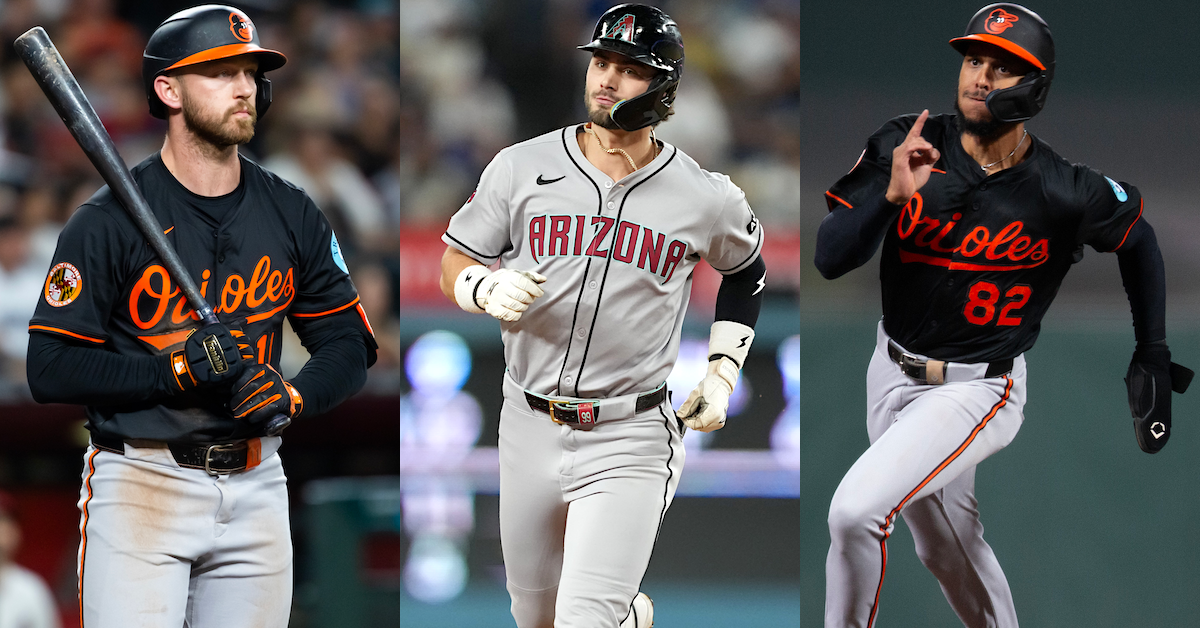
For the second time since the opening of spring training, the Baltimore Orioles lost one of their starting infielders to injury. On Friday, Baltimore announced that third baseman Jordan Westburg would miss significant time due to a partially torn UCL in his throwing elbow. Westburg received a platelet-rich plasma injection, commonly used for soft tissue and joint injuries, and will be out at least until the end of April, according to team president Mike Elias.
Jordan Westburg has a partial UCL tear in his right elbow and will be getting a PRP injection today, per Orioles POBO/GM Mike Elias.
Westburg will be out for all of April. Timeline TBD after that.
While there’s never an ideal time for an injury, the Orioles were already without second baseman Jackson Holliday, out with a broken hamate bone in his right hand. That puts half of their infield out of commission for Opening Day. Before Holliday and Westburg went down, there had been some turnover among the role players in Baltimore’s infield, adding to the uncertainty of what these injuries will mean for the team this spring and beyond. Read the rest of this entry »
All WAR figures refer to the Baseball Reference version unless otherwise indicated.
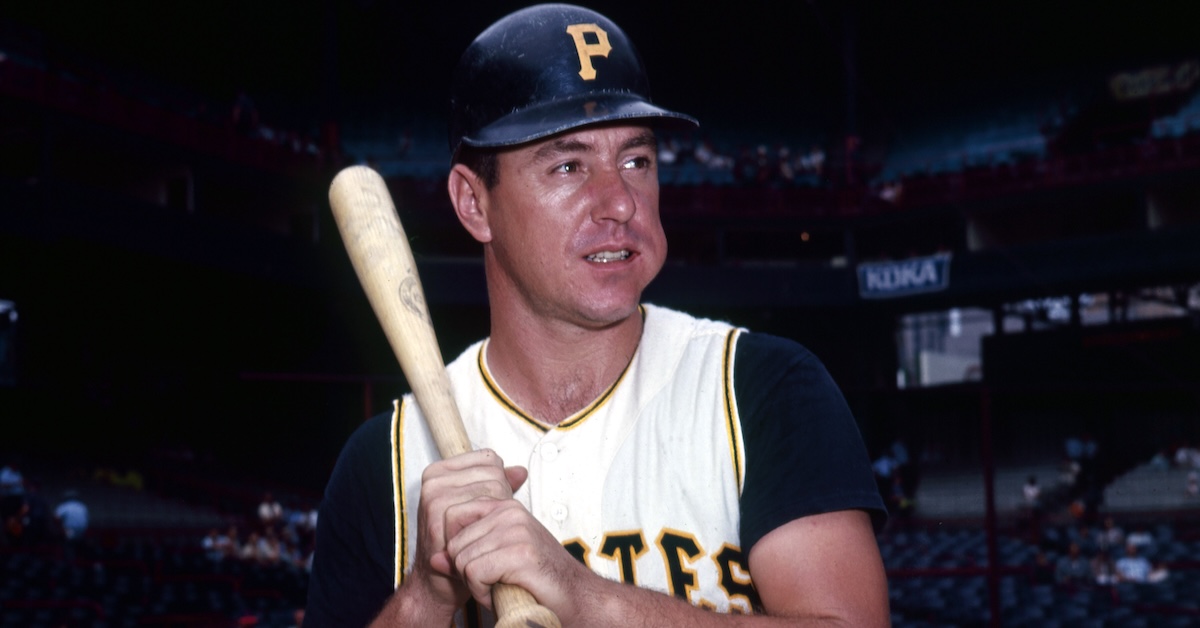
In the 121-year history of the modern World Series, just once has a player hit a walk-off home run in the seventh and deciding game. In the finale of the 1960 World Series, Bill Mazeroski, the light-hitting second baseman for the Pirates, connected for a solo homer off the Yankees’ Ralph Terry, driving the ball over the brick left field wall of Pittsburgh’s Forbes Field to deliver a shocking upset and produce one of the most indelible moments in baseball history. While it wasn’t entirely out of character — Mazeroski had already homered once in that World Series and would hit 138 regular season home runs for his career — the 24-year-old second baseman rode the notoriety of that conclusive blast right into Cooperstown. A well-decorated fielding whiz who never managed a league-average season at the plate, he was elected to the Hall of Fame by the Veterans Committee in 2001, and a quarter-century later remains a controversial choice.
Mazeroski’s home run stands among the game’s most famous, up there with Babe Ruth’s “Called Shot” in the 1932 World Series, Bobby Thomson’s “Shot Heard ‘Round the World” to win the 1951 pennant for the New York Giants and Joe Carter’s 1993 World Series-ending two-run homer, which unlike Mazeroski’s — which broke a 9-9 tie — turned a potential defeat into victory, albeit in Game 6, not Game 7. One might swap out another homer for Ruth’s, such as Ted Williams’ career-capping blast from 1960, Henry Aaron’s record-breaking 715th from 1974, or signature October blasts by Bucky Dent, Carlton Fisk, or Kirk Gibson, but if there’s a Mount Rushmore of homers, Mazeroski’s claim on a spot is rock-solid.
“Every day of my life I think of that home run. Wouldn’t you if you had hit it?” Mazeroski later said with typical humility. “People always are reminding me of it. I suppose it must be the most important thing I’ve ever done.”
Mazeroski died on Friday in Lansdale, Pennsylvania at the age of 89, according to the Pirates. No cause of death was given. He is the second member of those 1960 champions to pass away this month, after reliever Elroy Face, who died on February 12.
In a 17-year career with the Pirates (1956–1972), Mazeroski won eight Gold Gloves and made 10 All-Star teams, counting the three seasons in the 1959–62 span during which he was selected for both games. Renowned for his impeccable footwork, sure hands, and lightning-quick pivot, he led NL second basemen in double plays in eight consecutive years (1960–67) and is the career leader in that category, with 1,706. Meanwhile, he’s fifth at the position in assists (6,685), seventh in putouts (4,974), and 11th in games (2,094). Based on Total Zone’s estimates, his 147 fielding runs ranks third among players who played at least 50% of their games at the position, behind only Bid McPhee (154 from 1882–99) and Joe Gordon (150 from 1938–50). Mazeroski did all of this while wearing an exceptionally small glove to prevent the ball from getting lost in the webbing, and while playing the vast majority of his home games on Forbes Field’s notoriously hard infield, which longtime Pirates broadcaster Bob Prince dubbed “alabaster plaster.”
“Everybody talked about his quick hands, but nobody talked about his leg work,” former Pirates general manager Joe L. Brown said of Mazeroski in 2001. “[Manager] Danny Murtaugh used to say his legs were so quick, so agile, he had the leg control of a ballet dancer.”
“He had marvelous range, great instincts and never threw to the wrong base,” Dick Groat, Mazeroski’s primary double play partner from 1956–62, told ESPN for its SportsCentury series. “If I would move Maz and tell him to play here or play there, I never had to tell him a second time. Ever.”
Gene Alley, the Pirates’ regular shortstop from 1964–72, explained Mazeroski’s quickness on the double play to ESPN:
“Maz never really caught the ball, never really closed his glove over it, turning the double play. He could tilt his glove at an angle and hold his hand just so. It was a wonder the ball stayed in there. Then it would slide out in his hand just like that. He was the only one I ever saw do it like that.”
By contrast, Mazeroski was not much of a hitter, though his 12 seasons of everyday play (1957–68) did help him amass 2,016 hits. For his career, he batted .260/.299/.367, making him the only Hall of Fame position player with an on-base percentage below .300. Among that group, his 84 OPS+ is ahead of only shortstops Luis Aparicio and Rabbit Maranville (both 82) and catcher Ray Schalk (83).
William Stanley Mazeroski was born on September 5, 1936 in Wheeling, West Virginia, about 60 miles southwest of Pittsburgh. The family — parents Louis and Mayme, sister Mary and Bill — lived on the other side of the Ohio River, in a one-room tumbledown house with no electricity or indoor plumbing in Little Rush Run, Ohio. Louis was a coal miner who had been a standout sandlot shortstop, getting a tryout with Cleveland before his foot was crushed in a mining accident at age 17.
Despite — or because of — the injury, Louis tried to live out his major league dreams by teaching his son baseball starting at a very young age, sharpening his reflexes and adjusting to bad hops by fielding tennis balls that caromed off a brick wall. Though the younger Mazeroski only grew to be 5-foot-11, he starred as a center for Warren Consolidated High School’s basketball team, earning Second Team All-Ohio honors as a senior and receiving scholarship offers from Ohio State, Duquesne, and West Virginia University. On the diamond he was a four-year letterman, starring as a shortstop and pitcher. Despite having only 60 students in his graduating class, the school’s team made it all the way to the finals of the state championship tournament in 1953. Mazeroski drew interest from scouts for Cleveland, the Phillies, Red Sox, and White Sox, as well as the Pirates. He chose Pittsburgh because it was the only team willing to start him above Class D, signing for a $4,000 bonus.
Mazeroski was still just 17 when he began his career at A-level Williamsport, where he hit a mere .235/.291/.333 with three home runs in 93 games in 1954. He was a full-time shortstop that season, but the following spring, general manager Branch Rickey decided that between his arm strength and impressive ability to make the pivot on the double play, Mazeroski was better suited to second. The Pirates started him at Hollywood of the Pacific Coast League in 1955 — then considered one level above Triple-A — but he struggled in 20 games there before returning to Williamsport, where, as an 18-year-old in a league where the average age was 24, he hit a much more impressive .293/.354/.438 with 11 homers in 114 games. He played well enough in a return to Hollywood in 1956 (.306/.358/.465, his only time with a .300 batting average at any level) that the Pirates called him up in early July. On July 7, 1956, 59 days before his 20th birthday, he debuted, collecting a single off the Giants’ Johnny Antonelli in his first plate appearance. He spent his first five weeks with his batting average generally below .200, but heated up in mid-August during a stretch that included his first home run, one of three hits he collected off the Phillies’ Robin Roberts, a future Hall of Famer, on August 16. He finished the season with a .243/.290/.318 (67 OPS+) line and three homers in 81 games.
The Pirates finished seventh in the NL with a 66-88 record in 1956, their first time escaping last place since ’51, and their first with Brown as their GM; even with Rickey in that role, they had lost 317 games from 1952–54, but by the time Mazeroski had arrived, the youth movement was showing returns. Rickey had signed Groat in June 1952, and had plucked 20-year-old Roberto Clemente from the Dodgers as a Rule 5 pick in November 1954, while Brown traded for center fielder Bill Virdon in mid-1955. Though the Pirates actually backslid to 62-92 in 1957, they went 26-25 after Murtaugh took over from the fired Bobby Bragan — a move that came as a relief to the young Mazeroski, who later toldSports Illustrated, “I suddenly felt as if an elephant had just climbed down off my shoulders.”
Aided by hitting coach George Sisler, Mazeroski learned to use the whole field better instead of trying to pull every ball. He improved to a respectable .283/.318/.407 (96 OPS+) with eight home runs and 3.6 WAR in 1957, his first full season. The Pirates rocketed to 84-70 and a second-place finish in 1958, with the 21-year-old Mazeroski having what would stand as his best season on both sides of the ball. He hit .275/.308/.439 (97 OPS+) with 19 homers, was elected to start his first All-Star Game, won his first Gold Glove, and ranked seventh in the NL with 4.7 WAR. While he would match both that mark and its underlying 23 fielding runs in 1963, he would never surpass those numbers.
After marrying Milene Nicholson, the secretary of the Pirates’ head of scouting, in October 1958, Mazeroski failed to keep in shape during that offseason, reporting to spring training 15 pounds overweight. He lost range, and a pulled muscle in his leg didn’t help; while he was selected for both All-Star games, he slipped to a 67 OPS+ and 0.2 WAR. With Sisler counseling him to move deeper in the batter’s box and wait on curveballs until they broke, he rebounded to .273/.320/.392 (94 OPS+) with 11 home runs and 2.5 WAR in 1960, again starting both All-Star Games and claiming his second Gold Glove. Led by Groat and third baseman Don Hoak — who finished second to Groat in the NL MVP voting — as well as Clemente and Cy Young winner Vern Law, the Pirates won 95 games and took home their first pennant since 1927.
Though the World Series against the Yankees went down to the final pitch, New York’s three wins were all by at least 10 runs — 16-3 in Game 2, 10-0 in Game 3, and 12-0 in Game 6 — while the Pirates’ were all by three runs or fewer. In the aggregate, the Pirates were outscored 55-27 and outhit 91-60, though they benefited from Yankees manager Casey Stengel’s curious decision not to start Whitey Ford in Game 1, thus keeping him lined up for starts in Games 4 and 7. Ford instead started only Games 3 and 6, a decision that contributed to the 70-year-old Stengel’s losing his job shortly after the series despite having led the Yankees to 10 pennants and seven championships in 12 years.
Mazeroski went 2-for-4 in Game 1, with a two-run homer off Jim Coates in the fourth inning of a 6-4 win. He collected hits in each of the next four games as well, including a two-run double to chase starter Art Ditmar in the second inning of Game 5.
In Game 7, the Pirates took an early 4-0 lead, with Mazeroski contributing a bunt single to load the bases in the second inning before coming around to score. Aided by home runs by Bill Skowron and Yogi Berra, the Yankees rebounded, and by the eighth inning they led 7-4. The Pirates answered back by scoring five runs in the eighth — all without Mazeroski batting — with Hal Smith’s two-out, three-run homer off Coates giving them a 9-7 lead. The Yankees tied the game in the top of the ninth against reliever Harvey Haddix, but as Roger Angell later recalled, Mazeroski made a key defensive play with two outs and Mickey Mantle on first:
… a great play that will forever go insufficiently sung, because of what happened afterward and because it was a simple force at second. Indeed with the fleet Mantle barreling toward second on the pitch, [Pirates shortstop] Dick Groat’s best play on Skowron’s grounder into the hole was to first. Groat, however, after bobbling the ball slightly, looked to Mazeroski and rushed his throw, which went wide, surely wider than the compactly put-together Maz could stretch. But Maz, for whom second base is T.S. Eliot’s “still point of the turning world,” seemed to lay every fibre of his being end to end for an instant to snag Groat’s throw and nip the sliding Mantle by a heartbeat. And then he jogged in toward the bottom of the ninth and immortality.
That set up Mazeroski’s leadoff at-bat against Terry, who had relieved Coates following Smith’s homer and retired Hoak on a fly ball to end the eighth. Terry, who had warmed up five times since the first inning, fell behind 1-0 as Mazeroski passed on a shoulder-high fastball off the plate. His next pitch — a slider that didn’t slide — was over the plate, and Mazeroski clouted it over the left field wall, with Berra (in left field) and Mantle (in center) giving half-hearted chase but having no chance. Pandemonium ensued as fans stormed the field while Mazeroski rounded the bases, batting helmet in hand.
Remarkably, Mazeroski — who hit .320/.320/.640 with five RBI — was not named the World Series MVP. Instead, the honor went to Yankees second baseman Bobby Richardson, who drove in 12 runs, a record now shared with Freddie Freeman of the 2024 Dodgers. The MVP vote had been taken in the eighth inning of Game 7, and it remains the only time since the award’s inception (in 1955) that it went to a member of the losing team. Mazeroski did win that year’s Babe Ruth Award, given by the New York BBWAA chapter to the most outstanding player in the postseason.
For as climactic as it was, Mazeroski’s homer ranks only eighth in terms of championship win probability added (cWPA). As MLB.com’s Mike Petriello explained last fall in the wake of the Dodgers’ thrilling Game 7 win over the Blue Jays, Hal Smith’s homer in the previous inning turned a one-run deficit into a two-run lead, increasing the Pirates’ championship odds by 63.6%. Mazeroski’s homer “only” improved their chances by 36.7% — which is to say that with no outs and the score tied in a walk-off situation, the odds of the Pirates winning at the point of his homer were already higher.
Just 24 years old at the time of his signature blast, Mazeroski still had plenty of baseball ahead of him. He spent the next eight seasons as the Pirates’ starting second baseman, hitting a combined .262/.298/.368 (87 OPS+) while averaging 152 games, 10 home runs, 13 fielding runs, and 3.1 WAR per year. He won five straight Gold Gloves in that span (1963–67), perennially leading NL second basemen in most key defensive categories, and started All-Star Games in 1962 (twice) and ’67, while making the teams as a reserve two other times. After Groat was traded to the Cardinals in November 1962, the Pirates appointed Mazeroski team captain.
The Pirates’ competitive fortunes ebbed and flowed across the eight seasons following their World Series title. They won 93 games in 1962, 90 in ’65, and 92 in ’66, but they also finished below .500 four times in those eight seasons, and right at .500 once. They placed third in a 10-team league in both 1965 and ’66, three games behind the Dodgers in the latter season, but in the years before division play and wild cards, that wasn’t enough. Murtaugh stepped down after 1964 due to health concerns, though he returned to the dugout for the second half of 1967, when he guided the team to a 39–39 record after Harry Walker was fired.
Mazeroski had proven ultra-durable during that span. From 1964–67, he reached the 162-game mark three times, with a high of 163 (including a tie game) in ’67. He missed the first 21 games of the 1965 season after fracturing a metatarsal in his right foot, and played in just 130 games that year. In 1969, a recurrent hamstring injury limited him to just 67 games, including just six after June 29. With Murtaugh back at the helm in 1970, Mazeroski played 112 games, but his 65 OPS+ and 1.1 WAR both suggested the Pirates could do better, and as the season went on, he increasingly yielded to 22-year-old rookie Dave Cash. On June 28, 1970, Mazeroski did have the distinction of recording the final out of Forbes Field’s 62-year history on a forceout at second off the bat of the Cubs’ Don Kessinger; this, after he had collected the Pirates’ final hit at the ballpark, an eighth-inning double. Another double, on August 17 off the Astros’ Wade Blasingame, marked Mazeroski’s 2,000th career hit.
The Pirates went 89-73 in 1970, winning the NL East, but they were swept by the Reds in the best-of-five National League Championship Series, with Mazeroski going hitless in his only start in Game 3. Reduced to a reserve role, he slipped below replacement level in 1971 and ’72, but nonetheless served as a valued mentor to the team’s younger players, including Cash and fellow second baseman Rennie Stennett. The Pirates repeated as NL East champions in both seasons; in those postseasons, Mazeroski was limited to pinch-hit duty. His pinch-single in the second inning of Game 4 of the 1971 NLCS off the Giants’ Gaylord Perry led to a game-tying three-run homer by Richie Hebner. The Pirates clinched the series that afternoon, and went on to beat the Orioles in the World Series.
Mazeroski retired after the 1972 season, moving directly into a role as the team’s third base coach under Virdon, who despite winning the division title as a rookie manager didn’t make it through the following season; Murtaugh came out of retirement in September. Mazeroski didn’t return to coach in 1974, but did coach third for the Mariners in ’78 and ’79. He often served as a spring instructor for the Pirates, making an impression upon yet another generation of players. In 2010, he tutored Neil Walker as he made the conversion from third base to second. “He was in either his late 60s or early 70s at that time, and he was still pretty impressive,” Walker recalled in the wake of Mazeroski’s death. “The hands were still there, the glove was still there, the footwork was still there. The eyes were probably going a little bit, but it was just incredible.”
The Pirates honored Mazeroski by retiring his no. 9 in 1987. After his election to the Hall of Fame in 2001, the team named a street outside PNC Park Mazeroski Way in his honor. On his birthday in 2010, a bronze statue commemorating his jubilant trip around the bases following his Series-winning homer was unveiled along the Allegheny River outside PNC Park. Forbes Field was razed in 1972, but a plaque commemorating Mazeroski’s home run still stands on the site, along with a portion of the brick outfield wall. Since October 13, 1985, on the 25th anniversary of the home run, fans gather at the spot every year to rewatch the game, timing it so that Mazeroski’s home run happens at 3:36 p.m., as it originally did. For the 50th anniversary in 2010, Mazeroski and over 1,000 fans showed up to celebrate.
Mazeroski became eligible for election to the Hall of Fame on the BBWAA’s 1978 ballot. He scraped by with just 6.1% of the vote, didn’t reach double digits until 1983, and after five years spent in the 30% range, topped out at 42.3% in ’92, his final year of eligibility. Starting in 1996, his case was taken up by the Veterans Committee on an annual basis. With Brown serving as the committee’s chairman — and alas keeping alive the VC’s long history of cronyism — Mazeroski didn’t lack for support. After falling one vote short of election in 2000, he was elected the next year. Ted Williams, who had served on the committee since 1986 and had been frank about his unwillingness to support Mazeroski due to his weak offense, missed the 2001 vote while recovering from open-heart surgery. Instead of needing 12 out 15 votes to clear 75%, Mazeroski only needed 11 out of 14, and he squeaked through.
It would be an understatement to suggest that the election sparked controversy. “The Hall of Fame Veterans Committee was created to rectify mistakes. Which means its next act should be self-abolishment,” wrote the New York Post’s Joel Sherman. Implicitly, the Hall agreed, overhauling the committee format so that all living Hall of Famers, all Spink and Frick Award winners (writers and broadcasters), and all VC panelists whose terms had not expired (a group that did not include Brown) would have a vote on a biennial basis, starting in 2003.
“You dream of a lot of things,” Mazeroski said of his election, steering clear of the controversy. “You want to be in the big leagues. You want to make the All-Star Game. You want to be in a World Series. You want to do all those things. But you never dream of this. It’s pretty exciting. I just hope I can live up to it.”
Though he began his induction speech by noting he’d written 12 pages, Mazeroski ended up delivering one of the shortest speeches in Hall history. “I think defense belongs in the Hall of Fame. Defense deserves as much credit as pitching and hitting, and I’m proud and honored to be going into the Hall of Fame on the defensive side and mostly for my defensive abilities,” he said. Overcome by emotion, he continued for just a couple more minutes. “I thought when the Pirates retired my number that would be the greatest thing ever to happen to me… I think you can kiss those 12 pages down the drain… I want to thank all the friends and family who made this long trip up here to listen to me speak and hear this crap.”
Does Mazeroski belong in Cooperstown? By the advanced statistics, his case is flimsy. Even with his strong standing in fielding runs, his 36.5 career WAR and 31.2 JAWS both rank just 52nd, lower than any non-Negro Leagues Hall of Famer at the position, in the general vicinity of other glove wizards such as Placido Polanco, Mark Ellis, and Frank White, not to mention a less accomplished defender who hit a game-winning homer in a World Series Game 7, Howie Kendrick.
Such is the power of one fateful swing of the bat. Defense alone is rarely enough to get a player to Cooperstown, but defense and one of the most famous and enduring home runs in baseball history? That’s another story.
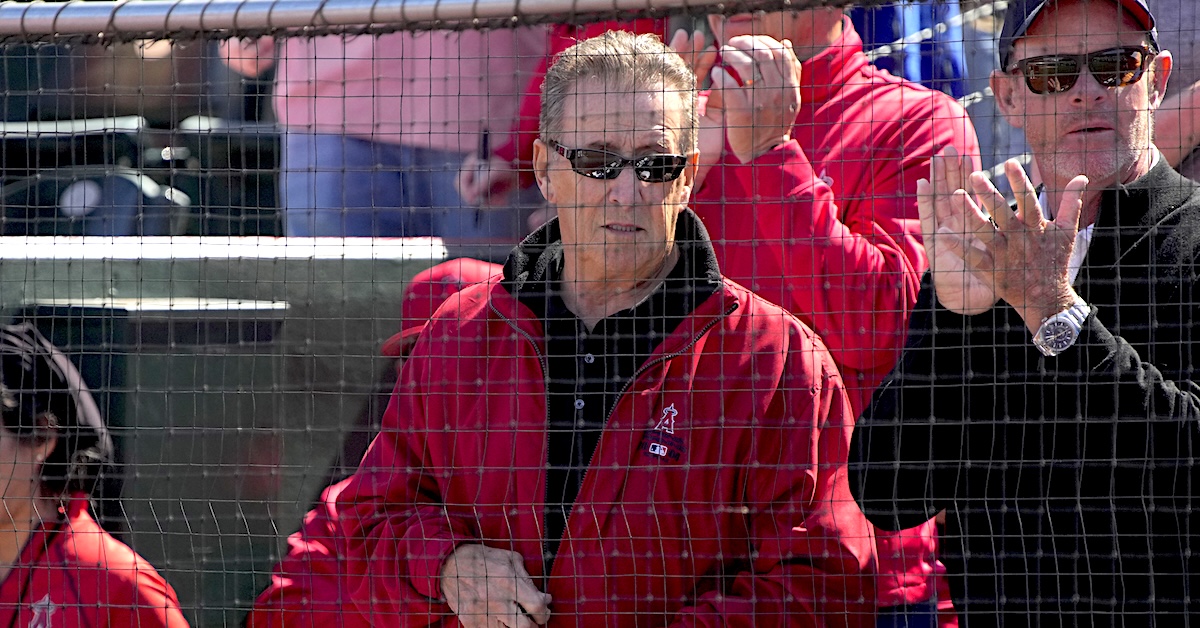
Last week, after Angels owner Arte Moreno finished his annual state of the team discussion with reporters, Jeff Fletcher of the Orange County Register and Rhett Bollinger of MLB.com published several quotes from the conversation. Between settling with Tyler Skaggs’ family over the wrongful death suit, not having a television partner for the upcoming season, and cutting payroll after eight straight losing seasons, there was a lot to cover. Several of Moreno’s quotes raised eyebrows, but the one that caught the most headlines concerned his description of a fan survey. He was simply trying to explain that he is focused on making sure the fan experience is a good one, but it came out very wrong.
“The number one thing fans want is affordability,” Moreno said. “They want affordability. They want safety, and they want a good experience when they come to the ballpark. Believe it or not, winning is not in their top five… The moms want to be able to afford to bring the kids. Moms make about 80% of the decisions. They want to be able to bring their kids and be affordable and they want safety and they want to have a good experience, so they get all the entertainment stuff or whatever. The purists, you know, it’s just straight winning.”
It wasn’t exactly inspiring to hear the owner of a baseball team come dangerously close to accusing fans of zealotry for just wanting their team to finish above .500 for the first time since 2015. After avoiding local media for years, Moreno started giving these spring training state of the team appearances in 2023. His answers are not always well received, and time tends not to do them any favors. In 2023, Moreno said, “You can’t start losing $50 to $100 million a year and keep the business,” then two years later, he said the team was doing just that, claiming it would “probably lose $50 million to $60 million, minimum.” In 2023, he said, “I always look at the fans. What are we doing to make sure the fans have a great experience and the fans are proud of the team that we put on the field?” Now he says winning is not even a top-five priority for the fans. Read the rest of this entry »
Two weeks ago, Sunday Notes led with David Cone following in Mark Gubicza’s footsteps. Just as his fellow pitcher-turned-broadcaster had done, Cone tackled a challenging career quiz, augmenting his answers — some of them correct, others amiss — with entertaining anecdotes about batters he faced along the way. Today we’ll hear from another 1980s-1990s hurler who is now a broadcast analyst: Jeff Montgomery, who played with Gubicza in Kansas City, is the Royals’ franchise leader in both appearances (686) and saves 304).
I began by asking the 64-year-old Wellston, Ohio native which batter he faced the most times.
“I’m going to say either Chili Davis or Kirby Puckett,” guessed Montgomery, naming a pair of players who narrowly missed being the correct answer. Upon being informed that it was neither of the two, the erstwhile closer pondered for several seconds, only to throw up his hands. “You got me,” he admitted. “Who was it?”
I told Montgomery that it was Paul Molitor, whom he faced 30 times, allowing just seven hits, all of them singles.
“Oh, Molly. There you go,” responded Montgomery, “Molly was the type of hitter who was never going to be easy. He had the ability to really wait on pitches. He was basically bat-to-ball, and his bat-to-ball skills were incredible. There were honestly times when I thought the pitch was in the catcher’s mitt, and the next thing I knew I was watching our right fielder chasing the ball down the line. Molly’s bat was that fast.
“I think I did pretty well against him,“ Montgomery added. “But I do remember one game in the Metrodome. We were in extra innings, it was a bases-loaded situation, and I had him 0-2. I’d thrown Molly a couple of sliders away, and decided to come in with a fastball. He leaned into it for a walk-off hit-by-pitch.” Read the rest of this entry »
The most consequential transaction (if you can call it that) in baseball this week was the resignation of Tony Clark as the executive director of the Major League Baseball Players Association. Clark, who had been the head of the union since 2013, stepped down after an internal investigation revealed that he’d had an “inappropriate relationship” with his sister-in-law, who had been hired to work for the union in 2023. The MLBPA elevated deputy executive director and lead negotiator Bruce Meyer into the top spot on an interim basis. The timing of the move is far from ideal, coming less than 10 months before the current collective bargaining agreement expires at 11:59 p.m. ET on December 1, at which point the owners are expected to promptly lock out the players for the second time this decade. Still, as Michael Baumann wrote on Tuesday, it’s an even worse time for the union to have leadership that its membership doesn’t trust. Beyond the “inappropriate relationship,” Clark is one of the subjects of a broader ongoing federal probe into both the MLBPA and the NFLPA over financial dealings related to the group licensing firm OneTeam Partners, and was the subject of a November 2024 whistleblower complaint alleging him of misusing union resources, self-dealing, and abuse of power. His departure allows the players to better coalesce around their shared priorities.
In lighter news, 12 teams played their first spring training games on Friday, providing us with a perfect opportunity to watch some of the players we covered during Prospect Week. If you tuned in to the Mariners-Padres game, for example, you would’ve seen four of our Top 100 Prospects — including shortstop Colt Emerson (no. 11), center fielder Jonny Farmelo (no. 51), right fielder Lazaro Montes (no. 66), and second baseman Michael Arroyo (no. 78) — in action, all playing for Seattle. The 21-year-old Arroyo (a 50-FV prospect) smoked a two-run homer to right center field on an 0-2 changeup that caught way too much of the plate. He doubled his next time up and finished the day 2-for-2. There are 16 games slated for this afternoon.
We have more labor talk to come in this mailbag, but that’s the last we’ll say about the start of spring training games. Instead, we’ll be answering your questions about quantifying the pitcher-catcher relationship, the looming lockout, how teams perform after significant roster turnover, and more. Before we do, though, I’d like to remind you that this mailbag is exclusive to FanGraphs Members. If you aren’t yet a Member and would like to keep reading, you can sign up for a Membership here. It’s the best way to both experience the site and support our staff, and it comes with a bunch of other great benefits. Also, if you’d like to ask a question for an upcoming mailbag, send me an email at mailbag@fangraphs.com. Read the rest of this entry »
Ben Lindbergh and Meg Rowley banter about a video of Brandon Marsh’s hair-wetting, the Phillies’ latest therapy, the Red Sox “home whites” non-disparagement saga, a former team exec’s proposals to promote competitive balance, and the best candidates among MLB players to pit against each other in a “Who ya got?” debate, then preview the 2026 Toronto Blue Jays (55:43) with The Athletic’s Mitch Bannon, and the 2026 Tampa Bay Rays (1:42:53) with MLB.com’s Adam Berry.
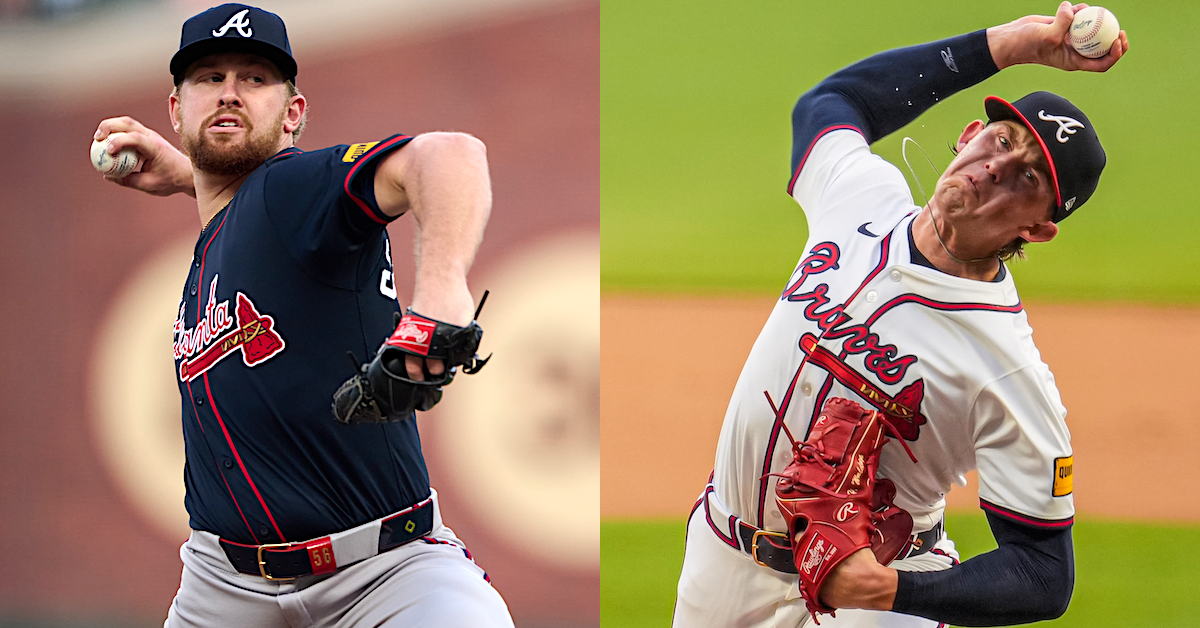
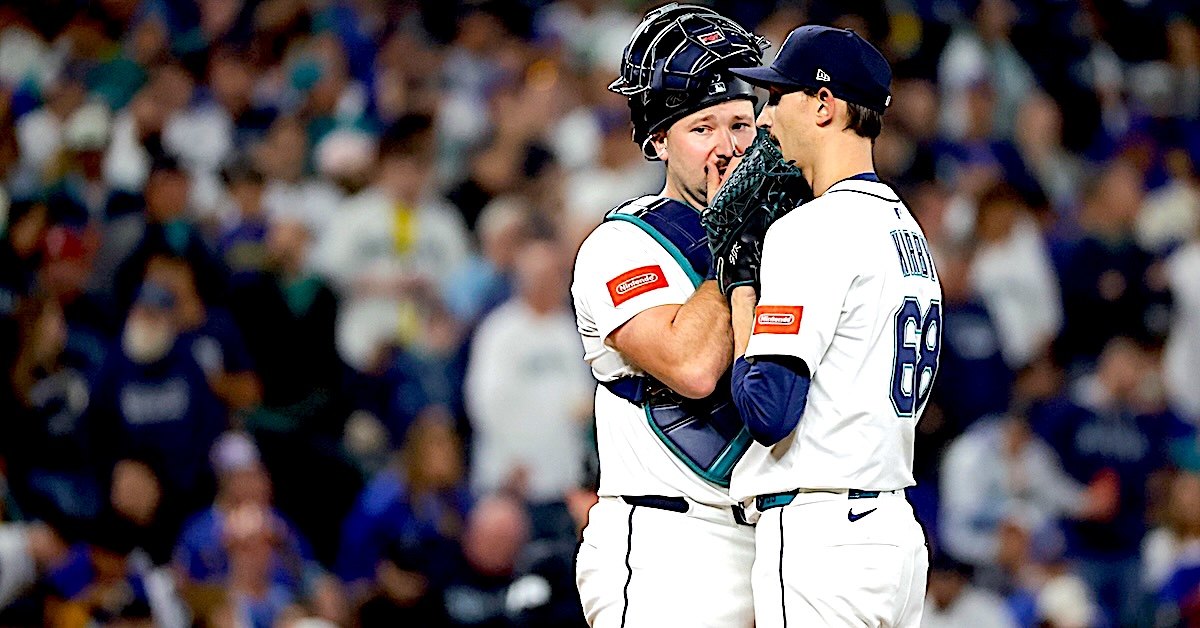
The Atlanta Braves opened spring training with the hopes of getting a healthier season out of their starting rotation this year. While it took a lot of things going wrong to drop the Braves to a 76-86 record in 2025, their worst record since 2017, the myriad injuries suffered by the starting pitching played an outsized role in their misfortune. Unfortunately, the Braves didn’t even get to the first exhibition game before the news broke that two of their starting pitchers, Spencer Schwellenbach and Hurston Waldrep, would have to undergo elbow surgery, with no estimated timeline for their returns.
If there’s a silver lining to manager Walt Weiss’s uncertainty about whether either Schwellenbach or Waldrep would pitch this year, it’s that neither surgery is of the Tommy John flavor, which would pretty much guarantee that both would miss the entire season. Instead, both surgeries are to remove loose bodies from their throwing elbows; Schwellenbach had his procedure on Wednesday, while Waldrep’s is scheduled for Monday. Yes, removing loose bodies sounds like the job description of a bouncer at a hot nightclub, but in this case it refers to the removal of small fragments of bone and cartilage present in the joint.
Regardless, both pitchers are bound to be out for an extended period of time, and their absences will surely be felt in Atlanta. Waldrep was solid for the Braves in 2025, putting up a 3.21 FIP in nine starts, and Schwellenbach looked well on target for a 4-WAR season before an elbow fracture ended his season in late June. Read the rest of this entry »
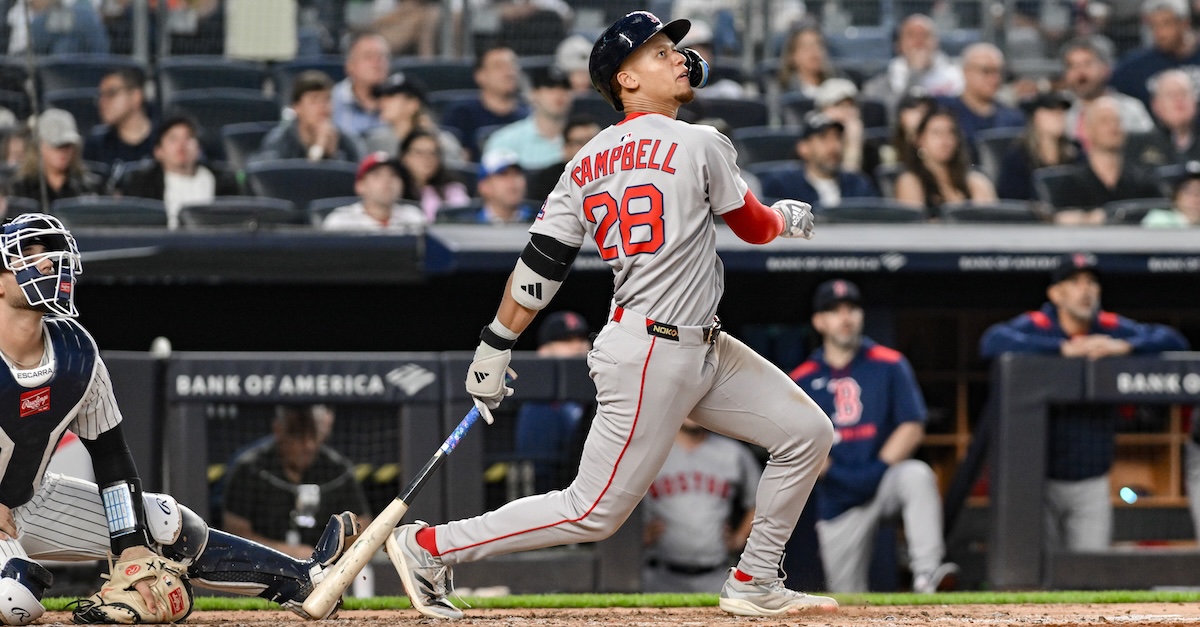
We’re putting a bow on Prospect Week with a post-hype look at one of last season’s top farmhands, Kristian Campbell. This time last year, Campbell was the biggest riser on prospect lists across the industry, a consensus top 10 player who had gone from relative obscurity to the cusp of the big leagues in just a year. Now, as we head into the spring’s first contests, he’s fallen out of the lineup and is likely to begin the 2026 season in Triple-A. His career path serves as a good reminder that growth isn’t linear, and that a player’s development path doesn’t conclude when he reaches the majors or exhausts his status as a rookie.
After playing just one season of college baseball, Boston selected Campbell in the fourth round of the 2023 draft as a toolsy player with contact skill but also a quirky, choppy swing. He put on 15-20 pounds of muscle that offseason, which helped spark an offensive explosion. His power shot from average to plus overnight, and he started lifting the ball more, both of which he managed without ballooning his whiff rates out of proportion. He posted a 178 wRC+ across three levels that season, with 20 homers and a sub-20% strikeout rate. Though little about his operation in the box looked conventional, plenty of evaluators — including, critically, the Red Sox brass — fully bought in. The Red Sox put Campbell on the Opening Day roster and then inked him to an eight-year, $60 million extension less than a week into the season.
Initially, all went well. Campbell won AL Rookie of the Month honors in April after hitting .301/.407/.495 with four homers. His strikeout rate crept north of 25%, which wasn’t itself alarming, as it came with power and a 15% walk rate; it’s perfectly normal for rookies to swing and miss a bunch as they adjust to the league anyway. Defensively, Campbell was primarily playing second base while also filling in left and center. He didn’t look great at the keystone, and the jury was still out on his long-term defensive home, but if nothing else, his versatility was itself a boost for the ballclub.
On April 30, Campbell went 0-4 in a game against the Blue Jays, and then missed the next three games with rib discomfort. We can’t know to what extent that injury bothered him. Campbell, for his part, said it wasn’t an issue by late May: “No. That’s all clear. There was just a little side discomfort, but it’s all good.” Regardless, it was a turning point in his season:
April Flowers and May Showers
BA
OBP
Slugging
K%
BB%
ISO
wRC+
March-April
.301
.407
.495
26%
15.4%
.194
150
May-June
.159
.243
.222
28.5%
7.1%
.063
30
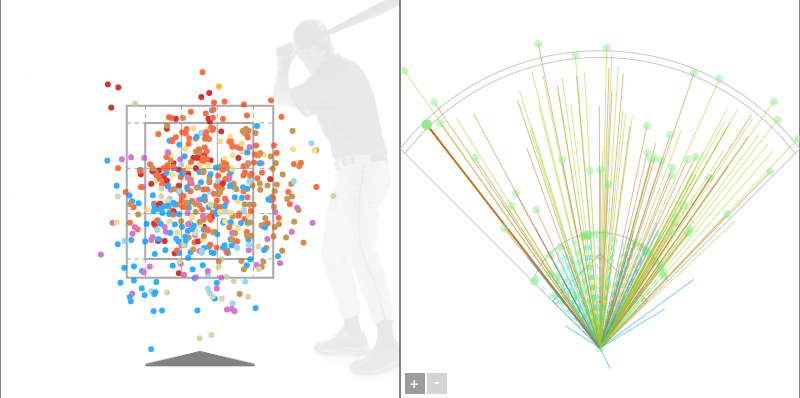
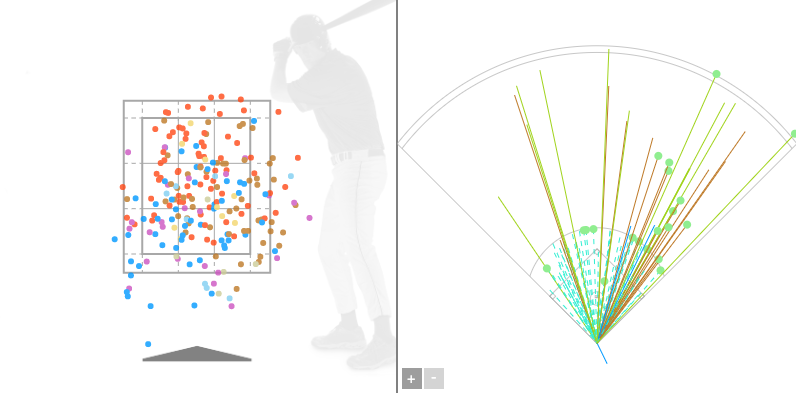
By mid-June, the Red Sox had seen enough and sent Campbell to Triple-A for the remainder of the season. Critically, his dip in production coincided with a sudden and complete inability to pull the ball.
April:
May:
Campbell wasn’t mauling good velo over the Green Monster even in April, but he did hit some heaters hard to the left of second base and had no trouble driving spin out to left. He got back to that in Triple-A, though somewhat troublingly all of his pull-side damage came on hanging breaking balls. As Campbell gutted through an unspectacular summer in Worcester — 118 wRC+, 26.7% strikeout rate — the Red Sox lineup hummed without him. A mix of players capably filled in at second, Romy Gonzalez most notably among them, while Boston had more good outfielders than room to play them. All over the headlines in March and April, Campbell ended the 2025 campaign a forgotten man.
Even at his peak, Campbell was a somewhat divisive player. While some scouts were willing to overlook his unorthodox swing, others were apprehensive about his mechanics. He had a double toe tap and then a big front hip leak that worked in part because he has huge hip-shoulder separation and was able to keep from flying open even as his lower half crept toward third base. The upper half was also concerning for some evaluators, as Campbell’s violent and rotational hack came with a lot of head movement and often left him off balance. Plus bat speed and good hand-eye coordination helped, but not everybody loved what they saw.
Having literally bought the breakout, it’s fair to wonder if Boston is now taking the collapse at face value as well. There are signs, if you want to look at it that way. The Red Sox sent Campbell to winter ball this offseason, hoping that quieter movements in the box will again let him get to his power. Between those adjustments, the trade for Caleb Durbin, and unsettled defensive plans that initially seemed to focus on the outfield but then made room for him to take groundballs once back in camp (all of this just a few months removed from when he started working in at first base), you’d be forgiven for thinking that he’s not in the club’s immediate plans. Fair enough, given last season’s production and this season’s lineup.
But all of the tinkering raises more questions than it answers. Were Campbell’s struggles last May and June really the inevitable result of an unconventional swing? Is it possible that the league’s adjustments to the young upstart, possibly combined with a nagging rib issue, did a number on a rookie already shouldering a difficult defensive load after very little collegiate and minor-league seasoning? You can make arguments for, against, or in between on those questions; the guy is in limbo, after all.
Last year, just after Campbell’s demotion, Eric wrote, “I, like most everyone, entered 2025 convinced that this weirdo swing would work for Campbell even though it’s unconventional. Though he was demoted shortly before [list] publication, I still think it will… two years ago, this guy was playing in his lone college baseball season and now he’s facing the best pitchers in the world. He deserves time to adjust and hopefully get stronger so it doesn’t take his entire body winding up for him to swing hard.”
I’ll sign on to that idea, and the comment about increased strength in particular. It’s a long season, and all the moving parts in Campbell’s swing mean that a minor disruption to one area of the body might just throw off the whole operation; having the strength to withstand the rigors of the schedule is important for everyone, but perhaps him especially. And let’s not lose sight of the talent here. However unusual, Campbell’s bat speed, short swing, and good approach were, for a time, effective. The history of this sport is full of guys who went the other way with fastballs and tugged breaking balls, and for a month it looked like Campbell had found a way to follow those footsteps. I still think he can; whether or not he will is for us to find out.



 Sponsor Us on Patreon
 Give a Gift Subscription
 Effectively Wild Subreddit
 Effectively Wild Wiki
 Apple Podcasts Feed
 Spotify Feed
 YouTube Playlist
 Facebook Group
 Bluesky Account
 Twitter Account
 Get Our Merch!