Ben and Meg banter about a hotel-lobby shrine to Addison Barger and Scott Boras wordplay at the GM meetings, Stat Blast (25:50) about Paul DePodesta’s comeback, POBO percentage, postseason questions, and Mike Greenwell, and (1:01:07) conduct the 11th annual free agent contract over/under draft, plus a Boras postscript.
As soon as one story in baseball ends, another begins. And so, with the 2025 season dissipating into silence as the champions hoist the World Series trophy, its remnants seed the next phase of the sport’s existence out from the quantum foam. The four months between now and Opening Day feel like an interminable gap, but we have the Hot Stove League to keep the MLB baseballmatic universe rolling. That means, as has been the case for nearly a quarter of a century now, it’s time for me to start rolling out the ZiPS projections for next season.
For those new to my projections, ZiPS is a computer projection system I initially developed in 2002–04. It officially went live for the public in 2005, after it had reached a level of non-craptitude I was content with. The origins of ZiPS are similar to Tom Tango’s Marcel the Monkey, coming out of discussions I had in the late 1990s with Chris Dial, one of my best friends (our first interaction involved Chris calling me an expletive!) and a fellow stat nerd. ZiPS quickly evolved from its original iteration as a reasonably simple projection system, and it now both does a lot more and uses a lot more data than I ever envisioned it would 20 years ago. At its core, however, it’s still doing two primary tasks: estimating what the baseline expectation for a player is at the moment I hit the button, and then estimating where that player may be going using large cohorts of relatively similar players.
So why is ZiPS named ZiPS? At the time, Voros McCracken’s theories on the interaction of pitching, defense, and balls in play were fairly new, and since I wanted to integrate some of his findings, I decided (with his blessing) that the name of my system would rhyme with DIPS (defense-independent pitching statistics). I didn’t like SIPS, so I went with the next letter in my last name. I originally named my work ZiPs as a nod to CHiPs, one of my favorite shows to watch as a kid, but I mis-typed ZiPs as ZiPS when I released the projections publicly, and since my now-colleague Jay Jaffe had already reported on ZiPS for his Futility Infielder blog, I chose to just go with it. I never expected that all of this would be useful to anyone but me; if I had, I would surely have named it in less bizarre fashion. Read the rest of this entry »
The following article is part of my ongoing look at the candidates on the 2026 Contemporary Baseball Era Committee ballot. Originally written for the 2014 election at SI.com, it has been updated to reflect recent voting results as well as additional research. For a detailed introduction to this year’s ballot, use the navigation tool above. An introduction to JAWS can be found here.
Jeff Kent took a long time to find a home. Drafted by the Blue Jays in 1989, he passed through the hands of three teams that didn’t quite realize the value of what they had. Not until a trade to the Giants in November 1996 — prior to his age-29 season — did he really settle in. Once he did, he established himself as a standout complement to Barry Bonds, helping the Giants become perennial contenders and spending more than a decade as a middle-of-the-lineup force.
Despite his late-arriving stardom and a prickly personality that sometimes rubbed teammates and media the wrong way, Kent earned All-Star honors five times, won an MVP award, and helped four different franchises reach the playoffs a total of seven times. His résumé gives him a claim as the best-hitting second baseman of the post-1960 expansion era — not an iron-clad one, but not one that’s easily dismissed. For starters, he holds the all-time record for most home runs by a second baseman (not counting any other positions) with 351. That’s 35 more than Robinson Canó, 74 more than Ryne Sandberg, 85 more than Joe Morgan, and 87 more than Rogers Hornsby — all Hall of Famers, and in Hornsby’s case, one from before the expansion era. Among players with at least 7,000 plate appearances who spent at least half their time at second base, only Hornsby (.577) has a higher slugging percentage than Kent’s .500. From that latter set, only Hornsby (1.010) and another pre-expansion Hall of Famer, Charlie Gehringer (.884), have a higher OPS than Kent (.855). Read the rest of this entry »
In just about any sport you can name, offense is king. If you’re the one who scores the goals, the points, the runs, the whatever they call it in polo – the biscuits, maybe? – you’re going to get the plaudits. Who’s the greatest defenseman in the history of hockey? It’s Bobby Orr, of course, because he was the first great offensive defenseman. This pattern very much holds when it comes to baseball.
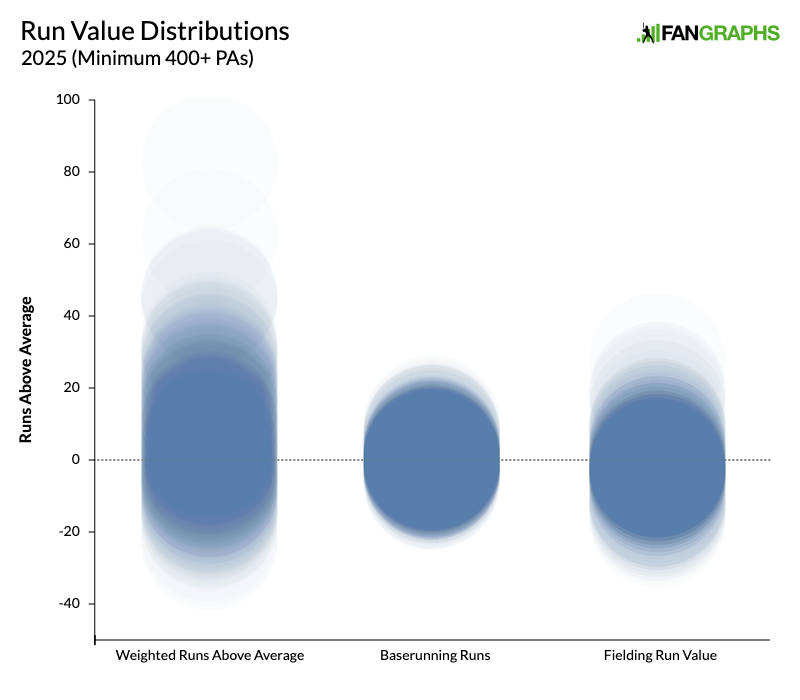
Among other things, the sabermetric revolution helped us codify the value of hitting relative to the other facets of the game. To wit, according to weighted runs above average – and we’re using that particular stat because, like standard baserunning and defensive metrics, it’s a counting stat that compares a player to the performance of an average player – the most valuable hitter during the 2025 season was one Aaron Judge. Judge created 82.5 more runs than the average hitter. That’s 21 runs more than any other player, and an astonishing 36 more than any other player not named Shohei Ohtani. Judge was the best offensive performer in the game by a mile, which makes him the frontrunner for the American League MVP award, even though he put up negative value as a baserunner and, depending on which metric you trust, his defense graded out somewhere between pretty good (DRS, FRV) and really bad (DRP). The best defender was Patrick Bailey, who put up 30 fielding runs, and the best baserunner was Corbin Carroll, who finished with a measly 10.3 baserunning runs. Offense is just more valuable than defense and baserunning. Here’s the distribution of values for the three portions of the game:
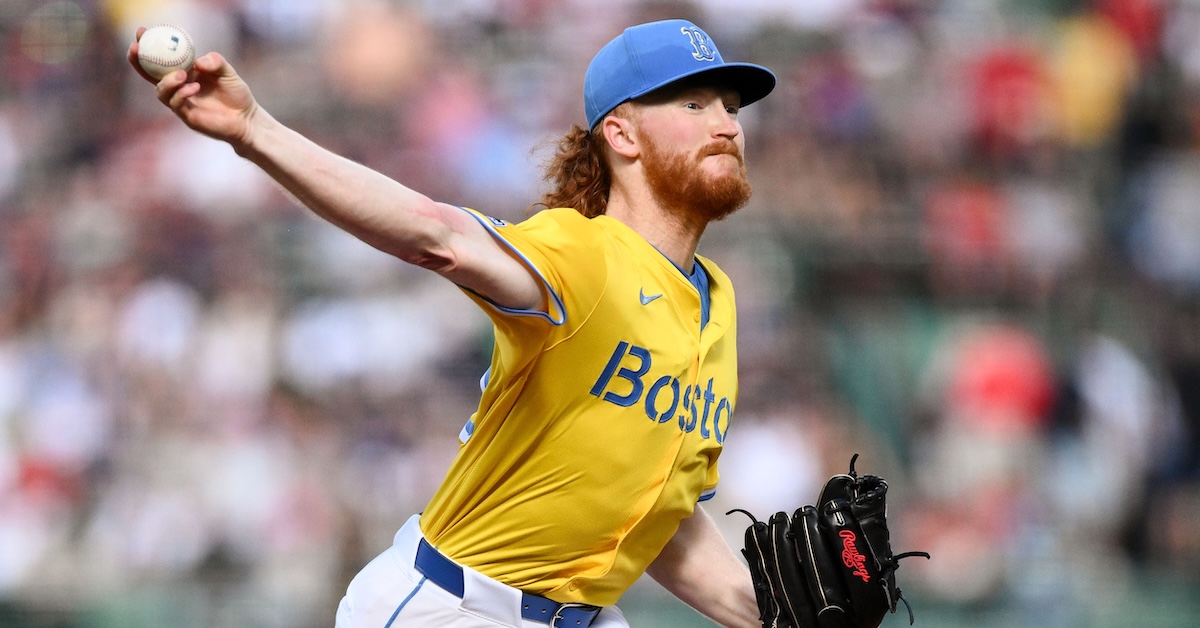
Dustin May is a free agent. And not because he got non-tendered; he’s passed six years of service this season, and hits the open market at the tender age of 28.
I admit this one snuck up on me. May, a highly touted Dodgers prospect, stormed into prominence when he joined the L.A. pitching staff in 2019 at the age of 21. He pitched for the Dodgers in the playoffs that October and started 2020 as the no. 14 prospect in all of baseball, and spent most of the year in the rotation, garnering a few Rookie of the Year votes and making seven appearances during the Dodgers’ run to the World Series. Read the rest of this entry »
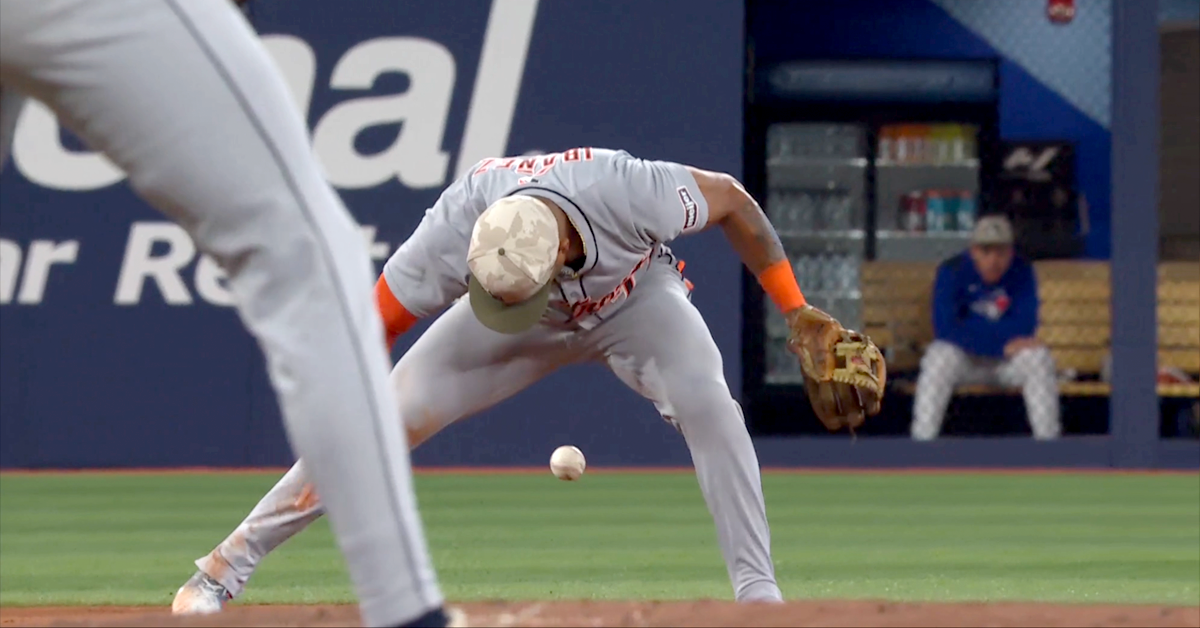
I found this in my notes last week. I have no idea how long it’s been there. It says: “How many times this season has an infielder let the ball go right between their legs?” I had no idea whatsoever. I couldn’t recall the last time I’d seen it. Probably in a highlight from the 1986 World Series.
Baseball is the ultimate scorekeeping sport, and thanks to sites like ours, when you ask how many times any particular event has happened, the answer is usually easy to find. How often does a righty hit a home run off a lefty in the top of the eighth inning with the tying run in the on-deck circle? It took me twice as long to type that question out as it did to look up the answer: It has happened five times in each of the last three years. Easy. But so far as I know, nobody keeps a count of grounders that go right through the wickets.
Errors get classified in certain ways. Our leaderboard tracks fielding and throwing errors. The play-by-play notes on Baseball Savant add in missed-catch errors. Other sources differentiate between reached-on-error errors and runner-advanced errors. But that’s about it. Because they represent arguably the most embarrassing way to commit an error, between-the-legs errors are special in a human sense, but nobody splits them out into their own column because there’s nothing particularly special about them in a baseball sense. At least, you wouldn’t think so initially. Read the rest of this entry »
The following article is part of my ongoing look at the candidates on the 2026 Contemporary Baseball Era Committee ballot. Originally written for the 2015 election at SI.com, it has been updated to reflect recent voting results as well as additional research. For a detailed introduction to this year’s ballot, use the navigation tool above. An introduction to JAWS can be found here.
Wherever Gary Sheffield went, he made noise, both with his bat and his voice. For the better part of two decades, he ranked among the game’s most dangerous hitters, a slugger with a keen batting eye and a penchant for contact that belied his quick, violent swing. For even longer than that, he was one of the game’s most outspoken players, unafraid to speak up when he felt he was being wronged and unwilling to endure a situation that wasn’t to his liking. He was a polarizing player, and hardly one for the faint of heart.
At the plate, Sheffield was viscerally impressive like few others. With his bat twitching back and forth like the tail of a tiger waiting to pounce, he was pure menace in the batter’s box. He won a batting title, launched over 500 home runs — he had 14 seasons with at least 20 and eight with at least 30 — and put many a third base coach in peril with some of the most terrifying foul balls anyone has ever seen. For as violent as his swing may have been, it was hardly wild; not until his late 30s did he strike out more than 80 times in a season, and in his prime, he walked far more often than he struck out.
Bill James wrote of Sheffield in the 2019 Bill James Handbook:
“In all the years that I have been with the Red Sox, 16 years now, there has never been a player the Red Sox were more concerned about, as an opponent, than Gary Sheffield. Sheffield was a dynamite hitter and a fierce competitor… When he was in the game, you knew exactly where he was from the first pitch to the last pitch. He conceded nothing; he was looking not only to beat you, but to embarrass you. He was on the highest level.”
Two decades before that, James referred to Sheffield as “an urban legend in his own mind,” referencing the slugger’s penchant for controversy. Sheffield found it before he ever reached the majors through his connection to his uncle, Dwight Gooden. He was drafted and developed by the Brewers, who had no idea how to handle such a volatile player and wound up doing far more harm than good. Small wonder then that from the time he was sent down midway through his rookie season after being accused of faking an injury, he was mistrustful of team management and wanted out. And when he wanted out — of Milwaukee, Los Angeles, or New York — he let everyone know it, and if a bridge had to burn, so be it; it was Festivus every day for Sheffield, who was always willing to air his grievances. Read the rest of this entry »
Jay Jaffe: Good afternoon, folks! Welcome to the first offseason edition of my weekly chat.
12:02
Jay Jaffe: I’ve reached the midway point in my evaluation of the Contemporary Baseball Era Committee ballot, which was released a week ago. Festivus has come early, for today I took another look at Gary Sheffield, his never-ending list of grievances, and his prodigious offensive production https://blogs.fangraphs.com/2026-contemporary-baseball-era-committee-c…
Ben and Meg break down the federal indictment of Emmanuel Clase and Luis L. Ortiz, including the documentary and statistical evidence of their alleged pitch-fixing, the implications for the sport and sports gambling, the unanswered questions, the dark comedy, and more (plus a real-time reaction to an MLB betting reform and an answer to an email about parenting in the age of ubiquitous sports-betting ads).




 Sponsor Us on Patreon
 Give a Gift Subscription
 Email Us: podcast@fangraphs.com
 Effectively Wild Subreddit
 Effectively Wild Wiki
 Apple Podcasts Feed
  Spotify Feed
 YouTube Playlist
 Facebook Group
 Bluesky Account
 Twitter Account
 Get Our Merch!


 Jay Jaffe