Jake Mangum is impressing as a 29-year-old rookie. Seven years after being drafted by the New York Mets out of Mississippi State University following four collegiate seasons, the switch-hitting outfielder has slashed .303/.346/.370 with a 109 wRC+ over 128 plate appearances with the Tampa Bay Rays. Moreover, Mangum has swiped 10 bags without being caught.
His path to pro ball included being bypassed in the draft out of high school, then opting not to sign after being a low-round pick following his sophomore and junior seasons. One of the teams that called his name didn’t make an offer so much as wish him well. “Good luck with school next year,” was their message to the high-average, low-power Bulldog.
Mangum went to finish his college career with a .357/.420/.457 slash line, as well as a Southeastern Conference-record 383 hits. He also finished with a degree in business administration — although that’s not something he expects to take advantage of down the road. Paying days have a shelf life, but he plans to “stay around the game forever.”
A lack of balls over fences contributed heavily to the limited interest he received from scouts. When he finally inked a contract, the 2019 fourth-rounder had gone deep just five times in 1,200 plate appearances.
“It was always the power piece,” explained Mangum, whose ledger now includes 24 home runs in the minors and one in the majors. “They just didn’t see it playing in professional baseball, my not having enough power. I’m stronger now, but to be honest with you, I don’t try to hit home runs. I try to hit for a high average and help the team with good defense and base running.”
It was a beautiful night here in Brooklyn on Wednesday, and although I couldn’t make it to Citi Field in time for Mets-Nationals, I decided to go for a long walk and then stop at a local sports bar to read and watch some baseball. Naturally, the Mets were on one of the TVs behind the bar, while the other was reserved for the Yankees, who were set to play the Royals a little while later. That was a bummer for the two Red Sox fans sitting next to me, Mike and Kathleen, but they were resourceful. The bar has free wifi, so Mike pulled up Boston’s game against the Rays on his phone. He and Kathleen didn’t know one another, but they recognized each other as fellow Sox fans from the weekend prior, when they were both at the same bar to watch Yankees-Red Sox. He moved over to the stool between Kathleen and I, so that she and her partner Harry could also watch the game. The four of us started talking, and it turns out Harry and I went to the same high school, though he graduated four years ahead of me. Small world!
Anyway, sometime between Marcelo Mayer’s first and second home run of the game, Kathleen said to me, “The best thing about Red Sox fans is we simultaneously love and hate the Sox, and we love to hate them, too.” I bring this up because I thought about her description of Boston fans as I sat down to answer the first question in this week’s mailbag.
We’ll get to that in a moment, but before we do, I’d like to remind all of you that while anyone can submit a question, this mailbag is exclusive to FanGraphs Members. If you aren’t yet a Member and would like to keep reading, you can sign up for a Membership here. It’s the best way to both experience the site and support our staff, and it comes with a bunch of other great benefits. Also, if you’d like to ask a question for next week’s mailbag, send me an email at mailbag@fangraphs.com. Read the rest of this entry »
Ben Lindbergh and Meg Rowley banter about Tarik Skubal dialing down his top-end fastball (and dominating nonetheless), Jazz Chisholm Jr.’s self-described 70 percent effort level, Ronald Acuña Jr. hitting more and running less, whether the Blue Jays are getting what they wanted out of Vladimir Guerrero Jr., the debut of Jacob Misiorowski, Aaron Civale’s trade request (and trade), whether it matters that the baseball is flying less far, and a correction about Barrys, plus listener emails (1:13:20) about guaranteed WAR in the amateur draft, whether Mike Trout will wind up being the best Mike, and what makes a play (or a player) impressive.
If you played baseball as a kid, you’re familiar with the phrase “a walk’s as good as a hit.” Your coaches probably shouted it at you. You probably shouted it yourself when your friend was at the plate with a three-ball count. Shouting a bromide is one thing, but believing it is another. We didn’t really buy it as kids, and for a while now, we’ve been able to quantify the difference. This season, hits have a wOBA of 1.129, while walks have a wOBA of .694. A walk, it turns out, is 61.5% as good as a hit. All of our coaches were liars.
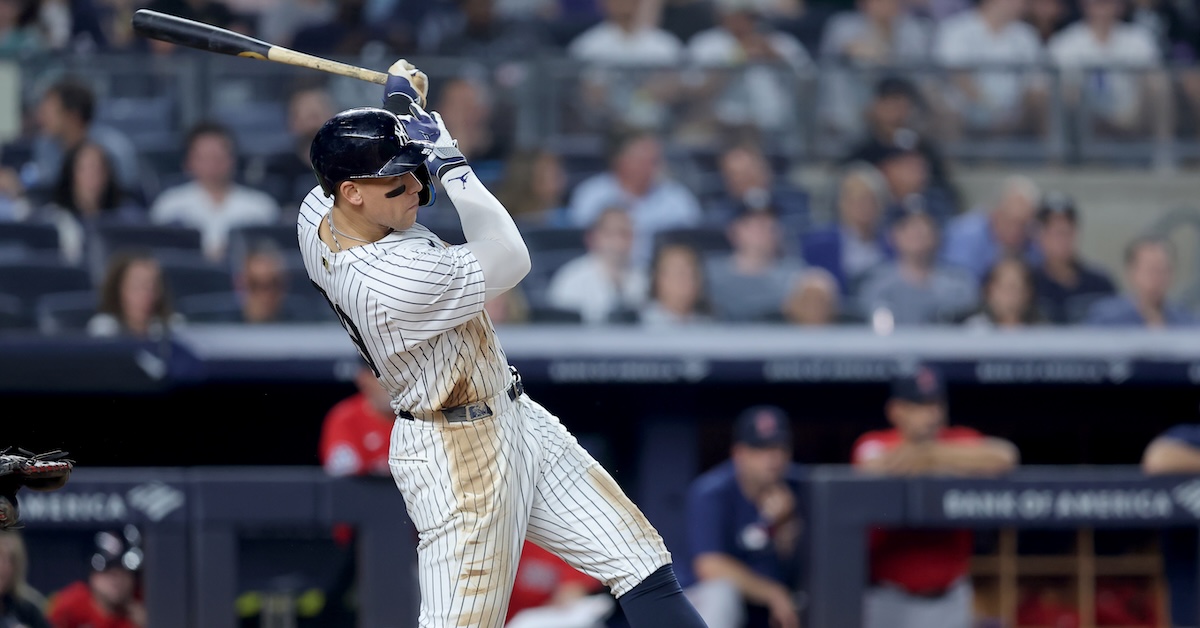
On Wednesday, I was checking to see where Alejandro Kirk’s wOBAcon – his wOBA when he makes contact – ranked in relation to the rest of the league. The top of the list caught my eye. It couldn’t help but catch my eye. Aaron Judge is so far ahead of the pack he may as well be playing a different sport. He’s currently running a .685 wOBAcon. The difference between Judge and Cal Raleigh in second place is the same as the difference between Raleigh and Brandon Lowe in 47th place. Here’s the most shocking way I can find to express just how absurd Aaron Judge’s wOBAcon is right now: When Aaron Judge puts the ball in play, he’s nearly as good as a walk.
I know that may not sound particularly sexy, but that number is remarkable. A walk is a sure thing. It’s a bird in the hand. Putting the ball in play is a gamble. The league as a whole has a .362 wOBA on batted balls. A walk is nearly twice as valuable. This is why every couple years we write a whole mess of articles about how if batters were really smart, they’d juststopswinging. But there’s Aaron Judge, so, so, very close to having his batted balls be as valuable as a walk. He’s just nine points of wOBA away. That’s nothing. It’s the value of a popup to the second baseman.
If all this talk about Judge and the value of a walk is giving you déjà vu, that’s because just about a month ago, Ben Clemens wrote a whole article about when it makes sense to walk Judge intentionally. We’ll circle back to that point, but the first thing I did when I saw that number was try to figure out just how special it was. Turns out it’s pretty special.
I checked the pitch tracking era first. Since 2008, Judge is the only player in baseball to break a .600 wOBAcon. He’s done it three times, going .600 in 2017, .602 in 2022, and .617 in 2024. Mike Trout’s never done it. Shohei Ohtani, Yordan Alvarez, no one but Aaron Judge has done it, and this season he’s surpassing his 2024 mark by, at present, 68 points. Judge will likely cool off at some point, and over at MLB.com, Mike Petriello has addressed how much of his sky-high BABIP is the result of luck and how much is just coming from the fact that it’s really hard to field a ball that’s been hit at the speed of sound.
Still, this made me really curious. I started wondering whether anyone had ever been as valuable as a walk when they put the ball in play. That meant a lot of math, because wOBAcon isn’t readily available for players who preceded the pitch tracking era. I wanted to go all the way back to 1901, so I had to reverse engineer it by myself (and when I say “by myself,” I mean “with the help of Ben Clemens because he’s good at math”). I pulled the stats for every qualified player-season since 1901, so I had everybody’s wOBA and counting stats. I split each player’s plate appearances into three sections: balls in play, strikeouts, and walks/hit by pitches. To calculate the number of balls in play, I took at-bats, subtracted strikeouts, then added the number of sacrifices. Then I got to the algebra and set up an equation that looked like this:
Total wOBA = (BIPwOBA x BIP%) + (BBwOBA x BB%) + (KwOBA x K%)
(Since strikeouts have a wOBA of zero, I didn’t actually need the third part. It would always equal zero.) At that point, my numbers didn’t look quite right, so I went to Ben, who taught me that for arcane reasons, hit by pitches have a different wOBA from walks and intentional walks don’t count toward wOBA at all, so I had to rework my calculations some.
The numbers still weren’t perfect, sometimes because of rounding issues, but more often because we don’t have all the data, like intentional walks and sacrifices, for older players. With the help of Stathead’s Katie Sharp, I incorporated intentional walk data from Retrosheet to the players in the top 20. The Retrosheet data isn’t official, but it made the numbers more accurate, and I care more about that. So keep in mind that this isn’t iron-clad, but here you go, the highest wOBAcons ever recorded in a qualified season:
Eight of the top spots belong to Aaron Judge and Babe Ruth; Ruth’s 1927 Murderer’s Row season also ranked 11th at .589. Judge is only one point above the all-time record, so he’ll almost certainly lose it at some point over the next 97 games, but he’s still 50 points above the third-place entry and 90 points above 10th place. He’s staying on this top 10 list unless something horrible happens.
More importantly, the answer to our question is “no.” Nobody’s has ever been as valuable as a walk when they put the ball in play. As a matter of fact, Judge is closer this season than anyone else has ever been. He may not beat Ruth in terms of overall wOBAcon, but keep in mind that wOBA is a seasonal constant. It changes every year based on the run-scoring environment. Back in 1920, walks had a wOBA of .741. This season, Judge’s wOBAcon is 98.7% the value of a walk. Ruth was at 92.3% in 1920, and that was the only season when anyone had ever reached 90%. If we look at things that way, Judge has two of the top three seasons of all-time, plus his current campaign, which is in first place and will likely stay there even after his BABIP luck runs out:
Judge still has a shot at reaching the magic number, though he’d have to hit even better to do so. I don’t think that’s really something we can ask of Judge right now. It’d kind of be like if you were an Athenian and Pheidippides had just run all the way from Marathon and shouted, “We win!” and collapsed and died, and then you started nudging him with your sandal and saying, “That’s great buddy, but now that you’re back, could you run and get me a sandwich?”
Still, let’s get back to Ben’s article. Ben combined Judge’s stats over the last four seasons with a run expectancy matrix and win expectancy numbers to figure out when it was smarter to put Judge on than to let him hit. Ben allowed for a wider range, but the math indicated that the answer was very narrow: in the ninth inning of a one-run game, with two outs and a runner on second or third. That’s it. Other than that situation, it’s smarter to pitch to Judge than to walk him. A lot of this discussion is centered around risk aversion. It’s scary to give up a 500-foot homer to Aaron Judge, and that makes you overreact, giving him a free base when the numbers say that’s not the smart move. But maybe we’re right to be scared of Aaron Judge. First of all, he’s run a ludicrous 239 wRC+ since that article came out. That’s somehow worse than the comical 248 mark he had at the time, but it also represented an improvement on the numbers that Ben was running. Those numbers went back to 2022, when Judge ran a pathetic 206 wRC+. It makes more sense to walk Judge intentionally now than it did back in May.
Knowing all this, I’d like to run a quick scenario by you. Say you’re a pitcher facing down Aaron Judge. First of all, I’m so sorry. No one deserves to be in this position, and you should check and see whether you have any legal recourse against whoever got you into this mess. Second, take a moment to ask yourself a question: Can I strike out Aaron Judge? Seriously. Judge strikes out at a roughly average rate, which means that nearly 77% of the time that he comes to the plate, he doesn’t strike out. So be honest with yourself. Do you have it today? Is the slider biting? Does the ball feel good in your hand, or are the seams a little flatter than you’d like them to be? Did you sleep OK last night? If your answer to any of those questions is something other than, “Hell yeah, let me at him,” then it’s a very firm “no.” If you can strike out Aaron Judge, then by all means, pitch to him. You’ve got a 51% chance of getting him out and just a 15% chance of giving up extra bases. But if you don’t feel like you can strike him out, if your choice is either a walk or a batted ball, then you should probably just put him on. He’s 99% as good as a walk anyway.
Welcome to another edition of Five Things I Liked (Or Didn’t Like) This Week. I took a week off to indulge in a little French Open binge-watching, and after one of the greatest finals of my lifetime, I was ready to charge back into baseball. That feeling – charging ahead – has been something of a theme across baseball of late. You want speed? Chaos? Huge tools and do-or-die choices? This week’s list is for you. It starts, as usual, with a nod to Zach Lowe of The Ringer for originating this format. It also starts, as everything seems to these days, with a green-and-gold blur.
1. The Flash
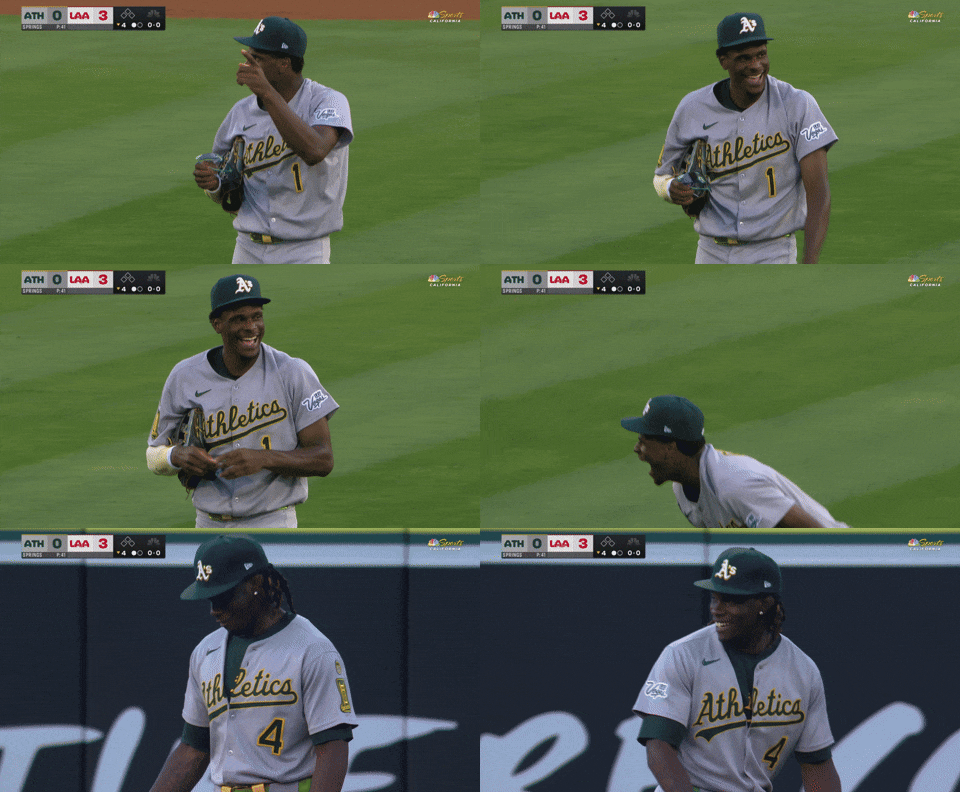
If you turn on a random A’s game of late, you’re liable to see something like this:
And if you’re lucky, something like this afterward:
Denzel Clarke is on quite the heater right now. That spectacular play doesn’t even come close to his greatest major league feat, this absurd home run robbery:
Eric A Longenhagen: Good morning from dangerously hot Tempe, where I am coffee’ing at the kitchen island getting ready to work on Red Sox and Twins lists while prepping for the Combine.
12:07
Eric A Longenhagen: FOr those who missed it, please go read the Rangers list:
Ken: Has Jack Perkins’ performance so far in Vegas moved the needle for you at all in terms of how you view his ability to remain a starting pitcher?
12:11
Eric A Longenhagen: Yes. Ran into him last week as I was working on Mariners and he carved. Physicality looks like he’ll be able to handle it even if he isn’t the most efficient strike thrower. Let’s keep in mind, though, that he’s looked like this (sitting 95-96 t98, plus slider, strikes) for like five weeks, six weeks? It’s not as strong a look as if he’d been doing it since April.
Do you remember the scene from The Benchwarmers when Clark is up to bat, except that he is absolutely nowhere near the plate? Back when I used to catch and would see hitters set up way off the plate, that was always the image that popped into my head. After an internal laugh, I’d give my sign, then take one big side step to the opposite side of where the hitter was standing to make sure my pitcher didn’t come close to fixating on the inner half. Unless you’re swinging a 40-inch bat and simultaneously have the strength of Giancarlo Stanton, you’re not making good contact on anything away. Gabriel Arias is a prime example of this.
In 2025, there hasn’t been a single hitter who stands farther from the plate than Arias. This is a relatively new extreme. Since 2023, Arias has moved farther and farther from the plate, starting at 31.9 inches in 2023, to 33.0 in 2024, to a league-leading 35.4 this season. For context, let’s take a snapshot of the 2025 leaders:
Most of these players are on the very tall side. That’s not to say you have to be tall to stand off the plate, but if the goal is to make sure your barrel aligns with the heart of the plate, it would make sense that the taller players are the ones who, generally, would benefit from having more space between the plate and where they set up. Conversely, when shorter players set up far off the plate, they increase the area they need to cover with their swings while lacking the length to do so.
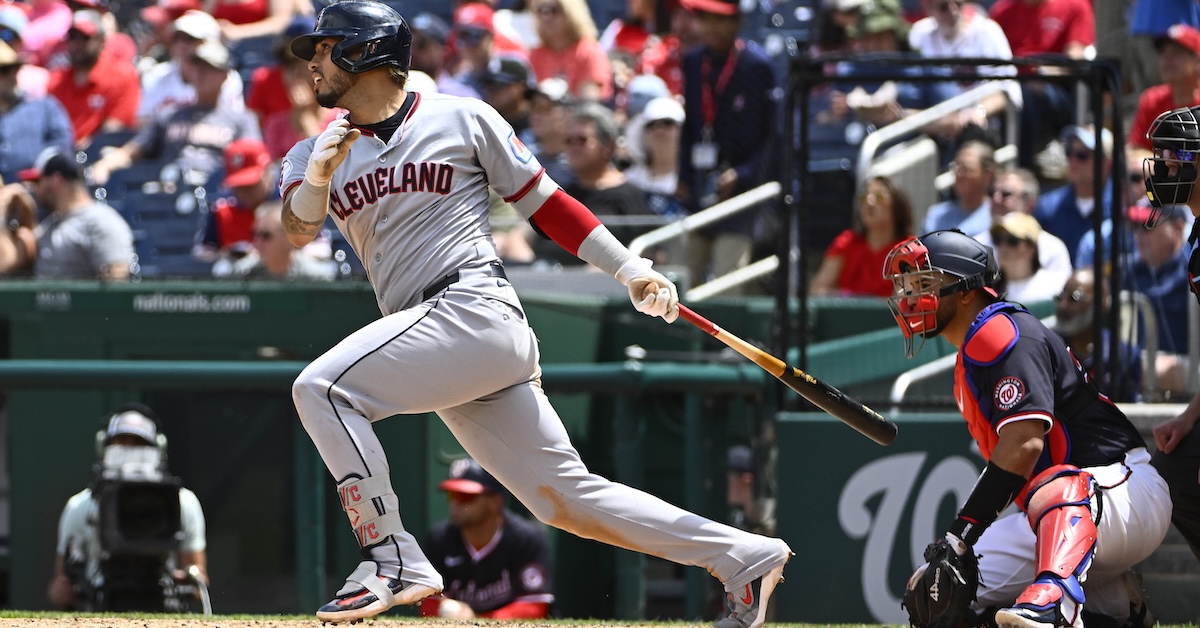
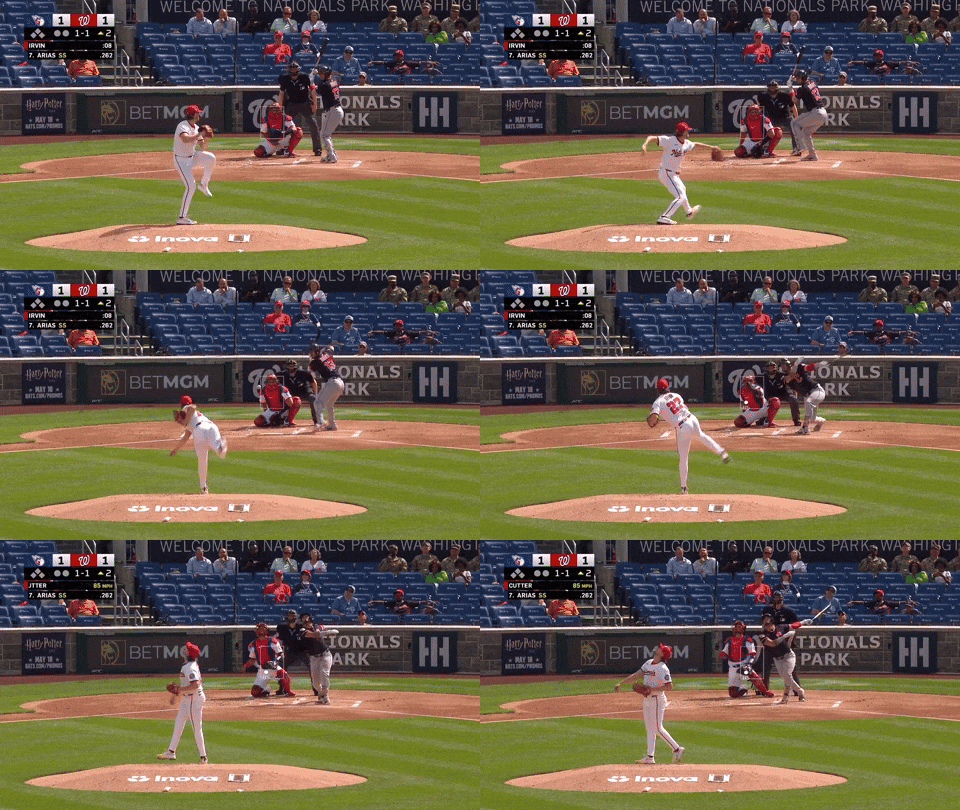
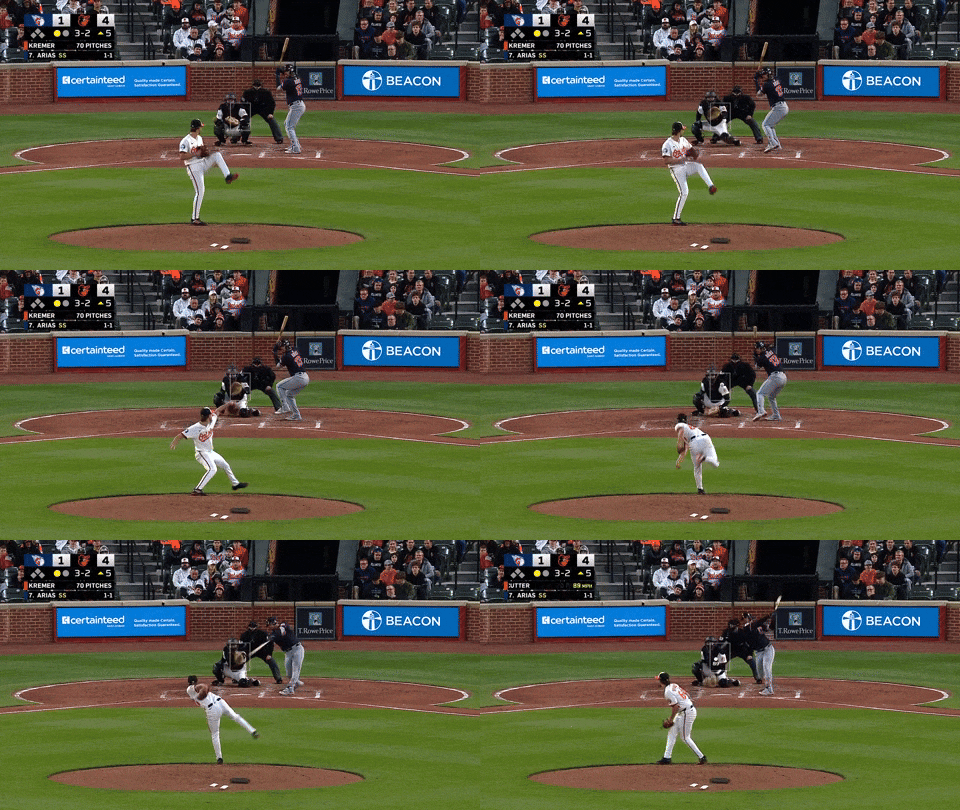
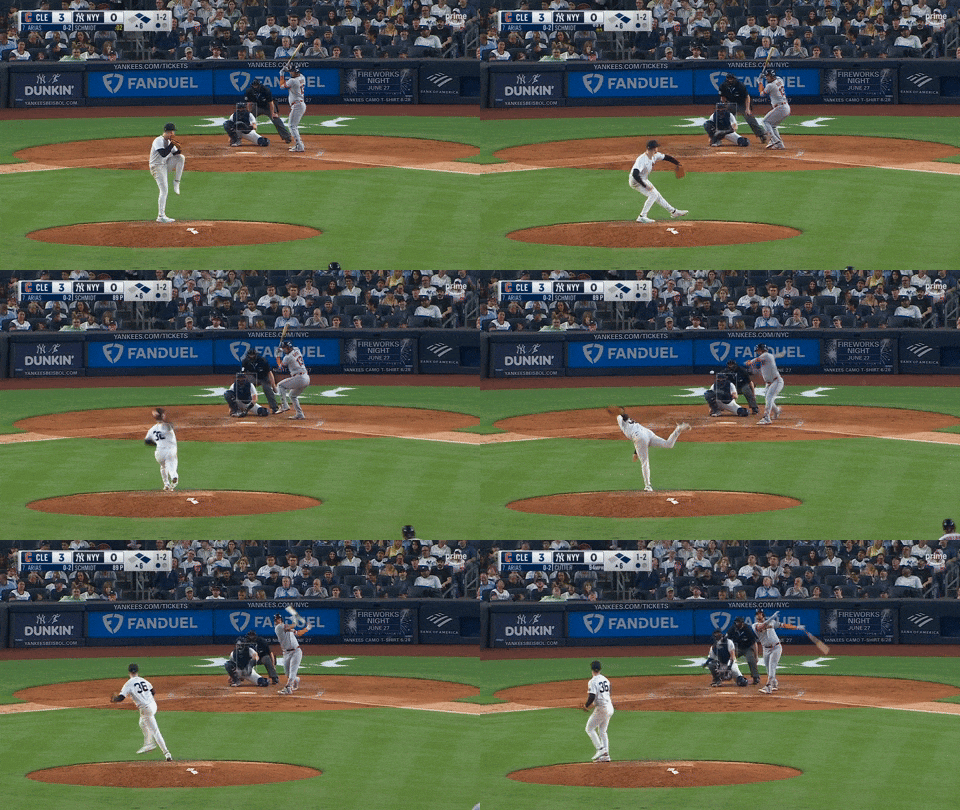
That seems to be what’s happening with Arias, who despite being among the shorter players on this list, is standing nearly two more inches off the plate than the next guy, Paul Goldschmidt, and nearly three more inches off it than Aaron Judge, who is six inches taller than the Guardians infielder. How can Arias possibly reach pitches on the outer third of the plate? Here is an example from a game last week:
If I had any video editing skills, I’d overlay Clark as a comparison to highlight just how far this is. It’s an interesting strategy that needs to be reasoned out. Despite his power potential, Arias entered 2025 with a career 74 wRC+, so it’s understandable he would want to make some changes. Setting up even farther away, though, seemed like a bizarre choice, given his average height for a ballplayer and the way it would expose him to outside pitches. Initially, I thought the new setup would hurt him more than it would help. I mean, why would pitchers ever throw him a pitch over the inner third? But then I noticed Arias’ wRC+ is higher this season than it was in 2023 and 2024, up to 88 as of Thursday morning, which is still quite bad but represents a sizable improvement nonetheless. Maybe he was on to something after all.
To see what’s going on here, let’s first zoom in on how this change is playing out on a zone-by-zone basis. In 2023 and 2024, Arias’ xwOBA against pitches on the outer third was .224 and .248, respectively, putting him near the bottom of the league. That number is nearly the same this year, at .235. I’m surprised it hasn’t gotten worse. Where he’s standing, the outside corner might as well be Narnia.
My best guess for why he’s setting up farther away is he wanted to have a better shot at damaging inside pitches. Perhaps he often felt handcuffed and thought moving off the plate would give him more space to get his barrel on plane and make it easier for him to elevate pitches. How’s that working out for him?
Arias Inner-Third Performance
Season
wOBA
xwOBA
Whiff%
Hard-Hit%
Sweet-Spot%
2023
.262
.306
27.0
49.2
28.8
2024
.319
.245
28.8
38.9
16.7
2025
.362
.401
21.5
54.1
37.8
SOURCE: Baseball Savant
OK, now we’re talking. In his previous two seasons, he was not competitive against pitches on the inner third. He was both whiffing a lot and not balancing it out with a ton of hard-hit balls. This year, he’s flipped the script by whiffing less and hitting the ball hard more often.
On top of that, he’s making sweet-spot contact at an impressive rate, helping him pull off a .436 xwOBACON on the inner third. Of course, that only accounts for his performance against pitches to one-third of the zone, but it’s still an improvement that has propelled his offensive performance from unplayable to bearable.
At some point, though, pitchers are going to have adjust, right? They can no longer beat him inside like they did before, but there’s a large chunk of the zone still available to them. And that area might be larger than just the outer third. Because Arias is standing so far off the plate and looking to turn on inside pitches, he might also have a tough time covering at least some pitches over the middle, too.
Hitters who shift farther away from the plate should still be able to crush middle-middle pitches, but depending on how their swing works, it could be difficult for them to reach either high or low pitches over the middle. Before diving into how Arias’ swing works, let’s see if the data tell us a bit more about that:
Arias Middle-Third Performance
Zone
Season
wOBA
xwOBA
Whiff%
Hard-Hit%
Low-Middle
2023
.313
.392
23.1
58.3
2024
.289
.474
17.9
44.4
2025
.578
.497
29.5
60.0
Middle-Middle
2023
.456
.461
26.9
69.0
2024
.465
.424
18.2
63.2
2025
.264
.387
31.8
56.3
Upper-Middle
2023
.373
.395
43.7
75.0
2024
.366
.394
50.0
75.0
2025
.053
.182
46.5
33.3
SOURCE: Baseball Savant
As expected, Arias’ new location in the box has created another hole over the middle third of the plate. His .053 wOBA and .182 xwOBA up top are absolutely brutal under any circumstances, but they’re especially jarring compared to his .366/.394 from last season. The drop-off alone isn’t entirely uncommon because of the small sample sizes when looking at one-ninth of the zone, but to go from above average to fourth worst in baseball is tough. His numbers have also declined on middle-middle pitches. The .123 margin between his wOBA and xwOBA says bad luck may be involved, but there are many hitters with much wider gaps between their actual numbers and their expected one. However, it’s also interesting to see Arias’ improvement on low-middle pitches. He’s always been good against these pitches, but now he’s demolishing them far more frequently than before.
Even so, that leaves a massive area for opposing pitchers to target, and their pitch mix to get Arias out should be fairly simple: Overwhelm him with heaters up, then put him away with soft stuff outside. He has a .177 xwOBA against offspeed pitches and a .234 xwOBA against breaking balls this season. Those numbers are even worse on the outer third, with a .127 xwOBA against offspeed and a .128 xwOBA against breakers. So far, pitchers don’t seem to be giving him a noticeably different pitch mix compared to how they attacked him in other seasons, or even earlier this year, but they are definitely starting to throw more offspeed pitches to locations that are farther away. Maybe they’re catching on, maybe not. Time will tell.
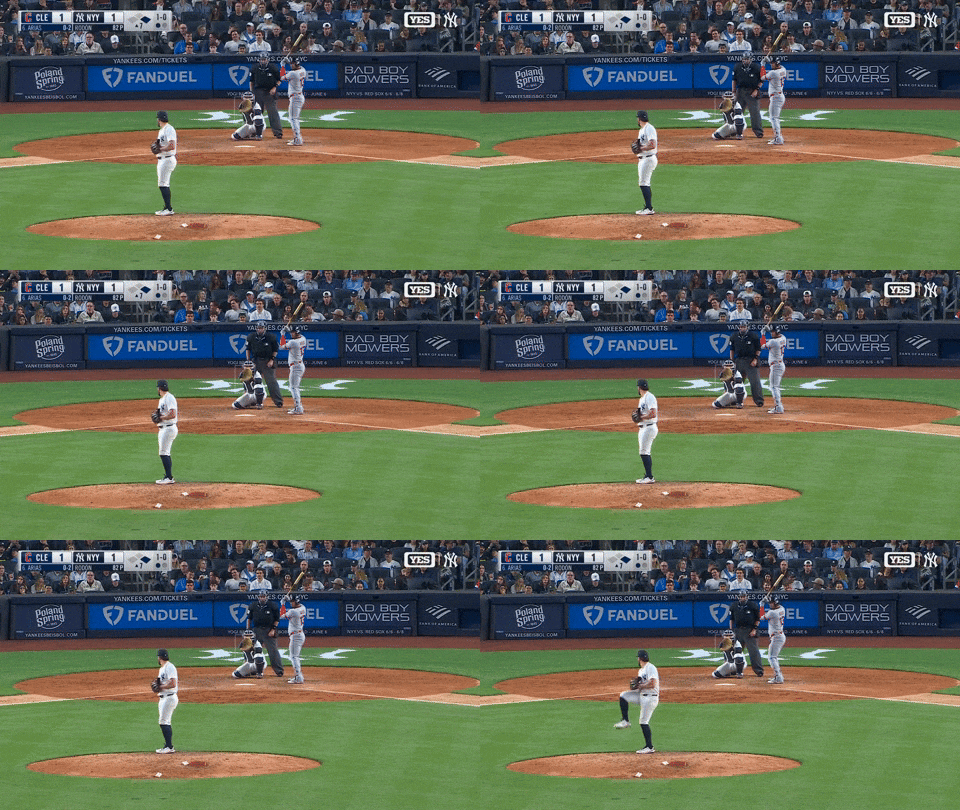
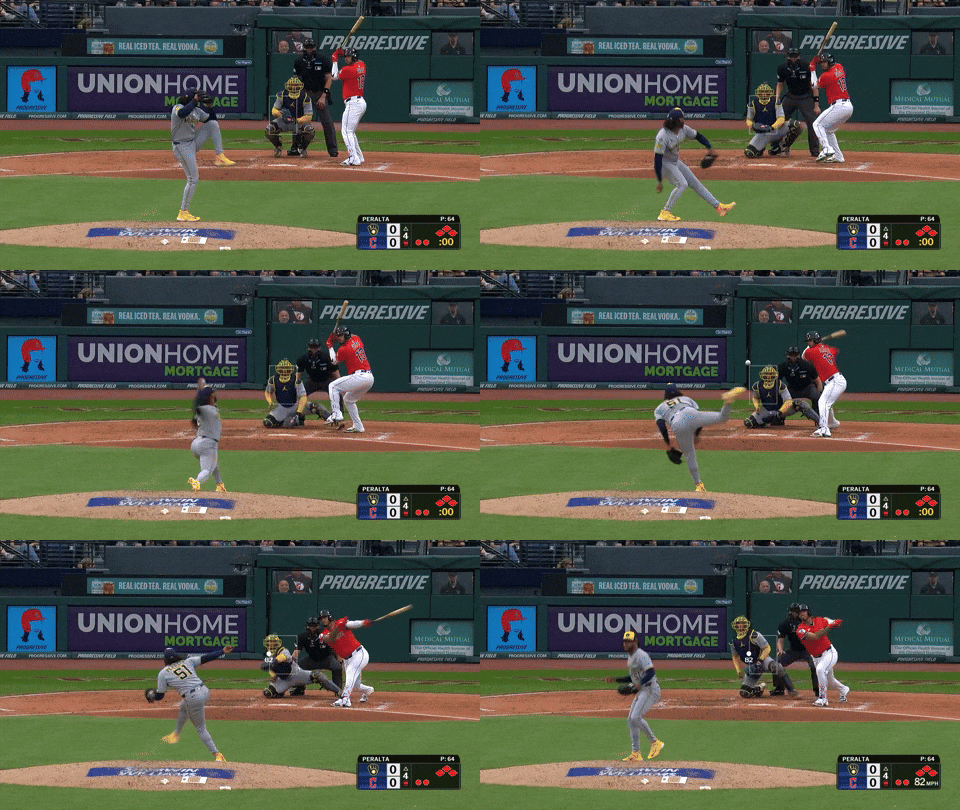
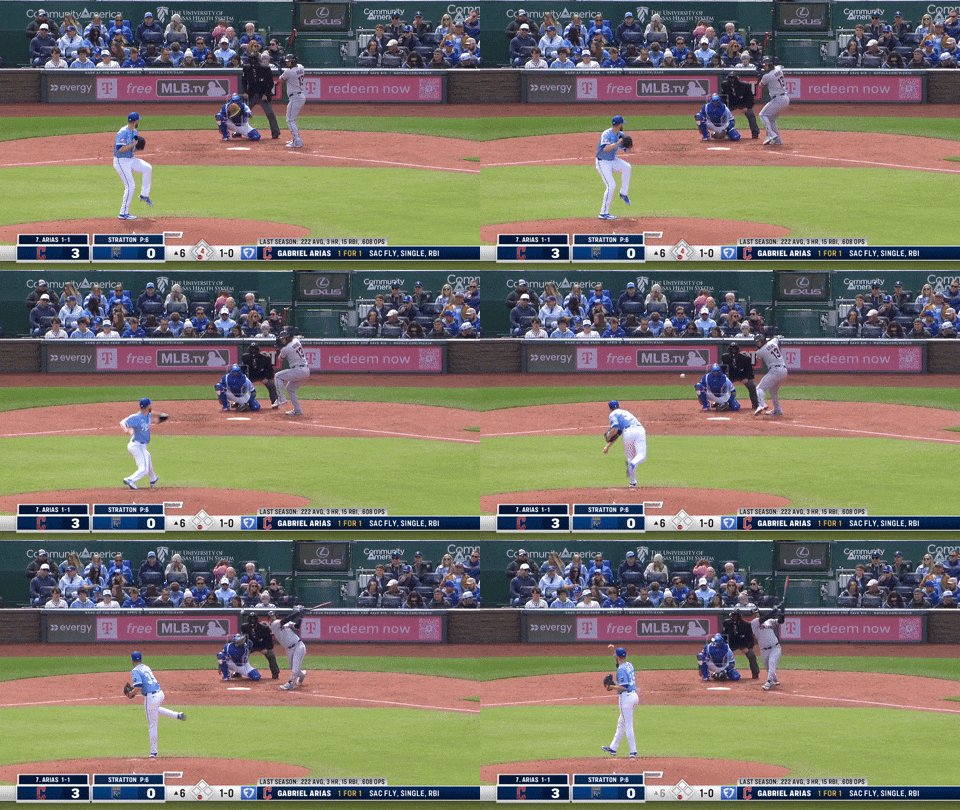
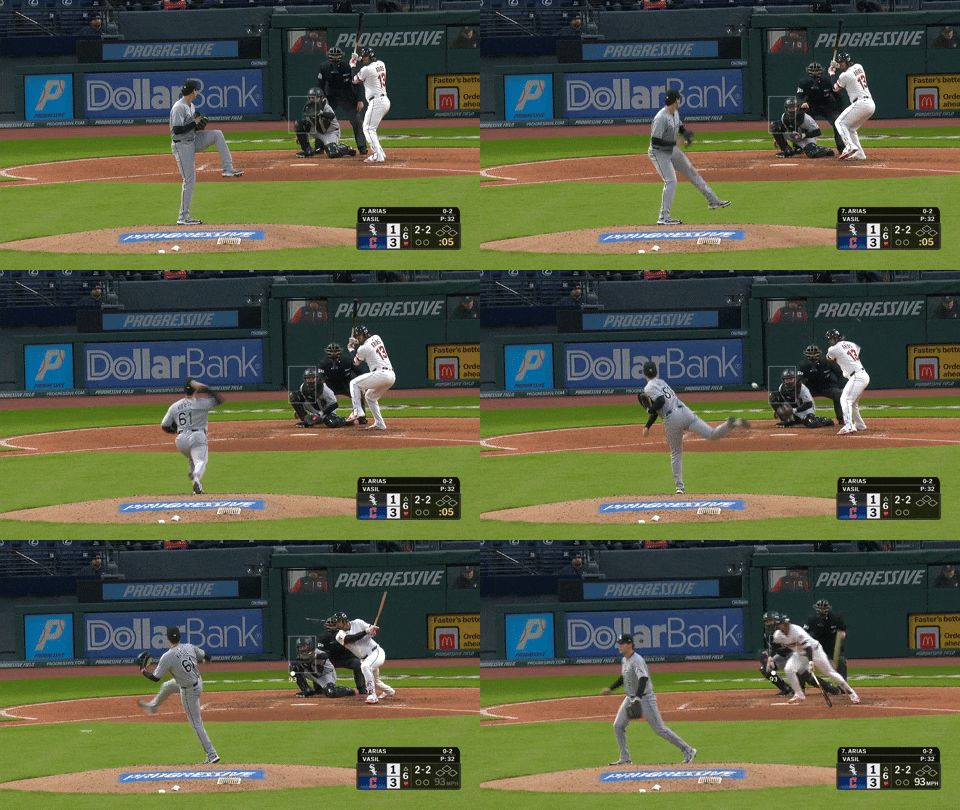
Here is some video of swings he’s taken against outer-third pitches:
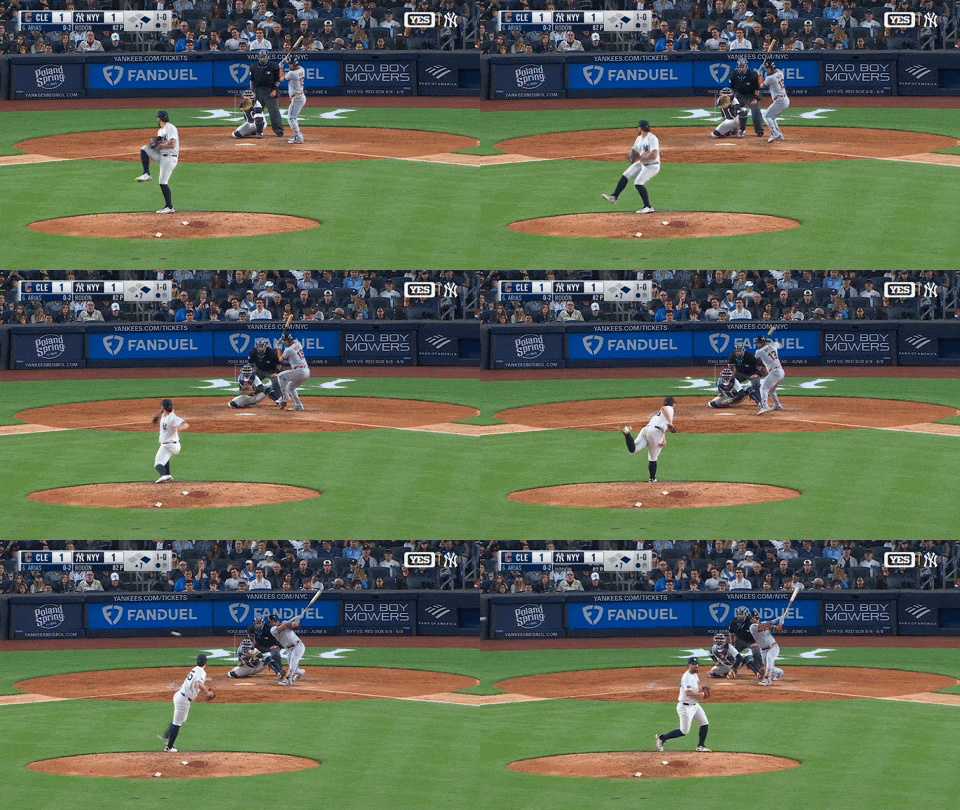
Almost everything is off the end of the bat. Any right-handed pitcher that can locate away is going to have a good shot at beating Arias. In almost all of these clips, he’s making contact off the end of the bat and/or swinging off balance. His closed stride helps him cover pitches that are closer to the middle — like the one from Carlos Rodón in the final GIF above — because his swing path is moving more toward the heart of the plate, but his barrel doesn’t stay in the hitting zone on an upward trajectory long enough to have much room for error. So unless he perfectly times his swing to connect with these pitches over the middle, he’s either not going to square them up or he’ll miss them altogether.
It’s clear Arias is trying to maximize his strengths, damaging inner-third and low-middle pitches, even if it means making his weaknesses even worse. So far, that trade-off is working for him. Although he remains below average at the plate, he’s a better hitter now than he was before; that improvement is enough for him to be a valuable player overall because he’s a good defender at multiple infield positions and he runs the bases well. But we’re only a third of the way through the season, and I have my doubts about how sustainable this will be for him. The holes in his plate coverage should be large enough for major league pitchers to exploit. If (read: when) that happens, Arias is going to have to punish every location mistake they make, which is difficult for even the most talented of hitters, or he’s going to have to continue to refine his game. Maybe that means closing off his stride even more to get to more pitches over the middle, or altering his swing to remain on an upward trajectory through the zone for a longer period of time. If his current setup proves to be too extreme, he can always slide ever so slightly closer to the plate. Not too much, just enough to cover a bit more of the zone without compromising his ability to turn on inner-third pitches.
But we’re not there yet. The most important thing to take away from this is Arias has shown he can make a fairly drastic adjustment and have it work as intended. So when pitchers inevitably adjust to him, perhaps he can do it again.
Below is an analysis of the prospects in the farm system of the Seattle Mariners. Scouting reports were compiled with information provided by industry sources as well as my own observations. This is the fifth year we’re delineating between two anticipated relief roles, the abbreviations for which you’ll see in the “position” column below: MIRP for multi-inning relief pitchers, and SIRP for single-inning relief pitchers. The ETAs listed generally correspond to the year a player has to be added to the 40-man roster to avoid being made eligible for the Rule 5 draft. Manual adjustments are made where they seem appropriate, but we use that as a rule of thumb.
A quick overview of what FV (Future Value) means can be found here. A much deeper overview can be found here.
All of the ranked prospects below also appear on The Board, a resource the site offers featuring sortable scouting information for every organization. It has more details (and updated TrackMan data from various sources) than this article and integrates every team’s list so readers can compare prospects across farm systems. It can be found here. Read the rest of this entry »
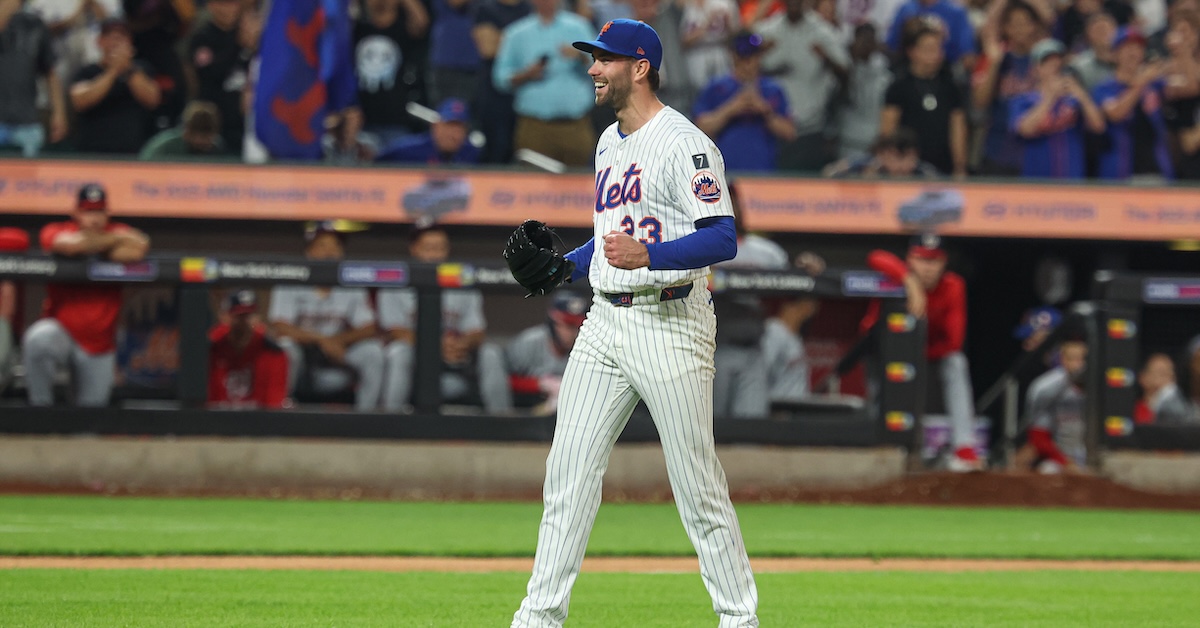
In 2023, Mets left-hander David Peterson struck out 128 batters in 111 innings. Peterson’s strikeout rate that year, 26.0%, was 27th in the league out of 127 pitchers who threw 100 or more innings. He was tied with Zac Gallen, not far behind Luis Castillo, Gerrit Cole, and Zack Wheeler.
The next year, Peterson’s strikeout rate dropped by more than six points, to 19.8%, but he shaved three-quarters of a run off his FIP, and more than two runs off his ERA. This year, Peterson is striking out 21.5% of opponents, and after Wednesday night’s complete-game shutout of the Nationals, his ERA is 2.49, which is 14th among qualified starters.
But I thought striking batters out was good! How did Peterson turn into this unhittable monster while running a lower strikeout rate than Shane Baz? Read the rest of this entry »
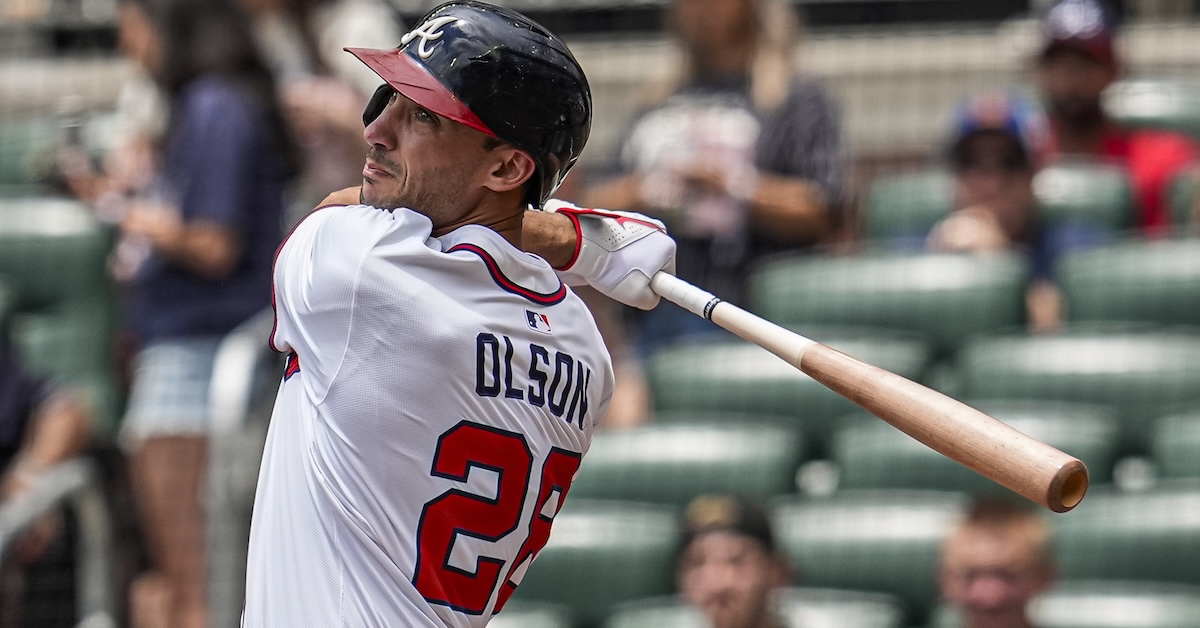
Matt Olson is having an outstanding career. Since breaking into the big leagues late in the 2016 season, the 31-year-old first baseman has blasted 273 home runs — including 54 in 2023 — while logging a 132 wRC+. A left-handed hitter, he’s garnered two All-Star nods, two Gold Gloves, and one Silver Slugger award. Originally with the Oakland Athletics, Olson has worn an Atlanta Braves uniform since they acquired him via trade in March 2022.
He was a promising-yet-polarizing prospect when Kiley McDaniel ranked him second behind Franklin Barreto on our 2015 Athletics Top Prospect list. Olson’s raw power was obvious, but there were also question marks. While some scouts were bullish on his future, others had their reservations. Drafted 47th overall in 2012 out of Parkview High School in Lilburn, Georgia, Olson had a degree of boom-or-bust in his profile.
What did Olson’s February 2015 FanGraphs scouting report look like? Moreover, what does he think about it all these years later? Wanting to find out, I shared some of what McDaniel wrote and asked Olson to respond to it.
———
“Olson has some pedigree as a former sandwich pick out of an Atlanta-area high school.”
“Once you get into pro ball it doesn’t matter too much,” Olson said. “At the same time, organizationally they kind of care more about the investment that is put into a guy than the player actually playing the game. As far as [having signed out of high school], you’re only playing 50 games in college, as opposed to 140 in the minors. As a hitter, I think it can be beneficial to get out there and get the day in, day out a little bit sooner.”
“He had a huge year in the Cal league last year and he has some big tools, headlined by easy plus power from the left side.”Read the rest of this entry »



 Sponsor Us on Patreon
 Give a Gift Subscription
 EW Subreddit
 Effectively Wild Wiki
 iTunes Feed
 Spotify Feed
 Facebook Group
 Bluesky Account
 Twitter Account
 Get Our Merch!