Matt Blewett, Chet Strange, Bruce Kluckhohn-Imagn Images
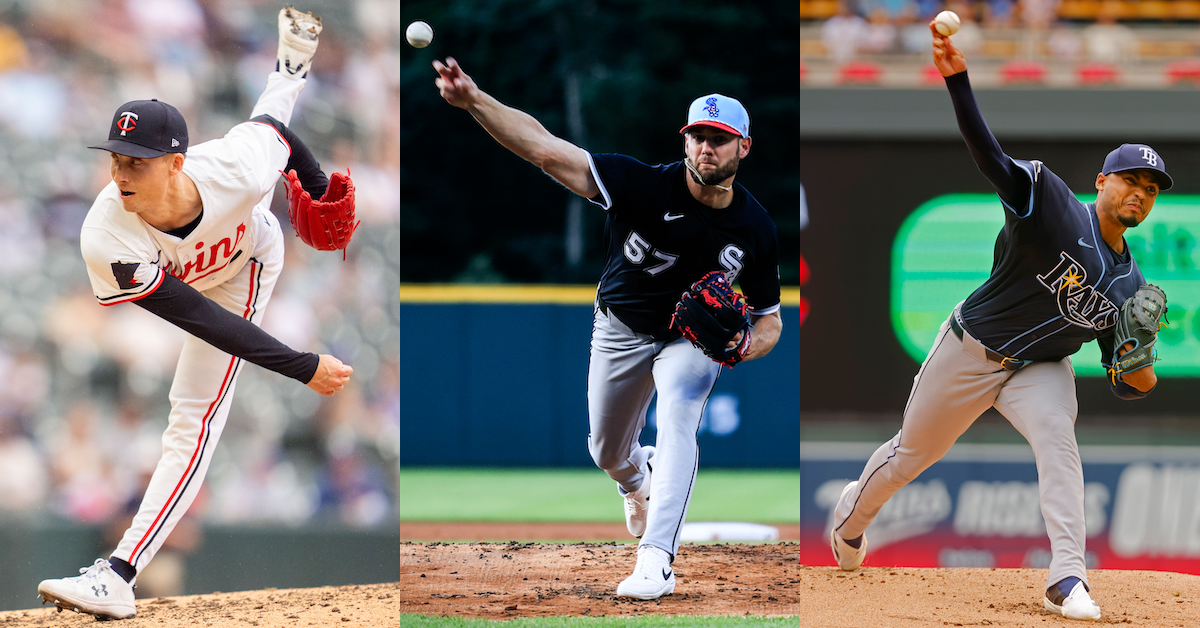
I was starting to get worried that Griffin Jax was going to be left behind in the Twins’ wholesale liquidation of their bullpen. Fear not; the hardest thrower in the Air Force Reserve is headed out after all. The Rays currently sit two games under .500 and 3 1/2 games out of a Wild Card spot, with a 9.9% chance of making the playoffs. That long-shot contender status did not dampen their enthusiasm for Jax in the slightest. Tampa Bay sent the talented but inconsistent starter Taj Bradley to Minnesota in exchange for Jax, who is under team control through 2027.
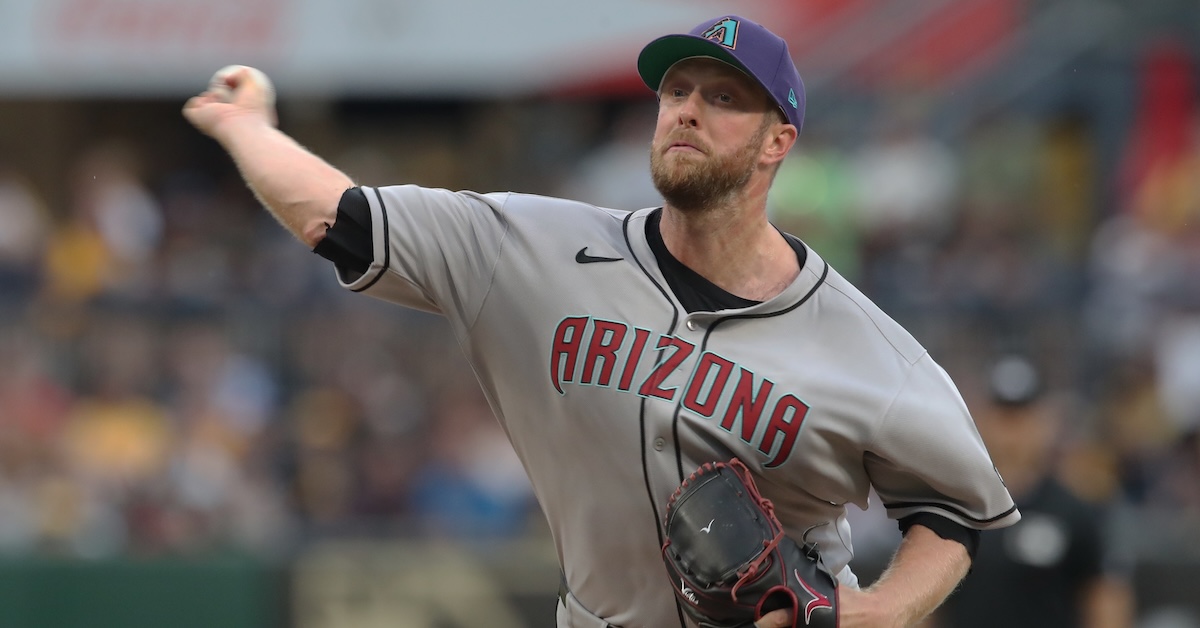
On June 30, the Rangers lost to fall to 41-44, 10th place in the American League. Then they turned it on. Since the calendar flipped to July, they’ve gone 16-8 and rocketed into the playoff picture. They’re tied with the Mariners for the last AL Wild Card spot. With their sights now set on thriving in October, they needed to reinforce a pitching staff that has been quite good up top but got shakier as you went down the depth chart, and the Diamondbacks were happy to oblige. As Ken Rosenthal first reported, the Rangers are getting Merrill Kelly in exchange for Kohl Drake, Mitch Bratt, and David Hagaman. They also acquired Danny Coulombe and Phil Maton in separate deals to shore up the middle of their bullpen.
Texas has a famous starting rotation. The two stars, Jacob deGrom and Nathan Eovaldi, need no introduction. Second on the team in innings, slightly ahead of Eovaldi? That’d be World Series winner Patrick Corbin, famous both for his high highs and low lows. The back of the rotation? Jack Leiter and Kumar Rocker, famous college teammates before they were famous prospect teammates. But Leiter and Rocker have been flat this year, and Corbin was bad enough for long enough that I’d be a little scared of counting on him. Tyler Mahle, another celebrated Rangers starter, has been out since June. Jon Gray is headed for free agency and has perhaps been banished to the bullpen for the remainder of 2025. And it’s not like deGrom has been the paragon of health over the last few years.
Kelly lengthens the playoff-ready portion of Texas’s rotation immediately. His career 3.74 ERA and 3.97 FIP are accurate representations of his work, as are his 22% strikeout rate and 7.4% walk rate. In other words, he’s a perfect mid-rotation arm, better than average (he’s managed a 3.22 ERA and 3.53 FIP this season) but squarely short of an ace. He’s 36 and a free agent after this year, which limits his return somewhat, but he’s a dependable playoff starter and thus a very desirable deadline target. Read the rest of this entry »
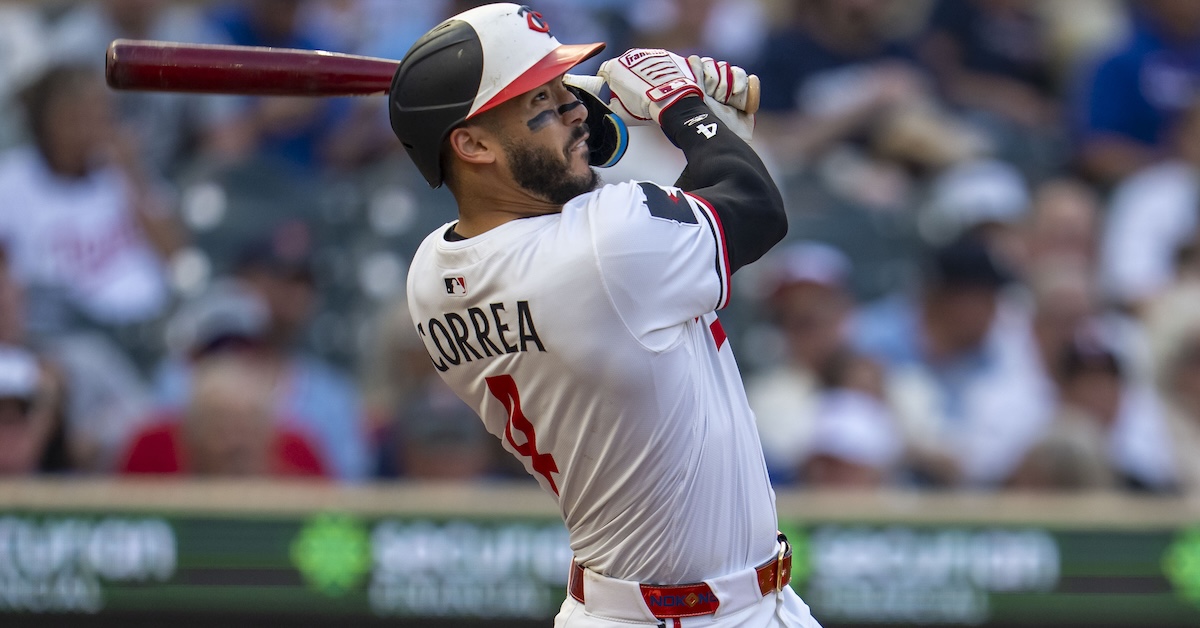
I was a young baseball writer working in Houston when Carlos Correa came up with the Astros. At the time, I was convinced that this 6-foot-4 mountain of a man with a massive throwing arm but unimpressive foot speed would end up at third base before too long. A lot has happened since then. When fellow shortstop prospect Alex Bregman got promoted a year later, it was Bregman, not Correa, who slid over to third. From there, Correa developed into a Platinum Glove winner and a consistent plus-10 defender or better.
Then Correa left the Astros entirely and stayed away after a successful one-season audition with the Twins. Even after a reunion with Houston was mooted in the lead-up to the deadline, the scuttlebutt said it wasn’t happening and the Astros traded forRamón Urías to fill the Isaac Paredes-shaped hole in the infield.
But after all those bumps in the road, and after 10 years of waiting, I turned out to be right after all: Correa is headed back to Houston, along with $33 million in cash, for minor league left-hander Matt Mikulski, and in accordance with my prediction, Correa is going to play third base.
Never abandon your takes, kids, you have no idea when the universe will decide to prove you right. Read the rest of this entry »
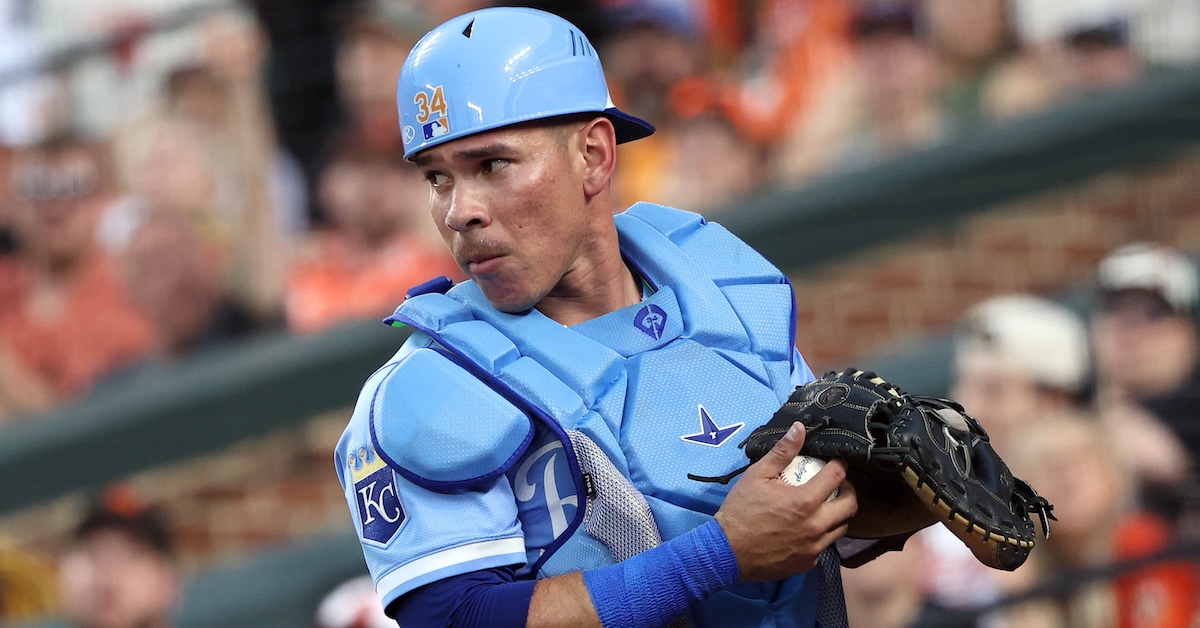
This, my friends, is the A.J. Preller we were promised. Mere hours after swinging a massive deal for closer Mason Miller and even fewer hours before trading for Ryan O’Hearn and Ramón Laureano, Preller made what you could argue – in one specific, absurd way – represented San Diego’s biggest upgrade of the day. Earlier this afternoon, ESPN’s Jeff Passan reported that the Padres have traded starters Ryan Bergert and Stephen Kolek to the Royals in exchange for catcher Freddy Fermin. How could Fermin, a 30-year-old catcher with roughly average framing numbers who’s underperforming his career 91 wRC+ this season, possibly be a bigger addition than Miller or O’Hearn, let alone worth the two major league pitchers the Padres gave up for him? Just you wait.
It would be hard to overstate both how ugly the catcher position has been for the Padres this season and how predictable that outcome was. Coming into the season, the Padres ranked dead last in our Positional Power Rankings at catcher. We expected them to get just 0.8 WAR from the catcher position, a hair behind the Rockies. And that was before our projections knew how bad things really were. Shortly after the those rankings came out, the Padres demoted Luis Campusano, who had the best projection on the team. Instead, they rolled with Elias Díaz and Martín Maldonado. (I’m sure the Padres have their reasons for being so out on Campusano, but I have no idea what they are. For what it’s worth, he has slashed .298/.410/.555 with 15 home runs in Triple-A El Paso this season, good for a 130 wRC+. In 27 PA as a designed hitter for the big club, he’s 0-for-21 with two walks, but even so, right now at this very moment, ZiPS sees him as the best catcher of the three.)
Díaz and Maldonado have caught every single inning for the Padres this season, and the results have been even worse than expected. (Following the initial publication of this piece, the Padres DFA’ed Maldonado.) Both players have put up negative WAR. Maldonado has a 62 wRC+, while Díaz is at 67. In all, the Padres have put up -0.6 WAR from the catcher spot, and the only reason that’s not the worst mark in baseball is that the Nationals spent the first half of the season challenging for the worst team catching season of the century. Things have been even worse lately, as Díaz has put up a 38 wRC+ in the month of July. Read the rest of this entry »
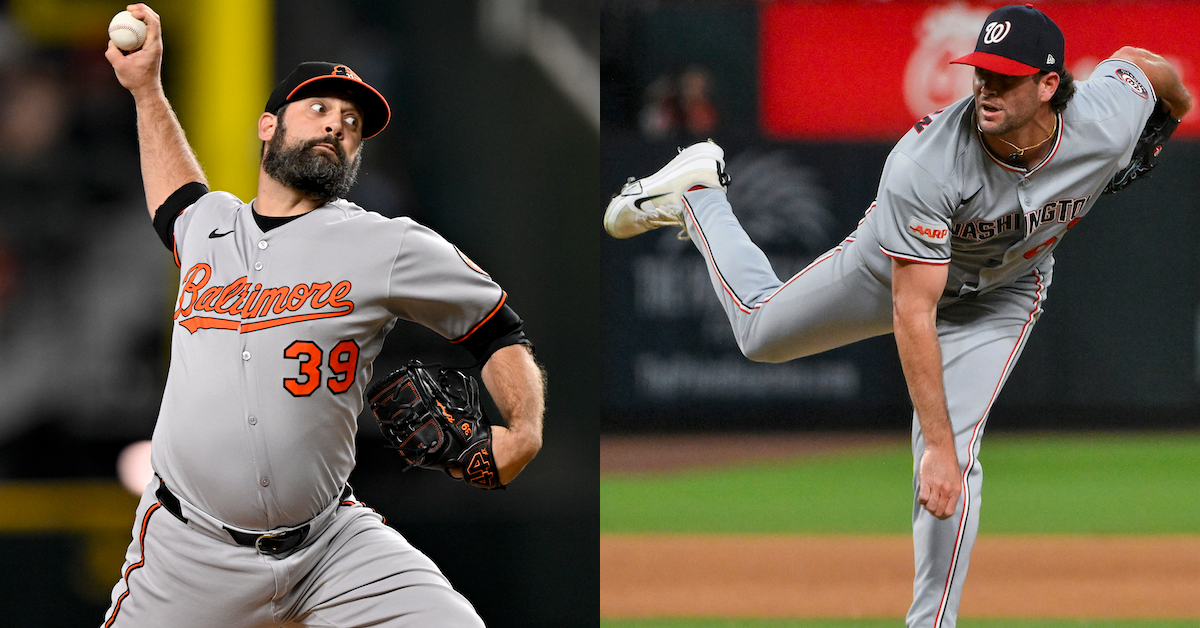
It’s a big deadline for relief pitchers, even for teams that aren’t operating in the Mason Miller or Jhoan Duran tier. The Orioles bullpen continues to get picked over like a charcuterie board: Andrew Kittredge is Chicago-bound, with the Cubs sending Wilfri De La Cruz the other way.
The Tigers beefed up their bullpen by picking up Paul Sewald from the Guardians in exchange for a player to be named later or cash. A few hours later, Detroit sent minor league pitchers Josh Randall and R.J. Sales to Washington for Kyle Finnegan and added Codi Heuer from Texas for minor league depth. Finally, the Dodgers are bringing Brock Stewart back from Minnesota, with James Outman going in the other direction.
Albert Cesare/The Enquirer/USA TODAY NETWORK via Imagn Images
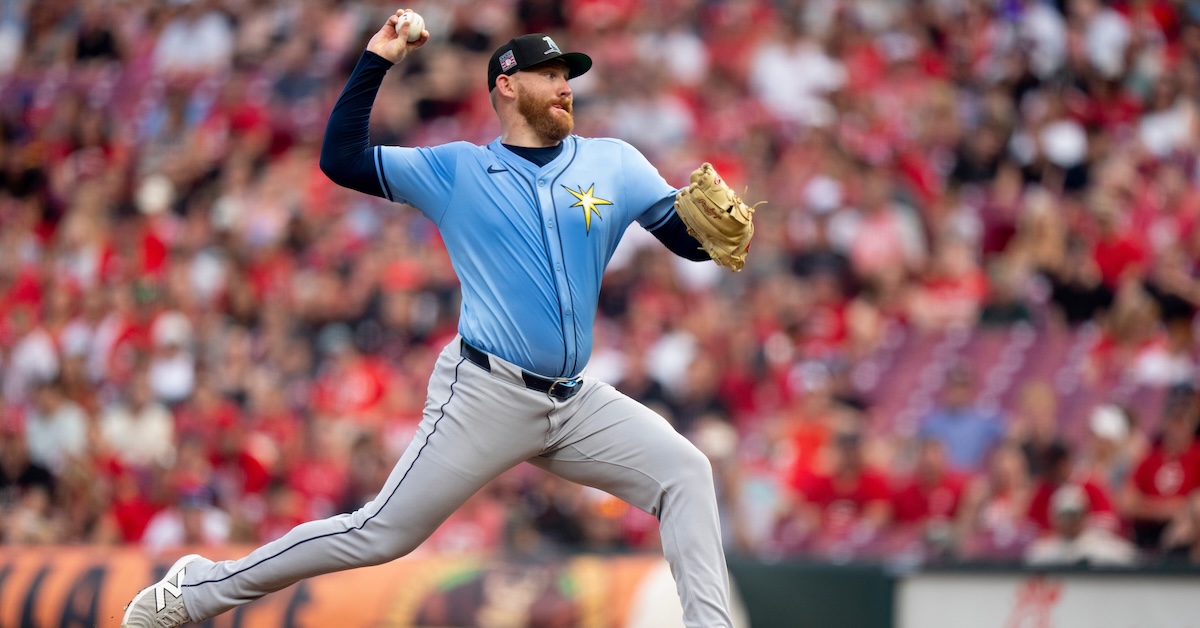
Last night, after Zack Littell had started for the Rays in what would turn out to be a dramatic extra-inning loss at Yankee Stadium, he was traded to the Reds as part of a three-team deal with the Dodgers. The names of the players involved slowly trickled out into the ether, and after an hour or so, the entire transaction came into focus:
Littell, who turns 30 in October, is in his final arbitration season and will be a free agent this winter. After spending the first half decade of his big league career in the bullpen, he made a successful transition to the rotation starting in the middle of 2023. He has the third-lowest walk rate among all qualified pitchers since then, at a microscopic 4%. This season, Littell has a 3.58 ERA (his FIPs and xERA are in the 4.20 to 4.90 range) across 22 starts. He’s a quintessential soft-tossing pitchability guy whose fit in the Rays rotation the last few years was largely driven by his addition of a sinker and a shift away from using his fastballs so much. Littell’s splitter has been his most reliable bat-missing weapon and played like a plus pitch in 2023 and 2024 before losing some of its sink in 2025; it has backed up into more of an average area in terms of garnering whiffs. He’s posting the lowest full-season strikeout rate of his career and one of the lowest across qualified big league pitchers this year. He’s also surrendered 26 home runs, the most in the majors and a potential concern in the bandbox that is Great American Ballpark. Read the rest of this entry »
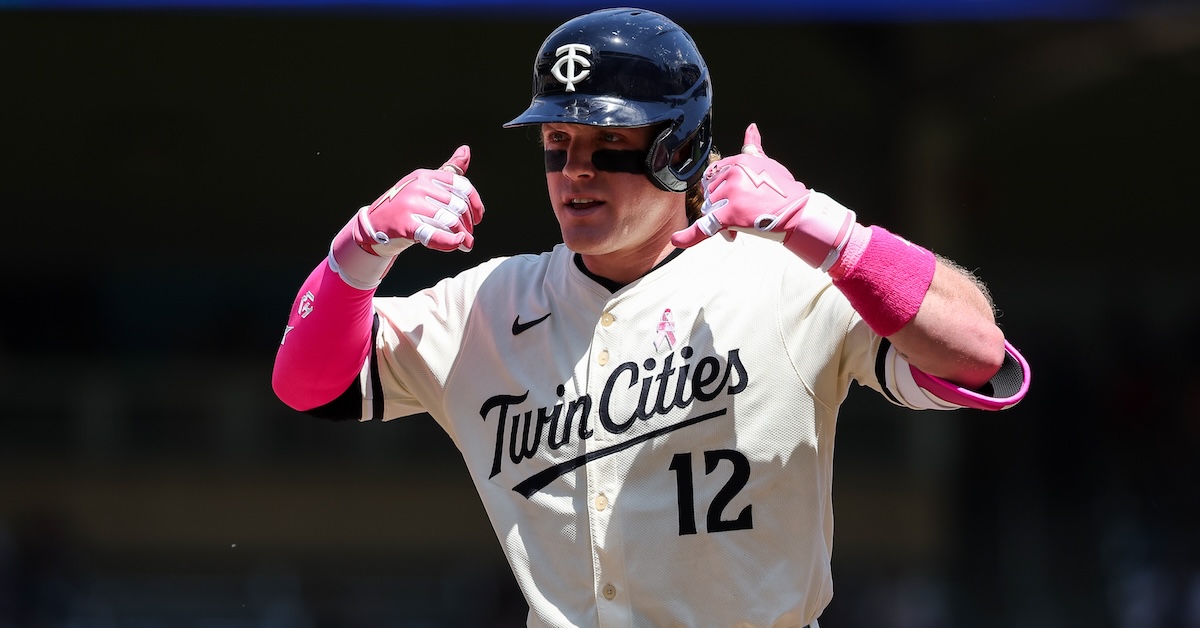
The Phillies have spent the first four months of the season battling the Mets for the top spot in the NL East despite getting almost no positive production from their outfield. All three positions landed on my annual Replacement-Level Killerslists, and at this writing, their outfielders’ net WAR of 0.6 is the third-lowest total in the majors, ahead of only the Guardians and Royals. Ahead of Thursday’s trade deadline, Philadelphia took a step to address that problem by trading two prospects to the Twins in exchange for Harrison Bader.
This could be more than just a typical two-month rental. Bader is making $6.25 million this season and has a $10 million mutual option with a $1.5 million buyout for 2026. The prospects heading to Minnesota are Hendry Mendez, a lefty-swinging 21-year-old outfielder from the Dominican Republic who’s spent this season at Double-A Reading, and Geremy Villoria, a 16-year-old righty from Venezuela who’s been pitching in the Dominican Summer League. Neither of them cracked the Phillies Top 30 Prospects list in late January, but things have changed in the past six months.
This is the third season out of four in which Bader has changed teams midseason. He was dealt from the Cardinals to the Yankees in exchange for Jordan Montgomery on August 2, 2022, and selected off waivers from the Yankees by the Reds on August 31, 2023; he spent all of last season with the Mets. Perhaps not coincidentally, he’s in the midst of his best season since 2021, when he hit for a 108 wRC+ with 16 home runs, nine stolen bases, and amassed 2.9 WAR in just 103 games (401 plate appearances) with the Cardinals. Read the rest of this entry »
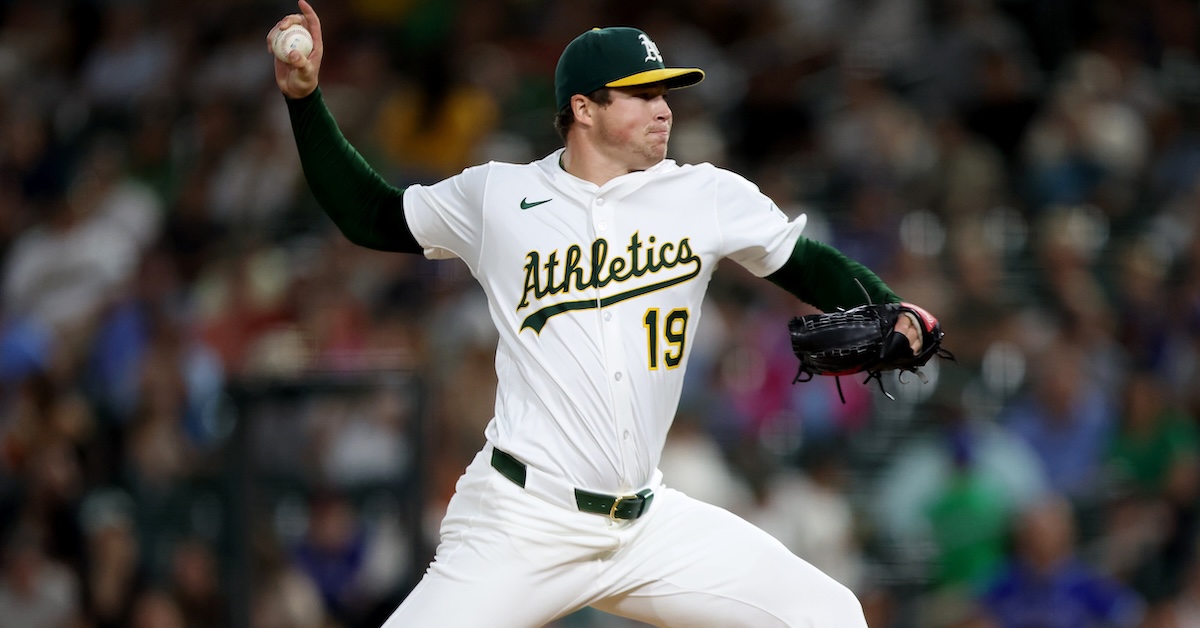
It was shaping up to be a boring trade deadline day, with the most interesting rental, Eugenio Suárez, already off the board and no huge prospects or stars in play. But the San Diego Padres don’t limit themselves to the guys that everyone knows are on the block. They swung a massive, unexpected deal earlier today, getting Mason Miller and JP Sears from the Athletics in exchange for Leo De Vries, Braden Nett, Henry Baez, and Eduarniel Núñez, as ESPN’s Jeff Passan first reported.
Miller burst onto the scene last year with one of the great relief seasons of the decade. He ramped up his fastball to nuclear velocities, sitting 100-101 mph and topping out above 103 en route to a 41.8% strikeout rate and a 2.49 ERA with peripherals that were even better. He did all that over 65 innings, a career-high workload for the 2021 draft pick. His fastball is a pitch modeler’s dream, all backspin and flat approach angle, and his slider is nearly unhittable for batters thinking “don’t get put on a poster by this fastball” from the minute they step into the box.
Miller’s 2025 encore hasn’t gone quite as well. For relievers not named Mariano Rivera, that tends to be the case. He’s still breathing as much fire as ever, but he’s aiming it a bit less effectively, and his walk rate has ballooned from 8.4% to 11.9%. Oh, don’t get me wrong, he’s still been very effective. Did you miss the part where I said he throws 103 with great shape and mixes in a nasty slider? Of course he’s still been effective. The decline has only been on the margins — ERA estimators in the high 2.00s instead of the low 2.00s, a low strand rate, and bam, suddenly he has a 3.76 ERA instead of a 2.49 mark. His stuff still looks really good, it’s just hard to maintain a two-handle ERA. Those are the numbers you put up when things go right, and 2025 seems more like an average year for Miller. Read the rest of this entry »
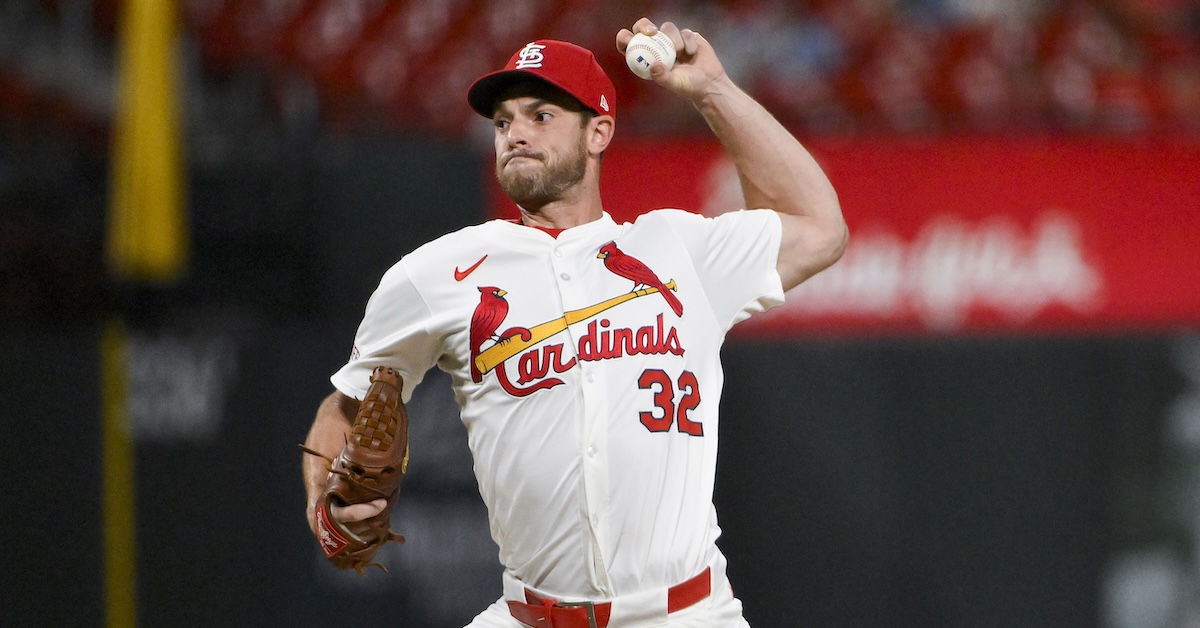
In a deadline where things are shaping up to be a little spicier than anticipated — Mason Miller for Leo De Vries and friends, holy cannoli — Steven Matz’s arrival in Boston in exchange for first base prospect Blaze Jordan feels destined to get swept under the rug. But wait, don’t look away yet. This season, Matz shifted to short-term relief work for the first time in his career, and the results have been impressive. In 55 innings, he’s delivered a 2.87 FIP, mostly on the strength of a minuscule 4% walk rate and excellent home-run suppression.
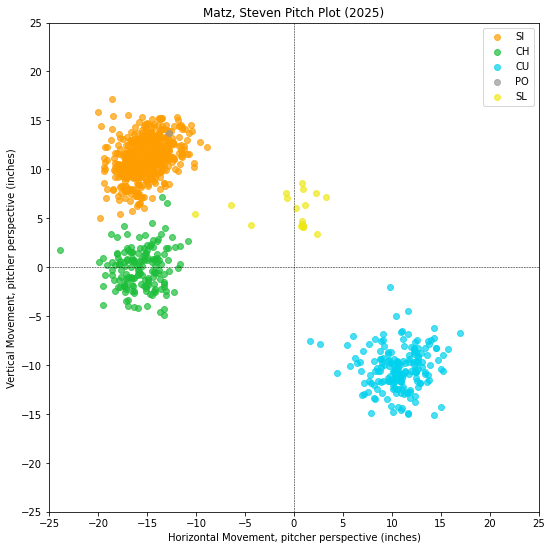
Matz hasn’t really overhauled anything about his arsenal with his move to the ‘pen. His heater is up maybe a tick, but it’s still the same fundamental Matz package, remarkably unchanged since his 2015 debut: heavy sinker usage, a slow two-plane curveball, and a changeup to mix in against right-handed hitters:
The lateral movement and lack of carry on his sinker makes it a somewhat ineffective pitch against righties, but those same qualities render it a weapon against lefties. Same-handed hitters are hitting .179/.216/.226 against Matz this season, good for just a .199 wOBA. Among pitchers who have thrown at least 250 pitches to lefties this season, he ranks 13th best in wOBA allowed.
Early in counts, Matz pounds the outside edge with that sinker. The precision aim — he zones the pitch nearly 65% of the time while aiming for a fine target — gets him a ton of called strikes, allowing him to frequently work with count leverage. Armed with an edge, Matz deploys his loopy curveball as his preferred put-away option. It doesn’t get a ton of whiff, but it’s also tough to elevate. And if he sneaks it through the front door, there’s just no way a hitter is swinging:
From a roster fit perspective, the move seems a bit curious. According to RosterResource, Matz will be the fifth lefty in Boston’s ‘pen. Aroldis Chapman is the closer, so he doesn’t really count, but between Justin Wilson, Brennan Bernardino, and Chris Murphy, it may look like the Sox are well-covered on the lefty specialist front. But a closer look suggests why they might not want to stand pat with that crew.
Let’s take them in reverse order. Murphy is an up-down guy, throwing just 16.2 innings in the major leagues this season. Alex Cora and co. probably aren’t going to feel comfortable thrusting a guy that green into high-leverage work during a big playoff series. He might even get optioned to clear room for Matz.
Bernardino is a guy who has been around a while, and does have a prototypical lefty-killer arsenal: a sinker that hovers around the zero induced vertical break line from a super-low release point, and a “curveball” (it’s a sweeper) that breaks nearly three feet in the other direction.
The problem? Bernardino sits 91 mph and walks a ton of guys. Thinking about a future where the Red Sox need to get through, say, Josh Naylor and Dominic Canzone to stave off an ALCS sweep at the hands of the Mariners, it’s a bit scary to have a guy throwing 91, with the distinct potential of walking two of the three hitters he is obligated by law to face. By contrast, Matz feels like a trusty pair of hands — he’s got the fourth-lowest walk rate among relievers with at least 40 innings pitched this year, and he’s a veteran with big-game experience.
But there is a third lefty, and he’s one of the dozen pitchers who’s actually been better against lefties this season than Matz. Wilson isn’t exactly Tim Hill. He throws from a high slot and gets a ton of fastball carry, and he pairs his heater with an 88-mph bullet slider he throws below the zone for whiffs. Even though it looks like a platoon-neutral north-south attack package, he’s been much better against left-handed hitters than righties, holding them to just seven hits (one double, zero homers) and five walks in 63 chances. Matz, at first glance, seems a bit redundant given the presence of Wilson. But I’ll get back to that.
As for the return: The Red Sox are sending Blaze Jordan to the Cardinals. On short-form social platforms, I saw a not-insignificant share of Boston fans lamenting the departure of such a premium prospect. Perhaps the enthusiasm can be attributed to his 80-grade name, or the sterling stats he posted in Double-A Portland earlier this year. The reaction suggests Jordan is an incredibly valuable prospect, not someone who Eric Longenhagen (favorably) compared to Ryon Healy in a recent write-up.
Jordan’s numbers in the high minors, as Eric noted, are impressive, and he’s relatively young for the level. But… well, instead of summarizing Eric’s report, I’ll just paste it here:
The chase is concerning when you’re talking about a bad corner defender. So many toolsier guys have been undone by that and that alone. Jordan is slow-of-foot and has well below-average range at third base, though he does other stuff well and could play there in a pinch. He has mostly played first base in 2025, and that’s his better position. Low-OBP first basemen need to have titanic power to be impact players, and while Blaze has meaningful pop, it’s not in Yordan Alvarez territory or anything like that.
Eric put a 40 FV grade on Jordan, which seems like a totally fair return for a reliever like Matz.
The last bit that’s curious about this deal: There just aren’t that many good left-handed hitters on the likely American League playoff teams. Of the teams with at least 15% playoff odds, there are only five qualified lefties with at least a 120 wRC+: Cody Bellinger (133), Riley Greene (133), Trent Grisham (127), the aforementioned Naylor (122) and Zach McKinstry (121). (Corey Seager, Jazz Chisholm Jr. and Addison Barger just missed the plate appearance cutoff, while Yordan Alvarez has yet to be activated from the IL.) That’s not exactly a murderer’s row. Given the lack of lefties in the way of their pursuit of a pennant, it does make one wonder why Boston would load up on lefty specialists.
But perhaps Boston is thinking optimistically. What if they find themselves in the first game of the World Series, and there are runners on first and second, and it’s the fifth inning, and Shohei Ohtani and Freddie Freeman are due up, and they need Wilson for the next time through the order. Hey, it’s a long shot — but if it comes through, the Red Sox will be awfully happy to have a reliable Matz in their pocket.
I know I was worried about a slow trade deadline; “top 100 prospects never get traded at the deadline anymore” had become a fashionable cliché. Even before the Padres dropped a depth charge on that notion on Thursday morning, the Blue Jays traded Khal Stephen, the no. 80 prospect in baseball, for a guy who hasn’t thrown a pitch in the majors all season, and has only made four starts in the past two calendar years.