Effectively Wild Episode 1799: Miller’s Crossing

EWFI
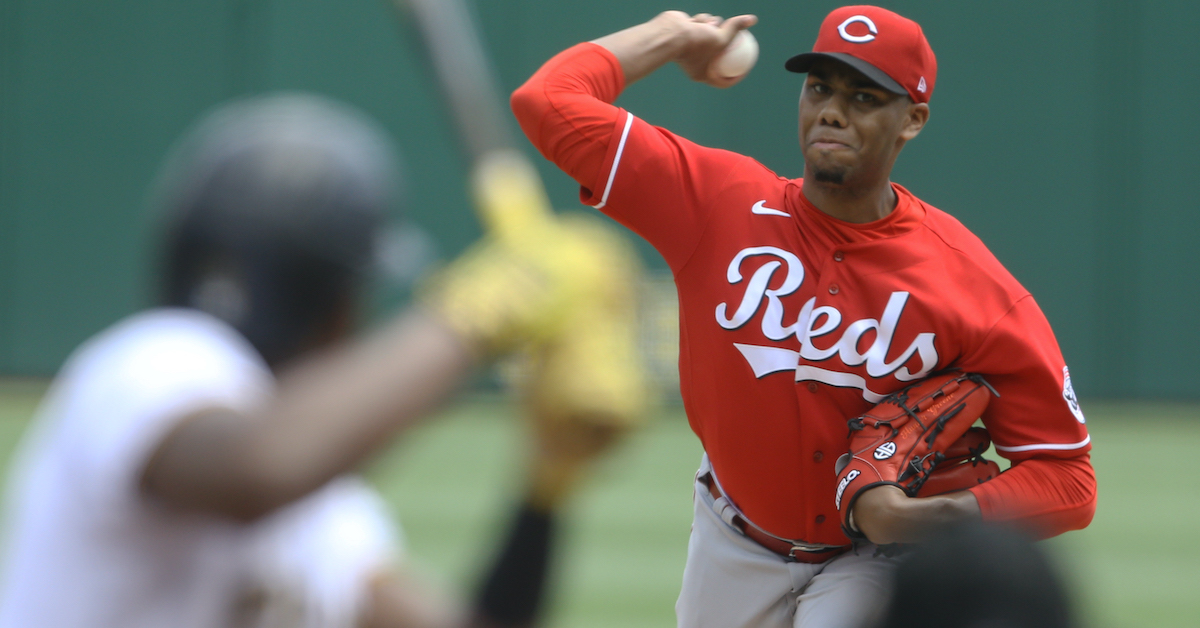
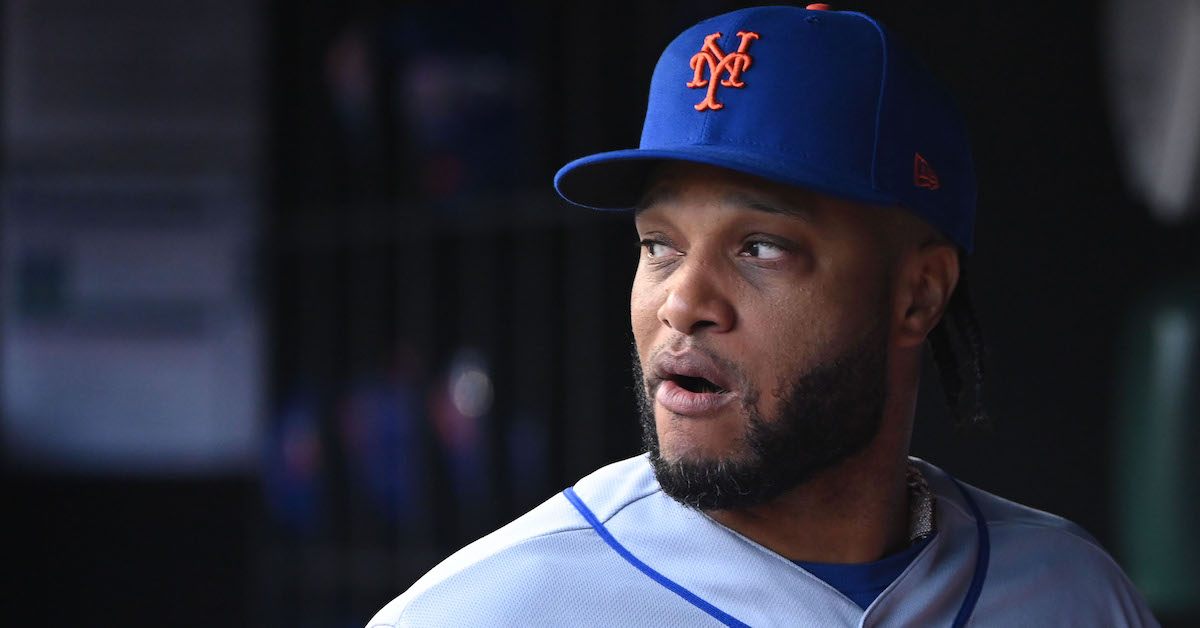
Ben Lindbergh and Meg Rowley reconnect with former cohost Sam Miller to discuss what he’s been up to since he stopped working for ESPN in December 2020, how the 2021 Giants rekindled his fandom, the pros and cons of paying attention to projections, what (if anything) he’s missed about covering baseball professionally, his plans for the future, the virtues of trying new things, doing dishes, and more.

Audio intro: Donovan, “Skip-A-Long Sam
Audio outro: Ohio Players, “Here Today and Gone Tomorrow

Link to Sam on projections

 iTunes Feed (Please rate and review us!)
 Sponsor Us on Patreon
 Facebook Group
 Effectively Wild Wiki
 Twitter Account
 Get Our Merch!
 Email Us: podcast@fangraphs.com


Reviewing the KBO Offseason: Part 2

This is Part 2 of my recap of what happened this winter in the KBO, a league that saw a flurry of signings that changed the outlooks of several teams heading into the 2022 season. Part 1 can be found here, featuring analysis of the KT Wiz, Samsung Lions, LG Twins, Doosan Bears, and Kiwoom Heroes. Part 2 will cover the remaining five teams: Landers, Dinos, Giants, Tigers, and Eagles.

Team Notes

SSG Landers
Shin-Soo Choo 추신수 signed a highly publicized one-year deal with the Landers last season and proceeded to do what he does best: get on base. His .409 on-base percentage last season ranked sixth among qualified KBO hitters, and he took advantage of all those trips to first base by swiping 25 bags, which also ranked sixth. Choo didn’t generate the monstrous home run totals some Korean fans expected of him, but power was never his strongest suit. Instead, he’ll be an excellent leadoff hitter for the Landers for an additional year.

Also returning is Wilmer Font 폰트, a righty with mesmerizing stuff but a lack of consistency. He’ll fan nine or ten batters with ease when he’s on but will otherwise rack up pitch counts with substandard command, often failing to go beyond the fifth inning. He has the potential to dominate the KBO, though, which is why the Landers are committed to him once more. Count me in as well. I’m hoping Font gains trust in his stuff and starts locating more in the zone — even down the pipe. Few would have a chance. Lastly, because KBO players can now sign multi-year contracts in non–free-agent years, right-handers Jong-hun Park 박종훈 and Seung-won Moon 문승원, and outfielder Yoo-seom Han 한유섬 all agreed to five-year extensions.

As for newcomers, Kevin Cron is arriving to replace Jamie Romak 로맥, who served as the Landers’ (and formerly Wyverns’) first baseman for five seasons. Cron enters Korea with an eye-popping resume, including a .329/.446/.777 Triple-A line in 2019, but it’s worth noting he played in the Pacific Coast League, where offense skyrockets due to the hitter-friendly parks and the introduction of those bouncy, bouncy balls back in 2019. His NPB stint was lackluster (.239/.296/.433 in 95 games), which raises further concerns. But Cron is still 28, and the upside is enormous; 30-or-so home runs seem reasonable to expect from his rookie KBO season.

If asked to guess before this offseason which pitcher the Landers would sign, I legitimately think it would have taken 50 attempts for Iván Nova’s name to pop up. It’s just rare for a pitcher his age with his pedigree to consider baseball in Korea. But why even pursue him, anyways? Well, his average fastball velocity in 2020 was still a robust 92.7 mph, and he’s a groundball machine with decent walk rates that might be effective in the KBO. Nova is also 35, however, so there are clear pros and cons. All in all, he has enough positive qualities that he should end up a reliable contributor to the Landers, who barely missed the playoffs last season.
Read the rest of this entry »


2022 ZiPS Projections: Miami Marlins

After having typically appeared in the hallowed pages of Baseball Think Factory, Dan Szymborski’s ZiPS projections have now been released at FanGraphs for a decade. The exercise continues this offseason. Below are the projections for the Miami Marlins.

Batters

We’ll get the bad news out of the way first because, well, that’s the order we do these blurbs in. There’s a lot to like about the Miami Marlins, but most of those things are on the pitching side. The offensive holes aren’t so deep as to prevent baseballs or electromagnetic radiation from escaping. But the offense is thoroughly uninspiring wherever you look. The lineup is neither good nor particularly young, and as such, it will likely struggle to push the Marlins to be much better than the National League’s 14th-ranked offense in runs scored, Miami’s 2021 mark. Read the rest of this entry »


JAWS and the 2022 Hall of Fame Ballot: Tim Lincecum

The following article is part of Jay Jaffe’s ongoing look at the candidates on the BBWAA 2022 Hall of Fame ballot. For a detailed introduction to this year’s ballot, and other candidates in the series, use the tool above; an introduction to JAWS can be found here. For a tentative schedule and a chance to fill out a Hall of Fame ballot for our crowdsourcing project, see here. All WAR figures refer to the Baseball-Reference version unless otherwise indicated.

2022 BBWAA Candidate: Tim Lincecum
Pitcher Career WAR Peak WAR Adj. S-JAWS W-L SO ERA ERA+
Tim Lincecum 19.5 23.9 21.7 110-89 1,736 3.74 104
SOURCE: Baseball-Reference

Tim Lincecum burned brightly but briefly. In a career that lasted just 10 major league seasons — the minimum to be included on a Hall of Fame ballot — and fewer innings than four of the eight enshrined relievers, Lincecum made four All-Star teams, pitched for three World Series winners, won two Cy Young awards, and threw two no-hitters. With his long hair, 5-foot-11, 170-pound frame, baby face, and unorthodox delivery, “The Freak” became one of the game’s most popular players, a cult hero in San Francisco and elsewhere.

Lincecum did all of this despite not pitching very well for the second half of that decade-long stretch (2007-16), though he certainly had his moments; both no-hitters and two of those World Series wins came when he was on the downslope of his brief career. What felled him wasn’t arm troubles but a degenerative condition in his hips, which compromised his range of motion and ability to generate power. Once his left hip labrum tore, he was too unstable to repeat his delivery, and his command suffered. The surprise wasn’t that his diminutive frame couldn’t withstand the physical toll of so many pitches and innings, but that he had dominated in the first place. Through it all, the Giants — and especially their fans — remained loyal to him, willing to give him a shot at recapturing the magic for just about as long as he was upright. Read the rest of this entry »


Sunday Notes: Was Ken Singleton Better Than Dale Murphy?

The most recent of my “Who Was Better” polls on Twitter featured Dale Murphy and Ken Singleton, and while it drew only a modicum of interest — only 95 people cast votes — the results were nonetheless telling. Murphy won in resounding fashion — 76.8% to Singleton’s 23.2% — and it’s unlikely that the percentages would have been markedly different with a more-robust sample size. Murphy is a two-time MVP who made seven All-Star teams and was once on a Hall of Fame trajectory. Singleton made three All-Star teams and received nary a vote in his one year on the ballot.

But was Murphy actually better than the less-ballyhooed Singleton, who broke into the big leagues with the New York Mets before excelling with the Montreal Expos and the Baltimore Orioles? Let’s look at a few of their numbers, keeping in mind that Murphy played in 2,180 games, Singleton in 2.082 games.

Murphy: .265/.346/.469, 2,111 hits, 398 HR, .357 wOBA, 119 wRC+, 44.3 WAR.
Singleton: .282/.388/.436, 2,029 hits, 246 HR,.371 wOBA, 134 wRC+, 44.4 WAR.

Peaks matter, so here is the best eight-year stretch for both: Read the rest of this entry »


Effectively Wild Episode 1798: The 2022 Minor League Free Agent Draft

EWFI
Ben Lindbergh, Meg Rowley, and FanGraphs writer Ben Clemens banter about a few details of MLB’s latest labor proposal to the players, the conclusion of and possible confounding factors behind a Bill James study about how switching teams affects a player’s chances of Hall of Fame induction, another historic hire of a woman in baseball, and a prospective “Lab League” logo, then (22:52) extend a cherished podcast tradition by conducting the ninth annual Effectively Wild Minor League Free Agent Draft, in which they select 10 minor league free agents each and compete to see whose roster will accumulate the most combined MLB playing time in 2022.

Audio intro: Ronnie Spector, “Try Some, Buy Some
Audio outro: The Bens, “Stop!

Link to CBA proposal details
Link to J.J. Cooper on the prospect proposal
Link to Bill James HoF study
Link to article about Red Sox hiring
Link to Lab League logo
Link to revamped Lab League logo
Link to MLB “duck” logo
Link to list of MiLB free agents
Link to Jeff on Shoemaker
Link to Bannister on Hill
Link to Castellani delivery
Link to Ben on pitcher deception
Link to EW competitions and drafts

 iTunes Feed (Please rate and review us!)
 Sponsor Us on Patreon
 Facebook Group
 Effectively Wild Wiki
 Twitter Account
 Get Our Merch!
 Email Us: podcast@fangraphs.com


Chin Music, Episode 47: Lighten Up, Francis

This week’s Chin Music is a little bit late but it’s for a good reason, as we finally had baseball news on Thursday with Major League Baseball and the MLBPA meeting for the first time since the lockout began six weeks ago. To discuss said news, I’m joined by the inimitable Jeff Passan of ESPN. We begin by spending over an hour discussing what happened yesterday, how we got to this point, and where we go from here. Then it’s your emails on how the union works, teams trading away players they didn’t mean to, and diversity in baseball hiring, followed by some discussion of the HBO mini-series Station Eleven and the exceptionally pleasant video game experience that is Lake. As always, we hope you enjoy, and thank you for listening.

Music by Nervous Curtains.

Have a question you’d like answered on the show? Ask us anything at chinmusic@fangraphs.com.

You can subscribe to the podcast via iTunes/Apple Podcasts or Spotify.

Warning One: While ostensibly a podcast about baseball, these conversations often veer into other subjects.

Warning Two: There is explicit language.

Run Time: 2:07:31.

Have a question you’d like answered on the show? Ask us anything at chinmusic@fangraphs.com.

You can subscribe to the podcast via iTunes/Apple Podcasts or Spotify.


Platooning Ain’t Easy

“Just platoon it.” Whenever a team has a weak spot in their lineup, that’s the first thing I think of. Limp left field production? Just sprinkle some platoon on it, and you could be living large. Second base got you down? You’re just one platoon away from competence, or even excellence if you play your cards right. Second base and left field are bad? Bam, platoon them both!

It isn’t actually that easy. If you want to deploy a platoon in the majors (as opposed to in theory, my favorite place to deploy platoons), you have to wrangle with reality, which is notoriously unforgiving. In that vein, this is an article I’m writing to remind myself how hard it is to run multiple platoons at once. It’s not necessarily a reason not to platoon. It’s not even a critique of platooning. It’s just that in my head, and potentially in yours, teams are passing up platoon spots left and right. Here are some reasons why that isn’t true.
Read the rest of this entry »


Reviewing the KBO Offseason: Part 1

While MLB’s lockout means baseball in the United States has descended to the is-Jon-Lester-a-Hall-of-Famer level of purgatory, the KBO has been going swimmingly. As of this writing, all available free agents have signed, and only one team, the Doosan Bears, is without a third foreign player on its roster. And with the chances of a blockbuster trade extremely slim, I thought now would be a good time to recap what happened in the KBO this winter.

I’m doing this in order of the regular season standings, so Part 1 will discuss 2021’s top five teams, while Part 2 will deal with the remaining five. Without further ado, here’s the latest news on baseball in Korea:

Team Notes

KT Wiz
As defending champions, the Wiz only needed to maintain a certain amount of talent on their roster to have another shot at contending – and that’s exactly what they’ve accomplished. William Cuevas 쿠에바스 and Odrisamer Despaigne 데스파이네 both agreed to return on one-year deals, which is great news for the Wiz: Their rotation last season ranked first in ERA and innings pitched by a wide margin. Notably, Despaigne has tossed 396.1 innings since joining the Wiz in 2020, meaning even if he’s a bit rustier in 2022, he’ll still anchor what projects to be a deep staff.

Replacing Jared Hoying 호잉 in the outfield is Henry Ramos, who most recently appeared in 18 games for the Arizona Diamondbacks, hitting for a paltry 48 wRC+ before getting outrighted from the 40-man roster in October. But he absolutely raked in Triple-A (.371/.439/.582), and if there’s anything we’ve learned from his predecessors, it’s that minor league stats can be a reliable predictor of KBO success. Read the rest of this entry »


A Conversation With New York Yankees Prospect Elijah Dunham

Elijah Dunham had a promising first professional season in the New York Yankees system. Signed as a non-drafted free agent following 2020’s COVID-shortened five-round draft, the 23-year-old Indiana University product slashed .263/.362/.463 with 13 home runs in 395 plate appearances between Low-A Tampa and High-A Hudson Valley. He proceeded to rake in the Arizona Fall League. In 101 plate appearances with the Surprise Saguaros, the left-handed hitting Dunham went deep twice while slashing a stand-up-and-take-notice .357/.465/.571.

Dunham — an Honorable Mention on our newly-released Yankees Top Prospects list — discussed his disappointing draft-day experience, and the developmental strides he’s made since entering pro ball, late in the Arizona Fall League season.

———

David Laurila: What were your conversations with teams leading into the draft?

Elijah Dunham: “A handful of [scouts] told me they were probably going to take me in the fourth or the fifth. My agent thought I was probably going to go somewhere in the fifth. But then, when draft day rolled around, he called and said ‘Hey, I think we fell out.’ In my mind, I was like, ‘There’s no way.’ But it happened.”

Laurila: Did your agent get calls on draft day, asking if you’d sign for X amount if you were taken in whatever round?

Dunham: “I didn’t even talk to my agent about it, because I was pretty distraught. But I had one call come straight to me, from the area scout, with their pick coming up. He asked if I’d take so-and-so amount, and I said, ‘Yeah, definitely.’ It just never happened.”

Laurila: Which team was that? Read the rest of this entry »