
The Red Sox Did It All This Winter
A few weeks ago, I took a high-level look at the Mets’ offseason overhaul. I thought it came out well, and readers also seemed to like it, so I’m going to use that same rubric to take a look at the Red Sox today. As before, I’ll be focusing on wrapping all of the team’s decisions up together and evaluating across several axes. As I put it last time:
“How should we evaluate a front office, particularly in the offseason when we don’t have games to look at? I’ve never been able to arrive at a single framework. That’s only logical. If there were one simple tool we could use to evaluate the sport, baseball wouldn’t be as interesting to us as it is. The metrics we use to evaluate teams, and even players, are mere abstractions. The goal of baseball – winning games, or winning the World Series in a broad sense – can be achieved in a ton of different ways. We measure a select few of those in most of our attempts at estimating value, or at figuring out who “won” or “lost” a given transaction. So today, I thought I’d try something a little bit different.”
I’m not going to give Boston a single grade. Instead, I’m going to evaluate the decisions that Craig Breslow and the Red Sox made on three axes. The first is what I’m calling Coherence of Strategy. If you make a win-now trade but then head into the season with a gaping hole in your roster, that’s not coherent. If you find yourself on the borderline of the playoffs and then start subtracting, that’s not coherent. It’s never quite that simple in the real world, but good teams make sets of decisions that work toward the same goal.
Next, Liquidity and Optionality. One thing we know for sure about baseball is that the future rarely looks the way we expect it to in the present. Preserving an ability to change directions based on new information is important. Why do teams treat players with no options remaining so callously? It’s because that lack of optionality really stings. Why do teams prefer high-dollar, short-term contracts over lengthy pacts in general? It’s because you don’t know how good that guy is going to be in year six, and you certainly don’t know how good your team will be or whether you’ll have another player for the same position. All else equal, decisions that reduce future optionality are bad because they limit a team’s ability to make the right move in the future. One note on optionality: It’s not the same as not having any long contracts. Long contracts to key players actually improve flexibility, because “have a few stars” is a key part of building a championship team. Not having a star under contract when you need one is almost as much of a problem as having too many aging veterans, and I’ll consider both versions of flexibility.
Finally, maximizing the Championship Probability Distribution. We like to talk about teams as chasing wins, but that’s not exactly what’s going on. Teams are chasing the likelihood of winning a World Series, or some close proxy of that. That’s correlated with wins, but it’s not exactly the same. Building a team that outperforms opponents on the strength of its 15th-26th best players being far superior to their counterparts on other clubs might help in the dog days of August, when everyone’s playing their depth pieces and cobbling together a rotation, but that won’t fly in October. Likewise, high-variance players with decent backup options don’t show up as overly valuable in a point estimate of WAR, but they absolutely matter. Teams are both trying to get to the playoffs as often as possible and perform as well as they can after arriving there. That’s not an easy thing to quantify, but we can at least give it a shot.
The Sox came into the offseason with a pretty clear problem to solve. Alex Bregman opted out of his deal and returned to free agency, which left the roster in a particularly unbalanced state. Boston’s best four position players were all outfielders – Roman Anthony, Jarren Duran, Ceddanne Rafaela, and Wilyer Abreu. The infield was relatively barren. Trevor Story and Romy Gonzalez were the only two holdovers who notched even 250 plate appearances in the dirt. Rafaela played nearly as many games in the infield as Marcelo Mayer, the team’s top shortstop prospect, last year.
The rotation didn’t have exactly the same imbalance, but it too needed bulking up. They had several interesting prospects, but only Garrett Crochet and Brayan Bello as bankable options at the top, and Bello is more of a nice mid-rotation arm than an ace. Breslow’s ideal outcome would be a new rotation and a new infield.
Oh, one last thing: The Sox paid a piddling $1.5 million for exceeding the CBT threshold in 2025. That’s a rounding error in terms of dollar outlay, but there are penalties for exceeding the cap in consecutive years. The base tax rate increases from 20% to 30%, and then to 50% for three-in-a-row overages. That’s just sloppy, honestly; exceeding the tax by a minuscule amount provides little on-field benefit but makes future spending more painful. Coming into this offseason, it would have behooved them either to get below the CBT threshold in time for the start of this season, or to lean into it and spend more — sitting at the same level, just over the cap, would be the worst possible option.
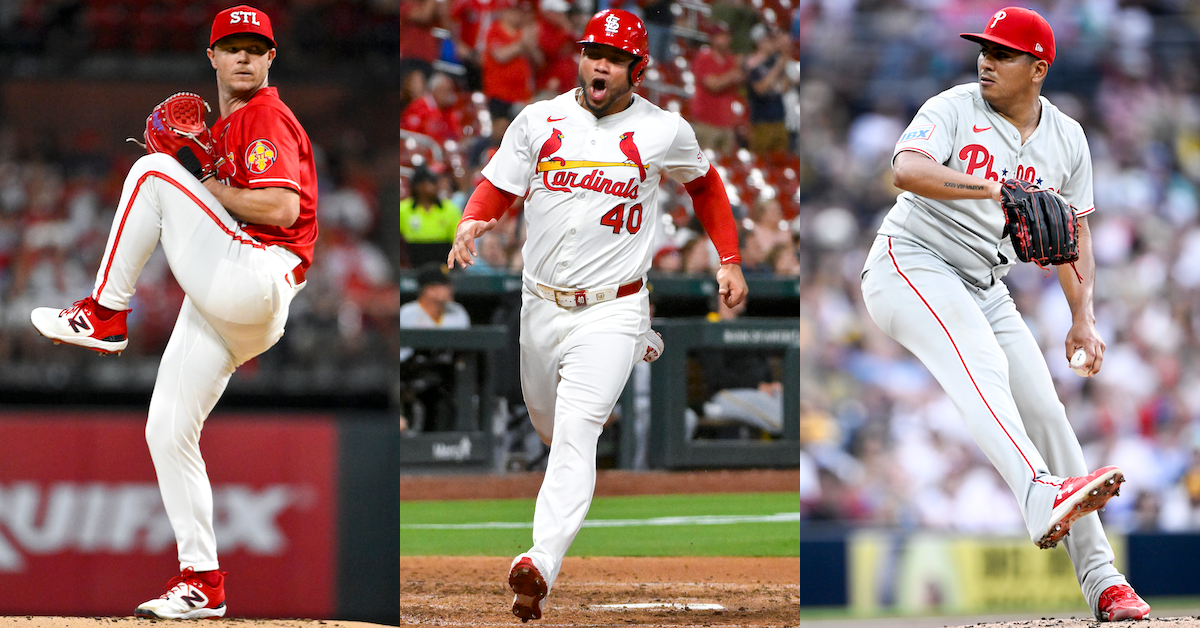
We’ll start with pitching and go mostly chronologically here, because a lot of Boston’s offseason maneuvering comes down to trading, and who you can trade away depends heavily on who you haven’t yet traded away. The first real move of the winter was the start of a fruitful pipeline: The Sox sent Richard Fitts, Brandon Clarke, and a player to be named later to the Cardinals in exchange for Sonny Gray. The Cards kicked in some cash to offset Gray’s backloaded contract, lowering his CBT hit to $21 million.
This is an easy win for the Sox. They were flush with backend-starter types like Fitts (50 FV as a prospect, 5.80 FIP in 45 major league innings), but those guys aren’t exactly bankable options. That fits the Championship Probability Distribution aspect of my evaluation almost perfectly. The Red Sox are presumptive World Series contenders with an embarrassment of riches on the depth starter front. Losing Fitts (and Clarke, who is a few years away from a big league debut) doesn’t impact their floor by much. Adding Gray raises their ceiling, though – he’s fifth among major league pitchers in WAR over the past three seasons, and even if you think that overstates his ability, our projection systems have him 12th among starters this year. He’s an elite playoff starter, in other words.
This trade was a net hit to Boston’s flexibility, but not hugely so. Sure, having Fitts and Clarke around with a lot of team control is nice, but context matters. The Red Sox have a near-perpetual 40-man roster crunch, and now they have a reliable frontline starter who will deliver a great year and then vanish from that roster instead of Fitts, an up-and-down arm. Guys like Fitts (and to a lesser extent Clarke, a high-variance prospect who might end up as a reliever) are often more useful to contending teams as trade chips than on the field, and I think that’s exactly what happened here.
The Sox followed up that deal by making another swap with an NL Central club. This one is less of a slam dunk to me, but still a good one: They acquired Johan Oviedo and Tyler Samaniego in exchange for Jhostynxon Garcia, with a few other prospects changing hands in the deal, as well. Oviedo is, to a first approximation, a Fitts replacement. He’s had issues with command in his four-year major league career, but with huge stuff that sometimes makes the overall package work anyway. He’s right on the swingman line; he’s going to give you a lot of five-and-dive starts, but he might be best suited throwing fewer, higher-leverage innings instead.
The reason for this trade comes down to roster management. Garcia was on the 40-man roster but didn’t have a reasonable route to playing time. The Sox are overflowing with outfielders, and he was something like their sixth option out there. He was too valuable to remove from the 40, though; he’d get claimed by basically the entire league. This trade repurposed that spot into a pitcher. Oviedo is a lot more likely to contribute to the cause this year than Garcia. Samaniego also requires a 40-man spot, but that’s OK: He’s nearly major league ready, and with all his options remaining, he’s a nice flexible bullpen piece. I think Boston gave up a bit of talent in this deal in the aggregate accounting – but turning an outfield surplus into pitching was good business anyway.
With those two trades squared away, the Red Sox finished their pitching overhaul by signing Ranger Suárez to a five-year, $130 million contract. Suárez is another pitcher in the Gray mold, a starter you’d be happy to run out in a playoff series, even if you wouldn’t be overjoyed to deploy him as your ace. Five years is long enough that I’m not in love with the Liquidity and Optionality part of this deal. The only other Red Sox players under contract that long are either stars (Crochet and Anthony) or on bargain contracts (Rafaela, Bello, and Kristian Campbell). But the idea of preserving optionality is that if your roster has contractual flexibility, you can stretch to add important players without worrying about the financial implications. I’d argue that their existing payroll flexibility is what let them sign Suárez in the first place, and given that he’s a good player at a position of need, I like what they did here.
Adding Suárez changes the Championship Probability Distribution part of the equation. Between Crochet, Gray, and Suárez, the Red Sox have one of the best top threes in baseball. Between Bello, Payton Tolle, and Connelly Early, they have multiple options to fill out a playoff rotation with a fourth starter. Oviedo might even technically fit in that group. It’s a fairly injury-proof unit, too; it would take a lot of injuries before the Red Sox couldn’t field a respectable four-man playoff rotation.
In the aggregate, these pitching moves were great. The Red Sox went from a top-heavy rotation with huge reliance on Crochet to a rotation with plenty of redundancy and many good playoff starter options. Before, they were counting on Tolle and Early to develop. Now, any improvement there would be a bonus. Boston didn’t sacrifice excessively on the prospect front, or even the payroll front, to do so. Sure, the Sox surrendered a little bit of payroll flexibility, but not a ton, and they got a marquee free agent for doing so. Adding two starters who project for a combined 7.2 WAR for $47 million in payroll this year is a coup, plain and simple.
While Boston was overhauling its rotation using money and mid-level prospects, the rest of the league signed all of the good infielders in free agency. This was the big worry coming into the winter: The free agency class wasn’t heavy on difference-makers who play the infield. But the Red Sox opted for non-free-agency solutions instead, a worthwhile pivot in my estimation.
Think of it this way: Trading for a pitcher of Suárez’s stature with multiple years of team control remaining is basically impossible. MacKenzie Gore, Edward Cabrera, and Shane Baz have all been worse than Suárez in recent years, and they all fetched big returns in trades. Gray is a rental, sure, but by paying some of the money on his deal and trading with a rebuilder, the Sox paid less in other ways. When the Mets acquired Freddy Peralta, they had to pony up more prospect capital than Boston did. Pitching is in hot demand these days, and the Sox managed to get a lot of it without surrendering a huge amount of money or talent.
Trading for a first baseman? Easier. The Red Sox took advantage of their newfound rotation depth by heading back to former executive Chaim Bloom and the Cardinals for another deal; they acquired first baseman Willson Contreras in exchange for Hunter Dobbins and two lesser prospects. Contreras immediately became Boston’s best-hitting infielder, and maybe their best right-handed hitter, period. In three years with St. Louis, he put up a 129 wRC+, and he even looked reasonable defensively after making the switch from catcher.
If Contreras were on the open market this winter, he’d be one of the best 10 or so hitters available. Taking into account the money the Cards sent the Sox, he’s under contract for $34.5 million over the next two years. That’s way less than a similar hitter would get on the open market. Is Pete Alonso a better bet to produce than Contreras in 2026? Probably. But I don’t think the gap is that high – both provide above-average offense with minimal defensive flexibility. I think that Alonso’s deal is also meaningfully less interesting from the Optionality and Liquidity aspect of my analysis. Keeping contracts for marginal players short – and bat-only first basemen in their 30s are automatically marginal, merely based on aggregate aging curves – is a smart business decision.
Don’t take this to mean that the Cardinals got swindled or anything. Dobbins is an interesting depth starter, particularly for a team that has the luxury of giving him plenty of playing time to see if he can figure out a pitch mix that unlocks a little bit more than he’s displayed so far. But the Sox had too many guys with that exact profile. Dobbins would have been seventh or so in the pecking order, and even worse, he tore his ACL last July, so there’s injury uncertainty to boot. The other prospects in the deal are the type that good farm systems churn out regularly, and I think it was entirely reasonable to offload them for offense. They spent from one of their surpluses to upgrade a position of weakness.
The last move of the winter tied things together. Even after adding Contreras, Boston needed more infielders. After coming up completely empty in free agency, the Red Sox executed a novel strategy: They traded for a young, controllable infielder instead of their established method of dealing with the Cardinals for a veteran. This time, they got Caleb Durbin in a swap with the Brewers.
Durbin’s contact-heavy approach and defensive chops give him a solid floor. Even if he posts a middling offensive line, plus defense at second or third will make him an average contributor overall. That’s a big improvement for a team that frequently played guys who didn’t meet that bar last season. Boston played some bad infielders during their trip to the playoffs, and that was despite having Bregman on the roster. The Sox used Rafaela at second for 24 games even though he might be the best defensive center fielder in the big leagues. I spent a while explaining how their rotation needed some upgrades to raise its ceiling potential, but the infield needed a floor overhaul. Durbin is exactly that. I’m not expecting him to be a perennial All-Star, but he’s steady in a way that many Boston infielders haven’t been in recent years.
This trade is a classic example of one that I like, even though it doesn’t stand out from an expected value standpoint. The Sox gave up a lot to get Durbin, and they’re buying relatively high; 2025 was the best season of his professional career. They gave up a shiny post-hype sleeper in Kyle Harrison, and Shane Drohan is no mere throw-in. But the Sox spent all winter turning their rotation into a team strength, thereby making both Harrison’s and Drohan’s paths to immediate big league relevance trickier. That meant they could once again deal from strength to address weakness.
This is the rare deal that I think works across the board. It meaningfully increases Liquidity and Optionality; Durbin can play second and third, Andruw Monasterio and Anthony Seigler provide further infield insurance, and all of those guys have gobs of team control remaining. There’s even a compensation pick in there to give the Sox more options in the upcoming draft. Championship Probability Distribution is clearly improved here; an infield injury gets much less scary with all this newly acquired depth, while Boston already had enough pitchers that losing Harrison and Drohan doesn’t negatively affect the team’s floor. Finally, Coherence of Strategy looks good; the high-end pitchers the Red Sox signed allowed them to deal from depth. Great piece of business here, even if Durbin disappoints somewhat relative to his 2025 numbers.
Those were the big moves of the winter, but Boston also did some trimming around the edges. Before last season even ended, the Red Sox retained Aroldis Chapman on a one-year deal. That was basically the end of their investment in the bullpen, and that’s just fine with me; with all the depth starters they have lined up, at least a few of them will be able to contribute in relief. Between Chapman and Garrett Whitlock, the Sox have multiple options for high-leverage spots.
Just before trading for Durbin, they also signed Isiah Kiner-Falefa to a one-year deal worth $6 million. This is smart hedging. Sure, Durbin and Contreras are valuable infield additions, but even with them in the fold, depth is a question. Story has played in less than half of the available games since joining the Red Sox four years ago, and he’s eclipsed 400 plate appearances only once in that time span. Mayer, another presumptive Opening Day starter, struggled with major league pitching in 2025 and has injury concerns of his own. There’s little chance that Kiner-Falefa has a starting role on a healthy Boston squad, but there’s also little chance that Boston has a healthy squad all year. His versatility, and the relatively cheap price tag, make him an excellent addition even though he doesn’t move the needle all that much unless someone else gets hurt.
Finally, a little cross-Sox action: Boston sent Jordan Hicks to the White Sox, paying down some of his salary and attaching a prospect to make the deal work. That one was entirely about payroll. Hicks had no place on the squad; he wore out his welcome with 21 appearances and a 6.19 FIP (8.20 ERA, it was ugly). He was acquired as salary ballast in the first place, and now the Red Sox are paying him less to pitch on the South Side.
If you look at the aggregate impact of Boston’s moves this winter, it’s easy to see where this roster has improved. Starting from a team that needed top-end starters and an entire new infield, the Red Sox accomplished most of what they wanted. From a Coherence of Strategy standpoint, they did masterfully well. I’m not saying I agree with one leg of the strategy, namely their refusing to trade from the outfield logjam. But Breslow has been consistent in refusing to trade those guys unless someone offers him a king’s ransom, and he developed a strategy that addressed most of the biggest problems with the roster anyway.
That’s easy to say, but hard to do. There were a lot of teams in the market for bankable pitching, thumping first basemen, and flexible infielders this winter. There are a lot of teams in the market for those things every winter, in fact. But by shopping just below the highest tier of the pitching market, trading for veterans, and dealing from surplus, Boston got what it needed and put together a solid squad for 2026 with depth options across the board.
I’m impressed by the organization’s ability to do that while maintaining flexibility, which means I give the team solid marks for Liquidity and Optionality. You want your best guys on long deals, your role players cost-controlled for years to come, and your good-but-not-great veterans on short-term contracts. The Red Sox didn’t quite manage that in Suárez’s case, but they came pretty close, and I think that in total they set up their future payroll situation pretty well. By 2028, the only Sox on guaranteed contracts will be Crochet, Anthony, Suárez, Bello, Campbell, and Rafaela. Only Crochet, Suárez, and Bello will be earning eight figures on those deals. In other words, when it comes time to sign a new crop of veterans in the Contreras or Story mold, there will be payroll space to do so.
Giving up a bunch of prospects and young major league pitchers to make this all work stings a little, undoubtedly. But while they subtracted from their prospect pipeline, they did so in a way that still leaves it among the better systems in baseball. In an era where teams increasingly hold onto their best prospects, adding three different valuable major league starters without trading from the top of the farm system is very good work indeed.
That all feeds into the Championship Probability Distribution. The Sox are pretty clearly better set up this year than they were at the close of 2025. Their roster is still a little misshapen – they’re DH’ing a good defender in Duran, Masataka Yoshida is a sunk cost, and the infield is still a tiny bit sketchy – but despite those flaws, they’ve improved both their ceiling and floor with these moves. Ceiling? They now have a rotation that can win playoff games on its own if everything breaks right. If the three top guys stay healthy and one of either Early or Tolle breaks out, this could be a scary group. Floor? The Red Sox now have more competent infielders than they’ve been able to call on for years, and they still have plenty of pitching depth despite dealing from it.
One place the Sox couldn’t quite tie everything together: their payroll. We have them down for a CBT payroll of $264 million, $20 million over the first tax threshold. That’s a small enough overage that it’s not catastrophic – they’ll owe 30% of that in tax with no other penalties, given that they aren’t exceeding the first threshold by $40 million. They have enough room below that target that even if they add salary at the trade deadline, they’re probably safe. Yes, exceeding the cap by a tiny amount in 2025 means this will cost them slightly more, but that was in the past. There’s no use crying over spilled milk. I don’t think the Sox could have spent less than they did and still put together a championship-caliber roster, so kudos to them for understanding that ducking the tax wasn’t imperative.
Could they have managed a different permutation of trades and signings? I think not. If they flip-flopped their strategy and traded for a pitcher instead of signing Suárez, I think they would have gotten a worse starter while surrendering more than they did in the Durbin and Contreras trades. Meanwhile, the hitters they could have signed with the money that went to Suárez aren’t obvious improvements on Contreras and Durbin.
There’s one last thing worth considering here: Would the Red Sox have been better off keeping Rafael Devers last summer? I’ll tell you up front that I don’t have a clear answer, but we can at least use this framework to consider how the team would look in an alternate world where he never left. Their payroll structure would be meaningfully different: $30 million a year for the next eight years meaningfully crimps your flexibility. On the other hand, locking up your prime-age stars for eight years is also a good thing. The Contreras trade doesn’t happen if the Sox already have Devers transitioning to first base, for example, and the Durbin trade looks pretty different without Harrison in the deal. On the other other hand, the Sox traded away a prospect just to dump part of Hicks’ salary, so they wouldn’t do that either. There are a lot of moving pieces to think about.
My final estimation is that I just don’t know. The real determining factor as to whether trading Devers was a good idea isn’t how your team looks in February 2026; it’s whether the offensive thunder he provides over the next half-decade is worth the risk of decline later. I’m not in a good position to answer that today. None of us are, honestly. As I’m fond of saying in evaluating deals like these, the future is unknown and unknowable. But it’s worth mentioning that I’m higher on the Devers trade than I was at the time for two reasons.
First, the Sox are spending the money they saved. Their payroll is going to be higher this year than it was last year. They went out and signed a top free agent while also adding salary in trades. They managed their payroll intelligently rather than just torpedoing the offseason to get below the CBT line. At this point, I think it would be unreasonable to say that the Sox traded Devers because they’re unwilling to spend money. I was less certain of that at the time of the deal, so my opinion of their decision-making has commensurately improved.
Second, they’ve demonstrated a willingness to move on from the guys they acquired in the Devers trade. Three of the four players they acquired are already out the door, in fact, all via trade. I didn’t particularly like their return for Devers, but as it turns out, neither did they, or at least they saw the guys they got back as pieces they could ship onward to keep improving the roster. That’s a good sign; flexibility of thinking is something I prize in front offices, and while the whole “you’ll pry these outfielders from our cold dead hands” thing doesn’t do it for me, opportunistically trading Harrison makes me think better of the Boston brain trust.
So, no letter grade or anything at the end of all of this, but I’m quite impressed with what the Red Sox did this winter. You can imagine an alternative world where they miss on Bregman, double down on saving money, and end up with an incomplete roster that can’t really keep up in the AL East. They did basically the opposite, though, and built a pretty nice team as a result.
Ben is a writer at FanGraphs. He can be found on Bluesky @benclemens.
It’s okay, we can agree to disagree!