
The Red Sox Did It All This Winter
A few weeks ago, I took a high-level look at the Mets’ offseason overhaul. I thought it came out well, and readers also seemed to like it, so I’m going to use that same rubric to take a look at the Red Sox today. As before, I’ll be focusing on wrapping all of the team’s decisions up together and evaluating across several axes. As I put it last time:
“How should we evaluate a front office, particularly in the offseason when we don’t have games to look at? I’ve never been able to arrive at a single framework. That’s only logical. If there were one simple tool we could use to evaluate the sport, baseball wouldn’t be as interesting to us as it is. The metrics we use to evaluate teams, and even players, are mere abstractions. The goal of baseball – winning games, or winning the World Series in a broad sense – can be achieved in a ton of different ways. We measure a select few of those in most of our attempts at estimating value, or at figuring out who “won” or “lost” a given transaction. So today, I thought I’d try something a little bit different.”
I’m not going to give Boston a single grade. Instead, I’m going to evaluate the decisions that Craig Breslow and the Red Sox made on three axes. The first is what I’m calling Coherence of Strategy. If you make a win-now trade but then head into the season with a gaping hole in your roster, that’s not coherent. If you find yourself on the borderline of the playoffs and then start subtracting, that’s not coherent. It’s never quite that simple in the real world, but good teams make sets of decisions that work toward the same goal.
Next, Liquidity and Optionality. One thing we know for sure about baseball is that the future rarely looks the way we expect it to in the present. Preserving an ability to change directions based on new information is important. Why do teams treat players with no options remaining so callously? It’s because that lack of optionality really stings. Why do teams prefer high-dollar, short-term contracts over lengthy pacts in general? It’s because you don’t know how good that guy is going to be in year six, and you certainly don’t know how good your team will be or whether you’ll have another player for the same position. All else equal, decisions that reduce future optionality are bad because they limit a team’s ability to make the right move in the future. One note on optionality: It’s not the same as not having any long contracts. Long contracts to key players actually improve flexibility, because “have a few stars” is a key part of building a championship team. Not having a star under contract when you need one is almost as much of a problem as having too many aging veterans, and I’ll consider both versions of flexibility.
Finally, maximizing the Championship Probability Distribution. We like to talk about teams as chasing wins, but that’s not exactly what’s going on. Teams are chasing the likelihood of winning a World Series, or some close proxy of that. That’s correlated with wins, but it’s not exactly the same. Building a team that outperforms opponents on the strength of its 15th-26th best players being far superior to their counterparts on other clubs might help in the dog days of August, when everyone’s playing their depth pieces and cobbling together a rotation, but that won’t fly in October. Likewise, high-variance players with decent backup options don’t show up as overly valuable in a point estimate of WAR, but they absolutely matter. Teams are both trying to get to the playoffs as often as possible and perform as well as they can after arriving there. That’s not an easy thing to quantify, but we can at least give it a shot.
The Sox came into the offseason with a pretty clear problem to solve. Alex Bregman opted out of his deal and returned to free agency, which left the roster in a particularly unbalanced state. Boston’s best four position players were all outfielders – Roman Anthony, Jarren Duran, Ceddanne Rafaela, and Wilyer Abreu. The infield was relatively barren. Trevor Story and Romy Gonzalez were the only two holdovers who notched even 250 plate appearances in the dirt. Rafaela played nearly as many games in the infield as Marcelo Mayer, the team’s top shortstop prospect, last year.
The rotation didn’t have exactly the same imbalance, but it too needed bulking up. They had several interesting prospects, but only Garrett Crochet and Brayan Bello as bankable options at the top, and Bello is more of a nice mid-rotation arm than an ace. Breslow’s ideal outcome would be a new rotation and a new infield.
Oh, one last thing: The Sox paid a piddling $1.5 million for exceeding the CBT threshold in 2025. That’s a rounding error in terms of dollar outlay, but there are penalties for exceeding the cap in consecutive years. The base tax rate increases from 20% to 30%, and then to 50% for three-in-a-row overages. That’s just sloppy, honestly; exceeding the tax by a minuscule amount provides little on-field benefit but makes future spending more painful. Coming into this offseason, it would have behooved them either to get below the CBT threshold in time for the start of this season, or to lean into it and spend more — sitting at the same level, just over the cap, would be the worst possible option.
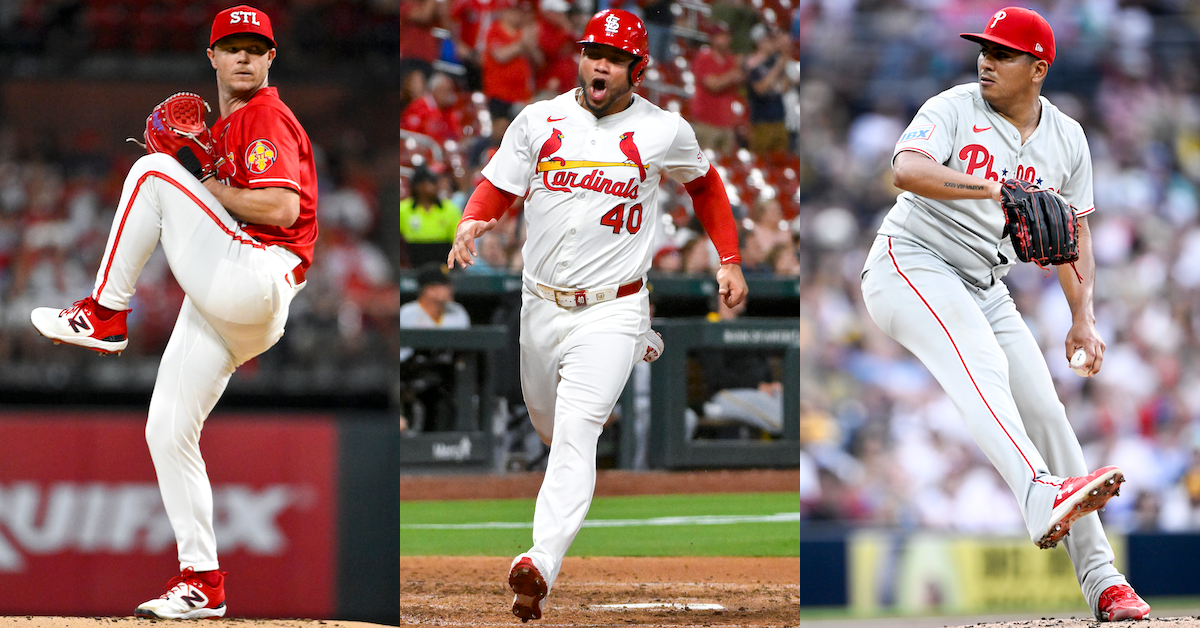
We’ll start with pitching and go mostly chronologically here, because a lot of Boston’s offseason maneuvering comes down to trading, and who you can trade away depends heavily on who you haven’t yet traded away. The first real move of the winter was the start of a fruitful pipeline: The Sox sent Richard Fitts, Brandon Clarke, and a player to be named later to the Cardinals in exchange for Sonny Gray. The Cards kicked in some cash to offset Gray’s backloaded contract, lowering his CBT hit to $21 million.
This is an easy win for the Sox. They were flush with backend-starter types like Fitts (50 FV as a prospect, 5.80 FIP in 45 major league innings), but those guys aren’t exactly bankable options. That fits the Championship Probability Distribution aspect of my evaluation almost perfectly. The Red Sox are presumptive World Series contenders with an embarrassment of riches on the depth starter front. Losing Fitts (and Clarke, who is a few years away from a big league debut) doesn’t impact their floor by much. Adding Gray raises their ceiling, though – he’s fifth among major league pitchers in WAR over the past three seasons, and even if you think that overstates his ability, our projection systems have him 12th among starters this year. He’s an elite playoff starter, in other words.
This trade was a net hit to Boston’s flexibility, but not hugely so. Sure, having Fitts and Clarke around with a lot of team control is nice, but context matters. The Red Sox have a near-perpetual 40-man roster crunch, and now they have a reliable frontline starter who will deliver a great year and then vanish from that roster instead of Fitts, an up-and-down arm. Guys like Fitts (and to a lesser extent Clarke, a high-variance prospect who might end up as a reliever) are often more useful to contending teams as trade chips than on the field, and I think that’s exactly what happened here.
The Sox followed up that deal by making another swap with an NL Central club. This one is less of a slam dunk to me, but still a good one: They acquired Johan Oviedo and Tyler Samaniego in exchange for Jhostynxon Garcia, with a few other prospects changing hands in the deal, as well. Oviedo is, to a first approximation, a Fitts replacement. He’s had issues with command in his four-year major league career, but with huge stuff that sometimes makes the overall package work anyway. He’s right on the swingman line; he’s going to give you a lot of five-and-dive starts, but he might be best suited throwing fewer, higher-leverage innings instead.
The reason for this trade comes down to roster management. Garcia was on the 40-man roster but didn’t have a reasonable route to playing time. The Sox are overflowing with outfielders, and he was something like their sixth option out there. He was too valuable to remove from the 40, though; he’d get claimed by basically the entire league. This trade repurposed that spot into a pitcher. Oviedo is a lot more likely to contribute to the cause this year than Garcia. Samaniego also requires a 40-man spot, but that’s OK: He’s nearly major league ready, and with all his options remaining, he’s a nice flexible bullpen piece. I think Boston gave up a bit of talent in this deal in the aggregate accounting – but turning an outfield surplus into pitching was good business anyway.
With those two trades squared away, the Red Sox finished their pitching overhaul by signing Ranger Suárez to a five-year, $130 million contract. Suárez is another pitcher in the Gray mold, a starter you’d be happy to run out in a playoff series, even if you wouldn’t be overjoyed to deploy him as your ace. Five years is long enough that I’m not in love with the Liquidity and Optionality part of this deal. The only other Red Sox players under contract that long are either stars (Crochet and Anthony) or on bargain contracts (Rafaela, Bello, and Kristian Campbell). But the idea of preserving optionality is that if your roster has contractual flexibility, you can stretch to add important players without worrying about the financial implications. I’d argue that their existing payroll flexibility is what let them sign Suárez in the first place, and given that he’s a good player at a position of need, I like what they did here.
Adding Suárez changes the Championship Probability Distribution part of the equation. Between Crochet, Gray, and Suárez, the Red Sox have one of the best top threes in baseball. Between Bello, Payton Tolle, and Connelly Early, they have multiple options to fill out a playoff rotation with a fourth starter. Oviedo might even technically fit in that group. It’s a fairly injury-proof unit, too; it would take a lot of injuries before the Red Sox couldn’t field a respectable four-man playoff rotation.
In the aggregate, these pitching moves were great. The Red Sox went from a top-heavy rotation with huge reliance on Crochet to a rotation with plenty of redundancy and many good playoff starter options. Before, they were counting on Tolle and Early to develop. Now, any improvement there would be a bonus. Boston didn’t sacrifice excessively on the prospect front, or even the payroll front, to do so. Sure, the Sox surrendered a little bit of payroll flexibility, but not a ton, and they got a marquee free agent for doing so. Adding two starters who project for a combined 7.2 WAR for $47 million in payroll this year is a coup, plain and simple.
While Boston was overhauling its rotation using money and mid-level prospects, the rest of the league signed all of the good infielders in free agency. This was the big worry coming into the winter: The free agency class wasn’t heavy on difference-makers who play the infield. But the Red Sox opted for non-free-agency solutions instead, a worthwhile pivot in my estimation.
Think of it this way: Trading for a pitcher of Suárez’s stature with multiple years of team control remaining is basically impossible. MacKenzie Gore, Edward Cabrera, and Shane Baz have all been worse than Suárez in recent years, and they all fetched big returns in trades. Gray is a rental, sure, but by paying some of the money on his deal and trading with a rebuilder, the Sox paid less in other ways. When the Mets acquired Freddy Peralta, they had to pony up more prospect capital than Boston did. Pitching is in hot demand these days, and the Sox managed to get a lot of it without surrendering a huge amount of money or talent.
Trading for a first baseman? Easier. The Red Sox took advantage of their newfound rotation depth by heading back to former executive Chaim Bloom and the Cardinals for another deal; they acquired first baseman Willson Contreras in exchange for Hunter Dobbins and two lesser prospects. Contreras immediately became Boston’s best-hitting infielder, and maybe their best right-handed hitter, period. In three years with St. Louis, he put up a 129 wRC+, and he even looked reasonable defensively after making the switch from catcher.
If Contreras were on the open market this winter, he’d be one of the best 10 or so hitters available. Taking into account the money the Cards sent the Sox, he’s under contract for $34.5 million over the next two years. That’s way less than a similar hitter would get on the open market. Is Pete Alonso a better bet to produce than Contreras in 2026? Probably. But I don’t think the gap is that high – both provide above-average offense with minimal defensive flexibility. I think that Alonso’s deal is also meaningfully less interesting from the Optionality and Liquidity aspect of my analysis. Keeping contracts for marginal players short – and bat-only first basemen in their 30s are automatically marginal, merely based on aggregate aging curves – is a smart business decision.
Don’t take this to mean that the Cardinals got swindled or anything. Dobbins is an interesting depth starter, particularly for a team that has the luxury of giving him plenty of playing time to see if he can figure out a pitch mix that unlocks a little bit more than he’s displayed so far. But the Sox had too many guys with that exact profile. Dobbins would have been seventh or so in the pecking order, and even worse, he tore his ACL last July, so there’s injury uncertainty to boot. The other prospects in the deal are the type that good farm systems churn out regularly, and I think it was entirely reasonable to offload them for offense. They spent from one of their surpluses to upgrade a position of weakness.
The last move of the winter tied things together. Even after adding Contreras, Boston needed more infielders. After coming up completely empty in free agency, the Red Sox executed a novel strategy: They traded for a young, controllable infielder instead of their established method of dealing with the Cardinals for a veteran. This time, they got Caleb Durbin in a swap with the Brewers.
Durbin’s contact-heavy approach and defensive chops give him a solid floor. Even if he posts a middling offensive line, plus defense at second or third will make him an average contributor overall. That’s a big improvement for a team that frequently played guys who didn’t meet that bar last season. Boston played some bad infielders during their trip to the playoffs, and that was despite having Bregman on the roster. The Sox used Rafaela at second for 24 games even though he might be the best defensive center fielder in the big leagues. I spent a while explaining how their rotation needed some upgrades to raise its ceiling potential, but the infield needed a floor overhaul. Durbin is exactly that. I’m not expecting him to be a perennial All-Star, but he’s steady in a way that many Boston infielders haven’t been in recent years.
This trade is a classic example of one that I like, even though it doesn’t stand out from an expected value standpoint. The Sox gave up a lot to get Durbin, and they’re buying relatively high; 2025 was the best season of his professional career. They gave up a shiny post-hype sleeper in Kyle Harrison, and Shane Drohan is no mere throw-in. But the Sox spent all winter turning their rotation into a team strength, thereby making both Harrison’s and Drohan’s paths to immediate big league relevance trickier. That meant they could once again deal from strength to address weakness.
This is the rare deal that I think works across the board. It meaningfully increases Liquidity and Optionality; Durbin can play second and third, Andruw Monasterio and Anthony Seigler provide further infield insurance, and all of those guys have gobs of team control remaining. There’s even a compensation pick in there to give the Sox more options in the upcoming draft. Championship Probability Distribution is clearly improved here; an infield injury gets much less scary with all this newly acquired depth, while Boston already had enough pitchers that losing Harrison and Drohan doesn’t negatively affect the team’s floor. Finally, Coherence of Strategy looks good; the high-end pitchers the Red Sox signed allowed them to deal from depth. Great piece of business here, even if Durbin disappoints somewhat relative to his 2025 numbers.
Those were the big moves of the winter, but Boston also did some trimming around the edges. Before last season even ended, the Red Sox retained Aroldis Chapman on a one-year deal. That was basically the end of their investment in the bullpen, and that’s just fine with me; with all the depth starters they have lined up, at least a few of them will be able to contribute in relief. Between Chapman and Garrett Whitlock, the Sox have multiple options for high-leverage spots.
Just before trading for Durbin, they also signed Isiah Kiner-Falefa to a one-year deal worth $6 million. This is smart hedging. Sure, Durbin and Contreras are valuable infield additions, but even with them in the fold, depth is a question. Story has played in less than half of the available games since joining the Red Sox four years ago, and he’s eclipsed 400 plate appearances only once in that time span. Mayer, another presumptive Opening Day starter, struggled with major league pitching in 2025 and has injury concerns of his own. There’s little chance that Kiner-Falefa has a starting role on a healthy Boston squad, but there’s also little chance that Boston has a healthy squad all year. His versatility, and the relatively cheap price tag, make him an excellent addition even though he doesn’t move the needle all that much unless someone else gets hurt.
Finally, a little cross-Sox action: Boston sent Jordan Hicks to the White Sox, paying down some of his salary and attaching a prospect to make the deal work. That one was entirely about payroll. Hicks had no place on the squad; he wore out his welcome with 21 appearances and a 6.19 FIP (8.20 ERA, it was ugly). He was acquired as salary ballast in the first place, and now the Red Sox are paying him less to pitch on the South Side.
If you look at the aggregate impact of Boston’s moves this winter, it’s easy to see where this roster has improved. Starting from a team that needed top-end starters and an entire new infield, the Red Sox accomplished most of what they wanted. From a Coherence of Strategy standpoint, they did masterfully well. I’m not saying I agree with one leg of the strategy, namely their refusing to trade from the outfield logjam. But Breslow has been consistent in refusing to trade those guys unless someone offers him a king’s ransom, and he developed a strategy that addressed most of the biggest problems with the roster anyway.
That’s easy to say, but hard to do. There were a lot of teams in the market for bankable pitching, thumping first basemen, and flexible infielders this winter. There are a lot of teams in the market for those things every winter, in fact. But by shopping just below the highest tier of the pitching market, trading for veterans, and dealing from surplus, Boston got what it needed and put together a solid squad for 2026 with depth options across the board.
I’m impressed by the organization’s ability to do that while maintaining flexibility, which means I give the team solid marks for Liquidity and Optionality. You want your best guys on long deals, your role players cost-controlled for years to come, and your good-but-not-great veterans on short-term contracts. The Red Sox didn’t quite manage that in Suárez’s case, but they came pretty close, and I think that in total they set up their future payroll situation pretty well. By 2028, the only Sox on guaranteed contracts will be Crochet, Anthony, Suárez, Bello, Campbell, and Rafaela. Only Crochet, Suárez, and Bello will be earning eight figures on those deals. In other words, when it comes time to sign a new crop of veterans in the Contreras or Story mold, there will be payroll space to do so.
Giving up a bunch of prospects and young major league pitchers to make this all work stings a little, undoubtedly. But while they subtracted from their prospect pipeline, they did so in a way that still leaves it among the better systems in baseball. In an era where teams increasingly hold onto their best prospects, adding three different valuable major league starters without trading from the top of the farm system is very good work indeed.
That all feeds into the Championship Probability Distribution. The Sox are pretty clearly better set up this year than they were at the close of 2025. Their roster is still a little misshapen – they’re DH’ing a good defender in Duran, Masataka Yoshida is a sunk cost, and the infield is still a tiny bit sketchy – but despite those flaws, they’ve improved both their ceiling and floor with these moves. Ceiling? They now have a rotation that can win playoff games on its own if everything breaks right. If the three top guys stay healthy and one of either Early or Tolle breaks out, this could be a scary group. Floor? The Red Sox now have more competent infielders than they’ve been able to call on for years, and they still have plenty of pitching depth despite dealing from it.
One place the Sox couldn’t quite tie everything together: their payroll. We have them down for a CBT payroll of $264 million, $20 million over the first tax threshold. That’s a small enough overage that it’s not catastrophic – they’ll owe 30% of that in tax with no other penalties, given that they aren’t exceeding the first threshold by $40 million. They have enough room below that target that even if they add salary at the trade deadline, they’re probably safe. Yes, exceeding the cap by a tiny amount in 2025 means this will cost them slightly more, but that was in the past. There’s no use crying over spilled milk. I don’t think the Sox could have spent less than they did and still put together a championship-caliber roster, so kudos to them for understanding that ducking the tax wasn’t imperative.
Could they have managed a different permutation of trades and signings? I think not. If they flip-flopped their strategy and traded for a pitcher instead of signing Suárez, I think they would have gotten a worse starter while surrendering more than they did in the Durbin and Contreras trades. Meanwhile, the hitters they could have signed with the money that went to Suárez aren’t obvious improvements on Contreras and Durbin.
There’s one last thing worth considering here: Would the Red Sox have been better off keeping Rafael Devers last summer? I’ll tell you up front that I don’t have a clear answer, but we can at least use this framework to consider how the team would look in an alternate world where he never left. Their payroll structure would be meaningfully different: $30 million a year for the next eight years meaningfully crimps your flexibility. On the other hand, locking up your prime-age stars for eight years is also a good thing. The Contreras trade doesn’t happen if the Sox already have Devers transitioning to first base, for example, and the Durbin trade looks pretty different without Harrison in the deal. On the other other hand, the Sox traded away a prospect just to dump part of Hicks’ salary, so they wouldn’t do that either. There are a lot of moving pieces to think about.
My final estimation is that I just don’t know. The real determining factor as to whether trading Devers was a good idea isn’t how your team looks in February 2026; it’s whether the offensive thunder he provides over the next half-decade is worth the risk of decline later. I’m not in a good position to answer that today. None of us are, honestly. As I’m fond of saying in evaluating deals like these, the future is unknown and unknowable. But it’s worth mentioning that I’m higher on the Devers trade than I was at the time for two reasons.
First, the Sox are spending the money they saved. Their payroll is going to be higher this year than it was last year. They went out and signed a top free agent while also adding salary in trades. They managed their payroll intelligently rather than just torpedoing the offseason to get below the CBT line. At this point, I think it would be unreasonable to say that the Sox traded Devers because they’re unwilling to spend money. I was less certain of that at the time of the deal, so my opinion of their decision-making has commensurately improved.
Second, they’ve demonstrated a willingness to move on from the guys they acquired in the Devers trade. Three of the four players they acquired are already out the door, in fact, all via trade. I didn’t particularly like their return for Devers, but as it turns out, neither did they, or at least they saw the guys they got back as pieces they could ship onward to keep improving the roster. That’s a good sign; flexibility of thinking is something I prize in front offices, and while the whole “you’ll pry these outfielders from our cold dead hands” thing doesn’t do it for me, opportunistically trading Harrison makes me think better of the Boston brain trust.
So, no letter grade or anything at the end of all of this, but I’m quite impressed with what the Red Sox did this winter. You can imagine an alternative world where they miss on Bregman, double down on saving money, and end up with an incomplete roster that can’t really keep up in the AL East. They did basically the opposite, though, and built a pretty nice team as a result.
Ben is a writer at FanGraphs. He can be found on Bluesky @benclemens.
It’s okay, we can agree to disagree!
Rafael Devers 2025 Red Sox: 73 games, 146 wrc+
Roman Anthony 2025 : 71 games, 140 wrc+
Alex Bregman 2025 : 114 games, 125 wrc+
Willson Contreras 2025 : 135 games, 124 wrc+
What’s Rafael Devers + Roman Anthony?
a malcontent bad example and a budding superstar
if you believe that vibes and togetherness and clubhouse cohesion and friendship matter to a team — i.e. if you’ve ever played sports before — you understand that devers HAD to go.
this is not a comment on how it got there, by the way. you can blame devers, you can blame cora, breslow, henry, mookie, babe ruth, dan shaughnessy – it does not matter.
once rafael devers publicly refused to play first base for the red sox, rafael devers and roman anthony were never going to play on the same team.
Notice that you haven’t heard a single player for the Red Sox say one bad word about Devers. He had a reputation for being a good clubhouse guy before last winter, and that debacle is entirely attributable to Cora & Breslow repeatedly lying to Devers about where he would be asked to play.
“Now, they should do their jobs essentially and hit the market and look for another player. I’m not sure why they want me to be an in-between,” Devers said. “Next thing you know, someone in the outfield gets hurt and they want me to play in the outfield. I know the kind of player that I am, and that’s where I stand.”
Devers said this after Triston Casas died on the field and was stretchered off in tears.
You’re not a bad teammate until you become a bad teammate, but Devers became a bad teammate. You can say it’s not his fault. People will agree with you. But once he became a bad teammate, he had to go.
Again, Devers teammates did not see him that way. None of them even hinted at such. The only other example anyone could come up with of a superstar player learning a new position during a season was Bryce Harper, and that wasn’t equivalent because he had three months to practice first base while rehabbing.
Cora & Breslow told Devers he would be the third baseman and Bregman would play second. Then they told him he would DH. They should have prepared for a potential Casas injury either by having someone on the roster who could handle the position or by asking Devers to start learning the position during the offseason.
Nobody on the Phillies said anything against Nick Castellanos, either, but we now learn the whole story.
I don’t know about you, but I never worked anywhere where taking a stand about not changing your job duties ever led to much longer employment. He challenged authority, and those are the consequences. If you let him play 3B indefinitely you’re ceding control of the dugout to Rafael Devers. I wouldn’t if I were in their shoes, and I doubt you would either.
I don’t see how Castellanos is an example to relate to Devers. RD was the entire embodiment of the Red Sox after trading Mookie and felt disrespected by the front office and general manager for not being forthcoming with what they wanted him to be responsible for. No greater evidence of this than his near immediate move to playing 1B for his new team.
Either you want to win, or you’re a selfish egotistical player who only wants whatever you deem respect to be and don’t give a damn about winning.
$30M is supposed to pay for something more than only doing whatever you want to do.
Yep. Red Sox fans are something else. Almost like Yankees fans.
How were they not forthcoming? This is baseball. Casas got injured for the year. Devers as DH was begging for him to be installed at 1B. Team players do what the team on the field needs–it wasn’t about appeasing ownership, it was about winning. Devers didn’t care, though. And the fact that he was more than happy to play 1B for the Giants betrays the fact that he was being selfish and a detriment to the team *on the field* (in the dugout, too).
I’ve done it. We had an employee leave and instead of replacing them, my boss tried to have me do their job and my own. I refused. I stuck to what my contract said about my responsibilities.
Granted, Devers’ contract didn’t specify what position he would play, but he prepared for the 2025 season based on what Cora asked him to do. As I said, learning a brand new position midseason is not a normal request.
This is absurd. Devers doing what he was asked to do in absolutely no way undermined Cora. In fact, going back on his word did that, especially since Cora chose to make his word public. Everyone saw what he told the media, then how he went back on that, then saw how the team leaked stories to make Devers look bad.
Um, I *guarantee* that Devers’ contract mandated he play 3B. If it had, his agent would have rightly screamed bloody murder.
What’s absurd is that you keep holding onto non-truths and false equivalencies.
You downvoters truly are heroes among humans.
(one omission of the word “not” and here we are)
Not a Phillies fan, but it was only a surprise if you hadn’t read between the lines on Castellanos over the years
Actually, ZERO of Devers’ teammates said anything about Devers after the trade. However, all that anyone did say was about how they would all do anything to help their teammates win games, which is almost a direct slam on the guy who would not do that. The fact that Devers played 1B for the Giants after refusing to do it for the Red Sox should tell everyone what they need to know.
I don’t want any young guys looking up to him as a good example of a Boston Red Sox player.
Yes, it tells us that Devers felt betrayed by the Red Sox for repeatedly lying to him in private and in public to the media. If they had been honest from the beginning, he probably would have been amenable.
Given what a horrible reputation the Red Sox have regarding leaking stories to the Globe to attack Francona and multiple former players, I would hope that all their young guys know to protect themselves and never trust anything the organization tells them.
You keep trotting out “repeatedly lying”. Where is the evidence?
https://blogs.fangraphs.com/the-red-sox-are-pulling-the-wrong-levers-with-rafael-devers/
This article proves*my* point, not yours.
Cora points out that these were different front offices that did the promises.
Who has gone on the record throwing teammates under the bus in recent memory who isn’t also known as a “bad teammate”? Nobody benefits from being the one that spills the tea.
Again, you don’t know how Devers’ teammates saw him.
Er, you wouldn’t, the Red Sox (like all teams) try to ensure their players don’t trash their own team or become clubhouse cancers. Devers notably pouted as a DH and sat apart from other players.
Also, where is the evidence they lied?
What does this have to do with the wrc+ numbers above? It’s a completely different argument.
I really love how the Devers trade turned half of Red Sox fandom into water carriers for team management at the expense of one of the greatest players they’ve ever developed
Rafael Devers is great, but let’s cool it with the hyperbole. The Red Sox have been around for 125 years. Devers is not one of the 50 or maybe even 100 greatest players they’ve ever developed.
And that’s part of this. He’s not Mookie Betts. Trading him just is not that big of a deal.
You would be singing a very different tune if they’d never traded him. Hope that water isn’t too heavy for you.
I really love how people who are seemingly incapable of rigorous analysis open their mouths anyway and spew reductionist/false nonsense and render themselves immune to additional facts.
I think that you have to take the Rafael Devers being gone as a given if you’re evaluating this offseason. They screwed that up so badly that we should hold it against them forever, but it’s not relevant to the current question.
I think it’s kind of relevant, in that if you replace “Rafael Devers” with some other trade target/free agent that replaces his production, you’d have “Trade/FA guy” + Roman Anthony which would make the team more offensively attractive. Contreras, Durbin, IKF, etc are decent enough, but the Sox better hope Anthony doesn’t get injured at length again.
Whenever I think about the Devers trade, it just makes me frustrated with everyone involved. Let’s just move on.
I agree that in the evaluation of this offseason, you ignore the Devers trade.
It’s more relevant in evaluation Breslow’s tenure overall.
I mean, you can argue that Devers as DH was blocking Anthony–because it was.
The Red Sox cannot and should not have expected a 140 wRC+ from Anthony; he definitely bailed them out on a poor decision.
And I hope that your first baseman could hit as well as your third baseman. Like, I’m not even sure why Bregman and Contreras are being compared? Again — to be clear — trading for Contreras did not fix the hole left by Bregman opting out. I don’t think Boston’ll be running Contreras out to 3B (or anywhere that isn’t first base).
Why not? He was the number 1 overall prospect in baseball and had a 140 as a rookie. Go look at his savant page – he had the highest hard-hit rate in the entire MLB at his number of plate appearances. Unless you’re saying no second-year player should ever be expected to put up a 140, which I guess is defensible, I don’t get your argument here.
And on your second paragraph: Contreras is relevant to Bregman because of what the Red Sox were running out at first base (after Devers refused to play there) last year. Abraham Toro had -1.2 war in 181 PA at first post-Devers trade. Bregman, by the way, had a sparkling 100 wrc+ in 269 PA post-trade.
And this was a stretch the Red Sox went 52-37 during. So, I think comparing injured/bad Bregman and Abraham Toro to Durbin and Contreras is very relevant to the prognosis of the 2026 team.
His argument is that the Sox seemed to expect Anthony to do well, immediately, given that they didn’t have a back up plan. To depend on a high-ranking prospect to so strongly buoy a team that desperately needed a bat was pretty lucky. There are countless top-ranked prospects, past and current, that do not show up like Anthony did.
i see, i misread as saying they shouldnt expect him to have a 140 this coming year
fair to say they shouldn’t have expected Roman to hit as well as he did last year
but it would be fair to expect bregman — who had a 156 wrc+ at the time of the Devers trade — to have hit better post-trade.
So im not sure they were really “relying” on Anthony at the time of the trade as much as it ended up seeming like
as I said above, Bregman had exactly a 100 wrc+ after 6/15.
I think it would have been fair to expect bregman to have a 135 and roman to have a 105, for example, or a 130 and a 110, or basically any combo equating to roughly 120 between the two of them, which is what they got.
The Red Sox would have been thrilled with Anthony posting a wRC+ of 120 as a rookie. Him achieving a 140 was far beyond what anyone expected.
Considering there’s no projection system on this site above a 125wrc+ for Anthony and it took a .404 BABIP to get him to a 140wrc+ exactly last season, I’d say you shouldn’t expect him to have to a 140wrc+ this year either (though of course he could; he’s great).
Well boy oh boy if there’s no projection system on this site above a 125 then that’s settled then
I like the Devers trade but this isn’t a fair comparison. They could have played Anthony and Devers.
Good God this thread spilled a lot of red ink.
fantastic work, Ben. I look forward to the Nats getting a similar analysis the next time they are at all interesting (which is 2030, optimistically).
Part of me suspects there’s still a CJ Abrams for prospects deal in the works for Boston if the Sox find they are a little short on infield offense in the middle of the year. By then, some of the guys slated behind Bello will have shaken out and may become available.
The AL East will be fun this season – 5 good to really good teams – but none a slam dunk – health will be key.
Baltimore – will their hitters return to form? Will Alonso lead and rake? Did the acquire enough pitching?
Boston – do all these moving parts come together in a winning way? Will Chapman regress? Is there enough hitting and defense without a mega-star?
New York – Did they do enough? Can Justice carry them again? Will the pitching staff stay healthy enough to contend? Do they have one huge move left before opening day?
Toronto – World Series hangover? Will the extra workload on the staff manifest in multiple injuries? How bad does Bichette’s loss hurt?
Tampa Bay – Can they really hang in there and contend or at least be a major spoiler? Will they get their new ballpark and then spend?
It could be a pennant race for the ages in that division this season!
lol @ Justice vs Judge on several levels
Well, last summer, you were pretty convinced that, yes, the Red Sox should have kept Devers — https://blogs.fangraphs.com/giants-acquire-rafael-devers-in-unexpected-blockbuster/. In which you wrote:
Then you write:
I agree that improvisation and tactical thinking is underrated in analyzing the performance of front offices. It’s also possible that Breslow and co. acted irrationally in taking the package that they did because they felt they needed Devers gone. Acting like the fact that 3/4ths of the package they got for Devers is already gone is good is pretty incredible.
Or maybe:
If the argument is, well, now the trade is fine because they happened to make the playoffs despite trading Devers, it doesn’t change the fact that it would have been awfully nice to have Devers in the lineup when they were getting run through in game 3 of the WC last year.
They traded Betts for a subpar return and used the money to help sign Devers long-term. They then traded Devers for a subpar return and used the money to help sign Anthony long-term. If I were Roman Anthony, I wouldn’t buy, I’d rent.
agree and thanks for this write-up. i think there is a world where you still have Devers at DH/1B, pony up to re-sign Bregman for 3B, and now their biggest issue is using existing pieces (Story, Mayer, Campbell, or trade) to figure out who plays SS and 2B, and doing something similar to what they did with their pitching overhaul. You probably can still get Contreras if you want an upgrade at 1B/DH and then you probably can even package Duran for something bigger instead of forcing him to DH now.
It is CRAY CRAY that Duran who’s at least scratch in CF is the DH here : Do we really think Anthony is THAT special in a corner?
The fact that much of the return for Devers is gone isn’t good in and of itself. But it is good that one of the pieces they got back was the centerpiece of the deal that got them their starting 3B for 2026 and beyond.
Going from Rafael Devers to Caleb Durbin in the span of a calendar year is a downgrade, even factoring in Devers’s defense.
Liked your closing joke on renting but it still makes sense for him to buy. Has the money, needs the write off, rent is too damn high. And no, I’m not in real estate.
Anthony seems regarded as the second coming of Babe Ruth or Ted Williams right now in Boston so he’s got some rope. And he can play defense it seems.
We’ll see how it holds up but his deal is a long way from a burden.
Um, these were different front offices that did these things?
The Red Sox missed out on something like their top 4 of their top 5 targets and drew the ire of everybody for not really having a plan at all.
And I still don’t think they had a plan, except for a stubborn interest in acquiring more right handed hitters, and a focus on a starter who wouldn’t give up a lot of fly balls to left field.
I think mostly they had a budget and a list of players they liked. I’m loathe to ascribe any sort of “strategy” beyond that. There are too many cooks in the kitchen with the Red Sox.
But their offseason hinged on acquiring another playoff-caliber starter and enough infielders to field a competent lineup and infield defense, and they did that. They went extra heavy on the playoff-caliber starter side and lighter on the infield side, but this team is so much better on paper than the one that they ended the year with, and that team won something like 90 games and I think underperformed their BaseRuns and run differential?
They have three playoff-caliber starters now, two who could be (Early, Tolle), a 4th starter in Bello, and some injured pitchers who might be able to sub in for them. They have four starting-caliber outfielders, so if one of them gets hurt they’re still in great shape out there. And they now have five adequate infielders (Contreras, Story, Durbin, Mayer, Gonzalez) who will probably average about 450 PAs between them due to injuries and platoon stuff, plus two decent utility infielders to cover the gaps when they get hurt (Monasterio, IKF).
Add it all up and you have a team that is probably Top 3 in the AL and Top 5 in MLB. I still don’t know that this roster makes any sense, but it is built to go deep in the playoffs. And isn’t that what the goal is?
I’m not sure why people see a need to compare offseason team building to an actual sport where winning is the only thing that matters. If you don’t sign Bregman and Alonso, you have LOST.
Consider that they chose to lose because the price wasn’t worth it. And the prices were not worth it.
I’m pretty sure the plan was to efficiently improve the roster while maintaining depth and financial flexibility, not just to improve the roster at any cost necessary. (too many fans fall into the second bucket and cry when they don’t do it)
I am not so sure about efficiency, but they did improve the roster. A lot.
I think Breslow had a plan and a set acquisition point and if players or clubs asked for more he pivoted to the next option. He has negotiated like this previously and I’m getting used to it.
He is a bit more ruthless than most but his methods are growing on me.
The end result is an improved ball club. Just because Breslow sees things differently to most others should not be an issue. We can be as confused as we want as long as Breslow isnt!
Records thru June 15th
SFG: 41 W – 31 L (5th in NL)
BOS: 37 W – 36 L (7th in AL)
Records after June 15th
BOS: 52 W – 37 L (3rd in AL)
SFG: 40 W – 50 L (12th in NL)
Would the Red Sox have been better off keeping Rafael Devers last summer? Who knows how the 2026 to 2033 portion of his remaining contract will play out, but they certainly came out ahead last year.
Red Sox ERA through 6/15: 18th in the league (3.96)
After 6/15: 2nd in the league (3.47)
San Fran ERA though 6/15: 3rd in the league (3.30)
After 6/15: 19th in the league (4.29)
Might that have anything to do with the record differences?
damn imagine if this team added Ranger Suarez and Sonny Gray i bet people would really like their outlook
whoosh
Agreed, records are nice, but there’s different opponents, different teammates, and all sorts of other factors than just wins and losses. Devers joined a team that may have been flawed to begin with, so just because the Sox improved and the Giants didn’t doesn’t mean that it’s all because of Devers.
Imagine what the Sox record might have looked like if they didn’t botch up the preseason and had a happy Devers? No no no… Devers bad, Sox admin good. :/
And your position is just the opposite, so I don’t see any difference between the two.
You don’t keep employing a disgruntled employee. You just don’t.
I disagree, as sometimes one has to work with the talent they have in the workplace. There’s ideally a situation where someone is brought it in with similar talent, or even better talent, so that the disgruntled person no longer feels entitled to be there. However, there’s plenty of workplaces with disgruntled employees that try to work together as best they can despite the misguidedness and transgressions of their bosses.
You don’t disgruntle your star employee you’d recently signed to a lifetime contract. You just don’t.
I love this series, Ben! Your ‘portfolio approach’ to assess team building adds alot to discussions which frequently focus only on who ‘won’ or ‘lost’ a trade. In finance, ‘efficient portfolio theory’ tells us an investment which has a lower return with a lower volatility can increase the expected return of the entire portfolio. Also in finance, investments with lower liquidity should demand a higher return (private credit, anyone?).
In a similar sense, using the expression “high floor” as a proxy for ‘low volatility’ is a valuable addition to my understanding of how teams get constructed.
I could not disagree with this piece more. The only move Boston made that I actually like is Contreras, who was a fantastic pickup given the modest price. Gray is the kind of pitcher who is consistently overrated by FIP, as his breaking balls remain excellent but everything else that he throws got absolutely tattooed. His cutter was bad. His four seam was terrible. His sinker was terrible. His change up was terrible. He’s 36 years old, so it’s no surprise that he posted the lowest velocity and highest hard hit rate of his career in 2025.
While Suárez is currently a better pitcher than Gray, he too experienced a concerning dip in velocity across the board. That presumably played a large role in his sinker playing as a neutral pitch in 2025 after being elite for most of his career. Suárez also allowed significantly more fly balls than ever before, the significance of which was masked by some good fortune in HR/FB%. Paying $130 million to a pitcher with that profile is crazy to me when you have several major league ready pitching prospects.
Then Durbin and IKF just don’t come anywhere close to adequate addressing their infield issues. This is a team with extraordinary outfield and pitching depth, so infield is the place where they should have spent significant money and/or prospect capital. Story probably won’t stay healthy again. Mayer is the kind of major league ready prospect who should be given a chance to compete for a job, but not outright handed one. Rafaela should never be asked to play the infield ever again, while Kristian Campbell has proven that he can’t play there. Then the farm system doesn’t have anyone close enough to contribute in 2026 if someone does get injured.
Durbin and IKF are decent, but this was a team that could have been World Series contenders had that weakness been addressed adequately. My take is the complete opposite of this piece. I think Breslow picked assets he thought were undervalued without any regard for team construction. To me, these moves are at least somewhat defensible individually but thoroughly perplexing in the aggregate.
I 100% agree with this statement, even though I think overall their offseason was pretty good.
I think the idea is that the roster is constantly in flux anyways due to injuries, under/overperformance etc., so there’s no need to have everything solved by Spring Training or even Opening Day. If they continue to pile up talent by the roster will sort itself out.
Really? I feel like you have been providing good analysis of their moves but I disagree with this. Breslow clearly had a specific plan for roster construction:
–Having plenty of starter depth, improve the top of the rotation.
–Add right-handed bats in the infield.
–Re-sign or replace Bregman by getting a starting 2B/3B.
I am not saying you have to agree with this plan or how he did it, but his moves this offseason all contributed to constructing the team in a very specific way. In fact, it was the first time in a while I felt like they actually went into a season without a glaring and easily fillable hole.
Maybe they had a plan and they just didn’t fulfill it? Or that the plan was bad? Of those three things, the first one is a good idea and they succeeded, the second one is a silly goal in itself so I have a hard time pretending it is real (it may be real), and they didn’t really succeed on the third one.
I just thought that “no regard for roster construction” implied that they didn’t have a plan. I’m fine with the criticism that they didn’t fulfill their plan.
If I were to break it down, I would say that there is one big thing that organizationally the Red Sox still don’t get: Why having a lineup that is “too left handed” is a weakness.
They have been far too obsessed with not adding any more left handed hitters over the last couple of years and “balancing” the lineup with right-handed infielders. Right handed hitters are useful because they have the platoon advantage against left handed pitching. Which means that if your team’s weakness is not having enough right-handed hitting, you need right handed hitters who can sub for guys who are weak to left handed pitching.
The Red Sox had a group of right-handed hitters last year that was great left-handed pitching. It’s true that the outfield has one guy who probably shouldn’t face left handed pitchers at all (Abreu) and another with huge platoon splits (Duran). But they lost maybe the best outfield-capable lefty-killer in MLB when Refsnyder. If they wanted to be less vulnerable to left-handed pitching, they took a step backwards there.
Instead what they did was stack the infield with redundant infield guys. Which is necessary with the injury problems they have, but on net this team is more vulnerable to left-handing pitching without Refsnyder and with Contreras.
Which means that unless they decide to convert Gonzalez to play the corner outfield (which may or may not work with the way the outfield corners are at Fenway) they now have two right-handed guys with big platoon splits (Monasterio, Gonzalez) backing up two right-handed middle infielders (Durbin, Story).
The team had some mixing and matching capability before. It wasn’t much because they didn’t have any infielders. Now they have a roster where the best situation is probably for them to run out the same starting nine every day, with the exception of Monasterio or Gonzalez in for Mayer if they don’t want him to develop against left handed pitching. Gonzalez or Monasterio (or IKF, if it comes to that) are mostly going to be getting in the game is when the starters are hurt, and in that situation they’re more likely to be facing right-handed pitching which is where they are weak.
I just don’t understand why the Red Sox don’t get that going to “get a right handed hitter” isn’t the end goal in itself, it’s to have a lineup overall that isn’t as vulnerable to lefty pitchers.
They’ve been trying to get Abreu more at bats against lefties for a couple years. His defense is so good that he’s valuable to the team even if it takes a while for him to get more comfortable against lefties, so I’m on board with the Abreu-plays-every-day experiment. If things don’t go well, they have other right handed outfielders in Campbell and Eaton.
A big name infielder would have been nice, but they really needed someone who can play SS when Story and Mayer inevitably get hurt. I can’t think of any starting shortstops who signed or were traded this winter (unless you count Bichette, but no one seems to think of him as a SS). So what is the alternative? Build INF depth and spend your money on starting pitching.
They’ve been much too deferential to Story at shortstop with his injury problems. They should have skipped the Juan Soto sweepstakes last year and offered $200M to Willy Adames.
That probably would have crowded out the money they spent on Bregman, but it would have solved so many problems for them last year and this one.
If Mayer stays healthy he’s also probably a better bet at shortstop than Story, but he’s the only other guy with an injury history at that level. It feels like between the two of them, one of them should be healthy enough to play until Franklin Arias is ready.
Next offseason I think they should go hard after Nico Hoerner, who I think might still be a capable shortstop. Although the long-term benefit (maybe short-term benefit too) would be to give them a solution at second base.
They really whiffed when they didn’t sign Adames! Its really hard to find good shortstops in free agency.
Next off season they’ll still have Story, Mayer, and Durbin, so I think it depends on how healthy and productive those guys are. Its clear that Mayer is a much better shortstop than Story right now. Hopefully they realize that at some point this year.
But of course Bogaerts might be a better defensive SS than Story or Mayer now.
I really think it was more that they needed more righties in their lineup and they needed to add an infielder, so you can accomplish those by adding right-handed infielders. And it’s not like they set out to get any old right hander. They got a quality hitter in Contreras and were in the mix for Bregman, Marte, and others (likely including Donovan, a lefty) before ending up with Durbin.
Some of their thinking may revolve around getting RHBs in the lineup to take advantage of the massive park skew for 2Bs and hits if flyballs can be pulled and the batter has some speed, not just platoon performance vs lefties. Lefties can take advantage of it too if they’re capable of such but it’s a bigger ask.
Love to see this continue, great article, Ben!
The other thing that made no sense was the Password for Oviedo trade. Maybe Password had zero trade value and they did what they could. But Oviedo is probably their seventh best healthy starter today and probably #9 or #10 if everyone is healthy.
I know that he came back with a plus fastball over 40 innings. But I don’t know how much you can read into that, and teams that are looking to win the toughest division in MLB should not be making that sort of a gamble. But there seems to be some sort of organizational mandate to have him be the fifth starter. This is the kind of thing the Rays or A’s should do, 77 win teams that are moneyballing their way into getting a guy with some upside, not a team that already has better options on hand who they’re going to send back to AAA because the front office sees the tree but not the forest.
Yeah, the only thing I can think about for that trade is that the Sox admin had no faith that Garcia was going to be anything that what he was, so they sold him ‘high’ for someone who can handle MLB innings. Maybe someone found an obscure number or two that made them think that Oviedo had more to give, but ultimately, he’s probably just a guy. Better to have the corn muffin than the cupcake showing signs of mold, I guess.
The problem isn’t trading Garcia, it’s the return. Garcia probably needs more development time in AAA, so they could have just kept him there. If they needed the 40-man roster spot, they could have traded him for younger prospects.
The only reason I can think to trade for Oviedo is if the Sox saw a pathway to help him develop. Maybe he’ll come to spring training with more velocity or new pitches.
Garcia is a 45+ prospect who the projection systems are projecting for a mid-80s wrc+. He’s not a huge loss and didn’t have a ton of value. Oviedo was a fine #3-4 starter in 2023 and looked decent in his return in 2025. Despite the missed time, the projection systems see him as a good swingman/#3-4 starter. That seems like a fine trade on the surface.
More importantly, Oviedo’s a big, tall extension guy who fits the Red Sox pitching program mode. I’m sure that was a big reason for getting him.
I think you’re underestimating garcia’s value. He’s not big league ready now, but he’s still a good prospect. The pirates obviously like him.
The issue is not that Garcia was traded away, it’s that the Red Sox don’t need another pitcher like Oviedo.
The Pirates liked him enough to give up Oviedo, and I agree with them.
Once the offseasons finished for both teams, I wonder if the trade actually makes less sense for each team than it did initially. The Pirates subsequently crowded their corner OF picture with O’Hearn, making Garcia a 4th OF type, or likely to start in AAA because the Pirates think they need to give playing time to Suwinski. The Red Sox added two better starters so the depth Oviedo affords is now less valuable. The Pirates are heavily reliant on a bunch of talented but unproven starters at the backend of the rotation and would benefit from a more veteran arm to soak up some innings. The Pirates bullpen could also use another lefty arm. The Red Sox OF picture is crowded, but Garcia has things to work on in AAA anyway, and if an OF gets hurt, they will be relying heavily on Yoshida as a replacement.
At the time in the offseason, you could see why each team would be willing to make the trade, but if they hadn’t then, I wonder if either would now.
Password was the short side of a platoon without a path to playing time. You have to finish developing in MLB. Staying in AAA forever will never finish a player’s development. So when exactly was he going to get enough playing time in Boston to finish developing? He wasn’t going to come up and get 150 PAs and become a finished product.
As far as Oviedo goes, the Red Sox have earned my trust when it comes to pitching. He has something they like and think they can further develop. They’ve done a pretty good job of that in the last few years.
I disagree that only the Rays or A’s should try to find value. Every smart team does or should. I also don’t understand why you think that any decisions have been made about the #5 starter.
Garcia had no place on the 40-man and doesn’t have a ton of value in a vacuum, either. I’m not sure who you’re going to get for him that’s much better than Oviedo.
My guess for them is that it’s essentially giving up their 7th OF for a 7th SP, which you should do basically every time. Password was buried on the depth chart – he’d be behind Abreu, Anthony, Duran, Rafaela, Eaton, and Yoshida for sure, and they also have Campbell and Ward and Sogard as options, and I think they’d like to see if Allan Castro is anything.
Oviedo may not turn into anything, but he has the traits they like in pitchers and can help the team right now as a depth starter or reliever (I think he could be good as a MIRP), which is more than can be said for Garcia. It also allows Early and Tolle to start in AAA if they need, and gives them more trade options should they want to pull from SP depth to get a bat later in the year.
For what it’s worth, I don’t think Garcia is going to hit enough to get to his power, and profiles more like a short-side platoon 4th OF, so I think this is a totally fair trade on both sides – both have upside but obvious downsides.
I really like the IKF signing and Durbin trade. Because those players have so much defensive flexibility, the team can keep Yoshida on the roster as a pinch hitter. Not many teams can carry a full time pinch hitter.
I have no idea what they will do if Casas comes back looking like his old self. I assume he will play in AAA for a while. I wonder if they would demote Yoshida to AAA if Casas is outhitting him. There is only space for one of them on the roster.
Typically foreign players who come over after 25 have something written into their contract where they can’t be optioned without their consent. The Red Sox are stuck with Yoshida. Or his contract, at least. About the best they can hope for is swapping him for another underwater contract. Like for Javier Baez or Christian Walker.
This makes sense. So there’s really no path for Casas to get playing time in Boston this year.
If Yoshida gets hurt or is cut, Casas could get back into it. Or if Contreras is hurt.
It’s probably not a big deal. He’s coming off a rough injury and needs a bit of a reset after last year anyway.
I did not like the Oviedo-Garcia trade at the time and it doesn’t look any better now. Oviedo is competing for one spot (5th starter/long reliever) with Crawford, Early, and Tolle. Sandoval is out of options, so he will fill one of those spots. I just don’t see much need for Oviedo. They could have held onto Garcia or traded him for younger prospects.
I guess it comes down to how good you think Garcia is. He’s a 45+ prospect projected for a mid-80s wrc+. Does he look better than a 4th OF/low-end starter to you?
Oviedo isn’t great but he was a solid #3-4 in 2023, and is projected to be about that going forward. He’s also the big tall pitcher type that that the org thinks they can maximize.
I had not realized this: The Sox paid a piddling $1.5 million for exceeding the CBT threshold in 2025.
It was the Steven Matz trade that put them over the tax line! This explains why they’ve been stockpiling pitching depth.
If they paid out $1.5M, does that mean they actually exceeded the threshold by about $7.5M? If true, they were likely already over the line before acquiring Matz.
I seem to recall it was something like this that was the final straw that finally led the Red Sox to fire Dombrowski.
I think it was more that he went way over and wanted to keep going way over, and the team did not.
I think going over in a year that they were not really contending contributed to Bloom’s demise.
Great writeup.
On the liquidity question, I can’t see any problem with the Suarez deal. On the contrary, giving a 30-year-old #1-2ish starter only five years is a win. Look at the comps for that group.
Cease, age 30, 7/210
Fried, age 31, 8/218
Burnes, age 30, 6/210
Snell, age 32, 5/182
Nola, age 31, 7/172
Some of these guys are probably better than Suarez but he does belong in this group. And for this type of starter at this age, you’re fortunate not to have to go 6 or 7 years.
Of course the best article of 2026 had to emerge on one of my busier work days
This is truly a great piece on the Red Sox bewildering but fairly productive and wildly interesting offseason.
I will wear my green fangraphs sweatshirt with extraordinary enthusiasm this weekend!
Can we admit that Sonny Gray is not a front-end starter? Since 2020, his RA9-WAR has gone 2.3/2.8/6.2/2.4/1.7. Outside of a HR/FB% fluke in 2023, he was a solid mid-rotation starter in his early thirties. Now he’s in his late thirties, and it really seems like he’s entered the back-end phase of his career.
You can admit that, but I don’t think RA9-WAR is the starting and ending point for evaluating pitchers.
I look at his 3.7 WAR FGDC projection, and last year’s 10.01 K/9 and 1.89 BB/9 and think that’s a damn good pitcher.
I wouldn’t say that it is the starting and ending point. Those are good numbers to look at, and in Gray’s case I would also bring BABIP, Barrel%, and IP over the last few years into the conversation. As he’s improved his K-BB% the past two years, his contact management has become a problem. And this tradeoff has been best illustrated by RA9-WAR.
He’s a breaking ball merchant. Against his FB: .356 xBA, .578 xSLG, .431 xWOBA. So he’ll rack up good strikeout numbers on breaking balls, but will get damage done when he throws his FB.
His xERA has been very consistent over the last five or six years, and he has adjusted a couple of times after he looked done. I wouldn’t rule him out.
I think going over the CBT threshold by adding players at the deadline should be commended. The Red Sox have rightly been criticized for falling far short of their large market competitors in spending. Going over by a little, even if it means more penalties the following year, should mean almost nothing to them.
(Admittedly, I didn’t love what they acquired at the deadline.)
Sure, but the issue wasn’t that they went over the line at all, it’s that they ONLY went a little over the line. If you’re going to be in tax territory, there’s no reason not to spend up to the line of the next highest penalty level.
Um, the point is to win games, not “spend money”.
The Red Sox under Craig Breslow have made an enormous amount of moves that net positive value in a vacuum, but don’t coalesce into an overall coherent strategy. I think they’re overly loyal to their value models.
Based on the reporting, it seems like they probably would’ve managed to re-sign Bregman if it wasn’t for their refusal to give him a no-trade clause. Yes, a no-trade clause is harmful for the team and decreases the value of his contract. Yes, Bregman’s deal is probably an overpay, and trading spare parts for Caleb Durbin looks like a way better deal in their model.
But are you a better team with Durbin and Suarez as opposed to Bregman and a slightly lesser starter? Andrew Monasterio is a valuable player to have, but do you need him and IKF on the same roster? How are Payton Tolle and Connelly Early not at least being pencilled into starting spots instead of Brayan Bello and Patrick Sandoval?
The Red Sox feel like they’re prioritizing being the smartest, most efficient organization ever instead of creating the best baseball team.
I don’t really understand this “no plan/coherent strategy” criticism. The Red Sox have a good and deep outfield, a decent infield, and very good and deep pitching. Is it really that much better to have a good infield and less pitching depth? Like what if the answer to the Durbin + Suarez vs. Bregman + more innings for Tolle/Early really is just Durbin + Suarez?
I get the sense that acquiring Durbin wasn’t the end goal of their offseason. It was a necessary pivot after whiffing on other bigger name, arguably higher-impact targets. I may not all the understand all the nuances of the path taken through most of the winter (specifically the potentially bugger trades that didn’t happen), but I see the value of raising the floor via layers of depth that is better than the depth of the preceding season
I also don’t get the implication that being smart and efficient are somehow at odds with creating the best baseball team.
This lack of coherence argument also makes no sense to me.
At the end of last season they needed a #2 starter and probably a #3. What’d they get? Two #2s.
They needed a 1B and so they got a damn good one in Contreras.
They needed an elite closer and so they re-signed Chapman.
They needed a 2B/3B and so they got a solid one in Durbin.
They needed IF depth and so they added IKF and Siegler and replaced Hamilton with Monasterio.
They severely needed catching depth on an organizational level and so they added like 5 catchers this offseason (Guzman, Heyman, Baez, Hernandez, and Gasper)
And they accomplished all of this while retaining insane pitching depth and the best prospects in their system. I just…don’t understand. What could be more coherent than “identify weaknesses and fix them efficiently”?
What’s the rush to name Early and Tolle starters now? Not like they’re going anywhere, and changes can be made during the season when needed.
They still have things to prove – Early looked good late in ‘25 but in only 4 starts following on 6 in AAA. Tolle was less immediately successful in Boston and only had 8 starts in AA & AAA.
Sandoval, Crawford, and Oviedo are also in line for looks – only Sandoval can’t be optioned without his consent, which he might give to show his status in AAA. Not sure why you’d want to dump Bello for far less proven options.
I agree that they don’t necessarily need to add Early to the rotation right away, but I do think that he’s already shown enough to earn a spot. He dominated in AA and AAA last year and dominated in his 4 MLB regular season starts (while also pitching quite well in his 1 playoff start). The projection systems all see him as ready and he doesn’t have any pitches that he needs to finetune down on the farm. At this point, I don’t think he has anything to gain from more time at AAA
Everyone responding to this saying their offseason made perfect sense should take another look at the Red Sox outfield depth chart. They took a logjam at the start of the offseason and left it that way. They might have even tried to shove a couple more twigs in there in the meantime.
Nice write-up!
This has been a very interesting off-season for this long standing and deeply invested Red Sox fan. I am a regular participant on Ben’s Monday chat and he tends to think as I do and this article comes very close to my view. Adding Contreras, Gray and Suarez and Durbin without touching the core of the team or the exciting prospects is solid work. The Devers debate, IMHO, has numerous facets. He was a good teammate, until he wasn’t. Things can turn on a dime and he definitely appeared to put self ahead of team. I think the Red Sox saw the contract as a potential problem. The industry looks like it is recognizing that extremely long deals are a mistake and the high AAV deals for a shorter term that surfaced this winter indicate that. Devers has a body shape that hints that he may crater quite quickly, of course that is conjecture. Ben says, and I agree, that the Red Sox didn’t sit on the savings and made moves that make sense. I wanted to see a them acquire a right handed hitter with power and the logjam in the outfield just has to be addressed. Two things should not occur in 2026. Yoshida appears in Fenway in a Red Sox uniform and Rafaela plays a game at 2nd. The offense should be acceptable. First base was a black hole in 2025 and 600 AB’s from Anthony augur well. It is bold prediction time and I see Durbin providing a lot more offense than the consensus. There is still time for more but at this moment I am quite certain the Red Sox go into 2026 a better team than ended last year.
Overall, I think the Sox offseason has been a success but it still leaves me with several questions/musings.
1) What’s the plan for Yoshida? With four outfielders, it’s already looking like they will be cycling through the DH position. Are they really going to keep a DH only bench bat? Seems like they either need to give him away with a suitcase full of money or just release him. If not, they can’t possibly justify keeping him and Casas at the major league level (Casas does have an option). Keeping Casas in the bigs also gives them a backup 1B which they don’t have without him?
2) They have four solid outfielders yet two of them can’t hit lefties. Sadly it feels like they still need another outfielder that can mash lefties or to trade one of them.
3) What’s the deal with Patrick Sandoval? Either they saw something that others didn’t and he’s a strong front runner for the fifth starter role or it was a terrible singing. It was a terrible singing either way. $18.25M for one season of Sandoval coming off TJS is crazy. I originally thought he was almost guaranteed a spot in the rotation but given their current depth, decent chance he’ll be the third highest paid reliever in the league.
4) Is starting Contreras at catcher one out of every five days a remote possibility? I’m assuming no, but man, that would create so much more roster flexibility. Start Narvaez 4 out of 5 days, get rid of Wong and Yoshida, keep Casas and have room to keep a fifth outfielder that can hit lefties.
Usually teams carry five outfielders, it’s just usually that the fifth outfielder has some defensive versatility and a light bat.
They’re still carrying five outfielders, it’s just that their three “corner” outfielders (Duran, Anthony, and Abreu) are theoretically capable at all three outfield spots. And the fifth outfielder is the defensively limited one who is LF-only-at-Fenway.
This is my guess:
-Yoshida will play whenever one of Duran / Rafaela / Abreu / Anthony needs a rest or is hurt. If Rafaela is the one who needs to come out, then Duran probably takes over CF and Yoshida becomes the DH.
-If one of them has to go in the IL I assume that someone like Nate Eaton would be called up to serve as the fifth outfielder and Yoshida would slide into LF-at-Fenway / DH, depending on if their other guys need a rest.
-And if two of them get hurt presumably Kristian Campbell will get called up and he would play every day in the field
And I think it actually works.
Also, Gonzalez can back up 1B just fine in a pinch and if Contreras has to go on the IL they’ll call up Casas.
The one flaw is that as you say they have one guy with big platoon splits (Duran) and another guy who can’t hit lefties at all (Abreu). They’ve indicated that they’re going to try and get Abreu more PAs, which I think is a mistake but they are probably going to try it anyway. It would be really helpful if that fifth outfielder was Refsnyder and not Yoshida, but apparently the Red Sox decided that the sunk cost of Yoshida’s contract was more important than keeping Refsnyder. Which makes no sense to me IMO, but whatever.
Well hopefully Yoshida is only playing the outfield when two of Duran / Rafaela / Abreu / Anthony need to sit, which, barring injury shouldn’t happen. Unless of course we had outfielders that could hit lefties. And surprise, surprise, Yoshida also can’t hit lefties…or Rafaela. Even Anthony has been much stronger against righties.
I agree with most of this. I think they are keeping their four starter-caliber outfielders for flexibility and depth. Anthony has something of an injury history, as does Abreu. Both Duran and Abreu are questionable at best against lefties, but there are fewer lefties anyway, and Duran is likely in a DH platoon with Gonzalez. Yoshida is further injury insurance and a luxury pinch-hitter against righties who doesn’t hinder the Sox by his roster presence because Duran is also the backup CF. They also don’t have anybody ready to play OF in the minors.
It’s also worth noting that Devers is not a third baseman anymore (and was a statue there despite a good glove and arm). His value was not as high as some think (though Boston obviously lost that trade on talent). We can complain that the Sox should spend like the Dodgers, but they’re not going to (and no one else will). Plus Devers-the-1B-or-DH meant a big logjam at those positions (before Casas got hurt again, anyway).
This team has Casas, Campbell, Monasterios, Seigler, and Sogard in the minors, with the outfield depth for the big club already on the ML roster.
Maybe they could have done this better by trading for Paredes or outbidding the Cubs for Bregman. But I think the org didn’t want to block Mayer (a 55 unless he keeps getting injured), they don’t want to block Campbell should he break out, and they wouldn’t get rid of Story (for nothing) considering the year he just had (I doubt another team would have taken that contract even with the good year). If and when Story goes down, Mayer takes over there (with IKF and three quality depth options in the minors around for depth). The teams tries to be pennywise without being pound-foolish, and they do a good job of it. They spend plenty.
I’m really excited to see what they bring this year.
Excellent article Ben
I didn’t realize I’d get shadowbanned from commenting on an article solely because I wrote too many comments.
Presumably not all 30 teams will get this kind of 3D write up, but I would be very interested reading one for Milwaukee.
“It’s a fairly injury-proof unit”
This is an insane thing to say about any group of pitchers.
Great article as always by Clemens. Devers was a pure salary dump b/c Breslow doesn’t know how to interact with normal people. The whole “we’re investing this money back into the team” is a fallacy because they simply won’t. That’s on the billionaire ownership who continues to charge the highest ticket prices in baseball while crying poor and passing out the plate for funds. I think this team is exciting and if young players like Anthony/Mayer/Campbell/Tolle/Early can contribute then they should be a very interesting team. Still seemed like an offseason of being passive and waiting to see where Bregman would sign. I don’t love 2 years in a row of trades/gutting the farm system especially when the Sox are toying the line between luxury tax. All in or bust, you lost picks for Suarez and gained one back in the Durbin trade, but there are several teams in the AL East that will outspend you on a year to year basis. Should be a fun year to watch especially with the Witherspoon/Phillips/Eyanson draft last year, but would love to see a more balanced approach in the draft.
It is amazing how bad Sam Kennedy put this foot in his mouth today.
if Alex Bregman wanted to be here, ultimately he’d be here
You are the team president. If you wanted to him to be in Boston, He would be there,
“The bigger issue seemed to be Bregman’s insistence on a full no-trade clause, which the Cubs were willing to give but Boston wasn’t, apparently due to an organizational policy.”
Can you blame the guy? You ship off Mookie? You trade Devers for salary relief? And you are shocked a player wants some assurance on their future? Especially after already after needing to sign a pillow contract? He is 32. You want that contract to bring you to the end of your career without being traded to the White Sox after a slow start.
You are in charge of the team, You COULD have done things differently but decided to double down instead. The dude already got paid. He had no problem DHing in San Fran. So, there was clearly something management was doing wrong.
Do you realize that the owners own the team, and thus control the purse?
So many of the comments here indicate a large lack of understanding of the situation.
I’m excited to watch this team play this season. You said it … If one of Tolle or Early hits, that is going to be a scary rotation. They’re going to be a good defensive team that makes contact at an above-average rate and steals at an above-average rate. In today’s MLB, that sounds like a winning formula.
If I wanted to watch a debate in which both sides used poor sources and came to lousy conclusions, I’d stream a TPUSA show.