Author Archive

Is There Hope For the Rangers Offense?

Kevin Jairaj-Imagn Images

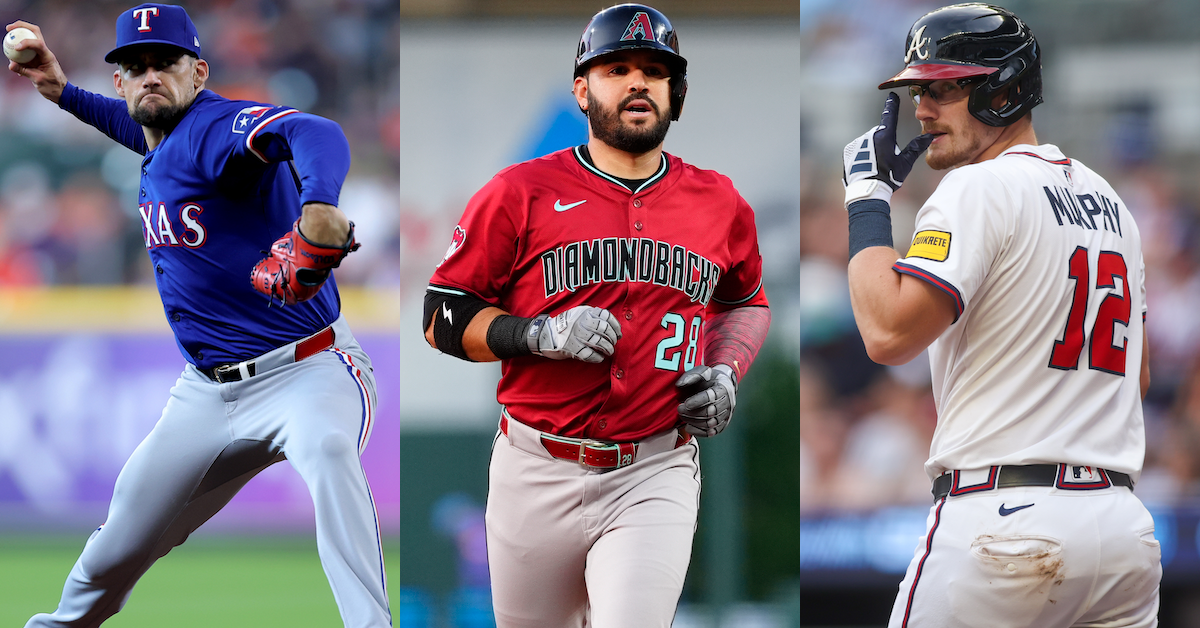
Any fan, analyst, or baseball executive would be hard-pressed to say that the Rangers pitching staff has failed to do its job in 2025. The rotation has been especially solid, ranking first in baseball in ERA, seventh in FIP, and sixth in WAR. If the bullpen hasn’t been as dominant, they’ve also improved significantly compared to last season, already accumulating almost as many wins above replacement as they did in the entire 2024 season. And yet the Rangers, less than two years removed from soaking each other with champagne to celebrate a World Series championship, sit below .500. A losing season here would be the franchise’s eighth in the last nine years, its worst showing since the move from Washington to Texas. The bats have let the team down, ranking near the bottom of baseball, and what’s worse, the underperforming offense consists mainly of players who the Rangers wanted in their lineup. So is there hope for a turnaround, or will the Rangers need to find new solutions to their run-scoring woes?

First, let’s assess just how lousy the offense has been. Well, ranking 25th in the majors in runs scored is their sunniest number. The Rangers rank 28th in on-base percentage, 27th in slugging percentage, and 28th in wRC+ at 80. The latter number outpaces only the Pirates and Rockies, two teams you don’t especially want to model your ballclub after. While the team has played solid defense, the abundance of leather hasn’t come close to making up for the shortage of wood, leaving the Rangers’ position players 25th in the league in WAR. What little offense there has been has come in very short bursts:

Most Games Scoring Zero or One Runs, 2025
Team Count
Texas Rangers 20
Colorado Rockies 19
Chicago White Sox 17
Pittsburgh Pirates 17
Cincinnati Reds 15
Kansas City Royals 15
San Diego Padres 15
St. Louis Cardinals 15
Tampa Bay Rays 15
Los Angeles Angels 14
San Francisco Giants 14
Boston Red Sox 13
Atlanta Braves 12
Milwaukee Brewers 12
Minnesota Twins 12
Washington Nationals 12
Cleveland Guardians 11
Detroit Tigers 11
Houston Astros 11
Seattle Mariners 11
Miami Marlins 10
Toronto Blue Jays 10
Baltimore Orioles 9
New York Mets 8
Athletics 8
Philadelphia Phillies 8
Arizona Diamondbacks 7
Chicago Cubs 7
Los Angeles Dodgers 6
New York Yankees 6

Read the rest of this entry »


Luke Weaver’s Sore Hamstring Trips Up Yankees Bullpen

Mark J. Rebilas-USA TODAY Sports

Tireless reporter Jeff Passan of ESPN reported late Monday night that the hamstring pain that caused Yankees closer Luke Weaver to be held out of Sunday night’s game against the Dodgers would land him on the IL, for as long as 4-6 weeks, with a more specific timetable to be presented at a later time. The extent of Weaver’s injury was previously unknown, as he was still in the trainer’s room well after the final pitch, through the end of postgame media access.

Weaver has been nearly flawless all season — allowing just three runs in 25 2/3 innings across his 24 appearances, though two of those runs have come in his last three games — and in late April, he took over as the team’s closer for Devin Williams, who was removed from the role after his atrocious start. While Weaver’s microscopic 1.05 ERA probably isn’t for real, given his more “normal” 3.04 FIP, even the latter number makes him one of the most important members of the New York relief corps, and losing him for a significant amount of time is a blow. Weaver represents one of the most successful rotation-to-bullpen conversions in recent memory, going from a struggling journeyman starter, who was released and then later claimed on waivers in 2023, to being a candidate for his first All-Star appearance this July. Since his transitioning to the bullpen, which also came with a reinvention of his delivery that featured a minimalist windup, Weaver has put up a 2.46 ERA and a 3.26 FIP over 109 2/3 innings. He also gave up just one hit across his four World Series appearances last October.

While this can hardly be considered good news, the impact of the bad news is mitigated by a couple of factors. First, Weaver’s injury comes at a time when the Yankees have a 5 1/2-game lead in the AL East. That’s certainly not an insurmountable lead, but it’s a comfortable one at this point of the season. Back in April, our preseason projections had the Yankees with only a 31% chance of winning the division, and ZiPS was even less confident, at 24%. As of Tuesday morning, these divisional probabilities are at 89% and 86%, respectively. The ZiPS number factors in Weaver’s injury, projecting him to miss a full six weeks as the worst-case scenario, in order to illustrate this point: The Yankees only get a 0.8% percentage bump if he happens to miss the minimum amount of time before he can come off the IL, meaning they’re in fairly strong shape either way. Read the rest of this entry »


Royals Be Nimble, Royals Be Quick, Royals Desperately Need Jac’s Stick

Corey Perrine/Florida Times-Union-USA TODAY NETWORK

With the sixth pick in the 2024 draft, the Kansas City Royals took slugger-pitcher Jac Caglianone out of the University of Florida, and set him to the task of being a full-time hitter. Caglianone’s short 2024 debut was a middling performance at best, as he hit .241/.302/.388 for the High-A Quad Cities Rivers Bandits, and while he showed impressive power in spots in the Arizona Fall League, he hardly dominated the opposition.

But since the calendar flipped to 2025, Caglianone has been on a quest for vengeance against pitchers with the ferocity of a Liam Neeson movie protagonist. First, he went 9-for-18 in spring training with six extra-base hits, in order to give major leaguers fair warning that he was coming for them. After hitting .322/.394/.553 for Double-A Northwest Arkansas, a promotion to Triple-A hasn’t tamped down his homerlust, and he’s already smacked five home runs for Omaha. The question of Caglianone’s promotion to the majors has rapidly become “when” rather than “if,” and it’s in the interest of the Royals to answer it with a three-letter word: “Now.” Read the rest of this entry »


Is the Third Time the Charm for Aaron Judge’s Triple Crown Hopes?

Brad Penner-Imagn Images

Will Aaron Judge win the Triple Crown? If you were hanging around on FanGraphs three years ago, this question might sound familiar. If you don’t want to click the link, back at the end of 2022, both Judge and Paul Goldschmidt were within earshot of a Triple Crown in the final weeks of the season. The projected probabilities were firmly against either of them winning it (about 4% for Judge and 3% for Goldschmidt), the bank won as it tends to do, and Miguel Cabrera remained the only Triple Crown winner of the last half-century. There’s a lot of 2025 left to go, but the man sometimes known as Arson Judge is once again setting fire to the league. And this time, some of the factors weighing against his potentially performing the feat are no longer present.

Triple Crown stats have lost their luster as tools for evaluating overall performance, especially batting average and runs batted in, but not everything has to be an optimized evaluative tool to be cool. Bo Jackson was not even close to the best baseball players of the late 1980s, but I dare someone to say he wasn’t one of the [insert superlative used by kids today that Dan totally doesn’t know because he’s old] players of his time. Triple Crowns are fun in a way that some sabermetric Triple Crown, perhaps wRC+/sprint speed/FRV, is not. Judge is, of course, also having an insanely good season by our more nerdy numbers, but today, we’re old school. And what could possibly be more old school and sepia toned than projection algorithms? Read the rest of this entry »


Dan Szymborski FanGraphs Chat – 5/22/25

12:00
Avatar Dan Szymborski: Chat time chat time, something that rhymes with chat time

12:00
Avatar Dan Szymborski: lime!

12:00
Avatar Dan Szymborski: slime!

12:00
Avatar Dan Szymborski: grime!

12:00
Avatar Dan Szymborski: splat chime!

12:00
Avatar Dan Szymborski: fat dime!

Read the rest of this entry »


Which Pitchers Have Seen Their 2026 Projections Change the Most?

Erik Williams and Sam Navarro-Imagn Images

I spend a lot of time saying the word “April.” It’s a convenient excuse to wave away any notion of changing my mind drastically on a player after two or three weeks of the season. But April isn’t actually meaningless, and as we head toward June, we’re already nearly a third of the way through the season. A lot of the stuff we’ve seen isn’t just a rough patch or a freak BABIP, but career trajectories changing, and that has consequences for the players and their teams. One of the most common questions about players I get in chats is some variation of “What does ZiPS think now?” I can’t answer them all, mainly because “doughy middle-aged nerd talks to his magical baseball box for an hour” sounds like the worst episode of Black Mirror ever. That said, because I do full in-season runs of ZiPS in the middle of every month, now seems like a good time to get some projectionist changes of heart for the overachieving and underperforming players.

So whose changing fortunes are most likely to lead to changed destinies? Well, to get an idea of which trajectories have changed the most, I took the current 2026 projected numbers for each player and compared them to the 2026 ZiPS projections from before this season began. We’ll start with the good news, because I’m a Baltimore native and an Orioles fan, so I need something sunny first. These are park-neutral projections, and I eliminated anyone who is projected as below replacement level, since we’re focusing on major league-relevant players.

Yesterday, sometimes known as “one Orioles loss ago,” I took a look at the hitters whose 2026 projections have changed the most since the start of this season, so now it’s the pitchers’ turn. Since we’re talking about pitchers, I also took out the guys who have missed most of the season due to injury, or the bottom 25 would just be a list of pitchers who might need Tommy John surgery.

Here are the pitchers whose 2026 ZiPS projections have improved the most since the beginning of this season, sorted by the greatest gains in projected WAR: Read the rest of this entry »


Which Hitters Have Seen Their 2026 Projections Change the Most?

Vincent Carchietta and Jerome Miron-Imagn Images

I spend a lot of time saying the word “April.” It’s a convenient excuse to wave away any notion of changing my mind drastically on a player after two or three weeks of the season. But April isn’t actually meaningless, and as we head toward June, we’re already nearly a third of the way through the season. A lot of the stuff we’ve seen isn’t just a rough patch or a freak BABIP, but career trajectories changing, and that has consequences for the players and their teams. One of the most common questions about players I get in chats is some variation of “What does ZiPS think now?” I can’t answer them all, mainly because “doughy middle-aged nerd talks to his magical baseball box for an hour” sounds like the worst episode of Black Mirror ever. That said, because I do full in-season runs of ZiPS in the middle of every month, now seems like a good time to get some projectionist changes of heart for the overachieving and underperforming players.

So whose changing fortunes are most likely to lead to changed destinies? Well, to get an idea of which trajectories have changed the most, I took the current 2026 projected numbers for each player and compared them to the 2026 ZiPS projections from before this season began. We’ll start with the good news, because I’m a Baltimore native and an Orioles fan, so I need something sunny first. These are park-neutral projections, and I eliminated anyone who is projected as below replacement level, since we’re focusing on major league-relevant players. Today, we’ll cover the position players before moving on to the pitchers tomorrow.

Here are the players whose 2026 ZiPS projections have improved the most since the beginning of this season, sorted by the greatest gains in projected WAR: Read the rest of this entry »


Dan Szymborski FanGraphs Chat – 5/15/25

12:01
Avatar Dan Szymborski: Ah, we meet again, Fangraphiers!

12:01
M: Better stash? Cowser or Meadows?

12:01
Avatar Dan Szymborski: Cowser, I think. You’re not rewarded for the best stuff Parker Meadows does!

12:02
.330/50: I looked it up on stat muse, and, weirdly, there are seven seasons where a player hit 50+ hr with a .349+ BA. And there are seven where a player hit 50+ with a .329+ BA. Barry in 01 was at .328 and one of Foxx’s two biggest years was .349. So… I know Zips doesn’t think AJ can keep THIS up, but given he’s been hitting like .370 for more than a year now, where would you rank the season all time if he “slumps” to finish the year at like a .335/.440/.712 with 50+ (again, measurably worse than he has been over the past year)? To me it would basically just be Barry and his special sauce since expansion ahead of it.

12:03
Avatar Dan Szymborski: I can’t give an exact ranking off-hand, but it’s an absolutely monster season, and I think it would cement his status as a Sandy Koufax-esque Hall of Famer if something bad happened.

12:03
Avatar Dan Szymborski: I would personally argue he’s already at that level, but I strongly suspect I’m much more willing to vote for a dizzying-peak/shortish career guy than most writers are

Read the rest of this entry »


Death, Taxes, and Freddie Freeman Being Awesome

Dale Zanine-Imagn Images

The world has changed in a lot of ways over the last dozen years, some good, and some… not. One thing that doesn’t change, however, is the status of Freddie Freeman at or near the top of the first base dogpile.

If at any point over the last decade you made a list of baseball’s top first basemen and didn’t include Freeman, you hopefully crumpled your list and started over again. Freeman will celebrate the 15th anniversary of his 2010 major league debut with the Braves later this year, and more than 2,000 hits and 350 homers later, he’s likely just rounding out the text on his bronze Hall of Fame plaque. Read the rest of this entry »


Let’s Sign Some Contracts! 2025 Edition

Kamil Krzaczynski and Jeff Hanisch-Imagn Images

Spending your own money is fun, but spending someone else’s money is even better! When it comes to extending major league contracts, unless you’re a billionaire, or a millionaire with a lot of millionaire business partners, you pretty much have to live vicariously through those other parties. Keeping talent wearing your uniform, of course, has more utility than a simple splendiferous shopping spree, since the players you want to retain are unlikely to get less expensive when they hit free agency. The Toronto Blue Jays did their own impressive feat of cash-splashing last month, when they gave Vladimir Guerrero Jr. half a billion bucks or about $700 million puckaroos, maplebacks, or whatever it is that Canadians call their money. Yes, comments section, I’m aware they’re dollars.

For this year’s edition, I’ve chosen seven players to sign to long-term deals with their current clubs, and in all seven cases, I believe an extension would be mutually beneficial for both the player and his respective team. I’ve included the up-to-date ZiPS projections for each player, as well as the contract that ZiPS thinks each player should get, though that doesn’t necessarily mean that I think the player will end up with that figure or even sign an extension.

Tarik Skubal, Detroit Tigers – Seven years, $240 million

ZiPS Projection – Tarik Skubal
Year W L ERA G GS IP H ER HR BB SO ERA+ WAR
2026 13 7 2.79 29 29 174.0 141 54 14 33 193 149 4.7
2027 13 7 2.88 29 29 172.0 144 55 15 33 186 144 4.5
2028 12 7 2.99 28 28 165.3 143 55 15 31 174 139 4.1
2029 11 7 3.12 28 28 158.7 140 55 15 30 161 133 3.7
2030 10 8 3.26 28 28 154.7 141 56 16 29 153 127 3.4
2031 10 7 3.50 27 27 149.3 142 58 16 29 143 119 2.9
2032 9 8 3.56 26 26 144.0 139 57 16 29 135 117 2.7

After his unanimous selection as the AL Cy Young winner last season, Tarik Skubal isn’t doing anything in 2025 that would make him less expensive on a long-term deal. When I ran ZiPS late last summer, Skubal just barely beat out Logan Webb for the most rest-of-career projected WAR among active starting pitchers, and he has maintained a very slight edge since. The AL Central is just ripe for some team to dominate the rest, and even if the Tigers don’t spend like they did during the Mike Ilitch years, they don’t need to dish out $300 million a year to be the big dog in this division. Skubal gives Detroit a weapon that no other AL Central team can match, and at this point, he’s probably no more of an injury risk than is any other pitcher. Outside of Javier Báez, the Tigers have very little guaranteed money on the books (Colt Keith’s deal wouldn’t even hamstring the Pirates or A’s), and if they’re looking going to spend to keep one player on the team long term, who else could it be?

Wyatt Langford, Texas Rangers – Nine years, $239 million

ZiPS Projection – Wyatt Langford
Year BA OBP SLG AB R H 2B 3B HR RBI BB SO SB OPS+ WAR
2026 .272 .349 .488 522 84 142 28 5 25 89 57 112 19 134 4.1
2027 .270 .348 .488 541 89 146 29 4 27 93 60 113 19 133 4.2
2028 .269 .349 .489 555 92 149 30 4 28 96 64 112 18 134 4.3
2029 .270 .352 .490 560 93 151 31 4 28 97 66 111 17 135 4.4
2030 .268 .351 .485 557 92 149 31 3 28 96 67 109 15 134 4.3
2031 .266 .351 .479 549 91 146 30 3 27 93 67 107 14 132 4.1
2032 .265 .350 .477 535 87 142 29 3 26 90 65 105 13 131 3.9
2033 .265 .350 .477 516 84 137 28 3 25 86 62 102 11 131 3.7
2034 .265 .350 .471 516 82 137 28 3 24 85 62 103 10 130 3.5

ZiPS was famously in love with Wyatt Langford coming into 2024, projecting him for 2.6 WAR just a few months after he was drafted out of Florida. The projection looked cringe early on as Langford struggled, but after returning from the hamstring injury that cost him most of May, he went on a tear, hitting .261/.334/.452 for a 122 wRC+ and 3.0 WAR the rest of the way. He finished the year off with a flourish, hitting eight homers and putting up nearly a 1.000 OPS in September. Langford has a 145 wRC+ this season and is already at the 1.0-WAR mark, and with nearly two years until he hits even salary arbitration, this is the best time for he and the Rangers to come to a deal that buys out some of his free agent years. He is projected to be the Rangers’ most valuable player in the long term, and they have demonstrated a willingness to spend top dollar on their best guys.

Kyle Tucker, Chicago Cubs – Eight years, $203 million

ZiPS Projection – Kyle Tucker
Year BA OBP SLG AB R H 2B 3B HR RBI BB SO SB OPS+ WAR
2026 .260 .354 .474 546 89 142 27 3 28 92 79 92 22 128 4.4
2027 .260 .353 .471 535 86 139 26 3 27 88 77 90 20 127 4.2
2028 .252 .346 .447 519 80 131 25 2 24 82 74 88 17 119 3.4
2029 .249 .343 .436 497 76 124 23 2 22 75 71 85 15 116 3.0
2030 .245 .339 .423 468 68 115 22 2 19 67 66 82 12 111 2.4
2031 .240 .333 .401 434 61 104 20 1 16 59 60 78 10 104 1.7
2032 .238 .331 .397 391 54 93 18 1 14 52 54 71 8 102 1.4
2033 .235 .327 .389 345 46 81 15 1 12 44 47 63 6 99 1.0

ZiPS was notoriously grumpy about Kyle Tucker back in March, but it’s coming around on him fast, and the gap between ZiPS and Steamer from the preseason has narrowed by two-thirds. No, the Cubs aren’t going to be able to sign him for $203 million; if he were willing to sign for that amount of money, I suspect the congratulatory press conference announcing his signing would have been months ago. But there is a dollar amount that will do the trick, and while that figure almost certainly won’t be as high as what Guerrero Jr. signed for, the fact that so few impact bats will hit free agency over the next few years gives Tucker a great deal of leverage. Now that Guerrero’s off the market, ZiPS projects Tucker to have the best 2026-2028 wRC+ of any player who is set to enter free agency after either this season or next. The second-best outfielder is Cubs teammate Seiya Suzuki, who has a 10-point shortfall compared to Tucker, not to mention that Suzuki is a much worse defender.

MacKenzie Gore, Washington Nationals – Six years, $123 million

ZiPS Projection – MacKenzie Gore
Year W L ERA G GS IP H ER HR BB SO ERA+ WAR
2026 11 9 3.70 30 30 165.3 147 68 19 56 193 110 3.1
2027 10 10 3.77 29 29 160.0 146 67 19 52 184 108 2.9
2028 10 9 3.82 28 28 157.7 146 67 19 50 176 107 2.7
2029 9 10 3.90 28 28 152.3 144 66 19 48 165 104 2.5
2030 9 10 4.01 28 28 150.3 145 67 19 48 158 102 2.2
2031 8 9 4.16 26 26 138.3 137 64 18 44 141 98 1.9

The Nationals aren’t contenders yet, but when you look at their offensive core, you see the fuzzy edges of a lineup that will get Washington back to playing October baseball. While the rotation has actually been surprisingly solid so far this season, pitchers like Jake Irvin and Mitchell Parker are overperforming their peripheral numbers, and we can’t bank on either of them to be a true ace. MacKenzie Gore, on the other hand, has peripherals that are even better than his excellent early-season stats — and he currently leads the league in strikeouts. That’s no fluke, either, as hitters simply aren’t making much contact against the former first-rounder. Gore’s 66.3% contact rate, if maintained, would be the 11th-best number among ERA qualifiers over the last decade, just behind former teammate Patrick Cor… OK, let’s stop that sentence before it gets dark. That Gore has two more years of cost control remaining gives the Nats an opportunity to absorb some risk on the injury front in order to get a better deal for a pitcher who looks like he’ll get rather expensive in a couple of years.

Logan Gilbert, Seattle Mariners – Six years, $121 million

ZiPS Projection – Logan Gilbert
Year W L ERA G GS IP H ER HR BB SO ERA+ WAR
2026 10 7 3.41 31 31 184.7 155 70 24 43 193 114 3.6
2027 9 7 3.49 29 29 173.0 148 67 23 40 176 111 3.2
2028 8 7 3.56 27 27 162.0 143 64 22 38 159 109 2.8
2029 8 6 3.64 26 26 148.3 133 60 20 35 142 107 2.4
2030 7 7 3.80 26 26 144.3 135 61 21 34 134 102 2.1
2031 6 6 3.95 22 22 127.7 123 56 19 31 115 98 1.6

To paraphrase Saint Augustine of Hippo: Jerry Dipoto, give me a Logan Gilbert contract extension, but not yet. You should probably never sign a pitcher who is currently on the IL with a flexor strain to big deal, so unlike the other extensions here, I wouldn’t suggest that the Mariners do this tomorrow. But if Gilbert comes back without problems or red flags, Seattle should sign him long term, especially with pitchers like George Kirby and Bryan Woo farther away for free agency and Luis Castillo not the talent he was as few years ago. ZiPS projects Gilbert to rank 10th among pitchers in five-year WAR, and of the others in the top 10, only Gilbert, Skubal, and Webb are eligible for free agency within the next three years. ZiPS prices Gilbert a bit lower than Gore, simply because the former is older and comes with a little less upside.

Steven Kwan, Cleveland Guardians – Six years, $111 million

ZiPS Projection – Steven Kwan
Year BA OBP SLG AB R H 2B 3B HR RBI BB SO SB OPS+ WAR
2026 .297 .371 .413 560 86 166 24 4 11 65 61 60 15 124 3.8
2027 .292 .367 .404 552 83 161 24 4 10 63 60 58 13 120 3.4
2028 .286 .361 .396 536 79 153 23 3 10 60 58 56 12 116 3.0
2029 .282 .359 .389 514 75 145 22 3 9 56 56 54 10 114 2.7
2030 .276 .353 .379 485 69 134 20 3 8 51 53 51 9 109 2.2
2031 .272 .350 .370 449 62 122 19 2 7 46 49 49 8 106 1.8

Steven Kwan is not a traditional corner outfielder, but even with his lack of power, he’s blossomed into an All-Star left fielder. Kwan is one of the most valuable contact hitters in baseball, and he makes the most of his elite contact ability by not falling into what I call the David Fletcher trap: Being so good at making contact that you hit a lot of pitches that you shouldn’t swing at. On the contrary, Kwan is a rather disciplined hitter for someone with his bat-to-ball skills; his career walk and chase rates are better than the league average. He plays solid defense in left field and gets as much out of his middling speed as is possible. The Guardians don’t like signing big deals, but José Ramírez isn’t impervious to the effects of aging, and the Guardians will have serious issues if they have to replace the production of both J-Ram and Kwan at the same time.

Hunter Brown, Houston Astros – Six years, $105 million

ZiPS Projection – Hunter Brown
Year W L ERA G GS IP H ER HR BB SO ERA+ WAR
2026 11 7 3.35 28 25 153.0 133 57 15 50 153 123 3.2
2027 11 7 3.35 27 24 150.3 132 56 15 48 148 123 3.1
2028 10 7 3.44 26 23 149.3 133 57 16 47 143 120 2.9
2029 10 7 3.55 26 22 144.3 130 57 16 45 135 116 2.7
2030 10 7 3.66 26 22 142.7 131 58 16 45 131 113 2.5
2031 9 7 3.76 23 20 131.7 124 55 16 41 117 110 2.2

Is Hunter Brown an ace now? I get asked that question in my chats three or four times a week now, and for the most part, I’ve avoided answering it because I knew that this piece was coming. So the answer is: Yes, yes he is. We have yet to see him carry a workload of 180-200 innings in a season, but at the moment, he’s on track to get there this year. And besides, volume is becoming less and less a part of an ace’s job description. Over the last calendar year, Brown ranks sixth in baseball with 5.1 WAR. During that span, he’s totaled 185 2/3 innings in 30 starts and posted a 16-6 record with a 2.28 ERA and a 2.89 FIP. Brown makes less than a million this year, and he’s still a long way away from fabulous riches. Buying out a few of his free agency years could be a good idea for both Brown and the Astros.