Archive for Daily Graphings

Which Teams Have Suffered the Most From Injuries?

David Frerker and Jerome Miron-Imagn Images

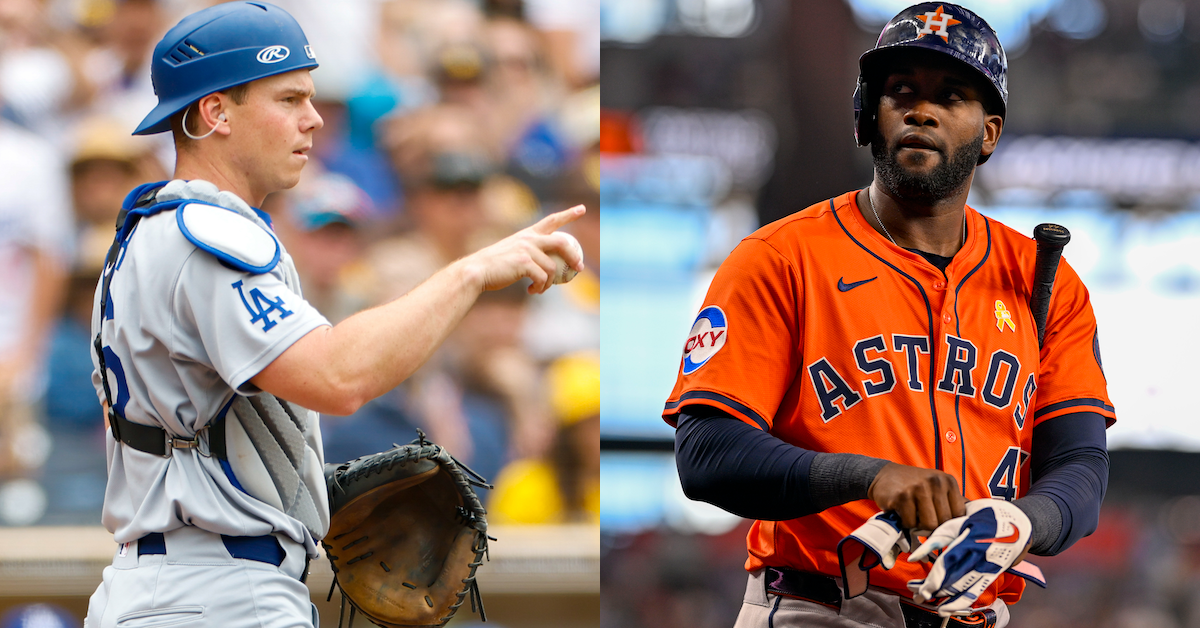
Major League Baseball’s injured list is the sport’s unofficial 31st team, one that never makes the playoffs but always plays spoiler. In the last week, 22 players were placed on the IL. The biggest name was Will Smith, who late last week landed on the IL with a bone bruise on his hand, courtesy of a rather rude foul tip off the bat of Nick Gonzales.

The Dodgers aren’t known for having a great deal of injury luck, but as injuries go, Smith’s appears to be far less consequential than it could have been. Smith’s tests revealed no fracture, minimizing the amount of time he’s expected to miss. The 30-year-old catcher is having the best offensive season of his career, with a .296/.404/.497 slash line and a 153 wRC+, all except slugging percentage representing career bests. He has played in fewer games than usual, but that’s largely due to the team’s roster construction; he started 39 games at designated hitter in 2022-2023, but Shohei Ohtani’s presence now makes it far more difficult to sneak him into the lineup here when he has a day off of catching. The injury would be a big deal… if it were a big deal, but Smith could return as early as this upcoming weekend. It could have been even sooner, but Smith’s start last Tuesday after missing five games meant that the retroactive IL date was later than September 3, when the Gonzales foul tip occurred.

Smith and the Dodgers seem to have gotten lucky, but the Astros and Yordan Alvarez may not see the same fortune. Less than a month after returning from a broken hand that had cost him more than half of the 2025 season, Alvarez turned his ankle while touching home plate in an awkward fashion that is only appropriate on your Stretch Armstrong doll. He has not yet been placed on the IL, and the exact consequences are still to be determined, but it’s all but official that he is going to miss some time. We’ll know more after his MRI on Tuesday. A serious injury to Alvarez could imperil the Astros in their tight playoff race and beyond if they make it to October.

Alvarez has already spent 115 days on the IL this season, and the Astros have certainly felt his absence, but how do their losses this season compare to those of other teams this season? More broadly, which team has lost the most production to the injured list? If you ask the fans of an underperforming team, the near-unanimous answer will be “us,” but I think we can do better than that! Read the rest of this entry »

A FanGraphs Playoff Odds Performance Update

Gregory Fisher-Imagn Images

Look, I get it. You keep refreshing FanGraphs, and it keeps saying that the Mets are 99.9999% likely to make the playoffs (okay, fine, 79.4%). You’ve seen the Mets play, though. They stink! They’re 32-48 since June 13. The White Sox are better than that! We think they’re going to make the playoffs? These Mets?! What, do we not watch the games or something?

Well, to be fair, our models don’t actually watch the games. They’re just code snippets. But given how the Mets’ recent swoon has created the most interesting playoff race in baseball this year, and given that our odds keep favoring them to pull out of a tailspin, the time is ripe to re-evaluate how our playoff odds perform. When we say a team is 80% likely to make the playoffs, what does that mean? Read on to find out.

In 2021, I sliced the data up in two ways to get an idea of what was going on. My conclusions were twofold. First, our model does a good job of saying what it does on the tin: Teams that we give an 80% playoff chance make the playoffs about 80% of the time, and so on. Second, our model’s biggest edge comes from the extremes. It’s at its best determining that teams are very likely, or very unlikely, to make the playoffs. Our flagship model did better than a model that uses season-to-date statistics to estimate team strength in the aggregate, with that coverage of extreme teams doing a lot of the work. Read the rest of this entry »


How the Same Defense Helps One Pitcher and Hurts Another

Michael McLoone and Benny Sieu-Imagn Images

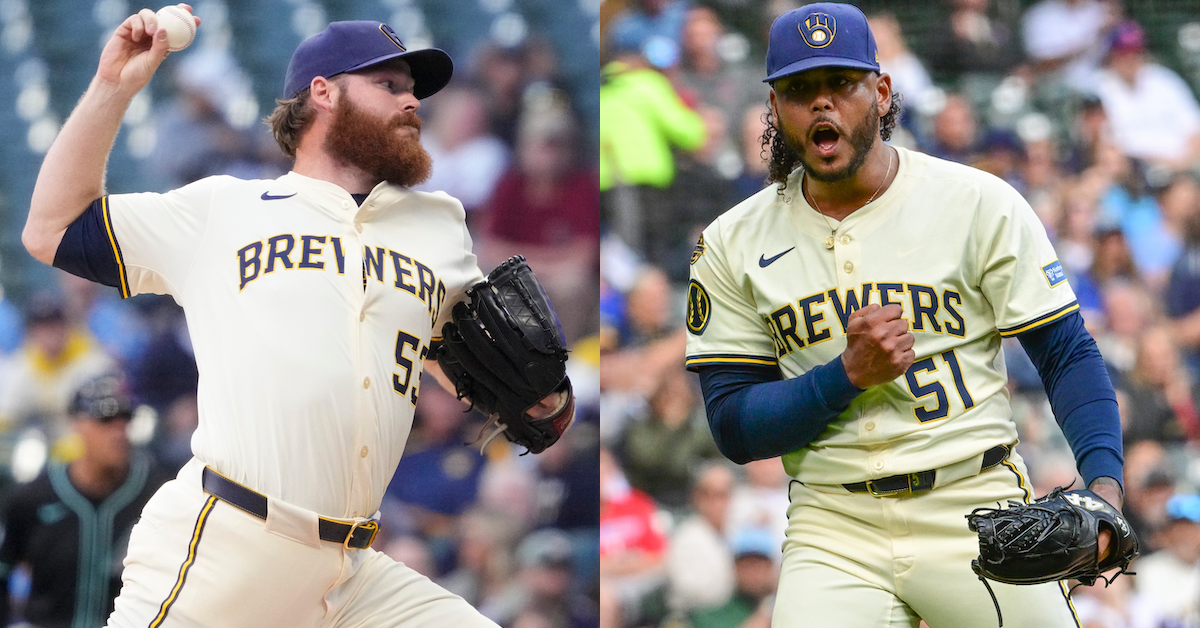
Freddy Peralta is having arguably the greatest season of his excellent eight-year career. The right-hander has ridden a career-best 2.69 ERA to a career-high 16 wins. However, I used the word arguably for a reason. Peralta’s 3.64 FIP is just the fourth best of his career, and his 3.93 xFIP is tied with 2024 for his fifth best. There’s a gap of 0.95 runs per nine innings between his FIP and his ERA. When you multiply that times his actual innings total of 163 2/3, FIP thinks he should’ve given up just over 17 more earned runs than he actually has allowed. None of this is surprising. Pitchers underperform or overperform their peripherals all the time. The interesting thing is that Statcast says that no pitcher has benefitted as much from the defense behind him as Peralta. When he’s has been on the mound, the Brewers defense has been worth just under 14 fielding runs. It’s neither this simple or this clean-cut, but it’s easy to combine these two numbers and make an inference: Defense can explain more than 80% of the difference between Peralta’s FIP and ERA.

On the other end of the spectrum is Peralta’s teammate Brandon Woodruff, who returned from shoulder surgery in July and has gone 6-2 over 11 starts and 59 2/3 innings. He’s posted a 3.32 ERA, 3.26 FIP, and 3.40 xFIP. In other words, FIP thinks Woodruff has gotten exactly what he’s deserved. However, Woodruff’s xERA is a scant 2.27. When you combine all those numbers, it means Statcast thinks several batted balls that should have resulted in outs instead fell in for non-homer base hits. The difference is a bit over six runs. Coincidentally or not, Statcast says the Milwaukee defense has been at its worst behind Woodruff, costing him just under five runs, once again just about 80% of the gap between an ERA estimator and his actual ERA.

That’s why we’re talking about Peralta and Woodruff. No two teammates have a bigger gap between the fielding run value of the defense behind them. It’s nearly an 18-run gap! It’s jarring. With 26 FRV, Statcast thinks the Brewers have the fourth-best team defense in the game, but somehow none of that brilliance has been shining on Woodruff. We’re going to use Statcast data to break down, as best we can, the reasons behind it. Hopefully, the comparison will show the various ways a team can provide defensive value. Let’s start with the catching numbers. Read the rest of this entry »


Amid the Collapse of Their Pitching, the Mets Are Barely Hanging On

Brad Penner-Imagn Images

Once upon a time — as of June 12, to be exact — the Mets had the best record in the majors (45-24) and a 5 1/2-game lead over the Phillies in the NL East. That afternoon, however, their rotation took a major hit when Kodai Senga strained his right hamstring. He hasn’t fully recovered his form, and it’s been mostly downhill for the Mets since then, even with their attempts to fortify their bullpen at the trade deadline, the arrival of some impressive rookie starters, and an MVP-caliber stretch by Juan Soto. The team entered Sunday on an eight-game losing streak that pushed them to the brink of elimination from the NL East race, and in danger of falling out of the third NL Wild Card spot.

The combination of Pete Alonso’s walk-off three-run homer off the Rangers’ Luis Curvelo, and losses by both the division-leading Phillies and the Giants (who now trail the Mets by 1 1/2 games in the Wild Card race) helped the Mets stave off those ignominious scenarios for the moment. Even so, the Phillies’ magic number to clinch is one, as they lead the NL East by 12 games with 12 to play. Not only are the Giants (75-74) on the Mets’ tail, but the Diamondbacks (75-75) are just two games behind, with the Reds (74-75) 2 1/2 behind. Read the rest of this entry »


Kevin Gausman’s Secret Weapon

John E. Sokolowski-Imagn Images

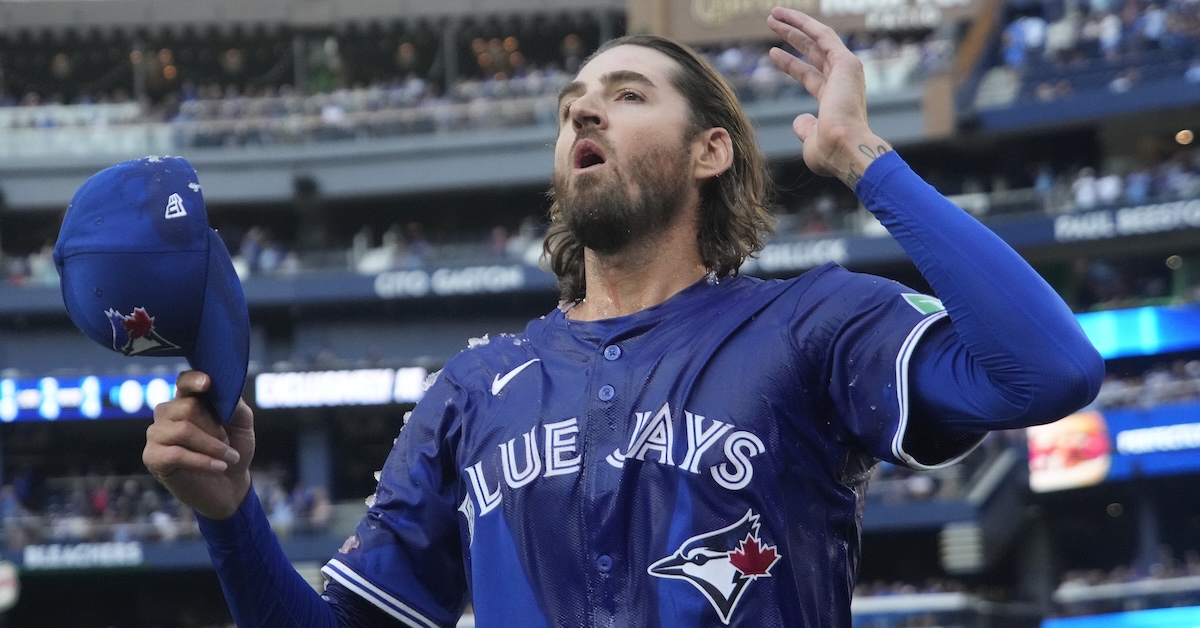
Keegan Matheson has a beard. Let’s start there. Matheson is MLB.com’s Blue Jays beat writer and he has a beard. It’s a big, glorious, pointy beard, and it’s attached to his face and everything.

Blue Jays starter Kevin Gausman has a beard too. It’s not glorious like Matheson’s. The right-hander usually opts for a few days’ growth, but in recent weeks, he’s been going a step further. It’s still patchy in the cheeks. Closeups show you individual hairs splayed in whichever direction their whimsy takes them. All the same, more often than not, Gausman has been moving beyond stubble status and into the beginnings of beard territory. Gausman has also been pitching quite well lately, running a 2.25 ERA and 3.00 FIP over his past 10 starts.

Last Thursday, Matheson watched Gausman mow down the Astros, pitching a shutout with nine strikeouts, two walks, and one hit, and made the connection. “The nerds won’t tell you this because their charts won’t show it,” he posted on Bluesky, “but Kevin Gausman’s recent hot streak has a direct correlation to him embracing a beard. Something to monitor.” Read the rest of this entry »


Sunday Notes: Cam Schlittler Shelved His Splitter (Yet Is Surviving Just Fine)

Cam Schlittler was on the doorstep of the big leagues when he led Sunday Notes on the penultimate day of June. Just 10 days later, the 24-year-old right-hander took the mound at Yankee Stadium against the Seattle Mariners and earned a win in his MLB debut. He’s been a presence in New York’s rotation ever since. In 11 starts for the pinstripers, Schlittler has a 3-3 record to go with a 3.05 ERA and a 3.73 FIP over 56 solid innings.

The 98-mph cut-ride fastball that Schlittler addressed in the article has been his most prominent pitch. Thrown at a 56.2% clip, it has elicited a .202 BAA and just a .298 slug. Augmenting the high-octane heater are a quartet of secondaries — none of which is the offering he planned to add to his arsenal this season.

“When I talked to you in the spring, I was working on a splitter,” Schlittler told me at Fenway Park on Friday. “But I just couldn’t figure it out. I didn’t want to go into the season competing with something I wasn’t really comfortable throwing, so I stopped throwing it.”

The 2022 seventh-round pick Northeastern University product began this season in Double-A, where he attacked hitters with the aforementioned fastball, a sweeper, and a curveball. He introduced a cutter — “metrically, it’s kind of in-between a slider and a cutter” — in his final start before being promoted to Triple-A in early June. He’s since added a two-seamer, giving him a pitch he can use to bore in on righties.

Which brings us back to the shelved splitter. Why does the young hurler feel that he wasn’t able to master the pitch? Read the rest of this entry »


Mind the WAR Gap

Vincent Carchietta, Joe Nicholson, Kirby Lee-Imagn Images

Aaron Judge stands alone. Well, Aaron Judge usually stands alone. This year, he’s got company. Judge leads all players with 8.3 WAR. Shohei Ohtani is right behind him with 7.8 total WAR (6.5 as a hitter and 1.4 as a pitcher), and Cal Raleigh is right behind him with 7.6. With a difference of less than three-quarters of a win, that’s an extremely tight race to be baseball’s WAR leader. It got me wondering how often these races are that tight, so I hit the spreadsheets. I pulled the top three WAR-getters in each season since 1901 and checked to see whether this year’s race is an outlier, and if so, just how out there it is compared to seasons past. The short answer is yes, this race is really tight by pretty much any historical standard.

Before we get into it, I’ve got to make a couple notes on the data and methodology here. First, I used FanGraphs WAR, both because I work here and because I’m a FanGraphs fan. (I’m also a fan of FanGraphs’ graphs, which makes me FanGraphs graphs fan. I could keep going.) Ohtani leads baseball in WARP, Baseball Prospectus’ version of WAR. As Ginny Searle wrote on Wednesday over at BP, Judge leads Raleigh by much more in both Baseball Reference WAR (which doesn’t incorporate pitch framing) and WARP (because DRC+ thinks Raleigh’s deserved offensive performance is slightly below his actual performance). Still, we’re going with fWAR, or as we refer to it here at FanGraphs, WAR.

Second, no matter which version you use, you’re really not supposed to dice WAR up like this. It’s a great stat that captures a lot, but it has error bars like any stat, and there are probably bits of value players produce that we can’t measure. If you’re selecting an MVP or comparing any two players based on fractions of a win, you’re probably doing it wrong. But I double-checked, and it turns out that nobody’s going to fire me for handling WAR slightly irresponsibly. Today, we’ll have some fun doing it wrong. Read the rest of this entry »


Mookie Betts May Salvage His Season Yet

Jonathan Hui-Imagn Images

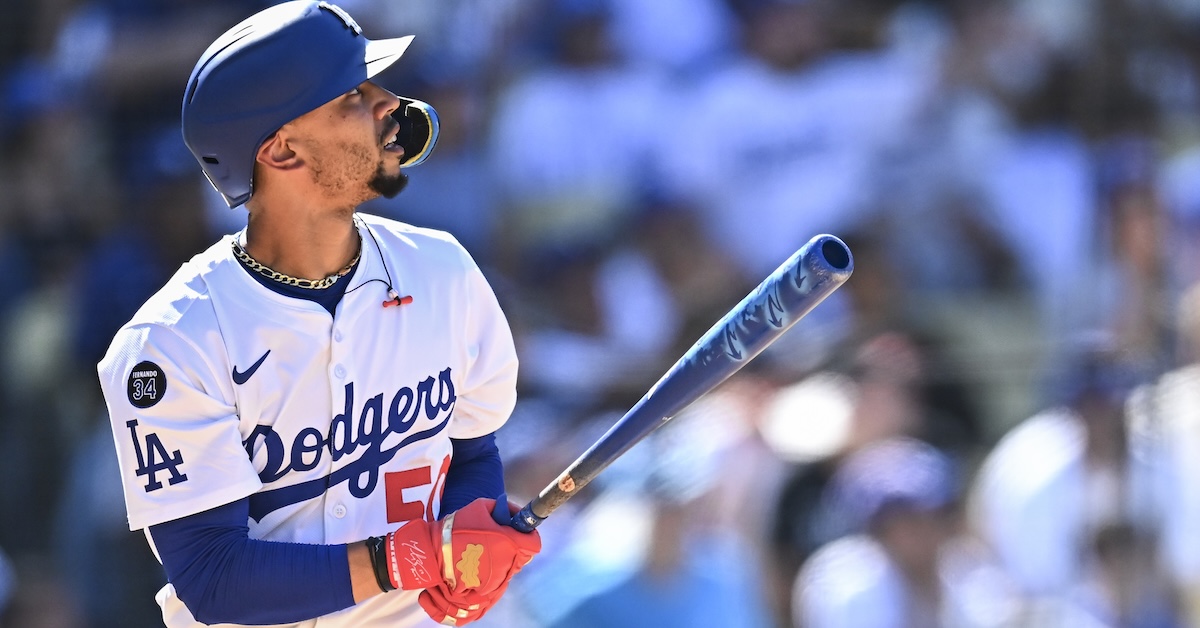
Mookie Betts entered the year as an eight-time All-Star, six-time Gold Glove winner, the majors’ only active position player with three World Series rings, and a likely future Hall of Famer. Not one to back down from a challenge, he’s turned himself into an exceptional shortstop after spending a good chunk of 2024 battling the position to a bloody draw. Yet after a mysterious illness knocked him out of the season-opening Tokyo Series and sapped his strength, he spent the first four months of this season struggling at the plate due to mechanical compromises and, by his own admission, a spiral of self-doubt. Over the past six weeks, he’s finally come around — and not a moment too soon as the Dodgers cling to a narrow NL West lead.

The offensive decline of the 32-year-old Betts seemed to come out of nowhere. Though he missed eight weeks last summer due to a fractured left hand, and didn’t hit the ball nearly as hard as in 2023, when he set a career high with 39 homers, Betts had an excellent season at the plate. He hit .289/.372/.491, with all three slash stats placing among the NL’s top eight and his 140 wRC+ ranking fifth — down 25 points from 2023, but matching his career mark to that point.

He hasn’t come close to approximating that level this season. Shortly before the Dodgers departed for Japan, Betts contracted a mysterious virus that not only sidelined him for those two games against the Cubs, but also prevented him from eating full meals and caused him to lose 23 pounds, no small matter for a 180-pound athlete. Yet he was back in the lineup for the Dodgers’ stateside opener against the Tigers on March 27, homered twice the next day, and started all but two of the team’s next 54 games. Read the rest of this entry »


Tongmorrow Comes Today

Vincent Carchietta-Imagn Images

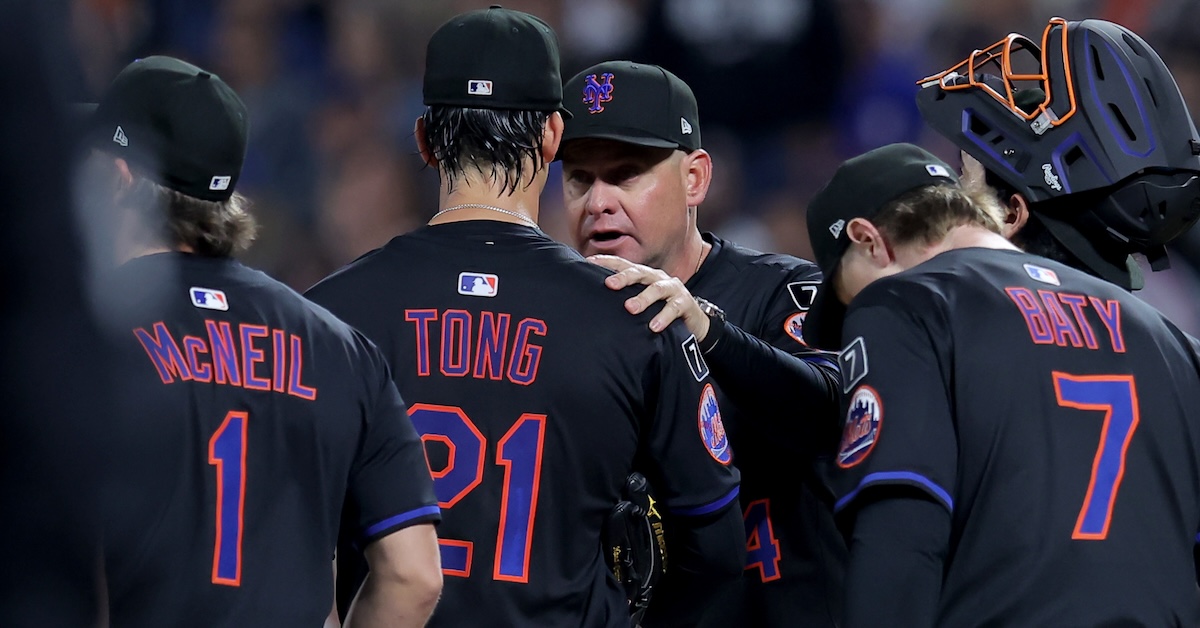
PHILADELPHIA — Nostalgia for the 1990s is so back! The Mets are running back Generation K, and at an interesting time. As it stands, their playoff rotation could include three pitchers who were in the minors in mid-August: Nolan McLean, Brandon Sproat, and Jonah Tong. At least, all three should figure somewhere on the postseason roster, should the Mets stop playing with their food and sew up the playoff berth they’ve had a hand on all season.

I’m old enough to remember the 90s the first time around — an era of flared jeans and futurism, much of which was rebadged 1960s nostalgia. Not least in Mets pitching prospects, when Bill Pulsipher, Paul Wilson, and Jason Isringhausen were viewed as the second coming of Tom Seaver, Jerry Koosman, and Gary Gentry and/or Nolan Ryan.

There is nothing new under the sun. Read the rest of this entry »


Let’s Imagine a Different Coby Mayo

James A. Pittman-Imagn Images

Every year, the Baltimore Orioles turn out a crop of strapping young hitters who just got done obliterating minor league pitching. You’ve probably heard of many of them. Adley Rutschman, Gunnar Henderson, Jackson Holliday, Colton Cowser, Jordan Westburg, Samuel Basallo, the list goes on. All six of those guys will be everyday regulars next year; the only reason they aren’t now is because Rutschman and Westburg are on the IL. But lost in that percolation of prospects is Coby Mayo, whose early major league career hasn’t quite gone as expected. I wondered why – and what Mayo could do to capitalize on his promise.

A year ago, Mayo was comprehensively dominating pitchers meaningfully older than him. He posted a 139 wRC+ in Triple-A at age 22, following up on an equally scintillating 2023 season. He was a preseason Top 100 prospect. His raw power was immediately evident to all observers. He looked like he’d be a key piece of the 2025 Orioles’ playoff run. But that run never materialized, and neither did Mayo’s thumping, mid-lineup offense. Instead, he’s hitting .184/.259/.327 and batting ninth for the last-place Birds.

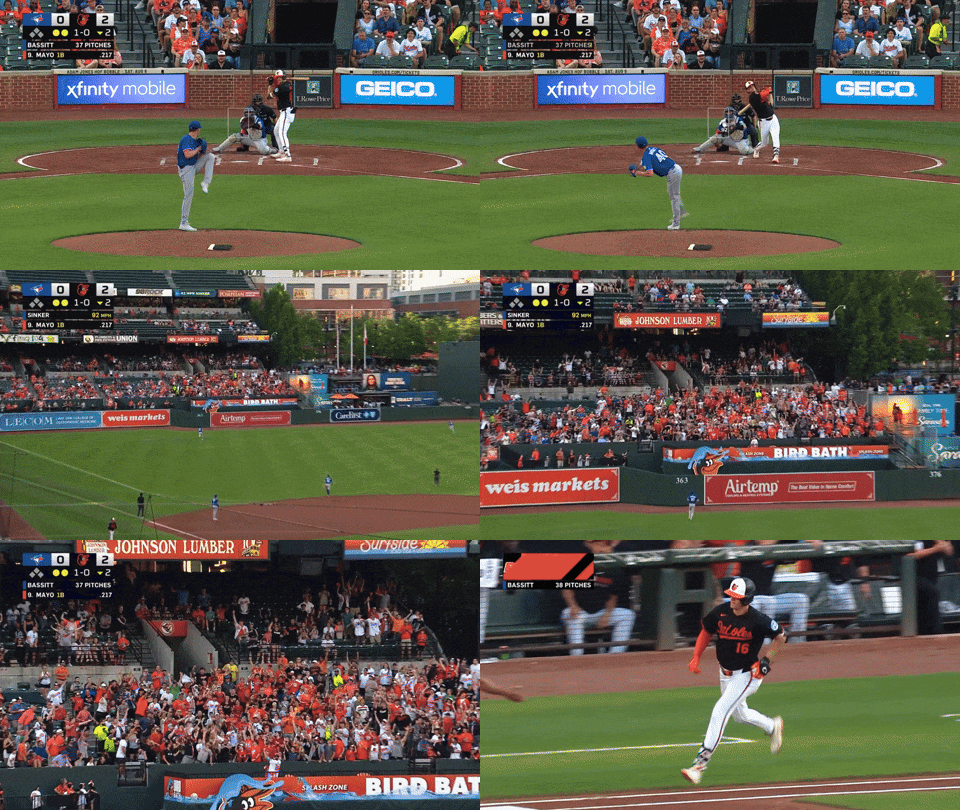
If you watch Mayo play, one thing jumps off the page: his unconventional uppercut swing. I’m not even quite sure how to describe it, but here’s a video of it at its best:

Swing mechanics aren’t my area of expertise, so I’ll just say it has a little funk to it and move on. The point is that he uses that swing to clobber the ball, and he really does accomplish what he sets out to, bad season notwithstanding. He has elite bat speed, and even in this miserable season, he’s posted good raw power indicators; his EV90, barrel rate, and launch angle suggest that he’s going to be elevating and celebrating plenty over the years to come. Read the rest of this entry »