Archive for Extension

San Diego Strikes Again With 11-Year Extension for Manny Machado

Manny Machado
Brad Penner-USA TODAY Sports

The speculation about Padres third baseman Manny Machado exercising his opt-out clause after the 2023 season came to a stunning conclusion over the weekend, as club and superstar agreed to an 11-year, $350 million contract. The new deal rips up the final six years of the contract that Machado signed before the 2019 season.

If nothing else, tally one team that is apparently not concerned with the short-term hiccups in baseball’s revenues due to the Bally/Diamond bankruptcy; the Padres are one of the teams with a regional sports network (RSN) that is affected. If revenues are up in the air, they have made sure that third base certainly is not, following an extension that will also keep Yu Darvish in town for all or most of the rest of his career. The Padres aren’t trying to be the Rays, the scrappy underdogs that hunt very large game with a sharpened stick; they’re trying to go toe-to-toe with the Dodgers at their own game. This is less David versus Goliath and more M. Bison versus palette-swapped M. Bison in “Street Fighter II.”

My colleague Jay Jaffe covered a lot of the particulars about the Manny situation in San Diego last week, so I’m going to skip the exposition. I think Jay and I both underestimated just how motivated the Padres were to ensure Machado stayed in mustard-and-brown for a long time. We had a ZiPS projection in that piece, but now that we know where he will play and for how long, I ran a new projection.

ZiPS Projection – Manny Machado
Year BA OBP SLG AB R H 2B 3B HR RBI BB SO SB OPS+ DR WAR
2023 .266 .338 .469 561 87 149 28 1 28 95 62 119 8 125 2 4.8
2024 .262 .336 .460 541 82 142 27 1 26 89 61 115 7 123 1 4.3
2025 .254 .328 .438 520 76 132 25 1 23 81 58 112 6 115 1 3.5
2026 .249 .323 .422 490 69 122 23 1 20 73 54 106 5 109 0 2.8
2027 .245 .320 .408 453 61 111 21 1 17 63 50 100 4 105 -1 2.2
2028 .237 .311 .388 410 53 97 18 1 14 54 44 93 3 97 -2 1.4
2029 .234 .308 .376 359 44 84 16 1 11 46 38 83 2 93 -2 0.9
2030 .230 .303 .362 304 37 70 13 0 9 37 32 71 2 88 -3 0.5
2031 .226 .297 .347 265 30 60 11 0 7 31 27 62 1 82 -3 0.2
2032 .225 .296 .348 178 20 40 7 0 5 20 18 43 1 82 -3 0.1
2033 .220 .289 .339 109 12 24 4 0 3 12 11 26 0 78 -2 -0.1

Let’s just say that ZiPS isn’t overly enthusiastic about the contract, valuing Machado’s future services at $181 million over 11 years. He is a superstar, but there’s a big difference between signing a player before their age-26 season and their age-30 season. Just to illustrate, here’s the projection a second time, but with Machado the age he was when he signed his initial deal with the Friars.

ZiPS Projection – Manny Machado (Four Years Younger)
Year BA OBP SLG AB R H 2B 3B HR RBI BB SO SB OPS+ DR WAR
2023 .269 .343 .481 572 91 154 29 1 30 102 65 118 9 130 2 5.2
2024 .270 .344 .487 571 92 154 29 1 31 101 66 116 8 132 2 5.4
2025 .265 .343 .476 569 91 151 28 1 30 99 68 114 7 129 3 5.2
2026 .260 .338 .466 569 89 148 28 1 29 97 68 114 7 125 2 4.8
2027 .259 .337 .461 557 86 144 27 1 28 93 67 112 6 123 1 4.5
2028 .251 .331 .441 537 80 135 25 1 25 86 65 109 5 116 0 3.7
2029 .252 .332 .443 515 77 130 24 1 24 81 62 105 4 117 0 3.5
2030 .249 .328 .434 486 71 121 22 1 22 75 58 100 4 114 -1 3.0
2031 .248 .327 .427 487 69 121 22 1 21 73 57 101 3 112 -2 2.7
2032 .247 .326 .422 453 63 112 20 1 19 67 53 95 3 110 -3 2.3
2033 .243 .321 .407 420 56 102 19 1 16 60 48 89 2 105 -4 1.8

That’s a valuation over $400 million, a notable difference! The sad truth is that even for superstars, the 30s are more often than not a tale of significant decline. Just to illustrate, here are all non-active position players worth between 41–51 WAR through age 29 (Machado is at 46.6) and how they fared in their 30s.

20s WAR vs. 30s WAR for Selected Stars
Name 20s PA 20s HR 20s BA 20s OBP 20s SLG 20s WAR 30s PA 30s HR 30s BA 30s OBP 30s SLG 30s WAR
Honus Wagner 3888 37 .341 .396 .489 41.2 7851 64 .320 .388 .455 96.9
Mike Schmidt 4506 235 .255 .374 .511 50.0 5556 313 .277 .385 .540 56.5
Joe Morgan 5298 103 .270 .384 .414 43.5 6031 165 .272 .399 .439 55.3
Nap Lajoie 4290 66 .363 .396 .545 48.3 6170 17 .320 .369 .410 53.9
Wade Boggs 3910 56 .354 .439 .484 43.0 6830 62 .313 .401 .419 45.3
Jeff Bagwell 4410 187 .304 .409 .536 42.3 5021 262 .290 .406 .544 37.9
George Davis 6095 60 .314 .378 .444 48.1 4056 13 .265 .336 .345 36.5
Paul Waner 4735 60 .351 .422 .521 41.2 6027 53 .319 .391 .436 35.8
George Brett 5338 125 .316 .369 .497 50.7 6287 192 .295 .370 .479 33.9
Sam Crawford 6133 58 .307 .354 .447 43.5 4461 39 .313 .372 .459 27.6
Joe Cronin 5218 62 .301 .381 .449 41.2 3620 108 .303 .402 .496 27.5
Reggie Jackson 5056 254 .265 .359 .503 45.8 6360 309 .259 .353 .480 27.0
Eddie Murray 5837 258 .298 .373 .509 45.0 6980 246 .278 .348 .449 27.0
Billy Hamilton 4378 26 .348 .455 .447 43.5 3206 14 .338 .456 .412 26.8
Johnny Mize 4189 184 .331 .413 .588 44.5 3182 175 .287 .376 .528 26.2
Al Simmons 4752 173 .363 .405 .596 47.4 4763 134 .305 .355 .475 23.6
Frank Thomas 4790 257 .330 .452 .600 48.7 5285 264 .276 .389 .515 23.4
Gary Carter 5025 188 .269 .342 .457 46.2 3994 136 .254 .326 .416 23.2
Ivan Rodriguez 5622 196 .304 .341 .485 46.2 4648 115 .288 .325 .438 22.8
Scott Rolen 5122 226 .286 .378 .520 47.8 3396 90 .274 .344 .447 22.0
Robin Yount 7148 144 .285 .331 .428 44.9 5101 107 .286 .357 .432 21.6
Goose Goslin 5600 145 .328 .393 .522 44.3 4222 103 .300 .380 .471 21.1
Alan Trammell 5949 118 .288 .355 .420 43.1 3427 67 .281 .346 .407 20.6
Manny Machado (Projected) 6273 283 .282 .341 .493 46.6 4645 163 .246 .319 .412 20.6
Tim Raines 5621 87 .303 .391 .442 46.4 4738 83 .283 .378 .405 20.0
Joe Torre 5481 181 .297 .362 .465 44.2 3321 71 .298 .369 .431 18.1
Lou Boudreau 5175 40 .292 .374 .410 49.9 1848 28 .304 .397 .427 17.6
Larry Doby 4182 164 .296 .403 .517 44.0 2731 109 .277 .368 .473 17.6
Dick Allen 4872 234 .297 .381 .543 43.9 2442 117 .282 .371 .514 17.4
Ernie Banks 4632 269 .292 .354 .557 46.7 5763 243 .260 .310 .454 16.6
Richie Ashburn 6109 19 .313 .393 .393 42.0 3627 10 .298 .402 .362 15.9
Jimmy Sheckard 6154 43 .284 .370 .394 41.6 2964 13 .251 .385 .344 15.1
Hank Greenberg 4587 247 .326 .418 .625 48.0 1509 84 .275 .393 .544 14.7
Bobby Bonds 5236 218 .273 .358 .482 42.5 2854 114 .258 .345 .450 14.6
Willie Keeler 5176 23 .376 .419 .470 41.4 4418 10 .300 .350 .347 14.3
Buster Posey 3692 116 .307 .373 .476 43.7 1915 42 .293 .369 .429 13.8
Elmer Flick 4701 43 .320 .397 .460 42.4 1713 5 .295 .367 .404 13.6
Duke Snider 5494 276 .306 .385 .557 51.0 2743 131 .275 .369 .504 12.8
Brian McCann 4354 176 .277 .350 .473 42.5 2496 106 .236 .315 .413 12.0
Willie Wells 3129 121 .336 .417 .571 46.8 1306 19 .314 .385 .451 10.3
Ted Simmons 5888 151 .297 .365 .454 44.0 3797 97 .266 .322 .411 10.2
Joe Medwick 5901 180 .332 .370 .542 47.8 2241 25 .302 .343 .406 9.3
Joe Kelley 5552 56 .335 .422 .485 46.0 2568 9 .279 .357 .378 9.0
David Wright 5453 204 .301 .381 .506 43.1 1419 38 .279 .357 .436 8.2
Vern Stephens 5694 207 .289 .360 .472 43.9 1546 40 .276 .337 .418 7.1
Ralph Kiner 4557 294 .281 .405 .571 42.4 1699 75 .274 .378 .489 6.4
George Sisler 4574 60 .361 .404 .510 46.4 4439 42 .320 .354 .426 6.2
Travis Jackson 5053 103 .298 .346 .446 41.2 1626 32 .268 .307 .394 5.8
Charlie Keller 3839 162 .292 .414 .530 42.7 765 27 .260 .390 .455 5.0
Vada Pinson 6850 186 .297 .341 .469 42.8 3553 70 .265 .301 .390 4.5
Cesar Cedeno 6051 158 .290 .353 .458 46.0 2082 41 .271 .327 .401 3.9
Jim Fregosi 5944 115 .268 .340 .403 42.6 1458 36 .249 .329 .381 1.6
John McGraw 4893 13 .334 .466 .411 48.8 33 0 .280 .455 .280 0.2

ZiPS actually has Machado aging slightly better than the average player in this group, with an additional three WAR over about 1,000 more plate appearances. The three active players at the end of their careers that I chopped off wouldn’t make this any sunnier a list; none of Miguel Cabrera, Evan Longoria, or Andrew McCutchen have aged particularly well.

Some of the decreased projection is due to the fact that Machado is no longer a defensive star at third base as he was earlier in his career. Defense doesn’t decline as rapidly as people think at the non-speed positions, and the fact that Nolan Arenado’s glove has stayed quite steady gives him kind of a fallback position if his bat declines. Machado no longer has that luxury.

Despite my grumpiness as an analyst who inevitably has to play devil’s advocate, let me emphasize that I’m certainly not shedding any tears for the pocketbooks of team ownership. While speculating what the Padres’ analytics gang has for Machado over the next 11 years would be a wild-ass guess, I know enough to know that ZiPS does not generally give projections that are grossly different from ones that teams run internally. The team’s ownership group, led by Peter Seidler, was no doubt given all the information the team had internally of this type and is also aware of the revenue situation, his personal net worth, and the fact that the big jump in baseball’s luxury tax threshold from 2021 to ’22 is much, much smaller in subsequent seasons of the CBA. They take this risk with the eyes wide open.

Even as a risk, it’s hard to dislike this signing as a fan of baseball. It’s refreshing to see owners who want to keep their teams together, who prioritize putting the best team on the field right now, and who directly challenge another of baseball’s elite franchises. Baseball’s system of playoffs and revenue sharing incentivizes just sneaking into the postseason every year, and if I worked for a team, I’d recommend the same cynical view that is prevalent among franchises. So it’s nice to see a team with a little more ambition, one willing to be happy with the increases in team value rather than also requiring a healthy profit every season to boot.

There remains a big unanswered question in the form of Juan Soto. Keeping him may cost $40 million a year, and I now have to wonder just how far San Diego’s willingness to spend will stretch. Are the Padres really willing to already be at $200 million for 2025–27 with two starting pitchers under contract? The farm system has nowhere near the depth that it had a few years ago, after all; ZiPS had no Padres prospects in its Top 100. While our prospect team placed two, the farm system ranked 26th at the end of last year, and though the new rankings aren’t out yet, I can’t imagine they’ve moved up a ton. But we’ll worry about Soto later.

By signing Machado, the Padres have signaled that they’re here to win now, and that the current aggressive spending isn’t just the apogee between the fire sales that have peppered San Diego’s franchise history. They’re going after the Dodgers on their own turf, and that’s pretty cool. Now the win now team just has to do the hard part and actually win now.


After a Breakout Season, Cristian Javier Earned Himself a Nice Extension

Cristian Javier
Eric Hartline-USA TODAY Sports

Depending on what your expectations were for the 2022 postseason, you likely saw Cristian Javier as the third or fourth starter for the Astros entering October. Dusty Baker agreed, as Javier didn’t get a start until the ALCS against the Yankees. But Javier clearly had different plans. When given the chance, he was dominant: in 12.2 innings, he pitched to a 0.71 era; in his two starts, he gave up a single hit across 11.1 innings facing the imposing lineups of the Yankees and Phillies. That performance plus his 3.4 fWAR in 148.2 regular-season innings put him on the map as one of the league’s best young pitchers. And last week, the Astros rewarded him as such by handing him a five year, $64 million extension.

After Houston announced the hiring of long-time Braves scouting executive Dana Brown as the team’s new general manager, I wondered if he would bring along his former organization’s tendency to extend players into their would-be free-agent years. It didn’t take long for that idea to come to reality. Javier was set to enter his three arbitration years in his age 26–28 seasons; those years have been bought out with salaries escalating from $3 million in 2023 to $7 million in ’24 and $10 million in ’25. His age-29 and 30 seasons will come at the price of $21 million per year, with an opportunity to escalate it from $500,000 to $2 million per year if he finishes at or near the top of the Cy Young ballot.

Even with free-agent departure after free-agent departure, Houston’s rotation remained strong due to the development of Framber Valdez and now Javier. But with the departure of Justin Verlander, the rotation looked like it was finally hitting a point of potential vulnerability. Extending Javier, then, provides the Astros some semblance of certainty beyond 2025. And with their entire starting lineup other than Martín Maldonado locked up through at least ’25, they needed to invest in their rotation. Read the rest of this entry »


Bo Bichette Nets a Three-Year Extension

John E. Sokolowski-USA TODAY Sports

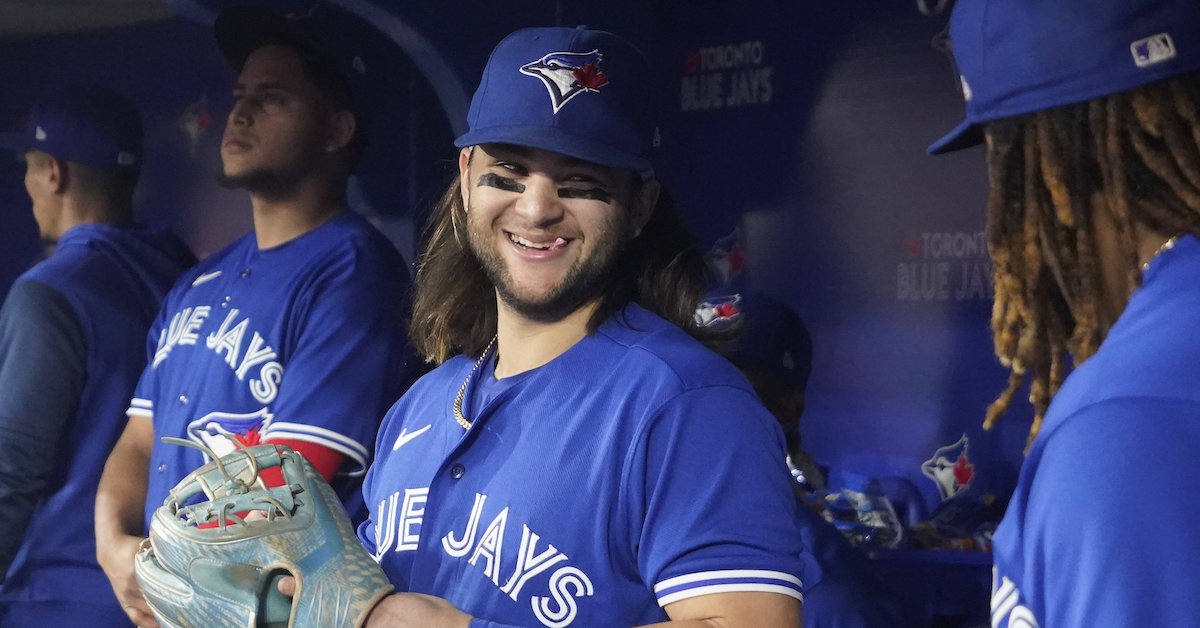
As the Blue Jays attempt to build upon last year’s 92-win season — their best since 2015 in terms of won-loss record — they’ve locked up one of their young, homegrown stars. Earlier this week, Sportsnet’s Ben Nicholson Smith reported that the team had agreed to a multiyear extension with Bo Bichette, thereby avoiding what could have been a contentious arbitration hearing. The terms of the deal were unclear at the time, but on Thursday, The Athletic’s Ken Rosenthal reported that Bichette will receive a three-year, $33.6 million guarantee, with escalators and incentives that can increase the total value of the deal to as much as $40.65 million.

Via the Associated Press, Bichette is guaranteed $6.1 million this year ($3.25 million as a signing bonus and $2.85 million in salary) and then $11 million in 2024 and $16.5 million in ’25. Winning an MVP award would increase his next salary by $2.25 million, while finishing second or third would add $1.25 million, and finishing fourth or fifth would add $250,000. The extension buys out all three of his arbitration years — his age-25 through 27 seasons — without delaying his free agency, as he enters 2023 with three years and 63 days of service time. Without the deal, he and the Blue Jays would have headed into arbitration with the two sides as far apart as any in the majors this year. According to MLB Trade Rumors, the $2.5 million gap between the filings of Bichette ($7.5 million) and the Blue Jays ($5 million) matched that of the Astros and Kyle Tucker; Houston won that hearing on Thursday.

Bichette is coming off a very good season, albeit something of an inconsistent one. He set a full-season high with a 129 wRC+ via a .290/.333/.469 line with 24 homers and 13 steals. His 4.5 WAR tied with Corey Seager for 14th in the American League and second among AL shortstops behind Xander Bogaerts, 0.1 WAR ahead of Carlos Correa. That said, his season was an uneven one that exposed concerns in several areas of his game. He hit just .213/.237/.298 (50 wRC+) in April and .257/.302/.418 (105 wRC+) through the first half — missing the AL All-Star team where he made it in 2021 — before batting .337/.378/.543 (163 wRC+) in the second half, capped by a .406/.444/.662 (217 wRC+) September. Fourteen of his 24 homers came before the break, but so did 100 of his 165 strikeouts; he trimmed his K% from 24.3% before the break to 19.2% after. Read the rest of this entry »


Jeff McNeil Hit His Way to a Four-Year Extension

Brad Penner-USA TODAY Sports

The modern game of baseball is defined by power and strength. You can turn on any game at any time and watch a guy swing his behind off as he launches a 100 mph fastball 450 feet. Of course, that wasn’t always so common — a lot of players used to swing for contact instead of the fences. Today, that skill set is more of a rarity, though there are still a few hitters who choke up on the handle and spray the ball from line to line. Jeff McNeil is perhaps one of the best in this category. Fresh off a batting tile, McNeil was due for a raise in arbitration. Instead, he and the Mets agreed to a four-year, $50 million extension.

The deal buys out McNeil’s two remaining arbitration years and two potential free agent years, taking him through his age-34 season. There’s also a $12.5 million club option for the 2027 season, giving the extension a chance to max out at five years and $62.5 million. On the surface, that seems like a bargain for a player coming off a 5.9 WAR, 143 wRC+ season that also saw him play the best defense of his career according to OAA. However, the free agent market doesn’t tend to be particularly generous to players who are over 30 or rely on contact as much as McNeil does. I asked Dan Szymborski if he could cook up a ZiPS estimate for a McNeil extension and as it turns out, the contract he signed isn’t as much of a bargain as I initially suspected. Including the discounts for the two cost-controlled arbitration years, ZiPS would have offered McNeil a five-year, $69 million extension. That is only $6.5 million more than the maximum the Mets offered when you include the club option. Dan also provided me with McNeil’s projected performance for the life of the contract:

ZiPS Projection – Jeff McNeil
Year BA OBP SLG AB R H 2B 3B HR RBI BB SO SB OPS+ DR WAR
2023 .289 .353 .419 485 64 140 31 1 10 59 37 63 3 116 -2 3.3
2024 .284 .351 .409 464 60 132 29 1 9 55 36 61 3 113 -3 2.9
2025 .278 .344 .398 442 55 123 27 1 8 51 34 59 3 108 -4 2.3
2026 .271 .338 .385 413 50 112 24 1 7 46 32 56 2 102 -4 1.8
2027 .263 .330 .366 377 44 99 21 0 6 40 29 53 2 95 -4 1.2

Read the rest of this entry »


The Rays Extended Two More Good Players

Dave Nelson-USA TODAY Sports

The Rays are infamous for running a tight ship payroll-wise, and because arbitration salaries are usually higher than rookie ones, they tend to trade arbitration-eligible players for younger, more cost-controlled talent. Then those new contributors develop into solid major leaguers, who become arbitration-eligible and therefore trade-eligible… and the cycle continues.

Yet the Rays have been good despite this. A major flaw in the described rinse-and-repeat style of roster management is that it depends on a regular influx of talent; without legitimate prospects in the farm system, you’d simply be making the big league squad worse, one trade at a time. Of course, the Rays are also known for their scouting and player development acumen, churning out viable big leaguers at a rate that, compared to other organizations, seems supersonic. But this too isn’t foolproof: Even if you run a supposedly smart front office, there’s a good chance that you’ll be wrong about a prospect or a trade acquisition more often than you’re right. That’s just how baseball works; you find yourself fighting to minimize risk, not to maximize return.

So really, the best option might be to avoid this conundrum in the first place. A good way to do that is to lock up your fresh-faced stars to contract extensions, à la the Braves of recent years. I don’t know if the Rays are following in Alex Anthopoulous’ footsteps, but they do seem to have become more open to the idea of making multiple multi-year commitments. As our Chris Gilligan covered, they recently signed Jeffrey Springs to a four-year contract extension with a club option for a fifth year. But the Rays weren’t done, as Jeff Passan reported last Friday:

Read the rest of this entry »


The Red Sox Have Finally Extended Rafael Devers

Nathan Ray Seebeck-USA TODAY Sports

“Extend Devers!” they shouted from the streets and the rooftops and the churches and the public houses and the decks of fishing boats and the parking lot of the local Dunkin’ Donuts. “Extend Devers!” they cried for years, as Mookie Betts and Christian Vázquez were traded and Xander Bogaerts, Eduardo Rodriguez, Nathan Eovaldi, and J.D. Martinez left in free agency.

Surely this last stalwart of Boston baseball would not be allowed, encouraged even, to complete his career elsewhere. Rafael Devers is coming off the best offensive season of his career. He’s one of the best hitters in baseball; he’d be the best homegrown player the Red Sox had produced in a generation, had the Red Sox not also produced Betts.

And he’s staying put. News broke Wednesday night that the Red Sox and Devers have agreed to an 11-year, $331 million contract extension that will keep the color of his socks unchanged through the 2033 season. This deal supersedes the one-year, $17.5 million arbitration-avoiding settlement announced the day before. Your pleas have been heard, your prayers answered, your supplications fulfilled. Devers has been extended. Hallelujah. Read the rest of this entry »


Luis Castillo Is Going To Be a Mariner for Awhile

© Jay Biggerstaff-USA TODAY Sports

Nobody can accuse the Mariners of skimping on frontline pitching in an effort to end their epic playoff drought. After signing Robbie Ray to a five-year, $115 million deal last winter, they traded a quartet of prospects for Luis Castillo on July 30. Already this was no mere rental, as the 29-year-old righty still has another season under control before free agency. Or rather had another season under control, because on Saturday, the Mariners announced they had agreed to terms with Castillo on a five-year, $108 million extension.

With the ink on the new deal barely dry, Castillo threw five solid innings against the Royals on Sunday, but faltered in the sixth and was charged with the first three runs of what turned out to be a gruesome 11-run rally that three other relievers tried in vain to contain. The Mariners, who led 11-2 before the onslaught, lost 13-12, dropping them to 3-7 on a 10-game road trip from hell, during which they lost series to the Angels, A’s, and Royals, and sent both Eugenio Suárez and Julio Rodríguez — their two most valuable players by WAR — to the injured list, the former with a fractured right middle finger, the latter with a lower back strain. Sunday’s loss dropped the Mariners to 83-69 overall, but fortunately for them, both the Rays (84-69) and Orioles (79-73) lost on Sunday as well, leaving Seattle four games ahead of Baltimore for the final American League Wild Card slot, and half a game behind Tampa Bay for the second slot.

The outing was the third rough one out of the last four for Castillo, who gave up six runs (three earned) to the White Sox on September 7, and four runs in 4.2 innings to the A’s on September 20. Even so, he’s pitched to a 3.34 ERA and 3.12 FIP in 59.1 innings over 10 starts since the trade, and a 3.06 ERA and 3.17 FIP in 144.1 innings overall. He didn’t make his season debut until May 9 due to a bout of shoulder soreness that sidelined him in the abbreviated spring, but among all pitchers with at least 140 innings, his 76 ERA- is 21st in the majors and his 78 FIP- is 12th; regardless of innings, his 3.4 WAR is in a virtual tie for 23rd among all starters. Read the rest of this entry »


The M’s and Julio Rodríguez Write the Most Expensive Choose Your Own Adventure Book Ever

© Gary A. Vasquez-USA TODAY Sports

It’ll still be a few months before we see whether Julio Rodríguez wins the American League Rookie of the Year award, but today we got a glimpse of baseball 15 years into the future. As reported by MLB.com’s Jesse Sanchez and ESPN’s Jeff Passan, the Seattle Mariners and Rodríguez have come to terms on a huge long-term contract extension, one that would run to the late 2030s.

Passan ran down the details of the deal, and it’s a complicated one.

Read the rest of this entry »


Rookie Standout Michael Harris II Signs $72 Million Extension

© Brett Davis-USA TODAY Sports

Just a few weeks after extending third baseman Austin Riley, Alex Anthopoulos and the Atlanta Braves are at it again. This time, the recipient of a long-term deal is one of the team’s two rookie standouts, Michael Harris II. The freshly inked contract runs for a minimum of eight years, with $15 million and $20 million club options in 2031 and ’32 that each carry a buyout of $5 million. All told, Harris stands to pocket at least $72 million; the deal will be worth $102 million if the Braves exercise both options.

That Harris would be signing an extension that takes him into the 2030s in August of 2022 while nearly doubling up the next-best National League rookie hitter by WAR would have been a surprising revelation to someone living in the pre-lockout days. After all, Harris had not yet played above High-A, and while he was excellent in the Sally League, he wasn’t dominating the way Julio Rodríguez was at a similar level of play. But like Rodríguez, it only took six weeks of Double-A ball before Harris was ready to star in the majors.

When Harris was called up in late May, the Braves were still scuffling below .500, 7 1/2 games behind the Mets in the NL East. Atlanta’s outfield beyond Ronald Acuña Jr. was sorely tested, as Eddie Rosario was out with eye surgery, Marcell Ozuna had an OPS hovering around .650, and it felt as if the Baha Men had a hit more recently than Travis Demeritte. Some teams would have taken the path of least resistance and called up journeyman fifth outfielder Delino DeShields or eternal prospect Drew Waters. Instead, the Braves went with the bolder move, calling up Harris. Unlike the other options, Harris was at least playing excellent baseball, hitting .305/.372/.506 in 43 games for Double-A Mississippi. Read the rest of this entry »


Braves Lock Up Another Core Bat With 10-Year Extension for Austin Riley

Austin Riley
Brett Davis-USA TODAY Sports

If you ever wondered how committed the Braves were to Austin Riley, they expressed their feelings clearly on Monday, agreeing with him on a 10-year, $212 million contract that will keep him in the lineup through at least the end of the 2032 season. After 2021’s breakout campaign, Riley has proceeded to break out once more, hitting .301/.360/.604 for 4.6 WAR in 101 games, that slugging percentage being enough to lead all National League hitters. The Braves also get an option season for 2033.

As a prospect, Riley was at risk, at times, of falling into the tweener gap, that dreaded place where a player doesn’t field well enough to handle third base in the majors but also doesn’t have the bat to be a good starter at first. His runner-runner breakouts have eliminated the chances of that scenario; he’s adequate enough defensively to stick at the hot corner for now, and his bat is more than capable enough to keep him a plus at first or designated hitter.

Like most of the rest of the team, Riley got off to a relatively slow start this season; at one point in late May, his line stood at an unimpressive .224/.309/.436. But from that May 22 nadir, he’s wreaked havoc on pitching staffs around the league, putting up a monster .350/.395/.713 line with 21 homers in 61 games:

Offensive Leaders, Last 30 Days
Name G PA HR AVG OBP SLG wRC+ WAR
Austin Riley 25 106 10 .420 .453 .870 262 2.4
Matt Carpenter 23 85 9 .356 .447 .822 253 1.7
Aaron Judge 25 112 13 .333 .446 .806 247 2.4
Freddie Freeman 25 109 6 .394 .450 .691 211 1.8
Juan Soto 23 95 6 .314 .495 .614 204 1.2
Alec Bohm 20 81 3 .434 .457 .632 201 1.2
Starling Marte 18 79 4 .384 .430 .616 200 1.1
Matt Chapman 24 96 9 .325 .396 .699 199 1.6
Corey Seager 22 95 8 .333 .411 .679 198 1.6
Jose Miranda 19 71 5 .354 .408 .615 192 0.9
J.T. Realmuto 19 78 5 .358 .423 .642 190 1.4
DJ LeMahieu 25 117 4 .344 .462 .490 179 1.6
Kris Bryant 21 91 5 .346 .418 .630 178 0.9
Yandy Diaz 24 105 2 .333 .419 .522 175 1.1
Leody Taveras 25 90 2 .354 .400 .549 170 1.3
Anthony Santander 23 99 5 .330 .384 .571 170 0.9
Gavin Lux 25 89 2 .320 .416 .533 167 1.1
Ramon Urias 22 79 5 .329 .380 .575 167 1.0
Francisco Lindor 24 108 5 .320 .389 .546 166 1.5
Jose Abreu 26 111 3 .350 .405 .520 164 1.1

Over the last 30 days, nobody’s been more of an offensive force than Riley, and he’s a primary reason that the Mets feel a lot less comfortable in the NL East than they did a few months ago. He’s put himself into the thick of the NL MVP race, and if you believe the ZiPS projections, his onslaught against the league’s hurlers isn’t stopping any time soon:

2022 ZiPS Projection – Austin Riley
Year BA OBP SLG AB R H 2B 3B HR RBI BB SO SB OPS+ DR WAR
2023 .286 .351 .554 587 88 168 33 2 40 106 52 170 1 131 -4 4.7
2024 .284 .352 .562 566 86 161 33 2 40 105 52 168 1 133 -4 4.6
2025 .282 .350 .559 556 85 157 33 2 39 103 51 165 1 132 -5 4.3
2026 .283 .350 .561 540 82 153 32 2 38 99 50 156 1 133 -6 4.1
2027 .286 .352 .558 525 79 150 31 2 36 96 48 145 1 133 -6 3.9
2028 .283 .348 .543 506 74 143 29 2 33 89 45 137 1 128 -7 3.3
2029 .279 .343 .529 484 68 135 27 2 30 83 42 128 1 123 -8 2.7
2030 .275 .338 .505 461 62 127 24 2 26 74 38 117 1 116 -10 2.0
2031 .271 .332 .478 435 55 118 22 1 22 65 34 105 1 108 -11 1.3
2032 .265 .321 .447 407 48 108 18 1 18 56 29 91 1 98 -12 0.5

ZiPS projects that if Riley hit free agency this winter, he’d merit a 10-year, $258 million contract, though he wasn’t going to get quite that much as a consequence of not making it to the open market until after the 2025 season. The computer projects arbitration year salaries of $9.2 million, $15.5 million, and $21.3 million, giving an overall estimate of $202 million over 10 years. In other words, my projections consider this a very reasonable contract, one in which Riley is selling his free agent years to Atlanta at a fair price. If the defensive projections turn out correct, he may need to move off of third base toward the end of his time in Atlanta, but it’s way too soon to start fretting about the exact configuration of 2030’s lineup. Read the rest of this entry »