Shane Bieber isn’t a prototypical modern-day pitcher. Unlike many of his peers who are on the mound pumping gas, the 27-year-old Cleveland Guardians right-hander succeeds by slicing and dicing, carving up the opposition with an array of well-placed offerings. Bieber’s heater is averaging just 91.3 mph on the season, and even in his higher-velocity 2020 Cy Young Award year, he was anything but a radar gun darling. From the time he entered pro ball in 2016 as a fourth-round pick out of the University of California, Santa Barbara, Bieber has been a technician, not a flamethrower.
It’s hard to argue with the results. Over the past four seasons, Bieber is 36-19 with a 3.04 ERA and a 2.99 FIP in 513 innings. Despite a reputation for having nothing-to-write-home-about stuff, he’s fanned 641 batters while allowing just 427 hits. In 20 starts this year, Bieber has a 3.39 ERA and a 2.96 FIP, tied for ninth-best in the junior circuit.
Bieber discussed the art and science of pitching when the Guardians visited Fenway Park in the final week of July.
———
David Laurila: At a time where a lot of guys are trying to overpower hitters, you’re viewed as a “pitcher.” With that in mind, where did you learn to pitch?
Shane Bieber: “I feel like I’ve been ‘pitching’ from a young age. My parents were involved — my dad was super involved — but the guy who taught me the most about pitching was Ben Siff. He was my travel ball coach for nine or 10 years, starting when I was nine years old. I’m still really close with him. Read the rest of this entry »
Detroit didn’t do much at the deadline. Trading Robbie Grossman to Atlanta in exchange for soon-to-turn 21-year-old pitching prospect Kris Anglin was the only move. Many expected more. A disgruntled fan base thought that Monday’s swap of an underachieving outfielder for a potential future asset would be the first of multiple deals for Al Avila’s underachieving team.
[Update/correction: The Tigers also traded reliever Michael Fulmer to the Minnesota Twins in exchange for Sawyer Gipson-Long, a 24-year-old 2019 sixth-round pick who was pitching at the Double-A level.]
The extent to which the relative inactivity was an indictment of Avila is a matter of opinion. Rival executives almost assuredly weren’t knocking down the GM’s door with appealing offers, and making trades for the sake of making trades is eyewash. Placating fans by simply moving pieces around doesn’t move the needle in any meaningful direction.
With a record of 43-66 and baseball’s 24th-rated farm system, which direction the club is heading in is far less clear than it was a year ago. Much for that reason, it’s easy to see why many in Motown would like to see Avila kicked to the curb.
Not everything that has gone wrong — and a lot has certainly gone wrong — can be placed squarely on the Detroit GM’s shoulders. But while this year’s plethorae of injuries and disappointing performances were largely beyond his control, Avila is nonetheless the architect of what has been a sluggish rebuild. The idea that said rebuild is in need of a rebuild of its own may be a valid one.
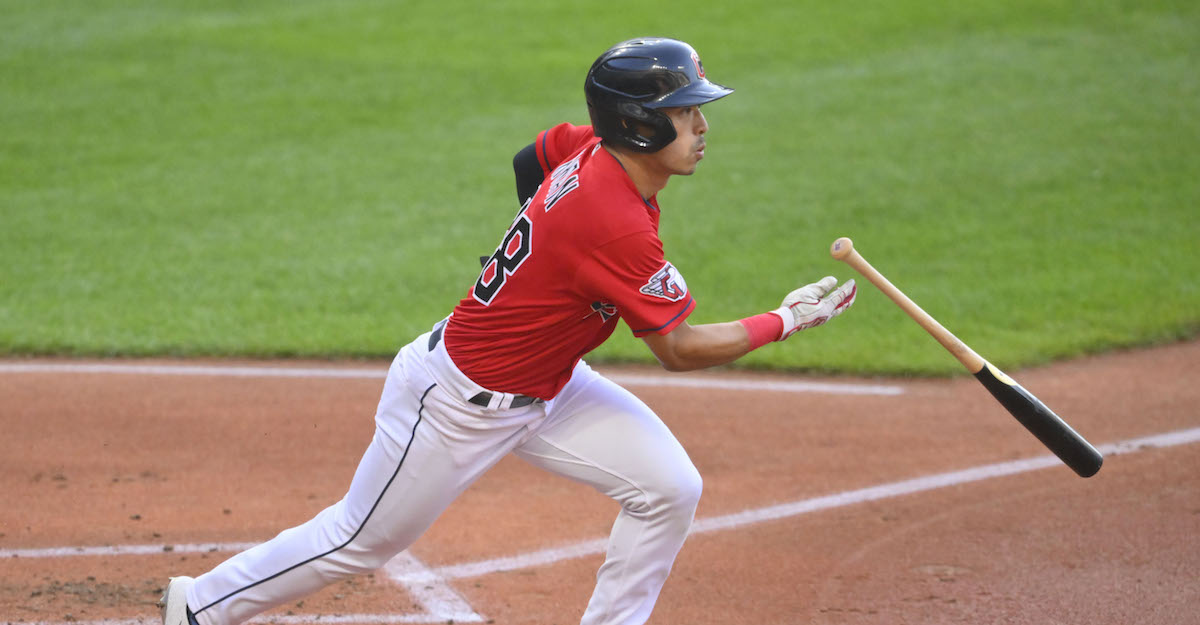
Steven Kwan is having an outstanding rookie season with the Cleveland Guardians. The 24-year-old outfielder is slashing .297/.370/.382 with a 118 wRC+, and he’s doing so with elite plate discipline and contact skills. Kwan’s 8.8% strikeout rate ranks second to Luis Arraez’s 8.3% among qualified hitters, while his 22.6% O-Swing% is tied for sixth-best. Moreover, he’s one of only a handful of hitters with more walks (36) than strikeouts (34). As Ben Clemens wrote back in April, “Kwan’s phenomenal bat control is as real as it gets.”
A 2018 fifth-round pick out of Oregon State University, Kwan came into the current campaign having emerged as one of the game’s most intriguing young players. No. 57 on our preseason Top 100 Prospects list, the slight-of-build left-handed hitter was described as having “short levers and excellent hand-eye coordination.” Brett Gardner was cited as his closest comp.
In the latest installment of our Talks Hitting series, Kwan discusses his innate ability to put the bat on the baseball and sneeze at pitches that aren’t in the strike zone.
———
David Laurila: You got a lot of attention early in the season, almost exclusively for your elite contact skills. What does that mean to you?
Steven Kwan: “It’s a compliment, if anything. I think hitter success is directly correlated to strike zone management — to swinging at strikes and not chasing out of the zone. I definitely see that as a compliment.” Read the rest of this entry »
Another trade deadline has come and gone, and I must say, this one was more exciting than I expected. I didn’t see the Yankees, Astros, or Dodgers making huge splashes, given that all three are in a daunting position both for first place in their divisions and a first-round playoff bye. There were also relatively few short-term rental options available; Juan Soto, Frankie Montas, and Luis Castillo, among others, could always be traded, but with none of them free agents after this season, teams could also pull them back if they didn’t like the offers. Meanwhile, players like Willson Contreras, Ian Happ and Carlos Rodón stayed put, also to my surprise. By and large, though, we had a whirlwind of a 48-hour period leading up to the deadline.
So, who won and who lost? That’s a bit of a loaded question, because the definition of winning and losing varies depending on each franchise’s goals. A contending team improving, a rebuilding team getting worse but acquiring a stable of prospects, or an indolent team only re-signing its 37-year-old closer are all things that can be considered a win in one way or the other. But we’re here to do some hardcore ranking, so let’s look only at who improved themselves the most in 2022.
To keep this all science-y rather than a somewhat arbitrary exercise, I first projected the entire league’s rest of season in ZiPS and then repeated the exercise with all trades since July 19 unwound. Since some teams primarily got overall playoff boosts and some teams saw improvement mainly in terms of World Series gains, I took each team’s rank in both categories and then ranked everyone by the harmonic mean of those two ranks. Read the rest of this entry »
Tuesday was trade deadline day, and you know what that means: enough trades of marginal relievers to blot out the sun. Every team in the playoff race can look at its bullpen and find flaws, and so every one of them was in the market for a reliever who can come in for the fifth, sixth, or seventh inning and do a more reliable job of getting out alive than the team’s current bullpen complement. That’s just how baseball works; every year, a new crop of pop-up relievers posts great numbers, while the old crop enjoys middling success. It’s a brisk trade market, even if the returns are rarely overwhelming. Here’s another roundup of such trades. Read the rest of this entry »
While still focusing upon teams that meet the loose definition of contenders (a .500 record or Playoff Odds of at least 10%), this year I have incorporated our Depth Charts’ rest-of-season WAR projections into the equation for an additional perspective. Sometimes that may suggest that the team will clear the bar by a significant margin, but even so, I’ve included them here because the team’s performance at that spot is worth a look.
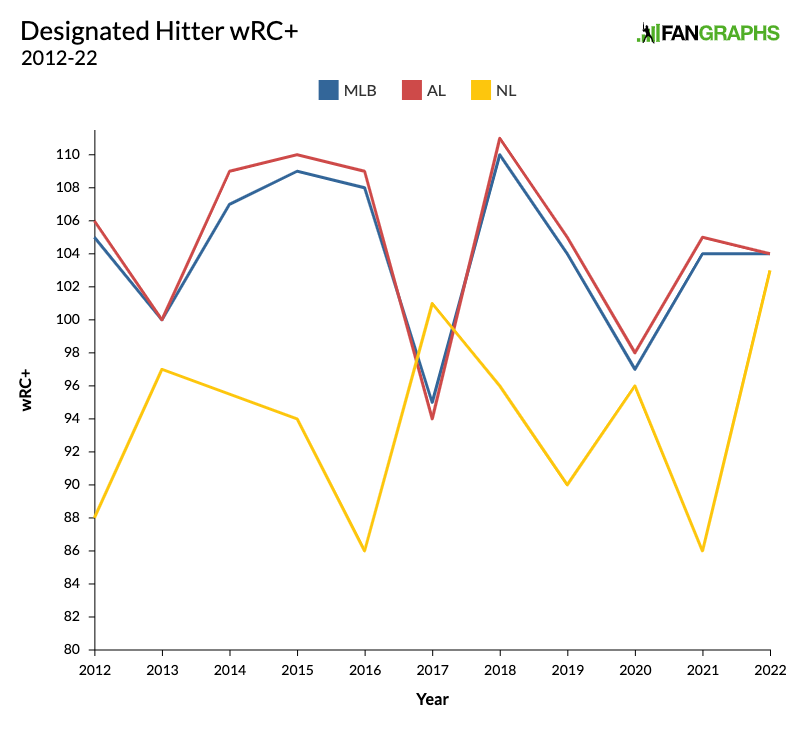
At the other positions in this series, I have used about 0.6 WAR or less thus far — which prorates to 1.0 WAR over a full season — as my cutoff, making exceptions here and there, but for the designated hitters, I’ve lowered that to 0.3, both to keep the list length manageable and to account for the general spread of value; in the first full season of the universal DH, exactly half the teams in the majors have actually gotten 0.1 WAR or less from their DHs thus far, and only 10 have gotten more than 0.6. DHs as a group have hit .239/.317/.404 for a 104 wRC+; that last figure matches what they did as a group both last year and in 2019, and it’s boosted by the best performance by NL DHs (103 wRC+) since 2009, when their 117 wRC+ accounted for a grand total of 525 PA, about 32 per NL team.
Bryan Shaw will reach two milestones the next time he takes the mound. The 34-year-old Guardians reliever has made 499 regular-season appearances in a Cleveland uniform, and he’s thrown 999-and-two-thirds professional innings. Neither should come as a surprise. Shaw has never been a star, but he’s always been a workhorse. Moreover, he’s a Terry Francona favorite.
“He’s like a lineman,” the Guardians manager said of Shaw. “When they allow a sack, everybody notices. When [Shaw] gives up runs, people want to bury him. But he saves our ass, time and time again. He pitches when other guys can’t… He’s been a trouper for a long time.”
Now in his 12th big-league season, and in his second stint with Cleveland, Shaw has led the American League in appearances in four different seasons, each time with his current club. The right-hander has appeared in 733 games overall — he’s also pitched for the Diamondbacks, Rockies, and Mariners — which ranks fifth-most among active pitchers.
While still focusing upon teams that meet the loose definition of contenders (a .500 record or Playoff Odds of at least 10%), and that have gotten about 0.6 WAR or less thus far — which prorates to 1.0 WAR over a full season — this year I have incorporated our Depth Charts’ rest-of-season WAR projections into the equation for an additional perspective. Sometimes that may suggest that the team will clear the bar by a significant margin, but even so, I’ve included them here because the team’s performance at that spot is worth a look.
As noted previously, some of these situations are more dire than others, particularly when taken in the context of the rest of their roster. I don’t expect every team to go out and track down an upgrade before the August 2 deadline, and in this batch in particular, I don’t get the sense that any of these teams have these positions atop their shopping lists. With catchers, framing and the less-quantifiable aspects of knowing a pitching staff make it easier for teams to talk themselves out of changing things up unless an injury situation has compromised their depth.
All statistics in this article are through July 26, though team won-loss records and Playoff Odds are through July 27.
2022 Replacement-Level Killers: Catcher
Team
AVG
OBP
SLG
wRC+
Bat
BsR
Fld
WAR
ROS WAR
Tot WAR
Cardinals
.195
.251
.252
47
-22.2
-3.5
-1.8
-0.8
0.7
-0.1
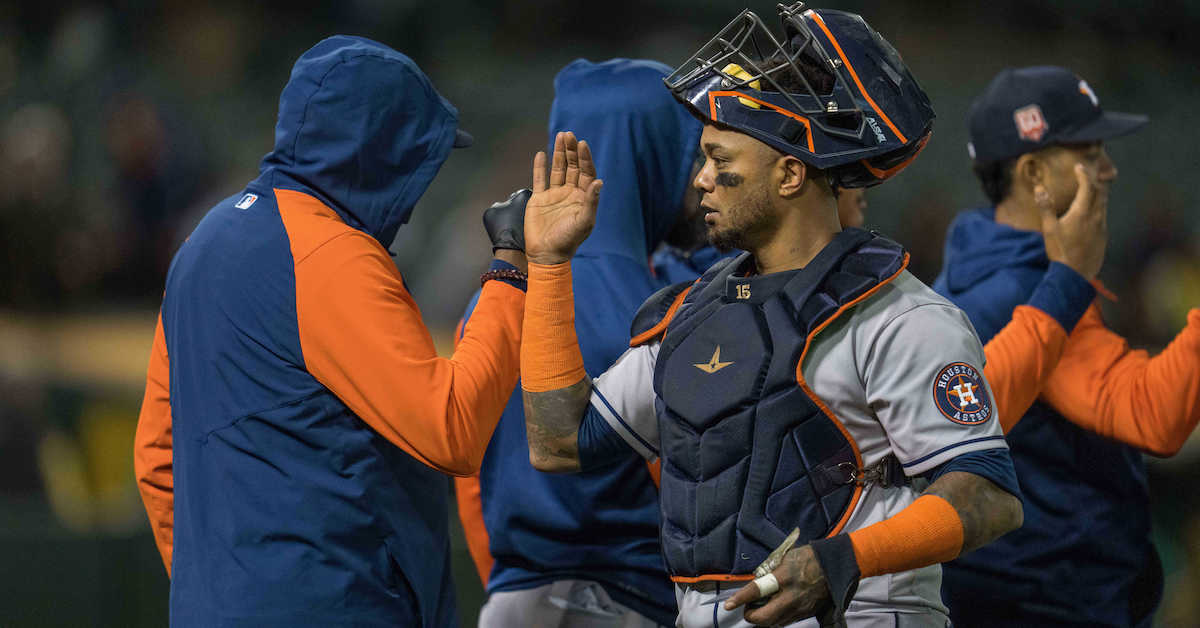
Astros
.166
.235
.312
57
-17.2
-2.3
-4.0
-0.5
0.6
0.1
Guardians
.176
.267
.267
55
-17.4
-2.7
2.7
0.1
0.8
0.9
Mets
.199
.245
.266
50
-20.3
-3.7
6.4
0.2
0.9
1.1
Red Sox
.251
.307
.373
89
-5.0
-8.6
-1.9
0.4
1.1
1.5
Rays
.205
.226
.346
63
-15.2
-0.6
0.9
0.4
1.3
1.7
Statistics through July 26. ROS = Rest-of-season WAR, via our Depth Charts.
Cardinals
Yadier Molina may be a future Hall of Famer, but his final major league season hasn’t gone smoothly. The 39-year-old backstop reported late to spring training due to personal reasons, then hit just .213/.225/.294 (46 wRC+) in 138 plate appearances before landing on the injured list with right knee inflammation in mid-June. With the team’s permission, he soon returned to his native Puerto Rico, a move that did not escape the notice of his teammates, who value his presence and leadership even when he’s not able to play up to his previous standards. Molina finally began a rehab assignment on Monday.
In Molina’s absence, the Cardinals have started Andrew Knizner behind the plate 51 times, and he’s reminded them that even by the standards of backup catchers, he leaves something to be desired. The 27-year-old has hit .199/.291/.248 (64 wRC+) and is 5.5 runs below average in our framing metric; his WARs have now been in the red for all four of his major league seasons, with a total of -1.7 in just 443 PA. Baseball Prospectus’ comprehensive defensive metrics put him 5.2 runs below average for his framing, blocking, and throwing as well. His backup, Austin Romine, owns a 47 wRC+ while catching for four teams over the past three seasons; his most notable accomplishment as a Cardinal is in joining Paul Goldschmidt and Nolan Arenado among the ranks of unvaccinated players who were unable to travel to Canada for this week’s two-game series against the Blue Jays.
Back in June, St. Louis gave a look to Molina’s heir apparent, Iván Herrera, who entered the season at no. 75 on our Top 100 Prospects list and has hit .295/.385/.432 at Triple-A. The 22-year-old Panamanian has a plus arm and potentially a plus hit tool as well as average raw power; his framing is below average and his receiving average. He was called up to replace Romine for the Toronto series but did not play.
With the trade market not offering a lot of obvious solutions (an intradivision trade for Willson Contreras probably isn’t an option), the Cardinals, who have gone just 24–26 in June and July but are still entrenched in the second Wild Card spot, would probably be better off pairing Molina with Herrera than Knizner or Romine. One possible option is Oakland’s Sean Murphy, who will be arbitration eligible for the first time this winter and who placed 37th on our Trade Value list; he could pair with Herrera for the next year or two and still be dealt while having club control remaining. Read the rest of this entry »
The trade deadline is nearly here and once again, team behavior will be affected by 40-man roster dynamics. Teams with an especially high number of currently-rostered players under contract for 2023 and prospects who need to be added to the 40-man in the offseason have what is often called a 40-man “crunch,” “overage,” or need to “churn.” This means the team has incentive to clear its overflow of players by either packaging several to acquire just one in return, or by trading for something the club can keep — international pool space, comp picks, or, more typically, younger players whose 40-man clocks are further from midnight — rather than do nothing and later lose some of those players to waivers or in the Rule 5 Draft. Teams can take care of this issue with transactions between the end of the season and the 40-man roster deadline in November, but a contending team with a crunch has more incentive to do something before the trade deadline so the results of those deals can bolster the club’s ability to reach the postseason.
In an effort to see whose depth might influence trade behavior, I assess teams’ 40-man futures every year. This exercise is done by using the RosterResource Depth Chart pages to examine current 40-man situations, subtracting pending free agents using the Team Payroll tab, and then weighing the December 2022 Rule 5 eligible prospects (or players who became eligible in past seasons and are having a strong year) to see which clubs have the biggest crunch coming. I then make an educated guess about which of those orgs might behave differently in the trade market as a result.
Some quick rules about 40-man rosters. Almost none of them contain exactly 40 players in-season because teams can add a player to the 40 to replace one who is on the 60-day injured list. In the offseason, teams don’t get extra spots for injured players and have to get down to 40 precisely, so if they want to keep some of their injury fill-ins, they have to cut someone else from the 40-man to make room. Read the rest of this entry »
Who has been your most influential teammate? I asked that question to 10 major leaguers — two each from five different teams — and all of the answers came after a moment of thoughtful consideration. Most couldn’t name just one, and there was another common theme that emerged, as well. A combination of appreciation and admiration was genuinely expressed with each and every response.
“Paul Goldschmidt. I like to watch just enough video to familiarize myself with the pitcher in terms of his tempo in the stretch, in the windup, his arm slots on different pitches, and maybe his tells on the base paths. Anything past that, I don’t like to watch. Paul has been the most influential, because I trust his assessment of the pitcher and his approach far more than anything I would create on my own. That’s because he keeps it really simple; he keeps it very straightforward. That approach helps him be very successful for his team. Because of that, I’ve learned to understand pitchers — when to open up a little more, when to stay focused on maybe driving the ball back up the middle. Little things like that allow you to be successful over nine innings.”
“Four come to mind, and it starts with Skip Schumaker. Skip and I played together in 2014 and 2015, and he was the guy I defaulted to if I had any questions. This was back when I was trying to figure out what the big leagues were like. So, Skip was one of my guys. We still talk. Read the rest of this entry »