Archive for Braves

Jacob Lopez Is Doing a Credible Chris Sale Impression

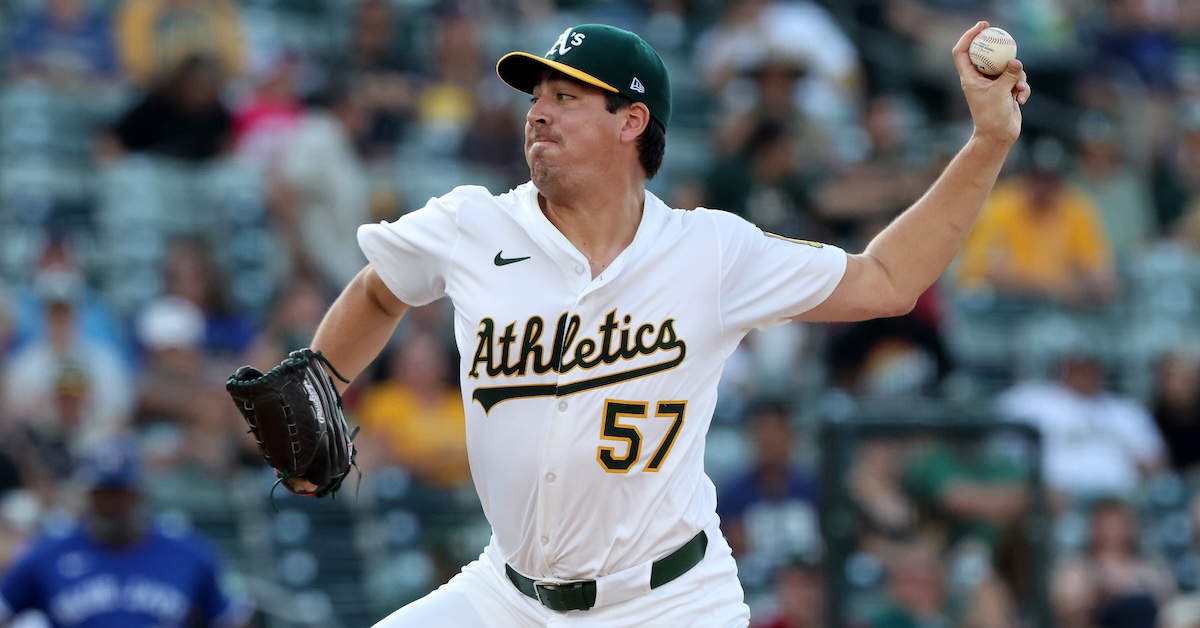
Dennis Lee-Imagn Images

Straight away, I wrote Jacob Lopez off. Even as he strung together three incredible starts in June — 32% strikeout rate, one run allowed over 19 innings — I couldn’t bring myself to think it actually meant anything. A 27-year-old lefty with hardly any prospect pedigree and so-so command throwing 90 mph dead zone fastballs? Small sample weirdness, nothing to see here.

It’s harder to dismiss Lopez these days. Once again, he’s on an infernal heater, this one even more scalding than the previous iteration. His last three starts: five innings, no runs, five strikeouts against the Diamondbacks; 7.2 innings, no runs, 10 strikeouts against the Nationals; seven innings, no runs, nine strikeouts against the Rays. That’s a 34.3% strikeout rate and a 0.98 FIP in a 19.2 inning sample.

Some of this is the quality of the opposition; the Rays and Nationals have been among the worst offenses in baseball over the last month or so. But the overall sample is getting uncomfortably significant. Over his 84.2 innings pitched this year, Lopez holds a 28.9% strikeout rate, eighth — eighth! — among all pitchers (minimum 80 innings pitched). He’s striking out more hitters than Paul Skenes, Jacob deGrom, and Spencer Strider. Read the rest of this entry »
Five Things I Liked (Or Didn’t Like) This Week, August 15

Curt Hogg/USA TODAY NETWORK via Imagn Images

Welcome to another edition of Five Things I Liked (Or Didn’t Like) This Week. August is a great time for reflection in the baseball world. The trade deadline has passed, which means what you see is pretty much what you get roster-wise. The playoff picture is generally clear, but no one has clinched yet. It’s too early to think about postseason rotations, but too late to think about turning the year around. The urgency mostly isn’t there – unless you’re a Mets fan trying to ward off 25 years of ghosts, of course. But the downtime of the baseball season has its own small delights, and even when you aren’t watching the brightest stars on the biggest stage, baseball is awesome. So thanks as always to Zach Lowe of The Ringer for the column format, and let’s get going.

1. Opportunity
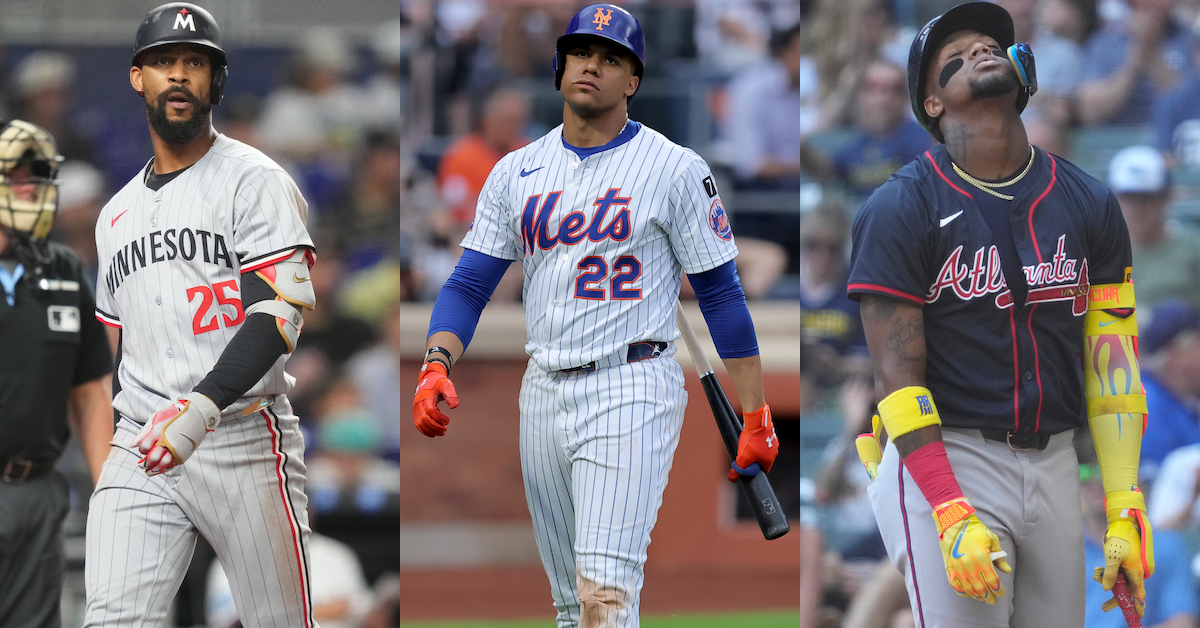
The Twins might have traded away a ton of their major league roster at the deadline, but that doesn’t mean they’re filling up the lineup with replacement players they found at a local tryout. Seven of the nine everyday position players on the current squad were drafted by Minnesota in the first two rounds. The other two, Alan Roden and Kody Clemens, aren’t exactly nobodies – they’re both third round draft picks the Twins acquired this year, and of course Clemens’ dad is famous too.

It’s tough sledding for Quad-A players looking for a major league shot. But while the starters still look like your average major leaguer when it comes to their amateur pedigree, the bench is another matter. Mickey Gasper was a 27th rounder who didn’t debut until he was 28. But he’s only the second-most improbable Twin. Ryan Fitzgerald went undrafted in 2016, didn’t reach Triple-A until he was 27, and finally got his major league break earlier this year as a 30-year-old. He went 0-3 in a single game as an injury replacement, pinch-ran in another, and got sent back down. Sometimes life in the bigs is nasty, brutish, and short.
Read the rest of this entry »


Is All Hope Lost for the Atlanta Braves?

Cary Edmondson-Imagn Images

For the Atlanta Braves, the 2025 season is a disasterpiece. Last season had its share of disappointments, but the long stretches of middling play still left the Braves in a playoff spot by the tiniest of margins. After 2024, it was reasonable to stay the course; no need to smash the red panic button like an unsupervised child in an elevator. This time around, however, the Braves are likely to finish the season with somewhere around 90 losses, making simply battening down the hatches and waiting for sunnier weather a lot riskier of a strategy. I cranked up ZiPS to see how much tinkering the computer thinks Atlanta needs to do in order to compete in 2026.

The Good

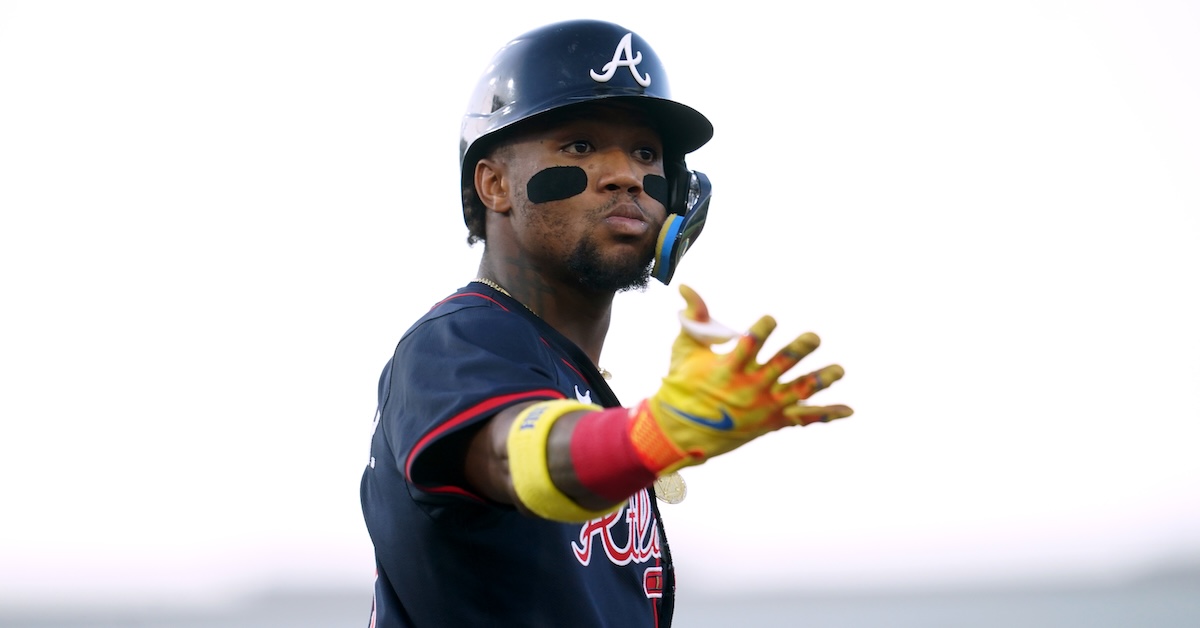
On the plus side, the Braves aren’t trying to build a winning team out of nothing. Much of the offensive core remains intact and is actually functioning quite well. Ronald Acuña Jr. has made a successful return from a second torn ACL and has been playing at a 7-WAR pace. Of course, he’s out at the moment with another Achilles injury, but this appears to be a minor issue, relatively speaking, and given his history and Atlanta’s position in the standings, there’s no real reason not to be conservative with his recovery. ZiPS is understandably down on his injury risk, but he still gets his usual dynamite projection for 2026, even if it’s a little diminished from a playing time perspective:

ZiPS Projection – Ronald Acuña Jr.
Year BA OBP SLG AB R H 2B 3B HR RBI BB SO SB OPS+ WAR
2026 .301 .409 .537 462 109 139 24 2 27 78 79 111 29 159 5.4
2027 .295 .405 .521 468 109 138 24 2 26 77 81 111 26 154 5.1
2028 .288 .399 .502 466 106 134 23 1 25 75 81 109 23 147 4.6

Read the rest of this entry »


The Wednesday Minor Moves Roundup

D. Ross Cameron, Kamil Krzaczynski, Mark J. Rebilas-Imagn Images

Not every deadline trade is a dramatic one, but that’s OK — teams need to make low-key moves, too. Do you think James Bond saved the world every day? No! Some days, he had to do paperwork. Some days, he had to go to the dentist, or take the car to the gas station to vacuum up the leftover Cool Ranch Doritos crumbs on the floor after they spilled out on his drive from Baltim… I mean Bristol. So let’s catch up on some of Wednesday’s smaller moves.

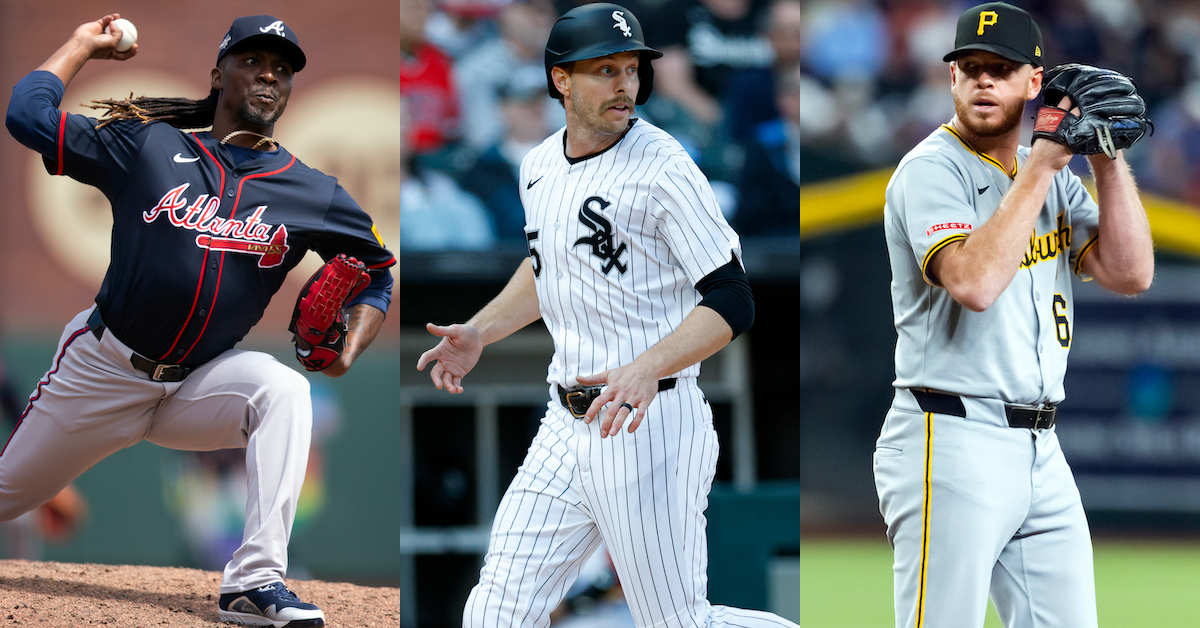
The Seattle Mariners acquired left-handed reliever Caleb Ferguson from the Pittsburgh Pirates for right-handed starter Jeter Martinez

The Mariners have been operating with a shortage of southpaws this season, with Gabe Speier mostly being the only lefty on the active roster. Speier’s been good, holding lefties to a .609 OPS this season, but he can’t pitch in every playoff game, and Andrés Muñoz, who handles lefties quite well, generally doesn’t make his entrance before the ninth inning, so a depth-targeted upgrade to give the team another option down the stretch and during October makes a lot of sense. Caleb Ferguson has shed some strikeouts this year as he’s more heavily integrated his sinker into his repertoire, but he’s compensated for that loss by shedding a walk per nine from last season and becoming one of the hardest pitchers in baseball to make good contact against. Of all the pitchers with at least 30 innings this season, only Adrian Morejon has allowed a lower hard-hit percentage. Ferguson gives the Mariners a second lefty in the ‘pen they can count on, something they couldn’t really say about Joe Jacques or Tayler Saucedo. Read the rest of this entry »


Acuña, Soto, Buxton: A Star Outfielder Injury Roundup

Jim Rassol, Brad Penner, Michael McLoone-Imagn Images

Happy Wednesday. Would you like some sad news? Are your cheek muscles getting tired from constantly smiling because everything in the world keeps humming along so smoothly? Let’s bring you down with a roundup of star outfielder injury news. We’ll go in ascending order of scariness, so if you don’t feel sufficiently depressed at the beginning, just stick with it. We’ll get you there.

We start in Minnesota, where Byron Buxton is headed to the IL with left ribcage inflammation. Buxton was removed from Saturday’s game after experiencing pain in his ribs while he was running. At the time, the Twins said Buxton would be day-to-day with “left side soreness.” He hasn’t spoken to the press since Friday, so all updates have come from manager Rocco Baldelli. On Saturday, Baldelli told reporters, “We’re just going to get an image tomorrow morning just to see what we’re dealing with. He actually felt it more running than anything else.” The MRI delivered good news, revealing only “cartilage irritation” rather than structural damage to the ribs. The team again classified Buxton as day-to-day. “It’s a good outcome,” said Baldelli. “We’ll see how he is tomorrow and so on, but to be day-to-day with what he left the game with, it’s a good thing. We’ll measure him out, get him looked at by the trainers each day, get him a lot of treatment and hopefully he’ll be back very soon.”

Unfortunately, Buxton hasn’t gotten back into a game and the Twins have lost three of four, cementing their status as deadline sellers. Harrison Bader has taken over in center field, but he’s widely expected to be moved at the deadline. Buxton has a no-trade clause and recently reiterated his stated desire to say with the Twins for life, but the injury seems likely to silence any remaining whispers about the possibility that he could be traded too. Read the rest of this entry »


Welcome to the $5 DVD Bin at Walmart of the Trade Deadline

Denny Medley-Imagn Images

The weekend before the trade deadline was light on big names moving — poor Eugenio Suárez has probably had to take his phone charger out of his go bag a dozen times this month — but we did see plenty of preliminary action. The Orioles began their sell-off by shipping hard-throwing left-hander Gregory Soto up to the Mets. Meanwhile, the Royals sought to maintain their spot on the postseason wait list by picking up a right-handed bat from Arizona: not Suárez, but Randal Grichuk.

Finally, the Braves picked up some reinforcements for their injury-riddled rotation, tossing the Cardinals a player to be named later or cash in exchange for the right to jump the waiver line on recently DFA’d right-hander Erick Fedde. Read the rest of this entry »


Sunday Notes: Austin Hays Is Locking In On His Strengths and Excelling As a Red

Austin Hays is having a productive-when-healthy season with the Cincinnati Reds. The 30-year-old outfielder has missed time with a calf strain, a hamstring strain, and a foot contusion, but he’s also slashed .282/.338/.510 with 10 home runs in 228 plate appearances. Moreover, his 128 wRC+ and .360 wOBA are both second on the team (behind Elly De La Cruz) among those with at least 140 PAs.

His résumé is that of a solid hitter. From 2021-2023— his first full seasons in the majors — Hays had 97 doubles and 54 home runs, as well as a wRC+ ranging between 106 and 111. Those three seasons were spent with the Baltimore Orioles, who subsequently swapped him to the Philadelphia Phillies in exchange for Seranthony Domínguez and Cristian Pache a few days before last July’s trade deadline. Hays’s 2024 campaign was the worst of his career. Hampered by injuries and illness — a kidney infection proved most problematic — he had a 97 wRC+ while playing in just 85 games. The Reds then inked him to a free agent contract over the winter,

Which brings us to the crux of this column’s lead item: the reasons behind the success he’s currently having.

“Consistency is probably the biggest thing,” Hays told me. “There’s not always an adjustment to be made. Sometimes it’s just the game [and] you’re being pitched tough. I don’t want to be altering too much of what I do well. In the past, I would sometimes pay too much attention to what the pitcher was doing and try to adjust to that. Staying strong to my strengths — locking in on those strengths — is going to help me over the course of 162 [games].” Read the rest of this entry »


Nick Allen and the Meritocratic Tyranny of the Batting Order

Brett Davis-Imagn Images

Nick Allen is definitely going to show up on my FanGraphs Walk-Off page. I’ve checked in on him a lot over the last month, but of the 1,664 stats on his player page (yes, I counted them all), I’ve really only been paying attention to one number. I just want to know how many plate appearances Allen has. The answer is 304, and that won’t do.

A month ago, I wrote about homerless qualifiers, the all-but-extinct subset of players who come to the plate often enough to qualify for the batting title – a minimum of 3.1 plate appearances per team game, or 502 over a 162-game season – without hitting even a single home run. At the time, Xavier Edwards was the only homerless qualifier left, but I didn’t believe in him – which is to say that I did believe he had the capacity to hit a home run. He did just that on July 12, blasting a 97.8-mph wall-scraper off Scott Blewett:

Read the rest of this entry »


Checking in on Spencer Strider

Brett Davis-Imagn Images

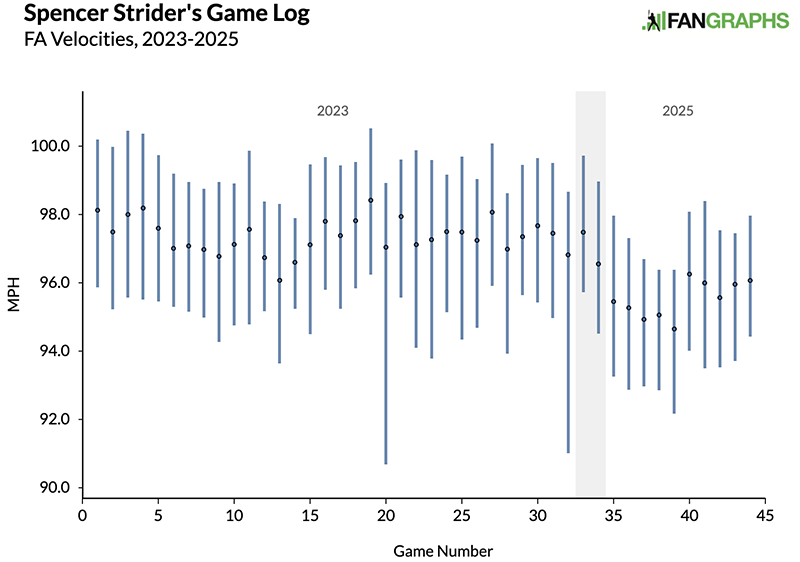
A month ago, I checked in on Spencer Strider’s worrisome return from internal brace surgery. After four starts, Strider was 0-4 with a 5.68 ERA and a 6.40 FIP. His fastball had lost two ticks. His arm angle had fallen by seven degrees. He wasn’t getting chases. He wasn’t missing bats. In short, he didn’t look like Spencer Strider. “There’s no way for us to know how long it might take Strider to get back up to speed,” I wrote, “but the longer he looks like this, the more reason there is to worry.” One month later, I return to you with good news. Strider has made six more starts, and over the last five, he is starting to look different. He’s run a 2.70 ERA and a 2.35 FIP. His strikeout rate is up and his walk rate is down. You might even say that Strider is halfway back.

Once again, the velocity is the big ticket item, so let’s not waste any time:

Read the rest of this entry »


Built Different or Skill Issue? A BaseRuns Game Show: Defense Edition

Junfu Han/USA TODAY NETWORK via Imagn Images

Last week, I began a series of pieces about team win-loss totals as estimated by BaseRuns, first by taking a broad look at the methodology and its limitations, then by zooming in on the offenses that deviate most notably from their BaseRuns assessment in the run scoring department. Let’s wrap up with a look at the defenses that sit furthest from their runs allowed approximation.

In the offense edition, I used a game show format to evaluate whether the perspective offered by BaseRuns has a point, or if there’s something its methodology is overlooking. We’ll keep that framework going for the defenses as well. Here’s a reminder of how it works:

To determine whether or not BaseRuns knows what it’s talking about with respect to each team, imagine yourself sitting in the audience on a game show set. The person on your left is dressed as Little Bo Peep, while the person on your right has gone to great lengths to look like Beetlejuice. That or Michael Keaton is really hard up for money. On stage there are a series of doors, each labeled with a team name. Behind each door is a flashing neon sign that reads either “Skill Issue!” or “Built Different!” Both can be either complimentary or derogatory depending on whether BaseRuns is more or less optimistic about a team relative to its actual record. For teams that BaseRuns suggests are better than the numbers indicate, the skill issue identified is a good thing — a latent ability not yet apparent in the on-field results. But if BaseRuns thinks a team is worse than the numbers currently imply, then skill issue is used more colloquially to suggest a lack thereof. The teams that are built different buck the norms laid out by BaseRuns and find a way that BaseRuns doesn’t consider to either excel or struggle.

Read the rest of this entry »