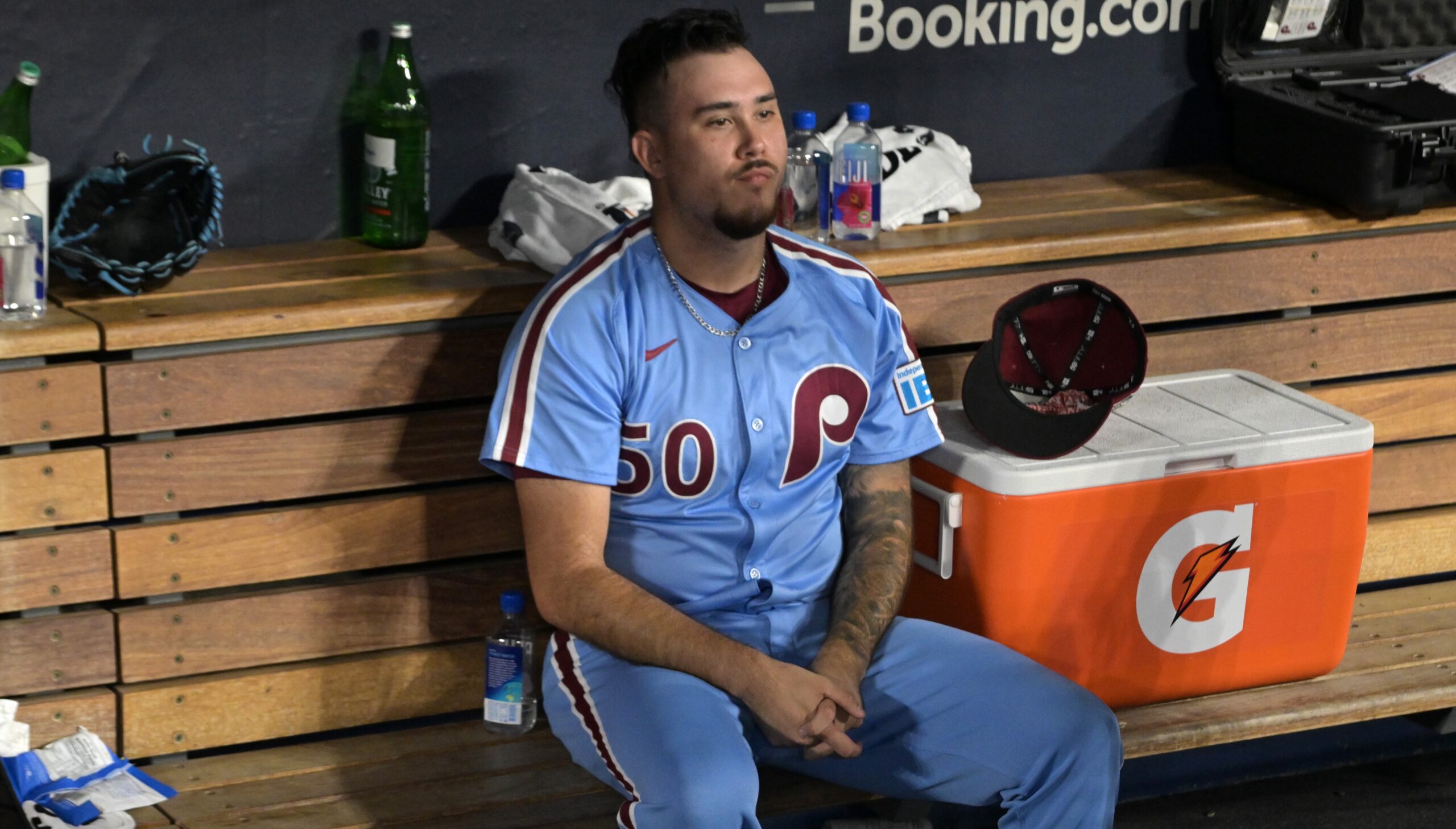
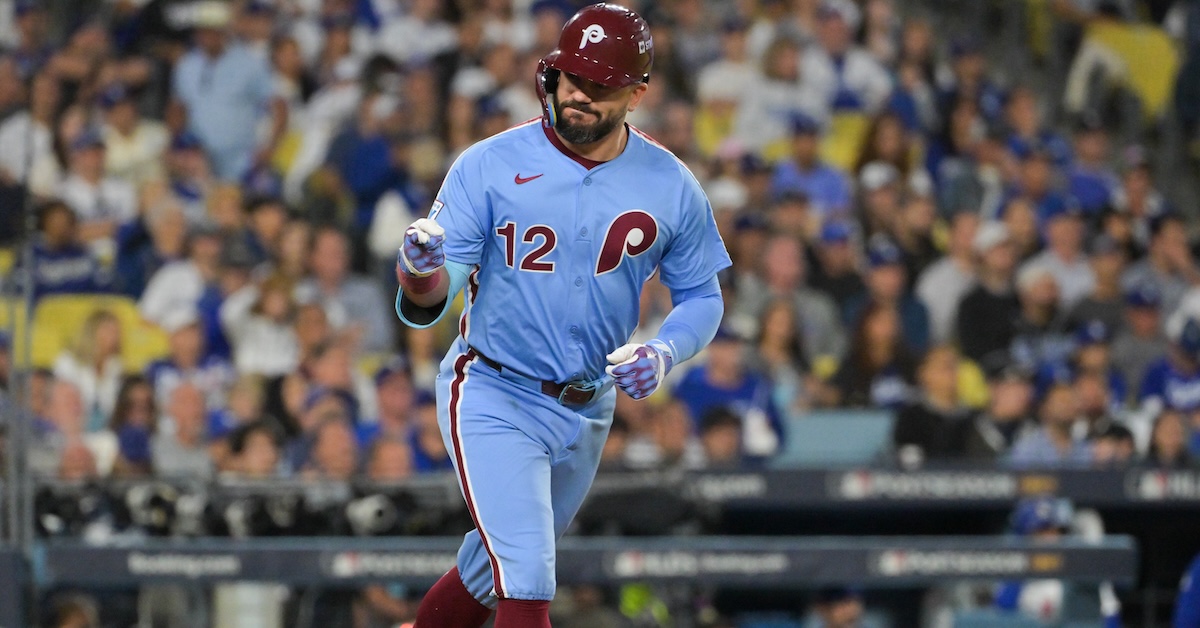
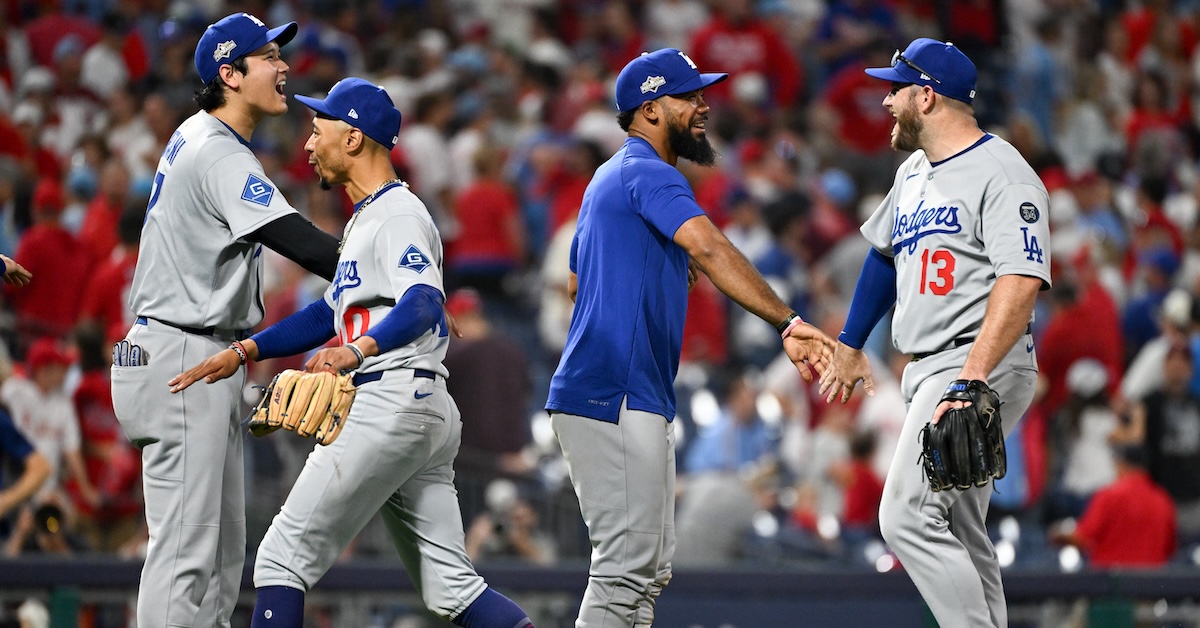
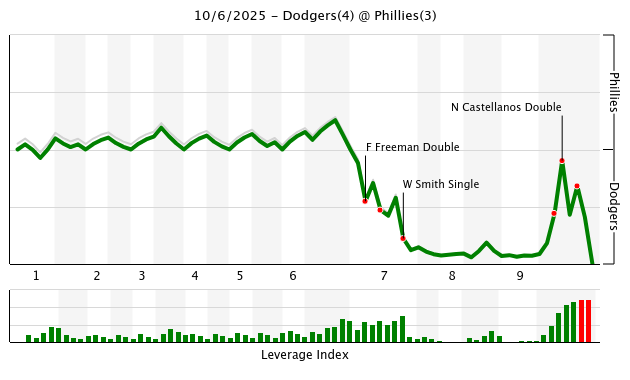
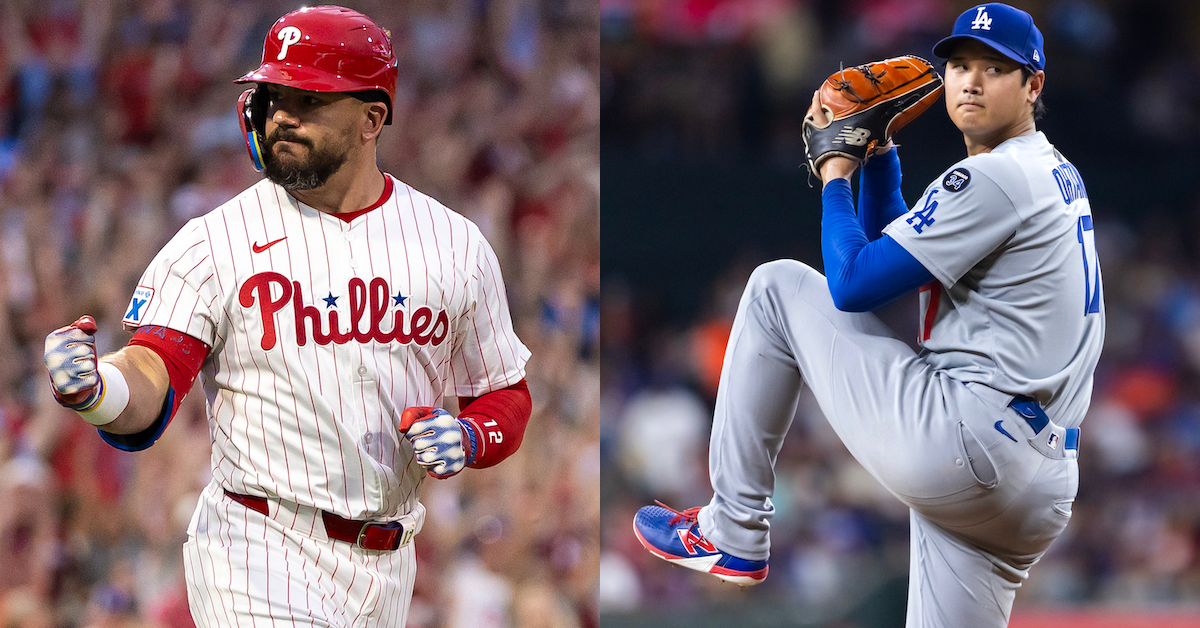
On Monday night in Cincinnati, Taijuan Walker scattered six hits and a walk over six innings. He allowed only a single earned run. He didn’t pick up a win; in fact, he was in line for the loss when manager Rob Thomson yanked him. But Walker pitched well enough to keep the Phillies within striking distance. Reds starter Andrew Abbott remained in the game into the eighth inning, where the Phillies finally touched him up. The NL East leaders went on to win the game 4-1.
I last wrote about Walker five months ago, at the very end of spring training. At the time, Walker was coming off a season in which he was the worst regular starting pitcher in baseball, and as frustrations around the team bubbled over following a disappointing playoff loss, the team’s overpaid and underperforming no. 6 starter was an easy target for public ire. Even in Philadelphia, it’s hard for an athlete to reach pariah status on quality of play alone, but Walker had managed it. Read the rest of this entry »
Welcome to another edition of Five Things I Liked (Or Didn’t Like) This Week. Between a vacation, the All-Star break, the Trade Value Series, and the trade deadline, Five Things has been on a bit of a summer hiatus. Baseball itself doesn’t stop, of course; weird and delightful things happen whether I’m documenting them or not. But I still couldn’t shake the feeling that this week had an extra helping of whimsy. Balls took funny hops. Good pitchers got shelled in unexpected ways. Balks took center stage. Leads changed hands late, defenders kicked things into high gear – there was so much delightful baseball this week that I struggled to narrow it down to five things. Seven things just doesn’t have the same ring to it, though, so let’s quickly nod to Zach Lowe of The Ringer for the column inspiration and get going.
1. The True King of Contact
Writing about Luis Arraez can be a bummer sometimes. Not because he’s bad – he’s emphatically not – but because merely mentioning his name reinvigorates the age-old argument between those who say there are too many strikeouts and those who insist that slug is in the air. Should everyone be doing what Arraez is doing? Is he an anachronism? Is he underrated? Overrated? He’s so good at what he does – and what he does is so different from what most good baseball players do – that these questions are frustratingly omnipresent in any discussion about Arraez.
That said, I think I found an Arraez play that won’t divide the audience. The key is for it not to involve a ball in play, a walk, or a strikeout. Take a look at this beauty:
Katie Stratman, Orlando Ramirez, Steven Bisig-Imagn Images
Now that the deadline dust has settled – or at least, started to settle – it’s time to start making sense of it. The Padres, Twins, and Orioles were everywhere. Top relievers flew off the board. Both New York teams spent all day adding. But who did well? Who did poorly? Who was so frenetic that they probably belong in both categories more than once? I tried to sort things out a little bit. This isn’t an exhaustive list. There were 36 trades on deadline day, a new record, and more than a dozen before it. Nearly every team changed its trajectory at least a little, and this is just a brief look into the chaos. Here are the trends that most stood out to me.
Winner: Teams Trading Top Pitchers
This year’s crop of rental players was lighter than usual, but deadline activity didn’t slow. Instead, it simply spilled over into relievers under contract for a while. Mason Miller, Jhoan Duran, Griffin Jax, and David Bednar are under contract for a combined nine more years after 2025. That drove the prospect priceup onallfour. Having long-term control of relievers might be less valuable than at other positions, but it’s still valuable.
Most of the best prospects who swapped teams at the deadline were involved in a trade for top pitching. Leo De Vries, the consensus best player of the 2024 international signing period, was the big name here, but both the Phillies and Yankees offered up multiple good minor leaguers in exchange for Duran and Bednar. Taj Bradley, whom the Twins got back for Jax, is a former top prospect who won’t be a free agent until 2030. Read the rest of this entry »
The Phillies have spent the first four months of the season battling the Mets for the top spot in the NL East despite getting almost no positive production from their outfield. All three positions landed on my annual Replacement-Level Killerslists, and at this writing, their outfielders’ net WAR of 0.6 is the third-lowest total in the majors, ahead of only the Guardians and Royals. Ahead of Thursday’s trade deadline, Philadelphia took a step to address that problem by trading two prospects to the Twins in exchange for Harrison Bader.
This could be more than just a typical two-month rental. Bader is making $6.25 million this season and has a $10 million mutual option with a $1.5 million buyout for 2026. The prospects heading to Minnesota are Hendry Mendez, a lefty-swinging 21-year-old outfielder from the Dominican Republic who’s spent this season at Double-A Reading, and Geremy Villoria, a 16-year-old righty from Venezuela who’s been pitching in the Dominican Summer League. Neither of them cracked the Phillies Top 30 Prospects list in late January, but things have changed in the past six months.
This is the third season out of four in which Bader has changed teams midseason. He was dealt from the Cardinals to the Yankees in exchange for Jordan Montgomery on August 2, 2022, and selected off waivers from the Yankees by the Reds on August 31, 2023; he spent all of last season with the Mets. Perhaps not coincidentally, he’s in the midst of his best season since 2021, when he hit for a 108 wRC+ with 16 home runs, nine stolen bases, and amassed 2.9 WAR in just 103 games (401 plate appearances) with the Cardinals. Read the rest of this entry »
The Philadelphia Phillies needed to get a reliever at the deadline, and they’ve got a doozy. Jhoan Duran, the 27-year-old flamethrower late of the Minnesota Twins, is taking his splinker east. This is a seller’s market for relievers, and Duran is the best one available; certainly the best with any kind of long-term team control remaining, and even more so now that Emmanuel Clase is indisposed.
Given Duran’s prodigious gifts, track record of durability and reliability, and two full remaining arbitration years, the cost is high: rookie right-hander Mick Abel and teenage catcher Eduardo Tait. Abel, the first high school pitcher taken in the 2020 draft, had an unsteady progression through the minors, but has shown flashes in limited major league action. Tait, fresh off a futures game invite, is an 18-year-old catcher and therefore quite raw, but he has the tools to be a good defender with plus, even plus-plus power at the plate.
It’s not Andrew Painter, or even Aidan Miller, but it’s a lot of freight from a not-that-great farm system, in order to get a one-inning reliever. Why would the Phillies do this? Well, not to be impolite, but they’re kind of desperate. Read the rest of this entry »
At the outset of Sunday’s Hall of Fame induction ceremony in Cooperstown, chairman of the board Jane Forbes Clark invoked the words of 2005 honoree Ryne Sandberg, who was not among the 52 returning Hall of Famers onstage for the festivities:
“As I have said many times before, the National Baseball Hall of Fame is an extraordinary place, and no one has described our game and what the Hall of Fame means better than Ryne Sandberg, Chicago Cubs legend and member of the Hall of Fame’s Class of 2005,” began Clark. “During his induction speech, he said, ‘The reason I am here, they tell me, is that I played the game a certain way, that I played the game the way it was supposed to be played. I don’t know about that, but I do know this: I had too much respect for the game to play it any other way. And if there is a single reason I am here today, it is because of one word: Respect.'”
As she continued, Clark’s voice audibly cracked, but she pushed through. “There is not a man seated behind me this afternoon who didn’t play the game the same way Ryno did. It is that respect, character, sportsmanship, integrity, and excellence that leads to just one percent of those that have ever played major league baseball to be inducted into the Hall of Fame.”
Her message — which referenced the Hall’s own voting rules, the so-called “character clause” — was evergreen, but the absence of Sandberg, who had attended the last two induction ceremonies, was conspicuous. So was Clark’s display of emotion, and now we know why. Sandberg, who was diagnosed with metastatic prostate cancer in January 2024, died on Monday at age 65. Read the rest of this entry »
COOPERSTOWN, NY — During his 19-year major league career, Ichiro Suzuki rarely spoke English in public unless it was to express his thoughts about the temperature in Kansas City in August as it pertained to certain rodents. On Sunday in Cooperstown, however, he flawlessly delivered his 19-minute Hall of Fame induction speech in his second language, showing off his sly sense of humor while speaking about the professionalism, respect, and love for the fans that drove his career. “Today, I am feeling something I thought I would never feel again. I am a rookie,” he began, referring to his first seasons with the Orix Blue Wave in 1992 and the Seattle Mariners in 2001. “But please, I am 51 years old now. Easy on the hazing. I don’t need to wear a Hooters uniform again,” he quipped to the 52 returning Hall of Famers, four fellow entrants in the Class of 2025, and the estimated 30,000 people who attended the ceremony at the Clark Sports Center.
“The first two times, it was easier to manage my emotions because my goal was always clear: to play professionally at the highest level,” continued Suzuki. “This time is so different, because I could never imagine as a kid in Japan that my play would lead me to a sacred baseball land that I didn’t even know was here. People often measure me by my records: 3,000 hits, 10 gold gloves, 10 seasons of 200 hits. Not bad, eh?
“But the truth is, without baseball, you would say this guy is such a dumbass. I have bad teammates, right, Bob Costas?”
Elsewhere, Suzuki poked fun at having fallen one vote short of becoming just the second Hall candidate elected unanimously: “Three thousand hits or 262 hits in one season are achievements recognized by the writers. Well… all but one. And by the way, the offer for that writer to have dinner at my home has now expired.” On a more serious note, he advised distinguishing between dreams and goals: “Dreams are not always realistic, but goals can be possible if you think deeply about how to reach them. Dreaming is fun, but goals are difficult and challenging… If you are serious about it, you must think critically about what is necessary to achieve it.” Read the rest of this entry »
Yesterday, I wrote up the news that David Robertson had signed with the Phillies. In my (and, I assume, everyone else’s) favorite paragraph, I mentioned that several teams had reportedly been in on the veteran right-hander. Ken Rosenthal and Jon Heyman combined to mention interest from the Mets, Yankees, Red Sox, Tigers, and “many others.” Depending on your perspective, this marked either the last We Tried of the 2025 free agency period or the first of the trade deadline period. As a quick refresher, We Tried is a catch-all term for any time we find out, after a player has ended up with one team, that another team also tried to land them. In its purest form, the We Tried is a front office’s bid for partial credit, an attempt to curry favor with the fans by demonstrating that it is trying to build a winner for them. I spent the offseason documenting each and every one in a disturbingly comprehensive spreadsheet.
I didn’t make a meal of this yesterday, mainly because Robertson’s free agency was a real outlier. The offseason ended months ago. He’s a 40-year-old reliever who didn’t get an offer he loved, so he stayed in shape and spent the spring hanging out with his family, then held a workout for teams on Saturday in order to sign before the deadline. Lots of teams were in on him and lots of teams showed up to watch him pitch, so word of who was there was bound to come out at some point. It definitely represented a We Tried, but it didn’t seem earth-shattering, and it was by no means a typical one. Read the rest of this entry »
We’ve finally done it, friends. Everybody take a bow. It took until July 20, but we’ve finally found a home for the last holdout on Ben Clemens’ 2025 edition of the Top 50 Free Agents. On Sunday, the Phillies took their shot on lucky no. 46, agreeing to sign veteran reliever David Robertson to a $16 million contract. Prorated for the late start date, the contract will actually pay the right-hander somewhere around $6 million. Ken Rosenthal of The Athletic broke the news, while MLB.com’s Mark Feinsand reported the contract details. According to Matt Gelb, also of The Athletic, Robertson will need a ramp-up period, which means he’ll need to agree to an assignment in the minors.
So why the hell did this take so long? Here’s my best answer: Uhh… ageism?
Let’s start with Robertson’s blurb from the top 50, which I don’t feel bad about plagiarizing here because I wrote it:
Over the past three seasons, Robertson has a 2.82 ERA and a 3.24 FIP. Over 188 appearances and 201 innings, he’s accrued 3.8 WAR, 12th most among all relievers. As he enters his age-40 season, Robertson is coming off his best FIP since 2017. His cutter averaged 93.3 mph in both 2023 and 2024, the fastest it’s been since Obama’s first term. According to Statcast’s run values, that cutter was worth 19 runs this season, making it the sixth-most valuable pitch in all of baseball. Knowing what it knows about aging curves and the volatility of relief arms, ZiPS projects Robertson for 0.5 WAR, but we humans should at the very least be open to the possibility that he’ll live forever. Until we see him fall apart with our own eyes, there’s no reason in particular to believe that he won’t just keep serving as an effective bullpen arm until sometime in the middle of the next decade. Robertson’s fourth straight one-year contract with a playoff hopeful would do quite nicely.
If you followed along with my Replacement Level Killers series, you’re no doubt familiar with the disheveled state of the Twins. After last year’s epic late-season collapse, Minnesota started slowly, clawed its way back into contention, and then stumbled during a 9-18 June; the team is now 48-51 with 17.5% Playoff Odds, still good enough to qualify for my series highlighting the weakest spots on contenders. Within that series, the Twins made a major league-high five appearances: at catcher, first base, second base, third base, and right field. An underrated part of their struggles is their defense. To the extent that they can still be considered contenders, their glovework stands out as the worst of any playoff hopeful based upon the methodology I used to identify the best team defenses thus far a few weeks ago.
Along with that piece, this is part of my annual midseason dip into the alphabet soup of defensive metrics, including Defensive Runs Saved (DRS), Statcast’s Fielding Run Value (FRV), and our own catcher framing metric (hereafter abbreviated as FRM, as it is on our stat pages). Longtime standby Ultimate Zone Rating has been retired, which required me to adjust my methodology.
On an individual level, even a full season of data isn’t enough to get the clearest picture of a player’s defense. Indeed, it’s not at all surprising that samples of 800 innings or fewer produce divergent values across the major metrics; different methodologies produce varying spreads in runs from top to bottom, spreads that owe something to what they don’t measure, as well as how much regression is built into their systems. Pitchers don’t have FRVs, and DRS tends to produce more extreme ratings (positive and negative) than Statcast. But within this aggregation, I think we get enough signal roughly 60% of the way through the season to justify checking in; I don’t proclaim this to be a bulletproof methodology so much as a good point of entry into a broad topic. Read the rest of this entry »