
How’s My Driving: 2019 Top 100 Audit
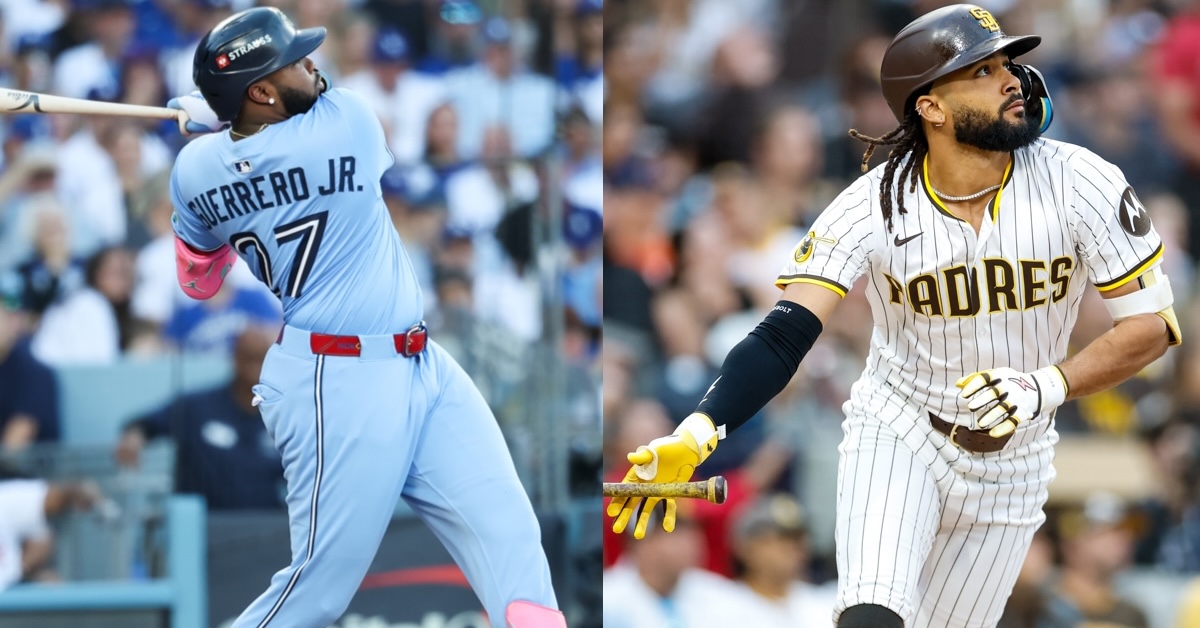
I have been FanGraphs’ Lead Prospect Analyst since the summer of 2016, and enough time has now passed that many of the players from the early era of my prospecting here have had big league careers unfold (or fail to). Hindsight allows me to have a pretty definitive idea of whether my call on a player was right or wrong in a binary sense, and to gauge any gap that may exist between my evaluation and what the player ultimately became. Looking back allows me to rate my approach to grading and ranking players so that I might begin to establish some baselines of self-assessment and see how I perform compared to my peers at other publications. For the third year — the 2017 review is here, while the 2018 review is here — I have gathered the various Top 100 prospect rankings from seven years ago for the purposes of such a self-assessment, an exercise I call “How’s My Driving?” This is my audit of the 2019 rankings.
For those who are new to these audits, a refresher on my approach. Below, I have compiled the 2019 Top 100 prospect rankings from the publications where it was basically at least one person’s full-time job to do this: FanGraphs, Baseball America, Baseball Prospectus, ESPN, and MLB Pipeline. Of course, several 2019 rookies who were not ranked on Top 100 lists have turned into good big leaguers, so I’ve also included players who might be thought of as collective whiffs, guys who produced enough that, in hindsight, they should have been on our Top 100 lists by my measure of production. Finally, I’ve added a handful of players whose output didn’t necessarily merit a Top 100 spot, but who I think are interesting to talk about for one reason or another. My goal here was to reflect on my work, not to create metrics that measure these publications against one another; the Top 100 rankings, which you’ll find next to one another in the table below, are the only comparative aspect of this exercise. Everyone has their fair share of hits and misses; readers can get a sense of those on a case-by-case basis as they play with the table, which is sortable.
Career-to-date WAR for the players who graduated from rookie status in 2019 — and only those players — is included in the first table. In the second table further down, I go into deeper, more meaningful analysis of the players from the 2019 lists whose careers are now far enough along to do so (that’s why I’ve only included WAR for the 2019 grads), those whose pre-free agency service is complete or close to it. Part of my approach to forecasting players has been to focus on the window of service time prior to a player’s free agency, and now members of the rookie class of 2019 — guys like Kyle Tucker and Bo Bichette — have played for long enough to be subject to this kind of analysis.
Why do I use this six-to-seven year cutoff? If you’re acquiring a player while he’s a prospect or young big leaguer, you’re doing so for those pre-free agency years. Once a player hits free agency, the process by which teams evaluate players and decide how aggressively to pursue them is completely divorced from their prospect evaluation. That’s done after a player has informed teams’ opinions with six-plus years of big league time. No serious front office discussion about how many years and dollars to offer Zac Gallen is centered around how he looked at North Carolina. As baseball fans, we can and should care about career longevity, but to do so in the prospect space such that it informs how I line up players would be unrealistic — like trying to predict what the weather will be like on a specific day four months from now.
Here are our collective Top 100 lists from 2019:
| FG Rank | BA | BP | ESPN | MLB | Name | Pos | Org | Age | AVG Rank | Grad Year | Career WAR |
|---|---|---|---|---|---|---|---|---|---|---|---|
| 1 | 1 | 1 | 2 | 1 | Vladimir Guerrero Jr. | 3B | TOR | 21.2 | 1 | 2019 | 20.7 |
| 2 | 4 | 10 | 3 | 13 | Wander Franco | SS | TBR | 19.3 | 6 | 2021 | — |
| 3 | 2 | 3 | 1 | 2 | Fernando Tatis Jr. | SS | SDP | 21.4 | 2 | 2019 | 26.5 |
| 4 | 5 | 7 | 4 | 7 | Forrest Whitley | RHP | HOU | 22.7 | 5 | N/A | — |
| 5 | 11 | 5 | 10 | 4 | Victor Robles | CF | WSN | 23.1 | 7 | 2019 | 7.4 |
| 6 | 9 | 8 | 9 | 5 | Royce Lewis | SS | MIN | 21.0 | 7 | 2023 | — |
| 7 | 10 | 9 | 6 | 6 | Nick Senzel | 3B | CIN | 25.0 | 8 | 2019 | -1.1 |
| 8 | 3 | 4 | 5 | 3 | Eloy Jiménez | RF | CHW | 23.5 | 5 | 2019 | 4.2 |
| 9 | 8 | 12 | 13 | 11 | Bo Bichette | SS | TOR | 22.3 | 11 | 2019 | 20.0 |
| 10 | 12 | 14 | 17 | 8 | Kyle Tucker | RF | HOU | 23.4 | 12 | 2019 | 25.4 |
| 11 | 6 | 2 | 8 | 14 | Jo Adell | RF | LAA | 21.2 | 8 | 2020 | — |
| 12 | 33 | 11 | 12 | 16 | Taylor Trammell | LF | CIN | 22.7 | 17 | 2021 | — |
| 13 | 17 | 6 | 21 | 20 | Keston Hiura | 2B | MIL | 23.9 | 15 | 2019 | 2.0 |
| 14 | 47 | 42 | 14 | 29 | Brendan McKay | LHP/1B | TBR | 24.5 | 29 | N/A | — |
| 15 | 20 | 31 | 27 | 36 | Keibert Ruiz | C | LAD | 21.9 | 26 | 2021 | — |
| 16 | 15 | 39 | 11 | 9 | Alex Kirilloff | RF | MIN | 22.6 | 18 | 2021 | — |
| 17 | 13 | 23 | 35 | 27 | Sixto Sánchez | RHP | MIA | 21.9 | 23 | 2024 | — |
| 18 | 41 | 16 | 98 | 25 | Carter Kieboom | SS | WSN | 22.8 | 40 | 2020 | — |
| 19 | 85 | 62 | 45 | 37 | Cristian Pache | CF | ATL | 21.6 | 50 | 2022 | — |
| 20 | 49 | 55 | 18 | 46 | Ke’Bryan Hayes | 3B | PIT | 23.4 | 38 | 2021 | — |
| 21 | 82 | 27 | 49 | 69 | Dustin May | RHP | LAD | 22.8 | 50 | 2020 | — |
| 22 | 28 | 28 | 7 | 15 | MacKenzie Gore | LHP | SDP | 21.3 | 20 | 2022 | — |
| 23 | 40 | NR | 41 | 70 | Gavin Lux | 2B | LAD | 22.6 | 44 | 2020 | — |
| 24 | 31 | 17 | 56 | 23 | Luis Urías | 2B | SDP | 23.0 | 30 | 2019 | 5.5 |
| 25 | 23 | 25 | 19 | 28 | Brent Honeywell | RHP | TBR | 25.2 | 24 | 2023 | — |
| 26 | 64 | 96 | 59 | NR | Vidal Bruján | 2B | TBR | 22.3 | 61 | 2022 | — |
| 27 | 7 | 13 | 31 | 12 | Jesús Luzardo | LHP | OAK | 22.7 | 18 | 2020 | — |
| 28 | 14 | 22 | 28 | 10 | Brendan Rodgers | SS | COL | 23.8 | 20 | 2020 | — |
| 29 | 21 | 24 | 20 | 18 | Michael Kopech | RHP | CHW | 24.1 | 22 | 2021 | — |
| 30 | 16 | 36 | 15 | 17 | Casey Mize | RHP | DET | 23.1 | 23 | 2021 | — |
| 31 | 59 | 69 | 32 | 60 | Jazz Chisholm Jr. | SS | ARI | 22.4 | 50 | 2021 | — |
| 32 | 43 | 15 | NR | 47 | Nick Madrigal | 2B | CHW | 23.2 | 34 | 2021 | — |
| 33 | 22 | 30 | 87 | 38 | Austin Riley | 3B | ATL | 23.2 | 42 | 2019 | 20.2 |
| 34 | 66 | 37 | 44 | 34 | Chris Paddack | RHP | SDP | 24.4 | 43 | 2019 | 7.3 |
| 35 | 72 | 95 | 88 | 45 | Sean Murphy | C | OAK | 25.7 | 67 | 2020 | — |
| 36 | 25 | 53 | 57 | 24 | Michael Soroka | RHP | ATL | 22.9 | 39 | 2019 | 5.9 |
| 37 | 26 | 18 | 24 | 19 | Mitch Keller | RHP | PIT | 24.2 | 25 | 2020 | — |
| 38 | 24 | 29 | 30 | 32 | Ian Anderson | RHP | ATL | 22.1 | 31 | 2021 | — |
| 39 | 39 | 58 | 22 | 30 | Kyle Wright | RHP | ATL | 24.7 | 38 | 2020 | — |
| 40 | 18 | 77 | 33 | 42 | A.J. Puk | LHP | OAK | 25.1 | 42 | 2022 | — |
| 41 | 29 | 41 | 82 | 22 | Joey Bart | C | SFG | 23.5 | 43 | 2022 | — |
| 42 | 67 | 74 | 50 | 48 | Luis Patiño | RHP | SDP | 20.6 | 56 | 2021 | — |
| 43 | 76 | 45 | 54 | 40 | Luis Robert Jr. | CF | CHW | 22.9 | 52 | 2020 | — |
| 44 | NR | 57 | NR | 77 | Adonis Medina | RHP | PHI | 23.5 | 59 | 2022 | — |
| 45 | 19 | 21 | 42 | 33 | Alex Reyes | RHP | STL | 25.8 | 32 | 2019 | 1.7 |
| 46 | 93 | NR | NR | NR | Brandon Lowe | 2B | TBR | 25.9 | 70 | 2019 | 16.9 |
| 47 | 42 | 89 | NR | 65 | Danny Jansen | C | TOR | 25.2 | 61 | 2019 | 10.8 |
| 48 | 48 | 40 | 90 | 51 | Pete Alonso | 1B | NYM | 25.5 | 55 | 2019 | 20.8 |
| 49 | 83 | 65 | 75 | 86 | Drew Waters | CF | ATL | 21.4 | 72 | 2022 | — |
| 50 | 78 | NR | 48 | 81 | Corbin Martin | RHP | HOU | 24.5 | 64 | 2021 | — |
| 51 | 57 | 75 | 16 | 31 | Hunter Greene | RHP | CIN | 20.8 | 46 | 2022 | — |
| 52 | 30 | 38 | 97 | 58 | Andrés Giménez | SS | NYM | 21.8 | 55 | 2020 | — |
| 53 | 61 | 81 | NR | 75 | Luis García Jr. | SS | WSN | 20.1 | 68 | 2020 | — |
| 54 | 62 | 32 | 71 | 38 | Jesús Sánchez | RF | TBR | 22.7 | 51 | 2021 | — |
| 55 | NR | NR | 81 | NR | William Contreras | C | ATL | 22.5 | 68 | 2021 | — |
| 56 | NR | 82 | 47 | 87 | Travis Swaggerty | CF | PIT | 22.8 | 68 | N/A | — |
| 57 | 53 | 70 | 26 | 50 | Touki Toussaint | RHP | ATL | 24.0 | 51 | 2019 | 0.0 |
| 58 | 38 | 26 | 25 | 21 | Dylan Cease | RHP | CHW | 24.5 | 34 | 2019 | 21.0 |
| 59 | 32 | 20 | 29 | 26 | Francisco Mejía | C | SDP | 24.6 | 33 | 2019 | 1.2 |
| 60 | 27 | 50 | 34 | 43 | Justus Sheffield | LHP | SEA | 24.1 | 43 | 2020 | — |
| 61 | NR | NR | NR | NR | Luiz Gohara | LHP | ATL | 23.9 | 61 | N/A | — |
| 62 | 79 | 91 | 78 | 96 | Oneil Cruz | CF | PIT | 21.7 | 81 | 2022 | — |
| 63 | 70 | 54 | 77 | 76 | Nate Pearson | RHP | TOR | 23.8 | 68 | 2021 | — |
| 64 | 55 | 33 | NR | 68 | Brusdar Graterol | RHP | MIN | 21.8 | 55 | 2020 | — |
| 65 | 98 | NR | 43 | 67 | Nolan Jones | 3B | CLE | 20.9 | 68 | 2023 | — |
| 66 | 65 | NR | NR | 59 | Alec Bohm | 3B | PHI | 23.9 | 63 | 2020 | — |
| 67 | NR | NR | 52 | NR | Spencer Howard | RHP | PHI | 23.9 | 60 | 2021 | — |
| 68 | 98 | NR | 99 | NR | Ronny Mauricio | SS | NYM | 19.2 | 88 | 2025 | — |
| 69 | 54 | 92 | 63 | 90 | DL Hall | LHP | BAL | 21.7 | 74 | 2023 | — |
| 70 | 56 | NR | 84 | 84 | Ronaldo Hernandez | C | TBR | 22.6 | 74 | N/A | — |
| 71 | 58 | NR | 36 | 55 | Matthew Liberatore | LHP | TBR | 20.6 | 55 | 2023 | — |
| 72 | 80 | 60 | 51 | 82 | Bryse Wilson | RHP | ATL | 22.5 | 69 | 2020 | — |
| 73 | NR | NR | 91 | 94 | Miguel Amaya | C | CHC | 21.3 | 86 | 2023 | — |
| 74 | 45 | NR | NR | NR | Yusei Kikuchi | LHP | SEA | 29.0 | 60 | 2019 | 10.2 |
| 75 | 51 | 35 | 76 | 53 | Jonathan India | 3B | CIN | 23.5 | 58 | 2021 | — |
| 76 | 44 | 43 | 23 | 41 | Triston McKenzie | RHP | CLE | 21.7 | 45 | 2021 | — |
| 77 | NR | NR | 89 | NR | Daulton Varsho | C | ARI | 23.9 | 83 | 2020 | — |
| 78 | NR | NR | 72 | 89 | Cole Winn | RHP | TEX | 20.5 | 80 | 2025 | — |
| 79 | NR | NR | NR | NR | José Suarez | LHP | LAA | 22.4 | 79 | 2019 | 1.8 |
| 80 | 95 | 59 | 79 | NR | Will Smith | C | LAD | 25.2 | 78 | 2019 | 22.4 |
| 81 | 37 | 44 | NR | 64 | Yusniel Díaz | RF | BAL | 23.7 | 57 | 2021 | — |
| 82 | NR | NR | NR | NR | Andrew Knizner | C | STL | 25.4 | 82 | 2020 | — |
| 83 | NR | NR | NR | NR | Cole Tucker | SS | PIT | 23.9 | 83 | 2019 | -2.1 |
| 84 | 68 | 63 | 38 | 56 | Jarred Kelenic | CF | SEA | 20.9 | 62 | 2021 | — |
| 85 | 75 | 34 | 39 | 61 | Nolan Gorman | 3B | STL | 20.1 | 59 | 2022 | — |
| 86 | 52 | 72 | 46 | 49 | Adrian Morejon | LHP | SDP | 21.3 | 61 | 2020 | — |
| 87 | 86 | 90 | 40 | 73 | Jon Duplantier | RHP | ARI | 25.9 | 75 | N/A | — |
| 88 | NR | 80 | 67 | 97 | J.B. Bukauskas | RHP | HOU | 23.7 | 83 | 2021 | — |
| 89 | NR | NR | 58 | 91 | Justin Dunn | RHP | SEA | 24.7 | 79 | 2020 | — |
| 90 | 100 | NR | NR | NR | Evan White | 1B | SEA | 24.1 | 95 | 2020 | — |
| 91 | NR | 94 | 73 | NR | Brandon Marsh | CF | LAA | 22.5 | 86 | 2021 | — |
| 92 | NR | NR | 60 | NR | Mark Vientos | 3B | NYM | 20.5 | 76 | 2023 | — |
| 93 | 92 | 84 | 80 | 74 | Logan Allen | LHP | SDP | 23.1 | 85 | 2020 | — |
| 94 | NR | 47 | 62 | NR | Leody Taveras | CF | TEX | 21.8 | 68 | 2021 | — |
| 95 | NR | NR | NR | NR | Tyler Stephenson | C | CIN | 23.8 | 95 | 2021 | — |
| 96 | 50 | NR | 65 | 52 | Matt Manning | RHP | DET | 22.4 | 66 | 2021 | — |
| 97 | NR | NR | NR | NR | Tristen Lutz | RF | MIL | 21.8 | 97 | N/A | — |
| 98 | 77 | 46 | 70 | 62 | Josh James | RHP | HOU | 27.3 | 71 | 2019 | 0.6 |
| 99 | NR | NR | NR | NR | Trevor Larnach | RF | MIN | 23.3 | 99 | 2021 | — |
| 100 | NR | NR | NR | NR | Cionel Pérez | LHP | HOU | 24.1 | 100 | 2020 | — |
| 101 | 63 | 56 | 86 | 63 | Griffin Canning | RHP | LAA | 24.1 | 74 | 2019 | 5.2 |
| 102 | NR | NR | NR | 83 | Taylor Widener | RHP | ARI | 25.6 | 93 | 2021 | — |
| 103 | NR | NR | NR | NR | Yu Chang | SS | CLE | 23.6 | 103 | 2020 | — |
| 104 | NR | NR | NR | NR | Isan Díaz | 2B | MIA | 24.0 | 104 | 2019 | -3.1 |
| 105 | NR | 86 | NR | 100 | Nico Hoerner | 2B | CHC | 23.1 | 97 | 2020 | — |
| 106 | NR | 66 | NR | 57 | Estevan Florial | CF | NYY | 22.5 | 76 | 2023 | — |
| 107 | NR | NR | 68 | NR | Daz Cameron | CF | DET | 23.4 | 88 | 2021 | — |
| 108 | NR | 48 | NR | NR | Bubba Thompson | CF | TEX | 22.0 | 78 | 2022 | — |
| 109 | NR | 100 | 93 | NR | Kristian Robinson | CF | ARI | 19.5 | 101 | N/A | — |
| 110 | NR | NR | NR | NR | Brayan Rocchio | SS | CLE | 18.2 | 110 | 2024 | — |
| 111 | NR | NR | NR | NR | Nick Solak | 2B | TBR | 25.4 | 111 | 2020 | — |
| 112 | 87 | 98 | NR | NR | Garrett Hampson | 2B | COL | 25.7 | 99 | 2019 | 1.0 |
| 113 | NR | NR | NR | NR | George Valera | LF | CLE | 18.4 | 113 | N/A | — |
| 114 | NR | NR | NR | NR | Anderson Espinoza | RHP | SDP | 22.3 | 114 | N/A | — |
| 115 | NR | 88 | 94 | NR | Shane Baz | RHP | TBR | 21.0 | 99 | 2022 | — |
| 116 | NR | NR | NR | NR | Tirso Ornelas | LF | SDP | 20.3 | 116 | N/A | — |
| 117 | 35 | 19 | 37 | 35 | Alex Verdugo | RF | LAD | 24.1 | 49 | 2019 | 8.0 |
| 118 | 94 | NR | NR | NR | Isaac Paredes | 3B | DET | 21.3 | 106 | 2021 | — |
| 119 | NR | NR | NR | NR | Aramis Ademan | SS | CHC | 21.7 | 119 | N/A | — |
| 120 | NR | NR | 92 | NR | Peter Lambert | RHP | COL | 23.1 | 106 | 2019 | 0.4 |
| 121 | NR | 76 | NR | 80 | Dane Dunning | RHP | CHW | 25.5 | 92 | 2021 | — |
| 122 | NR | NR | NR | NR | Monte Harrison | CF | MIA | 24.8 | 122 | 2021 | — |
| 123 | NR | NR | NR | NR | Corey Ray | CF | MIL | 25.7 | 123 | N/A | — |
| 124 | 99 | NR | NR | NR | Josh Naylor | 1B | SDP | 23.0 | 112 | 2019 | 10.1 |
| 125 | 34 | 49 | NR | 44 | Yordan Alvarez | DH | HOU | 23.0 | 63 | 2019 | 23.7 |
| 126 | NR | NR | NR | NR | Hudson Potts | 3B | SDP | 21.6 | 126 | N/A | — |
| 127 | NR | 73 | NR | NR | Sandy Alcantara | RHP | MIA | 24.8 | 100 | 2019 | 18.2 |
| 128 | NR | 68 | NR | NR | Jahmai Jones | 2B | LAA | 22.9 | 98 | 2023 | — |
| 129 | NR | 85 | NR | 72 | Michel Baez | RHP | SDP | 24.4 | 95 | 2020 | — |
| 130 | 90 | 51 | NR | 71 | Ryan Mountcastle | LF | BAL | 23.3 | 86 | 2021 | — |
| 131 | 69 | NR | 83 | NR | Tony Santillan | RHP | CIN | 23.2 | 94 | 2021 | — |
| 132 | NR | NR | NR | NR | Shed Long Jr. | 2B | SEA | 24.8 | 132 | 2019 | -0.1 |
| NR | 71 | NR | NR | 54 | Brady Singer | RHP | KCR | 23.9 | 63 | 2020 | — |
| NR | NR | 64 | NR | 66 | Jonathan Loáisiga | RHP | NYY | 25.6 | 65 | 2019 | 3.1 |
| NR | NR | NR | NR | 78 | Franklin Pérez | RHP | DET | 22.5 | 78 | N/A | — |
| NR | NR | NR | NR | 79 | Michael Chavis | 3B | BOS | 24.8 | 79 | 2019 | -0.3 |
| NR | 73 | NR | 95 | 85 | Hans Crouse | RHP | TEX | 21.7 | 84 | 2024 | — |
| NR | NR | 78 | NR | 88 | J.P. Martínez | CF | TEX | 24.2 | 83 | 2024 | — |
| NR | NR | 87 | NR | 92 | Heliot Ramos | OF | SFG | 20.8 | 90 | 2023 | — |
| NR | NR | NR | NR | 93 | Ryan Weathers | LHP | SDP | 20.6 | 93 | 2021 | — |
| NR | NR | NR | NR | 95 | Colton Welker | 3B | COL | 22.7 | 95 | N/A | — |
| NR | 84 | NR | NR | 98 | Eric Pardinho | RHP | TOR | 19.4 | 91 | N/A | — |
| NR | 60 | 71 | NR | 99 | Victor Mesa | CF | MIA | 23.9 | 77 | N/A | — |
| NR | NR | NR | 52 | NR | Daniel Lynch IV | LHP | KCR | 23.6 | 52 | 2021 | — |
| NR | NR | 61 | 55 | NR | Khalil Lee | OF | KCR | 22.0 | 58 | N/A | — |
| NR | NR | NR | 61 | NR | Deivi Garcia | RHP | NYY | 21.1 | 61 | 2023 | — |
| NR | 81 | NR | 64 | NR | Elehuris Montero | 3B | COL | 21.8 | 73 | 2022 | — |
| NR | NR | NR | 66 | NR | JoJo Romero | LHP | PHI | 23.7 | 66 | 2021 | — |
| NR | 88 | NR | 69 | NR | Luis García | SS | PHI | 19.6 | 79 | N/A | — |
| NR | NR | NR | 74 | NR | Bo Naylor | C | CLE | 19.1 | 74 | 2023 | — |
| NR | NR | NR | 85 | NR | Zack Brown | RHP | MIL | 25.5 | 85 | N/A | — |
| NR | NR | NR | 96 | NR | Mason Denaburg | RHP | WSN | 20.8 | 96 | N/A | — |
| NR | NR | 79 | 100 | NR | Lucius Fox | SS | TBR | 22.9 | 90 | N/A | — |
| NR | NR | 52 | NR | NR | Seuly Matias | RF | KCR | 21.8 | 52 | N/A | — |
| NR | NR | 67 | NR | NR | MJ Melendez | C | KCR | 21.5 | 67 | 2022 | — |
| NR | NR | 83 | NR | NR | Anderson Tejeda | SS | TEX | 22.1 | 83 | N/A | — |
| NR | NR | 93 | NR | NR | Luis Oviedo | RHP | CLE | 19.9 | 93 | 2021 | — |
| NR | NR | 97 | NR | NR | Cal Mitchell | OF | PIT | 21.3 | 97 | 2022 | — |
| NR | NR | 101 | NR | NR | Kyler Murray | CF | OAK | 21.8 | 101 | N/A | — |
| NR | 36 | NR | NR | NR | Tyler O’Neill | OF | STL | 23.8 | 36 | 2018 | — |
| NR | 46 | NR | NR | NR | Corbin Burnes | RHP | MIL | 24.4 | 46 | 2018 | — |
| NR | 74 | NR | NR | NR | Dakota Hudson | RHP | STL | 25.7 | 74 | 2019 | 3.1 |
| NR | 89 | NR | NR | NR | Jordan Groshans | 3B | TOR | 20.6 | 89 | N/A | — |
| NR | 91 | NR | NR | NR | Kevin Smith | SS | TOR | 23.9 | 91 | 2022 | — |
| NR | 97 | NR | NR | NR | Nathaniel Lowe | 1B | TBR | 24.9 | 97 | 2019 | 10.7 |
| NR | NR | NR | NR | NR | Framber Valdez | LHP | HOU | 26.6 | NR | 2019 | 20.5 |
| NR | NR | NR | NR | NR | Bryan Reynolds | OF | PIT | 25.4 | NR | 2019 | 18.6 |
| NR | NR | NR | NR | NR | Zac Gallen | RHP | MIA/ARI | 24.9 | NR | 2019 | 17.5 |
| NR | NR | NR | NR | NR | Tommy Edman | 2B/3B/RF | STL | 25.1 | NR | 2019 | 17.3 |
| NR | NR | NR | NR | NR | Christian Walker | 1B | ARI | 28.5 | NR | 2019 | 16.1 |
| NR | NR | NR | NR | NR | Ranger Suárez | LHP | PHI | 24.8 | NR | 2019 | 15.4 |
| NR | NR | NR | NR | NR | Merrill Kelly | RHP | ARI | 29.8 | NR | 2019 | 14.8 |
| NR | NR | NR | NR | NR | Mike Yastrzemski | OF | SFG | 28.5 | NR | 2019 | 13.8 |
| NR | NR | NR | NR | NR | Trent Grisham | CF | MIL | 23.6 | NR | 2019 | 12.7 |
| NR | NR | NR | NR | NR | Luis Arraez | 2B | MIN | 23.2 | NR | 2019 | 12.0 |
| NR | NR | NR | NR | NR | Andrés Muñoz | RHP | SDP | 21.4 | NR | 2019 | 6.0 |
| NR | NR | NR | NR | NR | Ryan Helsley | RHP | STL | 25.9 | NR | 2019 | 6.0 |
| NR | NR | NR | NR | NR | Scott Barlow | RHP | KCR | 26.5 | NR | 2019 | 6.0 |
This class had about the same number of 50 FV and above players, and 60 FV and above players, as the other two years on which I’ve conducted an audit. There isn’t a Judge, Soto or Ohtani at the very top of this class, but there are a handful of perennial All-Stars and occasional MVP candidates. The prior two years had eight players graduate and go on to produce 20 or more WAR before they hit free agency; the 2019 rookie class had 10. All three years have had about 20 players who generated 10 or more WAR during the window I care about for this exercise. The Prospect Ranking Industrial Complex did a better job of avoiding whiffs at the very top of this class, but still performed poorly when it came to projecting pitching, and again missed on several hurlers who ended up being awesome because they have game-changing command. Like Shane Bieber and Jordan Montgomery in prior years, this class had a few guys with excellent secondary stuff and command who were cast aside during the Top 100 process due to a lack of fastball velocity. Our background use of TrackMan data took a hit in this year. While we had access to a data load the prior year, after 2018, Kiley and I struggled to compile a complete industry-wide data set to help us with these evaluations. We were still learning how best to source and organize that stuff, developing ways of collecting and managing resources that we’d start wielding more effectively the following year, only to be stymied again by the pandemic the year after that.
Let’s dive deeper into the rookie class from this season. Below are the players who exhausted their rookie eligibility in 2019 and were also on a Top 100 list that year, with their career WAR, WAR rank among all qualified position players or pitchers since 2019, my projected FV grade from the time, and how I believe the player actually performed on the FV scale during his “window of evaluation.” I’ve also included a few players who haven’t graduated, but whose careers have stalled for one reason or another:
| FG Rank | Name | Pos | Org | 2019 Age | Career WAR | WAR Rank | FV | Actual Grade |
|---|---|---|---|---|---|---|---|---|
| 1 | Vladimir Guerrero Jr. | 3B | TOR | 21.2 | 20.7 | 41 | 70 | 60 | Guerrero had Chosen One aura from the jump and has essentially made good on it. Though he has had a couple of peak years that you could classify as a 70 on the scale, his early-career third base defense and the couple of seasons in which he hit for more modest power (for a first baseman, anyway) relegate him to the 60-grade tier. He is essentially tied for fifth with Pete Alonso for wins among first basemen since 2019, and when you look at the WAR tiers from that span, you can see Vladdy falls pretty comfortably into the third tier. Still only 26, his career is on a special trajectory, and he was arguably the catalyst for the Blue Jays turning into one of baseball’s financial juggernauts and obvious contenders. The fact that he was a 60 during a window that began when he was 20 is very special, even though you might think it underwhelming that he was only a 60. That grade illustrates how thin the margins are at first base more than it indicates that we were a little overzealous grading Guerrero. |
| FG Rank | Name | Pos | Org | 2019 Age | Career WAR | WAR Rank | FV | Actual Grade |
| 3 | Fernando Tatis Jr. | SS | SDP | 21.4 | 26.5 | 19 | 65 | 70 | Originally signed by the White Sox in 2015, Tatis was traded to San Diego for James Shields during his first extended spring training in Arizona, before he had even played an official pro game. Three years later, he broke camp with the big league club as a 20-year-old, and had as phenomenal and electric an introduction to the big leagues as anyone since I’ve started doing this. San Diego had lost the Chargers just a few years before Tatis debuted, and the team’s run of contention coincided with his arrival. A mistake-prone shortstop, he made a seamless transition to right field and became one of the best defenders in the sport, regardless of position. He is the 2019 rookie class’ WAR leader even though injuries (some caused by off-the-field thrill-seeking, others because his body is too explosive for its own good) and a PED suspension have limited his playing time. Among the top 30 position player WAR producers since 2019, Tatis is one of just three who have played fewer than 700 games (Bobby Witt Jr., and Yordan Alvarez are the other two). Prorating his production here (same as I did for Ronald Acuña Jr. last year) is why Tatis is a 70 and not just a 65. Good for Keith Law for having Fernando ranked first this year; it was the right call. |
| FG Rank | Name | Pos | Org | 2019 Age | Career WAR | WAR Rank | FV | Actual Grade |
| 5 | Victor Robles | CF | WSN | 23.1 | 7.4 | 189 | 65 | 40+ | Robles was billed as a five-tool player and performed like one throughout his minor league career. Beneath the surface, however, he lacked the measurable power of a player who was actually going to hit 20-plus homers in the big leagues. Because we were still in the early stages of gathering and understanding that data, we overrated Victor a little bit. There were team people who alluded to this when providing feedback on this Top 100 list while it was in progress, but Robles had played well in limited big league time and this ranking certainly looked correct after his rookie year. Still, while Robles has had two excellent peak seasons, he has otherwise been a 40. |
| FG Rank | Name | Pos | Org | 2019 Age | Career WAR | WAR Rank | FV | Actual Grade |
| 7 | Nick Senzel | 3B | CIN | 25.0 | -1.1 | 412 | 60 | ORG | Injuries played a role in Senzel’s struggles and also limited his minor league data sample, which made is less meaningful. He ran an absurdly high BABIP at basically every stop. I bought that he had a special hit tool, but it has actually been closer to average. A 50-hit/40-power combo, which is essentially what Senzel turned out to have, is not enough to profile at third base. |
| FG Rank | Name | Pos | Org | 2019 Age | Career WAR | WAR Rank | FV | Actual Grade |
| 8 | Eloy Jiménez | RF | CHW | 23.5 | 4.2 | 277 | 60 | 40+ | I was intentionally a little lower on Jiménez (not that eighth overall is burying anyone) because he had already gotten so big and been injured so often as a prospect that I worried he’d be a DH-only player in the majors. His injuries turned out to be even worse than that, and Eloy has only played more than 100 games in two seasons, with his lone near-complete season the shortened 2020 slate. His rate production when he’s been healthy (he’s a career .269/.318/.462 hitter) has been good, and he gets a pretty positive real-world grade as a result, even though it’s well short of his forecast. Entering 2021, Jiménez was on a pace that would have enabled him to hit this grade, but XXL athletes like this often have earlier declines. Jiménez is currently on a minor league deal with the Blue Jays and could still play a consequential role on a good team during his healthy stretches. |
| FG Rank | Name | Pos | Org | 2019 Age | Career WAR | WAR Rank | FV | Actual Grade |
| 9 | Bo Bichette | SS | TOR | 22.3 | 20.0 | 44 | 60 | 60 | Like Willy Adames last year, everyone nailed their reports and ranking for Bichette, as we all had him ranked within five spots, from eighth to 13th. Even though Bo has had stretches within seasons where his swing-happy style has caused him to run cold, he’s also had periods when he gets white-hot and carries the offense for weeks at a time, and he’s posted big numbers for a shortstop virtually every year. Does his approach put him at risk of having a Javier Báez career arc? Maybe, but we’re just looking at pre-free agency production here, and Bo was a 60. |
| FG Rank | Name | Pos | Org | 2019 Age | Career WAR | WAR Rank | FV | Actual Grade |
| 10 | Kyle Tucker | RF | HOU | 23.4 | 25.4 | 24 | 60 | 70 | Longtime readers might recall that when Tucker was in high school, his swing was being compared to that of Ted Williams. The Splendid Splinter’s place in the game’s history made that feel slightly ridiculous, and you could debate whether Tucker was going to be a great hitter just because his swing looked perfect, but it is perfect. He’s been the second-most productive player from this graduating class and, similar to Tatis, is just a little shy of the raw WAR production of a 70-grade player but comfortably meets it when you account for his injuries and prorate his pandemic season. His 138 wRC+ is 10th in all of baseball since he debuted. |
| FG Rank | Name | Pos | Org | 2019 Age | Career WAR | WAR Rank | FV | Actual Grade |
| 13 | Keston Hiura | 2B | MIL | 23.9 | 2.0 | 347 | 60 | 35+ | Hiura played the outfield as an underclassman at UC Irvine and then an elbow injury prevented him from playing defense in his draft year. At this time, the risk associated with his prospectdom centered around his speculative defensive fit at second base and potential tumble to left field. While he ended up being a good enough defender to play second in the big leagues, the load-bearing Jenga block in Hiura’s profile was actually a hole in his swing created by the path his hands took back to the baseball. Hiura’s hands are powerful but take too long to get on plane with fastballs. After a productive rookie year during which he K’d a concerning 30.7% of the time, the book was out on this guy, and Kiura managed just a 57% contact rate against pitches 93 mph and above from 2020 through 2023. |
| FG Rank | Name | Pos | Org | 2019 Age | Career WAR | WAR Rank | FV | Actual Grade |
| 24 | Luis Urías | 2B | SDP | 23.0 | 5.5 | 236 | 55 | 40+ | Urías walked more than he struck out in each of the first four seasons of his pro career, and there was a stretch when Kiley and I wondered if we were underappreciating the possibility that he might be a Mookie Betts type of mold-breaking hitter, one whose special contact feel allows him to hit for power despite limited physicality. About a year before he debuted, Urías started trading contact for power, and ultimately had two good big league seasons in the middle of several below-average campaigns. |
| FG Rank | Name | Pos | Org | 2019 Age | Career WAR | WAR Rank | FV | Actual Grade |
| 33 | Austin Riley | 3B | ATL | 23.2 | 20.2 | 43 | 55 | 60 | Riley is “only” the eighth-most productive third baseman since he debuted because his peer group during that span is historically significant. Riley’s production was on a 70-grade level for his three complete seasons, but the last two years have been more like a 55 as he’s dealt with injury. In aggregate, his FV grade was pretty close to his actual production, with one difference being that my hit tool grade (45) was bang on in terms of predicting Riley’s strikeout rate (26.1%, a little worse than average) but not his batting average (.270), which has been better than average because of how Riley hits the ball. |
| FG Rank | Name | Pos | Org | 2019 Age | Career WAR | WAR Rank | FV | Actual Grade |
| 34 | Chris Paddack | RHP | SDP | 24.4 | 7.3 | 111 | 55 | 40+ | Paddack was an older high school pick out of Texas who the Marlins traded to San Diego for Fernando Rodney before the younger righty broke out. Paddack’s sensational changeup, as well as his above-average velocity and command, made him seem like a good bet to be a mid-rotation starter despite below-average breaking stuff. He performed to expectations during his rookie season, but his fastball turned out to be more vulnerable to damage than anticipated, and Paddack has either been injured or posted bloated ERAs for much of the past half decade. |
| FG Rank | Name | Pos | Org | 2019 Age | Career WAR | WAR Rank | FV | Actual Grade |
| 36 | Michael Soroka | RHP | ATL | 22.9 | 5.9 | 161 | 55 | 40 | Soroka ate 174.2 innings during his 4-WAR 2019 season and then spent much of the next half decade dealing with injuries or struggling with walks. The ultra-competitive Canadian righty pitched like a 45-grade starter in 2025 and might still factor in the back of a good rotation, but his first seven years of service time yielded under 1 WAR per season. |
| FG Rank | Name | Pos | Org | 2019 Age | Career WAR | WAR Rank | FV | Actual Grade |
| 45 | Alex Reyes | RHP | STL | 25.8 | 1.7 | DNQ | 55 | INJ | Reyes debuted in 2016 and was just a few innings shy of graduating from rookie status that year. A marijuana suspension, a Tommy John surgery, and a torn lat would derail his 2017-19 seasons, and then we had the pandemic year in 2020. In 2021, Reyes pitched 72.1 walk-prone frames out of St. Louis’ bullpen, a career high. The following season, he began to deal with shoulder issues that would lead to two more surgeries, which prevented him from ever pitching for the Dodgers, who signed him before the start of the 2023 season. Two offseasons ago, Reyes and the Mets agreed on a two-year minor league deal, which fell through due to what NJ.com’s Manny Gomez reported as “personal reasons.” If you caught peak Reyes on one of his best days, you’d see him sitting 97-101 mph with an absolute hammer breaking ball and plus-plus changeup. His changeup and slider generated plus-plus swinging strike rates (each just over 20%) in the healthy big league innings he was able to throw. So many talented pitchers fall short of our collective expectations for no other reason than injury, and Reyes is among the more prominent of the last decade or so. He was included in last year’s audit as an interesting injury case, but actually graduated in 2019. |
| FG Rank | Name | Pos | Org | 2019 Age | Career WAR | WAR Rank | FV | Actual Grade |
| 46 | Brandon Lowe | 2B | TBR | 25.9 | 16.9 | 63 | 50 | 55 | Kiley and I were really high on Lowe but not quite high enough, and not quite for the right reasons. We thought he’d have a more balanced contact/power skill set, but Lowe has instead been one of the better power-hitting second basemen of the last decade, with a couple of 30-homer seasons despite elevated strikeouts. Lowe is tied for eighth in WAR production among second basemen since he debuted, seventh if you consider Tommy Edman more of a shortstop or center fielder than a second baseman. Pretty good for a third round pick. |
| FG Rank | Name | Pos | Org | 2019 Age | Career WAR | WAR Rank | FV | Actual Grade |
| 47 | Danny Jansen | C | TOR | 25.2 | 10.8 | 120 | 50 | 50 | Jansen is a career .220/.310/.415 hitter with a 100 wRC+, which is enough for him to rank eighth among catchers in WAR since he debuted. He has been a steady producer, with five double-digit home run seasons during that span. Even though his playing time was impacted by the emergence of Alejandro Kirk, Jansen has been one of the 10 most productive players at maybe the game’s most valuable position, a player whose projection we nailed. |
| FG Rank | Name | Pos | Org | 2019 Age | Career WAR | WAR Rank | FV | Actual Grade |
| 48 | Pete Alonso | 1B | NYM | 25.5 | 20.8 | 40 | 50 | 60 | There was a long stretch where basically no righty-hitting college first basemen turned into a great big leaguer. In between Eric Karros (who was drafted the year I was born) and this recent window of Rhys Hoskins, Alonso, and Christian Walker is a period full of guys like Paul Konerko and Richie Sexson (drafted out of high school), or Paul Goldschmidt and Kevin Youkilis types who played some third base. Alonso was a first baseman from the moment he set foot on campus in Gainesville, and the failure of his demographic was part of why he fell to the second round of his draft even though he was a productive college hitter. He slugged 36 homers in the minors entering the offseason in which Kiley and I ranked him here, and we thought it was bold to predict that Alonso was about to break a long streak of college first base failure, when actually we had underappreciated Pete’s power by a full grade. |
| FG Rank | Name | Pos | Org | 2019 Age | Career WAR | WAR Rank | FV | Actual Grade |
| 57 | Touki Toussaint | RHP | ATL | 24.0 | 0.0 | DNQ | 50 | 35 | Touki’s fastball shape caused that pitch to play down, and it probably also made his excellent curveball easier for hitters to identify out of hand. Reliever-quality command remains part of his game, and Touki has spent most of the last half decade as an up/down arm. |
| FG Rank | Name | Pos | Org | 2019 Age | Career WAR | WAR Rank | FV | Actual Grade |
| 58 | Dylan Cease | RHP | CHW | 24.5 | 21.0 | 12 | 50 | 60 | Cease was a hard-throwing high schooler who was given an over-slot bonus in the sixth round as part of a 2014 Cubs draft class that included Kyle Schwarber (signed under slot) and Justin Steele. He was traded to the White Sox in exchange for Jose Quintana in 2017, and debuted on the South Side two years later. He would go on to become one of the better power pitchers in baseball, with time spent in Chicago and San Diego before his big offseason deal with Toronto. Since reaching The Show, Cease ranks fourth in the big leagues in strikeouts and third in average fastball velocity among pitchers who’ve thrown at least 850 innings during that span. He’s also the most walk-prone of the big league starters who have thrown that many innings since he debuted, and in the bottom five in groundball rate. He has performed like someone who justifiably could have been ranked as one of the best couple of pitching prospects in baseball even though the orgs Cease has played for (late Epstein-era Cubs, White Sox, Padres) aren’t paragons of pitching development. He might have another gear in him now that he’s somewhere with a better track record. |
| FG Rank | Name | Pos | Org | 2019 Age | Career WAR | WAR Rank | FV | Actual Grade |
| 59 | Francisco Mejía | C | SDP | 24.6 | 1.2 | 365 | 50 | 40 | Mejía was a switch-hitting catcher with nutty bat control and a plus-plus arm who the Padres acquired from Cleveland for Brad Hand. Mejía’s lack of plate discipline turned out to be a problem at the big league level (he has just one above-average offensive season), and his lack of size (5-foot-8, 188 pounds) created hurdles for him as a framer and ball-blocker that he struggled to overcome. |
| FG Rank | Name | Pos | Org | 2019 Age | Career WAR | WAR Rank | FV | Actual Grade |
| 74 | Yusei Kikuchi | LHP | SEA | 29.0 | 10.2 | 71 | 50 | 50 | Kikuchi has been homer-prone since coming over from Japan, but that was especially true during his Mariners tenure and in his first campaign with the Blue Jays. Once he and Toronto found an arm slot and delivery that worked for him, Kikuchi was able to turn in his best couple of seasons. He’s made 32 starts and posted at least 2.5 WAR in each of the last three years leading up to this audit, putting his output in line with his projection. Remember that some of the publications simply weren’t ranking foreign pros like Kikuchi at this time, and we’ve stopped including those who aren’t subject to bonus restrictions in our rankings since. |
| FG Rank | Name | Pos | Org | 2019 Age | Career WAR | WAR Rank | FV | Actual Grade |
| 79 | José Suarez | LHP | LAA | 22.4 | 1.8 | 254 | 50 | 35+ | In 2018, Suarez had a little velo spike, struck out more than a batter per inning, and reached Triple-A as a 20-year-old; he seemed like a well-rounded, high-floored fourth starter prospect. After two years pitching like a 45-grade arm in a starter/swingman role, Suarez was moved to the bullpen and struggled until he was traded to the Braves for Ian Anderson. He’s ridden the waiver wire from the Braves to the Orioles and back again this offseason. I still like Suarez’s changeup and think he might, at age 28, be able to find a way to be a 45 again with stability in an org that maxes out pitchers, which hasn’t tended to be true of the Angels. |
| FG Rank | Name | Pos | Org | 2019 Age | Career WAR | WAR Rank | FV | Actual Grade |
| 80 | Will Smith | C | LAD | 25.2 | 22.4 | 33 | 50 | 70 | Smith was an athletic catcher at Louisville who is really the only semi-rational argument one could make in a “Who Should Have Gone First in the 2016 Draft?” debate, as the other great players (Bichette, Corbin Burnes) went later. Because of Yasmani Grandal’s presence on the big league roster, Smith was deployed semi-regularly on the infield as he approached the big leagues (more than 40 games at third base in 2019) until he seized the job. He’s been the most consistently productive offensive catcher in the bigs since then, leading all backstops in OBP and wRC+ since 2019, though ranking third in WAR because J.T. Realmuto and Cal Raleigh have been better defenders. Gauging catchers purely by WAR can be tricky because the nature of their job means they play fewer games than other position players. Smith’s wOBA is the second best of any catcher since 2010, behind only Buster Posey. Again, he’s not the caliber of defender Posey was, but Smith’s bat makes him an MVP candidate at catcher, a rarity, and his grade reflects that. |
| FG Rank | Name | Pos | Org | 2019 Age | Career WAR | WAR Rank | FV | Actual Grade |
| 83 | Cole Tucker | SS | PIT | 23.9 | -2.1 | DNQ | 50 | ORG | We 50’d Tucker as a bet on his physical projection and ability to stay at shortstop because of his arm. We thought he’d grow into more power in his mid-20s, enough to be an impact shortstop toward the end of his pre-free agency window. Instead he stagnated, fell down the defensive spectrum pretty quickly, and struggled to find big league playing time after the pandemic season. People in baseball really like Cole, and he seems poised for a long and lucrative media career. |
| FG Rank | Name | Pos | Org | 2019 Age | Career WAR | WAR Rank | FV | Actual Grade |
| 98 | Josh James | RHP | HOU | 27.3 | 0.6 | DNQ | 50 | INJ | James was a 34th rounder out of Western Oklahoma who had a prospect breakout when he struck out 171 batters in 114.1 innings spent mostly at Triple-A Fresno in 2018, his third consecutive year with an uptick in velocity. A litany of injuries packed into a three-year span — quadriceps, general arm fatigue, hip labrum surgery, hamstring issues that delayed his rehab from the hip surgery, lat and back issues, and finally flexor tendon surgery — derailed things. He pitched in Puerto Rico a little bit this offseason. |
| FG Rank | Name | Pos | Org | 2019 Age | Career WAR | WAR Rank | FV | Actual Grade |
| 101 | Griffin Canning | RHP | LAA | 24.1 | 5.2 | 165 | 50 | 40 | Canning was evaluated as a four-pitch starter with average-or-better offerings and above-average command, but his slider and changeup have turned out to be his only good pitches, and he has struggled to throw his fastball for strikes. He’s pitched more like a no. 5/6 starter than a mid-rotation guy. |
| FG Rank | Name | Pos | Org | 2019 Age | Career WAR | WAR Rank | FV | Actual Grade |
| 104 | Isan Díaz | 2B | MIA | 24.0 | -3.1 | DNQ | 50 | ORG | I essentially projected that Díaz’s output would look a lot like what Brandon Lowe’s turned out to be. Díaz’s strikeout rates were already in the 22-27% range during much of his minor league career, and that has turned out to be a dicey starting point. He was part of big trades for Jean Segura and Christian Yelich as a young prospect, but he’s a career .177 hitter in over 526 big league plate appearances, and has reached Triple-A journeyman status. |
| FG Rank | Name | Pos | Org | 2019 Age | Career WAR | WAR Rank | FV | Actual Grade |
| 112 | Garrett Hampson | 2B | COL | 25.7 | 1.0 | 384 | 50 | 40 | Hampson has had a nice big league career as a speedy utility guy capable of playing three up-the-middle positions. His performance has tended to hover on either side of the “replacement level,” well short of this projection, but the fact that he’s played at least a little bit in each of the past eight big league seasons is a feat on its own. |
| FG Rank | Name | Pos | Org | 2019 Age | Career WAR | WAR Rank | FV | Actual Grade |
| 117 | Alex Verdugo | RF | LAD | 24.1 | 8.0 | 157 | 50 | 45 | Kiley and I nerfed where we had Verdugo because of reports on his makeup. In retrospect, we were essentially quantifying his behavior in a way that said, “we value these infractions as being worth an 80-spot slide on a prospect list,” which afterward felt crass and icky. After this, my approach has been to rank guys where they belong based on talent alone, and then mention if there is anything potentially disqualifying about the player in their scouting blurb. Verdugo didn’t hit for enough power to be considered an average corner outfielder. We ended up being less wrong than the other publications about where we put Verdugo, but not for all the right reasons. |
| FG Rank | Name | Pos | Org | 2019 Age | Career WAR | WAR Rank | FV | Actual Grade |
| 120 | Peter Lambert | RHP | COL | 23.1 | 0.4 | DNQ | 50 | 35+ | Lambert was picked out of San Dimas High School in Southern California in 2015 and debuted as a 22-year-old. He amassed a 6.28 career ERA in Colorado before venturing abroad for the 2025 season, pitching for Yakult in NPB. He’s back in MLB, this time with Houston on a minor league deal. |
| FG Rank | Name | Pos | Org | 2019 Age | Career WAR | WAR Rank | FV | Actual Grade |
| 124 | Josh Naylor | 1B | SDP | 23.0 | 10.1 | 121 | 50 | 50 | Naylor was a husky Canadian first baseman originally drafted by the Marlins. In his first full pro season, he accidentally stabbed roommate Stone Garrett in what the Marlins described as a “prank gone wrong,” and then a month later was dealt to San Diego in a trade that became controversial due to deceptive medical record keeping surrounding Colin Rea on the part of the Padres, who then had to return a soon-to-be-awesome Luis Castillo to the Marlins (he was later traded to the Reds and is now Naylor’s teammate in Seattle). Naylor ended up behind Eric Hosmer in San Diego and was traded to Cleveland as part of a big Mike Clevinger deal. It took him until 2022 to break out, and he’s produced like an above-average first baseman each of the last four years. Naylor has been a fan favorite everywhere he’s been because of his intense on-field demeanor and baserunning acumen that belies his build and athleticism. |
| FG Rank | Name | Pos | Org | 2019 Age | Career WAR | WAR Rank | FV | Actual Grade |
| 125 | Yordan Alvarez | DH | HOU | 23.0 | 23.7 | 30 | 50 | 65 | This was far too light a Yordan evaluation to feel good about, as he has the second highest wRC+ of any qualified hitter in baseball since 2019. His WAR production has suffered relative to that superlative mark because he’s essentially a DH-only and has missed time with injuries. But he’s one of the most dangerous hitters in baseball when healthy and should have been stuffed in the top 10 overall of this list. |
| FG Rank | Name | Pos | Org | 2019 Age | Career WAR | WAR Rank | FV | Actual Grade |
| 127 | Sandy Alcantara | RHP | MIA | 24.8 | 18.2 | 18 | 50 | 55 | Alcantara struggled a bit with walks in the mid-minors but entered 2019 coming off three consecutive seasons with at least 120 innings pitched. He is built and moves like an impact big league starter, and even though aspects of his repertoire weren’t polished a this time, I had sources pleading with me to stuff him on our list because he checked virtually every old school scouting box thanks to his ideal frame and mechanics. He had a window as one of the best pitchers in baseball before a TJ and downturn in strikeout output hampered his performance (and trade value) in 2024 and 2025. It’s why he grades out as a 55 rather than a 60. |
| FG Rank | Name | Pos | Org | 2019 Age | Career WAR | WAR Rank | FV | Actual Grade |
| 132 | Shed Long Jr. | 2B | SEA | 24.8 | -0.1 | DNQ | 50 | 35 | Shed was a converted catcher who packed a pretty good punch for a hitter his size, and he hit well in a 42-game sample as a rookie. But his strikeouts climbed in subsequent big league trials, and he lacked the defensive versatility to shift into a utility role. He last played affiliated ball in 2022. |
Now let’s examine a few of the rookies who were ranked by other publications:
| FG Rank | Name | Pos | Org | 2019 Age | Career WAR | WAR Rank | FV | Actual Grade |
|---|---|---|---|---|---|---|---|---|
| NR | Nathaniel Lowe | 1B | TBR | 24.9 | 10.7 | 107 | 45+ | 50 | Kiley and I struggled to contextualize Lowe’s offensive performance after 2018 because he repeated High-A to start the year and slugged way more than he had in pro ball to that point. Though he’s always been a lower launch guy, his strength has allowed him to hit for enough power to fall into the middle of the first base group the last six years. |
| FG Rank | Name | Pos | Org | 2019 Age | Career WAR | WAR Rank | FV | Actual Grade |
| NR | Jonathan Loáisiga | RHP | NYY | 25.6 | 3.1 | 89 | 45+ | 40+ | Loáisiga’s grade was right on the set-up man/closer line, but he was only able to stay healthy for one awesome season. He’s thrown more than 50 innings just once in his career. |
| FG Rank | Name | Pos | Org | 2019 Age | Career WAR | WAR Rank | FV | Actual Grade |
| NR | Dakota Hudson | RHP | STL | 25.7 | 3.1 | 228 | 45 | 40 | Hudson was an injury-prone sinkerballer whose velo keeled off after his rookie year. He averaged 97 mph during his 2018 debut, and then his arm strength slowly bled away until he has been averaging 90-91 mph the last couple of seasons. |
| FG Rank | Name | Pos | Org | 2019 Age | Career WAR | WAR Rank | FV | Actual Grade |
| NR | Michael Chavis | 3B | BOS | 24.8 | -0.3 | 406 | 45 | 35 | Chavis struck out too much to be a productive big leaguer despite his considerable power. |
Lastly, here are some thoughts on a couple of the notable collective whiffs, players who should have been on our lists if we had perfect foresight:
| FG Rank | Name | Pos | Org | 2019 Age | Career WAR | WAR Rank | FV | Actual Grade |
|---|---|---|---|---|---|---|---|---|
| NR | Framber Valdez | LHP | HOU | 26.6 | 20.5 | 13 | 40 | 60 | Valdez was a good bit older than most international signees when he turned pro, and didn’t reach full season ball until 2016, when he pitched across four levels at age 22. In 2018, he drastically cut down his walks, reached Triple-A, and then struggled during his big league debut the following year. After a couple of years as a 50, he has pitched like a Cy Young contender for the last four seasons. Plus command of plus-plus breaking stuff has spearheaded his effectiveness. We put a 60 on his curveball entering the season, but not a 70 or 80 like we should have. |
| FG Rank | Name | Pos | Org | 2019 Age | Career WAR | WAR Rank | FV | Actual Grade |
| NR | Bryan Reynolds | OF | PIT | 25.4 | 18.6 | 47 | 45 | 55 | Reynolds was on the Top 100 list two years prior to this but fell into more of a tweener bucket for Kiley and I in 2018 and 2019. We nailed his hit tool grade but underrated how much power he’d get to via gobs and gobs of doubles, and he’s been an above-average regular even though he’s not a particularly skilled defensive corner outfielder. |
| FG Rank | Name | Pos | Org | 2019 Age | Career WAR | WAR Rank | FV | Actual Grade |
| NR | Zac Gallen | RHP | MIA/ARI | 24.9 | 17.5 | 21 | 40+ | 55 | We had Gallen pegged as a well-rounded 45, and for four of his seven big league seasons, that’s what he’s been. But in his peak years, with production in the 2.8-5.2 WAR range, he was able to work very efficiently and eat as many as 210 innings. Gallen’s command hasn’t been as precise during the last couple of seasons, but he still had plus command for a big enough part of his pre-free agency window to have been an above-average starter, a good team’s no. 2/3. |
| FG Rank | Name | Pos | Org | 2019 Age | Career WAR | WAR Rank | FV | Actual Grade |
| NR | Tommy Edman | 2B/3B/RF | STL | 25.1 | 17.3 | 55 | 40 | 55 | We wrote Edman up as a generic utility man and instead he’s become Millennial Ben Zobrist, crushing lefties while playing a passable shortstop and center field, among other positions. His .258/.312/.405 career line is below what my instincts associate with an above-average everyday player, but his WAR output is comfortably beyond the threshold. |
| FG Rank | Name | Pos | Org | 2019 Age | Career WAR | WAR Rank | FV | Actual Grade |
| NR | Christian Walker | 1B | ARI | 28.5 | 16.1 | 61 | NR | 55 | Walker was freely available on waivers during 2017 spring training and ended up passing through three orgs in short succession, the last of which was the Diamondbacks. After Arizona traded Paul Goldschmidt (a deal they mostly whiffed on) and Walker finally got regular, healthy playing time, he cut his strikeouts enough to consistently tap into his plus power. He had four seasons with at least 25 homers and became maybe the best defensive first baseman in baseball, which helped render some of Ketel Marte’s throwing issues moot. Though it’d be unreasonable to expect us to have ranked an older waiver claim player on a Top 100 list, Walker’s late-blooming career arc is a reminder that guys like this are lurking out there. His addition was a huge win for the D-backs’ pro scouting group; they don’t go to the World Series in 2023 without Walker. |
| FG Rank | Name | Pos | Org | 2019 Age | Career WAR | WAR Rank | FV | Actual Grade |
| NR | Ranger Suárez | LHP | PHI | 24.8 | 15.4 | 33 | 40 | 55 | Suárez continues the trend of me missing on command-oriented prospects with great breaking stuff. He took a minute to get established as a big league starter and didn’t root into Philly’s rotation until 2021, but since then, he’s averaged 3 WAR a season. He’s an ice cold mid-rotation starter. |
| FG Rank | Name | Pos | Org | 2019 Age | Career WAR | WAR Rank | FV | Actual Grade |
| NR | Merrill Kelly | RHP | ARI | 29.8 | 14.8 | 36 | NR | 55 | Kelly was drafted by the Rays out of ASU in 2010, plateaued in the upper minors from 2012 to 2013, and then headed to Korea for four seasons. This was before I started grading players coming back/over from Asia, but I’m not sure I would have predicted that Kelly would be productive for another seven seasons, deep into his late-30s. Kelly has great command of a sinker, cutter, and changeup, and he’s eaten a ton of innings even though he periodically deals with cramping and dehydration. |
| FG Rank | Name | Pos | Org | 2019 Age | Career WAR | WAR Rank | FV | Actual Grade |
| NR | Mike Yastrzemski | OF | SFG | 28.5 | 13.8 | 77 | NR | 50 | Yaz is the J.D. Martinez of Mike Elias’ Orioles tenure. He was squeezed out of a crowded outfielder group and traded to San Francisco during Elias’ first spring training on the job in 2019, and was instantly productive as a Giant. Yastrzemski ranks 12th among right fielders in WAR since 2019 and is a career .246/.336/.473 hitter against righties. His performance against lefties is nowhere near that good, and if you wanted to argue that Yaz should be a 45 because of how dramatic his splits are, I wouldn’t really fight you on it. But for me, he’s been productive enough to consider him a 50. |
| FG Rank | Name | Pos | Org | 2019 Age | Career WAR | WAR Rank | FV | Actual Grade |
| NR | Trent Grisham | CF | MIL | 23.6 | 12.7 | 88 | 40 | 50 | Grisham had a nasty, nose-altering collision with an outfield wall in rookie ball and then became one of the tougher players to evaluate in the minors because of his outlier walk rates, which seemed unsustainable. Grisham graduated as a Brewer and then was traded to San Diego for Luis Urías. Grisham played great defense and hit for some power for a couple of years as a Padre, then his production bottomed out for the better part of three seasons. He hit under .200 from 2022 through 2024 and was delt to the Yankees as part of the Juan Soto trade. Out of nowhere, Grisham rebounded in 2025 and clubbed 34 homers, doubling his single-season career high. He isn’t a great center field defender anymore, but the big offensive season pushed his overall production into the 50-grade tier during the course of his pre-free agency years. He was also consistently the happiest-looking Yankee in 2025 and generally seems like a great vibes guy. |
| FG Rank | Name | Pos | Org | 2019 Age | Career WAR | WAR Rank | FV | Actual Grade |
| NR | Luis Arraez | 2B | MIN | 23.2 | 12.0 | 94 | 40+ | 50 | Arraez is one of the best pure bat-to-ball hitters of this century, with the third-lowest strikeout rate among qualified hitters since 2000. He lacks the power of a true superstar and his second base defense is suspect, but he managed to hit .317/.363/.413 combined during his pre-free agency seasons, ranking 15th in WAR among keystoners. |
Eric Longenhagen is from Catasauqua, PA and currently lives in Tempe, AZ. He spent four years working for the Phillies Triple-A affiliate, two with Baseball Info Solutions and two contributing to prospect coverage at ESPN.com. Previous work can also be found at Sports On Earth, CrashburnAlley and Prospect Insider.
I still think about Eric’s Keston Hiura hot chocolate story
paraphrase the story please?
https://blogs.fangraphs.com/called-up-keston-hiura/
Thank you!
…Hours before he signs with the Dodgers, very suspect
Its always amusing to look back and see names we were all obsessed with and then just quietly disappeared from baseball consciousness over the years.
I had forgotten Carter Kieboom even existed until this list lol.
Hey, that’s the second most productive Keiboom brother you’re talking about!
Wouldnt he be the most productive? He at least made the majors. Or is there a 3rd Kieboom I forgot about as well? haha
Edit: The 3rd Kieboom sounds like some fictional war in Star Trek or something
IIRC the third kieboom is the agent of the other two kiebooms. Very deep cut there but I’m pretty sure im correct
I believe he’s a NRI with the Guards right now!
Incorrect. The only accurate answer to this is Ben Rice, who looks and acts like a goofy Little Leaguer that had a mystical fortune-telling incident and is a now a Major Leaguer.
Cistulli’s been gone for years, but the first sentence still reads in my head as /led/ prospect analyst.
There are a lot of busts in the 2019 graduates. And these are the best prospects!
I was very high on Nick Senzel and Eloy Jimenez. And looking back on it, there is no real reason to suspect that they would have busted except that they got hurt a lot. They both just got hurt one time too many.
Victor Robles doesn’t even have that excuse, and looking back on it I can’t find anything that I would have had access to that would suggest it. Even if his power was bad he played a premium position and had good results.
Pretty much the only guys on the Top 100 who graduated that year who I thought would bust and actually did was Shed Long. IIRC I thought the jury was out on Hiura. Mejia, Hampson, and Isan Diaz but I don’t remember having a strong inclination that it wasn’t going to work for any of them.
Prospects will break your heart.
I think in a lot of ways thictor was one of the first real obvious tragedies of the nats player dev regime. A top prospect with good tools that just didn’t have the right coaching to improve his hit tool. There were times in the first couple years where i was certain he was gonna have a very good career. he did put up a 4 win season, and was the starting CF on a WS winning team. So we kinda got a return there.
he had some really, really, electric moments first coming up. hustle triples, great plays, etc.
and lets not forget, he was very solid in 24 for the mariners, and then injured all of last year more or less. I think its possible he puts up a couple more 2 win seasons with a close to league average batting line.
“A top prospect with good tools that just didn’t have the right coaching to improve his hit tool.”
I think this also happened to Reid Brignac…
Now that’s a name I’ve not heard in a long time. A long time.
Victor Robles follows in a line of players who put up big rookie seasons then collapsed. It’s still pretty wild that someone who put up a 3+ war season with a below average batting line at a young age basically turned into a replacement level player for much of his career.
Health is the sixth tool, right? Obviously, players have some ability to shape their availability, but some guys are just made of glass and some have rubber joints.
I used to wonder why teams didn’t draft high school pitchers more often, and I think it’s just that there’s a fair amount (obviously not all or even most) of risk that gets cleared off the table if they make it through college with a serious work load. It’s a patently unsexy reason, but that’s the reality of it.
I don’t know what team rationale is aside from the “risky demographic” label but the story AFAIK is that college gives pitchers another 3 years to break. It’s another 3 years for the guys who are more injury prone to reveal themselves. That doesn’t mean the ones who make it through are guaranteed to stay healthy but it does mean they probably are built a bit better.
This was also my reaction to the list, just how many of the top 25, the best prospects, were complete busts and several more who barely moved the needle. It was also interesting to see how many untouted players have successfully overcome the barriers and biases they faced because they were not expected to be major leaguers and had to prove themselves over and over again whereas several proven 1st round busts have been given unlimited opportunities and are still hanging around. Baseball isn’t golf or tennis, individual sports where there is no need for scouting or projections. Scouting, and projecting, potential baseball players is difficult, and expensive for the organizations. How many super-talented boys who grew up in Maine or Montana never got a chance. Cooper Flagg was lucky that he played basketball and not baseball. The lower levels will eliminate the vast majority of players but once players have reached Double-A the early evaluations no longer have much validity and their future should be determined by performance but, for all involved, it is human nature to lessen the inevitable misjudgments.
Yet another reason why the murder of the NYPL is such a tragedy!
Peter Lambert proves the old expression “San Dimas High School Football rules!”
The Josh Naylor history in the article is crazy. I forgot all about it.
What sort of prank involves a knife sharp enough to put your friend on the DL!?! Wow I had no idea…
I remember when that happened and I thought, nope, this guy is never going to make it. But in terms of maturity there was nowhere to go but up.
Was Keith Law still at ESPN in 2019? Will you add him to your comparison in future years?
Scanning just at guys that most divided opinion among prospect sites, Eric/FG did well in 2019. Three sites omitted B. Lowe, Wild Bill Contreras, Varsho, and Kikuchi* from their Top 100s, all of whom were productive major leaguers FG had in its Top 80. Conversely, FG’s on-an-island whiffs were limited to Luiz Gohara (61) and Spencer Howard (67). After the Top 80 it gets worse, but that’s to be expected when dealing with relative long shots.
As far as the guys omitted from FG’s list that made at least two others, only Brady Singer has provided even marginal value.
*Some sites may have chosen not to rank Kikuchi on technicalities.
Wild Bill Contreras is a great name
Why isn’t Nico Hoerner’s WAR (21.8) listed nor a blurb on him?
Didn’t play enough to lose rookie eligibility till 2020. Only 2019 grads are covered.
I remember seeing Reyes pitch on one of his good days in the Fall League. He looked like he was pitching against 12 year olds.
I was all-in on Reyes.
I was too, but the injuries wrecked him.
”Guerrero had Chosen One aura and has essentially made good on it…That grade illustrates how thin the margins are at first base more than it indicates that we were a little overzealous grading Guerrero.”
ok
I love these sorts of auto-critiques. One question if you’re hanging around the comments, in re this:
Are there specific prospects this year or last on whom you’ve thought…hmmm…need to have him higher so don’t continue with that pattern I have? Or is it more that 9 times out of 10 guys like that don’t make it, so Suárez et al are just exceptions that prove the rule?
I thought of David Shields when I read the Suarez paragraph. Though, Shields isn’t close to graduating and was in A ball last year.
This describes Braylon Doughty well but they’re in on him. They’re lower on Robert Gasser and Luke Holman though.
They’ve also been pretty consistently lower on Owen Murphy than other outlets but he was also hurt a lot lately so it might be hard for them to make an adjustment.
parker messick
Zebby Matthews truthers need to rise up after reading this
Always love these looks back. Wish you’d include a link to the 2019 Top 100 list, though.
Also, doesn’t limiting the analysis to guys who graduated 7 years ago mean that the biggest busts will be overlooked entirely? Guys like Forrest Whitley and Sixto Sanchez fell off top 100 lists by the time they graduated, so they wouldn’t be discussed in this series at all. I know that there aren’t that many of those guys, but seems like a major omission.
Yeah, this. Brendan McKay still hasn’t graduated yet…
Yeah although it’s hard to say it was anything he did wrong or a lack of talent. He looked great but after his debut in 2019 I think he had every single arm and shoulder injury you can get.
Sure your interest in the link was to the write ups of the time but the 1st 132 listed in the initial chart do show them in order at least.
Maybe your thoughts re those that fell out before graduating could be another feature in the future – a kind of “Failure to Launch” post.
Saw Francisco Mejia catch a game at AAA in 2023. Never seen a lazier, more disinterested player. It was like he was playing the game under water. Easy to see how he washed out of MLB.
Link to 2019 top 100:
https://blogs.fangraphs.com/2019-top-100-prospects/
The last sentence of the Wander Franco wound up being prescient in a way that I don’t think any of us were expecting.
To spare everyone the time and share the oof factor:
“Rays officials have likened their immediate impression of Franco, as a player and person, to Evan Longoria. Teammates respond to him, and there isn’t even a whiff of the makeup concern some scouts conjured up as an amateur. Franco seems to be the sole author of his potential at this point.“
Prob a good reminder to not overestimate our ability to assess the makeup of a 16-18yo based on limited interactions and secondhand stories. Maybe best to assume neutral on the makeup scale for all unless there is documented evidence (police report, video, etc) of bad behavior.
I am a little disconcerted by the accuracy of this statement out of context.
Well he certainly became the sole author of his fate.
Though w/ hindsight the prior sentence is quite a bit less prescient (not meaning to imply anyone could have predicted what went down).
Love this annual article and the willingness to evaluate your hits and misses. One request – sure would be awesome if that table had one more column for career WAR regardless of graduation year.
Now I’m wondering if Eric’s gotten to the point where his misses are completely unpredictable, rather than stuff like “I used to underrate pitchers with great command”. Like how ZiPS projections always have big error bars, but the errors are completely unpredictable. I think it’s super-cool and super-useful to be this systematic about learning from your past mistakes.
No writeup on Jesús Luzardo? Oh he debuted in ’19 but didn’t lose status. My bad.
Pretty sad statement on pitching development in general when you look at this list, granted it also says something about the scouting industry as well. I would love to see a prospect analyst who gave the middle finger to both and actually thought independently regarding pitching, instead of just rubber stamping the consensus..
I love when people use “think independently” as some weird slur against accumulated knowledge and/or expertise. You can find all kinds of “independent thinkers” all over the internet. Usually they are “independent” because they don’t have a clue what they are talking about.
There’s a gradation from being skeptical of information to just being contrary for the sake of being contrary.
…all over the
administrationinternet.The individual analysis here is amazing! For me, the chart is confusing, having all those dashes and incompletes makes it look like you whiffed a lot more than you did. What if the blanks for folks who didn’t graduate in 2019 were filled in–in a different color–with today’s ZiPS projections for what they will have accumulated when their 6 years are up? MacKenzie Gore and Jonathan India and many of the rest of those guys were legit top prospects who have performed, even if not yet for 6 years.
Agree with this. The self imposed rule on only listing war for certain graduating year distracts and takes away more than it helps. Because this is an awesome series. So why let that one thing drag it down? Some of the proposed solutions like using actual + forecast seem like a material improvement.
And again the series / look back is fantastic. This would just make it even better.
After years of saying getting into prospects was to much work, this was the year I got into prospects. Brent Honeywell, I still need to get a jersey. Great work, this is a great series.
Honeywell had a wicked screwball. Sadly the injury gods require sacrifice.
Hard to fathom the White Sox losing 121 five years after this.
Proposed new report: What if we take a page from Finance and report on the sum of the WAR to date and the current projected WAR for rest of career?
I’m trying to contextualize my feels on Reynolds at the time of The McCutchen Trade.
I liked him though I would have admitted he was risky for a power position batter of his promise.
He sometimes reminds me of Adam LaRoche. Both have unorthodox upper body mechanics and their outputs are volatile and it’s tempting to read too much into their slumps.
At the point of the trade he somehow both looked like a guess-contacter or a hack/slasher and he has actually fused those things together, I guess.
Corbin Burnes doesn’t have a career WAR listed, and wasn’t in the ‘ranked by other pubs’??? Was this article AI-proofread?
Corbin Burnes graduated in 2018, maybe check out last year’s list…
BA must have done their lists by whether players exceeded the AB/IP limits, so they had Tyler O’Neill and Burnes even though they had lost rookie eligibility through service time.
I loved the article. It is important to look back at both our good and bad decisions to see what went right and what went wrong. The trick is not beating ourselves up too much when we miss. We learn more from reviewing what went wrong even though it hurts more to look back on.
Feedback is a gift, baby!
IMPORTANT NEWS!!!
Eric edited the 2017 piece to give Judge an 80
Does fWAR overrate Zobrist? I keep seeing players’ careers compared to Zobrist’s who, by fWAR, had significantly inferior careers/peaks.
It’s more that Zobrist has become a byword for “Switches positions every night AND he can hit.”
His actual career looks like “What if Mookie Betts figured it out at 28?”
I forgot how weird of a player Luis Urias was (is?). He’s also one of the rare modern players to possess a demonstrably weird batting stance.
To Eric Longenhagen and the owners of Fangraphs:
I don’t care if Eric was incorrect in every single prediction. The fact that the author is willing and able to review their assessment ensures I will re-up my subscription and gift it to other fans. This is FanGRAPHS, an institution of scientific assessment. It is not Fan-kneejerk-reaction.
The flashbacks of reading countless articles and quips about a lot of these prospects, especially the flameouts, are coming back to me. I spent way too much time trying to predict the future in baseball, but now that I’m here I probably should have just read more books or seen more movies back then.