Eric A Longenhagen: Good morning from Tempe. I indeed have COVID and am probably going to do an abbreviated version of chat today. If anyone wants two Todd Barry tickets for tonight at Crescent Ballroom they should holler at me.
12:03
Andy: It’s early but any thoughts on next year’s draft class?
12:03
Eric A Longenhagen: I really like the HS class, I think the college pitching crop will be way better than last year, I’m not sure Ethan Holliday is actually good
12:04
Syndergaardengnomes: Too soon for a breakdown of the top rule 5 guys available?
12:05
Eric A Longenhagen: It’s just such an inefficient, open-ended exercise with an enormous player pool. I could spend a while just scrolling through Roster Resource picking names that stand out to me, but now is not the time for it.
12:06
Eric A Longenhagen: Evan Reifert was one, just browsing the site like normal this week, that stood out to me.
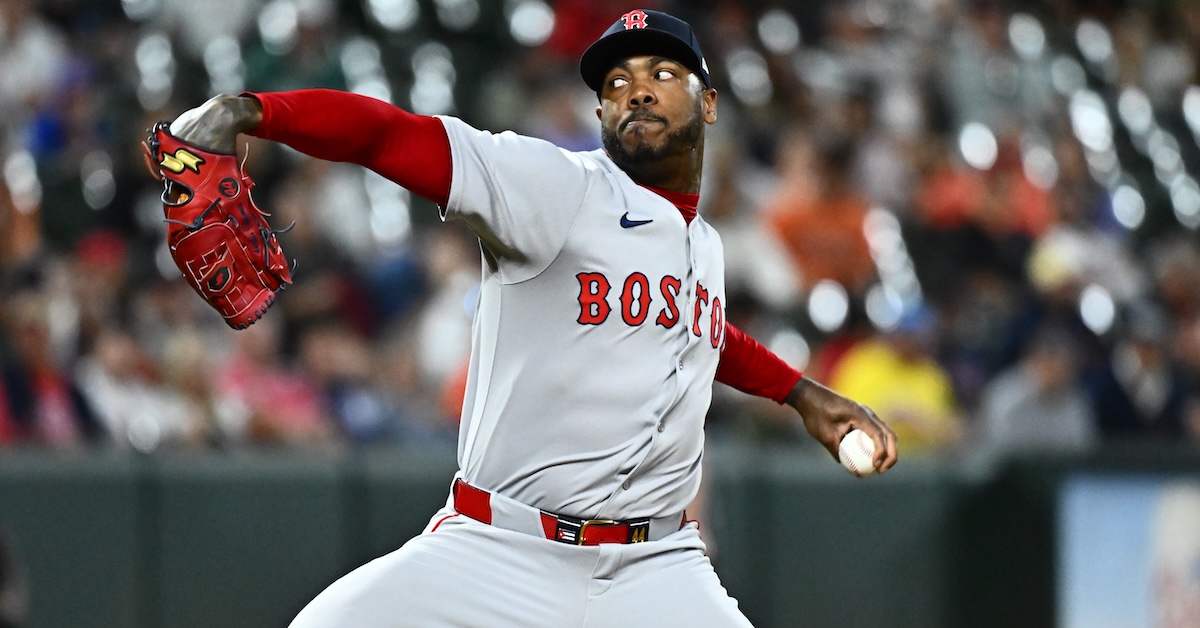
This year’s free agent class features a recent — as in the past two years — MVP. He’s playing the same position he has his entire career and has suffered no recent major injuries: 151 games played in his MVP campaign, 154 in each of the two that followed. And yet interest in this legend of the game is expected to be limited.
On the Top 50 free agents list, Ben Clemens ranked him 41st, which is third at his own position and lower than eight — EIGHT! — relief pitchers. I don’t know why I’m being coy about this player’s identity, actually, because presumably you can see the headline and header image and already know I’m talking about Paul Goldschmidt. Read the rest of this entry »
Below is an analysis of the prospects in the farm system of the Athletics. Scouting reports were compiled with information provided by industry sources as well as our own observations. This is the fifth year we’re delineating between two anticipated relief roles, the abbreviations for which you’ll see in the “position” column below: MIRP for multi-inning relief pitchers, and SIRP for single-inning relief pitchers. The ETAs listed generally correspond to the year a player has to be added to the 40-man roster to avoid being made eligible for the Rule 5 draft. Manual adjustments are made where they seem appropriate, but we use that as a rule of thumb.
A quick overview of what FV (Future Value) means can be found here. A much deeper overview can be found here.
All of the ranked prospects below also appear on The Board, a resource the site offers featuring sortable scouting information for every organization. It has more details (and updated TrackMan data from various sources) than this article and integrates every team’s list so readers can compare prospects across farm systems. It can be found here. Read the rest of this entry »
For the 21st consecutive season, the ZiPS projection system is unleashing a full set of prognostications. For more information on the ZiPS projections, please consult this year’s introduction and MLB’s glossary entry. The team order is selected by lot, and the next team up is the Philadelphia Phillies.
Batters
The quick exit in the postseason at the hands of the New York Mets was a disappointing finale for the 2024 Phillies, but the season as a whole still has to be considered a successful one. Cristopher Sánchez convincingly evaporated any questions about whether his late-2023 performance was a fluke, Bryce Harper stayed healthy and proved to be a more-than-competent defender at first, and the bullpen stayed strong despite a few veteran losses from the year before. But that’s not to say there wasn’t some good fortune involved. I don’t mean that to diminish the Phillies; most great teams have more things go their way than not. The preseason NL East favorite, the Atlanta Braves, saw some of their best players lose most or all of the season with serious injuries, and along those lines, the Phillies didn’t have their depth tested to the same degree. Read the rest of this entry »
Ben Lindbergh and Meg Rowley banter about Rich Hill’s latest (and hopefully not last) pitching exploits, then discuss how Rob Manfred’s desire to craft his legacy as commissioner could shape the sport’s direction, why sports commissioners’ tenures last so long, what qualities of the World Series-winning Dodgers rival teams might try to emulate, rumors surrounding the Dodgers and Roki Sasaki, and more.
The following article is part of a series concerning the 2025 Classic Baseball Era Committee ballot, covering long-retired players, managers, executives, and umpires whose candidacies will be voted upon on December 8. For an introduction to the ballot, see here, and for an introduction to JAWS, see here. Several profiles in this series are adapted from work previously published at SI.com, Baseball Prospectus, and Futility Infielder. All WAR figures refer to the Baseball-Reference version unless otherwise indicated.
2025 Classic Baseball Candidate: John Donaldson
Source
W-L
IP
K
ERA
ERA+
WAR
Baseball Ref (Major Negro Leagues)
6-9
137
69
4.14
88
3.4
Seamheads (All Black baseball)
23-25
432.1
252
2.79
123
12.7
Donaldson Network (c. 2020)
408-161
5,158
5,035
1.58
n/a
n/a
Baseball Reference data covers only play with teams within leagues recognized as majors during 1920-48 period. Seamheads data includes play with independent teams, but not within Latin leagues or exhibitions against white major leagues. Both WAR totals include Donaldson’s performances as a hitter and outfielder (.296/.341/.382 with 6 HR, 29 SB, and 106 OPS+ via Baseball Reference, .280/.330/.358, with 6 HR, 34 SB, and 98 OPS+ in 1,309 PA per Seamheads). Donaldson Network data, from the 2020 book The Negro Leagues Were Major League, includes play with semipro and town teams, minor league and major league teams, as well as Negro Leagues and pre-Negro Leagues Black teams; while his win and strikeout totals have been slightly superseded since then as cited in the text below, their accompanying statistics have not been published.
“If [John] Donaldson were a white man or if the unwritten law of baseball didn’t bar Negroes from the major leagues, I would give $50,000 for him and think I was getting a bargain.” — John McGraw, quoted in various newspapers, 1915
The career totals are staggering — 428 wins, 5,295 strikeouts, 14 no-hitters, and two perfect games over a span of 33 years — and they’ve all been documented by a network of researchers unearthing primary sources. But only a fraction of those are on Seamheads, and an even smaller fraction on Baseball Reference, covering his time in the major Negro Leagues. John Donaldson is an enigma. He may have been the greatest Black baseball pitcher of all time.
A 6-foot-1, 180-pound left-hander who had speed, a wide assortment of curveballs, and a good changeup, Donaldson spent the years from 1908–40 carving out a singular career in Black baseball. He barnstormed before the major Negro Leagues were in place, dominating the competition, spent five seasons (1920-24) with the Kansas City Monarchs (whom he’s said to have named) of the first Negro National League, primarily as an outfielder rather than a pitcher, and then spent over a decade and a half continuing his barnstorming odyssey on integrated and Black semiprofessional teams. Read the rest of this entry »
Tuesday was this year’s 40-man roster deadline, the date by which players who would otherwise be eligible for the Rule 5 Draft at Winter Meetings need to be added to their club’s roster in order to be protected. In addition to a few dozen players’ big league tickets essentially being punched on this day, there is often a flurry of trade activity as teams with a surplus of rosterable players look to find teams with skimpier rosters with which to trade.
I’ve updated the scouting reports for these newly rostered players over on The Board, which you can find here. There will probably be a couple of guys from this contingent whose grades change between now and when their team’s prospect list goes up on the site, but for the most part, these evaluations are hot off the presses and will hold up all offseason. I go into much greater depth on each player in their Board scouting report than I have here. The commentary below often has more to do with a team’s roster makeup than any individual player. Read the rest of this entry »
Dan Szymborski: Since it decided not to post in the queue for some reason at 11:40 and I had to force it at 11:57, there’s no queue built up, so feel free to ask any question, no matter how ridiculous
12:02
Dan Szymborski: And there’s a good chance I’ll be able to answer it, since asking me about how I evaluate pretzels or how many weird AIs I’ve made of Lindsey Graham is way better than awkward silence
12:02
Kate: Would Grant Holmes projection be worse if he was projected in the rotation? In terms of how ZiPS projects his role, is that something you do manually?
12:03
Dan Szymborski: As a default, ZiPS will project a player based on their recent usage. It looks at the last four years and VERY heavily weights recent play.
12:04
Dan Szymborski: However, I have clickboxes for “full-time starter” or “full-time reliever” which will cause ZiPS to go back and translate the past baselines for a pitcher into full-time starter or full-time reliever lines, and then make a new projections
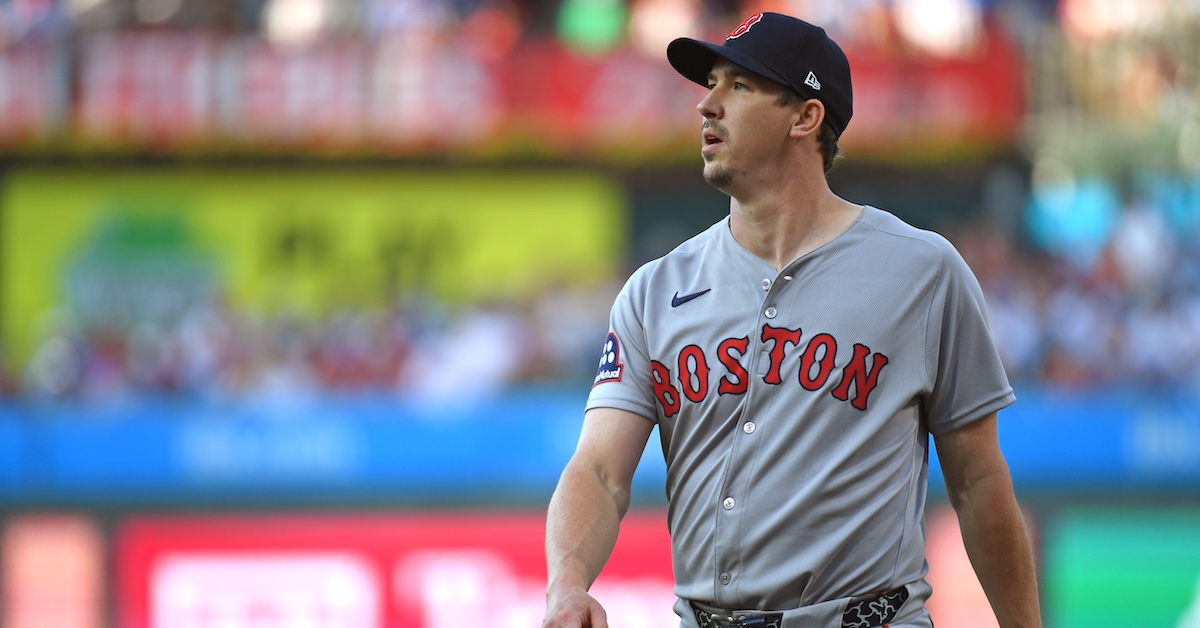
When I interviewed him back in January, Richard Fitts told me that his goal was to be a longtime big leaguer in Boston, and that his focus was simply on becoming the best version of himself. He’s since taken important steps on both fronts. The 24-year-old right-hander worked on fine-tuning his repertoire and usage at Triple-A Worcester, then impressed after receiving his first call-up in September. Moreover, he etched his name into the record books. Fitts didn’t allow an earned run over his initial 18 2/3 innings — this over three-plus starts — the most ever for a Red Sox pitcher to begin his career. As of right now, Roster Resource projects Fitts to be in the Red Sox rotation next season, though that could change depending on Lucas Giolito’s health and whether they sign a frontline starter or two this winter.
The Auburn University product had recently come to Boston via trade when we spoke 11 months ago. A sixth-round pick in the 2021 draft, Fitts was acquired along with Greg Weissert and Nicholas Judice from the New York Yankees in exchange for Alex Verdugo. At the time he’d been relying primarily on a four-seam fastball, with a slider serving as his best secondary. He described the latter as being “a little bit in between” a conventional slider and a sweeper.
How does the current iteration of the 6-foot-4, 245-pound hurler compare to the one I’d spoken to last winter? Is he basically the same pitcher? I asked him those questions on the final day of the regular season. Read the rest of this entry »
I’ve been working at FanGraphs long enough — more than two full years now — that I’ve started to build a track record. By that I mean that when I get something right, I can go back and gloat about it.
In February 2023, I wrote about Rangers outfielder Adolis García: A power-over-hit player who struggled to get on base and did not play a premium position. Some years ago, I was at a Starbucks a couple blocks from my house when I saw someone who looked like an ex-girlfriend of mine a few tables away. On further reflection, I don’t think it was really her, but I packed up my computer, downed my macchiato, went home, and never came back. You can never be too careful.
I would ordinarily avoid players like García with even greater alacrity. Nevertheless, I reasoned that the Rangers, having invested much more heavily in pitching than hitting, needed their right fielder to be at his best if they hoped to achieve anything in 2023. And García had made very good contact the previous season, but had not been rewarded accordingly. So despite my trepidation regarding his overall skill set, I predicted that García would take a step forward. Read the rest of this entry »