Frank Bowen IV/The Enquirer-USA TODAY NETWORK via Imagn Images
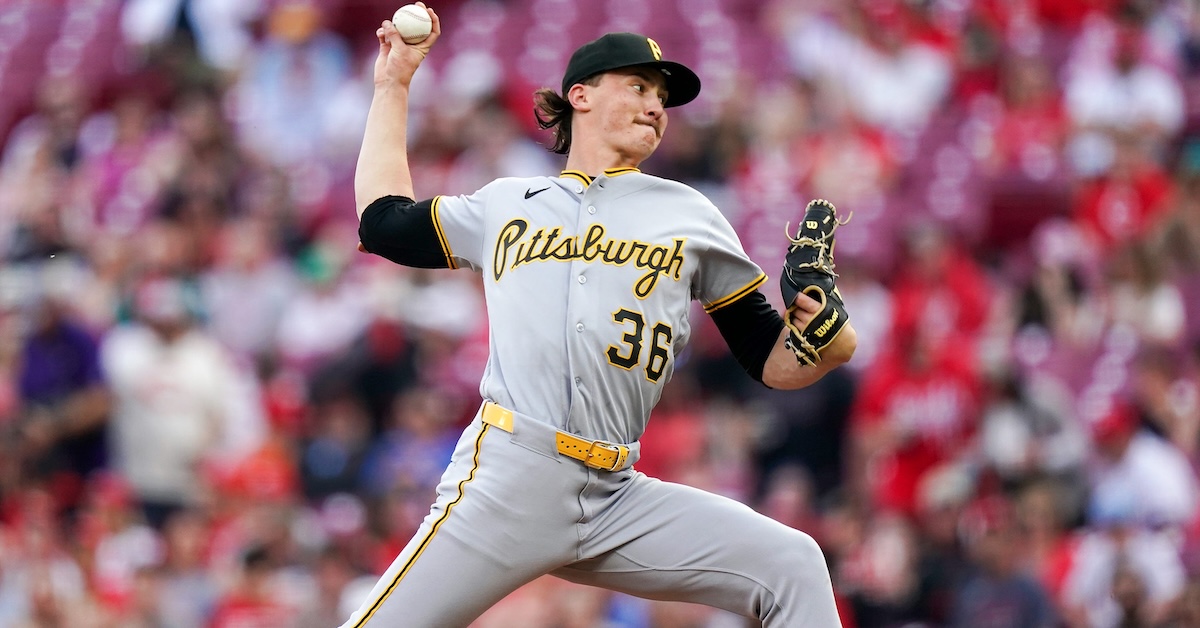
In Bubba Chandler’s first start of the 2026 season, he didn’t allow a single hit. Oh yeah, and he struck out more than 30% of the batters he faced. Spectacular! Just, um, don’t look over at the walk column. Oh, you did? Yeah, fine, he walked more than 30% of the batters he faced, too. Oh, and he allowed a run, and didn’t get out of the fifth inning. To understand what Chandler was up to, and what it might mean for the rest of his year, we’ll have to dig a little deeper.
Chandler leaned heavily on his fastball to start his year, as many pitchers do in their first appearance of the season. He breezed through the first inning with 11 straight fastballs, eclipsing 100 mph on the radar gun four times and essentially daring the Reds to hit it. TJ Friedl waved feebly at 100 above the zone. Matt McLain did the same. Chandler’s fastball is dynamite, particularly when he’s locating it high. It explodes upwards, and some offseason tweaks have it moving less arm side than before, making it even harder to square up.
I could watch a montage of Chandler overpowering Reds hitters all day. In fact, you can too:
You can see how difficult it is to track Chandler’s fastball by watching the check swings. The pitch that Jose Trevino, the last batter in that loop, offered at was more than a foot above the zone. The combination of velo, movement, and Chandler’s loping delivery means that hitters have a lot of trouble figuring out where the ball is going. Read the rest of this entry »
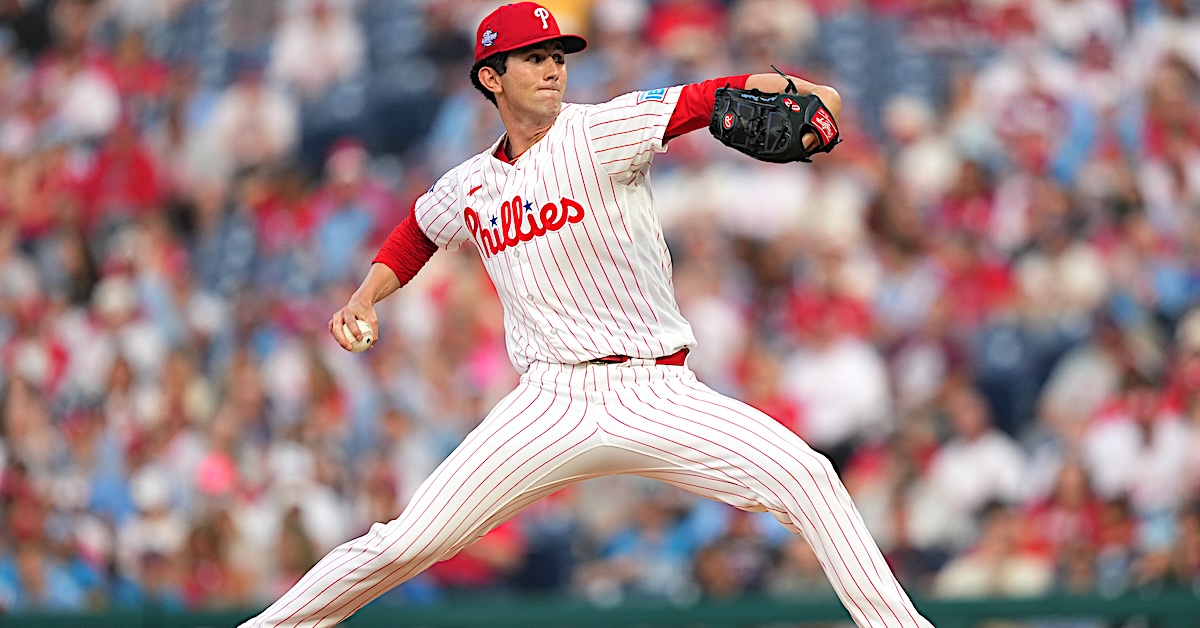
Andrew Painter made his major league debut on Tuesday, as the Phillies were coming off a three-game losing streak. That’s a tough assignment; I know it’s the first week of the season, but that has never stopped Phillies fans — who even in the best of times are always looking for a reason to jump off a bridge — from declaring the team irretrievably cooked.
Not so fast, my friends. Because anyone who’s willing to overreact to a one-game sample in April must be over the moon about Painter.
Painter, who turns 23 next month, was one of the top pitching prospects in the entire sport in the 2022-23 offseason. At age 19, he was promoted to Double-A, where he posted a 2.54 ERA in five starts and struck out 37, while walking just two, in 28 1/3 innings. As 2023 dawned, there was a not-unreasonable expectation that Painter would contribute down the stretch in his age-20 season, perhaps as a bullpen stopper, like a young David Price or Adam Wainwright, or perhaps in the rotation. (Remember, this was before Cristopher Sánchez turned into the world-destroying ace he’s become.)
But Painter’s elbow started barking, and an early hesitation to sending him to get Tommy John surgery led to both 2023 and 2024 being written off. With two years of rust, Painter struggled in 2025, pitching to an ERA over 5.00 across two minor league levels, and the first single-digit K/9 ratio of his professional career. The Phillies pitched well last postseason, but they still could’ve used Painter. He simply hadn’t earned the call-up that he’d seemingly had in the bag since early 2023.
He dropped his arm slot and lost a ton of life off his fastball while returning from Tommy John, but the promise remained. He was no longer the top pitching prospect in baseball, nor the top prospect in the Phillies’ system, but he rated no. 27 overall this past offseason and eighth among pitching prospects, with a 55-FV grade. This is still Philadelphia’s most anticipated rookie pitcher since at least Cole Hamels.
It speaks to the Phillies’ faith in the young right-hander that they did not go out and get anything resembling a like-for-like replacement for the departing Ranger Suarez. With Zack Wheeler on the mend from thoracic outlet syndrome, that left Painter in the big league rotation with no safety net. I genuinely do not know who starting pitcher no. 6 is for the Phillies right now, but I am confronted with the possibility that it might be Bryse Wilson if 40-man roster glut were not a consideration.
So, yeah, there’s a bit of pressure on Painter.
If he was feeling that pressure, you couldn’t tell. Painter, who stands an Ent-like 6-foot-7, strolled serenely to the mound for his first competitive big league action. And as good as the stuff and the results were — don’t worry, I’m getting there — Painter’s composure seemed to impress his teammates most.
But it doesn’t matter how calm a rookie pitcher is if he’s throwing slop and getting shelled. So let’s check Painter’s stuff and results.
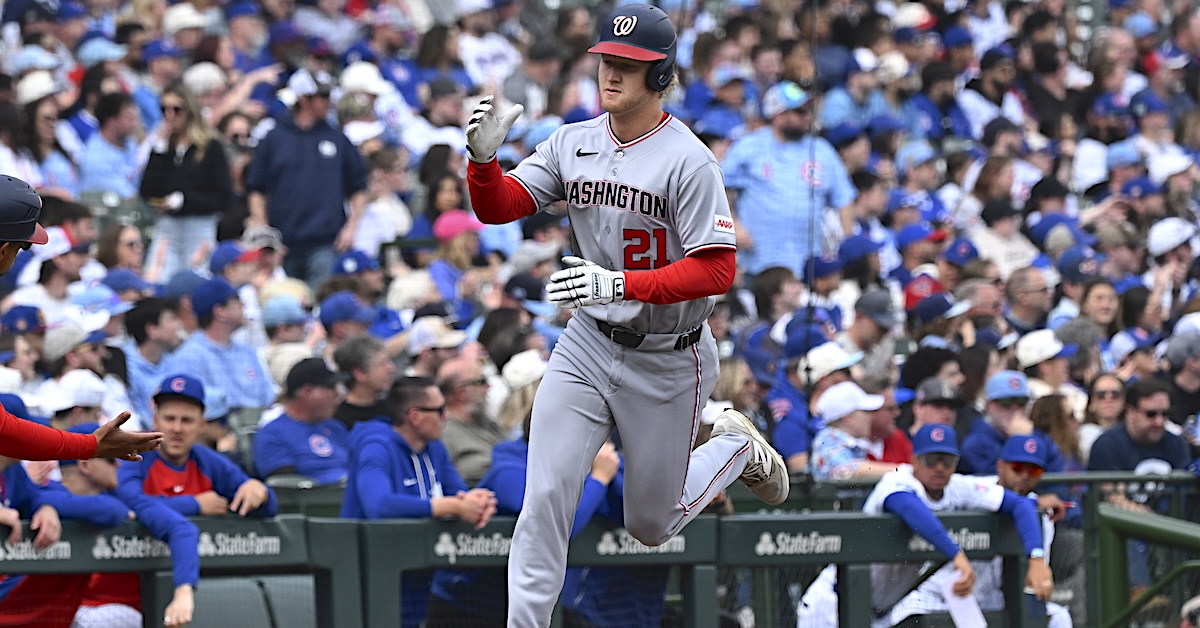
Yes, the Nationals’ lineup isn’t that good overall, but it features a few challenging hitters: CJ Abrams, Daylen Lile, and the genuinely capital-D Dangerous James Wood. Joey Wiemer is coming off a run of literally not making an out for 10 straight plate appearances, though it looks like the magic (or quantum ray power) has finally worn off.
The value proposition for Painter is that there’s nothing weird about him. He’s just what an ace looks like. He’s huge, he throws hard, he has a varied arsenal of six pitches… there’s just nothing to talk yourself into on the scouting report.
Painter throws two fastballs, a four-seamer and sinker, both of which sat 94-97 and topped out at 98.7 mph. He hit that figure twice in the first inning, when he was freshest and the adrenaline was surely pumping hardest, but he got back to 98.6 mph in the fourth.
Like a lot of modern starters, Painter has one look for left-handed hitters and another for righties. The platoon advantage works because breaking balls move away from same-handed batters and toward opposite-handed hitters. So pitchers like Painter, who have multiple fastballs and breaking balls, want to work side-to-side against same-handed batters and up-and-down against opposite-handed ones. That means four-seamer, sinker, slider, sweeper against righties, and four-seamer, slider, curveball, changeup against lefties in Painter’s case.
Nationals manager Blake Butera loaded up on the former. With six lefties and two switch-hitters in the lineup, Wiemer was the only right-handed batter Painter faced all evening, so we saw a lot of his four-seamer, slider, curveball, and changeup, and relatively little of his sinker and sweeper.
Painter was kind enough to get at least one strikeout on each pitch from that first group of four, so that you can see all of them in this highlight video.
Painter’s first and last strikeouts came against Wood, and both came from working fastball up, curveball down, to change Wood’s eye level and mess up his timing. He struck out in the fifth inning after taking an 80.6-mph curveball for a strike, and then chasing a 97.2-mph four-seamer up and away.
With the fastball and curveball established, Painter could tunnel his changeup into a middle ground in terms of movement and speed. The scouting report on Painter has “FASTBALL VELOCITY” and “NASTY CURVEBALL” written in all caps, but the changeup is a new weapon, perhaps the only positive development from his forgettable 2025 season in Lehigh Valley.
He was able to paint the bottom left-hand corner of the strike zone with his changeup to get Luis García Jr. looking in the third, and he did it again to Jorbit Vivas in the fourth. Both of those pitches were right on the edge of the zone, but Painter worked there so effectively that the Nats were out of challenges when Vivas tried to summon ABS to bail him out.
And when Painter did allow contact, it was pretty innocuous. He let up 12 balls in play out of 21 batters faced. Only three of those batted balls had an xBA of .100 or higher, and only one reached Baseball Savant’s hard-hit threshold of 95 mph. That was the last pitch Painter threw all night: Abrams ripped it to right for a single, and Phillies manager Rob Thomson, wanting his rookie starter to go out on a positive, pulled the plug.
The damage the Nats did against Painter, such as it was, didn’t do much to discredit the rookie’s effort. Lile seemed to have Painter’s number, reaching twice, but one of those two came on a popup that four different Phillies lost in the lights. As a general rule, when someone tags Jon Bois on social media with “watching baseball,” it doesn’t speak well of what’s depicted.
The state of perpetual garment-rending around the Phillies might be unhelpful, as I mentioned up top, but as debuts go, at home in April against the Nats is a pretty soft assignment for a rookie. Painter aced it, so to speak, but that success only earns him a new set of questions to answer. Can he get it done against deeper lineups? Can he survive a third time through the order? Can he hold his velocity? If so, how far up the rotation can he climb — a question that could become quite relevant given the questions about Wheeler’s health and Aaron Nola’s getting abducted by aliens last year.
But that’s life in the big leagues. The hits just keep on coming. Or, in Painter’s case, maybe they won’t.
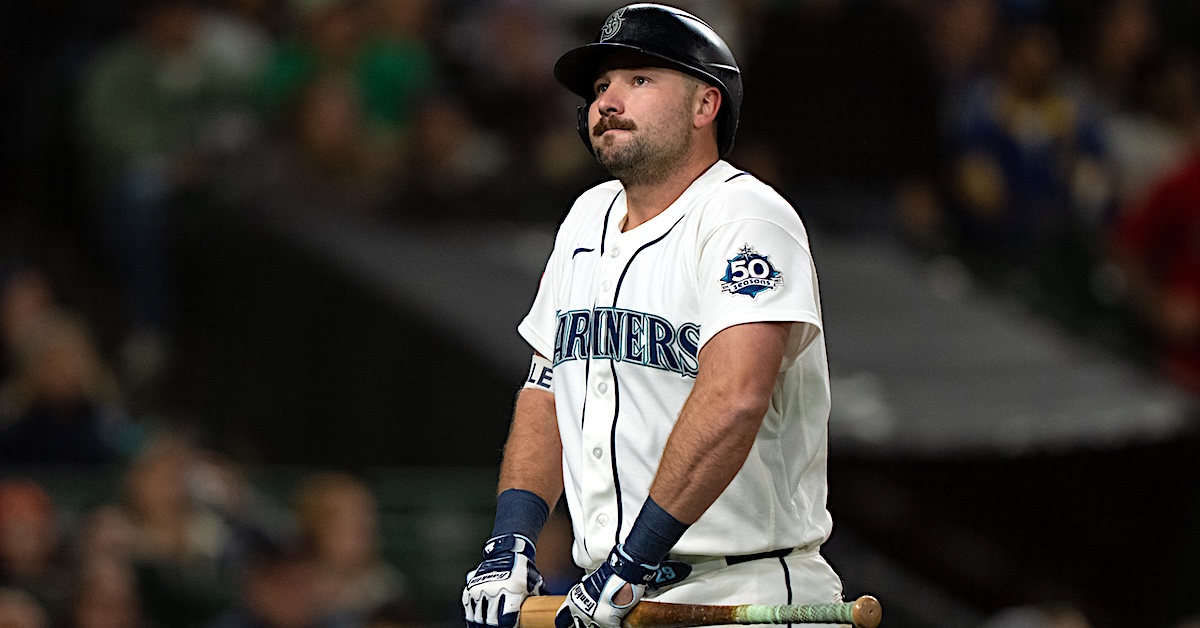
The Mariners did not record a single in their first two games of 2026. No team had ever done that in major league history. In fact, only eight teams have ever gone back-to-back games without a single, according to MLB.com’s Sarah Langs.
The reason is obvious. The Mariners didn’t hit a single because they didn’t put the ball in play very often. And frankly, how could they? Guardians pitchers threw less than 40% of their pitches in the zone, and the Mariners were forced to lay off them, drawing walks in 13.6% of their plate appearances during those two games. When the Guardians did enter the zone, the Mariners struggled to make contact, striking out 35.8% of the time. That means only 34 (50.8%) of their plate appearances ended with a batted ball. And because the Mariners employ a number of sluggers, six of those batted balls flew over the fence. Read the rest of this entry »
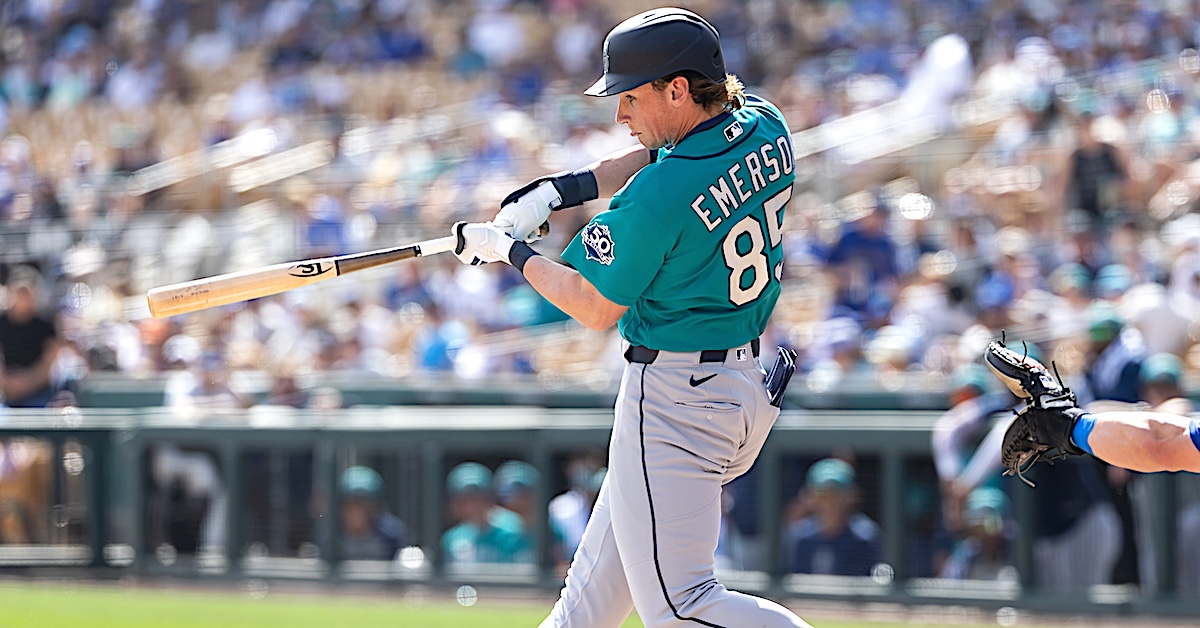
Apparently not wanting to be left out of the flurryofcontractextensionshanded out over the last two weeks, the Seattle Mariners signed a big one of their own, locking up infield prospect Colt Emerson to an eight-year contract that guarantees him $95 million over the next eight years. This includes a $1 million salary for 2026, meaning that the contract goes through the end of the 2033 season, with the Mariners holding a 2034 club option that could staple another $25 million onto the back of the contract. Emerson’s deal also includes a no-trade clause and bonuses for All-Star selections and Silver Slugger and MVP awards, de rigueur in deals such as this.
While Emerson doesn’t have one mind-blowing tool that absolutely obliterates the cognitive pathways of watchers, he’s very accomplished at basically everything he does. He’s not going to regularly blast Stantonian shots, but he’ll hit his fair share of home runs, ZiPS thinks 15-20 a year if he played home games at a neutral site rather than T-Mobile Park. Emerson is willing to draw walks, but he still retains a fundamental aggression at the plate; that’s a good thing, as being too passive is a frequent pitfall for prospects who take a good amount of free passes. There’s no whiff problem hiding in his advanced stats, either. He’s not a burner on the basepaths like Trea Turner or Bobby Witt Jr., but at the same time, he’s not me with a belly full of Cool Ranch Doritos, a 32-ounce deli container of beer, and a hamstring that hasn’t gotten a whole lot of use since the Clinton administration. It doesn’t seem like there are any serious concerns about his sticking at shortstop, and the coordinate-based method that ZiPS uses for minor leaguers sees him as a solid B+ defender at the position. Let’s crank out those projections. Read the rest of this entry »
One morning, about two weeks ago, a YouTube video made me feel like I was asleep at the wheel. Ethan Moore, a former analyst with the Rockies and the Reds, had posted a video titled “Every Baseball Analyst is Missing Something Important.” I’d like to consider myself a baseball analyst, and it sounded like I might be missing something important. And so I clicked to see what that might be.
Over the span of 36 minutes, Ethan broke down a total of three pitches, all of which were thrown by Nolan McLean to Pete Crow-Armstrong in the second inning of a late September game between the Mets and Cubs. He used this plate appearance to illustrate his central claim: There is so much happening in the handful of milliseconds between the release of the ball and the swing of a bat, and that the psychology of the hitter — conscious thoughts, subconscious expectations, muscle memories — dictates the decision of when to swing, and where, and how hard. As Ethan put it, “When the ball is in the air, on the way to the plate, what is actually happening in the mind and the subconscious brain of the hitter?”
It reminded me of another video I saw a bit earlier in the spring. It featured Vinnie Pasquantino, before he captained Team Italy in the WBC, wearing a microphone during a live batting practice session against his Royals teammate Steven Zobac. It’s meant to be a short and funny clip, and it is both of those things, but I just kept thinking about Pasquantino’s subconscious. Read the rest of this entry »
In the new season’s early going, the challenge system has been all the rage across the majors. If you don’t believe me, you can read ESPN’s coverage of it, or The Athletic’s, or MLB.com’s, or … well, you get the idea. The coverage has been extensive and positive, and I couldn’t agree with its enthusiasm more. I love the new system, and I’m also really excited to think about challenges in general. There are so many fun angles to consider. So here’s the math nerd’s take on what challenges have looked like so far, and what I’m most interested to learn about them moving forward.
How I’m Thinking About Challenges
Every time a strike or ball is called, there’s an opportunity for a challenge, at least so long as the relevant team has one remaining. That makes it easy to measure the prospective value of a challenge on any given pitch: It’s worth however much flipping the result of that particular pitch would change the game situation in the challenging player’s favor. All we have to do is figure out how many runs were likely to score in the inning in each case and compare the two. Read the rest of this entry »
Over the past few years, one thought has kept bouncing around in my mind: “I must be taking crazy pills.” Don’t run off to the comments to complain about this post getting political, because that’s not the point I’m trying to make. Over the past few years, longstanding institutions and norms have come crashing down without so much as a peep from the people charged with defending them. Whether you think that’s good or not, it’s a matter of historical fact.
Therefore, we live in disconcerting times. COVID, AI, mass media consolidation, man’s inhumanity to man… it messes with one’s sense of order in the universe. We’re rapidly approaching an era in which battery tech and solar power actually make electricity too cheap to meter, but NATO and the Washington Post might not exist by the time we get there.
It’s unsettling. There have been times when I’ve looked around and found that the most logical explanation is that I am, genuinely, being slipped crazy pills without my knowledge. Because surely this must make sense to someone. Read the rest of this entry »
Kevin Sousa, Benny Sieu, Eric Hartline, Troy Taormina-Imagn Images
Cody Ponce left his first start on a cart with a trainer.
Ponce collapsed in considerable pain Monday after making an awkward attempt to field a grounder in the third inning against the Rockies. He appeared to twist his right knee in a direction it’s not meant to go. He stood and limped to the cart on his own before exiting. Blue Jays’ manager John Schneider said after the game that Ponce will get an MRI.
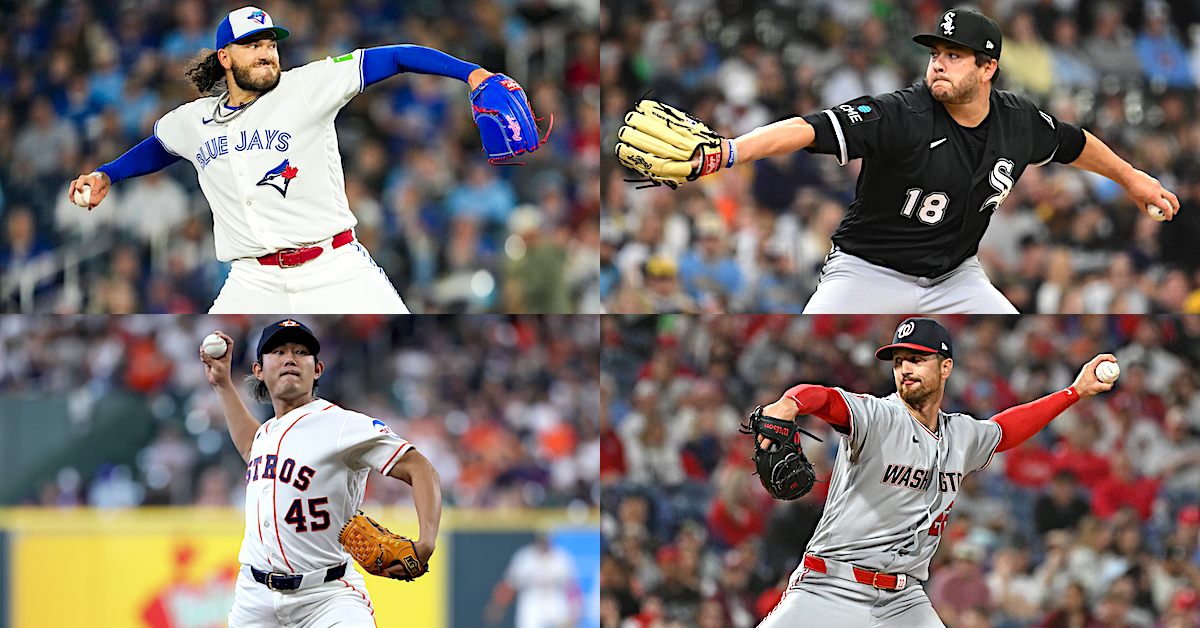
The injury is an unfortunate setback for Ponce, who was making his first start in the majors since 2021. He was perhaps the most anticipated in a quartet of free agent pitchers who signed out of the KBO or NPB this winter. I’d already planned to write about each of them, leading with Ponce for the reasons he displayed before the injury. And while I don’t want to overreact to one start, I think there are interesting takeaways from each that could inform the shape of their respective seasons to come. Read the rest of this entry »
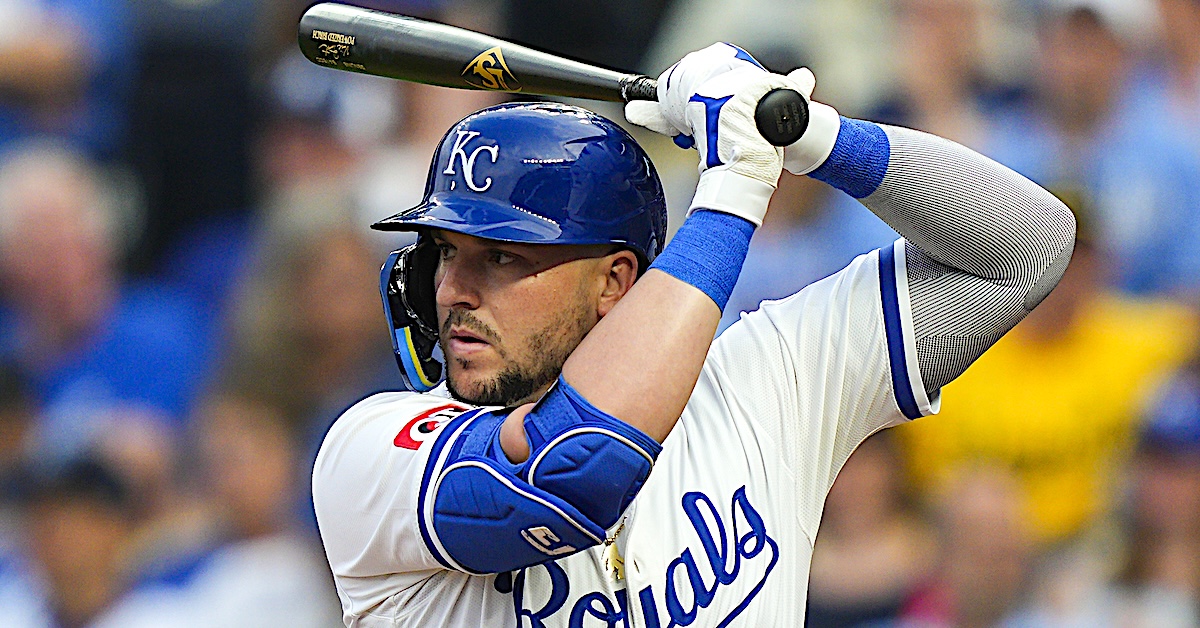
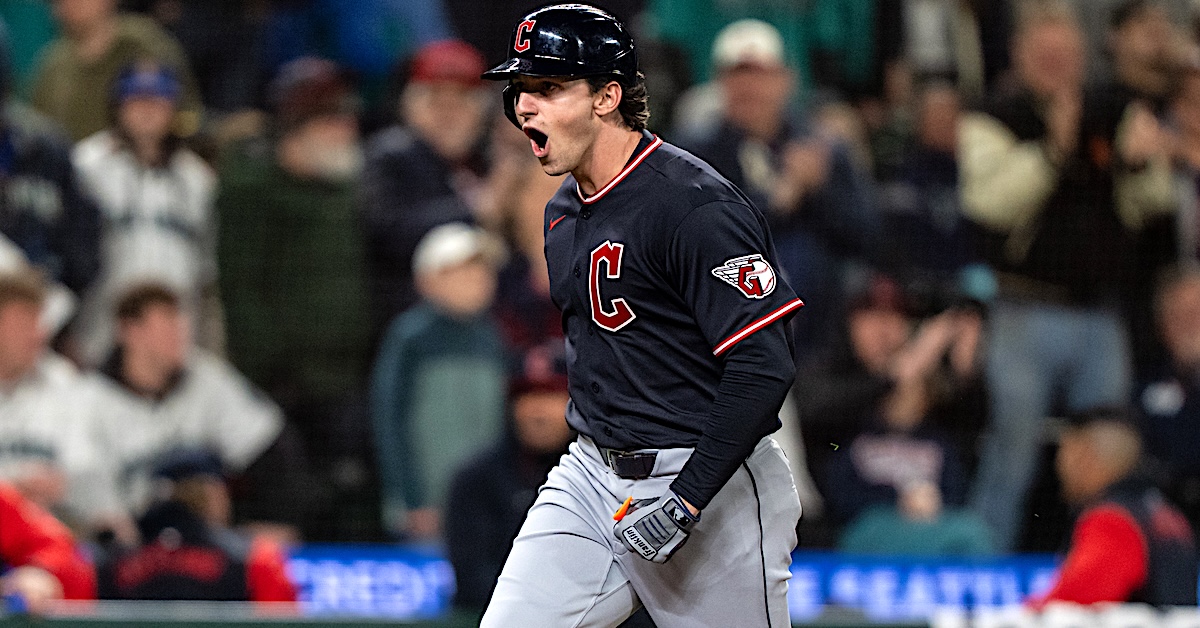
Chase DeLauter got an odd start to his major league career last fall — and an inauspicious one, at that — when he became the sixth player to debut in a postseason game before playing in a regular season one. The Guardians’ rookie right fielder has fared much better in the early stages of his first regular season in the majors, going on a home run binge that made a bit of history.
Facing the Mariners in Seattle on Opening Day last Thursday, the 24-year-old DeLauter started things off by homering in his first plate appearance, launching a towering 358-foot solo shot off Logan Gilbert. It was the first Cleveland run of the season, and though at least 140 players in AL/NL history have homered in their first career at-bat, in the ninth inning he joined a much more exclusive club. With the Guardians ahead 5-4, DeLauter hammered a 422-foot solo home run off Cooper Criswell, helping to seal the victory and becoming just the sixth player to homer twice in his regular season debut:
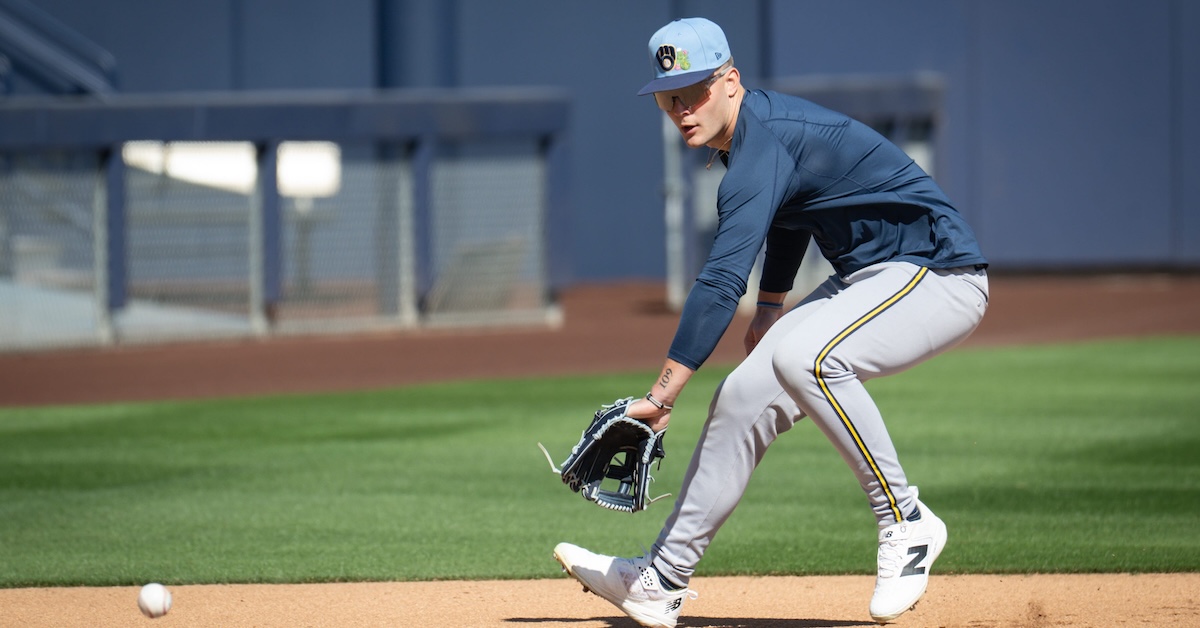
The Brewers and shortstop prospect Cooper Pratt are reportedly close to terms on an eight-year extension. The deal would guarantee Pratt $50.75 million over the life of the deal, and there are also two club options worth about $15 million apiece. As it’s a major league contract, Pratt must be added to Milwaukee’s 40-man roster. A corresponding move to make the terms work has not yet been announced.
While extensions for prospects who have yet to debut are becoming more common, Pratt’s is a little unusual. These tend to either be large deals to consensus top prospects, often with the carrot of a ticket to the Opening Day roster as a sort of signing bonus, or smaller sums for enticing but flawed farmhands. The eight-year, $82 million extension Milwaukee inked with Jackson Chourio prior to the 2024 season is a good example of the former (as is the eight-year, $95 million pact the Mariners reportedly just struck with Colt Emerson), while the six-year, $25 million pacts Seattle signed with Evan White and Philadelphia with Scott Kingery cover the latter. Pratt’s deal doesn’t fit cleanly in either category. It’s a pretty good chunk of change for a player who evaluators generally don’t see as a future star, and it’s also not a pay-for-play deal, as Pratt will likely remain at Triple-A after signing.
Pratt was taken in the sixth round of the 2023 draft from Magnolia Heights High School in Mississippi. Eric ranked him 25th on the Draft Board that year, but his $1.35 signing bonus was commensurate with more of a second-round talent. As you’d expect for a prospect in consideration for this kind of contract, he’s performed well in pro ball. After a successful cameo on the complex in his draft season, Pratt notched a 132 wRC+ at Low-A as a 19-year-old, with strong contact skills and a low walk rate. He spent all of 2025 at Double-A, where he played a clean shortstop and hit .238/.343/.348, good for a 107 wRC+. He also dropped his strikeout rate to 15.2%, impressive for a 20-year-old at that level. Read the rest of this entry »