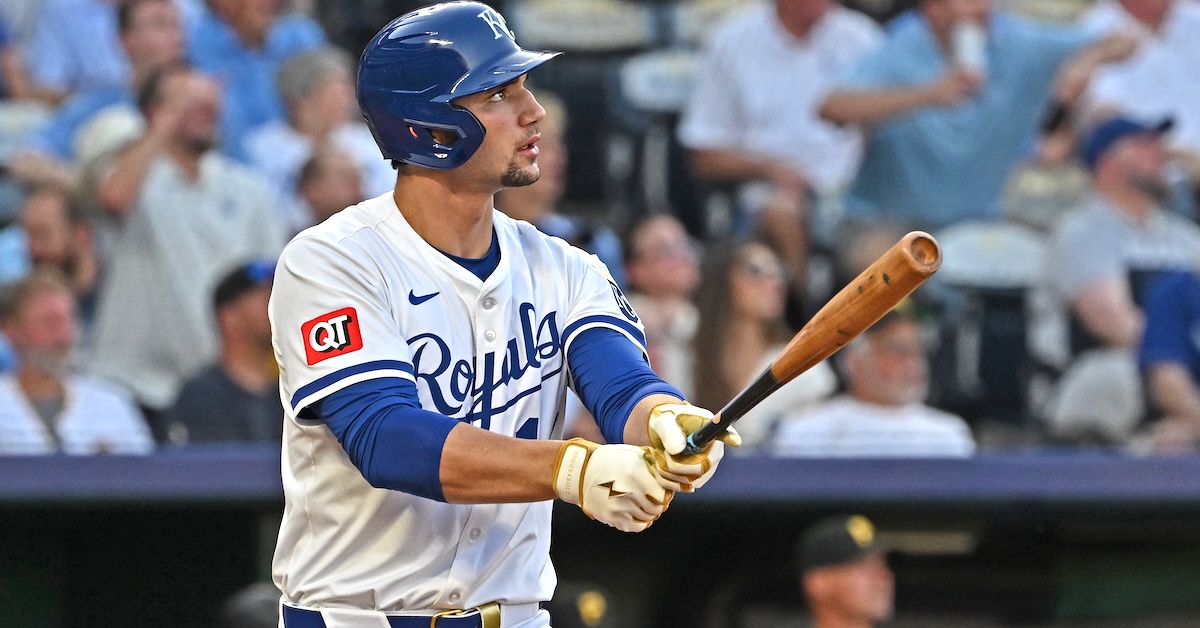
Home-field advantage has been a bit of a booby prize this postseason, with the home team losing all five LCS games heading into Thursday evening’s action. The Dodgers’ Game 3 starter, Tyler Glasnow, is arguably the closest thing this rotation has to a weak link. So maybe the Brewers weren’t as dead as the series standings made it seem. Win one and you’re back in it.
Unfortunately for the Brewers, and for neutrals hoping for this series to go six or seven exciting games, that wasn’t in the cards. The Dodgers put a run on the board within their first two batters of the game, and while Milwaukee tied it the next inning, Glasnow shut the door afterward. A couple singles, a walk, and a throwing error in the sixth inning were all the Dodgers needed to win the game, 3-1, and take a 3-0 lead in the series. You already know what the odds are at this point. Read the rest of this entry »
I’ve got some terrible news for you. The crime rate is way down. I know that sounds like it should be good news, but when it comes to baseball, it’s just boring. Nobody’s stealing any bases during the playoffs (except for Randy Arozarena and, of course, Josh Naylor). The 34 total playoff games have seen just 26 steals on 35 total attempts. That’s 0.51 attempts per team per game, a huge drop-off from a regular season that averaged 0.91. The Blue Jays and Dodgers have combined for just two steals on two attempts. Boring.
On its own, that doesn’t seem too surprising. This is the fourth year in a row that teams have attempted fewer steals per game in the playoffs than in the regular season. The reasons behind this are easy enough to understand. First, we have a logistical hurdle. Runs are harder to come by during the playoffs. This year, we’ve seen 4.45 runs per team game during the regular season and just 4.02 during the playoffs. On-base percentage is down 11 points, which means fewer baserunners and fewer stolen base opportunities to start with. Next, we’ve got the risk aversion angle. Those baserunners are a more precious commodity at a time when the stakes are at their highest. Running into an out on the bases is a very loud unforced error, the kind of thing you get roasted for in the papers the next morning. It’s a lot harder to see how much potential value you’re leaving on the table by just staying put. I feel confident that I’ve never read an article roasting a player for not trying to steal.
SEATTLE — There’s an age-old question among pitching philosophers. Should an approach focus more on the pitcher’s strengths or the hitter’s weaknesses? In my experience, pitchers do not ask themselves this question, though. They almost always prefer to pitch to their own strengths. They might tweak their strategy if a hitter has an obvious and exploitable weakness that they feel comfortable attacking, but mostly they’d rather stick to what they do best.
But what happens when what a pitcher does best aligns perfectly with what his opponent does best? When it’s not just that he’s ignoring the hitter’s weakness, but that he’s also pitching to the hitter’s strength? Game 3 of the ALCS between the Mariners and the Blue Jays gave us a data point to consider when answering that question. Toronto walked away with a 13-4 victory in Seattle to cut the Mariners’ series lead to 2-1, and did so by sticking to its strengths in the batter’s box. Read the rest of this entry »
Philadelphia, late in a must-win road game in a tightly contested playoff series, has all but gotten a stop. The team has held serve, against all odds blanking its opponent to force another frame and extend the season. Then, all of a sudden, the ball does something weird. It goes in a direction nobody anticipated, and as the entire Delaware Valley looks on in disbelieving horror, the home team scores to seal a walk-off win and advance to the next round.
I’m sure you’ve deduced from the lack of proper nouns in the previous paragraph that I’m not talking about the recently concluded Phillies-Dodgers NLDS, or the Orion Kerkering throwing error that ended it. No, I’m talking about this.
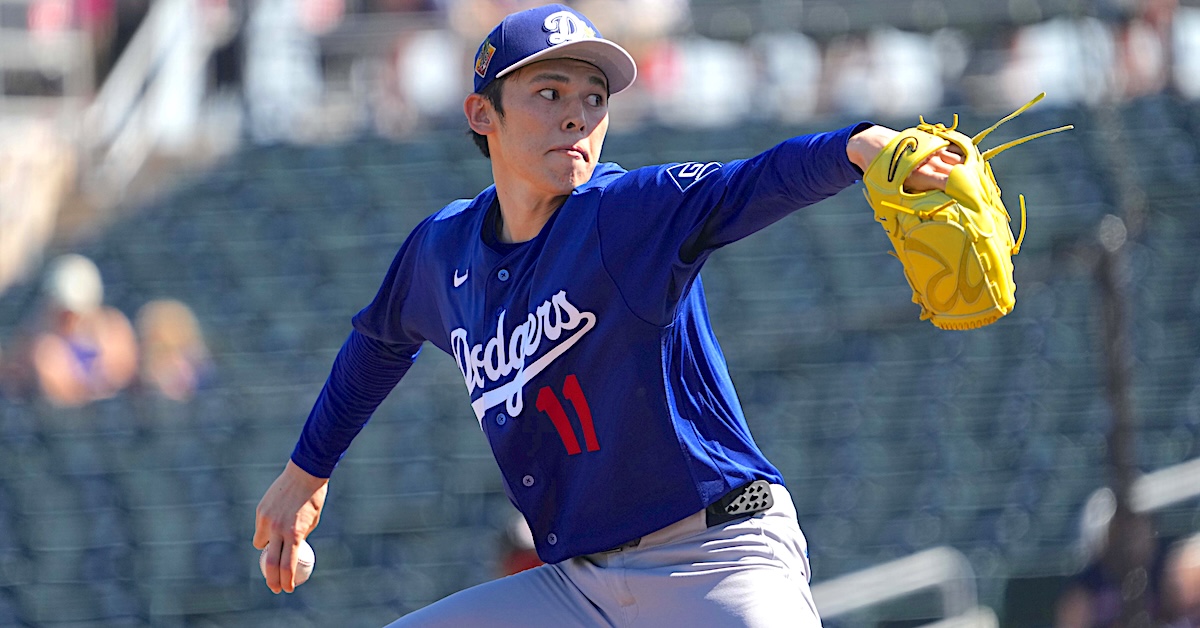
It could not have started worse. Yoshinobu Yamamoto’s first pitch of NLCS Game 2 was a 97-mph four-seam fastball to Jackson Chourio, the Brewers’ powerful leadoff hitter. Chourio promptly hammered it 389 feet into the Dodgers’ bullpen. It landed like a signal to the relievers milling out on the berm: Be alert, you might be needed sooner than you thought.
They would not be necessary. It’s hard to imagine a better pitching performance than that of Yamamoto’s teammate, Blake Snell, who delivered 10 strikeouts over eight innings the previous night. But Yamamoto managed to one-up him.
Over 111 magnificent pitches, Yamamoto rendered the Brewers’ bats rudderless, holding them to that single run over a three-hit complete game. It was the first in the playoffs in eight years, and it certainly offered one possible solution to the Dodgers’ bullpen woes: What if you just didn’t need those guys? Read the rest of this entry »
Say what you want about Blake Snell. You may not find his Only Use Strike Zone in Case of Emergency pitching style fun to watch, but in Game 1 of the National League Championship Series, the Brewers found it even less pleasant to hit against. Snell carved through a Milwaukee lineup that scored 22 runs in the NLDS like a knife through nothing at all, ending his night by retiring 17 straight. He faced the minimum over eight innings in an absolutely dominant performance as the Dodgers beat the Brewers, 2-1, to take a 1-0 lead in the NLCS.
A prolonged bout of shoulder inflammation limited Snell to just 11 starts and 61 1/3 innings this season, but over those 11 starts, he was excellent, running a 2.35 ERA and 2.69 FIP. He’d been even better in the playoffs, earning wins against the Reds and Phillies and allowing just two runs, five hits, and five walks while striking out 18. On Monday night, he made those performances look like warmup outings. Snell went eight innings for just the second time in his entire career, and finished with 10 strikeouts, no walks, and one hit. That one hit was a weak line drive that third baseman Caleb Durbin dumped into center field in the third inning. Durbin then broke for second way too early, allowing Snell to throw over to first and catch him easily at second. “You gotta disrupt it,” said Milwaukee manager Pat Murphy between innings. “You gotta do something. He looks really sharp.” The Brewers didn’t do anything.
It wasn’t surprising to see Snell dealing, but it was surprising to see him not walking anyone. The game plan for the Brewers was simple, if difficult to execute. They had the lowest chase rate and the sixth-highest walk rate in baseball this season. They needed to be patient and force Snell to throw the ball in the zone. The Dodgers wanted the same thing. “I can’t have him nibble,” said Los Angeles manager Dave Roberts before the game. Snell didn’t nibble. He hit the zone 50% of the time, well above his regular season rate of 44%, and only a hair under the major league average of 51%. It was just the third time in the past two seasons that he’d gone without a base on balls. His changeup was particularly devastating, and he threw it 37% of the time, the second-highest rate of his entire career. Between innings, he sat on the bench and flipped through a half-inch three-ring binder that held either scouting reports or notes for an AP chemistry midterm. Read the rest of this entry »

On Friday night in Seattle, Logan Gilbert was on the mound gutting out two scoreless innings of relief a mere two days after he’d won the third game of the American League Division Series. That performance was do or die; hold the Tigers scoreless or head home for winter. The entire Mariners team contributed to that 15-inning win, never mind any knock-on effects for the pitching staff. A few days after that, on Monday in Toronto, Gilbert tried to reprise his heroic, short-rest effort against a relentless Blue Jays offense in Game 2 of the American League Championship Series.
The Mariners couldn’t expect to get a peak Gilbert start, so their bats had to put up enough runs to outrun the ongoing effects of the massive workload its pitching staff shouldered late last week. The offense delivered plenty of scoring, and the pitchers more than held their own despite the circumstances. When it was all settled in a 10-3 Seattle win, the Mariners were just two wins away from their first World Series appearance in franchise history. Read the rest of this entry »
Jovanny Hernandez, Milwaukee Journal Sentinel, and Jayne Kamin-Oncea, Imagn Images
The matchup for the National League Championship Series is set, and it will feature the team with the best record in baseball and the team everyone thought would have the best record in baseball. The battle between the Milwaukee Brewers and the Los Angeles Dodgers will be a clash of styles. It’s big market versus small market. Superstars versus Average Joes. But make no mistake, even though Los Angeles has the name recognition (and all the money and resources in the world), Milwaukee’s scrappy roster is one of the most talented in baseball; the Brew Crew’s 6-0 record against the Dodgers during the regular season is evidence of that.
The Brewers’ win over the Chicago Cubs in the NLDS was their first postseason series victory since 2018, when they reached the NLCS only to lose to the Dodgers in seven games. This is their fourth appearance in the Championship Series, and they’re playing for a chance to advance to the World Series for just the second time in franchise history. As for the Dodgers, they’re the defending champions; this will be their eighth NLCS appearance in the last 13 years, making this well-trod ground for them. Read the rest of this entry »
One of the first lessons we learn about life is that it’s rarely fair. Neither the Seattle Mariners nor the Toronto Blue Jays are historical doormats, but both franchises have been plagued over the last three decades by a lack of postseason success, if they reached the playoffs at all.
After the Jays won the 1993 World Series, it was 22 years until they made another postseason. Toronto has a lot of recent October appearances, but finished last in the AL East in 2024 and came into the 2025 playoffs after being swept out of the wild card round in its last three opportunities, including by Seattle in 2022. Aside from that series three years ago, the Mariners have had it even worse: They’ve never won a World Series — never even played in one — and their 2022 postseason appearance snapped a 21-year playoff drought. So the 2025 ALCS is a pretty big deal for both teams, as someone is going to face the Brewers or Dodgers for baseball’s championship. Read the rest of this entry »

Willie MacIver has caught a lot of power arms since entering pro ball in 2018. Some were in Sacramento this season — the 28-year-old University of Washington product spent a chunk of the summer with the Athletics, backing up Shea Langeliers — but none of those hurlers stand out as having the best raw stuff he’s been behind the dish for. That distinction belongs to a former Colorado Rockies farmhand whose brief major-league ledger includes a 22.09 ERA and a 22.7% walk rate over five appearances comprising three-and-a-third innings.
“I caught a guy named Riley Pint,” said MacIver, citing the right-handed flamethrower whom the Rockies drafted fourth overall in 2016 out of an Overland, Kansas high school. “To this day, he has the best stuff I’ve ever seen. I caught him from Low-A all the way through Triple-A, so I was on the ride with him the whole time.”
That ride isn’t necessarily over. Pint is just 27 years old, and while he missed the 2025 season with an injury, the arm is indeed special. MacIver caught him as recently as 2024, and it’s being Pint, and not recent teammate Mason Miller, who he cited speaks volumes.
“When we were in Low-A, it was 102 [mph] all over the place,” MacIver told me. “Then he started throwing a sinker. We were at Driveline together and he was throwing sinkers that were registering as left-handed curveballs on the TrackMan. He could make the ball move like nothing else. His sinker would be like negative-eight, and then he would throw a true sweeper that was Morales-like with the horizontal, but at 87 [mph]. Read the rest of this entry »