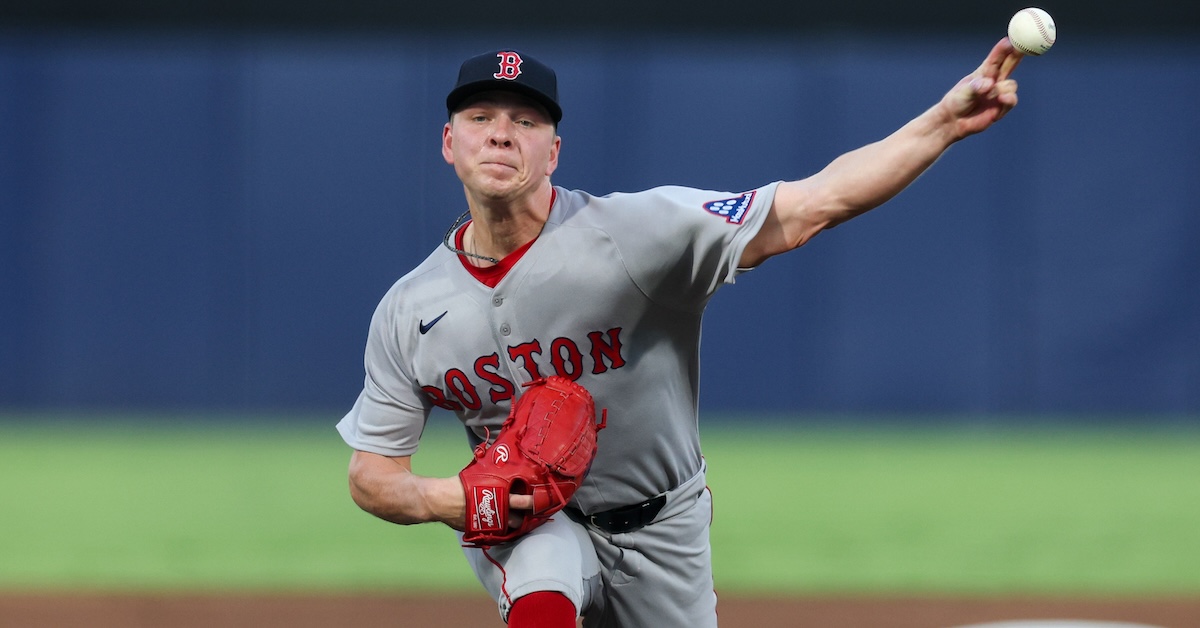
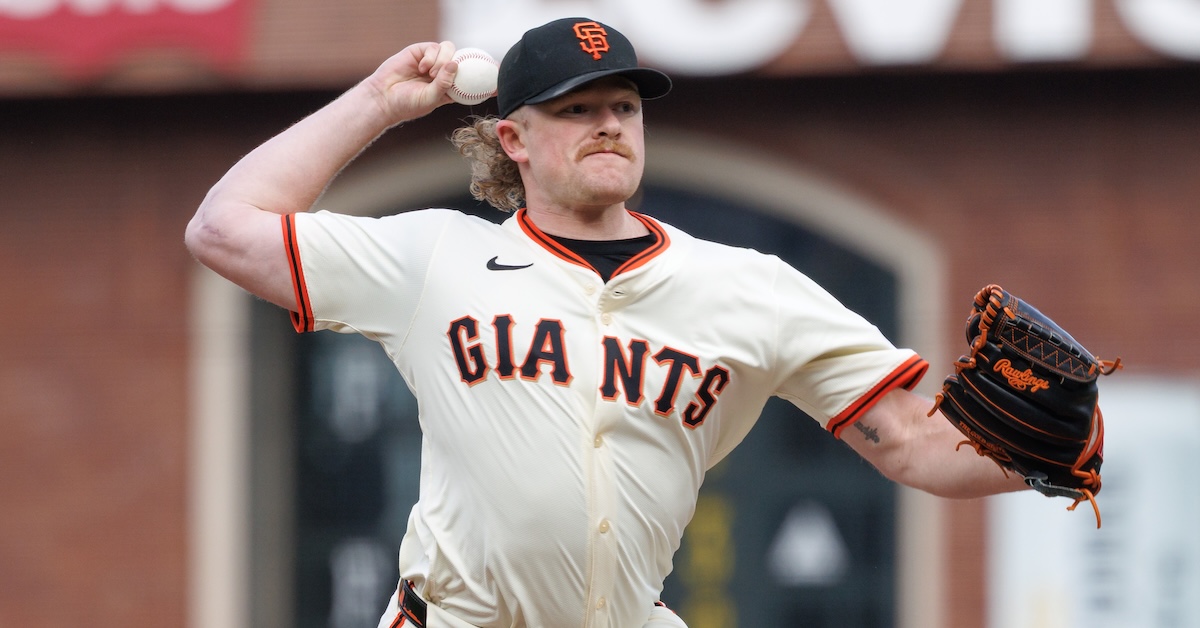
Kyle Harrison is morphing into a different pitcher than the one the Red Sox acquired from the Giants as part of June’s jaw-droppingRafael Devers deal. That was the plan when Boston brought him on board, as evidenced by the 24-year-old southpaw’s having spent close to three months in Triple-A following the swap. With 182 2/3 big league innings under his belt, the former top-rated prospect in the San Francisco system was sent to Worcester to have his repertoire reconfigured.
His primary weapons remain largely the same. Harrison still attacks hitters with a one-two combo that Eric Longenhagen called “an uphill fastball” and “a big bending breaking ball.” The former is an 94.8-mph heater, while the latter is an 84.2-mph offering that is categorized as a slurve.
And then there are the new additions.
“First and foremost, there is the cutter,” said Harrison, who has made two appearances and allowed one run over nine innings since making his Red Sox debut on September 10. “There is also a sinker that I can mix in to lefties. I have a new changeup grip, as well. Everything else is the same. The four-seam is kind of how I’ve always been identified — and I still have the slurve — so now it’s been about adding the other secondary stuff to protect it.”
Harrison mentioned adding a cutter when I spoke to him early last season, but the pitch never really took hold. Per Baseball Savant, he threw only six of them in 2024. As for the changeup, there have been multiple iterations. After tweaking his original grip last year, he is now a member of the kick change generation. Read the rest of this entry »
Welcome to the final Five Things I Liked (Or Didn’t Like) This Week of the year. As we prepare to leave the normal cadence of regular season baseball behind, we’re all already mentally preparing for the madcap pace of the playoffs, when the games are fewer but more momentous. This last week is more of a transitional phase; some of the series are monumentally important, while others feature the Royals and Angels (just to pick a random set) playing out the string. Maybe this is the best time for baseball, actually. If you’re looking for it, there’s more drama in the back half of September than in any other regular season month. But if you just want silly baserunning in inconsequential games, or role players making the most of big opportunities, there’s plenty of that too. I love October baseball, but I’ll be sad when September ends.
Of course, no Five Things intro would be complete without me thanking Zach Lowe of The Ringer for the format I’ve shamelessly copied. So Zach, I hope your Mets fandom isn’t too painful this week. To the things!
1. Playoff Races
Obviously. If this isn’t the thing you like most in baseball this week, you’re probably a Mets or Tigers fan, and even then, you’re probably lying to yourself a little. The thrill of a pennant race coming down to the wire is one of the great joys of this sport. Most of the time, I like baseball because no single outcome matters all that much. Lose a game? Play the next day. Strike out in a big spot? Everyone does that sometimes. Give up a walk-off hit? I mean, there are 162 games, you’re going to give up some walk-offs. But every so often, as a treat, it’s fun when the games suddenly transmute from seemingly endless to “must have this next one.”
Has the new playoff format played a role here? It’s hard to argue it hasn’t. This is the fourth year of the 12-team field, and it’s the fourth straight year with an unsettled playoff race in the last week of the season. It’s the third straight year with multiple good races, in fact. That’s not exactly unimpeachable evidence – the final year of the old format saw its own thrilling conclusion to the regular season – but the point is that when the last week of the regular season is filled with drama, it makes for a great playoff appetizer. I’m still unsure what the new format does to the competitive structure of the game, and I haven’t liked the way trade deadlines work when the line between contender and pretender is so hazy. But in late September, it sure seems to be giving me more of what I want. Read the rest of this entry »
Welcome to another edition of Five Things I Liked (Or Didn’t Like) This Week. You might think that this September is a poor one for baseball drama. The playoff spots in both leagues are fairly decided, give or take a bit of wobbliness from the perpetually star-crossed Mariners and Mets. Few division titles are in play – maybe the NL West or AL East, but neither feels all that likely to flip. But that’s okay, because even the teams that are probably out of it can be fun to watch, and even the teams that are already in it still have seeding to vie for. This week, I’ve turned my eye to a few teams with intriguing storylines in the month to come. I’m focusing my baseball viewing on playoff hopefuls, and there’s plenty to like. So with our customary nod to Zach Lowe of The Ringer, let’s talk baseball.
1. McLean (and Horton and Waldrep and…) Fever
One of my favorite baseball archetypes is the shooting star rookie ace. You know what I’m talking about if it’s happened to your team. Some rookie, often a heralded prospect, makes a mid-season debut and just has it. Their fastball? Unbeatable. Their breaking stuff? It just disappears! And that poise – it’s like they’ve been pitching in the majors for years, not weeks.
Whether you want to harken back to Fernando Valenzuela or rely on a more personally resonant example – 2013 Michael Wacha is my touchstone here – there’s just something special about these meteoric talents. At some point, they’re due for a downturn. How could they not be? It happens to everyone eventually. But until then, we might as well enjoy the ride. Read the rest of this entry »
Justin Verlander’s 2025 season isn’t going to be one for the history books. After his second stint with the Astros ended with a whimper (17 starts and a 5.48 ERA in 2024), he signed a one-year deal with the Giants that felt like a potential career capstone. At 42 and with a résumé that’s already a stone cold lock for Cooperstown, this year was never going to be about accumulating more statistics. When he started the year 0-8 with a 4.99 ERA, it felt like the final act of his career. No one fights off time forever, not even the seemingly ageless Verlander.
Anyway, here’s a leaderboard of the pitchers with the most WAR in the last 30 days:
Now, did I leave ERA out of this table on purpose? I sure did – ERA is noisy in small samples anyway, but mostly Verlander’s is just less impressive than the rest of this group. He’s at 4.18 in that span and 4.55 for the season, despite solid strikeout, walk, and home run numbers. He’s certainly not one of the best 10 starters in baseball, regardless of what that leaderboard says. But he’s been a solid big league starter, undoubtedly, and that in itself is pretty remarkable given how things looked a few months ago. Read the rest of this entry »
Welcome to another edition of Five Things I Liked (Or Didn’t Like) This Week. August is a month I like to use for rest and recovery. After the chaos of July, there’s a natural lull in the season before the drama of September. Both deadline buyers and sellers are figuring out their new rosters and allocating playing time to new arrivals and minor league call-ups. No race is down to the wire, and yet many races are already decided. That’s a great time to relax – and what I like to do to relax is watch baseball. This week’s set of five things doesn’t have a lot of pivotal plays or playoff squads on the brink. It doesn’t have walk-offs or game-ending defensive plays. It’s just guys doing cool things, and sometimes that’s the best part of baseball. So with a quick programming note – Five Things is off next week while I go to the US Open – and a nod to Zach Lowe of The Ringer, let’s get started.
1. Ultimate Reversals
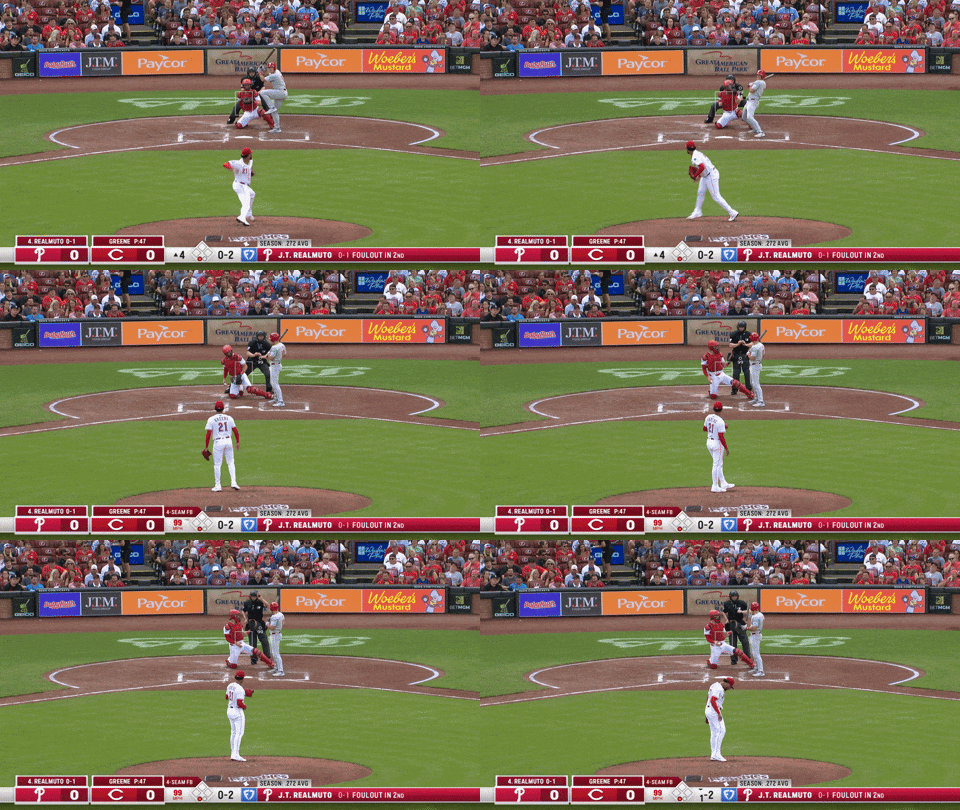
In an 0-2 count in his first start off the IL, Hunter Greene lost control of a fastball:
Hey, it happens. It was an 0-2 count, so no big deal, get ‘em next pitch. Only, wait, something was going on:
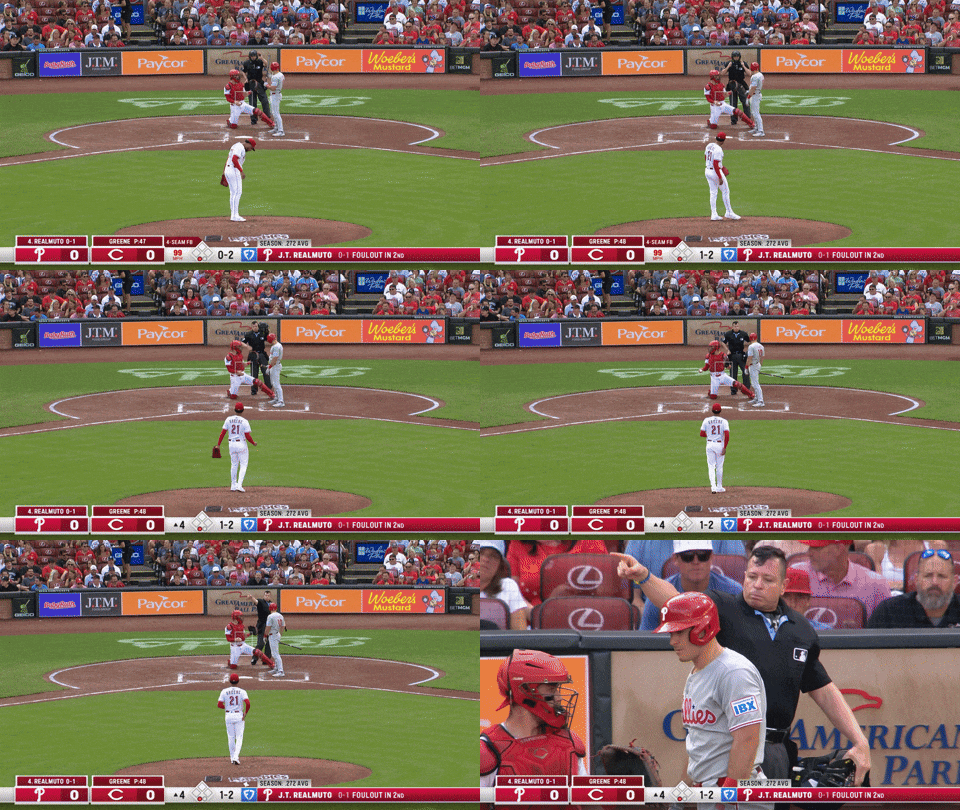
Hit… by pitch? I’m not sure anyone at the plate was sure what happened. J.T. Realmuto said something to umpire Carlos Torres. Torres thought about it and then eventually awarded Realmuto first base. Tyler Stephenson went full John Travolta behind home plate, looking around in vain for someone to make this make sense to him.
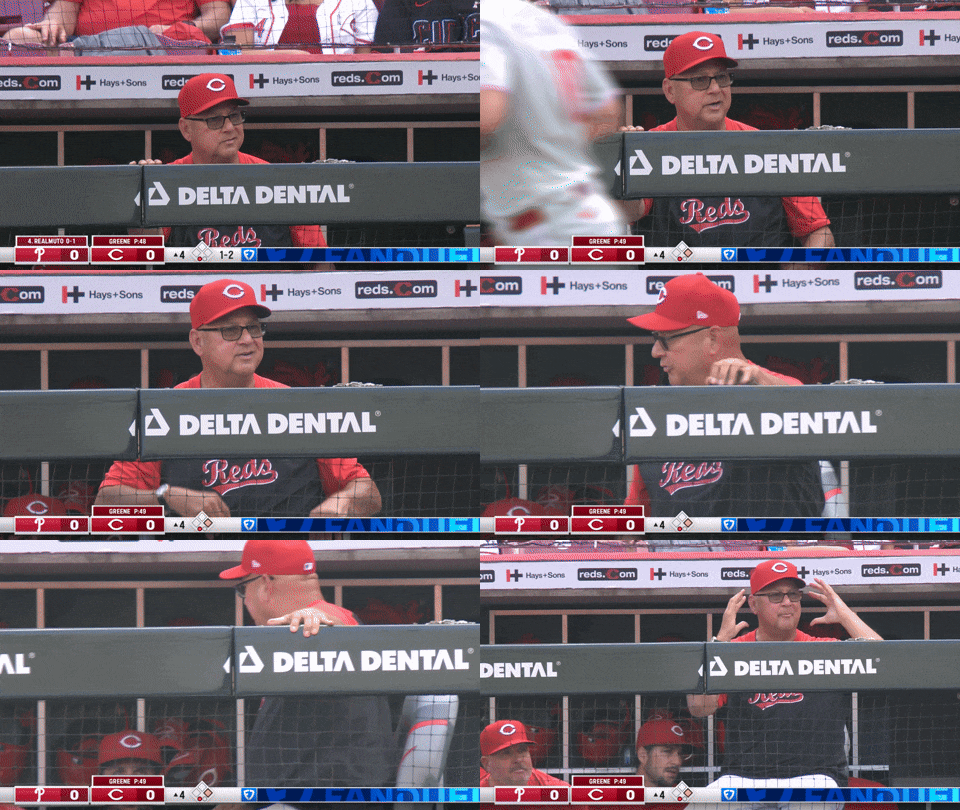
How did Reds manager Terry Francona feel about this? The same way I did, and the same way you do right now, presumably:
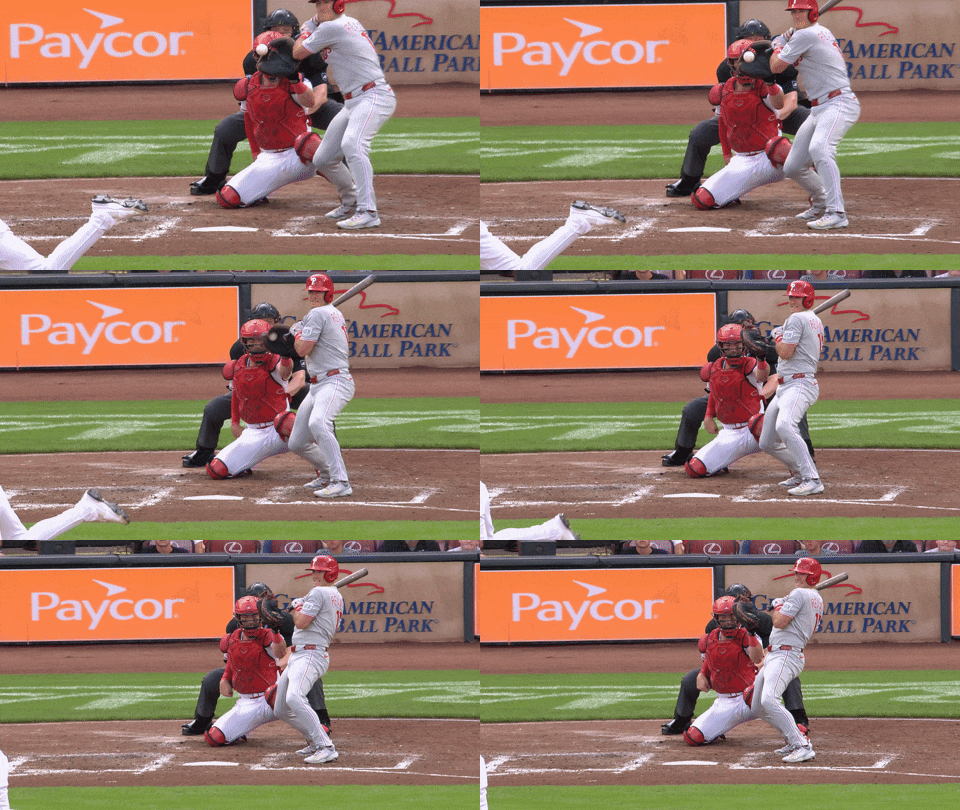
When the first slow-motion replay came in, everything started to make a little more sense:
Realmuto wasn’t hit by the pitch; his bat was. It’s an easy overturn. Why didn’t anyone notice? Well, Stephenson had his eyes closed and his glove blocked Torres’ view of the butt of Realmuto’s bat. No one noticed the deflection right away either; after all, Stephenson stuck up his glove trying to catch it and the ball landed in the mitt.
The replay review was short and conclusive. The call on the field was overturned; instead of a hit-by-pitch, it was a foul ball. Only, that’s not quite right – there were two strikes. The ball landed in Stephenson’s mitt after making contact with the bat. That’s a textbook foul tip strikeout. Instead of strolling to first base, Realmuto trudged back to the dugout.
There have only been five other HBP-to-strikeout overturns in the replay review era. I watched video of all of them. The one this week was the strangest. Here’s AJ Pollock getting “hit” by Tyler Chatwood in the first one I found:
See the umpire’s quick and decisive reaction? That’s normal. Call a dead ball, determine what happened, point to first to signal a hit-by-pitch – it’s standard operating procedure. Torres didn’t even call a dead ball, because he didn’t realize he needed to.
In fact, I think Realmuto might have inadvertently done this to himself. It’s feasible that if he didn’t say anything to Torres, that would have just been a ball. No one saw the ball deflect off the bat in real time, and it was such a glancing blow that no one seemed to hear it. You can tell because of their reactions; Torres doesn’t call the ball dead right away and Stephenson definitely has no idea what’s going on. Also? Change this rule! That has to be one of the hardest-luck strikeouts of all time.
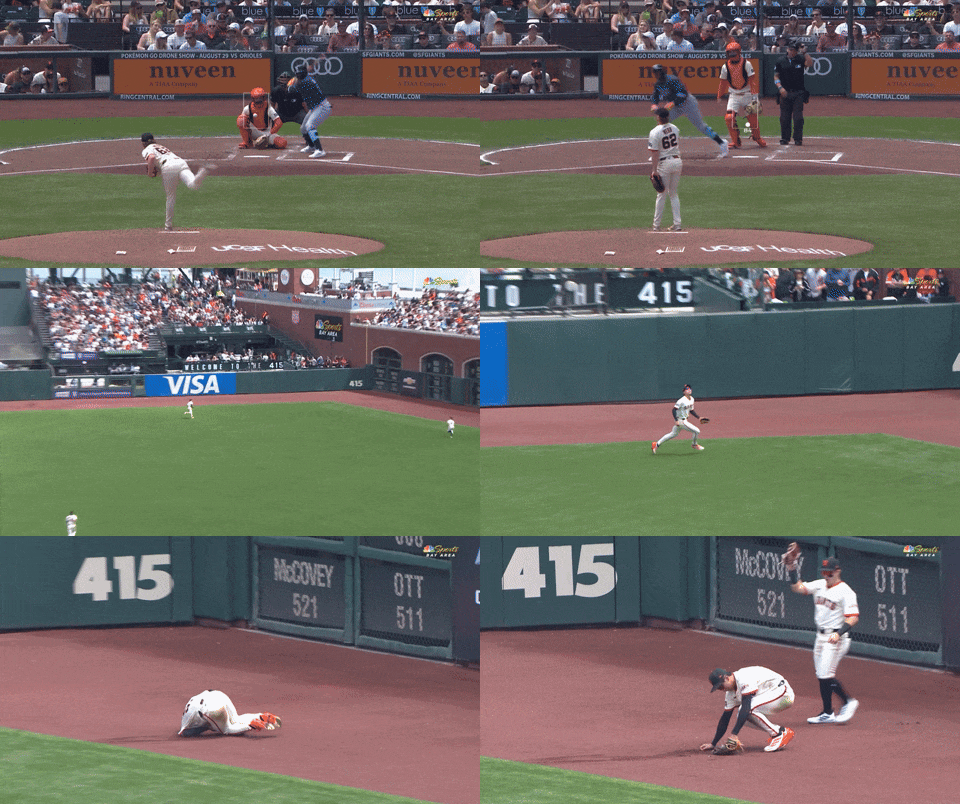
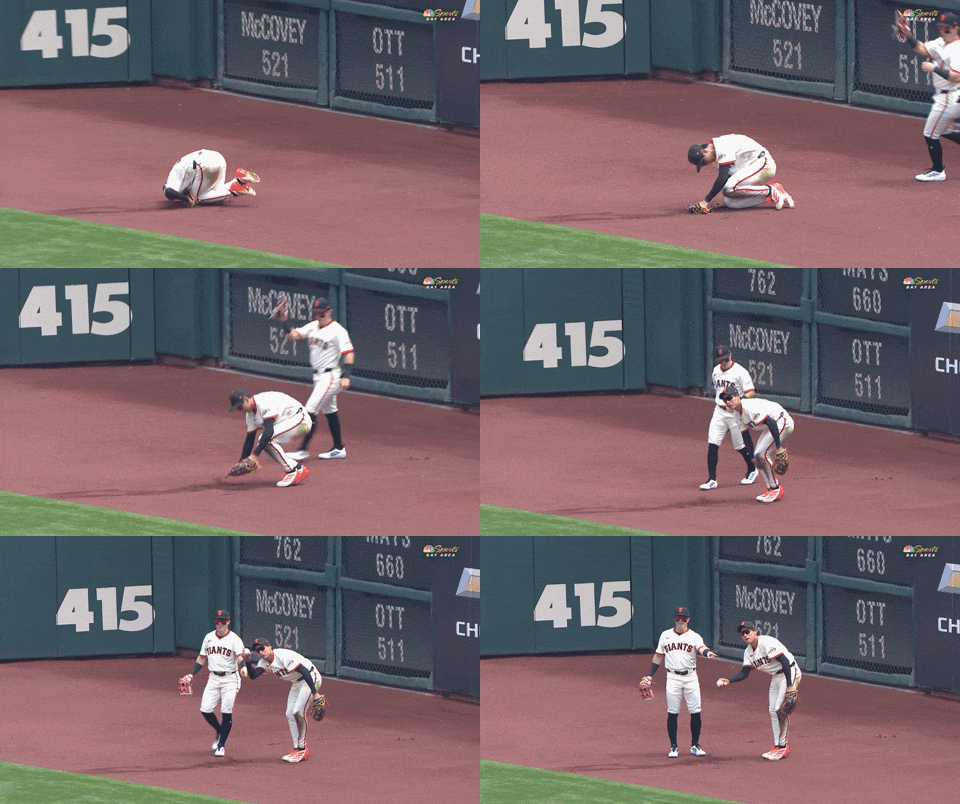
2. Coordination Jung Hoo Lee’s second year in San Francisco has gone much better than his first. He’s healthy, for one thing: After an injury limited him to just 158 plate appearances in 2024, he’s been active for the entire season and has already crested 500 plate appearances this year. He’s improved across the board offensively, flashing gap-to-gap power and consistently working counts and avoiding strikeouts. It’s been more of a struggle defensively, where he’s been somewhere between blah (per OAA) and quite poor (per DRS and Baseball Prospectus’ DRP). It’s tough having your fielding compared to the ridiculous monsters who roam center these days. But how many of them can do this?
What’s that, you say? That was a standard play, catch probability 99%? The wind looked a little swirly, which made it slightly more difficult, but you’re not wrong. Lee took a meandering route to the ball and still had time to flatten his route and more or less come to a complete stop to judge the wind; he probably could have caught it standing up if he’d gotten a better read initially. That’s all true! But wait for the reveal:
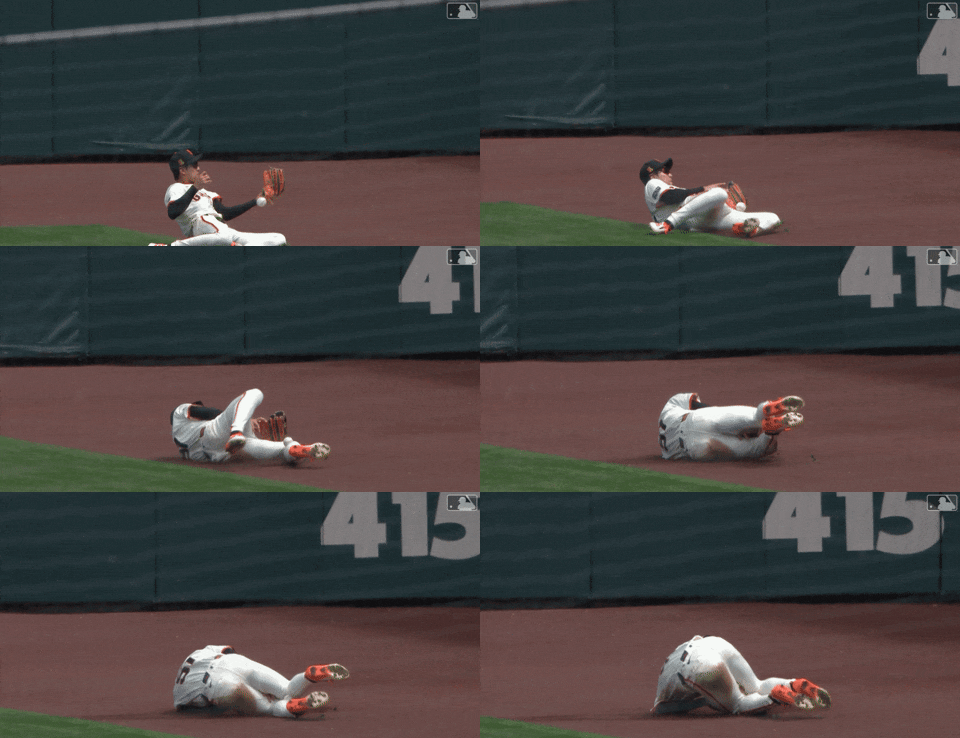
It’s like a magic trick, pulling a coin out from behind a kindergartener’s ear only in baseball form. Oh, you’d expect the ball to be in my glove? No, of course it’s somewhere else. See, the ball actually kicked out of Lee’s glove, but he made a spectacular instinctual adjustment:
Lee’s right leg made that entire play. He lunged and missed with his hand, the normal thing you’d use to catch a baseball. For most players, that would be the end of the play. But Lee somehow flipped his hips to get in position, drove his right knee past the ball without bumping it away, and then pincered it into the hollow between his knees to protect it from falling to the ground.
Don’t try this at home. I say that out of personal experience – my dog looked at me funny for about five minutes while I tried to replicate it on my living room floor. There’s no practicing or teaching this. No one works on it in spring training. For nearly every outfielder in baseball, the play would have been over after it kicked out of their glove. Lee might be a below-average outfielder when you take the sum of his defensive contributions into consideration. His coordination and ability to make last-minute adjustments, though? It’s certifiably excellent.
3. Necessity Ryan O’Hearn doesn’t face lefties. In his entire Orioles career – 1,223 plate appearances – he faced only 137 lefties. It’s no secret why: He posted an 89 wRC+ against them, as compared to a 126 wRC+ against righties. That’s a huge platoon split, more than double the major league average for lefties. The O’s had a surfeit of righty platoon options, and even this year, when O’Hearn put up his best season yet, they generally didn’t let him face lefties, and he hit poorly against them when he did get the chance.
In theory, the Padres are similarly capable of sheltering O’Hearn. They’ve only given him six plate appearances against lefties, and they’ve pretty much all been out of necessity rather than desire. Your bench isn’t always as full as you’d like, the other team can sneak in lefty relievers at almost any time late in the game, and no hitter avoids facing lefties altogether. In fact, the Padres have given him those opportunities at about the same rate as the O’s. But let’s just say he’s not hitting southpaws quite so poorly with San Diego:
That’s 4-5 with a walk, and all four hits have gone for extra bases. It’s far too small of a sample to make substantive conclusions, of course, but O’Hearn has already socked as many homers against lefties in a Padres uniform as he did in Baltimore, where he played for 20 times as long.
The last one, a two-run blast against All-Star Robbie Ray, came after Mike Shildt pinch-hit with O’Hearn against a lefty. It wasn’t exactly a normal decision – Jake Cronenworth was hit in the hand in his previous plate appearance, and while he played the field afterwards, he didn’t appear to be capable of swinging a bat. Since the Padres had already juiced their lineup with righties against Ray, the only bench hitter with a platoon advantage was Elias Díaz, and your light-hitting backup catcher isn’t a real pinch-hitting option. O’Hearn was the logical play even if “pinch-hit with the guy we never let face lefties against a dominant lefty” isn’t normally a good decision.
So, is O’Hearn suddenly a lefty killer? I don’t think so, but I definitely hope so. The Padres are going to run into many more chances to either let O’Hearn hit against a lefty or replace him with an inferior hitter (Jose Iglesias? Bryce Johnson?) who stands on the other side of the plate. Previously, the decision has rarely been interesting – get the righty in there. In the last 20 days, though, O’Hearn is making it hard to pull him from the game. Yes, it’s six plate appearances. Sure, that’s not how sample sizes work. But since coming to the Padres, he’s slashing .800/.833/2.400 against lefties. Can you really turn that down in favor of Candelita? It’s gonna be a great subplot to watch down the stretch.
4. Thievery Alejandro Kirk doesn’t steal bases. In his entire minor league career, he swiped five bags, all in 2018 and 2019. He’s never so much as attempted one at the major league level. He’s listed at 5-foot-8 and 245 pounds, kind of the reverse of a prototypical base stealing frame. His 24.2 ft/sec sprint speed is in the second percentile league-wide. Could you, personally, beat Alejandro Kirk in a footrace? Probably not, but it’s at least closer than it would be for pretty much every other major leaguer.
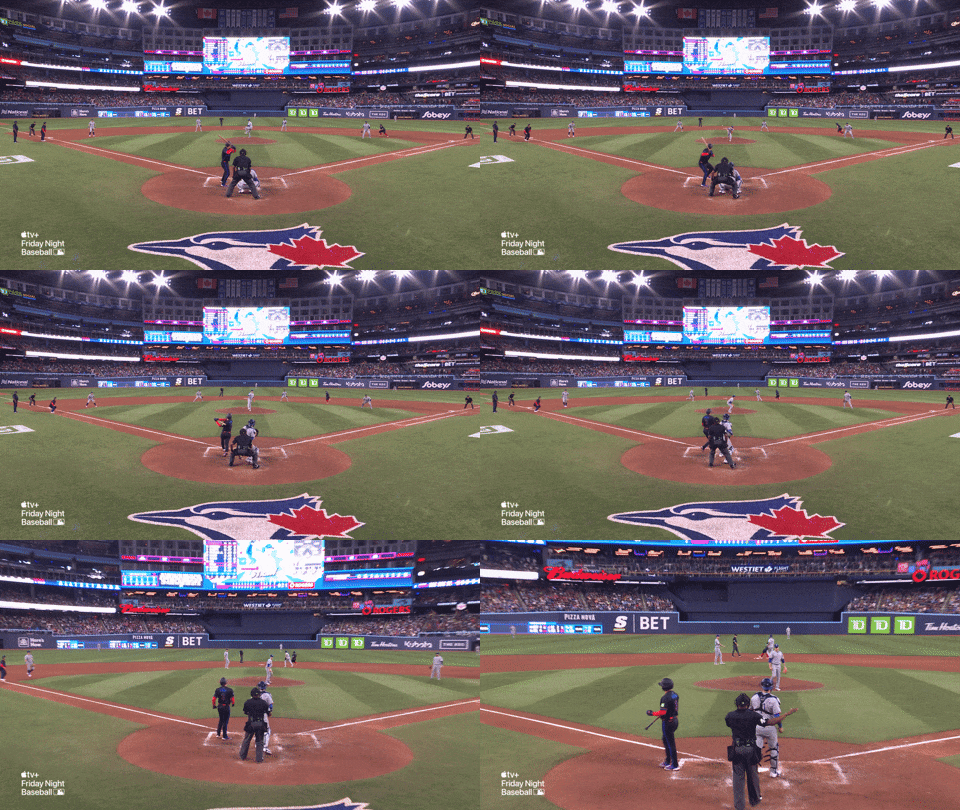
Anyway, here’s Alejandro Kirk stealing a base:
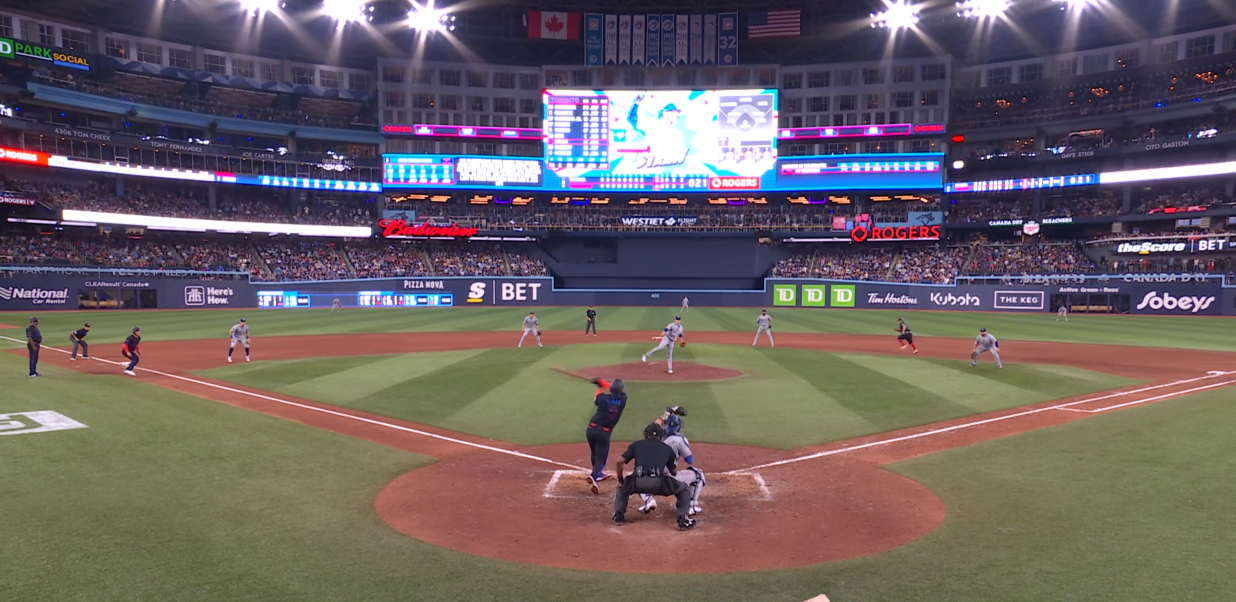
This play was a perfect storm of pro-stealing factors. With only one out and a runner on third in a one-run game, the Rangers infield was all the way in. That meant Jake Burger couldn’t hold Kirk on first base because he was off the line and on the grass. It wasn’t a big deal, though. Is there a runner less important to hold on than the guy with 2,000 plate appearances and zero stolen base attempts? Meanwhile, with Daulton Varsho on third base, Kyle Higashioka had no interest in throwing down to second and letting Varsho maraud home. The Rangers knew there was no throw coming to second. Look at their positioning with the ball already in Higashioka’s glove:
In other words, they were more or less daring Kirk to go. Why wouldn’t they? Kirk batted 1,946 times before attempting his first steal. Second place in the majors for most plate appearances without attempting one? Spencer Horwitz with 723. The post-integration record for career plate appearances without a stolen base attempt is 2,224, by Johnny Estrada from 2001-2008. Very few batters reach 1,000 plate appearances without trying to steal at least once. Kirk was a true standout in his field of standing around.
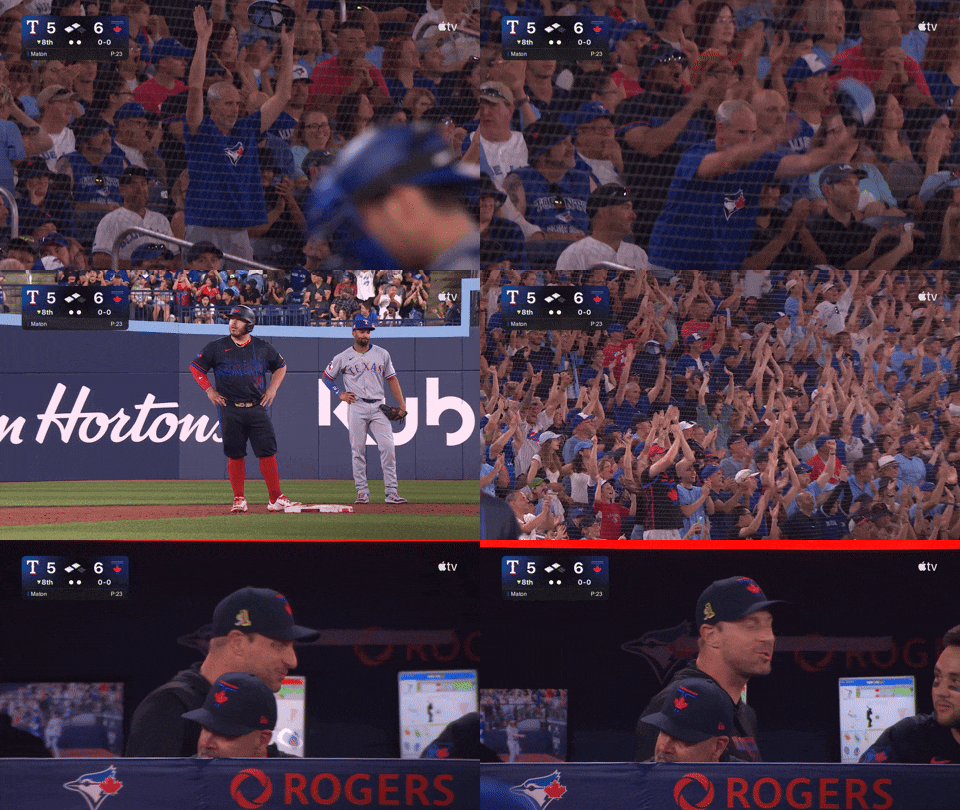
Now he’s got a swipe in his back pocket. Estrada’s record is safe; the odds of Horwitz getting to that milestone are negligible. He’s not even a catcher! But more importantly, Kirk is on the board. He tried to act casual after stealing the base, but the crowd wouldn’t let it go (the Jays posted that it was his first career stolen base on the scoreboard). You know you’ve done something fun when you get Max Scherzer to react like this:
5. Pratfalls With Happy Endings
If your only understanding of outfield defense came from this column, you might think that falling over was a key part of the job:
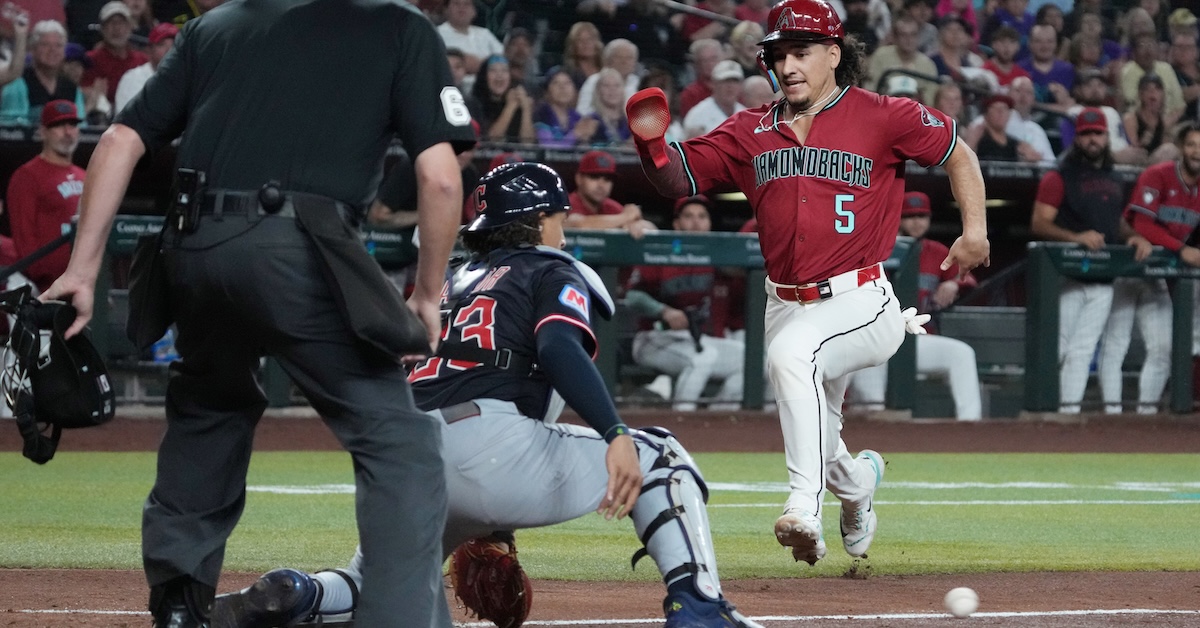
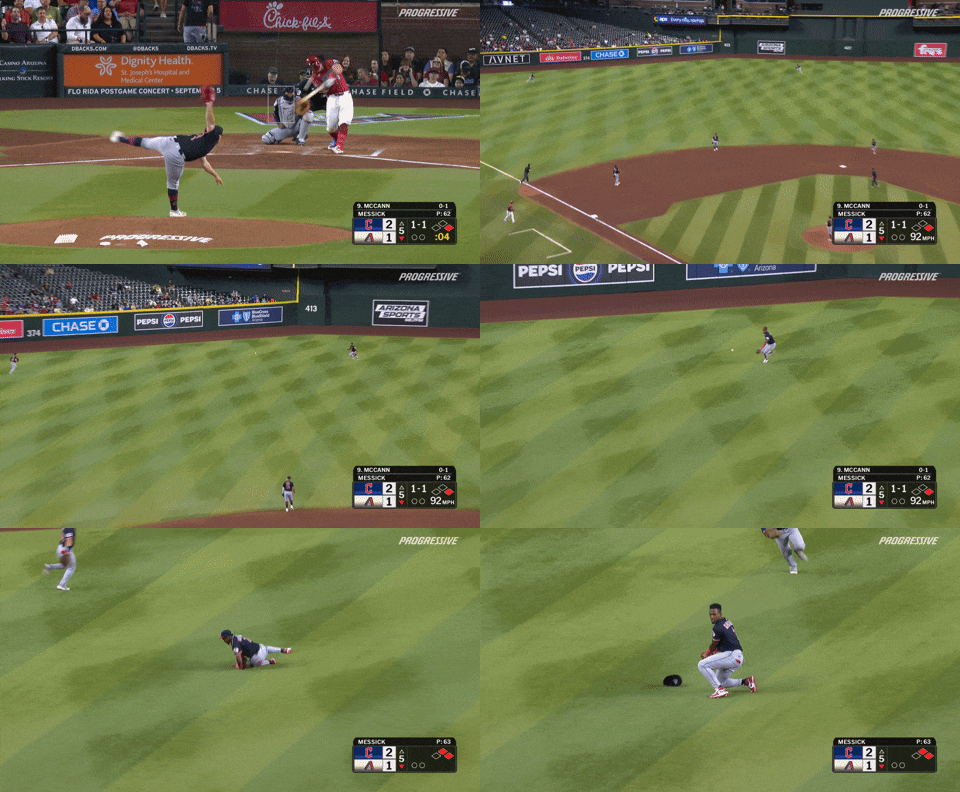
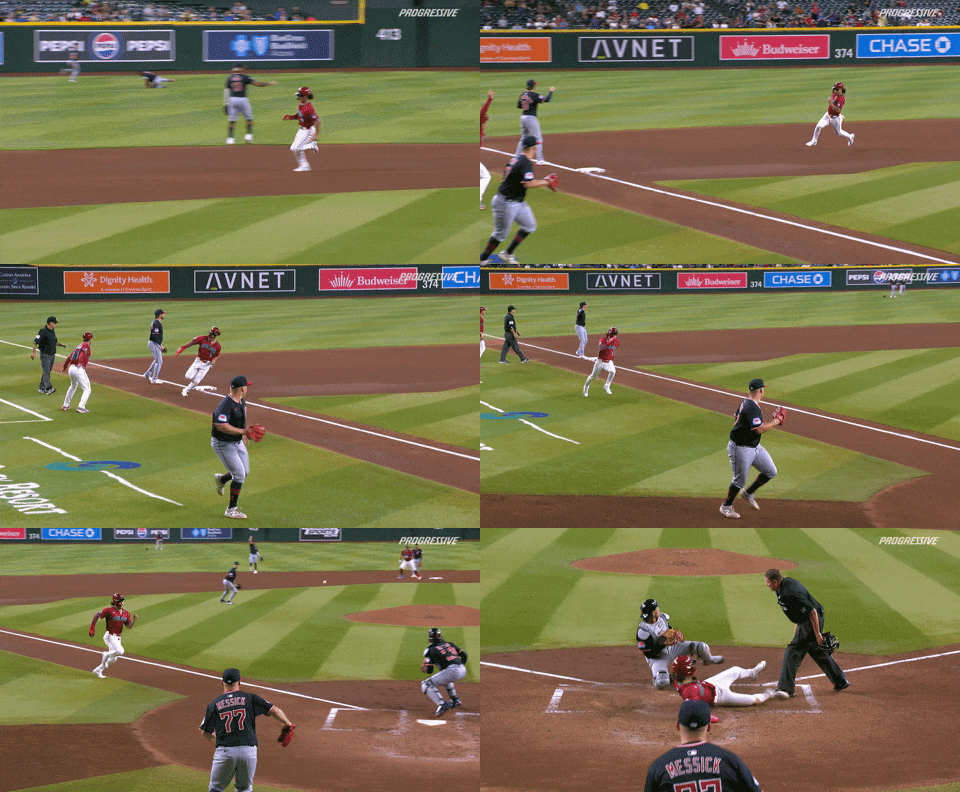
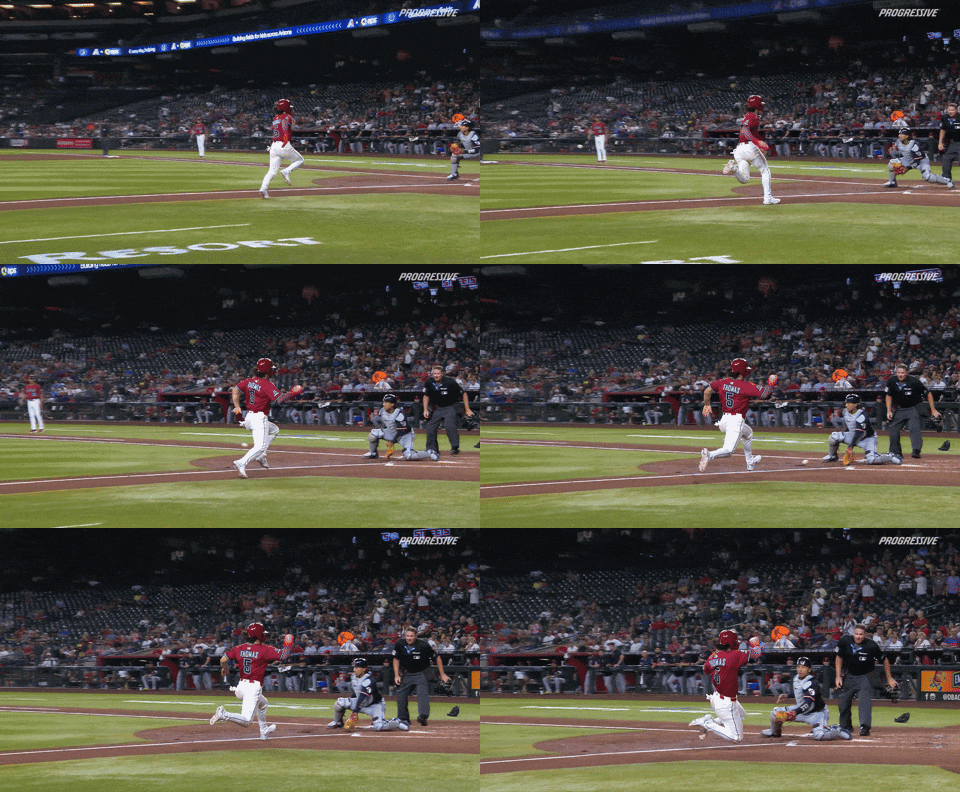
Sorry for the camera angle; it’s all both broadcasts had. But in any case, what a disaster. You can’t fall down there. That’s Alek Freaking Thomas on the basepaths. He’s maniacally aggressive and has the speed to make it work; he’s 10 runs above average on the basepaths in his career even without taking stolen bases (he’s not a great base stealer) into account. He was on his horse right away and had eyes on home plate. Watch Thomas clock what’s going on in center, pick up third base coach Shaun Larkin waving him on, and book it home:
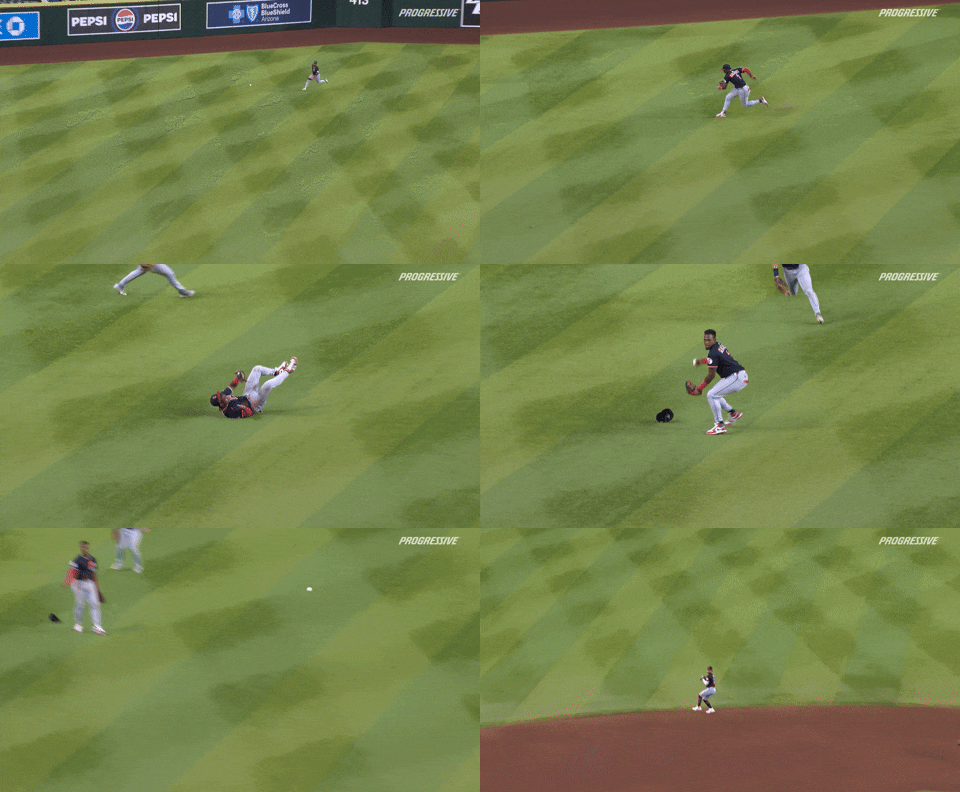
Wait, what? He got thrown out?!? Yeah, and by a lot, as it turns out. See, Angel Martínez fell, but it was fairly graceful as falls go. He didn’t lose the ball, didn’t panic, and was back on his feet quickly to toss in the relay. It took him about a second-and-a-half to recover, which isn’t great, but it’s a lot better than staying down or losing his grip:
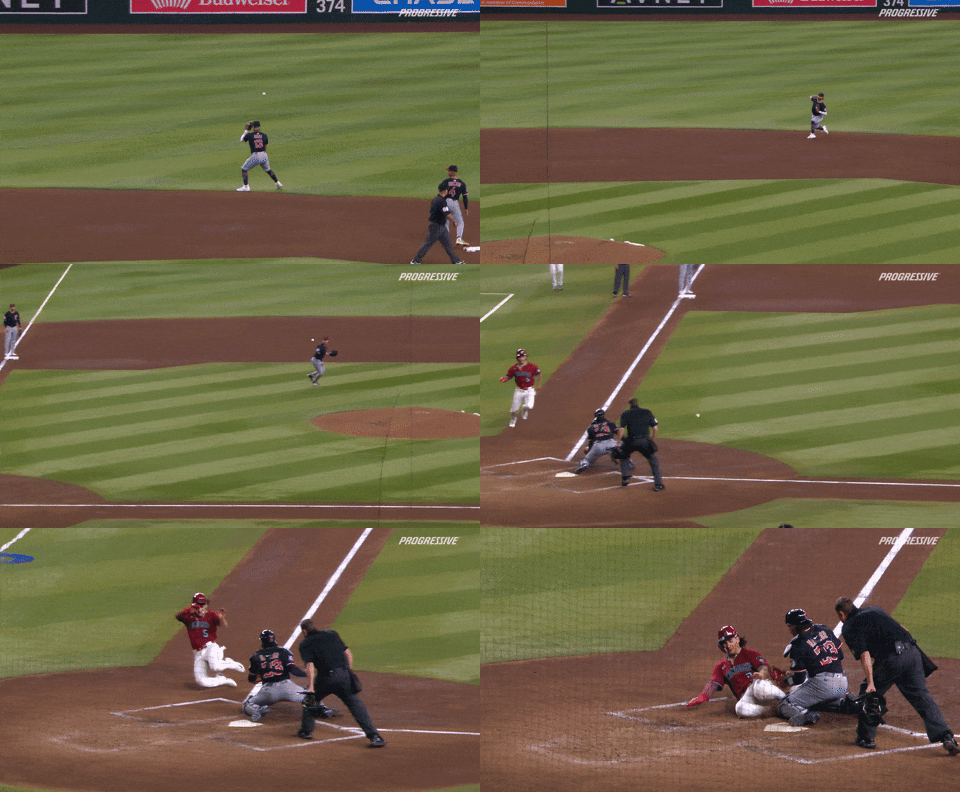
That was a decent relay throw, perfectly on line but without a ton of vigor. Martínez has a cannon arm, but he didn’t show it off there; he was just thinking of getting the ball to the infield. When Gabriel Arias received the throw, though, he had maximum effort on his mind. Arias has an incredibly strong throwing arm, too. He knew there was going to be a play at the plate. He received the relay throw while already stepping into a throw home:
Don’t overlook Bo Naylor’s role in that play. The throw beat Thomas by plenty, but it reached Naylor on a short hop. Without perfect concentration, that ball would probably skip away. It hit so close to Naylor that he had to make a first-base-style scoop:
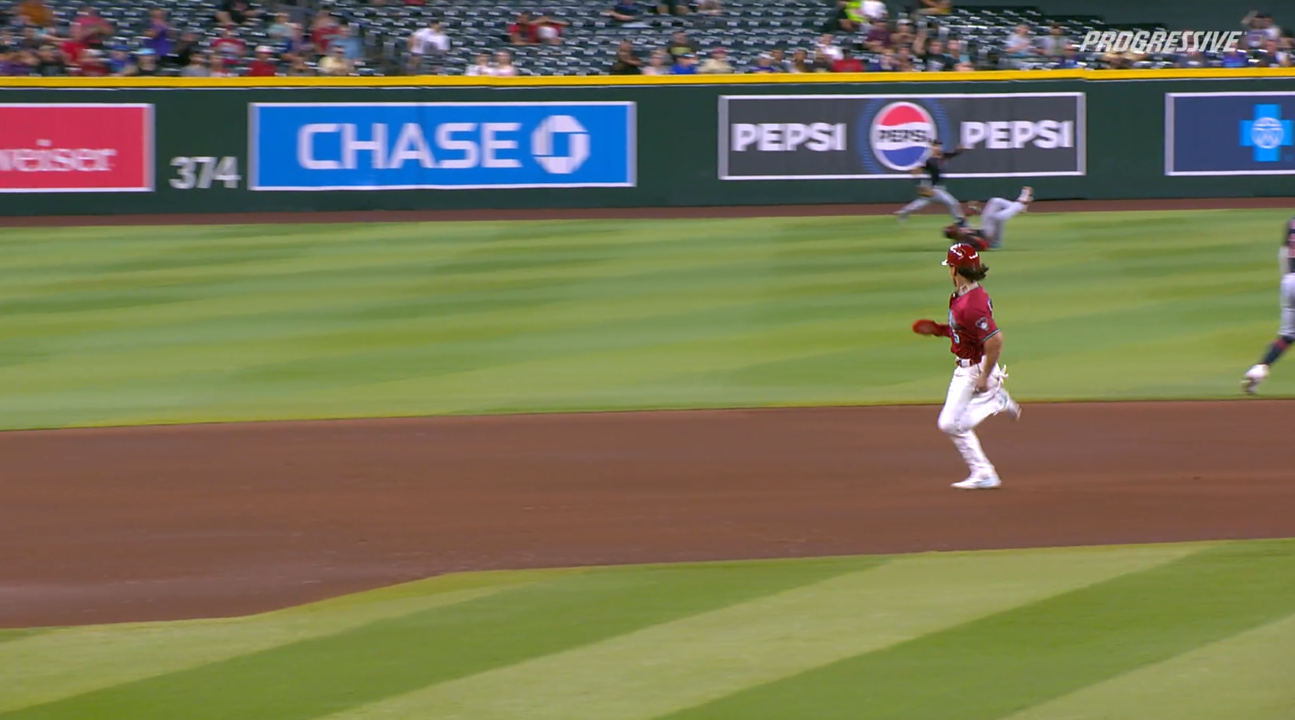
Meanwhile, though, even with an outfielder falling down and then feathering in a relay throw instead of ripping one, Thomas was out by quite a bit. I think I can show you what went wrong. Here’s Thomas with Martínez sprawled out in the outfield:
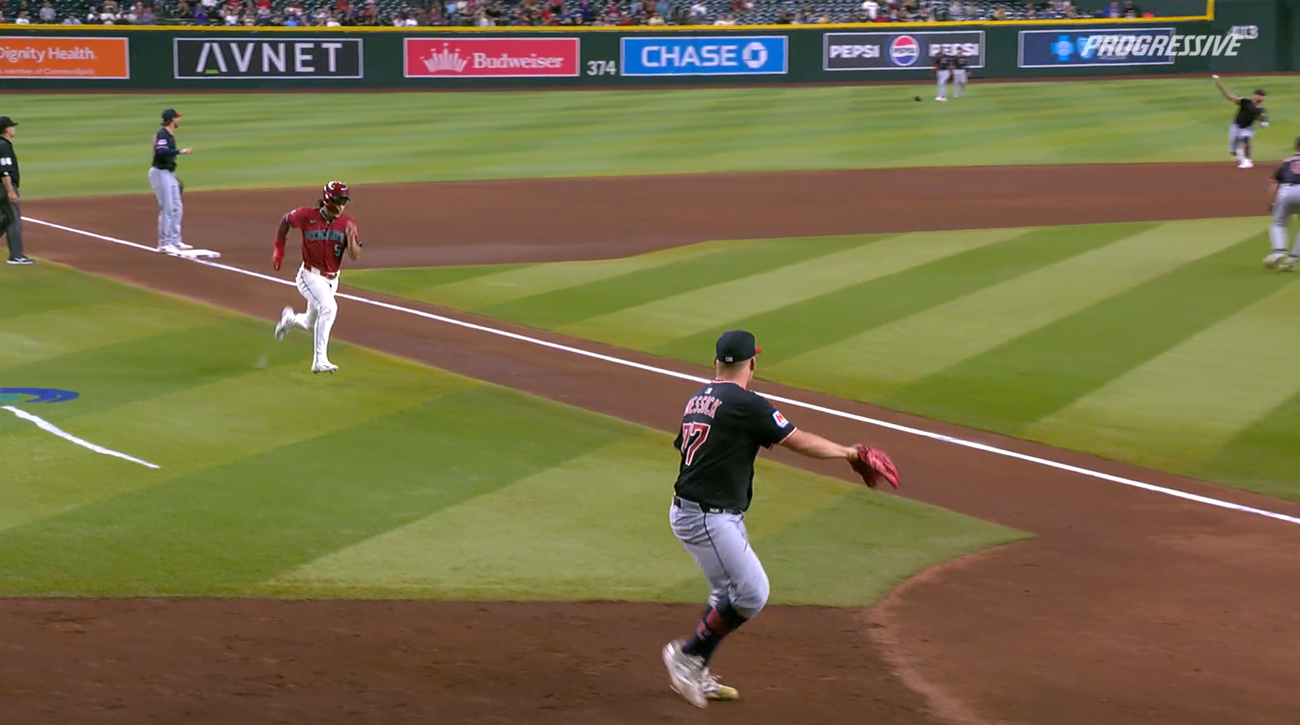
He’s nowhere near third base. Forget how hard Arias threw the ball on his relay; there aren’t many players who are making it home safely from this position:
The play wasn’t in front of Thomas; he noticed that Martínez fell, but he had to turn his head to run at maximum speed after that. But the timing just wasn’t right for even a fast runner to score. Martínez was throwing the ball in before Thomas reached third base. Arias was releasing it from shortstop before he was halfway home. Major league fielders are great. This just wasn’t a safe time to score, even after Martínez’s stumble.
It’s perhaps not a coincidence that Shaun Larkin isn’t coaching third base for the Diamondbacks anymore. Manager Torey Lovullo removed him after this very game, in fact. It was a straw-that-broke-the-camel’s-back situation, but I think it’s emblematic of how hard it is to wrap your head around just how athletic major leaguers are. Angel Martínez was on his back in the outfield, and then he made a natural-looking, low-effort move and just wasn’t. He didn’t have to make a hero throw. He didn’t have to try to whip it home on the fly to make up for his stumble. He just kept his head about him and let his natural coordination plus his team’s competence make up for the trip. Martínez has been quite bad in the outfield this year. He’s a shortstop by trade and hasn’t adapted to the broad expanses of grass all that cleanly. But making an athletic, tumbling play, and having the rest of the Guardians turn it into an out? He looks pretty good doing that.
Let me be the first to congratulate Logan Webb on his third-place NL Cy Young finish. It’s well deserved.
Right now, the award is Paul Skenes’ to lose, and it’s easy to see why. He’s big, he throws hard, he’s famous, and while he’s come back to Earth a little in the past three weeks, he genuinely hasn’t had a truly bad start since high school, if ever. Sometimes, playing for a last-place, small-market team is bad for one’s award chances, but if anything, the Pirates’ dog crap season has only perversely burnished Skenes’ reputation. He’d be a big fish in any pond, but my God, does he stand out here.
Believe it or not, there are two NL starters who came out of the weekend within half a win of Skenes on the WAR leaderboard: Webb and Philadelphia’s Cristopher Sánchez. The changeup is back, baby! Read the rest of this entry »
Katie Stratman, Orlando Ramirez, Steven Bisig-Imagn Images
Now that the deadline dust has settled – or at least, started to settle – it’s time to start making sense of it. The Padres, Twins, and Orioles were everywhere. Top relievers flew off the board. Both New York teams spent all day adding. But who did well? Who did poorly? Who was so frenetic that they probably belong in both categories more than once? I tried to sort things out a little bit. This isn’t an exhaustive list. There were 36 trades on deadline day, a new record, and more than a dozen before it. Nearly every team changed its trajectory at least a little, and this is just a brief look into the chaos. Here are the trends that most stood out to me.
Winner: Teams Trading Top Pitchers
This year’s crop of rental players was lighter than usual, but deadline activity didn’t slow. Instead, it simply spilled over into relievers under contract for a while. Mason Miller, Jhoan Duran, Griffin Jax, and David Bednar are under contract for a combined nine more years after 2025. That drove the prospect priceup onallfour. Having long-term control of relievers might be less valuable than at other positions, but it’s still valuable.
Most of the best prospects who swapped teams at the deadline were involved in a trade for top pitching. Leo De Vries, the consensus best player of the 2024 international signing period, was the big name here, but both the Phillies and Yankees offered up multiple good minor leaguers in exchange for Duran and Bednar. Taj Bradley, whom the Twins got back for Jax, is a former top prospect who won’t be a free agent until 2030. Read the rest of this entry »
At the time of this writing, the Kansas City Royals’ playoff odds sit at 12%. They’re 54-55, 3.5 games back of the third AL Wild Card, packed in tight with a bunch of average teams chasing the major contenders, including the Rangers, Guardians, Rays, and Angels. (I’m going to go ahead and count the Twins out.) It’s a tough spot. You don’t necessarily want to go all in with a 12% chance of making the playoffs, but it’s a good enough shot that a sell-off would go down pretty poorly.
Threading this needle with precision, the Royals made a series of moves that filled key roster holes without gambling away any significant long-term pieces. The first of those went down yesterday morning, when they picked up two solid, controllable right-handers in Ryan Bergert and Stephen Kolek in exchange for backup catcher Freddy Fermin.
Later in the day, the Royals made two more trades. The first further shored up a depleted rotation; the second improved a truly abysmal outfield. First, they brought in lanky left-hander Bailey Falter from the Pirates, parting with up-and-down lefty Evan Sisk and Callan Moss, a first baseman with a .790 OPS in High-A who went undrafted in 2024. And a few minutes after the deadline passed, Jon Heyman reported that they’d picked up Mike Yastrzemski from the Giants for A-ball hurler Yunior Marte. Read the rest of this entry »
Mark J. Rebilas, Darren Yamashita and Kelley L Cox-Imagn Images
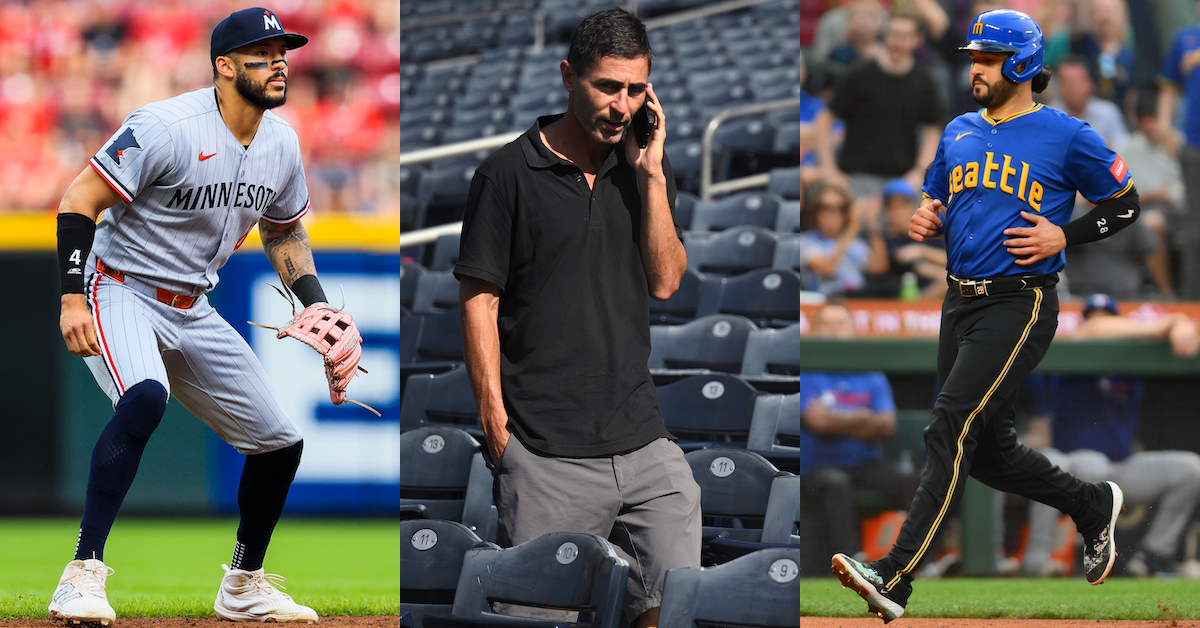
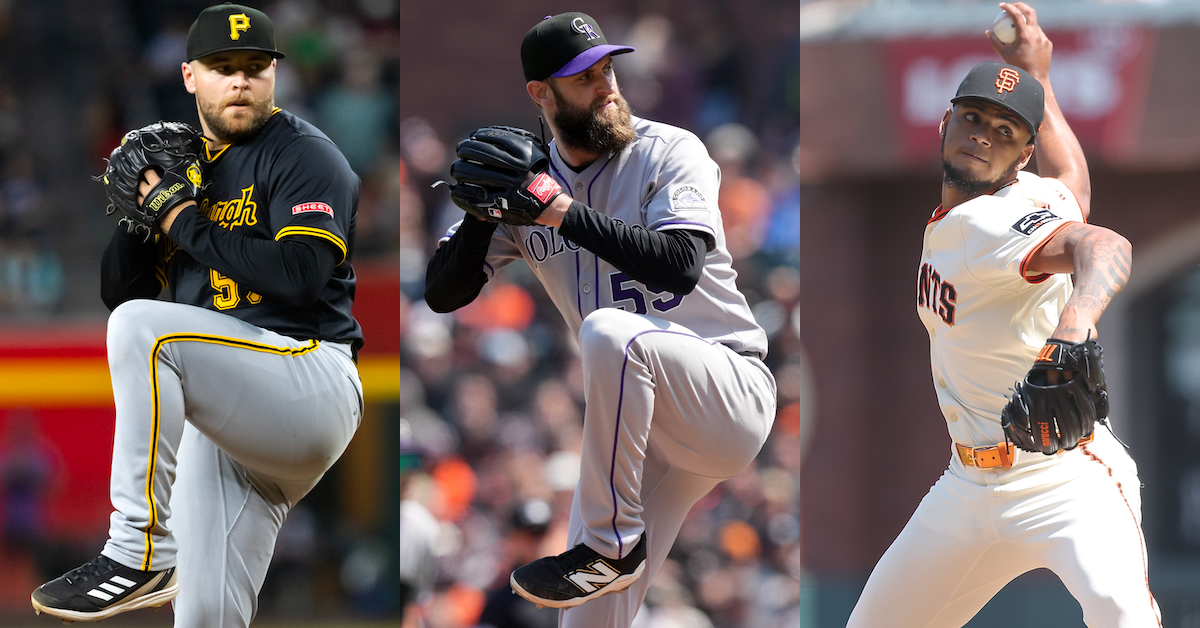
As Thursday’s 6 PM deadline approached, the New York Yankees finally made their big bullpen moves, first trading for closer David Bednar from the Pittsburgh Pirates and sending back catcher Rafael Flores, catcher Edgleen Perez, and outfielder Brian Sanchez. Bednar, with a year of arbitration remaining next season, has allowed a 2.37 ERA and a 1.96 FIP while striking out 51 batters and walking only 10 in 38 innings this year.
Also donning (non-purple) pinstripes is Jake Bird, whom the Yankees acquired from the Colorado Rockies in exchange for second baseman Roc Riggio and left-handed starter Ben Shields. Bird, in his fourth year with the Rockies, has a 4.73 ERA for the season, but a much sunnier 3.45 FIP, and he has struck out nearly 11 batters per nine innings, easily the best mark of his career.
Rogers, with his 1.80 ERA and 2.59 FIP in 50 innings this year for the Giants, has been one of the best relief pitchers in baseball. Still, he’s 34, and a rental, and a major departure from the hard-throwing Adonises the Mets might otherwise have pursued. And yet, David Stearns saw fit to give up Drew Gilbert, Blade Tidwell, and José Buttó — two big-name prospects and a guy who’s been decent in the majors this year — for two months of a guy who throws underhand. Maybe up to three months, if the Mets make the playoffs and stay there for a couple rounds.
It’s not quite that simple. Rogers is good, relievers are expensive now, and fame does not always equal value in the prospect world. Read the rest of this entry »