Archive for Marlins

2025 National League 40-Man Roster Crunch Analysis
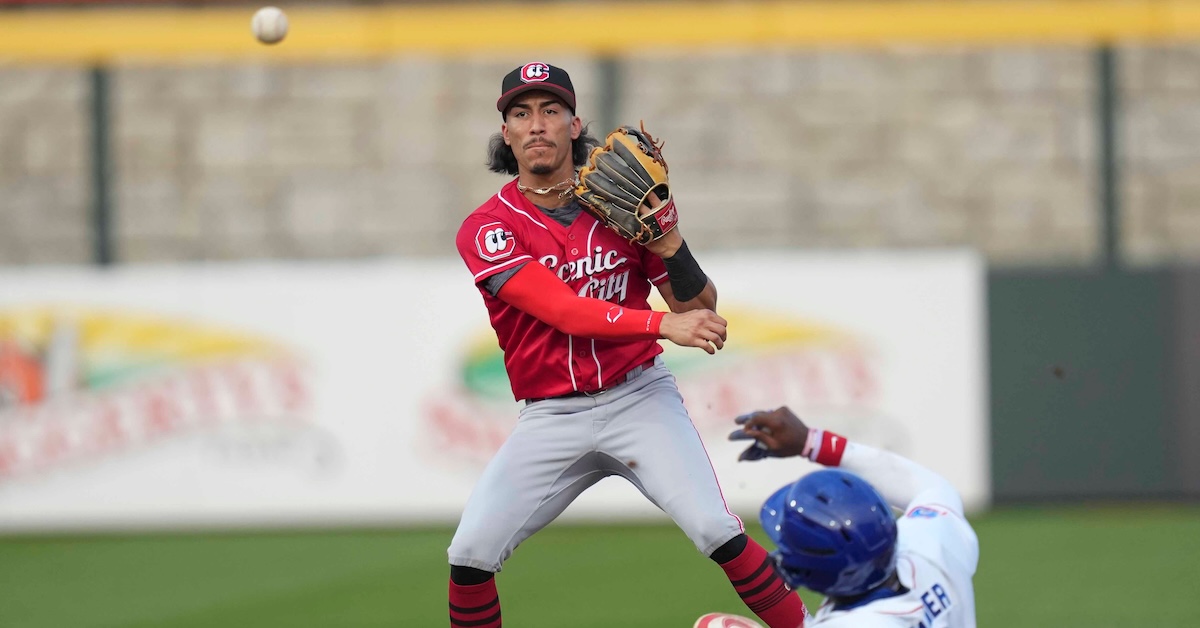
Edwin Arroyo Photo: Angelina Alcantar/News Sentinel/USA TODAY NETWORK via Imagn Images

We’re less than a month from the Winter Meetings and the Rule 5 Draft, which means it’s a good time to evaluate every team’s 40-man roster situation. This is the time of year when teams have one final chance to protect Rule 5 eligible players by placing them on the 40-man. Eligibility is determined by a mix of how long a player has been with their parent organization and how young they were when they signed: Players who signed at 18 or younger must be added to the 40-man within five seasons, while everyone else must be added within four. RosterResource monitors Rule 5 eligibility, if you’re curious to see the lay of the land.

During the season, teams can free up roster space by placing an injured player on the 60-day IL. In the offseason, teams don’t get extra slots for injured players, which tends to put pressure on the back of the roster. The Diamondbacks are a good example of how space can tighten quickly, as they’ve currently got six pitchers battling long-term injuries occupying a spot. You may have noticed a flurry of moves immediately following the World Series, with many teams outrighting players off the 40-man in order to make room for all the guys who were on the IL.

Below, I’ve assessed every National League team’s 40-man roster situation (Eric will sort through the American League tomorrow). Some teams, like the Braves, have plenty of roster space, and thus a lot of flexibility in adding whoever they like. Others, like the Cardinals and Marlins, will face some tough choices as they seek to balance protecting interesting prospects with retaining players already on the roster, as well as finding room for prospective additions via trade or free agency. Some clubs don’t have many impact players to add, while others may need to protect a half-dozen or so guys. I’ve tried to identify which players are most likely to be added, which guys on the 40-man are vulnerable to getting lopped off in a roster crunch, and who could be moved in a deal to free up roster space. Let’s dig in. Read the rest of this entry »

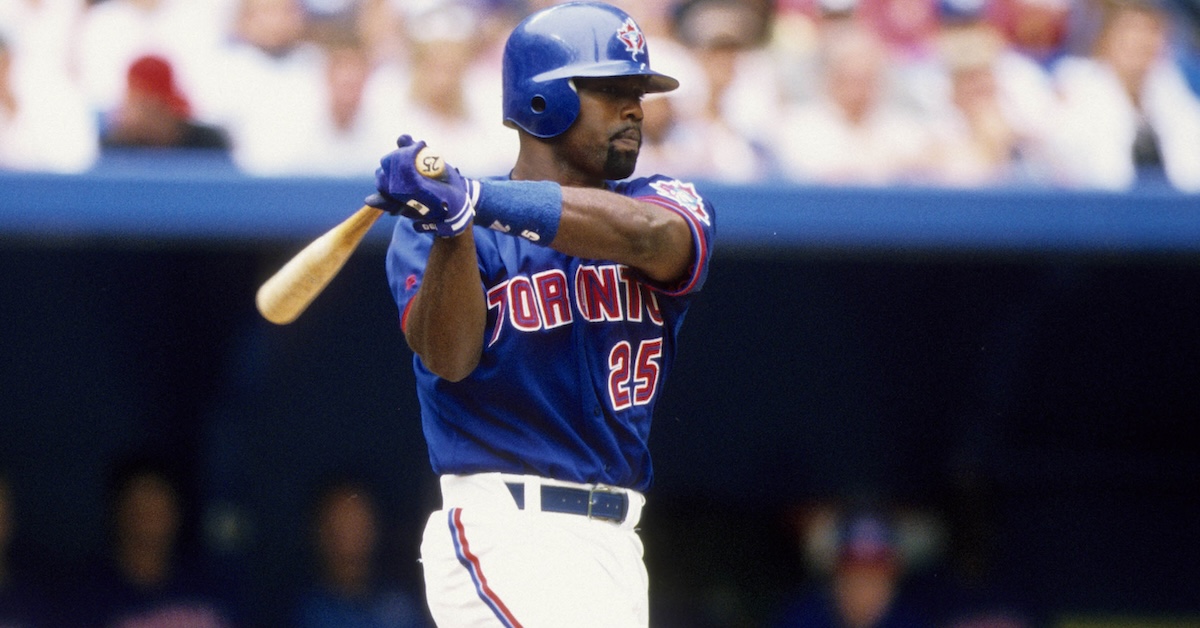
2026 Contemporary Baseball Era Committee Candidate: Gary Sheffield

RVR Photos-USA TODAY Sports

The following article is part of my ongoing look at the candidates on the 2026 Contemporary Baseball Era Committee ballot. Originally written for the 2015 election at SI.com, it has been updated to reflect recent voting results as well as additional research. For a detailed introduction to this year’s ballot, use the navigation tool above. An introduction to JAWS can be found here.

Wherever Gary Sheffield went, he made noise, both with his bat and his voice. For the better part of two decades, he ranked among the game’s most dangerous hitters, a slugger with a keen batting eye and a penchant for contact that belied his quick, violent swing. For even longer than that, he was one of the game’s most outspoken players, unafraid to speak up when he felt he was being wronged and unwilling to endure a situation that wasn’t to his liking. He was a polarizing player, and hardly one for the faint of heart.

At the plate, Sheffield was viscerally impressive like few others. With his bat twitching back and forth like the tail of a tiger waiting to pounce, he was pure menace in the batter’s box. He won a batting title, launched over 500 home runs — he had 14 seasons with at least 20 and eight with at least 30 — and put many a third base coach in peril with some of the most terrifying foul balls anyone has ever seen. For as violent as his swing may have been, it was hardly wild; not until his late 30s did he strike out more than 80 times in a season, and in his prime, he walked far more often than he struck out.

Bill James wrote of Sheffield in the 2019 Bill James Handbook:

“In all the years that I have been with the Red Sox, 16 years now, there has never been a player the Red Sox were more concerned about, as an opponent, than Gary Sheffield. Sheffield was a dynamite hitter and a fierce competitor… When he was in the game, you knew exactly where he was from the first pitch to the last pitch. He conceded nothing; he was looking not only to beat you, but to embarrass you. He was on the highest level.”

Two decades before that, James referred to Sheffield as “an urban legend in his own mind,” referencing the slugger’s penchant for controversy. Sheffield found it before he ever reached the majors through his connection to his uncle, Dwight Gooden. He was drafted and developed by the Brewers, who had no idea how to handle such a volatile player and wound up doing far more harm than good. Small wonder then that from the time he was sent down midway through his rookie season after being accused of faking an injury, he was mistrustful of team management and wanted out. And when he wanted out — of Milwaukee, Los Angeles, or New York — he let everyone know it, and if a bridge had to burn, so be it; it was Festivus every day for Sheffield, who was always willing to air his grievances. Read the rest of this entry »


2026 Contemporary Baseball Era Committee Candidate: Carlos Delgado

RVR Photos-Imagn Images

The following article is part of my ongoing look at the candidates on the 2026 Contemporary Baseball Era Committee ballot. Originally written for the 2015 election at SI.com, it has been expanded and updated. For a detailed introduction to this year’s ballot, use the tool above. An introduction to JAWS can be found here.

Though blessed with as much talent to crush a baseball as nearly anyone in his era, Carlos Delgado had a hard time getting the attention that his performance might have merited. Almost certainly, that owed something to the record numbers of balls flying out of the park during his heyday, with a proliferation of 30- or 40-homer seasons. That he spent the bulk of his prime in Toronto, arriving just after the Blue Jays’ back-to-back world championships but unable to aid in replicating that accomplishment, didn’t help either; not until late in his career would he reach the postseason.

Beyond that, Delgado didn’t fit the mold of what the public has come to expect from professional athletes. The controversies in which he was engulfed weren’t the garden-variety ones of so many other jocks — money, respect, performance-enhancing drugs, off-field lifestyle. No, they were bigger. In an age when most athletes shirk political stances because they can narrow their public appeal and impact their personal brands, Delgado was unafraid to protest against what he felt was wrong, even if his stance was unpopular. He spoke out against the United States Navy using part of his native Puerto Rico for bombing practice, and publicly opposed the war in Iraq. He took a stand by taking a seat (to borrow a headline from The New York Times), refusing to go through the motions during the post-9/11 ritual of “God Bless America” — an action that prefigured San Francisco 49ers quarterback Colin Kaepernick’s kneeling during the national anthem to protest police brutality against people of color in 2016. Delgado was the conscientious slugger.

Deglado’s outspokenness and activism stemmed from his admiration for Hall of Famer and Puerto Rican hero Roberto Clemente. He died six months after Delgado was born, but his legacy of humanitarianism and fighting for social justice left a deep impression on Delgado. He wore Clemente’s no. 21 briefly with the Blue Jays and later with the Mets, and thanks to his charitable endeavors — which included raising money for homeless, underprivileged and handicapped Puerto Rican children, and sponsoring college scholarships through his Extra Bases Foundation, Delgado won the 2006 Roberto Clemente Award. Read the rest of this entry »


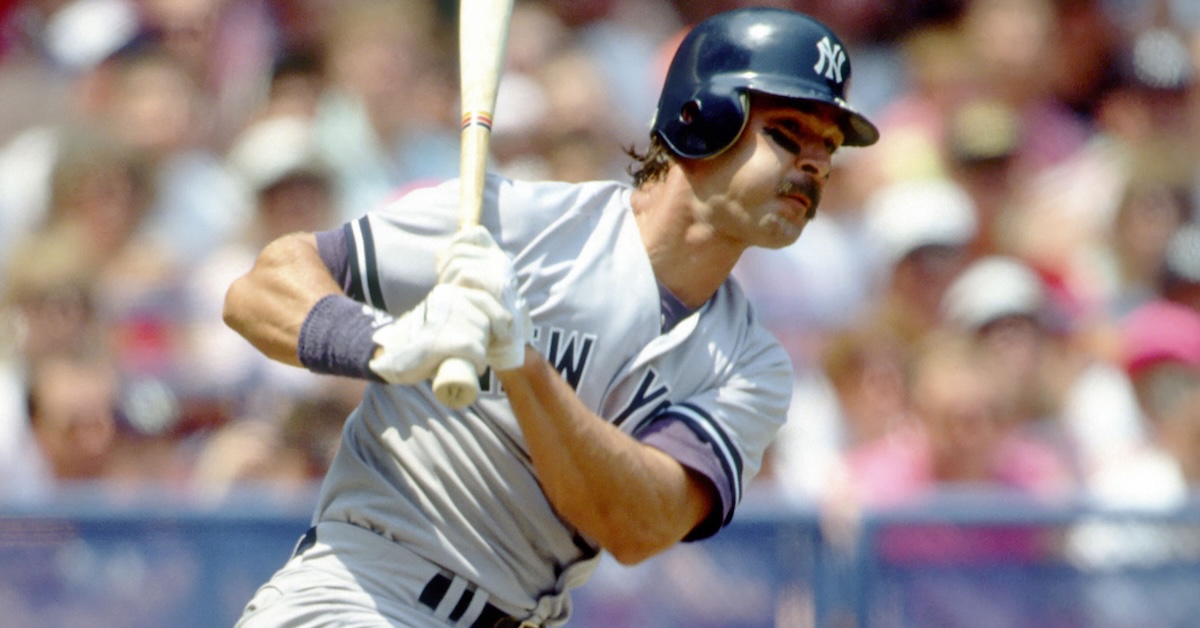
2026 Contemporary Baseball Era Committee Candidate: Don Mattingly

RVR Photos-Imagn Images

The following article is part of my ongoing look at the candidates on the 2026 Contemporary Baseball Era Committee ballot. Originally written for the 2013 election at SI.com, it has been expanded and updated. For a detailed introduction to this year’s ballot, use the tool above. An introduction to JAWS can be found here.

Don Mattingly was the golden child of the Great Yankees Dark Age. He debuted in September 1982, the year after the team finished a stretch of four World Series appearances in six seasons, and retired in 1995 after finally reaching the postseason — a year too early for the franchise’s run of six pennants and four titles in eight years under Joe Torre.

A lefty-swinging first baseman with a sweet stroke, “Donnie Baseball” was both an outstanding hitter and a slick fielder at his peak. He made six straight All-Star teams from 1984 to ’89 and won a batting title, an MVP award, and nine Gold Gloves. Along the way, he battled with owner George Steinbrenner even while becoming the standard bearer of the pinstripes, the team captain, and something of a cultural icon. Alas, a back injury sapped his power, not only shortening his peak, but also bringing his career to a premature end at age 34. At its root, the problem was that Mattingly was so driven to succeed that he overworked himself in the batting cage.

“Donnie was one of the hardest workers I had ever seen and played with. He would go in the cage before batting practice and take batting practice. And after batting practice was over, he’d take batting practice,” former teammate Ron Guidry said for a 2022 MLB Network documentary, Donnie Baseball (for which this scribe was also interviewed).

“I should have learned quicker to not to beat my body up, and if I did less, I could perform better,” said Mattingly for the same documentary. Read the rest of this entry »


Kyle Stowers Matured His Mindset and Proceeded To Mash in Miami

Rhona Wise-Imagn Images

Kyle Stowers came into the year on the heels of frustration. Shuttling between Baltimore and Triple-A Norfolk, the Stanford University product put up an uninspiring 84 wRC+ over 168 plate appearances with the Orioles across the 2022-2024 seasons. Moreover, he then scuffled in his first opportunity with the Marlins. Acquired by Miami along with Connor Norby in exchange for Trevor Rogers at last year’s trade deadline, Stowers proceeded to produce just a 57 wRC+ over 172 PAs. The 2019 second-round pick hadn’t exactly reached failed-prospect territory, but he was falling well short of his potential.

This year was a different story entirely. Finally finding his footing, the 27-year-old outfielder broke out while serving as the Marlins’ everyday left fielder. Prior to having his season end early due to a left oblique strain — he played his last game on August 15 — Stowers slugged 25 home runs while slashing .288/.368/.544 with a 149 wRC+ over 457 plate appearances. For good measure, he represented the Fish in the All-Star game, and was recently named a senior circuit Gold Glove finalist.

I asked the left-handed slugger about his breakout when the Marlins visited Boston in August, a series that coincided with his season-ending injury. Was it simply a matter of his getting an extended opportunity, or was there more to it? Read the rest of this entry »


The Junk Box Is Full of Mystery

Jim Rassol-Imagn Images

Every once in a while, I take a peek at the Kirby Index leaderboards. In August, the expected names that populated the top of the rankings: Kevin Gausman, Trevor Rogers, and Jacob deGrom. Similarly, the bottom featured stereotypically wild hurlers: Joe Boyle, Luis Gil, Freddy Peralta, and… Janson Junk???

Kirby Index Laggards (August)
Name Kirby Index
Ryan Pepiot 0.283
Yusei Kikuchi 0.282
Hunter Brown 0.280
Joe Boyle 0.277
Mitchell Parker 0.238
Freddy Peralta 0.181
Luis Gil 0.179
Luis Morales 0.174
Hunter Greene 0.168
Janson Junk 0.096
Source: Baseball Savant
Minimum 100 fastballs thrown. August only.

If you’re familiar with Junk, it’s most likely due to his excellent command: Among all starters with at least 70 innings pitched this season, his 3.0% walk rate ranks as the lowest. (In an excellent interview with David Laurila last month, Junk talked about training his command at Driveline over the winter.) Seeing Junk in last place on this leaderboard was like spotting a polar bear in Arlington, Texas — in other words, a sign that something was seriously amiss.

By all four components of the Kirby Index, Junk ranked poorly. But his vertical release point was particularly inconsistent, sitting dead last among pitchers in the sample. In my article from last year introducing the Kirby Index, which I linked to above, I found that the ultimate location of the pitch is dictated almost entirely by release angles and release points. It follows that pitchers with inconsistent release points exhibit poor command. How was Junk varying his release point so frequently and still throwing so many strikes? Read the rest of this entry »


Sunday Notes: Cade Horton Is an Emerging Ace With an Old-School Approach

Cade Horton hasn’t simply been one of the best rookie pitchers in MLB this year, he has been one of the better starters in the senior circuit. The 24-year-old Chicago Cubs right-hander has a record of 11-4 to go with a 2.66 ERA and a 3.53 FIP over 115 frames. Moreover, he boasts a 0.93 ERA over his last 11 starts. In Triple-A to begin the season — his Cubs’ debut came on May 10th — Horton is now poised to start for Craig Counsell’s club in October,

My colleague Michael Baumann wrote about the 2022 first-rounder just over a month ago, but given his continued success, and with the postseason looming, another article seemed in order. Already well-informed on his background and arsenal, I asked Horton about the approach he takes with him to the mound.

“I’m a guy that is going to go out there and fill up the zone,” the erstwhile Oklahoma Sooner told me prior to a recent game at Wrigley Field. “I really just try to get outs and put my team in a good position to win. I’m a competitor, so I’m attacking the strike zone.”

Attacking the strike zone is, in many ways, akin to pitching to contact — more of an old-school approach to pitching — whereas in today’s game, chasing swing-and-miss is most often the goal. Given his high-octane heater and overall plus stuff, is he not looking to miss bats? Read the rest of this entry »


Brandon Mann Addresses a Bevy of Miami Marlins Changeups

Sam Navarro-Imagn Images

Brandon Mann’s playing career was coming to a close when he was featured here at FanGraphs in June 2020. A southpaw whose professional experience spanned 17 seasons — including part of 2018 with the Texas Rangers — he was soon to turn from hurler to tutor. Mann served as a pitching coordinator for the KBO’s Lotte Giants in 2021, then spent the next two years as a trainer and pitching coordinator at Driveline. His last two season have been in Miami. Mann joined the Marlins as a pitching strategist in 2024, and this year he is their bullpen coach.

Given his background and expertise, as well as my being intrigued by some of the talented arms on the Miami pitching staff, I made it a point to catch up with Mann when the Marlins visited Fenway Park in mid-August. I wasn’t sure exactly what we’d talk about, but I knew that it would be a good pitching conversation. We ended up focusing on changeups and splitters.

———

David Laurila: You just told me that Edward Cabrera has a unique changeup. What makes it stand out?

Brandon Mann: “The most unique part is how hard it is [94.2 mph, per Baseball Savant]. The movement profile is similar to a sinker, although it has a little bit more depth than sinkers in general. It’s really more of the spin. Say he throws a changeup and a sinker and both are 96 [mph]. The movement profiles would be almost identical, but the changeup is going to fall off more because it’s got as much as 600 fewer rpm. That’s super unique.

“I don’t know if the movement gives it justice when you actually see… say it’s three [inches] of induced vertical break and 16 [inches] horizontal — and then he throws a sinker at six and 18. They’re the same velo, and the sinker stays up, but the changeup falls off, and somebody swings and misses at it. A lot of that is the spin component. Again, it’s similar velo, but anywhere from 500 to 600 rpm less spin. Read the rest of this entry »
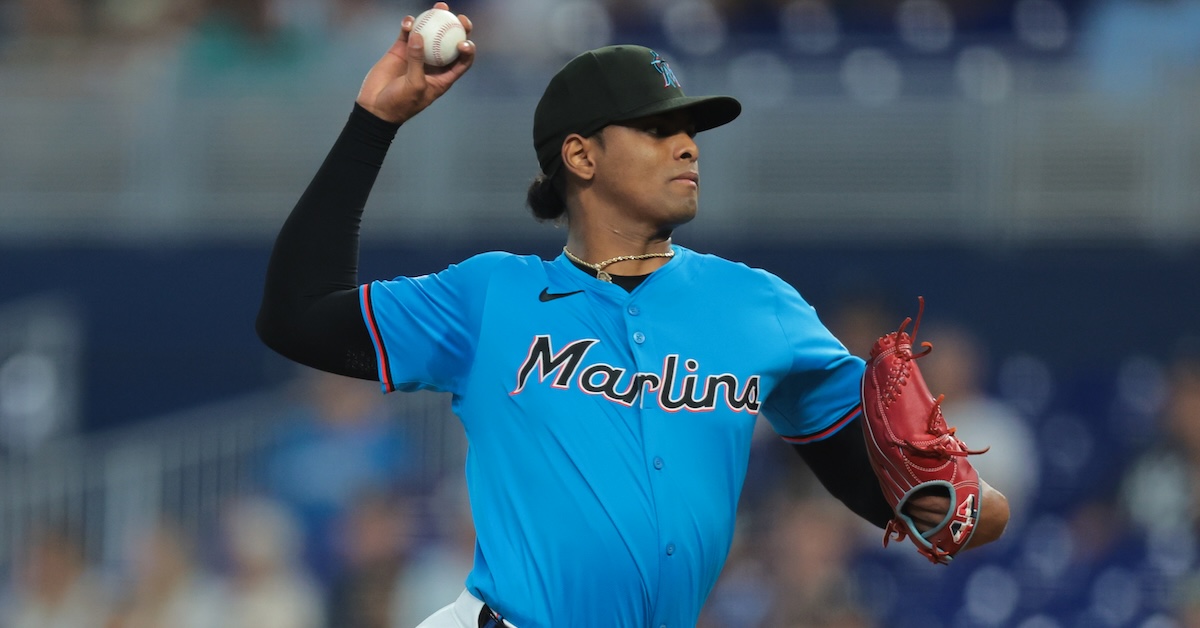

Sunday Notes: Now an Arm In Miami, Lake Bachar Had a Big Leg In Whitewater

Lake Bachar was a kicker at the University of Wisconsin-Whitewater before turning his full attention to baseball. He had a good leg. An all-conference performer, Bachar booted three field goals in the 2014 NCAA Division III championship game, a 43-34 Warhawks win over the Mount Union Raiders. Along with being a place kicker, he served as the team’s punter and kickoff specialist across his three collegiate seasons on the gridiron.

How good was he in his other sport?

“I was decent,” said Bachar, who now pitches out of the bullpen for the Miami Marlins. “I don’t know about NFL kicker, but at that time I was going to try do whatever I could to at least go to a [tryout] camp. The longest field goal I kicked in practice was 68 [yards] — good conditions, and all that — and the longest in a game was either high 40s or low 50s.”

Baseball has turned out to be a good career choice, although it took him awhile to reach the majors. Drafted by the San Diego Padres in 2016, the fifth-rounder was 29 years old when he debuted with the Marlins last September. His first full big-league season has been impressive. Over 43 relief appearances, the right-hander has a 5-1 record and a pair of saves to go with his 3.39 ERA and 3.77 FIP over 58-and-a-third innings. His strikeout rate is a solid 26.7%.

Selected off waivers by Miami shortly before his debut, Bachar attributes his late-bloomer breakthrough to “being in the right place at the right time,” as well as some fine-tuning of his pitches. A four-seamer that gets ride-run and a splitter that he’s thrown since 2020 comprise half of his arsenal. The other offerings are breakers new to this year. Read the rest of this entry »


Sunday Notes: Tarik Skubal versus Hunter Brown Was a Modern-Day Pitchers’ Duel

Tarik Skubal and Hunter Brown matched up at Comerica Park earlier this week, and the aces didn’t disappoint. In a game Detroit won 1-0 in 10 innings, the Tigers southpaw fanned 10 batters through seven stellar innings, while the Houston Astros right-hander tossed six scoreless frames with half a dozen strikeouts. In terms of modern-day pitchers’ duels, this was nearly as good as it gets.

On pace to win his second straight AL Cy Young Award, Skubal is currently 11-3 with a 2.32 ERA and a 33.1% strikeout rate. Brown, who is fast establishing himself as one of baseball’s best pitchers, is 10-5 with a 2.36 ERA and a 29.3% strikeout rate. Both cook with gas. Skubal’s fastball ranks in the 91st percentile for velocity, while Brown’s ranks in the 83rd percentile.

A few hours before they went head-to-head, I asked Detroit manager A.J. Hinch how — left and right aside — the two hurlers compare.

“I know my guy, and don’t know Hunter as well — how he goes about it or how he prepares — but if you’re looking at who has the best fastballs in the league, you’re going to look at both of those guys,” replied Hinch. “If you look at who has elite secondary pitches, both do. Tarik will use his changeup more than Hunter will. I just think there’s an it factor that comes with a guy where, when we come to a ballpark and Tarik is pitching, we expect to win. I’m sure when Hunter is pitching, the Astros expect to win. That’s the definition of top of the rotation.”

Which brings us to the baker’s dozen innings they combined to throw on Tuesday night. Once upon a time, it would have been several more. For much of baseball history, pitchers who were dealing were generally allowed to keep dealing. The legendary July 2, 1963 matchup between San Francisco’s Juan Marichal and Milwaukee’s Warren Spahn is a case in point. That afternoon, Marichal threw 16 scoreless innings, while Spahn (at age 42, no less) tossed 15-and-a-third of his own — only to then be taken deep by Willie Mays for the game’s only run. Read the rest of this entry »