Archive for Teams

Five Things I Liked (Or Didn’t Like) This Week, August 15

Curt Hogg/USA TODAY NETWORK via Imagn Images

Welcome to another edition of Five Things I Liked (Or Didn’t Like) This Week. August is a great time for reflection in the baseball world. The trade deadline has passed, which means what you see is pretty much what you get roster-wise. The playoff picture is generally clear, but no one has clinched yet. It’s too early to think about postseason rotations, but too late to think about turning the year around. The urgency mostly isn’t there – unless you’re a Mets fan trying to ward off 25 years of ghosts, of course. But the downtime of the baseball season has its own small delights, and even when you aren’t watching the brightest stars on the biggest stage, baseball is awesome. So thanks as always to Zach Lowe of The Ringer for the column format, and let’s get going.

1. Opportunity
The Twins might have traded away a ton of their major league roster at the deadline, but that doesn’t mean they’re filling up the lineup with replacement players they found at a local tryout. Seven of the nine everyday position players on the current squad were drafted by Minnesota in the first two rounds. The other two, Alan Roden and Kody Clemens, aren’t exactly nobodies – they’re both third round draft picks the Twins acquired this year, and of course Clemens’ dad is famous too.

It’s tough sledding for Quad-A players looking for a major league shot. But while the starters still look like your average major leaguer when it comes to their amateur pedigree, the bench is another matter. Mickey Gasper was a 27th rounder who didn’t debut until he was 28. But he’s only the second-most improbable Twin. Ryan Fitzgerald went undrafted in 2016, didn’t reach Triple-A until he was 27, and finally got his major league break earlier this year as a 30-year-old. He went 0-3 in a single game as an injury replacement, pinch-ran in another, and got sent back down. Sometimes life in the bigs is nasty, brutish, and short.
Read the rest of this entry »


History Repeats Itself for Cade Horton

David Banks-Imagn Images

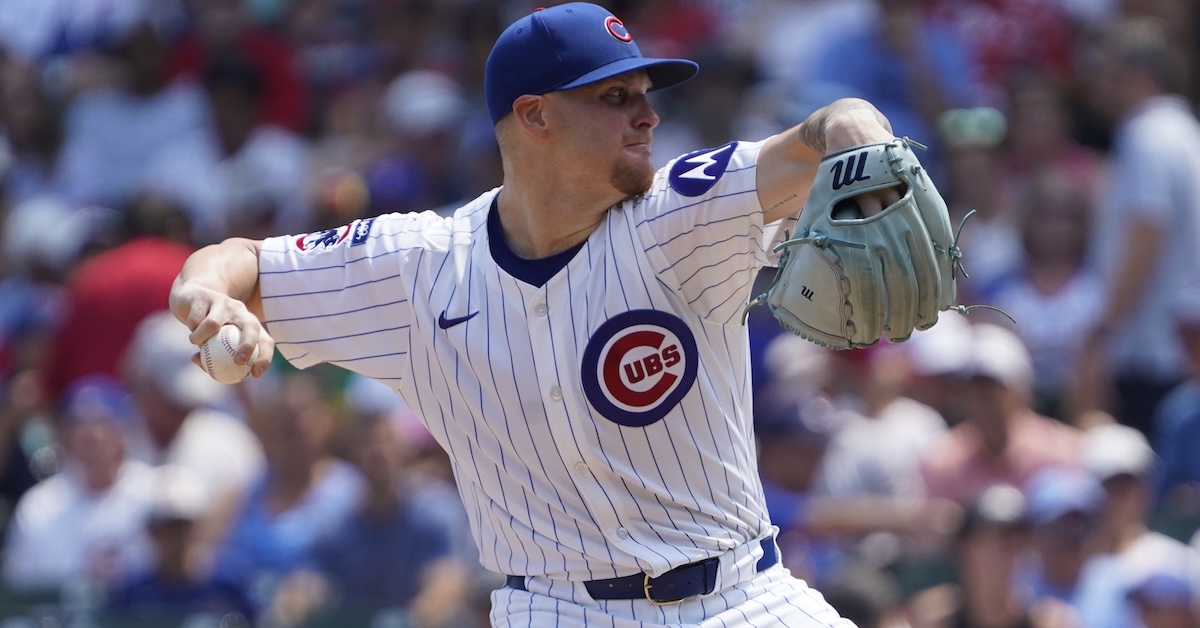
Cade Horton gave up a run on Wednesday night. Kind of. He was charged with a run because he exited the game with two men on base, but it was Andrew Kittredge who allowed the Vladimir Guerrero Jr. sea-skimming missile that brought the run home. Not to criticize Kittredge; the odd 111.8-mph double is an occupational hazard of pitching to Vladito.

That run was the first one Horton had surrendered in five starts since the All-Star Break; taking things back to his final outing before the Midsummer Classic, Horton’s scoreless streak had run to 29 innings. In those five starts, Horton has allowed 11 hits total, only one of them for extra bases.

As for his most recent start, I don’t think Horton or the Cubs will be too broken up about the inherited runner. Not only did Chicago win the game, but also Horton set a new career high with eight strikeouts and made the Blue Jays wait until the sixth inning for their first hit. Read the rest of this entry »


Job Posting: Miami Marlins – Director of Baseball Data

Director of Baseball Data

At the Miami Marlins, we make waves — on and off the field.

We’re built for sustainable success thanks to our commitment to being great teammates, bold innovators, and thinking long-term. These three pillars guide us in championing a winning culture across the organization. The work we do doesn’t just impact our team — it reaches fans and communities across South Florida.

Position Summary
The Director of Baseball Data will lead the data engineering team within Baseball Systems, overseeing the architecture, development, and maintenance of our data infrastructure. This role will be responsible for designing and implementing scalable, high-performance data pipelines that support analytics, player evaluation, and decision-making across Baseball Operations. The ideal candidate will have deep expertise in data engineering, cloud computing, and database technologies, along with strong leadership and project management skills.

Essential Functions

  • Develop and execute the long-term data strategy for Baseball Systems, ensuring alignment with organizational goals.
  • Lead the design, implementation, and optimization of scalable data pipelines and storage solutions.
  • Oversee the integration of multiple internal and external data sources, ensuring data quality, consistency, and accessibility.
  • Manage a team of data engineers, providing mentorship, technical guidance, and professional development.
  • Collaborate with R&D, Player Development, Scouting, and Performance Science teams to understand data needs and deliver innovative solutions.
  • Implement best practices for data governance, security, and compliance within the baseball data ecosystem.
  • Evaluate and integrate new technologies and tools to enhance data processing, analytics, and machine learning workflows.
  • Establish and maintain data documentation, ensuring transparency and usability across the organization.
  • Work closely with the Director of Baseball Applications to align data infrastructure with application development.
  • Drive continuous improvement in data engineering processes, fostering a culture of innovation and efficiency.

Our Values
We Are Great Teammates

  • Supports and encourages colleagues.
  • Provides and receives feedback without judgement or ego.
  • Holds one another to a high standard.
  • Provides help and encouragement proactively.
  • Assumes positive intentions from others.
  • Looks for ways to help make their teammates better.

We Are Innovators

  • Embraces a growth mindset.
  • Challenges conventional wisdom.
  • Unafraid to fail.
  • Pushes boundaries and doesn’t accept impossible.
  • Asks why and asks why not.

We Think Long-Term

  • Asks: what can I do today that will pay off a year from now.
  • Eschews instant gratification for bigger benefits in the future.
  • Always trying to think three steps ahead.

Skill Requirements

  • Expertise in SQL, Python, and data pipeline orchestration tools such as Apache Airflow.
  • Strong experience with cloud computing platforms (Google Cloud, AWS, or Azure).
  • Deep understanding of database technologies, including relational (PostgreSQL, MySQL, SQL Server) and NoSQL (MongoDB, BigQuery) systems. Knowledge of Snowflake is a plus.
  • Knowledge of modern data architecture concepts, including data lakes, real-time processing, and distributed systems.
  • Familiarity with CI/CD pipelines, containerization (Docker, Kubernetes), and infrastructure as code (Terraform, CloudFormation).
  • Strong analytical and problem-solving skills with a focus on performance optimization.
  • Excellent communication and leadership abilities, with a track record of managing and developing teams.
  • Experience working in sports analytics or baseball operations is a plus.
  • Strong attention to detail and organizational skills.

Education & Experience Guidelines

  • Bachelor’s or Master’s degree in Computer Science, Data Engineering, or a related field.
  • Minimum of 7+ years of experience in data engineering, with at least 3+ years in a leadership role.
  • Proven experience designing and managing large-scale data infrastructure in a cloud environment.
  • Experience in the sports industry or a passion for baseball is preferred.
  • Experience with Baseball Data, Biomechanical Data, and Tracking Systems is preferred.

Work Environment

  • Ability to work evenings, weekends, and holidays as needed.
  • Availability to travel occasionally for industry conferences or organizational needs.
  • Ability to sit/stand for extended periods and work in an office environment.

We are an equal opportunity employer, and all qualified applicants will receive consideration for employment without regard to race, color, religion, national origin, sex, sexual orientation, age, disability, gender identity, marital, or veteran status, or any other protected status.

Job Questions:

  1. Describe your experience working with baseball-specific data sources (e.g., Statcast, TrackMan, Hawkeye, biomechanics, scouting reports).
  2. What’s your philosophy on managing a high-performing data engineering team?

To Apply:
To apply, please follow this link.

The content in this posting was created and provided solely by the Miami Marlins.


The Mets Could Swipe Some Base-Stealing Records

Brad Penner-Imagn Images

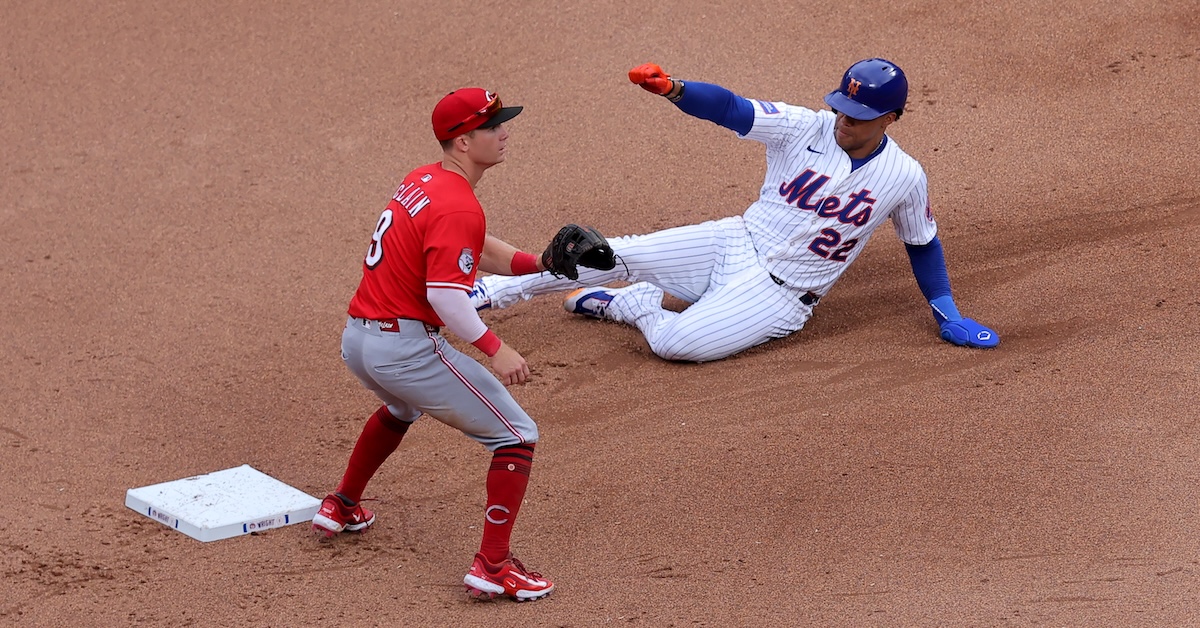
Back in late June, I wrote about something weird happening in Flushing. In spite of being slow, and in spite of not being great at the other parts of baserunning, the Mets were threatening to become the most efficient base-stealing team of all time.

Well, exactly seven weeks later, the Mets are still slow. According to Statcast, they’ve got an average sprint speed of 27 feet per second, which puts them in a five-way tie for the slowest team in baseball. And they are also still not good at taking the extra base: Statcast ranks them 20th, while Baseball Prospectus has them at 15th. But if you’ve been watching the Mets for the last couple months, you know very well that they can still steal bases.

This week, I took another look at the numbers because a reader named Kevin submitted a mailbag question about Juan Soto’s newfound proclivity for stealing bases. We’ll get to Soto a bit later, but let’s start with the team as a whole. I wrote that article on June 26. At the time, the Mets had 62 stolen bases, which ranked 11th in the majors, and they’d been caught just 10 times. That was a lot of baseball ago, so now seems like a good time to give you an update. The Mets have 93 stolen bases, the 11th-most swipes in the game, and they’ve been caught just 10 times. They haven’t been caught since June 17! They’re 34 for their last 34! Read the rest of this entry »


Is All Hope Lost for the Atlanta Braves?

Cary Edmondson-Imagn Images

For the Atlanta Braves, the 2025 season is a disasterpiece. Last season had its share of disappointments, but the long stretches of middling play still left the Braves in a playoff spot by the tiniest of margins. After 2024, it was reasonable to stay the course; no need to smash the red panic button like an unsupervised child in an elevator. This time around, however, the Braves are likely to finish the season with somewhere around 90 losses, making simply battening down the hatches and waiting for sunnier weather a lot riskier of a strategy. I cranked up ZiPS to see how much tinkering the computer thinks Atlanta needs to do in order to compete in 2026.

The Good

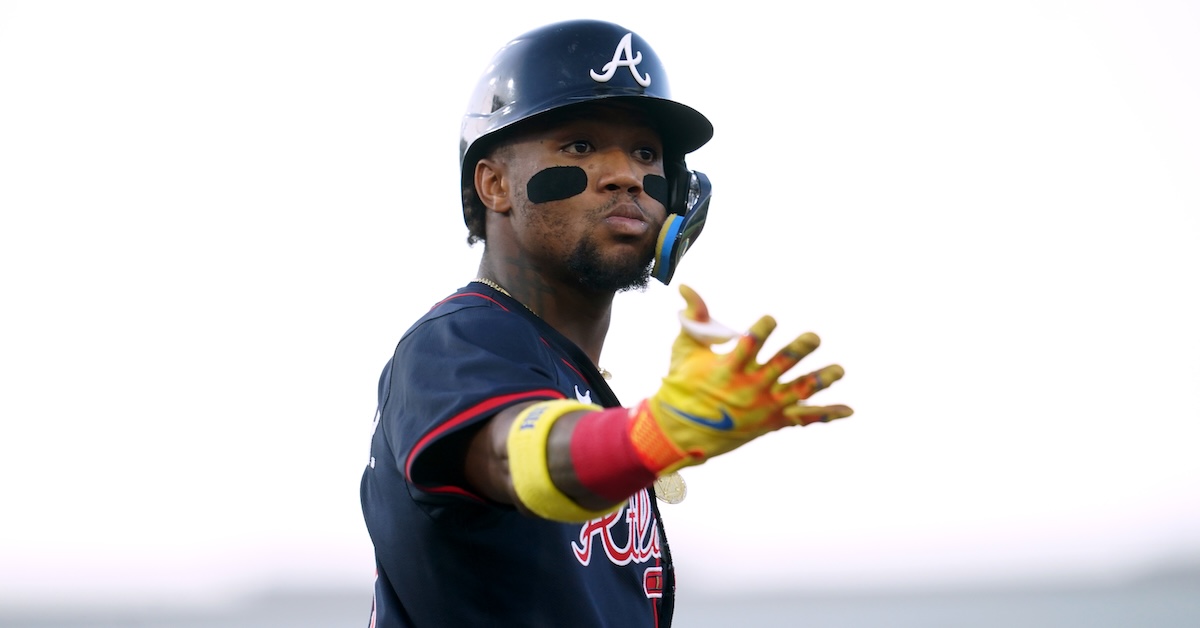
On the plus side, the Braves aren’t trying to build a winning team out of nothing. Much of the offensive core remains intact and is actually functioning quite well. Ronald Acuña Jr. has made a successful return from a second torn ACL and has been playing at a 7-WAR pace. Of course, he’s out at the moment with another Achilles injury, but this appears to be a minor issue, relatively speaking, and given his history and Atlanta’s position in the standings, there’s no real reason not to be conservative with his recovery. ZiPS is understandably down on his injury risk, but he still gets his usual dynamite projection for 2026, even if it’s a little diminished from a playing time perspective:

ZiPS Projection – Ronald Acuña Jr.
Year BA OBP SLG AB R H 2B 3B HR RBI BB SO SB OPS+ WAR
2026 .301 .409 .537 462 109 139 24 2 27 78 79 111 29 159 5.4
2027 .295 .405 .521 468 109 138 24 2 26 77 81 111 26 154 5.1
2028 .288 .399 .502 466 106 134 23 1 25 75 81 109 23 147 4.6

Read the rest of this entry »


NL West Arms Race: Can Pitching Prospects Contribute to the Dodgers and Padres?

Joe Camporeale and David Frerker-Imagn Images

We’re in the phase of the minor league calendar where the domestic complex league seasons have ended, in order to accommodate the incoming draft classes, while the rest of the minor leagues continue with their regular seasons for a few more weeks. There are some recent draftees who have already been sent out to affiliates, but the majority have gotten going at their respective facilities during unofficial “Bridge League” or “Continuation Camp” activity with loose, flexible schedules and start times. There’s a big group chat in which scouts and development personnel (plus a handful of media folks, and probably a clandestine autograph hound or two) exchange lineups and pitching probables to keep everyone abreast of the goings on. Ceasing official play in Arizona and Florida allows teams to onboard their draft classes in an unofficial setting and avoids the traffic jam of minor roster spots, which would exceed the allowed amount if the draft classes were just assigned to affiliates right away.

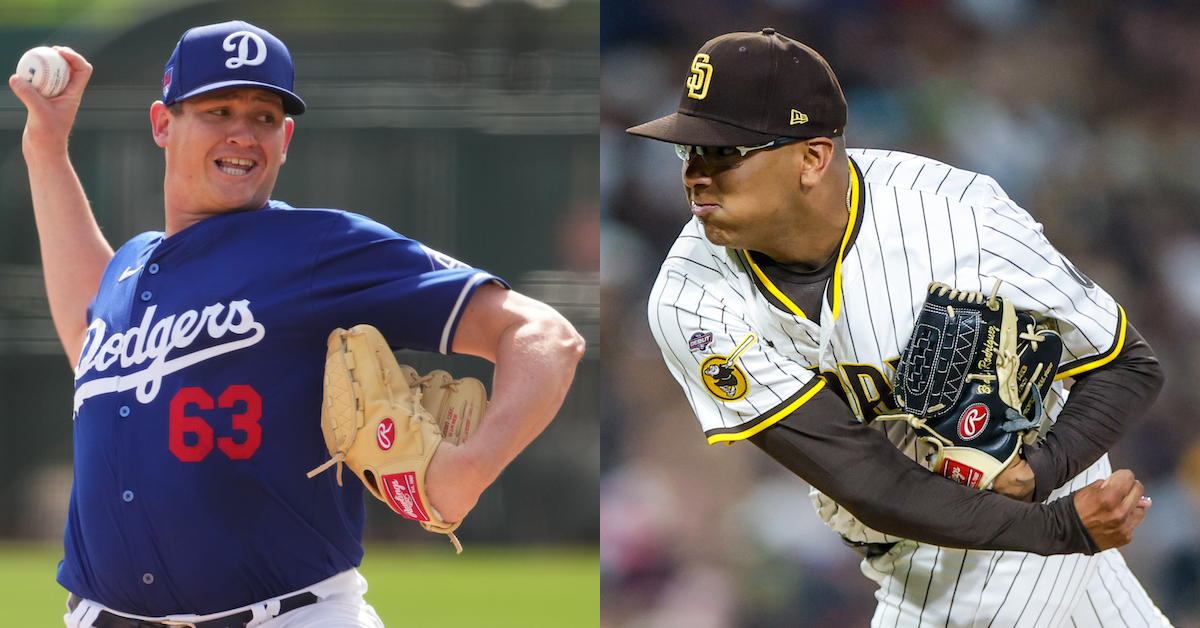
This is also a fruitful place for rehabbers to see their first real game action since injury because teams can just “roll” innings whenever they feel like it. If you’re on a 25-pitch limit and you’ve hit your count without getting three outs, the inning will just turn over regardless of how many guys are on base. This setting is about development and is not an actual game, so it’s a safe place to shake off rust and work up a sweat. On Tuesday, when the Padres officially caught the Dodgers in the NL West race, I saw their Bridge League teams square off with two rehabbing members of their 40-man rosters getting an inning of work at the start of the game. In this piece, I’ll pass along how Kyle Hurt (Dodgers) and Bradgley Rodriguez (Padres) looked and examine whether either team has a postseason pitching weapon lurking in the minors. Read the rest of this entry »


The Dodgers Have Face-Planted

Kiyoshi Mio-Imagn Images

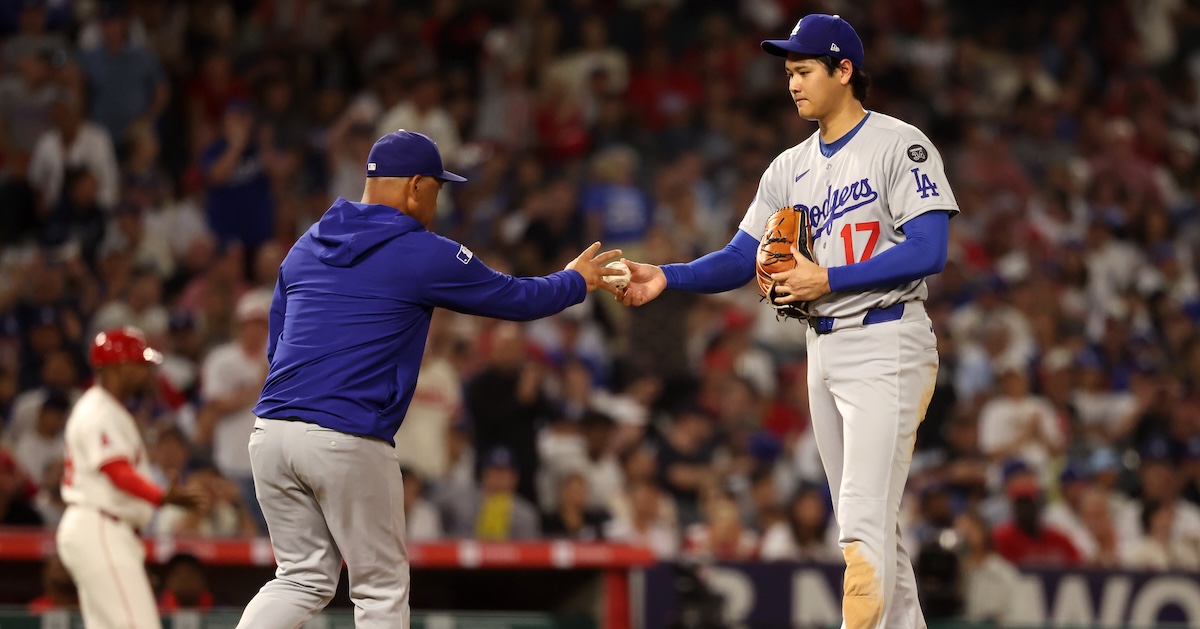
The Dodgers may have peaked too early. On July 3, they completed a three-game sweep of the White Sox, lifting their record to a season-high 24 games over .500 (56-32) and their NL West lead to nine games over both the Padres and Giants. It’s been mostly downhill since then for Los Angeles, starting with a seven-game losing streak from July 4–11, which included three-game sweeps by the Astros and Brewers. This week, they dropped three straight to the Angels while the Padres swept the Giants, knocking the Dodgers out of first place for the first time since April 27. The two Southern California rivals face off six times in the next 10 days, bookended by three-game series in Los Angeles this weekend and San Diego next weekend.

I’ll zoom out to the bigger picture below and in a subsequent Padres installment, but Tuesday night’s Dodgers-Angels game had a couple moments that had to be seen to be believed. The Dodgers scratched out a run in the top of the first against Angels starter Victor Mederos, but opposite number Emmet Sheehan, who has generally pitched quite well since returning from Tommy John surgery in mid-June, fell behind each of the first five Angels he faced, leading to three first-inning runs. A two-run Dalton Rushing homer tied it in the second; the Angels retook the lead with runs in the third and fourth, but the Dodgers’ two-out rally for two runs tied it in the fifth, 5-5.

The Dodgers had a golden opportunity to break the game open when Miguel Rojas and Rushing both singled off reliever Brock Burke to open the sixth. Up came Shohei Ohtani, who amid the team’s recent malaise entered the game on a 17-for-38 run that included homers in three straight games. Ohtani lined a Burke fastball up the middle, but shortstop Zach Neto, shifted about six feet to the left of second base, speared it and was perfectly positioned to double off Rojas, then fire to first. Rushing, who had ranged too far towards second, punctuated becoming the third out in the triple play by face-planting while trying to avoid a tag (luckily, he at least escaped injury). Oof.

Read the rest of this entry »


Shea Langeliers Is Hotter than the Surface of the Sun

Daniel Kucin Jr.-Imagn Images

Over the past 30 days, the major league leader in position player WAR and wRC+ is also tied for the league lead in home runs and runs scored. You might not have noticed because the team he plays for, the Athletics, is taking some time off to go find itself before settling down. The player in question is not Nick Kurtz! Haha, I pulled the ol’ switcheroo there, didn’t I?

No, it’s Shea Langeliers.

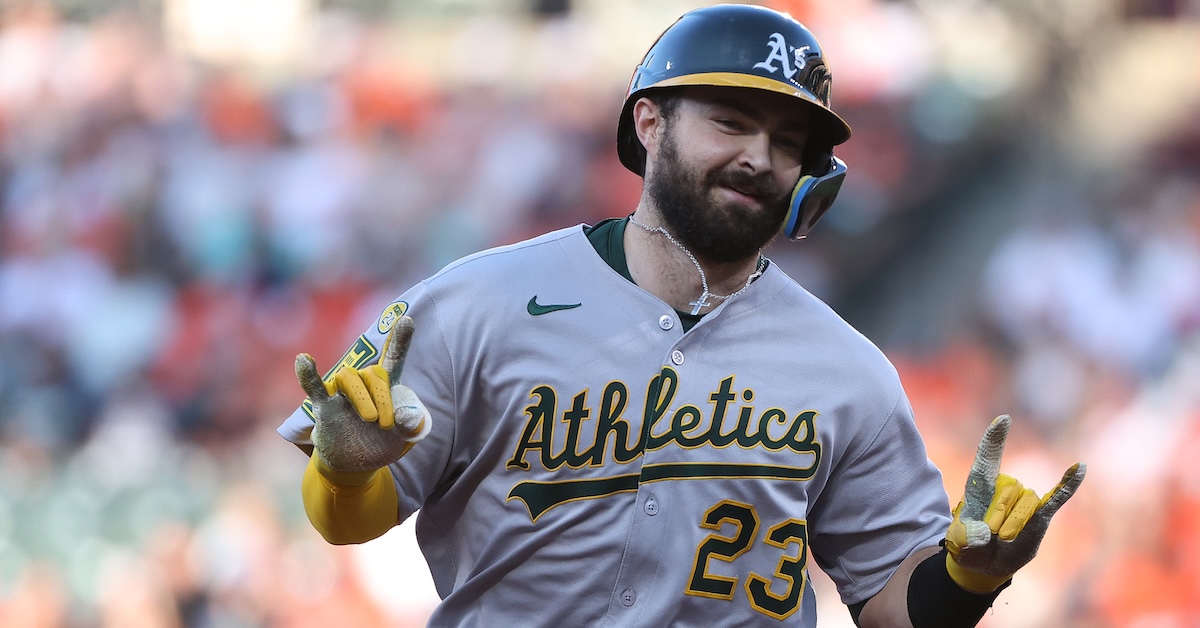
That’s right, the most dangerous hitter in baseball over the past month is a catcher. Not only that, a catcher who entered this season with a career wRC+ of just 98, who was hitting an uninspiring .226/.285/.424 at the All-Star break. Since then, Langeliers is hitting .398/.419/.857, with as many home runs (12) in 105 second-half plate appearances as he hit in 267 PA in the first half. Read the rest of this entry »


The Most Feared Hitter in Baseball

Charles LeClaire-Imagn Images

“Who is the most feared hitter in baseball?” is not a question I set out to answer. That would be too easy! Step one: Write “Aaron Judge.” Step two: Let out a bemused chuckle. Obviously it’s Aaron Judge. Who would have commissioned such a silly article? Step three: Get lunch. That does sound pretty tempting, I must admit, but that’s not this article. This one is a little bit weirder.

I started by asking the opposite question: “Who is the least feared hitter in baseball?” I had a simple idea for how to test it. Take a look at the rate of pitches over the heart of the plate that each batter sees when behind in the count – more strikes than balls. A hitter who sees tons of pitches down the middle in a bad hitting situation isn’t a guy who scare opponents. Pitchers are so not afraid that they’re chucking pitches down Broadway even in the situations where that’s least necessary and least advantageous. Read the rest of this entry »


Vladimir Guerrero Jr. Is Getting Out of the Swing of Things

Kevin Sousa-Imagn Images

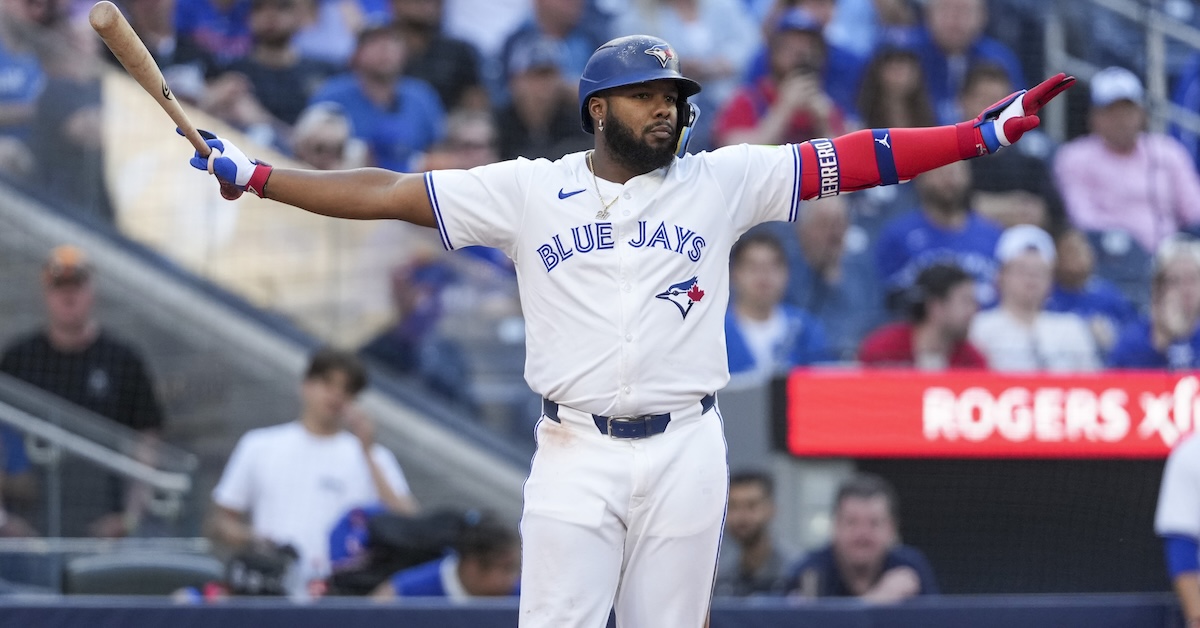
We haven’t written much about Vladimir Guerrero Jr. since he signed his half-billion-dollar contract extension back in April. That’s understandable, in that we tend to write about new and exciting developments. Of course, the downside of that is sometimes it can lead us to neglect exciting players who aren’t necessarily doing anything new. On the surface, Guerrero very much falls into that category. He’s having a typical Vladimir Guerrero Jr. season.

Same Old Vladdy
Season wRC+ AVG HardHit GB/FB
2021-2024 145 .293 52.4% 1.41
2025 148 .300 51.2% 1.38

Those numbers are nearly identical! Guerrero is doing his thing, which consists of hitting the ball hard, hitting it on the ground, and putting up an overall batting line that should nab him a smattering of MVP votes. The Blue Jays promised Guerrero all the money in Canada in the hope that he would just keep on being himself for the next decade and a half, and he’s off to a great start. Just 14 more seasons like this to go. He’s on pace for 5.0 WAR, the third-best mark of his career. That’s certainly worth writing about, especially when Guerrero is doing it for the team with the best record in the American League. But also, I mostly want to write about this new thing he’s doing.

Here’s the new thing: Guerrero has stopped swinging. Not entirely – that would be silly – but he’s dropped his overall swing rate from 48.5% in 2024 all the way to 40.9% in 2025. That’s the third-largest decrease among all qualified players. It represents a huge departure for Guerrero (and an even bigger departure from the ways of his swing-happy father). Read the rest of this entry »