Archive for Tigers

Five Things I Liked (Or Didn’t Like) This Week, August 8

Chadd Cady-Imagn Images

Welcome to another edition of Five Things I Liked (Or Didn’t Like) This Week. Between a vacation, the All-Star break, the Trade Value Series, and the trade deadline, Five Things has been on a bit of a summer hiatus. Baseball itself doesn’t stop, of course; weird and delightful things happen whether I’m documenting them or not. But I still couldn’t shake the feeling that this week had an extra helping of whimsy. Balls took funny hops. Good pitchers got shelled in unexpected ways. Balks took center stage. Leads changed hands late, defenders kicked things into high gear – there was so much delightful baseball this week that I struggled to narrow it down to five things. Seven things just doesn’t have the same ring to it, though, so let’s quickly nod to Zach Lowe of The Ringer for the column inspiration and get going.

1. The True King of Contact
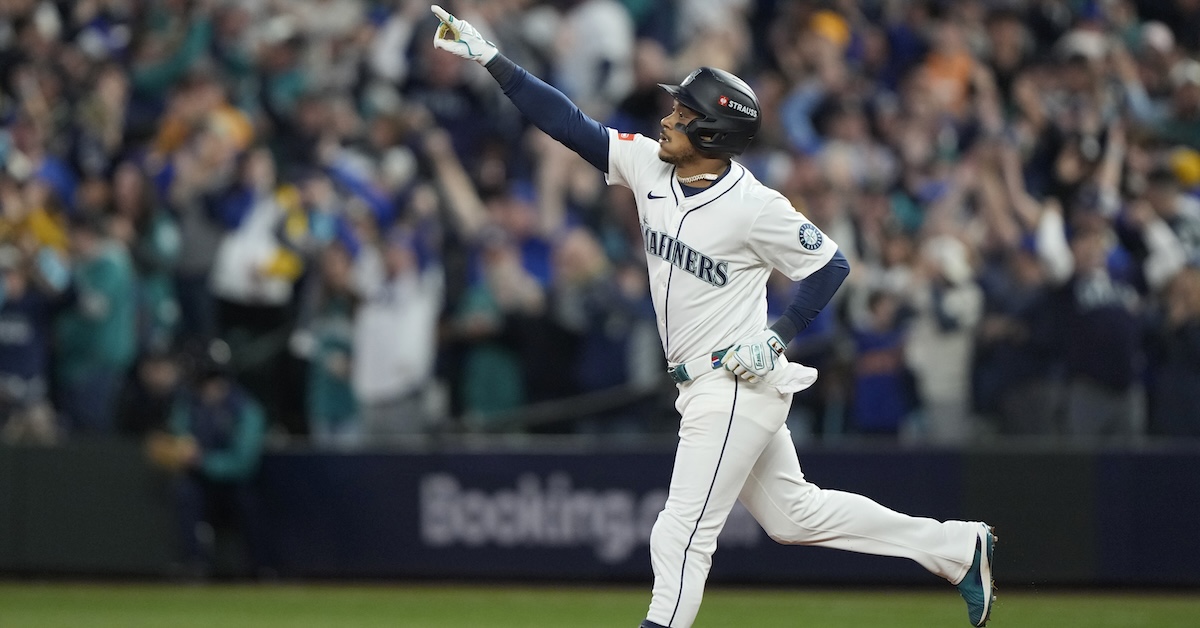
Writing about Luis Arraez can be a bummer sometimes. Not because he’s bad – he’s emphatically not – but because merely mentioning his name reinvigorates the age-old argument between those who say there are too many strikeouts and those who insist that slug is in the air. Should everyone be doing what Arraez is doing? Is he an anachronism? Is he underrated? Overrated? He’s so good at what he does – and what he does is so different from what most good baseball players do – that these questions are frustratingly omnipresent in any discussion about Arraez.

That said, I think I found an Arraez play that won’t divide the audience. The key is for it not to involve a ball in play, a walk, or a strikeout. Take a look at this beauty:

Read the rest of this entry »


Orioles Send Mullins to Mets and Morton to Tigers, and Get a Gaggle of Pitchers in Return

Dale Zanine and Mitch Stringer-Imagn Images

Though many predicted heading into the 2025 season that the Orioles’ weak starting rotation and general inactivity over the offseason would come back to haunt them, even Baltimore’s biggest skeptics weren’t prognosticating that the team would sit well under .500 and 7.5 games out of playoff position at the end of July. Such as it is, the Orioles spent this year’s trade deadline turning over roughly a third of their roster. Over the last week or so, the O’s have traded relievers Gregory Soto, Seranthony Domínguez, and Andrew Kittredge, along with infielders Ryan O’Hearn and Ramón Urías. Then on Thursday afternoon, Anthony DiComo reported that Cedric Mullins was on his way to the Mets; a few hours later, Jeff Passan broke the news that Charlie Morton would be joining the Tigers. The only healthy pending free agent who wasn’t traded out of Baltimore is Tomoyuki Sugano, and with Zach Eflin hitting the IL mere hours before the deadline, Sugano is now a load-bearing member of the rotation. Read the rest of this entry »


Various Relievers Get Traded To Various Clubs in Various Combinations

Jerome Miron and Jeff Curry-Imagn Images

It’s a big deadline for relief pitchers, even for teams that aren’t operating in the Mason Miller or Jhoan Duran tier. The Orioles bullpen continues to get picked over like a charcuterie board: Andrew Kittredge is Chicago-bound, with the Cubs sending Wilfri De La Cruz the other way.

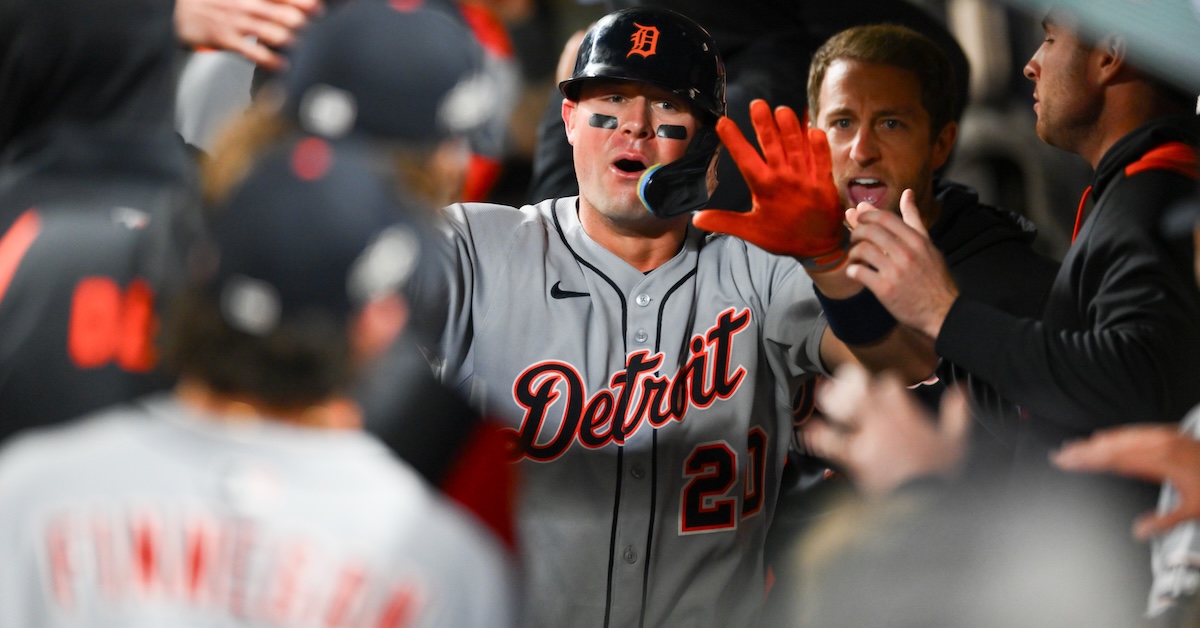
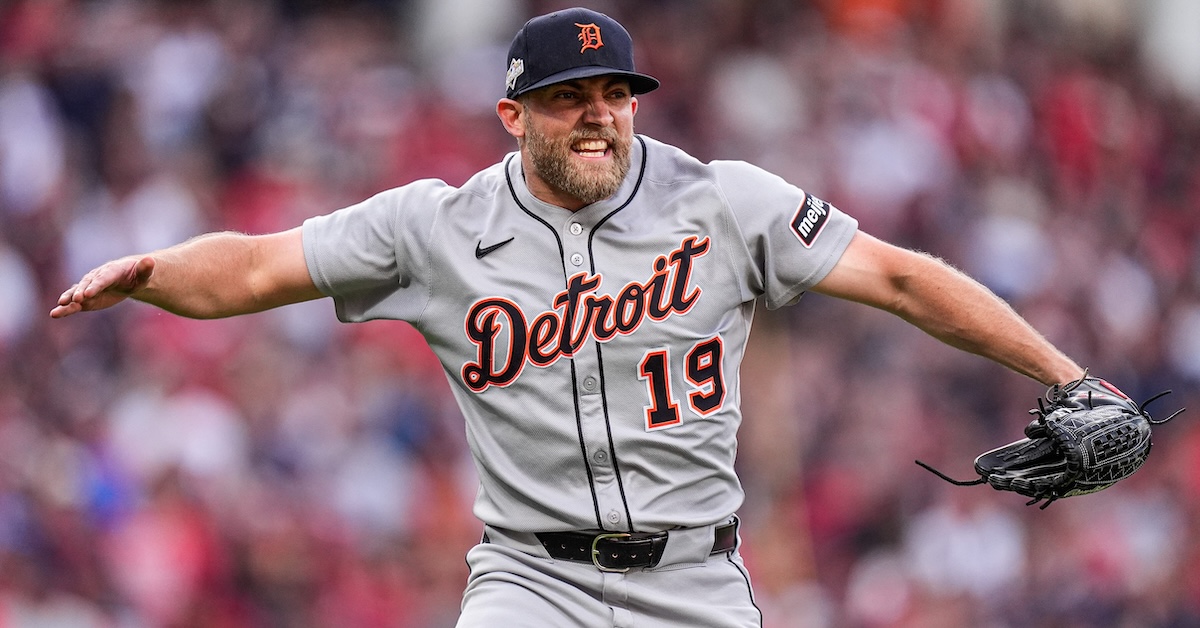
The Tigers beefed up their bullpen by picking up Paul Sewald from the Guardians in exchange for a player to be named later or cash. A few hours later, Detroit sent minor league pitchers Josh Randall and R.J. Sales to Washington for Kyle Finnegan and added Codi Heuer from Texas for minor league depth. Finally, the Dodgers are bringing Brock Stewart back from Minnesota, with James Outman going in the other direction.

Let’s take those in order. Read the rest of this entry »


The Wednesday Minor Moves Roundup

D. Ross Cameron, Kamil Krzaczynski, Mark J. Rebilas-Imagn Images

Not every deadline trade is a dramatic one, but that’s OK — teams need to make low-key moves, too. Do you think James Bond saved the world every day? No! Some days, he had to do paperwork. Some days, he had to go to the dentist, or take the car to the gas station to vacuum up the leftover Cool Ranch Doritos crumbs on the floor after they spilled out on his drive from Baltim… I mean Bristol. So let’s catch up on some of Wednesday’s smaller moves.

The Seattle Mariners acquired left-handed reliever Caleb Ferguson from the Pittsburgh Pirates for right-handed starter Jeter Martinez

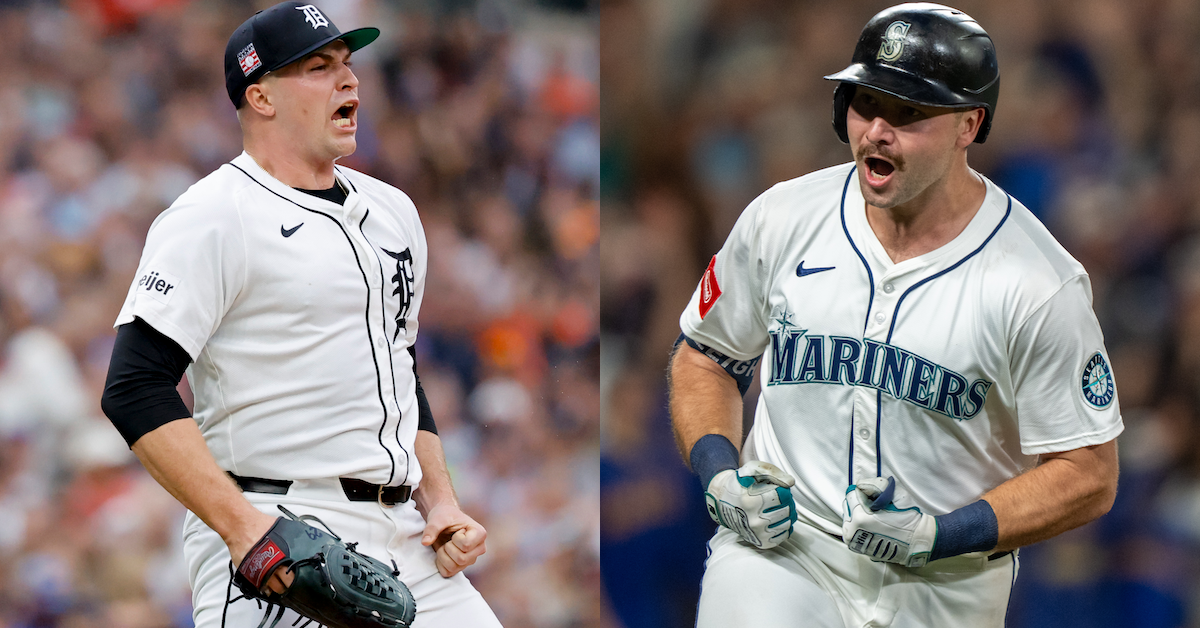
The Mariners have been operating with a shortage of southpaws this season, with Gabe Speier mostly being the only lefty on the active roster. Speier’s been good, holding lefties to a .609 OPS this season, but he can’t pitch in every playoff game, and Andrés Muñoz, who handles lefties quite well, generally doesn’t make his entrance before the ninth inning, so a depth-targeted upgrade to give the team another option down the stretch and during October makes a lot of sense. Caleb Ferguson has shed some strikeouts this year as he’s more heavily integrated his sinker into his repertoire, but he’s compensated for that loss by shedding a walk per nine from last season and becoming one of the hardest pitchers in baseball to make good contact against. Of all the pitchers with at least 30 innings this season, only Adrian Morejon has allowed a lower hard-hit percentage. Ferguson gives the Mariners a second lefty in the ‘pen they can count on, something they couldn’t really say about Joe Jacques or Tayler Saucedo. Read the rest of this entry »


With Chris Paddack Trade, Tigers Bolster Ailing Rotation and Twins Start Selling

Isaiah J. Downing-Imagn Images

The Tigers didn’t wait long. On Monday, the team announced that starter Reese Olson would miss the rest of the season (and possibly the postseason) with a right shoulder strain, and that same day, Detroit filled Olson’s rotation spot by swinging a trade within the division for Minnesota right-hander Chris Paddack. The full deal brought Paddack and reliever Randy Dobnak to the Tigers in exchange for 19-year-old catching prospect Enrique Jimenez. The trade represented an attempt to stabilize an increasingly banged-up Detroit rotation for an increasingly important stretch run. For the Twins, the move kicked off what has the potential to be a significant sell-off.

We’ll start with the Twins side. “It’s just crazy how fast it can turn around,” Paddack told Dan Hayes of The Athletic, who initially reported news of the deal along with Ken Rosenthal. “World just got twisted upside down, to say the least. It stinks. This business is out of our control sometimes. I was really pulling for us, as a Twin. I was hoping we would make some moves and go get that Wild Card spot. I’m excited for this new opportunity with a new team.” It’s not immediately clear who will take Paddack’s spot in the Minnesota rotation. The Twins have a bullpen game planned for today. Paddack will start tomorrow, and he’s lined up to face his old squad when the Tigers and Twins face off a week from today. The Twins broadcast made a point of circling the date on the calendar during last night’s game. Read the rest of this entry »

Gleyber Torres Is So Annoying

Rick Osentoski-Imagn Images

In the final days before the All-Star break, the Mariners threw 60 pitches to Gleyber Torres. I swear he didn’t make a single incorrect swing decision.

Fastball jammed inside on a 2-2 count? He’ll spoil it.

Slider dropped in the chase zone, low and away? Easy take.

Fastball pinned to the top edge in a full count? That’s a walk.

What’s a pitcher to do? Torres went 5-for-10 in the series with two doubles and two walks. It wasn’t the flashiest series, and it’s not really the flashiest batting line. He’s hitting .282/.390/.421 this year, which scans to me more as “very good” than “great.” But if there were an award for “most annoying at-bat,” I’d submit a nomination for Torres. Read the rest of this entry »


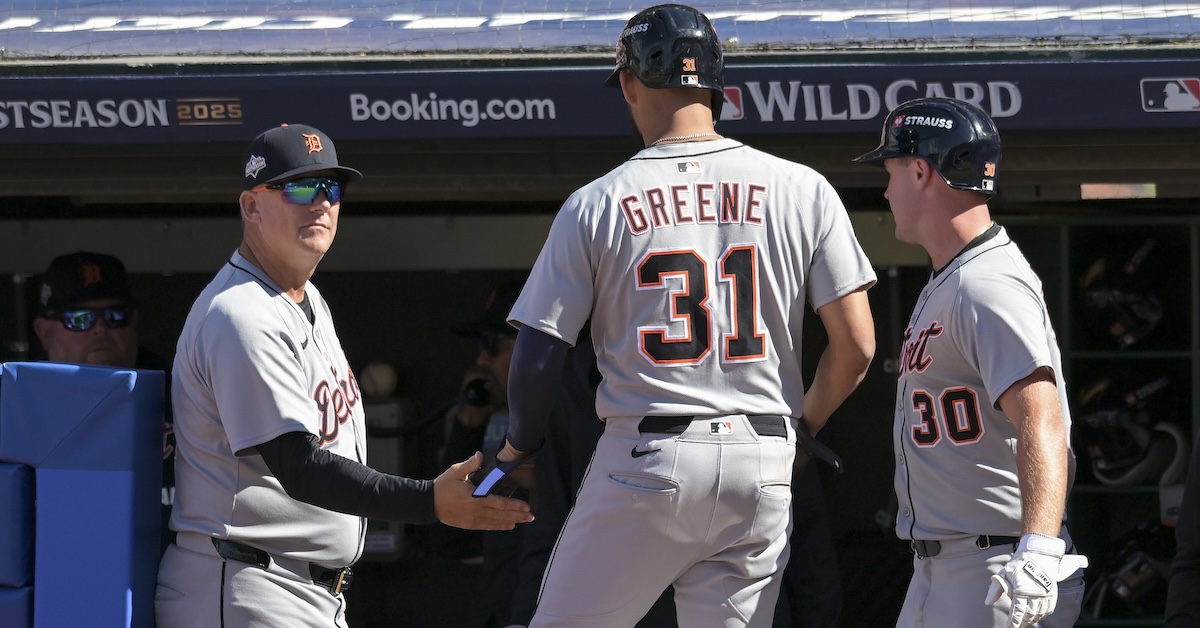
Riley Greene Is Luis Arraez’s Wario

Ken Blaze-Imagn Images

On last Monday’s episode of the Rates and Barrels podcast, Derek VanRiper raised a curious contradiction. “[Riley Greene is] first percentile in squared-up percentage, but 97th percentile in barrel rate, which — I’m sure there’s an explanation, I don’t know what it is just yet.” In response, Eno Sarris asked, “How can he barrel it without squaring it up?” It was a great question. In colloquial use, a squared-up ball is synonymous with a barreled ball. So what’s going on here, exactly?

The first thing to know: A squared-up ball is not necessarily a well-hit ball, as Davy Andrews highlighted when these stats were first made public last June. To understand why, one must first become acquainted with the Statcast definition of squared up. The MLB glossary entry for squared-up rate defines it thusly: “A swing’s squared-up rate tells us how much of the highest possible exit velocity available (based on the physics related to the swing speed and pitch speed) a batter was able to obtain – it is, at its simplest, how much exit velocity did you get as a share of how much exit velocity was possible based on your swing speed and the speed of the pitch.” If a hitter generates 80% of their possible exit velocity on a given swing and the ball is put in play, the batted ball is considered squared up.

We might quibble over the simplicity of that definition. In any case, as Davy showed, squared-up balls can be hit at super low speeds — if all it means is that a hitter channelled 80% of the potential exit velocity, then 80% of a half-swing is not very much exit velocity.

It’s also possible to do damage without making frequent flush contact; Greene shows us how. As Ben Clemens wrote just a couple of weeks ago, Greene is posting yet another excellent offensive campaign despite one of the higher strikeout rates among qualified hitters. He’s doing it unconventionally, swinging a ton in early counts to maximize damage. He’s also unconventional in another sense: He barrels the ball a ton while hardly ever squaring it up.

Part of the explanation for how this works is tied to the nature of swinging hard. When the bat speed statistics first dropped, it immediately became clear that there is a strong negative relationship between bat speed and the ability to square the ball up, at least by the Statcast definition. Click over to the bat tracking leaderboard, and the first thing you’ll see is this image, which shows the negative correlation between these two variables:

That’s no surprise. By the Statcast definition of a squared-up ball, slow swingers will always come out on top, because swinging slower allows for greater barrel accuracy. But it’s not all bad news for hard swingers. They also tend to produce the most valuable type of batted ball: a barrel.

Naturally, bat speed is correlated — positively — with barrel rate. A barrel, by the Statcast definition, is any type of batted ball where the expected batting average is at least .500 and the expected slugging percentage is at least 1.500. Barrels tend to be clustered in a pretty narrow exit velocity/launch angle range, somewhere north of 100 mph in terms of exit velocity and between 15 and 40 degrees or so of launch angle:

As the scatterplot below shows, the relationship between bat speed and barrel rate is extremely tight:

Greene’s average bat speed — 75.2 mph — is in the 91st percentile, so on some level, a high barrel rate and a low squared-up rate is to be expected. Even so, the spread between these two metrics is striking. His barrel rate is higher than his squared-up rate! Only one other hitter has a lower squared-up-minus-barrel rate — Aaron Judge. And that gives a hint into how, exactly, Greene is pulling this off.

Judge racks up an obscene number of barrels. Already, he’s mashed 60 this year, good for a 25.9% barrel rate. Like Greene, his squared-up rate is low — not as low, but comfortably a standard deviation below the mean. But also like Greene, Judge is amazing at converting his squared-up balls into barrels.

Nobody comes particularly close to Judge in this metric. Nearly 40% of his squared-up balls are converted into barrels, by far the highest rate in the league. (The league average is 13.6%.) As you might have guessed, Greene also excels here, ranking fifth among all hitters with at least 150 plate appearances:

Squared-Up Barrels
Name % of Squared-Up Balls That Are Barrels
Aaron Judge 39.7%
Oneil Cruz 32.1%
Kyle Stowers 31.9%
Shohei Ohtani 30.7%
Riley Greene 30.5%
Cal Raleigh 29.1%
Seiya Suzuki 29.1%
James Wood 28.9%
Nick Kurtz 28.8%
Pete Alonso 28.7%
SOURCE: Baseball Savant
Minimum 150 plate appearances.

So that’s the first part of this equation. Greene might not square the ball up that often, but when he does, it’s frequently crushed. The other part of the equation? Greene hits a ton of foul balls.

Greene’s 315 foul balls rank fifth among all hitters. When Greene makes contact with the ball, it goes foul 56% of the time. That mark ranks 11th out of all hitters with at least 150 plate appearances; besides Cal Raleigh, nobody else in Greene’s squared-up-to-barrel cohort fouls off nearly as many balls:

Foul Ball Rates
Name Fouls Per Contact
Bo Naylor 59.0%
Anthony Santander 58.2%
Sean Murphy 57.6%
Kody Clemens 57.2%
Cedric Mullins 57.1%
Josh Lowe 56.8%
Jasson Domínguez 56.4%
Spencer Horwitz 56.0%
Cal Raleigh 56.0%
Jake Cronenworth 55.8%
Riley Greene 55.5%
Matt Thaiss 55.4%
Tyler Stephenson 55.4%
Brandon Marsh 55.3%
Max Muncy 55.3%
SOURCE: Baseball Savant
Minimum 150 plate appearances. Foul balls divided by pitches that end with contact.

All of those foul balls — in addition to his seventh percentile whiff rate — contribute to the squared-up percentage denominator, sinking Greene’s squared-up rate to the very bottom of qualified hitters. Importantly, foul balls are not part of the barrel rate denominator. The barrel rate that shows up on the Savant player page popsicles is a measure of barrels per batted ball event. A bunch of foul balls do nothing to affect a hitter’s barrel rate, but they’ll go a long way toward tanking a squared-up rate.

It isn’t necessarily intuitive to think that a hitter could be so good at barreling the ball and so bad at squaring it up. But breaking it down in this fashion, I think it starts to clarify this ostensible conundrum. Barrels are hard to come by. Even Judge, the barrel GOAT, hits one just over a quarter of the time he puts a ball in play. To be a barrel king like Judge or Greene, you don’t need to crush that many baseballs, at least on an absolute basis. But you better make sure that when the ball is in play, it gets smushed.

More than anything, I think these two data points paint a compelling picture of the modern hitter. Greene, perhaps more than any other hitter, goes for broke, almost like the anti-Luis Arraez. His swing tilt is the steepest in the sport. He mishits a bunch of pitches. He whiffs a ton. But when he connects, he does damage. And even though those damage events are relatively infrequent, they’re valuable enough to make him one of the better hitters in baseball.


The Best Team Defenses of 2025 (So Far)

Kevin Jairaj and John E. Sokolowski – Imagn Images

Coming into 2025, you might not have expected Alejandro Kirk and Ernie Clement to play central roles on a playoff contender. Neither player was an above-average hitter last season; in fact, each hit for a 93 wRC+ while playing regularly for a team that won just 74 games. Yet the pair rank first and second in position player WAR on the Blue Jays, thanks not only to improved offense but exceptional glovework, with Kirk battling the Giants’ Patrick Bailey for the top spot in two catching metrics, and Clement ranking among the best third basemen while also posting strong metrics in limited duty at the three other infield positions. The pair have not only helped the Blue Jays to a 47-38 record and the top AL Wild Card position, but also the top ranking in my annual midseason defensive breakdown.

Kirk and Clement aren’t Toronto’s only defensive stalwarts. Second baseman Andrés Giménez and center fielder Myles Straw, a pair of light-hitting glove whizzes acquired from the Guardians in separate trades this past winter, have been strong at their respective positions, with the latter helping to cover for the absences of Daulton Varsho. A Gold Glove winner last year, Varsho missed the first month of this season recovering from right rotator cuff surgery, and returned to the injured list on June 1 due to a strained left hamstring. Even in limited duty, Straw, Varsho, and Giménez — who missed about four weeks due to a quad strain, with Clement filling in at second for most of that time — have all rated as three to five runs above average according to Statcast’s Fielding Runs Value (FRV), and five to eight above average according to Defensive Runs Saved (DRS). Clement has totaled 12 DRS and 10 FRV at the four infield spots; in 359.2 innings at third, he’s second in the majors in both DRS (7) and FRV (5).

This is the third year in a row I’ve taken a midseason dip into the alphabet soup of defensive metrics, including Defensive Runs Saved (DRS), Statcast’s Fielding Run Value (FRV), and our own catcher framing metric (hereafter abbreviated as FRM, as it is on our stat pages). One longtime standby, Ultimate Zone Rating (UZR), has been retired, which required me to adjust my methodology. Read the rest of this entry »


Sunday Notes: Cam Schlittler Is Cut-Riding His Way Toward the Yankees Rotation

Cam Schlittler has emerged as the top pitching prospect in the New York Yankees organization. His ability to overpower hitters is a big reason why. In four starts since being promoted to Triple-A Scranton/Wilkes-Barre on June 3, the 6-foot-6, 225-pound right-hander has logged a 1.69 ERA and a 40.2% strikeout rate over 21-and-a-third innings. Counting his 53 frames at Double-A Somerset, Schlittler has a 2.18 ERA and a 33.0% strikeout rate on the season.

The 2022 seventh-rounder out of Northeastern University is averaging 96.5 mph with his heater, but more than velocity plays into the offering’s effectiveness. As Eric Longenhagen wrote back in January, Schlittler’s “size and arm angle create downhill plane on his mid-90s fastball akin to a runaway truck ramp, while the backspinning nature of the pitch also creates riding life.”

I asked the 24-year-old Walpole, Massachusetts native about the characteristics our lead prospect analyst described in his report.

“Arm slot-wise it’s nothing crazy,” Schlittler said in our spring training conversation. “I’m more of a high-three-quarters kind of guy, but what I didn’t realize until looking at video a couple months ago is that I have really quick arm speed. My mechanics are kind of slow, and then my arm path is really fast, so the ball kind of shoots out a little bit. With my height, release point— I get good extension — and how fast my arm is moving, the ball gets on guys quicker than they might expect.” Read the rest of this entry »


Built Different or Skill Issue? A BaseRuns Game Show: Offense Edition

Rick Osentoski-Imagn Images

In a post yesterday, I wrote about the BaseRuns approach to estimating team winning percentages and how it attempts to strip away context that doesn’t pertain to a team’s actual ability, so as to reveal what would have happened if baseball were played in a world not governed by the whims of seemingly random variation. In this world, a win-loss record truly represents how good a team actually is. Try as it might, the BaseRuns methodology fails to actually create such a world, sometimes stripping away too much context, ignoring factors that do speak to a team’s quality, or both.

I delayed for a separate post (this one!) a deeper discussion of specific offensive and defensive units that BaseRuns represents quite differently compared to the actual numbers posted by these teams. To determine whether or not BaseRuns knows what it’s talking about with respect to each team, imagine yourself sitting in the audience on a game show set. The person on your left is dressed as Little Bo Peep, while the person on your right has gone to great lengths to look like Beetlejuice. That or Michael Keaton is really hard up for money. On stage there are a series of doors, each labeled with a team name. Behind each door is a flashing neon sign that reads either “Skill Issue!” or “Built Different!” Both can be either complimentary or derogatory depending on whether BaseRuns is more or less optimistic about a team relative to its actual record. For teams that BaseRuns suggests are better than the numbers indicate, the skill issue identified is a good thing — a latent ability not yet apparent in the on-field results. But if BaseRuns thinks a team is worse than the numbers currently imply, then skill issue is used more colloquially to suggest a lack thereof. The teams that are built different buck the norms laid out by BaseRuns and find a way that BaseRuns doesn’t consider to either excel or struggle. Read the rest of this entry »