Today at FanGraphs, we’re introducing an updated approach to prospect valuation. You can read the announcement here, and also see the new Farm System Rankings for 2026 on The Board. This post is a detailed methodological examination of how we’ve produced our new estimates. It goes over each step of the process in order, and concludes with a sensitivity analysis. If you’re interested in the broad strokes of our new approach, the introductory post will likely suffice. But if you want to see how the sausage is made, read on.
Prospect Classes
We began with Baseball America’s annual Top 100 prospect lists for each year from 2005-2016, plus FanGraphs’ lists for 2017 and 2018. The BA lists serve as a publicly accessible bridge to the current era of FanGraphs prospect writing, and provide a nice through line with Craig Edwards’ earlier research. We took all instances of a prospect being ranked, including duplicates of the same prospect in multiple years. We converted those ordinal rankings into Future Value grades using a two-step process. First, we separated the rankings into pitchers and hitters and created two separate ordinal lists for each year. Second, we adjusted those ordinal rankings between years by a regressed factor based on that class’ major league production. This allowed us to differentiate between classes – without some type of delineation between years, every top overall hitter would receive the same grade, which is contrary to the way we grade prospects.
This method introduces some potential bias. Judging prospects based on how they turned out inherently brings some information from the future into the mix. We decided that this was the best possible way to systematically introduce varying year-over-year quality to an otherwise ordinal-only set of values, and that it also did a good job of replicating the way that grades might have actually been assigned in the past. The top pitching prospect on the 2010 list was Stephen Strasburg. The top pitching prospect on the 2011 list was Julio Teheran. It’s important to differentiate between the likely grade that they would have received. There’s some volatility in relative value assignment at the very top end of the scale based on this methodology, which is addressed in the sensitivity analysis. Read the rest of this entry »
Jesús Made Photo: Dave Kallmann/Milwaukee Journal Sentinel/USA Today Network via Imagn Images
Seven years ago, Craig Edwards published a landmark study on prospect valuation. Craig’s work built on previous studies by Victor Wang, Scott McKinney, Kevin Creagh, Steve DiMiceli, and our own Jeff Zimmerman, as well as a few prior ad hocattempts here at FanGraphs; subsequent work on the subject was done by the team at Driveline Baseball. These studies have been hugely important both for FanGraphs’ own evaluation of prospects — among other things, Craig’s work has helped to feed the Farm System Rankings over on The Board — and for the broader public study of the minor leagues.
The reasoning behind these studies is clear and simple. If you want to evaluate a prospect-for-big-leaguer trade, you’ll need to know the expected value of the prospect in the trade. If you want to evaluate how much help is waiting in a given team’s farm system, a quantitative assessment of the talent there is necessary. Even if you’re just wondering how likely your team is to find the next big thing, again, you’ll need some type of framework to understand how often that’s happened in the past.
The previous studies of prospect valuation are still excellent, but they’re all very much of their time. Since Craig published his study in November 2018, the league has changed significantly. The COVID-abbreviated 2020 season changed minor league timelines across the board. The league contracted the number of minor league franchises significantly in 2021. A new CBA, signed before the 2022 season, changed compensation structures and competitive balance tax levels, and introduced the Prospect Promotion Incentive. The cost of a win in free agency has skyrocketed; league-wide payrolls are up more than 30%, and free agent salaries are up by more than that. Read the rest of this entry »
DEPARTMENT OVERVIEW:
Baseball Analytics is the quantitative research and data science group within Baseball Operations. We develop statistical models, machine learning algorithms, and analytical tools that support decision-making across Baseball Operations including player acquisition, player development, and player optimization. Core responsibilities include predictive modeling, applied research, experimentation, and communicating technical findings to inform baseball decisions.
POSITION OVERVIEW:
The Boston Red Sox seek a Data Scientist for the club’s Baseball Analytics department to develop, evaluate, and optimize predictive models that enhance decision-making across all aspects of Baseball Operations. Operating in a dynamic and intellectually stimulating environment, the Data Scientist will collaborate closely with the Baseball Analytics team and other Baseball Operations stakeholders to influence player personnel decisions and strategic initiatives. This role offers a unique opportunity to apply advanced statistical techniques and data science to shape the team’s future direction.
The successful candidate will possess strong analytical skills, a deep understanding of baseball, and the ability to communicate technical concepts to non-technical audiences effectively. The specific role, level, and compensation package will be tailored to the selected candidate’s qualifications and experience. Applications are encouraged from individuals with varying levels of expertise in the field.
The salary range for this position is $75,000–$100,000, based on relevant experience and internal equity. Our full-time employees also receive a comprehensive benefits package, including healthcare, retirement plans, paid time off, and more.
RESPONSIBILITIES:
Design and maintain robust predictive models and data pipelines to generate insights for player evaluation, acquisition, development, and performance optimization.
Craft compelling written reports and data visualizations to effectively communicate complex analyses to diverse audiences, including both technical specialists and Baseball Operations leadership.
Partner with the Baseball Systems team to seamlessly integrate new analytical findings into team applications and proactively identify and address data quality issues.
Continuously monitor and evaluate cutting-edge analytics and research from public and academic spaces to recommend innovative ideas, methodologies, and technologies that can enhance on-field performance.
COMPETENCIES:
Understanding of modern statistical and machine learning methods and an advanced proficiency with popular data science languages and libraries.
Practical understanding of how to approach research questions to drive actionable insights.
Able to visualize, present and disseminate analyses to a diverse group of stakeholders (leadership, coaches, players, scouts, etc.) in a clean, intuitive, and engaging way.
ADDITIONAL QUALIFICATIONS:
PhD or master’s degree in a quantitative field (such as statistics, engineering, applied mathematics, physics, quantitative social sciences, computer science, computer vision, or operations research) or equivalent professional experience.
Proficiency in SQL and programming languages such as R or Python.
A passion for baseball and a strong desire to contribute to building a championship-winning team.
In addition to the above requirements, all roles within Baseball Operations are expected to effectively demonstrate our universal competencies related to problem solving, teamwork, clarity of communication, and time management, along with embodying our culture of honesty, humility, relentlessness, and commitment to DEIB.
At the Boston Red Sox we go beyond embracing diversity. We’re committed to living by our values, strengthening our community, and creating a workplace where people genuinely feel like they belong.
Too often, job seekers don’t apply to positions because they don’t meet every qualification. If you love this role and are great at what you do, we encourage you to apply. Your unique skills and experiences might just be what we’ve been looking for.
Prospective employees will receive consideration without discrimination based on race, religious creed, color, sex, age, national origin, handicap, disability, military/veteran status, ancestry, sexual orientation, gender identity/expression or protected genetic information.
DEPARTMENT OVERVIEW:
Baseball Analytics is the quantitative research and data science group within Baseball Operations. We develop statistical models, machine learning algorithms, and analytical tools that support decision-making across Baseball Operations including player acquisition, player development, and player optimization. Core responsibilities include predictive modeling, applied research, experimentation, and communicating technical findings to inform baseball decisions.
POSITION OVERVIEW:
The Boston Red Sox seek a Senior Data Scientist for the club’s Baseball Analytics department to develop, evaluate, and optimize predictive models that enhance decision-making across all aspects of Baseball Operations. The Senior Data Scientist will collaborate closely with the Baseball Analytics team and other Baseball Operations stakeholders to influence player personnel decisions and strategic initiatives. As a senior member of the team, the Senior Data Scientist will help shape the data strategy of the department, influencing team growth and keeping the group on the cutting edge of predictive data science. This role offers a unique opportunity to apply advanced statistical techniques and data science to shape the team’s future direction.
The successful candidate will possess excellent analytical skills, a deep understanding of baseball, and the ability to communicate technical concepts to non-technical audiences effectively. The specific role, level, and compensation package will be tailored to the selected candidate’s qualifications and experience.
The salary range for this position is $100,000–$140,000, based on relevant experience and internal equity. Our full-time employees also receive a comprehensive benefits package, including healthcare, retirement plans, paid time off, and more.
RESPONSIBILITIES:
Design and maintain robust predictive models and data pipelines to generate insights for player evaluation, acquisition, development, and performance optimization.
Craft compelling written reports and data visualizations to effectively communicate complex analyses to diverse audiences, including both technical specialists and Baseball Operations leadership.
Partner with the Baseball Systems team to seamlessly integrate new analytical findings into team applications and proactively identify and address data quality issues.
Take an active role in evaluating cutting-edge analytics and research from public and academic spaces to drive innovative ideas and methodologies to help continuously improve the department.
Introduce creative and novel methodologies to improve existing processes and enhance departmental decision making
COMPETENCIES:
Advanced understanding of modern statistical and machine learning methods and an advanced proficiency with popular data science languages and libraries.
Practical understanding of how to approach research questions to drive actionable insights.
Able to visualize, present and disseminate analyses to a diverse group of stakeholders (leadership, coaches, players, scouts, etc.) in a clean, intuitive, and engaging way.
ADDITIONAL QUALIFICATIONS:
PhD in a quantitative field (such as statistics, engineering, applied mathematics, physics, quantitative social sciences, computer science, computer vision, or operations research) or equivalent professional experience.
Expert proficiency in SQL and programming languages such as R or Python.
A passion for baseball and a strong desire to contribute to building a championship-winning team.
In addition to the above requirements, all roles within Baseball Operations are expected to effectively demonstrate our universal competencies related to problem solving, teamwork, clarity of communication, and time management, along with embodying our culture of honesty, humility, relentlessness, and commitment to DEIB.
Bryce Harper started out as a catcher. By the time he was old enough to drive, though, everyone knew his catching days were numbered. When the Nationals drafted him in 2010, they stamped that nonsense out, because no one who can mash like Bryce Harper is allowed to waste their energy and their knees behind the dish. Harper moved to the outfield, and those of us who were there in 2012 will recall that for a short while, he was fantastic out there. He played with his hair on fire, he had a rifle arm that slotted in nicely alongside Rick Ankiel’s cannon, and in those first couple years before Statcast appeared, he was downright fast. It didn’t last too long, though. Harper decided to beef up, arriving in Florida each spring with more and more muscle mass and less and less footspeed. Also, he ran into walls a lot. For most of his career, Harper was a poor outfielder, and then in 2023, he returned from Tommy John surgery as a first baseman, initially on a temporary basis. He has not played in the outfield since.
So far this season, according to Statcast’s Fielding Runs Value, Harper has been the fourth-worst fielder in baseball. He’s at -7 FRV, ahead of only Willy Adames and Logan O’Hoppe at -10, and Owen Caissie at -8. According to our defensive numbers, which include a positional adjustment, Harper has been worth -12.3 runs, making him the worst defender in baseball by a substantial margin. So that’s bad. Nobody wants to be at the very bottom of the leaderboard. I mean, I suppose once you sort the leaderboard upside down, it shouldn’t be called a leaderboard anymore. It should really be called a trailerboard. Or maybe the shame list. I’m spitballing here. The point is that’s not where Harper wants to be. And it gets worse.
Statcast has FRV values dating back to 2016. Here’s the single-season trailerboard for that entire 11-year period:
So the worst total ever recorded is -9 FRV. Harper is already at -7, and he’s still got half a season left to move beyond 1,250th place. He’s on pace for -13 FRV and -23.2 defensive runs, which would absolutely boat race the worst defensive seasons of the Statcast era. On the bright side, he’s no longer running into walls.
So is Harper one of the worst defensive first basemen in recent history? The other defensive metrics don’t think so. (As a matter of fact, they’re formulas, so they don’t think at all, but you get the point.) Harper is at -1 Defensive Runs Saved this season, an improvement over the -3 he put up in 2025. Deserved Runs Prevented, the flagship defensive metric of Baseball Prospectus, is much more conservative than the others, so Harper’s -0.3 mark makes him the fourth-worst first baseman this season. That’s very bad, but it’s not historic or anything. Last season, he was at a positive 0.3 DRP. In other words, we’re seeing a sudden drop-off according to two metrics, while the other metric thinks Harper has gotten very slightly better.
Harper also graded out fantastically at first base as recently as 2024. That was his first full season at the position, and he nailed it. He was worth 5 DRS, 5 FRV, 0.9 DRP. You can take my word for it (along with the absence of minus signs) that all of those numbers are good. Two years ago, Harper was a good first baseman and all the computers thought so. This season, one of them thinks he’s meh, one thinks he’s terrible, and one thinks he’s bordering on the worst ever to do it.
Now it’s time for the big caveat you’ve been waiting for. Defensive metrics are far from perfect, and they take a long time to stabilize. In fact, when I started writing this article yesterday, Harper was at -8 FRV. Then last night, he made a couple great plays — one of which you can watch below — and knocked it down to -7. That’s the thing about small sample sizes.
Half a season of an ugly FRV does not the worst defender ever make. Still, numbers this extreme definitely mean something, and the nice thing about Statcast is that it gets very specific. Here’s why the fancy cameras dislike Harper:
Bryce Harper’s Directional OAA
Year
In
To Right
To Left
Back
2024
0
5
3
0
2025
3
-4
2
0
2026
2
-8
-2
1
First basemen don’t really go back on the ball too much, so we can mostly ignore that last column. Charging the ball isn’t Harper’s problem either. Hit the ball right at him, and he’ll probably be just fine. The problem is on the sides. In 2024, Statcast says Harper was great going both to his right (toward second base) and to his left (toward first base). In 2025, he stopped being good to his right side. This year, he stopped being good to his left side, too. He has now officially run out of sides.
With this data in hand, I hit the tape. Here’s another big caveat: Every player is going to look bad if you’re going into your film session looking for the things they’re doing wrong. It’s just human nature. However, I did my best to look at every single ball hit Harper’s way, not just the ones that got by him. Moreover, I’m here to help. I did notice a few clear issues, and I’ve prescribed some simple fixes.
The first problem is that Harper isn’t great at diving for the ball. That’s unfortunate, because although first base isn’t the hot corner, the position is still awfully close to home plate and involves a lot of plays that don’t provide much in the way of reaction time. Harper has had a lot of plays this year where he only has time for a step and a dive. I suspect that a fielder with better instincts and a quicker first step wouldn’t have to dive quite as often, but there’s only so much I can do to quantify that. That’s what Statcast is particularly good at, because it knows every player’s starting point and how much time they have to make each play. For right now, what I noticed is that Harper rarely seems to come up with the ball when he dives for a grounder. On nearly every play in the supercut below, he is within range of the ball, but he doesn’t get his glove down in time, or he dives too late, or the ball deflects off him, or he just doesn’t get extended.
All of these clips are just from the first half of this season, so this is happening pretty regularly. I don’t really know how you fix that. Harper didn’t grow up playing the infield. He spent almost no time on the dirt until he turned 30. It might just be too late for him to develop that particular skill, and it would be lunacy to risk an injury to such a valuable hitter by making him practice hurling himself to the ground over and over again. So that part’s going to be tough. Just to make Phillies fans feel better about this one, here’s a video of Harper making a diving play:
There, that’s nice. Now, I don’t mean to say there’s nothing Harper can do to fix this problem. I don’t know how you get him better specifically at making the play once he’s diving for the ball, but I do think there are a few things he could do to avoid having to dive in the first place. I’m sure that working on his instincts and his first step is already a part of his daily infield routine, but beyond that, there are a couple of ways for him to get in a position to make a few more plays.
I would argue that Harper should play a bit deeper to buy himself more time. This season, when lefties are at the plate with no one on, the league’s first basemen have average depths ranging 120 feet and 130 feet. Harper is right in the middle at 125. When righties are up, he averages 111 feet, a bit shallower than average. If you recall the table at the top of this article, Harper has always been good, maybe even great, at coming in on the ball, so why not push him back just a couple feet? He still wouldn’t be the deepest first baseman out there, but he would get a little bit more of the reaction time that he needs.
The next issue I noticed also has a pretty simple fix. As I watched ball after ball sneak past a diving Harper, I noticed something simple. When he’s holding a runner on first base, he tends not to get back into a good fielding position. When you’re holding the runner on first, you’re all the way on the edge of the field, which drastically reduces your range, since all of the area to your left is foul territory. Once the pitcher commits to home, first basemen usually shuffle toward their right in order to get back into a more useful fielding position. Harper is not great at that. In fact, he sometimes seems to forget to do it altogether.
According to the Statcast data, Harper actually grades out in the middle of the pack in terms of positioning when there’s a runner on first. His average angle is 41 degrees, and some players are as high as 43 (standing directly on the foul line would be a 45 degree angle). However, that data gets measured when the pitcher releases the ball, not when it crosses the plate, and at that point, most first basemen would only be a step or two into their shuffle. Harper often doesn’t seem to shuffle at all, and ball after ball leaks by his right side, even balls that are within the cutout of the infield grass. Believe me when I tell you that the video above could have been longer. At a certain point, I stopped pulling videos, because there were just too many, so here’s a sample of screenshots that show just how close he is to the bag:
He’s flat-footed in all of these shots. No wonder the numbers say that he doesn’t have good range going to his right. He’s starting as far to the left as it’s possible to get, and he doesn’t seem particularly interested in correcting that. Again, the Statcast numbers say that Harper is not the most egregious offender on this particular count, but he is a player whose range could really use some help, and making sure he remembers to take a shuffle or two in order to get into a better position seems like it would be pretty easy.
The last issue I noticed specifically about balls to Harper’s right is that he has a tendency to get greedy. You can’t run into that many walls as a first baseman, but you can go steal grounders away from your second baseman. I love that Harper is aggressive. You want your first baseman to go get the ball. And sometimes, like on these plays, it works out just fine.
Those ended up as outs. That’s great. But we all saw the second baseman behind Harper, ready to field the ball, right? Sometimes it doesn’t work out that great.
The good news is that this should be at least somewhat fixable. I’m sure every infield coach has a drill where they hit tweeners toward their first basemen in order to help them practice making the split-second decision to go after the ball or cover the bag. Let’s make that a regular part of Harper’s pregame warmups.
I have one last complaint. I think Harper is genuinely great at starting the 3-6-1 double play and the 3-6 double play where the first baseman steps on the bag and the shortstop tags the lead runner. His turns are smooth and his throws are strong and accurate. That’s why Statcast thinks he’s great coming in on the ball. Those are often balls where he has to charge and make a good throw, and he’s excellent at it. However, I think Harper doesn’t charge the ball hard enough, specifically on routine plays. He’s often happy to wait back even on softly hit balls, which means that he won’t have time to step on first base himself, which means his pitcher has to cover and catch a flip. Now, Harper’s good at making that flip, but you’d still much rather have your first baseman make that play himself. A lot of things can go wrong on those flips plays: errors, sprained ankles, collisions. Here’s a glaring example:
This ball was an easy grounder hit at 49 mph, but Harper still chose to wait back and field it 15 feet behind the bag. Even then, he still had plenty of time to make the play himself. The runner wasn’t even halfway to first when he flipped the ball to the pitcher. This was a low stakes play, and about as easy a flip play as you’ll see, but it was also a play that did not necessitate a flip at all. Harper just decided early on that he was going to flip it; that’s why he didn’t charge the ball, and that’s why he didn’t keep it even after the runner gave up on the play. Here’s a higher stakes example:
This is a very easy play that Harper turned into a hard one. That’s Cy Young candidate Cristopher Sánchez on the mound. The Phillies should be protecting his ankles at all costs! Not only was Harper the closest player to first base when he fielded this ball, but also, look at where everybody else was when he fielded it.
The batter is barely out of the box. Sánchez is still on the mound, and he has to bust it over to first. Watch that clip again and look how hard he hits the bag. This is egregious. It hasn’t really come back to bite Harper just yet, but turning easy plays into hard ones is not a great habit.
So that’s my critique of Harper’s first base defense. Just a quick 2,400 words. I should once again close by noting that we’re talking about small sample sizes, and that Harper is probably not quite as bad as Statcast makes him out to be, if for no other reason than the fact that no first baseman has ever graded out as badly for a whole season as he has in the first half of this one. However, I need to bring up one more thing.
Just a few days ago, Tom Tango wrote a blog post revealing that Statcast will soon be incorporating data about how first basemen handle throws. It’s an exciting development, and I recommend reading the whole post, but we’re interested in one specific part. Naturally, Tango mentioned a couple players who stand out: “For the 2021-present (thru June 27, 2026), Matt Olson and Freddie Freeman are tied at +25 receiving outs above average. Yuli Gurriel is at +12 at half the playing time. On the flip side is Bryce Harper at -13.” Harper is the worst at this stat even though he’s only been playing first base since late 2023. As Tango was quick to mention, Harper is a converted first baseman. Because we don’t have a year-by-year breakdown, it’s entirely possible that he’s fine at this particular skill now, and that he racked up all that negative value when he was a newbie at the position. I asked a couple smart Phillies fans (though I left Michael Baumann alone because he’s on vacation) what they thought of Harper’s receiving. One said they hadn’t noticed it much one way or another, and one said they thought he’s pretty good at it. So maybe this is merely old news or nothing at all. Or maybe Statcast is about to hate Bryce Harper even more.
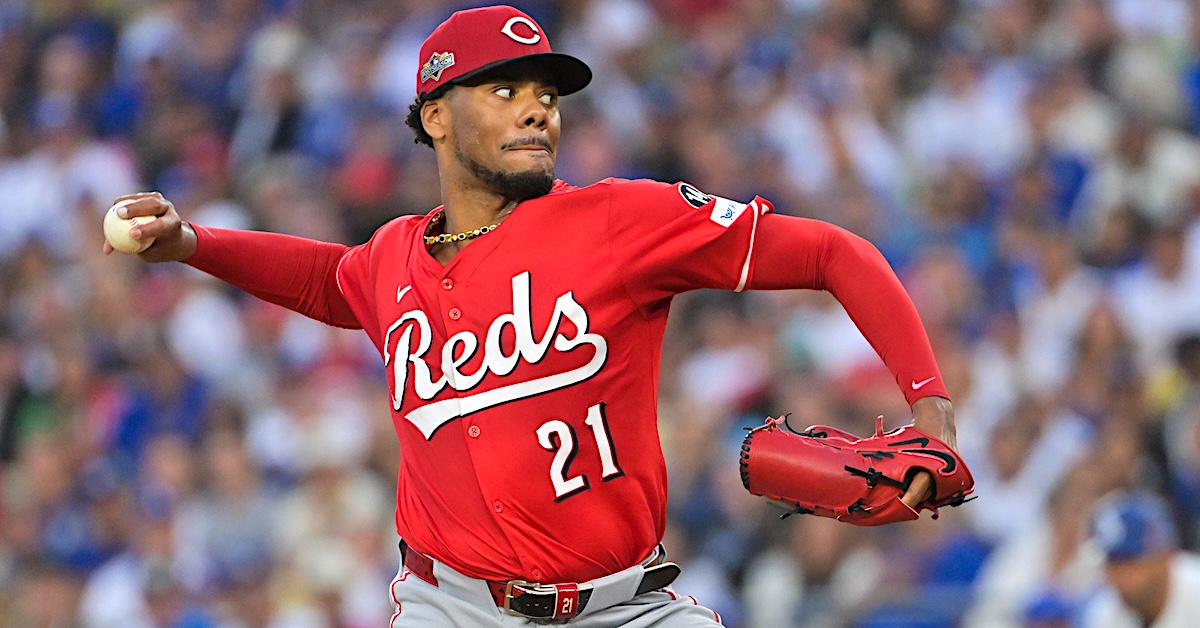
When fans woke up on the first morning of May, the Cincinnati Reds led the NL Central with a 20-11 record and were coming off their fifth consecutive series win. Since that point, the Reds have been the second-worst team in baseball with a 19-34 record, and those same fans awoke on the first morning of July with Cincinnati in last place by three games. There’s a bit of good news, however, as the team’s ace, Hunter Greene, will finally make his 2026 MLB debut in Saturday’s holiday game against the Baltimore Orioles. The return of Greene couldn’t come sooner, but is it a case of too little, too late for the reeling Reds?
A lot was expected of Greene coming into the 2026 season. The second overall pick in the 2017 draft out of Notre Dame High School in Sherman Oaks, California, Greene was a long time coming. At that point, he’d already been featured on the cover of Sports Illustrated, in a story by Lee Jenkins, touting him as “the star baseball needs.” His career came close to being derailed by two missed seasons in 2019 and 2020 due to Tommy John surgery, with an assist from COVID to keep him from a 2020 return. Greene’s stuff remained intact after the involuntary time off, and he finally reached the majors in 2022. The 2024 season was his true coming-out party. He posted a 2.75 ERA and a 3.47 FIP in 150 1/3 innings, good enough to rank 10th in the NL with 3.7 WAR. Greene slashed off a walk per nine in 2025, and likely would have received some Cy Young votes if not for two stints on the injured list with a groin injury.
While last year was marred by injury, it wasn’t an arm ailment, and the Reds hoped to get a full, healthy year out of Greene this time around. They needed it, too. Cincinnati was near the bottom of the league in team wRC+ in both 2024 and 2025, and the team hasn’t had a wRC+ of 100 or better since 2010. With the offense expected to be lousy, the Reds likely had to get a lot from their pitching staff in order to be playoff relevant this year. Naturally, that outcome would probably require their best pitcher. But after a single appearance in the spring, Greene had surgery to remove bone chips from his elbow. Now, after spending three months of the season on the shelf, Greene is back. Read the rest of this entry »
Dan Shulman was featured here in Sunday Notes on June 21, the topic being broadcast traits he shares with his son Ben, who calls Toronto Blue Jays games on radio. Today we’ll hear from the TV play-by-play voice of “Canada’s Team” on non-familial matters, primarily how a club’s fortunes influence tone in the booth. The elder Shulman has been behind the mic in both good times and bad, but does the number of wins and losses — be they over a multi-week stretch or a much longer span — actually matter in terms of a broadcaster’s style?
Shulman addressed that subject, and more, on a recent visit to Fenway Park.
———
David Laurila: How well a team is doing impacts the mood of a fanbase. To what extent does it — or should it — influence how the games are called?
Dan Shulman: “I think every broadcaster has their own internal balance. Some sway more positive. Some sway more neutral or objective. My job is to keep people interested in watching the team, whether they’re playing well or they’re not playing well, but you certainly can’t have entirely the same tone when the team is having a bad year, as opposed to when they’re having a good year. In 2024, the Blue Jays finished last. In 2025, they made it to the World Series. The tone is very different.
“You do always try to find some positives. In 2024, after the deadline, they traded off a bunch of guys and had some younger players coming up who did pretty well and were interesting. You focus on that a little bit. But again, the overall tone is different. You can’t sugarcoat everything. You have to be pretty honest with the viewers. At the same time, you can’t go on the air and say, ‘This is bad; none of these players belong here.’ That’s not how the job is done.”
Your role as Software Engineer:
You will design, develop, and maintain our internal web applications and data pipelines to support a wide range of Baseball Operations departments (including Front Office, Scouting, Player Development, and Major League Operations), with the ultimate goal of building a winning team on the field. This position is located onsite in San Diego, CA.
All the responsibilities we will trust you with:
Design, build, code review, and deploy new features to our internal web application
Develop creative solutions for visualizing baseball information to our end users
Construct and maintain data pipelines to ingest information from external baseball vendors into our internal systems
Transform data in meaningful ways to ensure it is reliable, understandable, and easily accessible for developers and analysts
Develop innovative solutions for optimizing these applications and processes to improve performance, reliability, and scalability
Collaborate with other software and data engineers, analysts, and Baseball Operations staff to understand their workflows and build software solutions that support them
Your areas of knowledge and expertise that matter most:
Proficient computer skills including experience with MS Office products such as Word, Excel, Outlook, etc., and general knowledge of basic office equipment including copier, laser printer, telephone, and computer
Possess strong communication skills, both written and verbal, and effectively work well with others in a collaborative, respectful manner. Able to communicate effectively with non-technical users to translate requirements into technical solutions
Strong problem-solving skills with the ability to debug complex software issues
Exceptional time management and organizational skills with capacity to handle high volumes of detailed work, multi-task and manage projects on strict deadlines
Maintain professional demeanor with a high degree of discretion, integrity, and accountability
You will be required to meet the following:
Must be at least 18 years of age by the start of employment
4-year Bachelor’s Degree, or education equivalent, preferably in Computer Science or closely related field, is preferred
Able to work flexible hours including evenings, weekends, holidays and extended hours as dictated by the baseball calendar
Previous experience designing and building web applications, databases, and data warehouses
Passion for baseball and understanding of baseball statistics and analytics
Solid understanding of programming fundamentals and experience with one or more coding languages (such as Python or JavaScript)
Strong understanding and use of front-end web technologies (HTML, CSS)
Proven experience with modern database technologies and proficiency writing SQL
Previous experience with version control systems like Git
Fluently bilingual in another language popular among baseball players, such as Spanish, Japanese, or Korean a plus
Proficiency in Python, particularly for backend web development and data manipulation preferred
Knowledge of web development frameworks like Django or Flask, and JavaScript frameworks like Angular, React, or Vue a plus
Prior experience with AWS cloud services like Redshift, Glue, RDS, EC2, ECS, and Lambda (or Azure/GCP equivalents) preferred
Familiarity with orchestration tools (Dagster, Airflow), dbt, and Apache Spark a plus
Minimum physical requirements: able to travel to and gain access to various areas of the ballpark for prolonged periods of time during games and events; able to lift and transport up to 25 pounds
As a condition of employment, you must successfully complete all post-offer, pre-employment requirements, including but not limited to a background check
Salary and additional compensation:
Per the California pay transparency law, the base salary range for this full-time position is $100,000 to $125,000. As a candidate for this position, your salary and related elements of compensation will be contingent upon your work experience, education, job-related skills and any other factors the San Diego Padres considers relevant to the hiring decision for this position.
In addition to the base salary, the Padres believe in providing a very competitive and generous compensation and benefits package for its employees. Benefits include, but are not limited to: Medical, Dental, Vision, 401(k) with employer match + automatic company Safe Harbor contribution, Basic Life Insurance (with option to purchase Supplemental Life Insurance), Pet Insurance, generous paid time off (PTO) and holiday program, paid employee parking, onsite barista service, employer provided game tickets to home games, onsite experiences, ballpark discounts on food and retail, work from home Fridays (during the off-season and when team is on the road), smart casual dress code and so much more! All benefits are subject to eligibility requirements and the terms of official plan documents which may be modified or amended at any given time.
The San Diego Padres are an Equal Opportunity Employer.
San Diego Padres Commitment:
The San Diego Padres are committed to creating a diverse and inclusive environment for our employees. We welcome applicants from all backgrounds and encourage those who may not meet every qualification but are passionate about our mission to apply. Skills are transferable, and enthusiasm for our work is highly valued.
Ben Lindbergh and Meg Rowley banter about the firing of Perry Minasian and the Angels’ outlook under John Mozeliak, Molly Jolly, and Arte Moreno, how MLB is using official channels to publicly promote its position in labor bargaining, whether the Mets’ disappointing season will influence other teams’ approaches to roster construction, the popularity (or lack thereof) of Josh Naylor, Jacob Misiorowski and the imprecise nature of pitch-speed records, and the delightful debut of the Diamondbacks’ Mitch Bratt, plus a postscript about MLB’s ball-drag statement.
While he’s never been a true liability on the infield, Max Muncy has generally been a player whose defensive contributions took a back seat to his offense. The Dodgers have long counted on Muncy’s combination of power and plate discipline to outweigh his shortcomings in the field while bouncing him from first base to second to third depending on their roster’s current needs. That handling has paid off handsomely, as he’s been a vital contributor to four pennant winners and three World Series champions since being plucked off the scrap heap in April 2017. This year, however, Muncy has really flashed the leather at third base, showing the best range of his career. He leads all third basemen in Statcast’s Fielding Run Value, while tying for second in Defensive Runs Saved.
According to Statcast, Muncy was 11 runs below average at third base in 3,817 innings from 2018–25, roughly the equivalent of four runs below average per full season of play; he was four below average by that measure in just 801.1 innings last year. This year, he’s already six runs above average in 621 innings. According to Statcast’s Outs Above Average, he’s gone from being the majors’ worst qualifier on plays coming in (-9) to tying for second-best (4). DRS has generally been more charitable in its assessment of his defense; he was 16 runs above average at third from 2018–25, and is eight above average this season.





 Sponsor Us on Patreon
 Give a Gift Subscription
 Effectively Wild Subreddit
 Effectively Wild Wiki
 Apple Podcasts Feed
 Spotify Feed
 YouTube Playlist
 Facebook Group
 Bluesky Account
 Twitter Account
 Get Our Merch!