Frank Bowen IV/The Enquirer/USA TODAY NETWORK via Imagn Images
I was going to start this piece by acknowledging that a month ago, it would’ve been logical to write the Cincinnati Reds off. Then I remembered something: I actually did write the Reds off. From FanGraphs Dot Com, on August 29: “Unless the Reds Do Something Wild, the NL Playoff Race Is Over.”
Well, the Reds did something wild. As a rule, I try to caveat my predictions; rather than saying something absolutely will or won’t happen, I’ll use a frame like “This is extremely unlikely to happen; we’ll write about it if and when it does.” Well, from August 29 to September 22, Cincinnati went from playoff odds in the low single digits to a virtual coin flip:
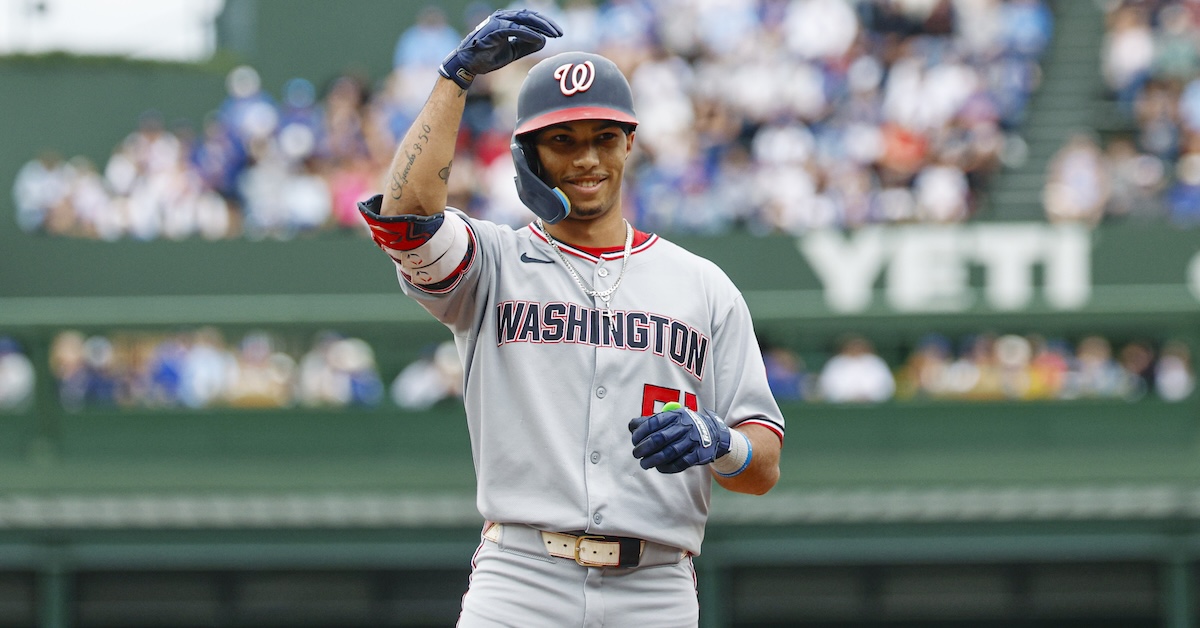
The Nationals will remember 2025 as a gap year, if they’re lucky. The 2023 and 2024 teams, invigorated by many of the prospects acquired in the Juan Soto trade, each won 71 games, dragging Washington out of the bottom-of-table ignominy that it had occupied since winning the World Series in 2019 and then blowing up the roster. This year’s squad is going to finish with a win total in the 60s and some developmental hiccups, a step backward from the recent past. But lost in the broadly disappointing year is one bright shining beacon: Daylen Lile might just be a keeper.
Lile, a high school draftee in 2021, missed all of 2022 rehabbing from Tommy John surgery, then spent the next two years methodically climbing through the minor league ranks. He started 2025 hot, with a .337/.383/.509 line in his first 40 games in the minors, and got his first taste of the majors when Jacob Young briefly hit the IL. Lile struggled during that first stint but landed in the majors for good a few weeks later when the Nats overhauled their bench. By the All-Star break, he’d carved out a role as a rotational right fielder.
That’s the boring part of this article. The exciting part? As Lile settled into big league life, opportunity beckoned. Young scuffled. Alex Call got traded. Dylan Crews was still out with injury. Lile? He just kept hitting. By August, he was locked in as a starter, and why not? Since the break, he’s hitting a sensational .323/.371/.552 for a 153 wRC+, and turning heads with his aggressive approach and hair-on-fire baserunning. Move over, other baby Nats – there’s a new top youngster in town.
Lile’s game is built around a sensational feel to hit. He regularly ran gaudy contact rates in the minor leagues, and his zone contact rate in the majors is above 90%, squarely in the upper echelon of the league. Like many hitters who make a ton of contact, Lile likes to swing. Unlike those peers, though, he’s done a good job of avoiding the over-chase downward spiral that traps so many singles hitters into lunging at sliders off the plate. Read the rest of this entry »
Ben Lindbergh and Meg Rowley banter about the standings and stakes of an unexpectedly wild last week of the regular season, whether there’s such as a thing as a playoff team that can’t make a deep run, why Cal Raleigh is the player of the year regardless of whether he wins MVP, whether it still makes sense to say that fan-favorite players will never have to buy a meal/drink in their team’s city, the unique celebrations of Pirates pitcher Dauri Moreta, the official arrival of the ABS challenge system, the Marlins calling pitches from the dugout, the extent to which coaches should influence games, and Mike Trout’s barehand catch with a fan.
Charles LeClaire, Mark J. Rebilas, Brad Penner-Imagn Images
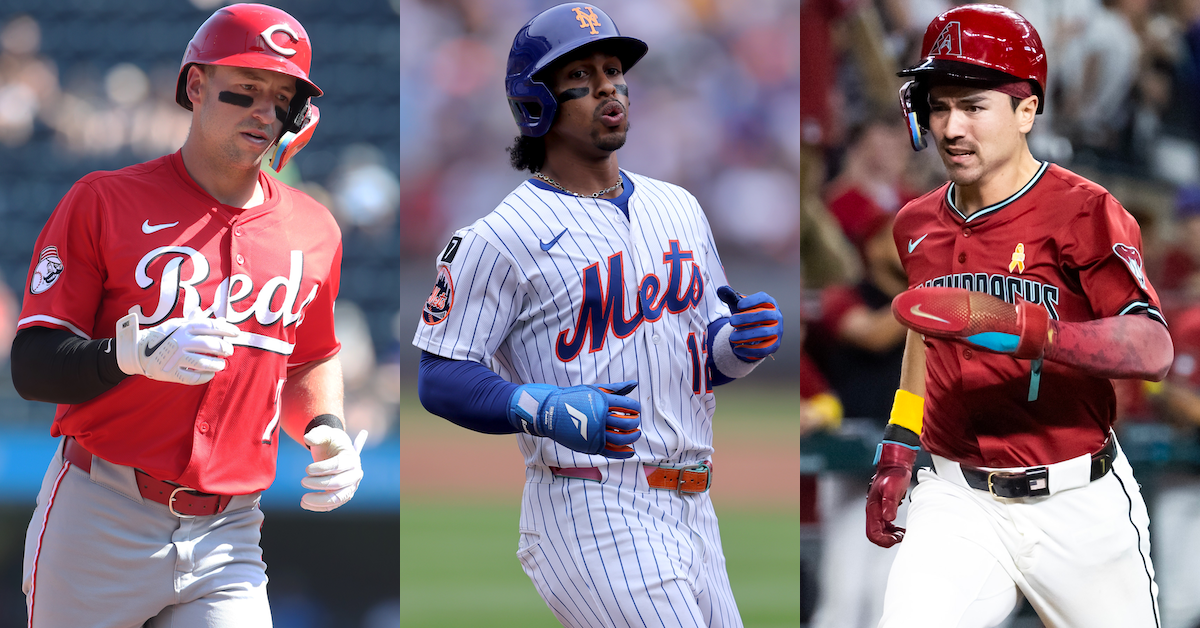
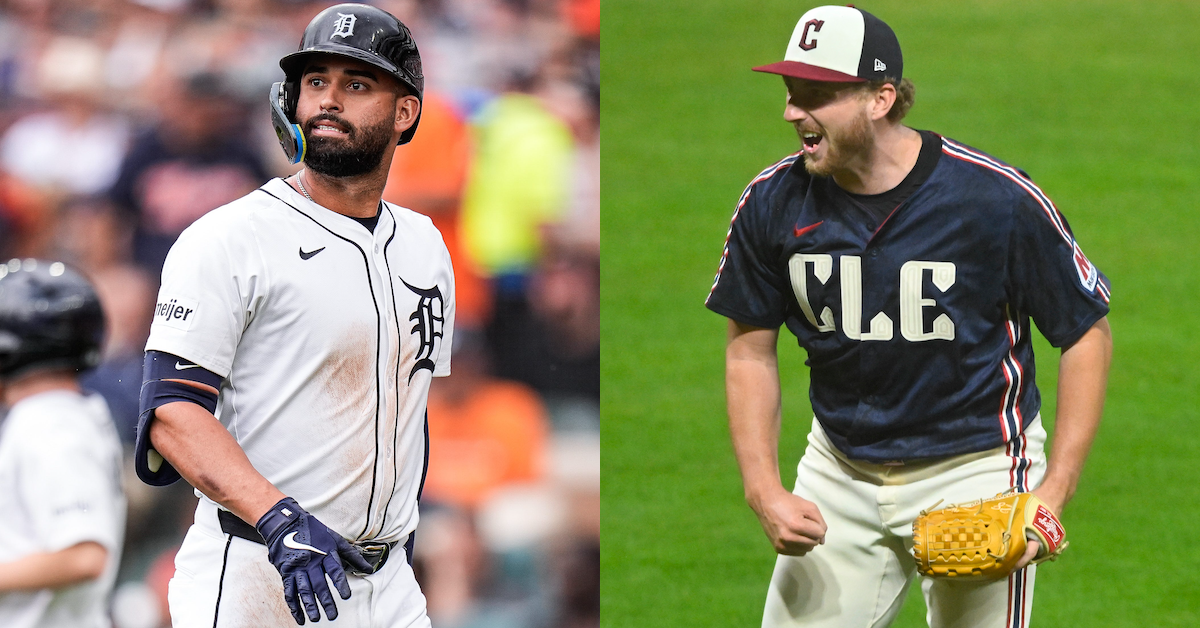
Last year, after a trade deadline sell-off, the Tigers snagged a Wild Card spot thanks to the combination of a late surge and a gruesome collapse by the Twins. This year, it’s the Tigers who are in danger of fumbling away a playoff berth, as they’ve lost 11 out of 15 since September 3, while the Guardians have won 15 out of 18. Meanwhile, the Mets have lost 12 out of 19 this month, slipping from the third NL Wild Card spot to being on the outside looking in due to the tiebreaker with the Reds.
Particularly with that tiebreaker looming so large, with six days to go in the regular season, it’s time for another look at what’s at stake. This used to be Team Entropy territory, but alas in the 2022 Collective Bargaining Agreement, Major League Baseball and the players’ union traded the potential excitement and scheduling mayhem created by on-field tiebreakers and sudden-death Wild Card games in exchange for a larger inventory of playoff games. The 12-team, two-bye format was designed to reward the top two teams in each league by allowing them to bypass the possibility of being eliminated in a best-of-three series. Those bye teams are just 6-6 under the new format, but across a larger sample going back to 1981, research by Dan Szymborski, freshly updated for this article, shows that in matchups where with one playoff team had a layoff of four or more days while its opponent had two or fewer days off, the team with more rest went 27-13 in its next game. It’s an advantage.
Anyway, as we head into the season’s final days, here’s a look at the various scenarios still in play when it comes to playoff seeding, and how the tiebreaker rules could determine who plays on into October and who goes home. Read the rest of this entry »
I started with every defensive season in which someone played 800 innings at a position in consecutive seasons. I treated corner outfield positions as different positions here, just to keep this as clean and simple as possible. Statcast defense is still a relatively new thing, so we have only 583 two-year runs for individual players. Not enough to break it down further by age or position or component in a meaningful manner, but enough to look at the bottomline numbers. When we look at three-year runs, we drop down to 277 individual players. Thanks 2020!
Of the players who had 800 innings at the same position in three consecutive seasons, here are the 30 largest gainers from the first year to the second. I used FRV/1200 instead of raw FRV.
Nearly two-thirds of the biggest improvers had negative FRV numbers the first season, and averaged a 10.8-run improvement in the second season. While FRV is obviously a volatile number, these players successfully retained a large portion of their one-year gains in the third season, averaging a 6.4-run improvement, with only five players going back into negative territory.
Turner’s 2024-2025 improvement in FRV/1200 is 11.7 runs, which would rank him ninth on this list, and the second-largest improvement among shortstops, behind Tim Anderson from 2017-2018. Turner doesn’t feature here because this is specifically for three-year runs, and the 2026 season hasn’t happened yet. His current Year 1-to-Year 2 gain for 2023-2024 is 4.5 runs — from -8.0 to -3.5 — and therefore not enough to make the top 30. It’s worth noting, though, that ZiPS projects him to be worth about 4.0 FRV/1200 in 2026, meaning he’d maintain about half his improvement from last year to this season.
The story here is similar. The 30 biggest decliners averaged an 11.7-run slide from Year 1 to Year 2. All but two of the 30 were initially in positive territory, and only two players (Trevor Story and Evan Longoria) rebounded to positive territory in Year 3. Compared to the change of -11.7 runs in the first two seasons, Year 3 was still at -7.9 runs below the first year. So again, the biggest declines generally still displayed significant deterioration of their defensive performances.
Despite my sample size misgivings, I also look at the stickiness by age or position. Unfortunately, the results weren’t terribly interesting; the sample sizes were simply too small to draw meaningful conclusions from this part of the exercise.
So, what does this mean? While you shouldn’t take the most recent FRV of a player as some magical this-is-their-true-ability number, large changes in performance are very meaningful going forward. That’s good news for Turner and Phillies fans.
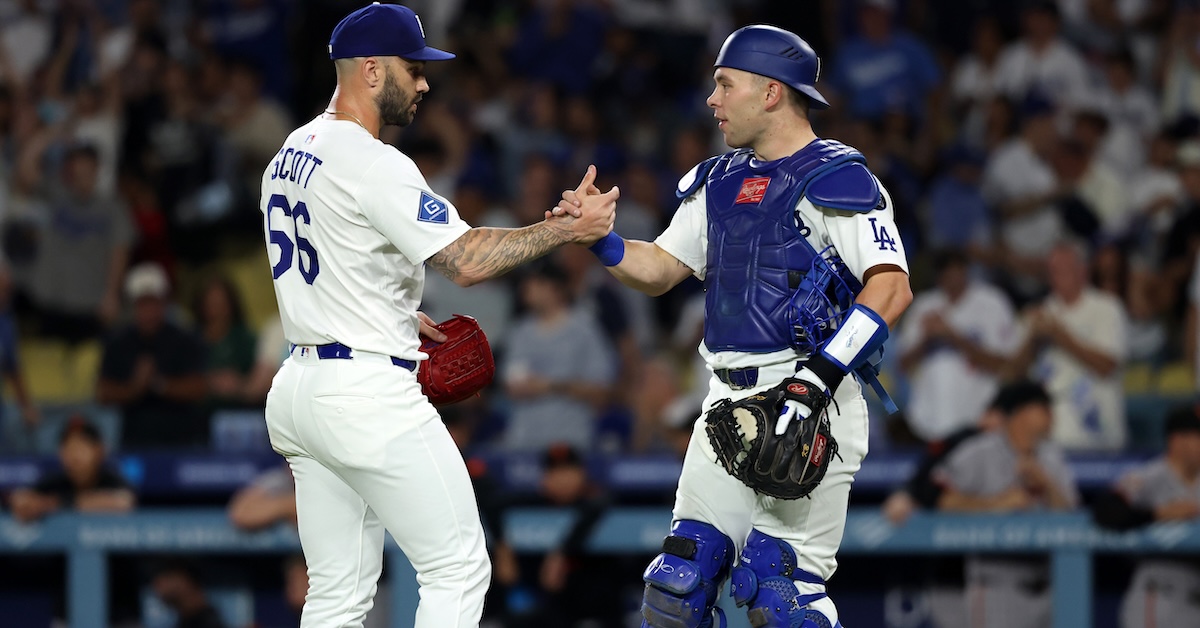
This June 25, the Dodgers and Tigers both played their 81st game of the season. Both teams finished the day 50-31, sharing the best winning percentage in baseball at .617. The Tigers got there with a slightly better run differential, though; their Pythagorean winning percentage was a cool .608, while the Dodgers checked in at .595. Pythagorean record is implied by runs scored and allowed, and broadly regarded as a more stable measure of talent than simple wins and losses. Since that day, though, the Tigers have gone 35-40 (.467 with a .483 Pythag), while the Dodgers have gone 38-37 (.507 with a .556 Pythag).
I’m bringing this up – last data project for a while, incidentally, I just had a bunch of things in my queue and couldn’t resist tackling them all – because “how good is that team, anyway?” has been a hot topic this year given the various surprising teams who have, at times, taken up the mantel of “hottest in baseball.” Versions of this question – “This team is doing well/poorly now, what does that mean for next month?” – have been both interesting and top of mind in 2025. The Tigers and Brewers played so well for so long that they each crashed the best-team-in-baseball debate. The Mets did their hot-and-cold thing. The Dodgers have endured multiple fallow stretches. Sometimes, teams felt like they were getting very lucky or unlucky relative to their run differential. But what does any of that even mean? Read the rest of this entry »
Matt Blewett, Junfu Han-USA TODAY NETWORK via Imagn Images, Rick Osentoski-Imagn Images
The Detroit Tigers are in a dogfight with just six games remaining on the schedule. Not only is their lead in the American League Central down to one game over the Cleveland Guardians — their opponent the next three nights — a Wild Card berth is no sure thing if they don’t hang on to win the division. As my colleague Kiri Oler pointed out just yesterday, while their chances are promising on paper, “the error bars on those odds are huge.” In order to stave off what could reasonably be deemed a collapse, a Tigers team that has lost nine out of their last 10 is badly in need of wins down the stretch.
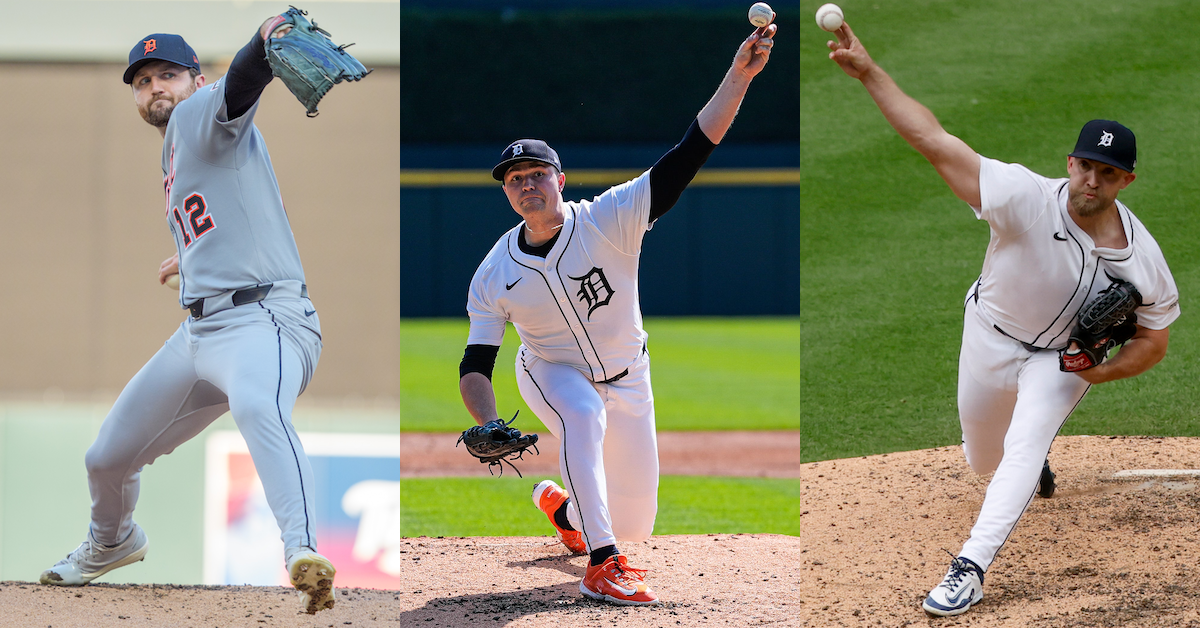
A trio of pitchers who will help determine Detroit’s fate were the subject of a recent conversation I had with Dan Hubbs. Now the bullpen coach for the Athletics, Hubbs was the Tigers’ director of pitching development in 2019 and 2020, a time in which Tarik Skubal, Casey Mize, and Will Vest were all on the doorstep of the majors. Skubal (who made his major league debut in 2020) is slated to start tonight, while Mize (also 2020) will be on the mound over the weekend, and Vest (2021) has a team-leading 21 saves.
Heading into the 2020 season, Skubal was no. 4 on our Tigers prospect rankings with a 50 FV, Mize was ranked no. 2 with a 60 FV, and Vest was no. 36 with a 35+ FV. How did Hubbs view them then, and what does he see from them — albeit from a distance — five years later? That was what I wanted to know.
———
Hubbs on Tarik Skubal:
“With Tarik, it was getting him to command the arm side a little bit more. He was always kind of cross body and ran balls in on guys, and he would pitch up. He’s always had the mindset. I mean, he’s an animal on the mound, and always attacking the strike zone. So, one of the biggest things now is that he commands the arm side. But what has really changed is that he never had the changeup that he has now. That’s taken him to a whole different stratosphere. He throws 100 [mph], then he has this changeup that he can throw against [righties or lefties], interchangeably with his fastball. Read the rest of this entry »
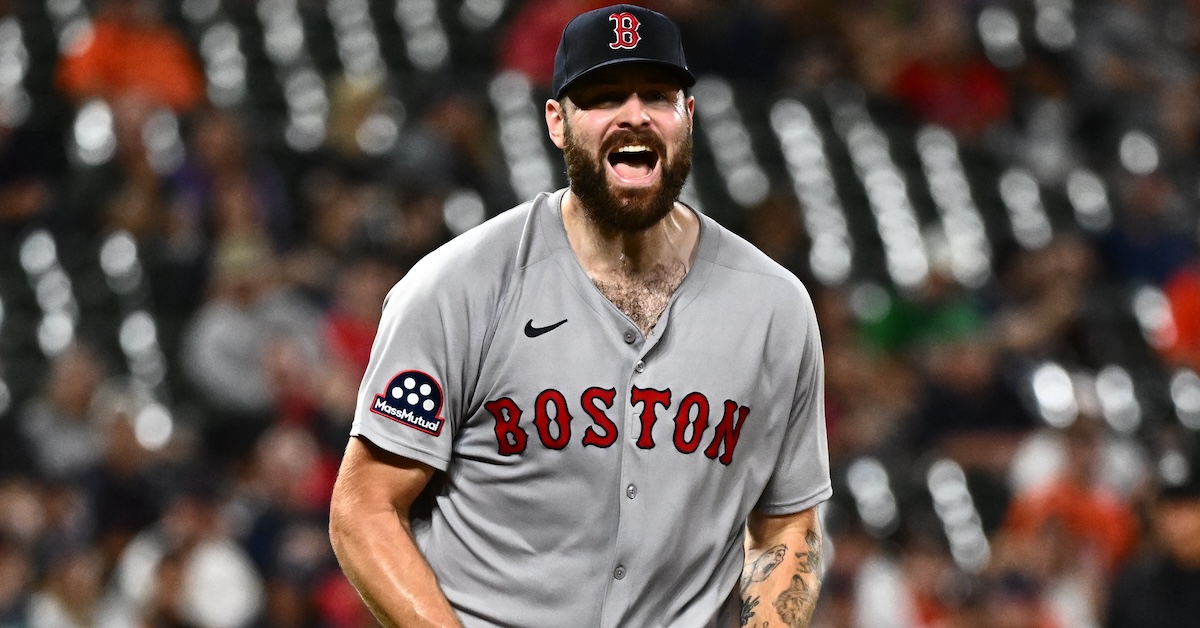
The Boston Red Sox enter the final week of the regular season with a one-game cushion in the AL Wild Card race, which doesn’t sound like a lot, but it is. With Boston and Detroit at 85-71 and Cleveland and Houston at 84-72, with the AL Central and two Wild Card spots on the line, this is a four-goes-into-three situation. Factor in that the Astros have been pretty anemic of late, and the Tigers — who actually end the season with a three-game set at Fenway — look like they couldn’t find their own shoes with a flashlight and a map right now, and you have to like Boston’s chances.
Our playoff odds give the Sox an 89.9% chance of making the postseason. That’s not what I’d consider a lock, but it’s pretty close. Close enough to wonder about what their playoff rotation is going to look like. Read the rest of this entry »
The final week of the regular season is upon us, and the playoff picture in both leagues is far from settled. It should be a fun week of baseball as everything sorts itself out before the postseason begins.
Last year, we revamped our power rankings using a modified Elo rating system. If you’re familiar with chess rankings or FiveThirtyEight’s defunct sports section, you’ll know that Elo is an elegant solution that measures teams’ relative strength and is very reactive to recent performance. To avoid overweighting recent results during the season, we weigh each team’s raw Elo rank using our coin flip playoff odds (specifically, we regress the playoff odds by 50% and weigh those against the raw Elo ranking, increasing in weight as the season progresses to a maximum of 25%). The weighted Elo ranks are then displayed as “Power Score” in the tables below. As the best and worst teams sort themselves out throughout the season, they’ll filter to the top and bottom of the rankings, while the exercise will remain reactive to hot streaks or cold snaps.
First up are the full rankings, presented in a sortable table. Below that, I’ve grouped the teams into tiers with comments on a handful of clubs. You’ll notice that the official ordinal rankings don’t always match the tiers — there are times where I take editorial liberties when grouping teams together — but generally, the ordering is consistent. One thing to note: The playoff odds listed in the tables below are our standard Depth Charts odds, not the coin flip odds that are used in the ranking formula. Read the rest of this entry »
Junfu Han-USA TODAY NETWORK via Imagn Images; David Richard-Imagn Images
On July 8, the Tigers had 59 wins, while the Guardians had just 42. With one week remaining in the regular season, the Tigers have 85 wins and the Guardians have 84. A single game separates the two teams in the race for the AL Central title, a division that seemed all but sewn up for the Tigers as recently as September 13, when Detroit’s odds to win the Central sat at 98.2%, putting Cleveland’s odds at 1.8%. As of this writing, the Tigers are still favorites to win it, at 62.7%, but given that three of Detroit’s last six games are against Cleveland, the error bars on those odds are huge.
That wild swing in divisional odds happened over the course of the last week, but such a dramatic swing could only occur because in the two months leading up to it, two teams that had been heading in opposite directions both gradually rerouted and wound up on a collision course. Through April 25, both teams were winning games at roughly a .600 clip, but their fates diverged from there. By July 8, the gap in winning percentage had widened to 167 points, which translated to an additional 17 wins for the Tigers compared to the Guardians. Ever since July 8, that divide has slowly evaporated, and now the two teams own nearly identical records. Read the rest of this entry »




 Sponsor Us on Patreon
 Give a Gift Subscription
 Effectively Wild Subreddit
 Effectively Wild Wiki
 Apple Podcasts Feed
 Spotify Feed
 YouTube Playlist
 Facebook Group
 Bluesky Account
 Twitter Account
 Get Our Merch!