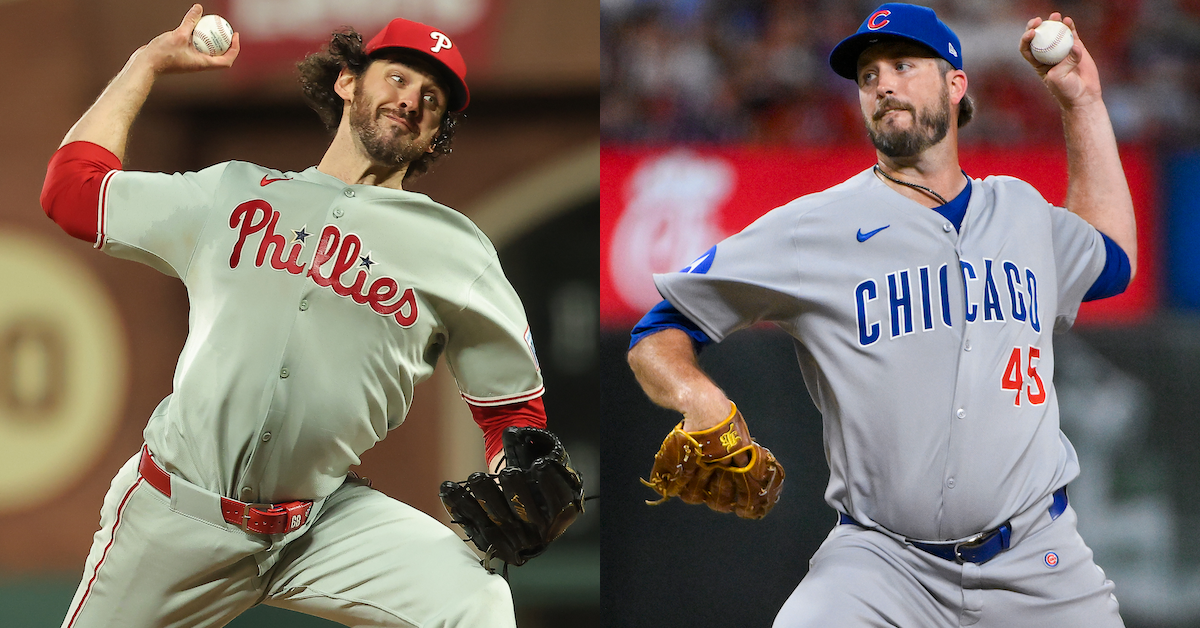
Bob Dylan can’t get no relief, but the Los Angeles Angels don’t have that problem. They just signed two veteran pitchers, Drew Pomeranz and Jordan Romano, to one-year deals worth $4 million and $2 million, respectively.
I’m starting to get worried that the Angels are becoming orthodox. For most of this decade, there have been two teams — the Angels and Rockies — that you could count on to be truly iconoclastic. The other 28 clubs differed from each other mostly due to flavor of ownership: How many resources their boss was willing to commit to the cause, and what time pressure, if any, was being placed on the executives to win. (It’s probably more like 27 other teams now, with the Buster Posey Era underway in San Francisco, though that’s another story.)
But for the most part, the way you run a baseball team is you hire some business school goon, give him a budget and a list of goals, and let him cook. He then goes out and hires as many quants and biomechanics experts as he can, and let the chips fall where they may. Read the rest of this entry »
If you’re a regular FanGraphs reader, then you know that this week, the week after the Winter Meetings, is a week for roundups. The Rangers make a couple moves on a Friday? I’ll bundle them into one snug article. A passel of lefties comes off the board on a Tuesday? Michael Rosen will arrange them into a tidy bouquet. A couple teams talk themselves into believing that they could be the ones to figure out Josh Bell and Adolis García? Michael Baumann will slam his head into the wall repeatedly for our amusement. That’s how it goes.
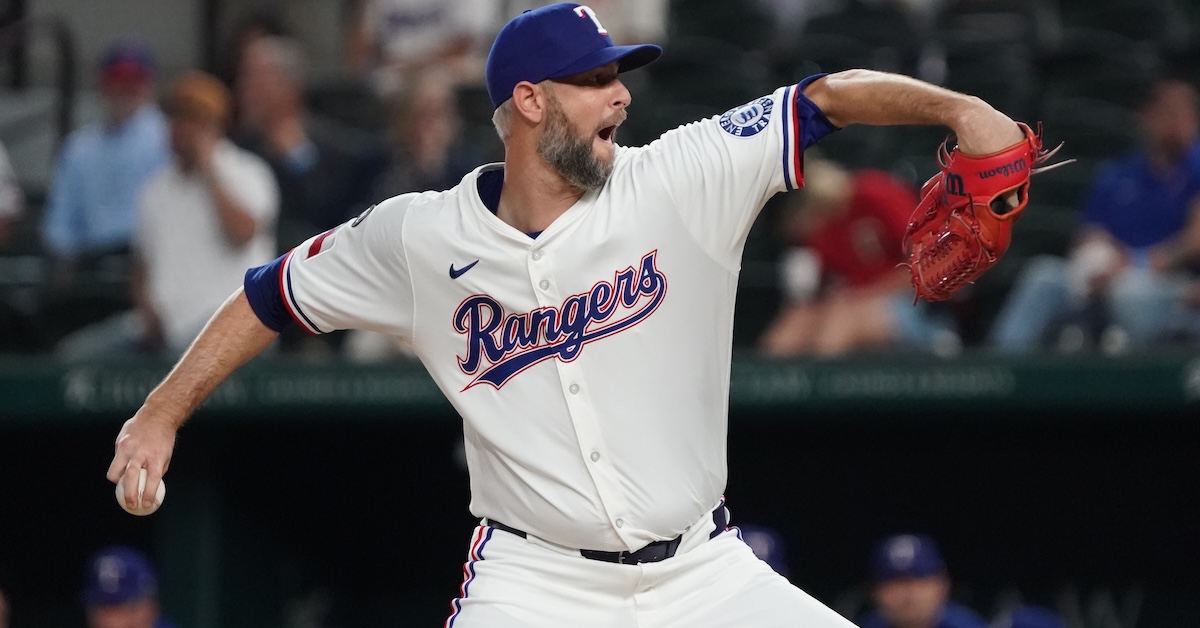
On Wednesday, Chris Martin, the big, 39-year-old middle reliever from Texas, signed up for one last rodeo with his hometown Rangers. As with many minor deals, no one has reported how much Martin will be paid for the 2026 season. The news seemed all but destined to occupy one quarter of a reliever roundup, but I’d like to give Martin single billing here, because I don’t think we’ve done a good enough job of celebrating just how good he’s been. Let’s start at the beginning. Read the rest of this entry »
The following article is part of Jay Jaffe’s ongoing look at the candidates on the BBWAA 2026 Hall of Fame ballot. For a detailed introduction to this year’s ballot, and other candidates in the series, use the tool above; an introduction to JAWS can be found here. For a tentative schedule and a chance to fill out a Hall of Fame ballot for our crowdsourcing project, see here. All WAR figures refer to the Baseball Reference version unless otherwise indicated.
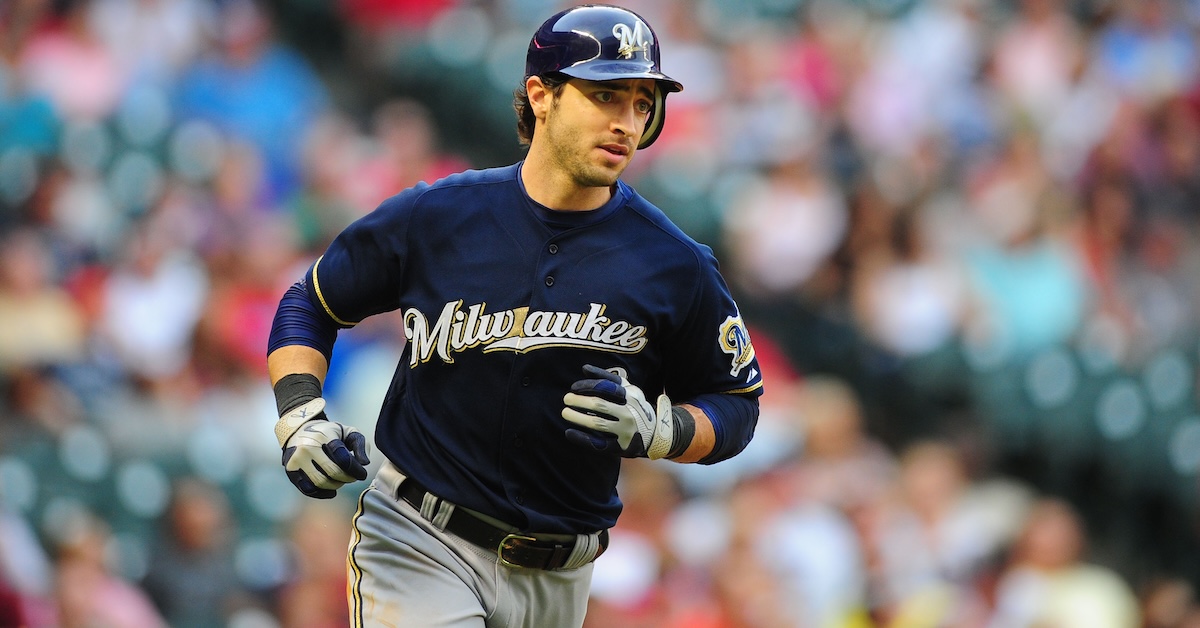
Along with Prince Fielder, who debuted in mid-2005 and joined the lineup as a regular the following season, Ryan Braun was a transformative figure in the history of the Brewers. Including its one-off season as the Seattle Pilots, the franchise made the playoffs just twice in its first 38 campaigns, back in 1981 and ’82. With Braun — the club’s first-round pick in 2005 — bopping 34 homers in just 113 games en route to NL Rookie of the Year honors in ’07, the Brewers finished above .500 for the first time in 15 years, and the next year, with Braun moving from third base (where he was terrible) to left field and making his first of six All-Star teams, they made the playoffs as the National League Wild Card. They would go on to qualify for the playoffs four more times during Braun’s career, with division titles and trips to the National League Championship Series in 2011 and ’18, though they fell just short of trips to the World Series.
Braun won NL MVP honors in 2011 and went on a memorable October run before the Brewers were eliminated, then led the league in home runs while finishing as runner-up in the voting the following year. He accumulated at least 30 homers and 30 steals in both seasons, but by that point, the legitimacy of those accomplishments was in question. In December 2011, less than a month after he beat out Matt Kemp for MVP, Major League Baseball suspended him for 50 games for testing positive for elevated levels of testosterone, later discovered to be synthetic; the sample had been taken after the Brewers’ first postseason game. With a spokesman citing “highly unusual circumstances,” “Ryan’s complete innocence,” “impeccable character and no previous history” of violations, Braun challenged the suspension. In February 2012, an arbitration panel overturned it due to a technicality involving the delay between when he submitted his sample and when the collector, a man named Dino Laurenzi Jr., sent it to the lab.
Both that reversal and Braun’s following actions — smearing Laurenzi both publicly and privately, even alleging that the collector was anti-Semitic (Braun’s father is Jewish, and Braun publicly embraced his Jewish heritage) — are without parallel in MLB’s long steroid saga. What’s more, Braun’s indignation and proclamations of innocence turned out to be a total sham; in 2013, he was discovered to have received PEDs through the Biogenesis Clinic, and earned a 65-game suspension. Thereafter, he publicly apologized, made amends with Laurenzi, and did his best to rehabilitate his image and demonstrate solid citizenship by continuing his involvement in several charitable organizations; he even earned multiple nominations for the Roberto Clemente Award. While he continued to play a supporting role on some very good Brewers teams (and some not-so-good ones), age and injuries limited his availability and effectiveness. Read the rest of this entry »
Patrick Gorski, Darren Yamashita, Mark J. Rebilas-Imagn Images
At first, it was a trickle. A Gregory Soto here, a Hoby Milner there. On Tuesday, though, we were staring down a veritable deluge. In a single day, the low-to-mid-tier short-term left-handed pitching market got ransacked like a Ralph’s on the Wednesday before Thanksgiving. In rapid succession, three cromulent southpaws inked deals. First, it was Caleb Thielbar, returning to the Cubs on a one-year pact. Foster Griffin followed, lured back from Japan by a $5.5 million guarantee from the Nationals. Finally, Caleb Ferguson linked up with the Reds, also for a single year. (Later on Tuesday, Drew Pomeranz joined the party; he agreed to a one-year contract with the Angels, which be covered in a separate post.) Let’s assess each of these deals in the order in which they signed:
Caleb Thielbar
When Thielbar appeared on one of these roundups around this time last year, it was under sorrier circumstances. The weathered middle reliever had just dropped a stinker, walking 11.1% of hitters on his way to 47 1/3 innings of a 5.32 ERA. The Cubs handed him a “here’s your last chance” $2.75 million; given that Thielbar was heading into his age-38 season, another shoddy campaign would’ve likely marked the end of a surprisingly successful career for the former 18th rounder.
Instead, the wily veteran innovated his way out of a hole, adding a new pitch and delivering a vintage Thielbar performance. The terms of his deal have not yet been disclosed, but considering that many relievers this offseason have signed for more money than they were expected to get, Thielbar almost certainly received a healthy raise to keep playing ball for a living.
In 2025, his strikeout rate remained down a few points from his 30ish% peak, but Thielbar got his command back, in part due to his decision to replace a good chunk of his big old sweepers with a tighter, cutterish hard slider. The slutter (sorry) was a genius bridge between his three other pitches, which are all relatively easy to identify out-of-hand. By adding a pitch that he could conceivably tunnel with his four-seamer, curveball, and sweeper, he seems to have increased the effectiveness of his entire arsenal.
See all of those yellow dots on the pitch plot above? That pitch did not exist before this year. In 2024, Thielbar primarily attacked lefties with the sweeper, throwing it 55% of the time in same-handed matchups. A pitch with all that movement — 14 inches of horizontal movement on average — is hard to land for strikes. His new slider doesn’t have that sort of crazy break, and he had a much easier time throwing it in and around the zone.
And it wasn’t just a chase pitch to lefties. Thielbar also used the new slider as a soft-contact generator against right-handed batters, jamming them inside with respectable velo and glove-side break:
Otherwise, it was vintage Thielbar, slinging slow, high-ride fastballs and some of the prettiest curveballs in the sport. He handled righties and lefties alike, and will assume a similar role in the Chicago bullpen, navigating medium-high leverage situations, particularly when that leverage context coincides with a run of lefties.
Foster Griffin
Last we saw of Griffin stateside, it was 2022, and he was languishing in Quad-A limbo, making brief cameos with the Royals and Blue Jays before hopping on a bus back to Omaha or Buffalo. Back then, he was a fringy bullpen arm, leaning on a cutter with a movement profile that coincidentally resembled Thielbar’s new slider. On top of the cutter, Griffin featured a dead-zone four-seamer at 93 mph, a pretty standard curveball, and a changeup with some quality arm-side fade.
The uninspiring stuff and varied arsenal felt more befitting of a backend starter, and starting is exactly what Griffin took to with the Yomiuri Giants, where he pitched some excellent ball for three seasons. The final was his finest for the Tokyo-based club. He posted the third-best FIP (1.78) among NPB hurlers with at least 70 innings pitched, striking out a quarter of hitters and allowing just a single home run.
What changed? For that, I’ll hand it over to James Fegan, who wrote up a little blurb on Griffin for The Board:
The addition of a low-80s splitter is the profile-changing development since the last of Griffin’s eight career big league innings. Its raw action won’t knock you out of your chair, but it flirted with a 50% miss rate this past season because Griffin almost never leaves it in mistake locations. His steep approach angle makes the pitch nearly impossible to lift, allowing Griffin to allow fewer home runs (18) in over 300 innings in Japan than he gave up in his last full season in the PCL (20) in 2019. Even topping out at 93 mph now, this is still too much of a nibbling profile to project him beyond a multi-inning swingman role. But now that he can wield his splitter as an out pitch to either side, it’s easier to see Griffin carving out a Tyler Alexander-shaped niche at the end of a pitching staff.
The prospect team gave Griffin a 35+ FV grade, suggesting he is unlikely to do much more than hoover up innings for the Nationals. But if there’s a club in need of some innings-hoovering, it’s the Nats, who have a bunch of question marks on the staff after MacKenzie Gore, and that’s assuming they hang onto Gore, which, who knows.
Caleb Ferguson
The second left-handed Caleb in this roundup is 10 years younger than his predecessor. Once a whiff chaser with shaky command, Ferguson leaned hard into contact suppression in 2025, scaling back his four-seamer against same-handed hitters while boosting the sinker to nearly 50% usage. At times, this worked great. His strikeout rate dropped over eight percentage points, but the heavy combination of sinkers and cutters gave Ferguson some of the lowest barrel rates and exit velocities in the league.
Chasing weak contact as a relief pitcher can be a blessing and a curse. Attacking the zone with three fastballs keeps the walks down and the extra base hits to a minimum. But it also means a big chunk of balls in play, and one day the BABIP gods will rise with vengeance and rain misery upon your poor ERA. Unfortunately, this happened to Ferguson at a crucial juncture. Plucked from Midwestern obscurity in Pittsburgh and thrust into a playoff push in Seattle, he initially performed well before running into a spate of poor performances in late August and early September. In a tight postseason race, that was that — Ferguson didn’t get many leverage opportunities for the remainder of the season, and his brief playoff work went terribly. Brought in to close down a seven-run lead in the ninth inning of ALDS Game 3, Ferguson allowed three runs without recording an out, requiring Dan Wilson to throw Andrés Muñoz on a day that he could’ve secured some crucial rest. It cannot be great for a reliever to get shelled on a big stage in his final moments before hitting the free market.
For most of his Mariners tenure, Ferguson was treated like a member of the B team, deployed mostly in losing efforts. Will the Reds, themselves a recent playoff club, trust him to handle leads in close games? It’s sort of on the edge. RosterResource sees Ferguson as the fourth arm out of the pen, behind Emilio Pagán, Tony Santillan, and Graham Ashcraft. Astute readers will note that all three of those guys throw baseballs with their right arm, and so Ferguson will assume the mantle of Most Trusted Lefty, prying that loosely held title from Sam Moll’s fingertips.
Every year, FanGraphs (in this case, I am FanGraph) releases contract predictions for our top 50 free agents. We also run a contract crowdsourcing project for those players, and I have to say, the crowd is spectacularly good at this. Last year, for example, I looked through all of the various predictions across the internet and awarded the crowd the title of best overall prognosticator.
But honestly, the winner of that award was hard to determine because I didn’t have a great way to evaluate the various predictions. Why so difficult? Because not every deal ended up being for the length we all predicted. As an example, I predicted 12 years and $48 million per year for Juan Soto, while the crowd predicted 13 years and $45 million per year. Soto signed a deal that was for 15 years and $51 million per year. Who was closest to the mark? It’s not immediately clear. I did better on the AAV, but the crowd did better on the number of years. There’s no obvious determining factor to use when comparing the two. Even worse, the two are inversely correlated; more years generally means a lower AAV. The two predictions seem pretty similar to me, but I had to grade AAVs and total guarantees separately, and that just felt clunky and confusing.
After some time bouncing ideas off my friends and colleagues, and plenty of time in the FanGraphs Idea Generation Lab (not real, but man, it should be), I think I have a solution. It’s simple, really. Evaluating contract predictions would be much easier if the predictions and the actual contract were for the same length, so I made them all the same length. Read the rest of this entry »
For the 22nd consecutive season, the ZiPS projection system is unleashing a full set of prognostications. For more information on the ZiPS projections, please consult this year’s introduction, as well as MLB’s glossary entry. The team order is selected by lot, and the next team up is the Cleveland Guardians.
Batters
The 2025 Cleveland Guardians proved that necromancy is, in fact, possible, and despite looking dead by the All-Star break, they went on a monumental late-season tear to close a 12 1/2-game gap in the AL Central over the last five weeks of the season. While the season ended in dissatisfying fashion, with the Guardians dropping the Wild Card Series in three games to the Detroit Tigers, just getting to the playoffs in 2025 felt like they were playing with house money. The fun of Cleveland’s postseason run did hide some serious problems with the team, though, most notably an offense that scored fewer runs than every team except the Pirates and Rockies. The Guardians may have made their big September surge without Emmanuel Clase’s services, but the loss of their best reliever — for what is looking more and more likely to be forever — removes a key part of their core. Cleveland did win 88 games, but the team was outscored by its opponents on the year, and the context of this sentence ought to indicate to you, fair reader, whether run differential or actual wins has more predictive value.
ZiPS projects the Guardians to have a lot of the same strengths and weaknesses as the Twins in 2026. On offense, ZiPS sees both teams as having one hitter it really likes, with José Ramírez being the healthier star compared to Byron Buxton. Then, each team has a couple position players the system likes, with Steven Kwan and the catchers — OK, Bo Naylor — standing in as Cleveland’s version of Luke Keaschall and the Minnesota catchers. But just like with the Twins, once you get past the top guys, ZiPS sees a whole lotta mid going ’round in Cleveland. Kyle Manzardo’s uneven platoon splits keep his ceiling fairly low, so the Guardians could use a lefty smasher to pair with him to make first base a plus position. Second base is fine at the moment, and it should be even better than that if Travis Bazzana, the computer’s preference, pushes for the job sooner rather than later.
The projections look most problematic at center field and designated hitter. Lots of teams slum it at DH, so I can see the Guardians just rolling with [insert mediocre burly batter here] at the position, but there’s probably at least some chance that they’ll make an upgrade in center. Harrison Bader is probably the most interesting option available, at least of the players that the Guardians could theoretically afford; I’d be really surprised to see them want to shell out the cash needed to bring in Cody Bellinger. Perhaps a trade is more likely for Cleveland than signing either free agent.
Put it all together and the Guardians have a below-average offense with some real highlights. Yes, I still think Ramírez is one of the most underrated players of this generation, and I’m already planning my social media meltdowns for 10-15 years from now when I see Hall of Fame ballots with his box unchecked. ZiPS is projecting him for yet another 20/20 season with more than 4 WAR, and considering he’s gone 30/40 with more than 6 WAR in each of the past two seasons, it wouldn’t be surprising to him exceed even ZiPS’ expectations for his age-33 season.
Pitchers
ZiPS is much more confident about the state of the Guardians pitching staff than the lineup. Even if neither pitcher really fits the mold of a typical ace, ZiPS expects both Tanner Bibee and Gavin Williams to surpass 3 WAR based on our Depth Chart playing time. There aren’t any big names in this rotation after Bibee and Williams, but ZiPS sees Slade Cecconi, Logan Allen, and Parker Messick as quietly competent starters. ZiPS has had a silicon-crush on Joey Cantillo for a while now, and led by Austin Peterson, the team has pretty good depth in the form of unexciting pitchers with generally decent command. These are the types that Cleveland, like the A’s, has historically produced like clockwork. Luis Ortiz has a good projection as well, but like Clase, it looks like he won’t ever pitch again in the majors or affiliated ball; the good news is the rotation is deep enough to withstand his likely absence.
Last year, ZiPS was quite taken with the Cleveland bullpen, projecting a 5.9 Depth Chart WAR over the winter. That’s one of those fortune-readings that worked out, as the Guardians actually beat that, finishing the season with 6.6 WAR out of the pen. Crossing out Clase, Sam Hentges, and Nic Enright takes this unit down a notch, but the Guardians still project to have a solid group of relievers. A good bullpen can have Cade Smith as its best reliever, and Hunter Gaddis, Erik Sabrowski, and Tim Herrin make for a darn good trio of lieutenants. ZiPS sees Cantillo as being very good when used in relief, and while he’ll have to break out to get a lot of innings in the majors, there are so many good upside scenarios for Franco Aleman that the computer is far less annoyed than you may expect about his walk rate in Triple-A. The only prominent denizen on the bullpen depth chart that ZiPS is uneasy about is Peyton Pallette, a Rule 5 draftee last week.
All told, the Guardians will likely end up at 80-85 wins, which puts them a little bit behind the Royals and Tigers, but not so far back that it would be crazy to see Cleveland surpass them in the standings.
Ballpark graphic courtesy Eephus League. Depth charts constructed by way of those listed here. Size of player names is very roughly proportional to Depth Chart playing time. The final team projections may differ considerably from our Depth Chart playing time.
Players are listed with their most recent teams wherever possible. This includes players who are unsigned or have retired, players who will miss 2026 due to injury, and players who were released in 2025. So yes, if you see Joe Schmoe, who quit baseball back in August to form a Ambient Math-Rock Trip-Hop Yacht Metal band that only performs in abandoned malls, he’s still listed here intentionally. ZiPS is assuming a league with an ERA of 4.16.
Hitters are ranked by zWAR, which is to say, WAR values as calculated by me, Dan Szymborski, whose surname is spelled with a z. WAR values might differ slightly from those that appear in the full release of ZiPS. Finally, I will advise anyone against — and might karate chop anyone guilty of — merely adding up WAR totals on a depth chart to produce projected team WAR. It is important to remember that ZiPS is agnostic about playing time, and has no information about, for example, how quickly a team will call up a prospect or what veteran has fallen into disfavor.
As always, incorrect projections are either caused by misinformation, a non-pragmatic reality, or by the skillful sabotage of our friend and former editor. You can, however, still get mad at me on Twitter or on Bluesky. This last is, however, not an actual requirement.
The Pirates Why
The Pittsburgh Pirates are a storied franchise in Major League Baseball who are reinventing themselves on every level. Boldly and relentlessly pursuing excellence by:
purposefully developing a player and people-centered culture;
deeply connecting with our fans, partners, and colleagues;
passionately creating lifetime memories for generations of families and friends; and
meaningfully impacting our communities and the game of baseball.
At the Pirates, we believe in the power of a diverse workforce and strive to create an inclusive culture centered in Passion, Innovation, Respect, Accountability, Teamwork, Empathy, and Service.
Tech Lead – Baseball Systems
Job Summary
We are looking for a Tech Lead to guide the next evolution of our internal baseball decision-making platform. This web-based system equips players, coaches, analysts, and executives with the insights they need to make better, faster decisions. You’ll be combining bleeding edge ML research with the latest in baseball statistics. You’ll pair hands-on engineering with technical leadership: setting the bar for code quality, modern architectures, and DevOps practices while mentoring a high-performing team of software and data engineers.
Responsibilities Primary
Ensure every baseball systems feature is intuitive, reliable, and delivers measurable impact.
Design clean, scalable architectures and champion platform-wide standards that reflect the latest industry best practices.
Lead cloud-native engineering efforts, including containerization, Kubernetes orchestration, and infrastructure-as-code pipelines.
Partner with data scientists, analysts, software engineers, and front-office leaders to translate baseball strategy into resilient software and ML pipelines.
Model fast, high-quality execution—from building custom React components to tuning data services or ML workflows—and see initiatives through from concept to delivery.
Mentor engineers of varying experience levels, promoting knowledge sharing, thoughtful code review, and continuous improvement.
Champion an Agile product development process that balances experimentation, user feedback, and operational excellence.
Keep a relentless focus on features that strengthen the organization’s competitive edge.
Qualifications Required:
Authorized to work lawfully in the United States.
Bachelor’s degree in Computer Science, Information Systems, or a related field (or equivalent experience).
Strong communication skills—you translate complex technical concepts for non-technical partners and build trust across departments.
Familiarity with building and operating ML pipelines or advanced analytics services alongside traditional application development.
Track record of shipping full-stack web applications in data-driven, end-user centric environments.
Proven success leading engineering teams, designing technical implementations, and mentoring others to deliver their best work.
Hands-on experience with Kubernetes, Docker, container orchestration, and modern DevOps practices (CI/CD, infrastructure as code).
Expert-level experience with React, Node.js, and Python, plus comfort moving across the stack—from front-end polish to backend services and data workflows.
Desired:
Hands on experience in Statistical Learning or AI Development
Deep curiosity about baseball and how data, analytics, and technology inform strategy and performance.
Equal Opportunity Employer
The Pittsburgh Pirates are an equal opportunity employer. All qualified applicants will receive consideration for employment without regard to race, color, religion, sex, national origin, disability status, protected veteran status or any other characteristic protected by law.
Job Summary
As a Data Scientist on the Pirates Research & Development team, you will help transform a wealth of baseball data — from box scores and player tracking to video and biomechanics — into actionable insights that drive the Pirates to make better, faster acquisition, development, and deployment decisions. You will work closely with other data scientists, analysts, and software engineers across Baseball R&D as well as other stakeholders across Baseball Operations (scouts, coaches, player development, front office) to turn your statistical and machine learning models into actionable decision tools.
Responsibilities:
Design, build, validate, and deploy statistical and/or machine-learning models to support all facets of baseball operations, including scouting, player acquisition, player development, and on-field decision making.
Build tools, prototypes, and visualizations to translate complex data and model results into insights understandable by coaches, players, and decision-makers.
Communicate results and insights clearly to both technical and non-technical audiences.
Partner with data engineers to build scalable data pipelines and maintain data quality.
Stay abreast of new data sources, analytical techniques, and research.
Help the organization experiment, learn, and iterate.
Qualifications We recognize that no candidate will meet every qualification listed below. If you are excited about this role and believe you can add value to our work, we encourage you to apply even if your experience does not align perfectly with every requirement.
Required:
Degree (or equivalent experience) in a quantitative discipline (e.g., Statistics, Computer Science, Mathematics, Economics, Machine Learning, Biomechanics, Engineering, Operations Research).
Experience with machine-learning / deep-learning frameworks (e.g., PyTorch, Tensorflow), especially applied to high-dimensional, spatiotemporal, or biomechanical data.
Background in computer vision, biomechanics, sports-science, or modeling of dynamic physical systems.
Prior experience in sports analytics context; baseball is a plus.
Experience with database languages (e.g., SQL) and working with large / relational datasets.
Equal Opportunity Employer
The Pittsburgh Pirates are an equal opportunity employer. All qualified applicants will receive consideration for employment without regard to race, color, religion, sex, national origin, disability status, protected veteran status or any other characteristic protected by law.
Ben Lindbergh and Meg Rowley banter about the Ha-Seong Kim, Adrian Houser, and Foster Griffin signings, a prospect-for-prospect Red Sox and Nationals trade, and the Twins’ partial sale, then (34:00) answer emails about saying “pitchoff” instead of “first pitch,” the value of a cool nickname, a Hall of Fame reference in The Wizard of Oz, whether teams value batter performance against elite pitching, protesting ball/strike calls from the dugout, keeping Pete Rose out of the Hall, a running start for pitchers, and moving the catcher back instead of the mound.
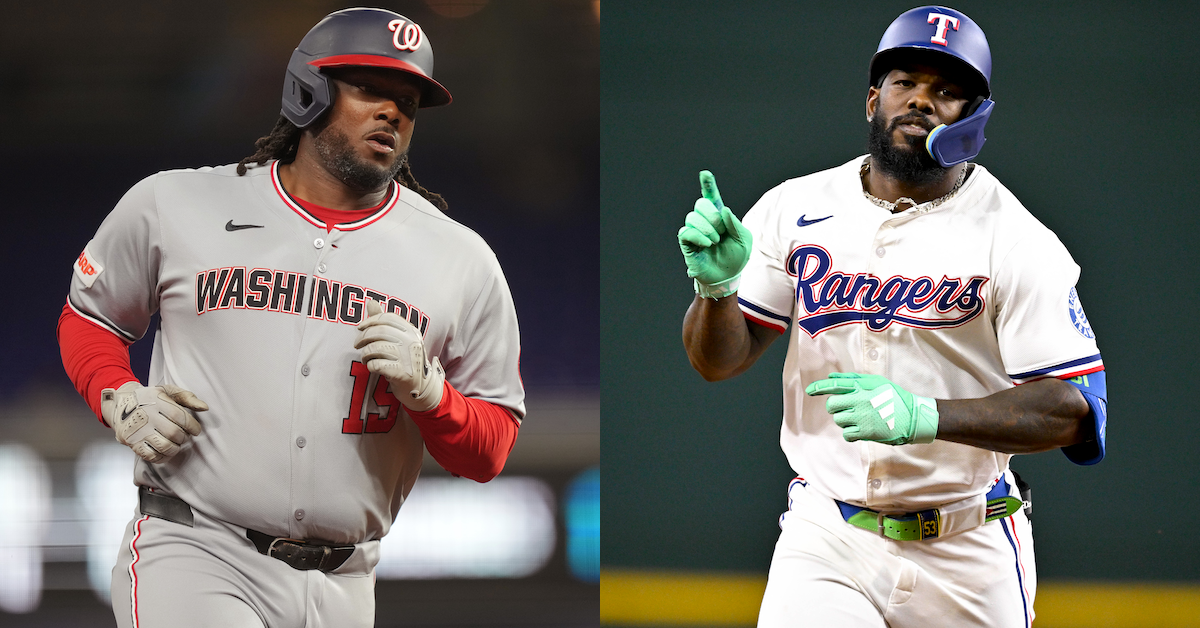
On Monday morning, the Twins signed Josh Bell to a one-year contract with a mutual option for 2027. Between salary, signing bonus, and option buyout, the deal guarantees Bell $7 million. A couple hours later, the Phillies and outfielder Adolis García agreed to terms on a one-year, $10 million contract.
Look around whatever room you’re sitting in as you read this. Consider the material of the walls, the furniture, whatever appliances (if any) are in view. The carpet, or wood or laminate or tile of the floor. Pens and pencils, soap, hand lotion, power cables, books, magazines, children’s toys… whatever you can see, you know what it’d feel like and taste like if you licked it.
That’s from experience. At some point in your life, you put everything you encountered in your mouth, just to see what would happen. If you’ve ever raised a child, or met a child, or been a child, you know kids are always putting stuff in their mouths. You know equally well that kids aren’t supposed to do that. They could choke, or get sick, or otherwise come to harm by licking the sidewalk.
But they do it anyway, no matter how forcefully their parents remind them not to. There’s only one way to know for sure what the TV remote tastes like, and it’s too important an issue to take anyone else’s word for it. Read the rest of this entry »
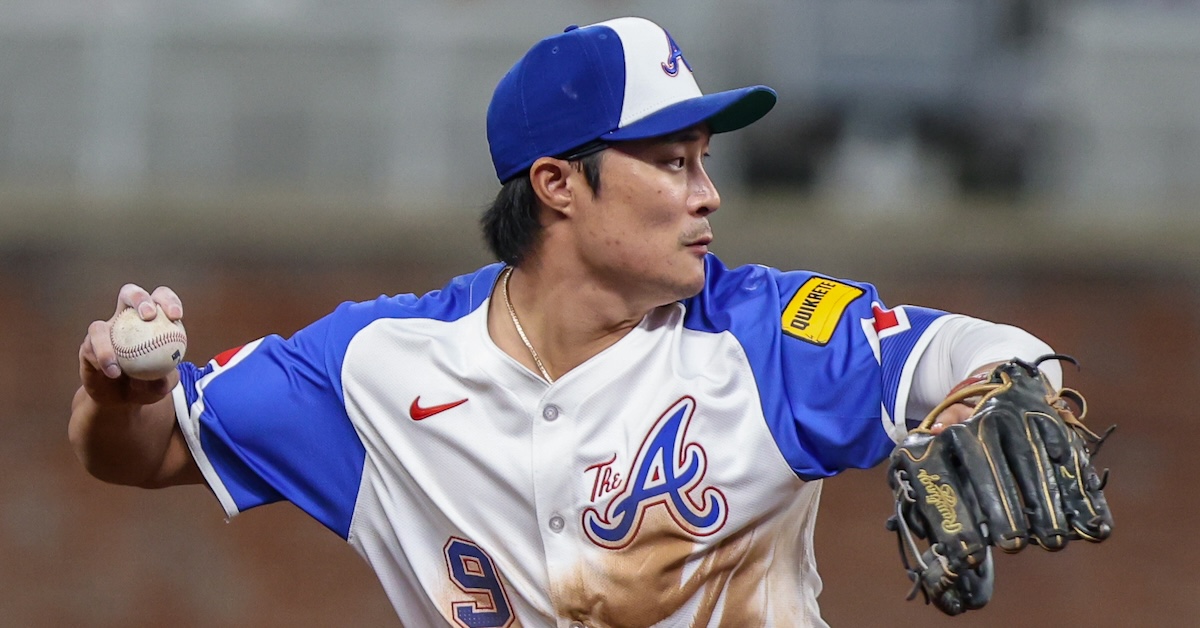
Well, the Braves must have liked what they saw. After Atlanta claimed Ha-Seong Kim off waivers in September and watched him decline his $16 million option for the 2026 season, the team is bringing him back on a one-year, $20 million contract. In a rare coup, Jon Heyman scooped the Braves by breaking the news before they could slap some text onto their trusty press release template and post a JPEG to social media. (Peter Labuza of Twins Daily made note of the most important part of the deal: The press release featured no mention of Kim donating 1% of his salary to the Atlanta Braves Foundation.) The reunion isn’t necessarily surprising, as president of baseball operations Alex Anthopoulos expressed interest in bringing Kim back when he opted out. However, the deal represents a departure from Atlanta’s recent strategy, and doesn’t match most of the estimates of what Kim would get in free agency.
This is the first time the Braves have deigned to spend money on the shortstop position since they let Dansby Swanson walk in 2022. They rolled with Orlando Arcia in 2023, and he rewarded them with a 100 wRC+ and 2.4 WAR. When Arcia reverted back to his career norms with a 72 wRC+ in 2023, the Braves got just 0.7 WAR from the position, fifth worst in the league. The punchless, slick-fielding Nick Allen didn’t work out in 2025, prompting the team to claim Kim; on the year, Atlanta’s 0.4 WAR at short was third from the bottom. They recently traded Allen to Houston in exchange for utilityman Mauricio Dubón, who has surprisingly good numbers at short but isn’t really an everyday option. The Braves are clearly sick of having a gaping black hole at short, but you might not be prepared for just how big a departure this is. Swanson made just $10 million in his final year of arbitration, meaning the Braves are about to spend double the amount they’ve ever spent on a shortstop.
Coming into the offseason, most estimates had Kim signing a deal like the one he signed with the Rays last year: two or three years with an opt-out for something like $15 million per year. That made sense, because he was still in a similar position. After a brilliant seven-year KBO career, Kim struggled in his first stateside campaign, then settled in as a reliably above-average middle infielder for the Padres. From 2022 to 2024, he combined great defense with a 106 wRC+, averaging 3.7 WAR per 150 games. That’s a borderline All-Star at a premium position. In 2023, Kim won a Gold Glove and earned some MVP votes. He looked primed for a payday and a long contract heading into free agency. Instead, he tore the labrum in his right shoulder diving back into first base against the Rockies in August 2024. Read the rest of this entry »







 Sponsor Us on Patreon
 Give a Gift Subscription
 Effectively Wild Subreddit
 Effectively Wild Wiki
 Apple Podcasts Feed
 Spotify Feed
 YouTube Playlist
 Facebook Group
 Bluesky Account
 Twitter Account
 Get Our Merch!