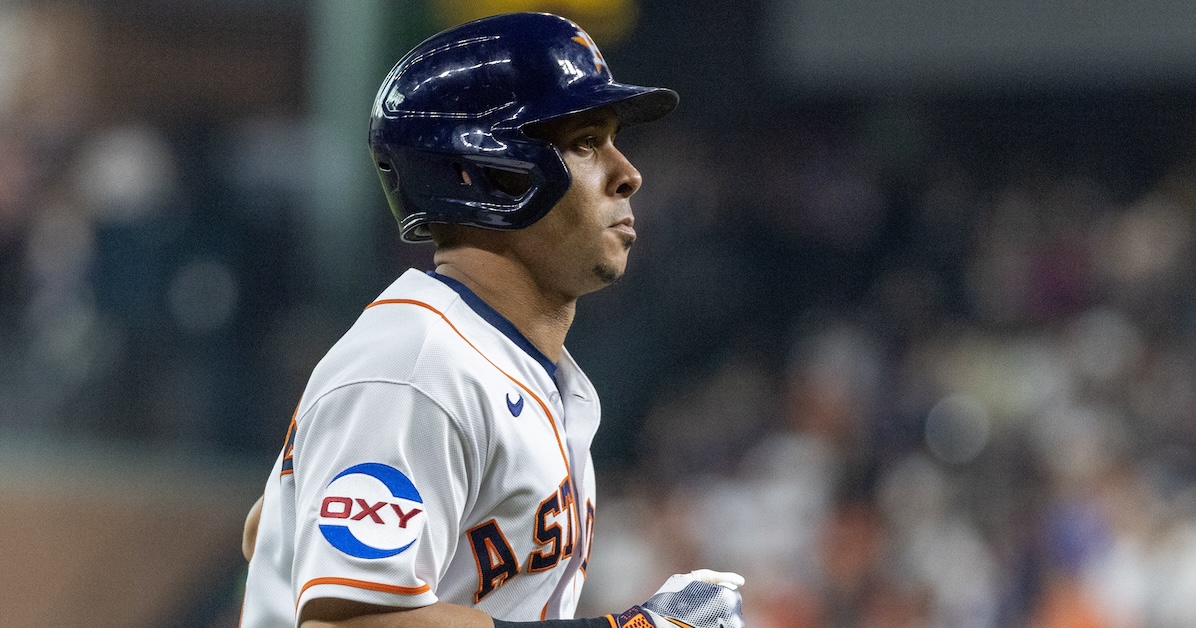
In 2023, Emmanuel Clase ran a 3.22 ERA and a 2.91 FIP. His 44 saves were a career high and five more than any other pitcher. Compared to the rest of the league, he was great. Compared to prior versions of Emmanuel Clase, however, he was dreadful. In 2021 and 2022, Clase was an unstoppable force of nature, running a 1.33 ERA and a top-five groundball rate while striking out more than a batter per inning. Then in 2023, Clase fell off a cliff, though admittedly, he landed on another, still pretty lofty cliff; not with a splat, but gently, into some soft, leafy bushes.
What happened to Clase? Everything happened! There were situational factors and mechanical factors. There were changes in consistency and approach. Everything is connected when it comes to pitching, with one factor cascading upon another. The fun is in following the chain. Read the rest of this entry »
Troy Taylor is an under-the-radar pitcher to keep your eye on in the Seattle Mariners system. A 22-year-old right-hander who was taken in the 12th round of the 2022 draft out of the University of California Irvine, Taylor impressed evaluators in the Arizona Fall League with a two-pitch mix that has him well-positioned for a future role as a big-league reliever.
“I’m a big fan of what he can do athletically, as a mover,” said a scout I spoke to. “His stuff is good. He’s a guy who probably ends up in the bullpen with the Mariners, and sooner rather than later.”
He’s already come a long way. Taylor was an infielder at Rancho Cucamonga’s Los Osos High School, and when he did occasionally take the mound — “I closed a couple of times” — all he really did was throw as hard he could. It wasn’t until he got to Cyprus Junior College, and then to UC-Irvine, that he “actually started learning how to pitch.”
Taylor has understandably learned a lot more about the nuances of his craft since signing with Seattle, but he nonetheless remains anything but a technician. Topping out at 98 mph and typically averaging “five and some change,” he still tries to throw his heater as hard as he can. He identifies as a power pitcher.
Adding a third pitch is a goal — the Mariners have him working on a changeup to use against left-handed hitters — but his fastball-slider combination will always be his bread and butter. The former is not only his best pitch, it has unique characteristics. Read the rest of this entry »
As you might have heard, the Yankees made a big splash early this offseason by trading for Juan Soto. It was one of the most impactful moves of the entire winter, and they struck quickly. Then, they went into hibernation. Their next major move didn’t come until yesterday, when they signed Marcus Stroman to a two-year deal worth $37 million, as Joel Sherman first reported.
As second acts go, it’s surely not what Yankees fans were hoping for. New York was linked to Yoshinobu Yamamoto, and several other interesting pitchers were at least briefly connected to the team as well. But while Stroman is hardly the most exciting signing of the offseason, I think he’ll be an important cog in the team’s 2024 quest to get back to the playoffs, and that makes for a great fit in my opinion.
Let’s get something out of the way first: ZiPS doesn’t agree with me on this one. It thinks that Stroman is going to be a decidedly unexciting rotation option for the next two years:
ZiPS Projections – Marcus Stroman
Year
W
L
ERA
G
GS
IP
H
ER
HR
BB
SO
ERA+
WAR
$
2024
9
9
4.17
26
25
138.0
133
64
17
44
110
101
2.0
$14.2
2025
8
8
4.31
23
22
123.3
122
59
16
41
96
98
1.5
$10.4
In a word, yikes. That’s a desultory projection, the kind of starter that you’d be unhappy turning to in a playoff game. As you can see, the model would only have offered him about $25 million for the next two years rather than $37 million. But I’m not quite buying it, so let’s talk about why. Read the rest of this entry »
The San Francisco Giants drafted Reggie Crawford as a two-way player, and so far they’ve allowed the 30th-overall pick in the 2022 draft to continue to both pitch and swing the bat. How much longer that will be the case remains to be seen, with the forthcoming season likely going a long way toward determining an answer. To this point, Crawford has had scant opportunity to do either. Thanks largely to Tommy John surgery, the 6-foot-4, 235-pound University of Connecticut product has logged just 19 innings and 111 plate appearances (71 of them in the Arizona Fall League) since signing a professional contract.
Eric Longenhagen described the left-left hurler/first-baseman as “a prospect of extreme variance” and “still more a developmental project than anything else” when assigning him a 40+ FV midway through last summer. That both his hitting and pitching potential factor into our lead prospect analyst’s assessment makes Crawford arguably the most intriguing young player in the Giants’ pipeline. If he performs capably on both sides in 2024, he’ll be among the most intriguing young players in baseball.
Crawford discussed his two-way aspirations in the final week of the Arizona Fall League season.
———
David Laurila: To start, I’m interested in your thoughts on someone you’ve been playing against here in the Fall League. Carson Williams was highly regarded as a two-way player in high school, but has only played shortstop since Tampa Bay drafted him 28th overall in 2021. Could you see him succeeding at both in pro ball?
Reggie Crawford: “Oh, I’d imagine so. It just comes down to… I mean, for me the planning and the scheduling is probably the most difficult part. Someone who is that athletic and has those sets of tools, I don’t see why he wouldn’t be able to.” Read the rest of this entry »
Rhys Hoskins is a free agent, and it’s kind of weird. The 30-year-old first baseman spent 10 seasons in the Phillies organization, six of them (plus one full year spent on the injured list) with the major league club. For a time, he was one of the only bright spots on a completely moribund team, but eventually the big fella settled into a role as a supporting player and de facto table-setter for a lineup built around Bryce Harper. His achievements in that role include the Bat Spike home run, a three-run dinger off Spencer Strider in the 2022 NLDS — the Phillies’ first home playoff game in 11 years.
While it was surpassed in the imagination by Harper’s pennant-winning homer in the rain later that October, the image of Hoskins’ celebration lives on in memory as a highly localized version of the José Bautista bat flip for people who are deeply upset by the decline in the quality of Wawa’s sandwich bread since the chain went national. You want to watch the home run again? I do. Let’s watch it again.
He may not have upper-echelon career totals, but boy was Michael Brantley an absolute baller. A five-time All-Star, Brantley also won a Silver Slugger and finished third in American League MVP voting in 2014, a year that saw him finish second in the AL in WAR behind only Mike Trout, the MVP winner. After a very successful 15-year career, the sweet swinging lefty outfielder has decided to hang up his cleats. It’s an unsurprising move for Brantley, who had battled shoulder injuries for much of the last three seasons and would have been entering his age-37 season.
Brantley was a unique player. Over the course of his career (2009-2023), the league-wide strikeout rate increased from 18.0% to 22.7%. But while the league was whiffing more and more, Brantley bucked the trend. During his 10-year tenure in Cleveland, he struck out 10.7% of the time; in the five years he spent in Houston, that mark was exactly the same. Indeed, his strikeout rate with the Astros was over 40% better than the league average rate (22.8%) during that period. Of the hitters with at least 1,000 plate appearances from 2019 to 2023, 21 had a strikeout rate below 14%. Only two had a higher wRC+ than Brantley: Alex Bregman (137) and José Ramírez (132).
His skill set was timeless, headlined by his elite contact ability. His wRC+ was actually higher in his 30s (124) than it was in his 20s (112). And his future looked bright – ZiPS projected him for a .290/.354/.416 line and a 114 OPS+ in the upcoming season had he played. As Timothy Jackson of Baseball Prospectusput it, Brantley was “unique among players with outlier skills.” And so, with his time in the majors coming to a close, I wanted to look back at Brantley’s career progression. More specifically, I wanted to examine how his consistently elite contact skills allowed him to maintain his performance despite myriad injuries. Read the rest of this entry »
With one game to win and the world championship on the line, Japan manager Hideki Kuriyama called on left-hander Shōta Imanaga to start the decisive game of the World Baseball Classic. Availability and pitch count obviously limited Kuriyama’s options, but still, it’s quite an honor, considering Japan’s pitching staff also included Shohei Ohtani, Yu Darvish, Yoshinobu Yamamoto, and wunderkind Roki Sasaki.
The Cubs must have been impressed, because on Monday night Bob Nightengale reported that Chicago had reached an agreement with the two-time NPB All-Star. Imanaga, who had previously been linked with the Giants, will make at least $30 million over two years, with options and incentives that could bring the total value of the deal to $80 million over a longer (but still as-yet-unspecified) term. Jon Heyman called the deal “complicated.”
However much Imanaga’s contract will end up confounding the bookkeepers, it won’t be official until he passes a physical. That must be completed before Imanaga’s posting window expires Thursday afternoon. Read the rest of this entry »
The 2009 MLB draft was notable for numerous reasons, not the least of which was Mike Trout lasting until the 25th overall pick, where the Los Angeles Angels snagged him in one of the biggest steals in draft history. The Arizona Diamondbacks missed out on a pair of opportunities to take the future Hall of Famer — they picked back-to-back at 16 and 17 — and misfired on a few of their higher-round selections as well. Which isn’t to say they had a bad draft — anything but. Not only did a dozen of the players the D-backs drafted and signed go on to reach the big leagues, one of them was arguably as big of a steal as Trout. In the eighth round, with the 246th overall pick, they took Paul Goldschmidt out of Texas State University.
Tom Allison was the lead architect of Arizona’s 2009 draft. Serving as the club’s amateur scouting director under general manager Josh Byrnes, he not only oversaw the Goldschmidt pick, but also the selections of AJ Pollock, Chase Anderson, and Matt Davidson. There were disappointments — taking Bobby Borchering at 16 didn’t work out the way Arizona hoped — but that goes with the territory. The amateur draft is an inexact art, and a mix of hits and misses is inevitable, which is something a longtime scout like Allison knows all too well. Now a special assignment scout with the Los Angeles Dodgers, Allison addressed that very subject when looking back on 2009.
———
David Laurila: To the extent that a draft can be predictable, did things more or less go as you expected, or were there a lot of curveballs? Your club obviously had a number of extra picks early on.
Tom Allison: “First, it’s always great looking back at drafts, especially ones that had so many of these different outcomes. But that’s a great question. With those extra picks, we had the attention of the agents and advisors. They knew that, ‘OK, the Diamondbacks are interested and we have an opportunity to get them in there.’ That presented itself a lot of times with accessibility, which is really impactful. We had pre-draft workouts. We were in a different timeframe than we are now — it was a non-Combine time — so having a pre-draft workout was a big thing. Read the rest of this entry »
Every time I look up this offseason, I see a string of trades. The Braves seemingly made 65 roster moves to upgrade one position. The Mariners sent away a good chunk of their 2023 roster to save money and bulk up their outfield. The Rays are Rays’ing as hard as ever. Truly, it feels like a golden age for offseason deals.
All told, 130 players have changed teams via trade this offseason, per RosterResource. The quality is all over the map, from former aces like Chris Sale and Cy Young winners like Robbie Ray to minor leaguers you’ve never heard of. Juan Soto aside, it hasn’t been much of a season for blockbusters, at least in my estimation, but the sheer volume feels notable.
This being FanGraphs, though, I didn’t want to leave it at that. Sure, it feels like more teams than ever are engaging in red paperclip chains to make marginal upgrades, but the Rays also existed in prior offseasons, and Jerry Dipoto didn’t get his reputation for wheeling and dealing yesterday. Heck, A.J. Preller has been quiet this winter, and he often turns the hot stove incandescent in the winter. Maybe I’m just a victim of my own poor estimation. Read the rest of this entry »
Victor Scott II has received a lot of attention lately, and for good reason. The 22-year-old outfielder swiped 94 bases this past season between High- and Double-A, then added 18 more representing the St. Louis Cardinals in the Arizona Fall League. Moreover, his left-handed stroke produced a .303/.369/.425 slash line over 618 plate appearances against Midwest League and Texas League pitching. Flying below the radar when he was taken in the fifth round of the 2022 draft out of West Virginia University, the speedster is now widely viewed as one of the most promising players in the Cardinals’ pipeline.
The focus the Atlanta native has received lately has understandably centered on his plus-plus wheels and his improved hit tool. Neither of those subjects was broached when I spoke to Scott over the phone in early December — this a few weeks before he graduated from WVU with a degree in Interdisciplinary Studies. Instead, we discussed his burgeoning music career. Scott is not only on the fast track to the big leagues, he is also an accomplished rapper.
———
David Laurila: You’ve recorded a number of rap songs. Tell me about that.
Victor Scott II: “It’s something I can’t really do in-season, and I couldn’t really do at school, because I didn’t have a studio. Here at home, I can get in there with Quinn Carter — one of my best friends from back in the day — to kind of hang out and make music. It’s therapeutic. It allows me to get whatever off my mind, and also to be imaginative. It’s a cool little outlet, man. It’s great.” Read the rest of this entry »