Archive for Daily Graphings

The Rule of Six: Yu Darvish Re-Ups in San Diego

Yu Darvish
Orlando Ramirez-USA TODAY Sports

Be honest: you didn’t think A.J. Preller was done with headline-making this offseason, did you? The Padres have built a team through outrageous swings — trades that no one else in baseball would attempt and free-agent signings that make opposing teams whine with envy. After signing Xander Bogaerts earlier this offseason, though, it seemed like even Preller might be out of moves. There was no one left to sign, no one left to trade for.

The joke’s on us, though, because the Padres found a new way to make news: they signed Yu Darvish to a six-year extension worth $108 million, as MLB.com’s AJ Cassavell reported. The deal replaces the final year of his existing contract, which would have ended after this year. Instead of hitting free agency, Darvish will remain a Padre, presumably for life at this point.

Darvish has long been one of my favorite pitchers thanks in large part to his dizzying array of pitches. He threw six different ones at least 5% of the time last year and even dabbled with two more. Six pitches, six years: I know an article setup when I see one. If you’ll indulge me in some gratuitous gif-posting, I’ll walk you through six ways to think about this contract. Read the rest of this entry »


Two Thousand More Words About the Cole Irvin Trade

Kelley L Cox-USA TODAY Sports

There’s a simple maxim in the entertainment business, which we here at FanGraphs subscribe to: give the people what they want. You called for it (implicitly), and now you’re getting it: more discussion of the Cole Irvin trade! And hey, if that’s not what you want, you should have somehow broadcast your thoughts to me more clearly.

Here’s the overarching concept of today’s article: the total-’em-up-and-compare method of analyzing trades doesn’t really work, and in fact it hasn’t really worked for a while. I’ve got some criticisms of WAR-to-money conversions in here, too, and a general questioning of the way people apply the nebulous concept of surplus value to baseball players. Let’s get right into it.

In the comments to the Irvin piece, someone mentioned an angle that I purposefully ignored in my analysis: adding up Irvin’s projected team-controllable WAR and comparing it to the monetary prospect values Craig Edwards produced a few years ago. Subject to a few assumptions, that accounting of the trade favors the Orioles by a huge margin. Prospects in the 40+ FV tier, like Darell Hernaiz, don’t usually work out. Irvin will almost certainly be better than replacement level. If you’re intent on slapping a universal dollar figure on all players based on that, the Orioles almost can’t lose in this trade.

That’s not really how it works in real life, though. Teams don’t have a department that inputs projections, turns everything into some calculation of value measured by dollars, and then pursues trades and acquisitions based on the cold hard reality of that math and nothing else. The Irvin trade reflects this in a few ways, so let’s talk about them. Read the rest of this entry »


Ben Cherington on Pittsburgh’s Two Top Prospects

Charles LeClaire-USA TODAY Sports

Termarr Johnson and Endy Rodriguez are the top two prospects in the Pirates organization. An 18-year-old middle infielder, Johnson was drafted fourth overall by Pittsburgh last summer out of an Atlanta high school. Meanwhile, Rodriguez, a 22-year-old catcher from Santiago, Dominican Republic, was acquired by the Pirates from the Mets in the January 2021 three-team trade that included David Bednar and Joe Musgrove.

I asked Pittsburgh general manager Ben Cherington about the highly-regarded duo during November’s GM Meetings in Las Vegas.

———

David Laurila: Pirates fans and prospect nerds are quite familiar with Termarr Johnson, but a lot of fans around the country probably aren’t. What can you tell me about him?

Ben Cherington: “I think a good place to start is that he is currently in the Dominican, participating in our Dominican instructional program, which I think is a cool thing for a high first-round pick to do. It’s something that he wanted to do. Termarr wanted to go down there and be part of that experience, and to get to know potential future teammates who are young Latin players. He’s a full participant in our Dominican program.” Read the rest of this entry »


Caught Between a Walk and a Hard Hit, Guardians Starters Came Out on Top

Shane Bieber
Vincent Carchietta-USA TODAY Sports

When a pitcher throws the third ball of a plate appearance, it can start to feel like his back’s against the wall quickly. First base starts to seem awfully close without any more pitches to spare and a walk lingering. The batter knows this, too, and he’s digging in looking for a juicy pitch, thinking about doing more damage than just a walk if he sees it. It’s a stressful position for any pitcher: aim for the edge of the plate, and you risk a miss and a free pass; catch a little more of the plate, you risk getting clobbered by the barrel of an increasingly comfortable and aggressive hitter.

In 2022, the Guardians didn’t get the memo. In plate appearances that reached three balls, opposing hitters posted a .197/.500/.311 batting line, good for a best-in-baseball wOBA of .397. There’s a big difference between production levels on 3–0, 3–1, and 3–2, but Cleveland handled each about as well as anybody else; its .336 wOBA on 3–2 counts and .512 mark on 3–1 were each second in baseball, and its .630 clip on 3–0 ranked fourth. The club’s starters were even better, limiting opponents to a .165/.464/.289 line and a .371 wOBA. With all unintentional walks coming on three-ball counts, these are still ultimately pretty productive lines — ask (almost) any major leaguer if he’d sign up for a .371 wOBA next year — but by comparison with staffs across the league, Cleveland’s was able to limit damage in these tight spots better than any of its peers.

Opponent wOBA by Count
Count CLE MLB MLB Rank
3-0 .630 .665 4
3-1 .512 .561 2
3-2 .336 .371 2
SOURCE: Baseball Savant

Baseball Reference carries a nifty splits statistic they call sOPS+, which compares a player’s OPS (or in pitchers’ cases, opponent OPS) under the conditions of a certain split to his peers, with 100 representing league average. It’s a helpful way to contextualize splits — that Trea Turner had a .601 two-strike OPS in 2022 is less intuitive than his 137 sOPS+ with two strikes, which tells us he was 37% more productive with two strikes than the league average. By sOPS+, Guardians pitchers were again the strongest in the league with their backs against the wall. In three-ball counts, they had an sOPS+ of 75, the seventh-lowest in 300 team seasons over the last decade. Read the rest of this entry »


A Tale of Two Fastballs

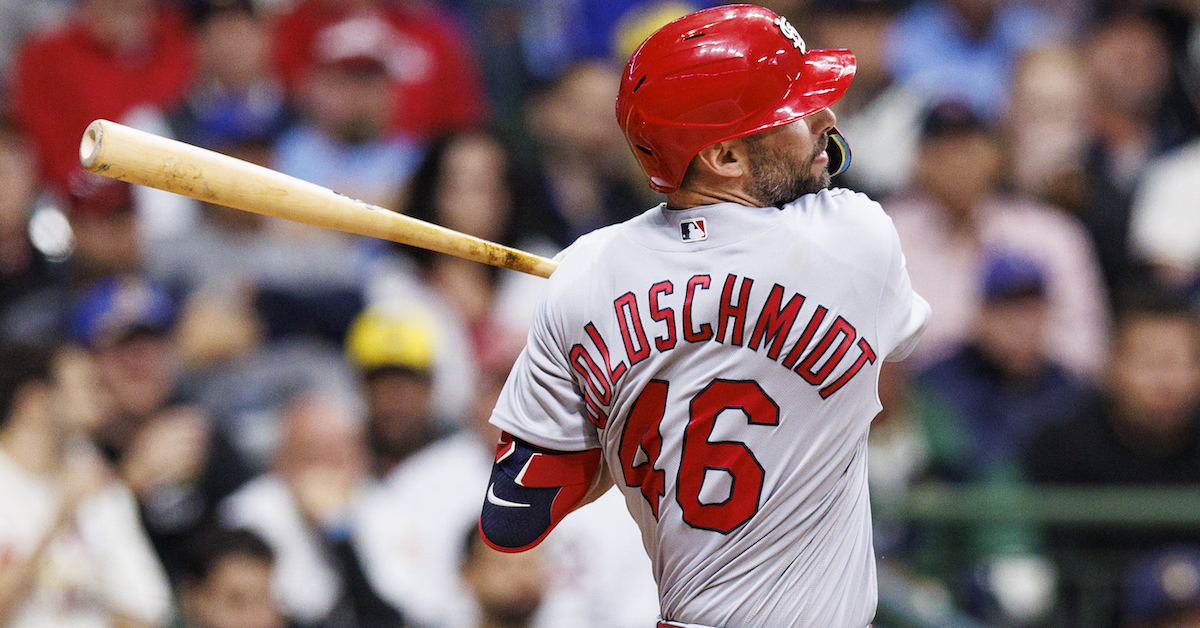
Paul Goldschmidt
Jeff Hanisch-USA TODAY Sports

The worst thing you can do in baseball as a hitter is swing through a fastball right down the pipe. That’s the pitch you were waiting for all along, and you turned it into a strike as surely as if you’d swung at a slider in the dirt. Conversely, that’s the best thing you can do as a pitcher. If your mistakes turn into strikes, it’s like playing on easy mode. Every pitcher is great when they’re dotting the corner, but turning middle-middle happy accidents into free strikes is the domain of an elite few.

If you look at the starters who did this most frequently in 2022, you’ll find a ton of good names and Eric Lauer:

Highest Middle-Middle Fastball Whiff Rate, 2022
Pitcher Mid-Mid Fastball Swings Whiff%
Eric Lauer 126 25.4%
Cristian Javier 110 24.5%
Carlos Rodón 112 24.1%
Gerrit Cole 126 23.8%
Joe Ryan 111 23.4%
Robbie Ray 112 22.3%
Luis Castillo 112 21.4%
Hunter Greene 80 21.3%
Eduardo Rodriguez 80 20.0%
Triston McKenzie 118 19.5%

Maybe that was harsh to Lauer, even. He’s clearly doing something right, given his two straight solid seasons despite lackluster raw stuff. It’s enlightening seeing him alongside a list of pitchers with dominant fastballs, and even if the other ten aren’t exclusively aces, they’re all solid starters with the chance to be more than that. Shane McClanahan, Spencer Strider, and Max Scherzer just missed the top 10. Zack Wheeler is way up there. This is clearly a desirable pitcher skill. Read the rest of this entry »


Aaron Nola Is About to Get Very Rich, Somewhere

Troy Taormina-USA TODAY Sports

This offseason’s free agency action is basically over, so let’s go take a look ahead at next offseason. Where shortstops dominated the conversation this winter, in nine months’ time we’ll be talking about pitchers. Shohei Ohtani is in a class of his own, obviously, but the market also stands to include Yu Darvish, Julio Urías, Blake Snell, Max Scherzer (if he opts out), and Sonny Gray. Jack Flaherty and Lucas Giolito could also both cash in huge if they rediscover their recent ace-like form.

Also bound for the open market: last season’s leader in WAR among starting pitchers. Anyone care to guess who that is? That’s right, by a fraction of a win, it’s Aaron Nola. By any standard he’s been one of the best pitchers in baseball over the past five years. So how much money should he be out to make this offseason? Read the rest of this entry »


The 2023 Start of Spring ZiPS Projected Standings: American League

© Jerome Miron-USA TODAY Sports

The 2023 ZiPS projections have all been incorporated into the site, and while there will be some additions (platoon splits), changes (there’s a weird RBI bug affecting a handful of very poor minor league hitters) and updates to come, the player pages now contain the projections for the upcoming season. Our Depth Charts also reflect ZiPS along with Steamer, enabling David Appelman to crank up all the dials and flick all the switches, and you to blame me as well as Steamer when a team’s projection doesn’t look right to you!

Spring doesn’t actually start in the Northern Hemisphere until March 20 this year, but the real spring, baseball’s spring training, kicks off in a week when pitchers and catchers report. While it’s unlikely that these are the precise rosters that will eventually start playing exhibition games, the vast majority of the significant shifts in player talent have already happened.

So where do we stand?

Naturally, I used the ZiPS projection system to get the latest run of team win totals. The methodology I’m using here isn’t identical to the one we use in our Projected Standings, meaning there will naturally be some important differences in the results. So how does ZiPS calculate the season? Stored within ZiPS are the first through 99th-percentile projections for each player. I start by making a generalized depth chart, using our Depth Charts as a jumping off point. Since these are my curated projections, I make changes based on my personal feelings about who will receive playing time as filtered through arbitrary whimsy my logic and reasoning. ZiPS then generates a million versions of each team in Monte Carlo fashion — the computational algorithms, that is (no one is dressing up in a tuxedo and playing baccarat like James Bond). Read the rest of this entry »


The Case For Sam Hilliard, Everyday Left Fielder

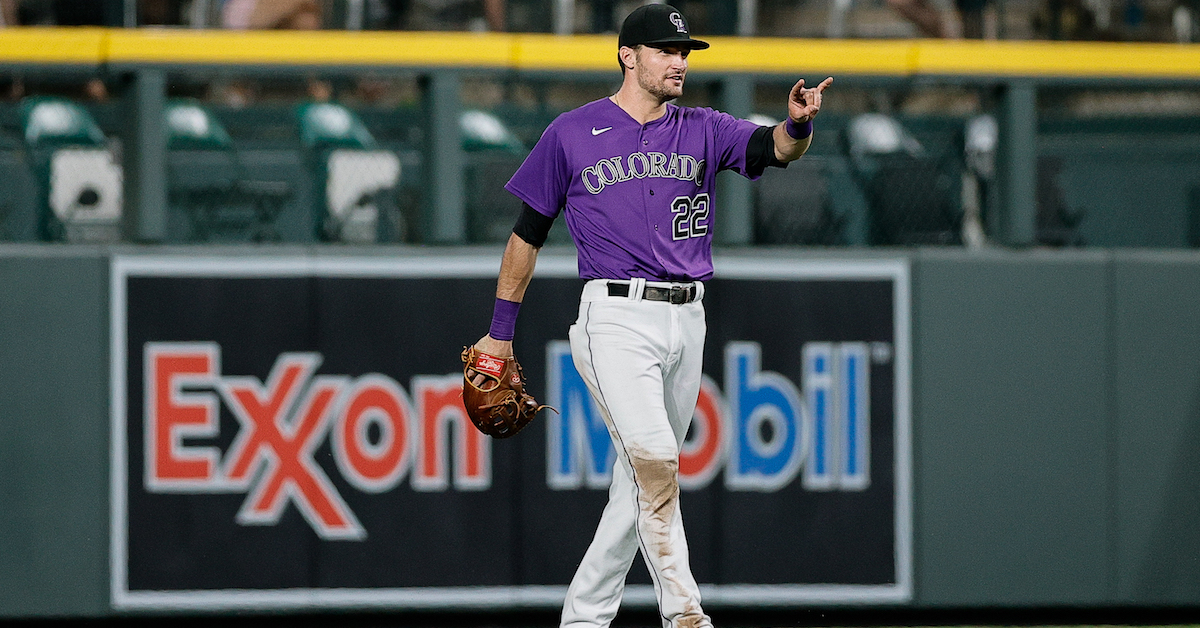
Sam Hilliard
Isaiah J. Downing-USA TODAY Sports

The Braves are the team of stability. At six of nine offensive positions, they have locked an above-average-to-star-level player down to a contract that will keep him under club control for at least the next five seasons. We could probably get away with literally not writing any Braves roster construction thinkpieces until 2026 or so. Nevertheless, I want to pick at the one imperfection in Atlanta’s cavalcade of cost-controlled stars: the whole left field/DH situation. Specifically, I want to propose an idea that isn’t a joke, or a bit, or a troll… but it’s also not not a joke, or a bit, or a troll: Make Sam Hilliard the starting left fielder. Read the rest of this entry »


Cole Comfort: Orioles Bolster Rotation in Trade with Oakland

Jayne Kamin-Oncea-USA TODAY Sports

In 2021, John Means rode a command-first approach to the best pitching season on the Orioles. In 2022, Means missed most of the season – and Jordan Lyles and Dean Kremer both rode command-first approaches to the best starting pitching performances on the team. Now Lyles is gone and Means isn’t yet back from Tommy John, so the Orioles did what they had to do: traded for Cole Irvin, who will now inevitably ride a command-first approach to post the best numbers of any Orioles starter in 2023.

That’s my main takeaway from last week’s trade with the Oakland Athletics. The full trade: Irvin and prospect Kyle Virbitsky are headed to Baltimore in exchange for prospect Darell Hernaiz. In broad strokes, the deal makes sense: the A’s are continuing to get rid of every major leaguer they possibly can, while the Orioles look to make marginal improvements to their major league roster to back up last year’s breakthrough. But Irvin is hardly a slam dunk rotation topper, so I think it’s worth investigating what the O’s might see in him.

The first-level reason to acquire Irvin is probably the best one. He’s a left-handed fly-ball pitcher, and the new configuration of Camden Yards favors that skill set. The team pushed the left field wall back in 2022, and righties simply stopped hitting homers. In 2021, Baltimore was the easiest place for righties to hit home runs. In 2022, it was the sixth-toughest, a massive swing. Oakland has always been a pitcher-friendly park, and Irvin took good advantage of that; he should find similar success in the newly-spacious Camden. Read the rest of this entry »


George Springer’s Not So Great, Still Very Good Year

George Springer
Nick Turchiaro-USA TODAY Sports

There are a lot of ways to look at the numbers George Springer put up in 2022. Here’s the simplest: He had an All-Star season, posting a 132 wRC+ and piling up 4.2 WAR. That’s excellent. On the other hand, you could argue that he has been slipping for a while now. His wRC+ has declined in three consecutive seasons, and now that Kevin Kiermaier and Daulton Varsho are both Blue Jays, his days as a center fielder are officially over.

Analyzing Springer is tricky because he’s always been a great hitter no matter what was going on under the hood. He reached his offensive peak in 2019, posting a 155 wRC+ with the help of a career-high 43.2% hard-hit rate. Then in 2020 and ’21, his hard-hit rate came back to earth a bit, his pull rate spiked, and he literally doubled his launch angle. Despite the drastic changes, his wRC+ fell by just over 10 points, dropping him from elite all the way down to very nearly elite. Read the rest of this entry »