Archive for Daily Graphings

J.T. Realmuto Will J.T. Realmain in Philadelphia
Eric Hartline-Imagn Images

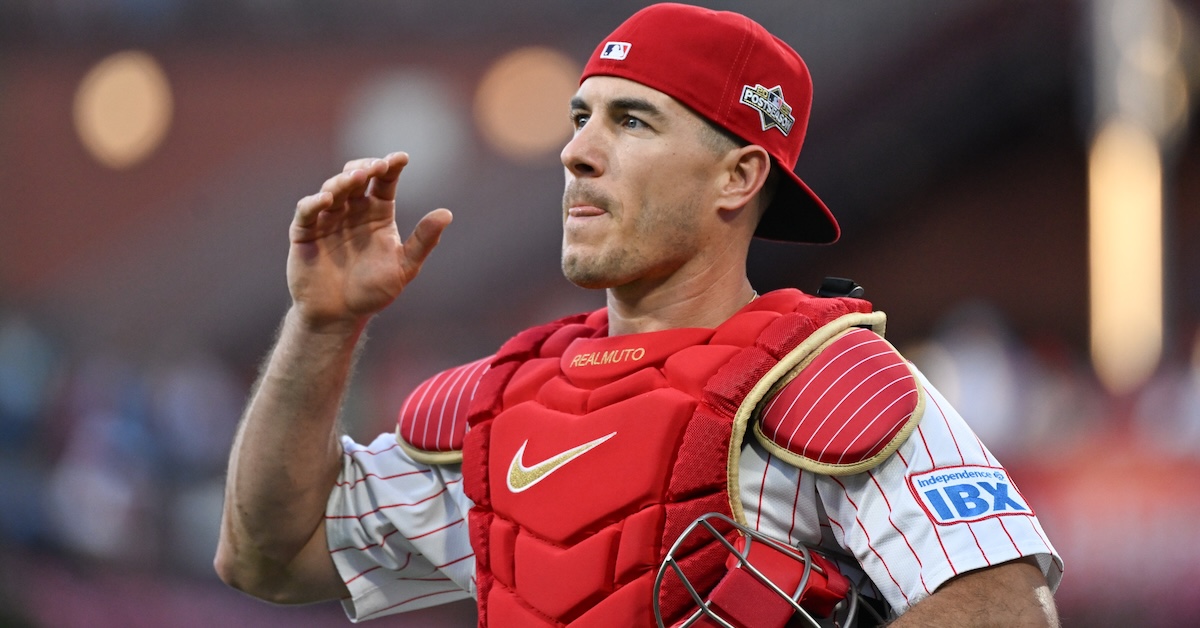
Well, that’s a relief. On Friday afternoon, the Phillies, spurned by Bo Bichette, got swept up in the tidal wave of hot stove transactions, agreeing to a three-year, $45 million deal (plus $15 million in incentives) to keep J.T. Realmuto in Philadelphia, according to Ken Rosenthal and Matt Gelb of The Athletic. You may have your qualms about rebounding from a rejection by signing a catcher three years into his decline phase for another three years, but consider what other options the Phillies had, and then consider how weird it would have felt to watch Realmuto playing in another uniform after all this time. It’s probably too many years, and that’s not great, but look at everything else that’s going on in the world right now and realize how much nicer it is to spend a moment thinking about something that’s merely not great.

Before we dive into the here and now, let’s take this chance to remind ourselves just how special a career Realmuto has had. He debuted with the Marlins in 2014 and blossomed into a star in 2017, combining excellent defense with a great bat and an exquisite baserunning prowess unbefitting a backstop. (He currently ranks 23rd all-time among catchers with 104 stolen bases. If we limit ourselves to 1901 and later, he moves up to 11th.) Such things were never meant for Miami. In February 2019, after he’d put up two four-win seasons and earned an All-Star nod and a Silver Slugger, the Marlins traded him to Philadelphia for a blockbuster package that netted them 2.0 total WAR and $250,000 in international bonus pool money. Realmuto got even better the next season.

From 2017 to 2022, Realmuto wasn’t just the best catcher in baseball; there was an ocean between him and the rest of the competition. He led all catchers with 28.2 WAR. Yasmani Grandal, in second place, had just 19.6. Of the 207 catchers who played during that stretch, Grandal and future Hall of Famer Buster Posey were the only ones whose WAR total Realmuto didn’t double. Over that stretch, he tops our leaderboards at the plate, on the basepaths, and on defense, and nobody else is even close. Realmuto has earned two Gold Gloves, two Silver Sluggers, three All-Star nods, and MVP votes in two seasons. He has a career 104 wRC+ in the playoffs. It’s great that the Phillies have held onto him. He’ll reach 200 career home runs in Philadelphia. He’s the team’s longest-tenured position player, ahead of Bryce Harper by roughly a month and trailing only Aaron Nola on the pitching side. He’s a grinder, the heart of a Phillies team that has been at the top of the league for years now. Still, you know the problem as well as I do.

It’s not 2022 anymore, and Realmuto has got so, so many miles on his knees. He has caught at least 125 games seven different times, and led the league in innings caught in three of the last four seasons. He ranks seventh in innings caught since 2002. Two of the guys ahead of him played through their age-39 seasons. One is a manager now.

Realmuto started looking human in 2023, and he missed a couple months due to a meniscectomy in 2024. Over the past three years, he’s run a perfectly average 100 wRC+. That’s still plenty good for a catcher, but it dropped to 94 in 2025, and advanced numbers like DRC+ have him even lower. Although he hit the ball just about as hard as ever, his bat speed took a very scary dive from the 70th percentile in 2024 to the 47th in 2025, and his barrel rate followed suit. Realmuto once feasted on four-seamers, but over the past three seasons, he’s put up negative run values against them. He started struggling with cutters in 2024 and sinkers in 2025, meaning he now struggles against any kind of fastball.

He has combined this weaker bat with poor framing numbers, and despite still possessing plenty of speed, he’s even started to take on water in the baserunning department. Put it together, and Realmuto has recorded almost exactly 2.0 WAR in each of the past three seasons. Despite all the doom and gloom I just laid on you, that’s not just a useful player, it’s an above-average catcher.

It makes Realmuto the best option behind the plate on the Phillies roster, ahead of Rafael Marchán and Garrett Stubbs. Likewise, it made Realmuto the top-ranked catcher on our Top 50 Free Agents list, where he came in at 30th overall. Wouldn’t you rather have him than Danny Jansen or Victor Caratini, who ranked 38th and 39th? In 2025, you definitely would, but projections pegged Realmuto for a two-year deal with an average annual value of $13 million. Instead, he’s making $15 million for an extra year, which will be, once again, the age-37 season of the guy who already ranks seventh in innings caught this century. Still, there was no better catcher on the trading block, and unless the Tyrell Corporation has started manufacturing them while I wasn’t paying attention, we’ve now exhausted all the ways by which a baseball team can get its hands on a baseball player.

Everything makes sense here. The Phillies are a win-now team that’s already above the highest luxury tax threshold. It’s hard to blame them for holding onto the best catcher available to them, especially when he’s a guy they love – a guy they and their fans are capable of appreciating far more deeply than anybody else is – for a year and a few million dollars more than would be ideal. Three years is not forever, and Realmuto now has an excellent chance at ending his career as a Phillie. It’ll be OK. Try to enjoy your weekend.

Rockies Sign Willi Castro

Ron Chenoy-Imagn Images

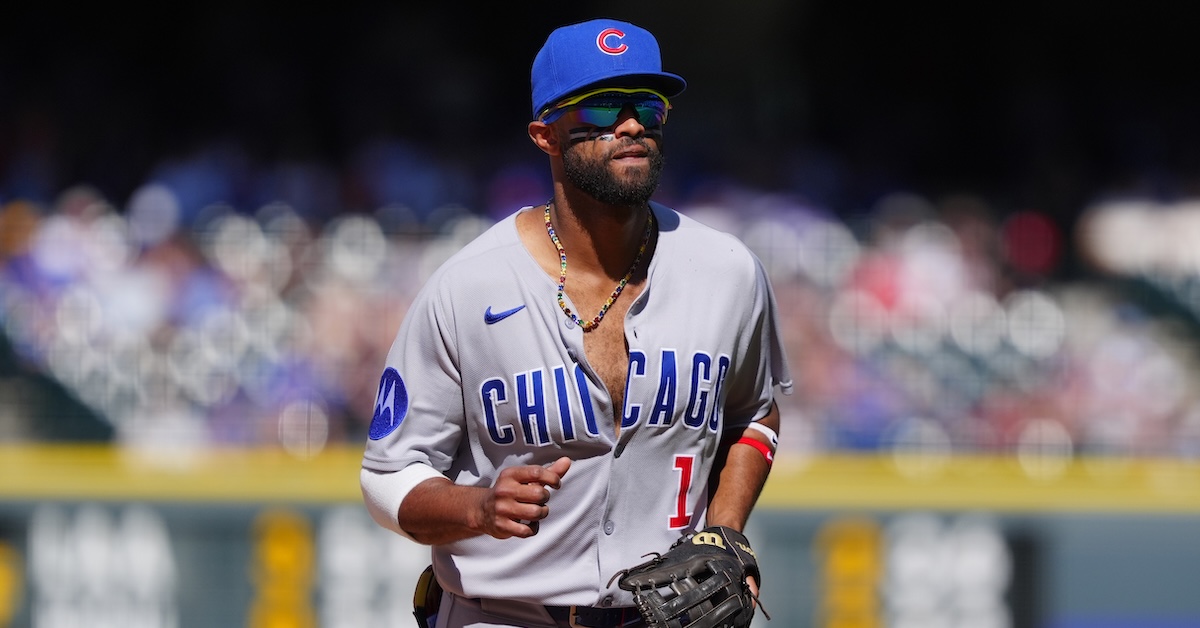
Our annual preview of free agency doesn’t include projected destinations for free agents. I don’t know if that has always been a site-wide editorial decision, but it’s one I wholeheartedly agree with. Predicting how much money someone will get is hard enough. Predicting which team out of many similar teams will give that money to them is essentially guesswork; sure, matching names to teams has entertainment value, but it’s hard to actually be good at it. Except, if you made me predict where Willi Castro would have signed before this offseason started, I absolutely would have picked the Rockies, and voila: Castro agreed to a two-year, $12.8 million deal with Colorado on Thursday.

The Rockies haven’t been players in free agency for a number of years, though that appears to be changing. Earlier this month, they signed Michael Lorenzen to a $8 million contract, the largest deal they’ve given to a pitcher in the 2020s. Castro’s deal is the biggest guarantee they’ve handed out to a free agent since Charlie Blackmon, and that hardly counts, what with him being a long-time Rockie signing the last deal of his career and all. Really, Castro is the team’s biggest signing since Kris Bryant, which says a lot about how the past few years have gone in Colorado.

What compelled the team to wade into the free agent position player pool – the shallow end, to be sure – for the first time in years? Signing a good major league player, that’s what. Castro is a versatile defender who won’t embarrass you offensively. In 2025 alone, he logged 100 innings at four different positions, plus cameos at shortstop and in center field. He’s not a standout at any of those spots, but the sheer flexibility is inarguably useful. Roster Castro, and you have a nice backup plan nearly everywhere. He’s a switch-hitter, too, so he can shore up any of the positions where you’d really prefer a platoon, regardless of who his platoon partner might be. Read the rest of this entry »


Which Way Is Janson Junk Going to Regress?

Sam Navarro-Imagn Images

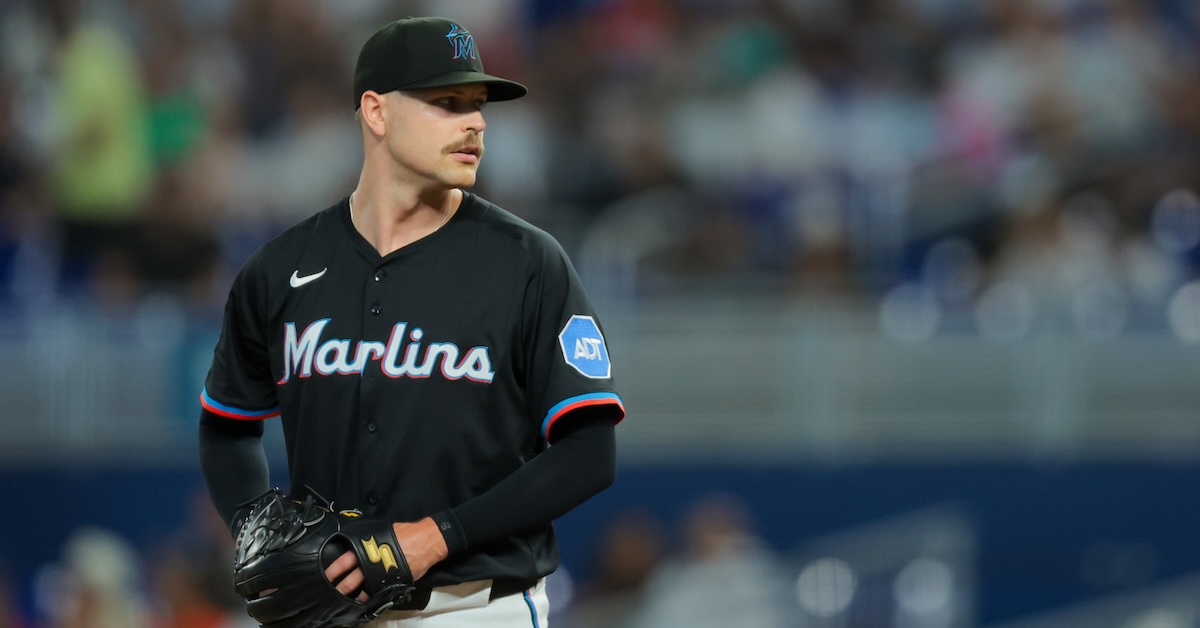
I don’t know why, but I’ve spent more time thinking about the Miami Marlins than any other team this winter. It started when the Marlins came to the end of the season with a not-terrible 79-83 record — three games better than the Braves! — with some interesting pieces looking forward.

Then two Marlins showed up on my search for the next Geraldo Perdomo. Then I kind of talked myself into Miami being one lucky free agent signing from competitiveness — just like in 2002. But it turns out they’re not even making a token effort to spend. Then they traded from their surplus of pitchers to beef up their anemic lineup, which seemed like an OK compromise to make at the time even though it thinned out their greatest strength.

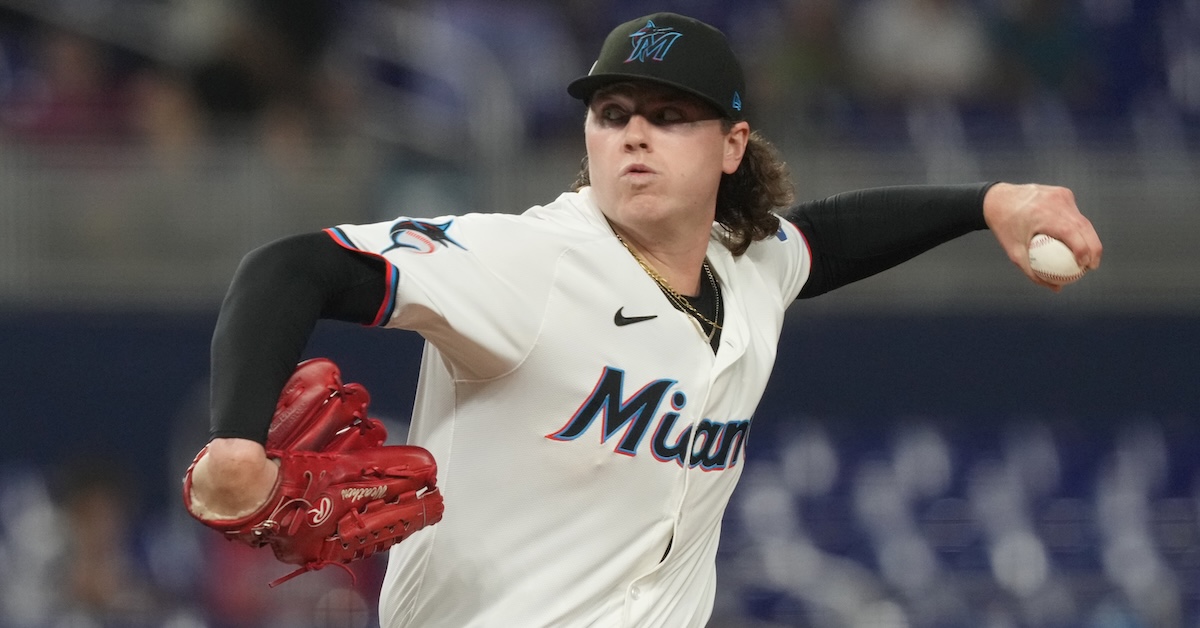
But then the Marlins thinned that rotation out even further, shipping Ryan Weathers to the Yankees for four prospects. So now the Marlins are in a position where Janson Junk is back in their presumptive Opening Day rotation. How fortuitous, because I’d been meaning to write about Junk for a while. Read the rest of this entry »


2026 ZiPS Projections: Baltimore Orioles

For the 22nd consecutive season, the ZiPS projection system is unleashing a full set of prognostications. For more information on the ZiPS projections, please consult this year’s introduction, as well as MLB’s glossary entry. The team order is selected by lot, and the preantepenultimate team is the Baltimore Orioles.

Batters

Baltimore’s pitching looked to be a problem entering the 2025 season, but the lackluster offense turned what was a good team with a run prevention problem into a losing club. After ranking second in the American League in runs scored in 2024, the O’s dropped to 11th in 2025, and suffice it to say, the pitching didn’t bail them out. A 75-87 record looks bad in a comparatively mild way given some of the clunkers the team has crafted since 1997, but it was one of the biggest O’s letdowns in at least my memory (I’m from Baltimore). But like the Blue Jays going into 2025 or the Yankees going into 2024, people tend to underrate good teams coming off of crappy seasons, sometimes horribly. There’s this belief that the lousy year is some baseline expectation and you have to start counting wins added from that point, which is a very poor way to make projections.

Have the O’s done enough with the offense? If the projections here are accurate, probably. With so many underperformances, some righting of the ship was always going to happen anyway, but the O’s didn’t just wait for the magic of regression to do the job for them. I don’t think the end of the Pete Alonso contract will be pretty, but he’s a legitimate big bat in a way the franchise tried to pretend Ryan Mountcastle was for a long time. Taylor Ward isn’t great, but you know who Taylor Ward is. The O’s are now in a position where they don’t need Coby Mayo or Heston Kjerstad to get back on track, though it would of course be nice. Read the rest of this entry »


How the Red Sox Could Miss Out on All the Big Free Agent Infielders and Still Come Out Ahead

John E. Sokolowski-Imagn Images

Things have been a little testy in Boston of late. It’s all downstream of the decision, in June, to trade — salary dump, reallyRafael Devers to San Francisco. I won’t relitigate the blow-by-blow, but Boston had just made the opportunistic signing of Alex Bregman and anointed Kristian Campbell as their second baseman of the future. Coupled with Trevor Story’s return to decentness after two years lost to injury, to say nothing of Marcelo Mayer’s rapid development, that left the Sox with more infielders than they could use.

Now, having seen what’s happened to Devers’ in-zone contact rate over the past two seasons, I think in the long run Red Sox fans will be happy they don’t have to watch the last eight and a half years of his contract up close. But for now, everyone’s nerves are a still a little raw. It’s always tough parting with a homegrown superstar, but the player Boston seemingly chose over Devers is quite good himself… oh wait, Bregman opted out of the last two years of his contract and signed with the Cubs. Read the rest of this entry »


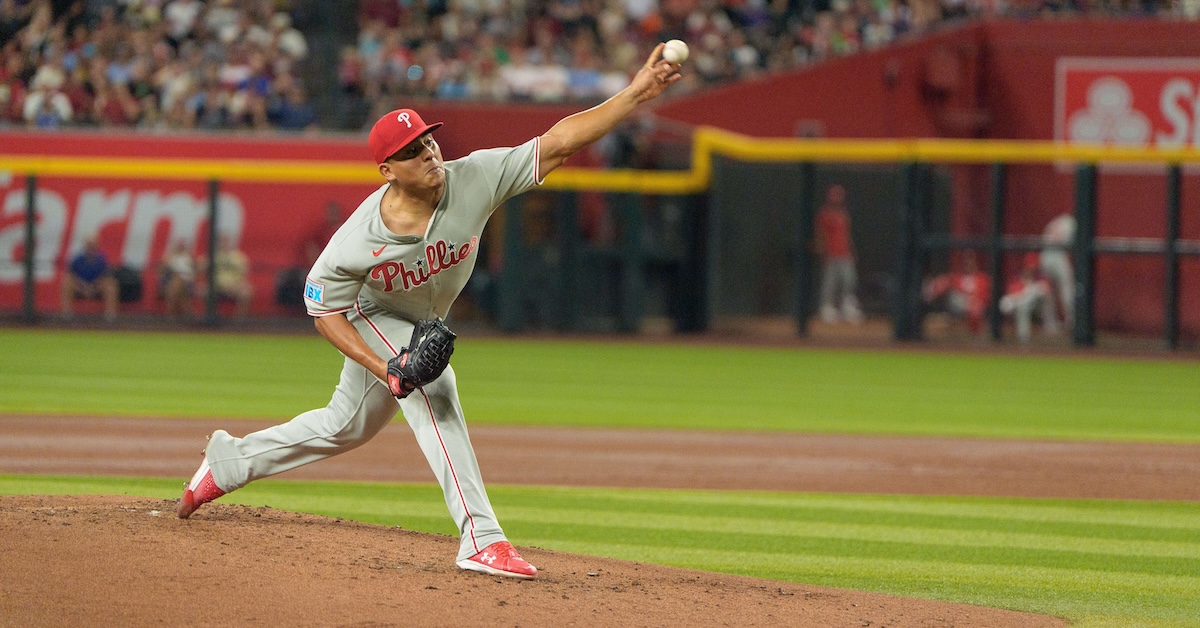
Red Sox Jump Into Free Agency With Five-Year Deal for Ranger Suárez

Allan Henry-Imagn Images

The Red Sox have finally done it. On Wednesday afternoon, the Sox became the last team in baseball to agree to terms with a major league free agent and they did so with a bang, nabbing southpaw Ranger Suárez on a five-year deal worth $130 million. Jon Heyman of the New York Post first reported the signing, while Bob Nightengale of USA Today reported the terms. Alex Speier of the Boston Globe reported that the deal contained no deferred money, meaning that the average annual value is a straight $26 million. Setting aside Alex Bregman’s opt-out laden pillow contract and several two-year deals given to pitchers who missed the first while recovering from injuries, this represents the first true multi-year commitment the team has made to a free agent during the tenure of chief baseball officer Craig Breslow. The Red Sox are finally going for it using every means available, and with one of the game’s most consistently good (if not consistently available) starting pitchers on their roster, they are looking more and more like a championship contender.

The Red Sox went into the offseason with one of the game’s greatest starters in Garrett Crochet, but there was a big gap between him and the rest of the rotation, which featured a number of solid pitchers who hadn’t managed to step up and grab the no. 2 spot in Brayan Bello, Tanner Houck, and Kutter Crawford. Boston upgraded through trades for Sonny Gray and Johan Oviedo, and according to our depth charts, they projected to have the best rotation in the game even before signing Suárez (the Phillies, even without Suárez, rank fourth).

Still, this is a different caliber of move, the effects of which seem likely to cascade down the roster. It represents a major commitment in both years and dollars, and according to RosterResource, it pushes Boston just over the second luxury tax threshold. All of a sudden, Bello and Co. are likely jockeying for the fourth or fifth spot in the rotation rather than the second. The Red Sox also boast Patrick Sandoval, who missed the 2025 season recovering from internal brace surgery, and Kyle Harrison, who came over in the Rafael Devers trade and projects for an above-average line in 2026. We’ve now named nine different viable big league starters, before you even get to coveted prospects like Payton Tolle and Connelly Early, who debuted in 2025. That’s a lot of depth to deal from, freeing Boston up to trade a starter and maybe some of its outfield surplus to reinforce a particularly weak infield. Read the rest of this entry »


For Nationals Prospect Seaver King, Discipline Is the Key to His Ceiling

Mark J. Rebilas-Imagn Images

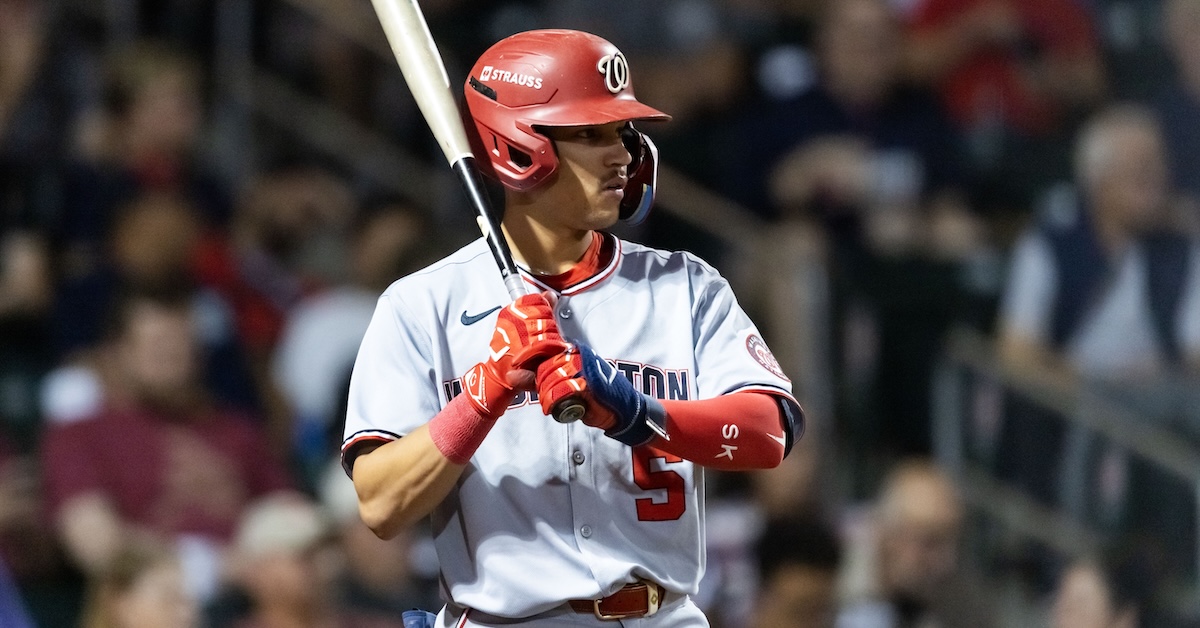
Seaver King will head into the 2026 season looking to improve on a 2025 campaign that saw him fail to impress at the plate. Across 551 plate appearances split between High-A Wilmington and Double-A Harrisburg, the 22-year-old shortstop slashed a lackluster .244/.294/.337 with six home runs and an 88 wRC+. There is certainly more in the tank. Drafted 10th overall by the Washington Nationals out of Wake Forest University in 2024, King has both the résumé and the raw tools to profile as a solid hitter at the big league level.

He flashed some of that promise in the admittedly hitter-friendly Arizona Fall League. As our lead prospect analyst Eric Longenhagen put it, King “rebounded in a big way,” raking to the tune of a 1.031 OPS and eight extra-base hits over 79 plate appearances with the Scottsdale Scorpions. Just as importantly, he displayed the smooth right-handed stroke that allows him to shoot balls to all parts of the field, which is what he does when he’s at the top of his game.

He isn’t lacking in confidence, nor is he afraid of some honest self-assessment. Reportedly selling out for power early last season, the Athens, Georgia native has come around to realizing that staying true to himself is what will produce the best results.

“I feel like I bring a lot to the table,” King told me early in his AFL stint. “Defense. Leadership. I am still finding my way in the box, obviously. It’s tough playing against elite competition, so I have to go out there and play my game. That’s hitting line drives. I’ll maybe mix in a couple of home runs with the right launch angle, but mostly I’m trying to get on base and move around them as fast as possible.” Read the rest of this entry »


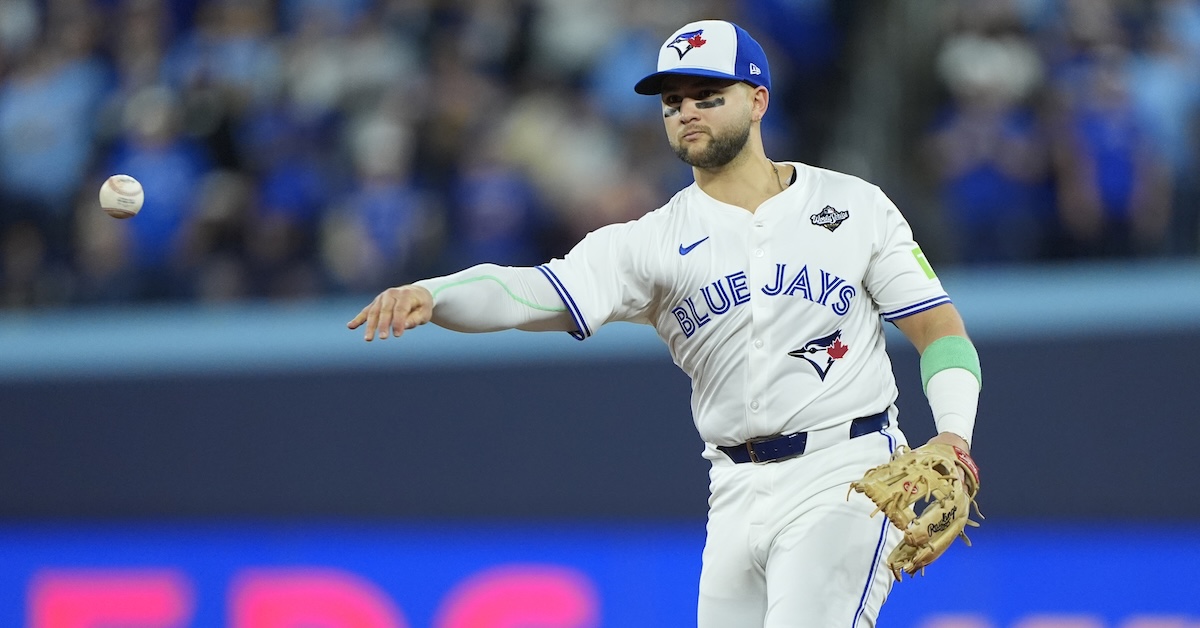
Reliever Contracts Make Plenty of Sense

Dale Zanine-Imagn Images

Most free agent contracts are relatively easy to predict. Calculate the going rate for a single win, multiply it by the player’s projected wins above replacement over the length of the deal, and the result will come pretty close to the actual contract. This generally holds true for every type of player save one: the humble relief pitcher.

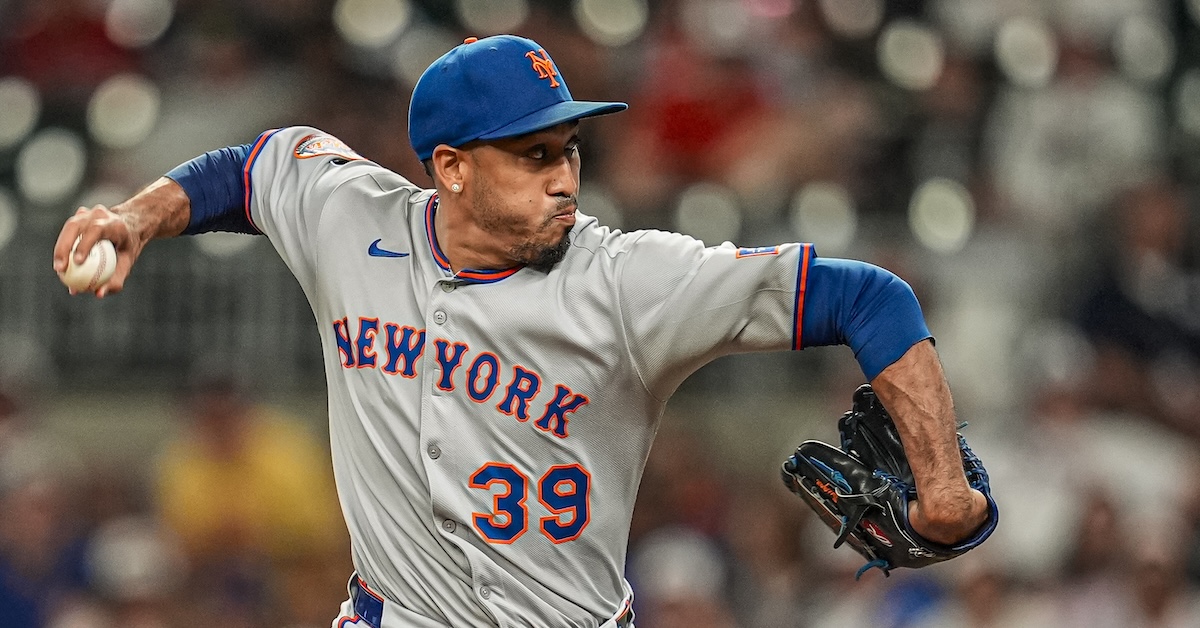
The Mets gave Luke Weaver $22 million for two years. The Tigers gave Kenley Jansen $11 million for his age-38 season. The Reds gave Emilio Pagán two years and $20 million, with the second year a player option. Run all of the reliever contracts signed this offseason through a dollars per win calculation, and they’re almost uniformly going to come out looking like terrible deals.

The sport appears to be smarter than ever, and yet teams keep shelling out gobs of guaranteed money on bullpen arms who hardly ever top 2 WAR. What’s their problem? Well, maybe teams have collectively decided to behave irrationally in one specific market, but I don’t think it’s that. I think teams are behaving as rationally in the reliever market as any other, but they happen to be using a different metric for evaluating reliever deals. The relevant metric, I think, isn’t dollars per win, but something like championship win probability added. Read the rest of this entry »


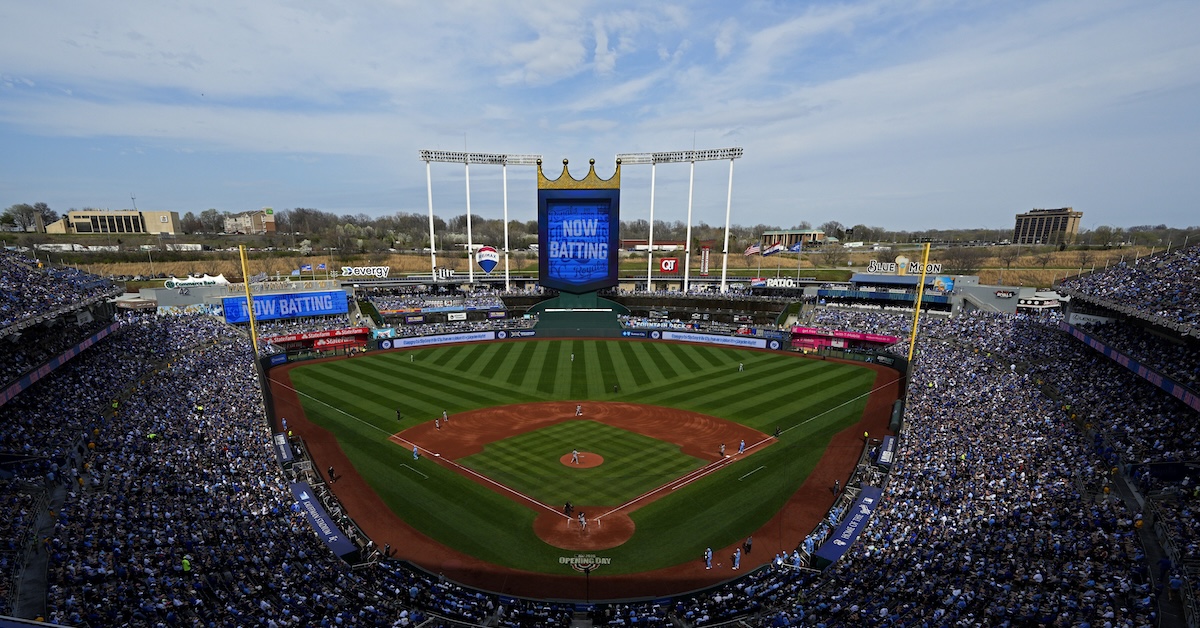
Analyzing Kauffman Stadium’s New Dimensions

Jay Biggerstaff-Imagn Images

Yesterday, the Royals made a big announcement. Kauffman Stadium, long one of the most cavernous venues in the majors, is going to be a little less warehouse-like this year. The walls are moving in nine or 10 feet more or less across the board, and getting shorter by a foot and a half to boot. That’s a meaningful change for a stadium where home runs generally go to die. How massive? Time to crank up the old computer and find out.

I plugged the new dimensions from Kansas City’s press release into an equation describing a rough arc. I fit those points to a cubic spline so that it could more closely resemble the actual stadium, with its pinched-in corners. I made a few approximations as well; for instance, the wall is moving to a height of eight and a half feet “in most places,” so I just applied that across the board. I also modeled the old dimensions the same way. That way, I had two different virtual walls built to compare some batted ball data against.

Notably, my approximation isn’t a perfect replica of the stadium. I don’t have a millimeter-scale, or even a yard-scale, map of the place. I can’t account for outfielders robbing home runs, which is definitely going to be more common with the lowered walls, though still quite rare overall. But by running it through both the old and new wall dimensions, I think that this unavoidable error can be minimized. It’s pretty clear that no balls that were home runs with the old outfield parameters will suddenly not be home runs with the new ones, so the thing we’re looking for is the difference, assuming that my approximation is close enough to reality. And it is: My modeling says that over the last three years respectively, 205, 162, and 159 batted balls hit in Kansas City should have turned into homers. In reality, it’s been 186, 147, and 151. Read the rest of this entry »


Yankees Finally Kick Off Their Offseason by Trading for Ryan Weathers

Jim Rassol-Imagn Images

Though they may have failed in their reported pursuit of former Miami starter Edward Cabrera, who was ultimately dealt to the Cubs last week, the Yankees still managed to complete a trade with the Marlins for a starting pitcher. As Jack Curry of YES Network reported on Tuesday night, Ryan Weathers is on the move from Miami to New York. In return, the Marlins will receive a group of four minor leaguers from the Yankees: outfielders Dillon Lewis and Brendan Jones, along with infielders Dylan Jasso and Juan Matheus.

Frankly, it’s impressive that Yankees general manager Brian Cashman can get anything done while locked in a staring contest with agent Scott Boras over the terms necessary to re-sign outfielder Cody Bellinger. As for Miami’s side, I deeply respect the Marlins pro scouting department for looking at all the work they did scouring New York’s farm system for potential targets during the Cabrera talks and refusing to let all that effort go to waste.

Weathers, like Cabrera, still has three seasons of team control remaining before he hits free agency. This is not a rebuilding team trading contracts set to expire before its next window of contention opens. Rather, the Marlins, who are in the early stages of transitioning from rebuilding to contending, have such a surplus of starting pitching that they feel comfortable trading not one, but two established starters in favor of stockpiling additional position player talent in the minors. When Michael Baumann wrote up the Cabrera trade, he speculated that we might see debuts this coming season from Thomas White and Robby Snelling, two of Miami’s top pitching prospects who both graduated to Triple-A last year. By trading Weathers in addition to Cabrera, the Marlins are all but committing to giving one or both of them meaningful innings in the majors in 2026. Read the rest of this entry »