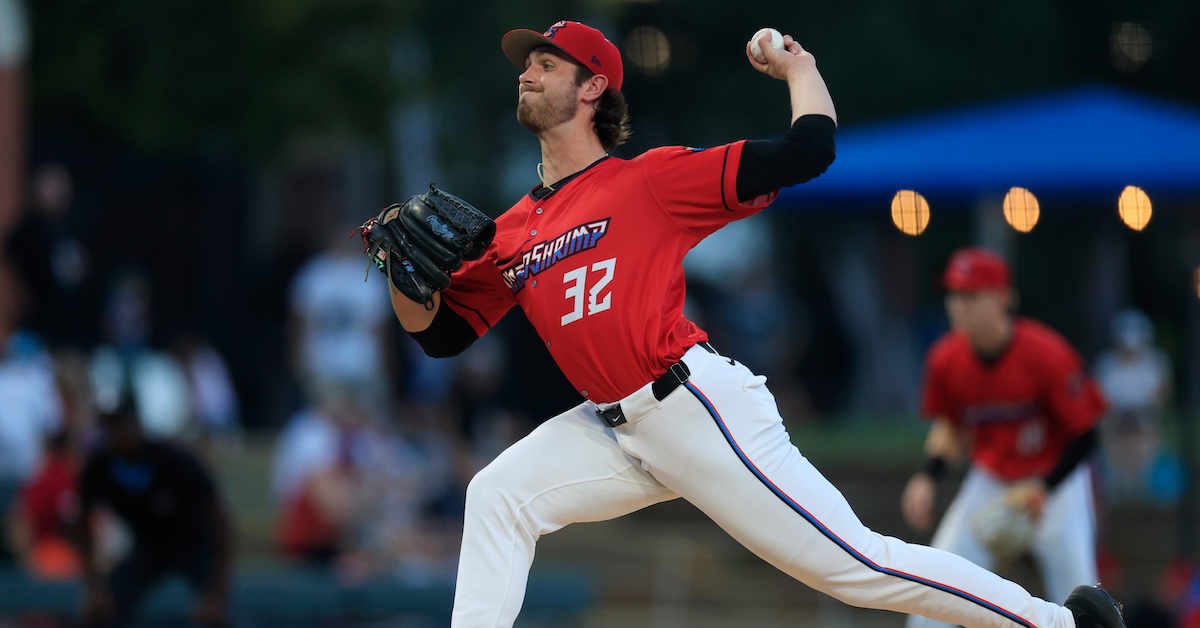
Thomas White Photo: Corey Perrine/Florida Times-Union/USA Today Network via Imagn Images
Below is an analysis of the prospects in the farm system of the Miami Marlins. Scouting reports were compiled with information provided by industry sources as well as my own observations. This is the sixth year we’re delineating between two anticipated relief roles, the abbreviations for which you’ll see in the “position” column below: MIRP for multi-inning relief pitchers, and SIRP for single-inning relief pitchers. The ETAs listed generally correspond to the year a player has to be added to the 40-man roster to avoid being made eligible for the Rule 5 draft. Manual adjustments are made where they seem appropriate, but we use that as a rule of thumb.
A quick overview of what FV (Future Value) means can be found here. A much deeper overview can be found here.
All of the ranked prospects below also appear on The Board, a resource the site offers featuring sortable scouting information for every organization. It has more details (and updated TrackMan data from various sources) than this article and integrates every team’s list so readers can compare prospects across farm systems. It can be found here. Read the rest of this entry »
On April 21, Grant Anderson inherited a hot mess. With the Brewers ahead 3-0 in the fourth inning, starter Kyle Harrison lost his feel. He walked Riley Greene and Spencer Torkelson in two uncompetitive plate appearances, then gave up a rifled line drive on one of his slowest fastballs of the day, a center-cut cookie to Hao-Yu Lee. Pat Murphy called Anderson in from the bullpen to face the bases loaded with no one out.
Anderson delivered nearly flawlessly. He got Javier Báez to ground into a first-pitch double play, then struck out pinch-hitter Kerry Carpenter to escape the inning with only a single run allowed. That run, of course, went on Harrison’s ledger. Anderson got credit for a scoreless inning, no more or less.
On May 16, Chase Silseth tried to pull off the same trick. José Soriano fought through five strong innings against the Dodgers, but he didn’t have it in the sixth. After an inning-opening groundout, he walked four of the next five batters and hit the fifth, driving in two runs and leaving the bases loaded. Silseth came in to put out the fire – but he might as well have poured kerosene on it. He hit the first batter he faced, then gave up a two-run single immediately after, pushing the score to 6-0. He finally got the last two batters of the inning – which meant that in the game’s official log, he pitched two-thirds of an inning and didn’t allow a run.
These two pitching performances went quite differently. Anderson had a tougher task and performed better. But the two of them each got credit for a clean sheet. This is far from the only problem with the way we calculate ERA, but it’s one that stands out to anyone following. Anderson and Silseth didn’t deserve the same counting statistics there. Likewise, Soriano got tagged for three runs, while Harrison got tagged with only one. But that didn’t reflect what happened to them – both of them lost it and had to be removed from the game because of all the runners they’d allowed. Read the rest of this entry »
Shohei Ohtani made his first start on the mound for the Dodgers one year ago today, following a nearly two-year recovery from Tommy John surgery. He threw 28 pitches, exited after the first inning as planned, and flashed great stuff, even if he looked occasionally frustrated with his command. He ramped up slowly from there, from one inning to two to three to eventually six by the fall. He stamped his health with a dominant, 10-strikeout performance in NLCS Game 4 to send the Dodgers to the World Series.
Ohtani has now made 25 starts (of some length) since his return. Not only has he excelled individually over the last year, but his renaissance has run parallel with that of the Dodgers rotation.
Let’s start there: The 2025 Dodgers weren’t a powerhouse. They were great, and I’m sure they’re content with their second consecutive World Series trophy. But they weren’t quite the behemoth we’d seen in the past. They didn’t lock up the NL West until game 159. They finished with their fewest wins since 2018 and “worst” pythag record since 2016. We can see their win rate over 162 games has steadily fallen from its peak of 118 wins in late 2022. Read the rest of this entry »
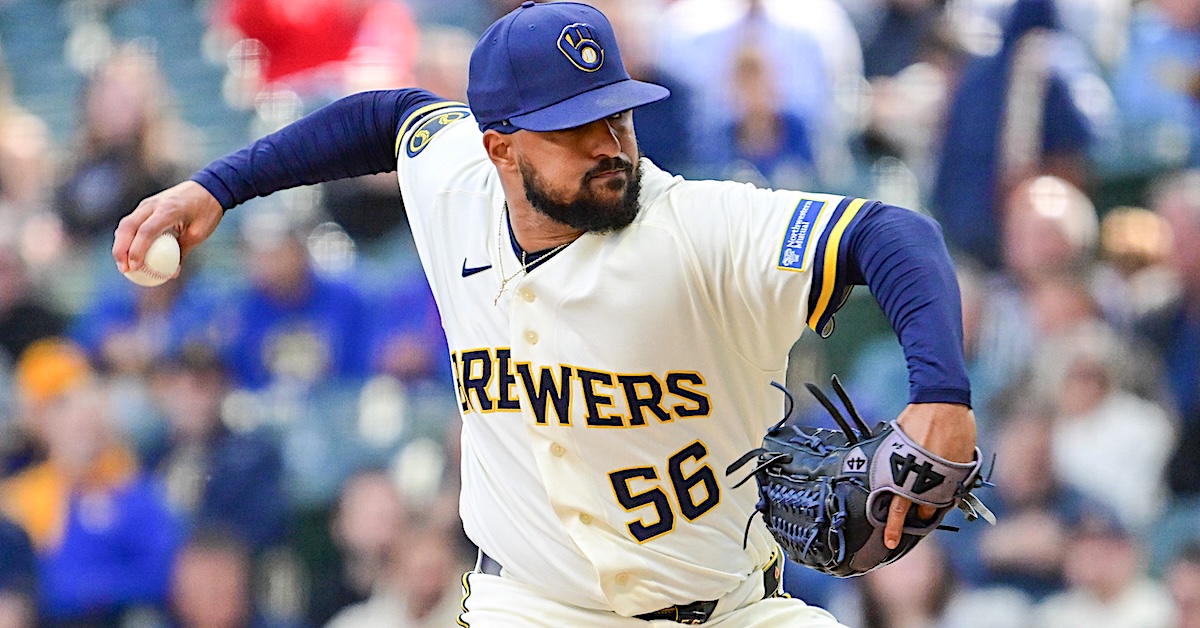
Mark Hoffman/Milwaukee Journal Sentinel/USA Today Network via Imagn Images
Last week, the illustrious Ben Clemens wrote about the state of the bunt, because the state of the bunt, as it turns out, is strong. Hitters are bunting more often, picking their spots better, and finding greater success. It’s a bunting renaissance. He didn’t appear in Ben’s article, but Milwaukee’s David Hamilton is at the forefront, leading the league with 10 bunt hits and 23 total bunts. It’s just the 12th time this decade a player has reached 23 bunts in a season, and we’re only halfway through June! Ben noted that 74.1% of bunts have been successful – meaning the bunt resulted in either a hit, an error on the defense, or a sacrifice – the highest mark in the universal DH era. With so much bunt in the air (and on the ground), I got to wondering how pitchers can fight back.
The first line of defense is to alter your positioning. You bring your third baseman in, play the corners in, put on the wheel play. But I wanted to come at it from another angle. If you’re a pitcher, and you want to make sure the batter at the plate doesn’t get a successful bunt down, what can you do? The two biggest things you can control are your pitch type and location. I dug into the Statcast data on bunts and attempted bunts over the past 18 years. This is not earthshaking research, and some of what I found is fairly intuitive, but I’m not sure I’ve ever seen it laid out, and I definitely haven’t seen any numbers behind it. Read the rest of this entry »
Like many of us, Jake Burger is tuning in to as many World Cup matches as his schedule allows. The Texas Rangers first baseman is a big fan of “the beautiful game,” and has been for well over a decade. Moreover, it isn’t just the US national team that captures his attention. Burger is an ardent supporter of Tottenham Hotspur, one of the more prominent sides in the English Premier League.
How and when did the 30-year-old St. Louis native come to embrace a team based in North London?
“I became a Spurs fan probably around 2011-2012,” Burger told me. “Gareth Bale and Luka Modrić were my two favorite players. It kind of started with me playing [the FIFA video game] and knowing a lot of those names. Modrić was a wizard out there. Bale, too. Then, obviously, Harry Kane came over to Spurs and I became a big fan of his. They kind of went on a run when Mauricio Pochettino came in [as manager], so following them just became more a part of my life.
“In 2019, I got to go over there to the new stadium and watch a game,” Burger added. “They played Bournemouth and won 3-2. I went over with Ryan Burr and Jimmy Lambert, who were in the White Sox organization with me, and we saw a few other matches, as well. Lambert is a Liverpool fan, and Burr a Man City fan, so along with the Tottenham game we went to a Manchester Derby and a Merseyside Derby; we saw Liverpool play Everton.”
Being a Tottenham fan this past season was anything but easy. Had they lost their final match, they would have been relegated from England’s top league for the first time in nearly 50 years. Much to the relief of Spurs supporters everywhere, they defeated Everton 1-0 to remain safe. Read the rest of this entry »
On Wednesday night, I sent Michael Baumann a Slack message asking him the first question in today’s mailbag: How many teams have never had a 30/30 season? “Phew,” he said. “That’s a good one.” I told him I’d be answering it, but I thought it was a fun bit of trivia and wanted to know what his guess would be. I was on my way back from my softball game, and I told him I’d look it up as soon as I got home. But Baumann was impatient. He proceeded to run the search himself and answer the question for me.
“Thanks for doing the mailbag for me lol,” I said. He replied, “I had that thought. I just couldn’t help myself.” That’s the type of impulsive, obsessive behavior that drives us to answer your mailbag questions every week. Like you, we love all that is trivial, whimsical, historical, hypothetical, strategic, pedantic, gigantic, nitty, gritty, and silly about baseball. Your passion is our passion. Anyway, because Baumann couldn’t resist, part of the answer to the first question comes from his initial Stathead search. He told me to run my own search, just in case he missed something in his fervor.
We’ll get to the answer to that 30/30 question in a moment. We’ll also answer your questions on the teams with the greatest difference between cumulative player WAR generated and actual team wins, bases-loaded walks, and how to get your baseball fix when you’re short on time. But first, I’d like to remind you that this mailbag is exclusive to FanGraphs Members. If you aren’t yet a Member and would like to keep reading, you can sign up for a Membership here. It’s the best way to both experience the site and support our staff, and it comes with a bunch of other great benefits. Also, if you’d like to ask a question for an upcoming mailbag, send me an email at mailbag@fangraphs.com. Read the rest of this entry »
Below is an analysis of the prospects in the farm system of the Minnesota Twins. Scouting reports were compiled with information provided by industry sources as well as our own observations. This is the sixth year we’re delineating between two anticipated relief roles, the abbreviations for which you’ll see in the “position” column below: MIRP for multi-inning relief pitchers, and SIRP for single-inning relief pitchers. The ETAs listed generally correspond to the year a player has to be added to the 40-man roster to avoid being made eligible for the Rule 5 draft. Manual adjustments are made where they seem appropriate, but we use that as a rule of thumb.
A quick overview of what FV (Future Value) means can be found here. A much deeper overview can be found here.
All of the ranked prospects below also appear on The Board, a resource the site offers featuring sortable scouting information for every organization. It has more details (and updated TrackMan data from various sources) than this article and integrates every team’s list so readers can compare prospects across farm systems. It can be found here. Read the rest of this entry »
Manny Machado was in the news last week for what got called an anti-analytics rant. This would’ve been a bigger deal 10 or 15 years ago, when front offices were still coming to grips with empirical study as a part of scouting and player development, but that battle’s over now. The nerds are here.
Machado said the game’s getting harder to play, and that there are “too many stats out there. Too many stats, way too many numbers. I don’t even know half of the stuff that goes up there. I look at the board sometimes, and I even ask some of the guys, like, ‘What is WCCVBB, whatever it is?’… It’s crazy to even keep up with.”
As someone who makes his living using WCCVBB, I think Machado’s actually got a point here. I’m an analyst with a social science background: There is no stat so newfangled I won’t poke it to see if it’ll teach me — or better yet, you, the fans — something new about the game. Read the rest of this entry »
Not very much has gone right in Cincinnati this season. Having fought through injuries, slumps from key hitters, and total no-shows from their closer and the back end of their rotation, the Reds sit just under .500, which in the surprisingly competitive NL Central is good for last place. It’s not how the Reds wanted to build on their playoff appearance a year ago.
One of the few bright spots has been JJ Bleday, who’s hitting .270/.363/.568. Despite appearing in just 39 of Cincinnati’s 67 games, he’s third on the team with 11 home runs and tied for fourth in total bases.
Unlike other Reds standouts, like Sal Stewart and Chase Burns, Bleday wasn’t really expected to do much. The Reds picked him up off the street for $1.4 million after the A’s non-tendered him last November. I was about to make a joke about what it says that Bleday couldn’t even stick in Sacramento, but the A’s are actually pretty deep at his position. At any rate, he was just below replacement level in 98 games in 2025 — that’ll get you non-tendered anywhere. Read the rest of this entry »
Once in a while, a player gets to walk off into the sunset at the height of his game. Ted Williams and David Ortiz are two examples of Hall of Famers who retired while still stars. But most players, even many greats, don’t see their careers end on a high note. That much larger list includes Andrew McCutchen, who was released by the Texas Rangers in late May after hitting .197/.277/.260 in 37 games as a part-time designated hitter/outfielder. There’s still a possibility that McCutchen catches on with another team this season as a spare bat off the bench, but in any case, we’re likely seeing the last throes of his career. Time always wins in the end, so this discussion was inevitable, but a decade ago, it looked like this conversation would have Cooperstown-related content.
Going back to early 2016 in the time machine, Andrew McCutchen was a very different player. Still in his 20s, he was a five-time NL All-Star coming off four consecutive Silver Slugger awards and four top-five finishes in the NL MVP balloting, including a win in 2013. It was a better time for the Pittsburgh Pirates as well, having just made the playoffs for the third straight season, winning 98 games in 2015 before being unceremoniously eliminated by the Cubs in the Wild Card game. Always at risk of losing their stars to teams more willing to pay them, the Pirates didn’t have to worry about that yet with McCutchen, who still had three more years to go in Pittsburgh, thanks to the six-year, $51 million extension (with a team option for a seventh year) that he had signed before the 2012 season.
At this stage, McCutchen appeared to be on a pretty good Hall of Fame trajectory. After seven seasons, Cutch was entering his age-29 campaign having already tallied 41 WAR with a .298/.388/.496, 144 wRC+ career line while playing center field. On a historical level, these numbers were quite competitive with some of the best young center fielders in MLB history. Look at how prominently he featured on the leaderboard through his age-28 season:
Note that Mike Trout would eventually move up to third on this list; 2015 was only his age-23 season! It’s also weird to see Rickey Henderson here, but he played mostly center field for the Yankees in 1985-1987, and so he qualified in our database.
Anyway, that’s impressive company, and the vast majority of these players are Hall of Famers or will end up there eventually. ZiPS at the time saw no reason to be particularly suspicious of McCutchen’s performance, and without any red flags, was happy to project him with a fairly typical decline phase for a star outfielder.
ZiPS Time Warp – Andrew McCutchen (Through 2015)
Year
BA
OBP
SLG
AB
R
H
2B
3B
HR
RBI
BB
SO
SB
OPS+
WAR
2016
.293
.392
.493
550
89
161
33
4
23
89
84
118
14
146
5.7
2017
.292
.391
.501
527
85
154
33
4
23
87
80
112
12
148
5.4
2018
.292
.391
.497
511
81
149
31
4
22
84
78
107
12
147
5.2
2019
.287
.384
.486
494
76
142
30
4
20
78
72
101
11
142
4.5
2020
.285
.379
.468
470
70
134
27
4
17
71
67
90
10
136
3.8
2021
.285
.377
.462
446
64
127
25
3
16
65
61
82
9
134
3.4
2022
.279
.366
.446
419
58
117
22
3
14
60
53
71
8
126
2.6
2023
.274
.353
.425
391
50
107
20
3
11
52
43
61
7
117
1.7
2024
.268
.339
.414
362
43
97
17
3
10
46
35
53
6
110
1.0
2025
.261
.328
.387
333
37
87
14
2
8
39
29
45
4
100
0.3
2026
.254
.314
.365
307
32
78
12
2
6
34
23
38
4
90
-0.3
2027
.248
.304
.342
234
23
58
8
1
4
23
16
28
3
81
-0.7
2028
.246
.296
.339
171
15
42
5
1
3
16
10
19
1
78
-0.8
RoC Proj.
.279
.365
.448
5215
723
1453
277
38
177
744
651
925
101
126
31.7
RoC Actual
.248
.344
.420
4558
659
1129
217
11
182
599
649
1136
66
108
10.9
Career Proj.
.287
.375
.469
9080
1362
2604
513
77
328
1302
1194
1704
255
134
72.7
Career Actual
.271
.364
.455
8423
1298
2280
453
50
333
1298
1192
1915
220
124
51.9
As it turned out, 2015 was McCutchen’s last 4-WAR season, and in only one season was he better than 2 WAR (3.6 WAR, 2017) over the next decade. While ZiPS didn’t have any illusions that McCutchen would stay a superstar for another decade, it didn’t expect him to hit a more drastic decline until the early 2020s. Sticking in center for a few more years, with a projected 2,600 hits, 72.7 WAR, and 333 home runs, when combined with his peak, I think this McCutchen would’ve made the Hall of Fame, though it probably would’ve taken him several years on the ballot to creep over the 75% line.
It’s hard to point to the obvious reason for his premature decline. The 2016 campaign was his worst season in the majors at that point, marred by a down June/July while he was playing through a severely jammed thumb. But that wasn’t thought to be a long-term problem, and his offense did bounce back to a degree for the next few seasons. His defense was already trending downward, but he was hardly slow, and, except for 2020 when he was coming back from a torn ACL that prematurely ended his 2019 campaign, he stayed above the 90th percentile in sprint speed through the 2022 season. His contact rate declined, but he still maintained his solid plate discipline and his hard-hit rate remained steady.
I don’t believe McCutchen’s going to do well when he hits the Hall of Fame ballot, but I think the version that we got might be too easily dismissed. He only ranks 30th in Jay Jaffe’s JAWS for center fielders, a place where most players do not get into the Hall. He does fare better using FanGraphs WAR, however, both in seven-year peak fWAR and in fJAWS. McCutchen ranks 13th in peak fWAR among center fielders, compared to 24th in Baseball Reference’s version.
Using FanGraphs WAR, McCutchen ranks 19th among center fielders in JAWS rather than 30th, and that ranking is strong enough that I think you at least need to have a conversation about his Hall of Fame suitability. As noted above, I’m not optimistic; the writers gave very little attention to Jimmy Wynn (19th), Kenny Lofton (12th), and Jim Edmonds (11th), while it took nine ballots to induct Andruw Jones (eighth). McCutchen had a huge peak, but the freshest memories of him will not be of that peak, but of his decade as a middling DH/corner outfielder.
If this is actually the end for Andrew McCutchen, he shouldn’t be remembered for coming up short of Cooperstown. For the better part of a decade, he was one of the very best players in baseball, the biggest name in a Pirates revival that briefly made Pittsburgh feel like a big baseball city again. The second half of his career didn’t dazzle like the first, but he did more than enough to be remembered as something greater than merely a very good player who got old quickly.