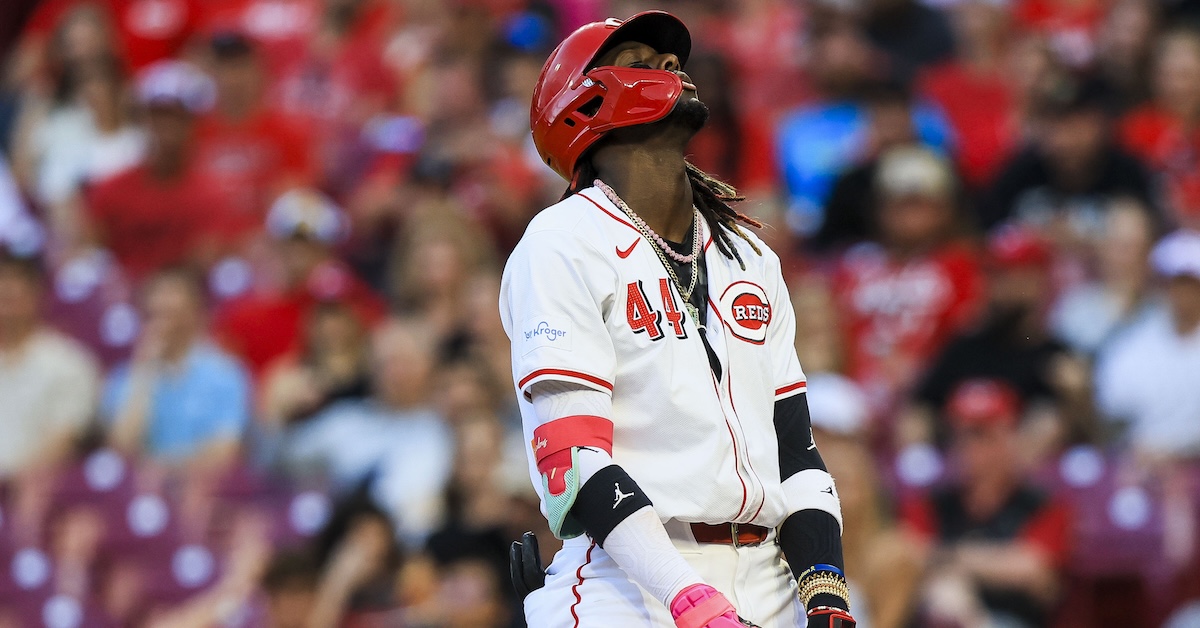
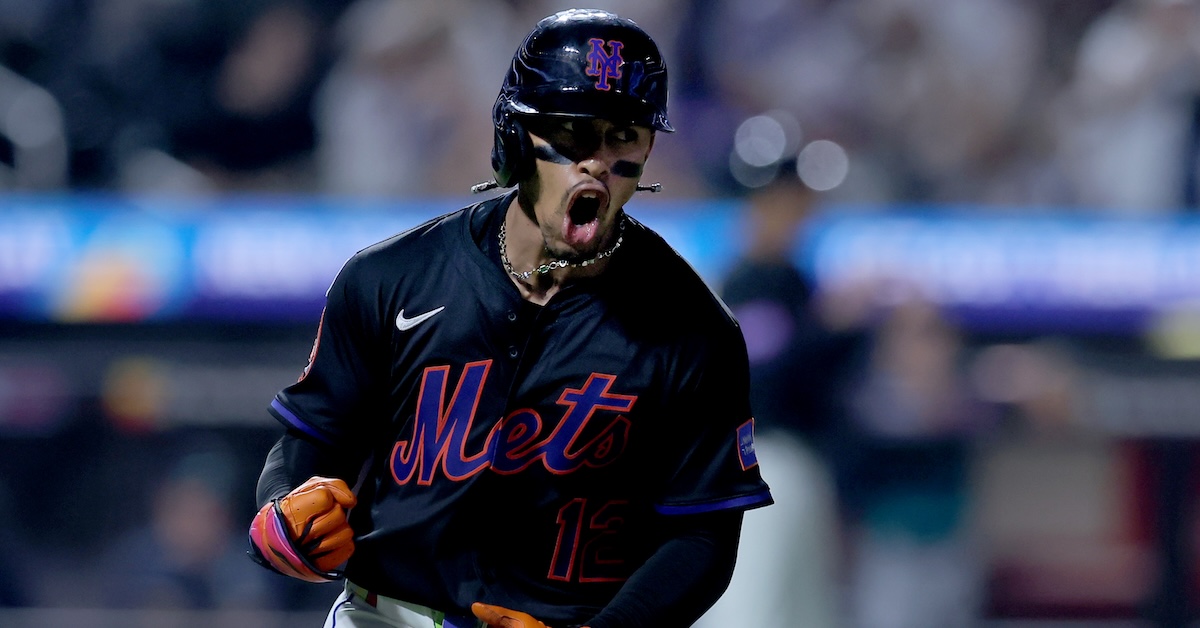
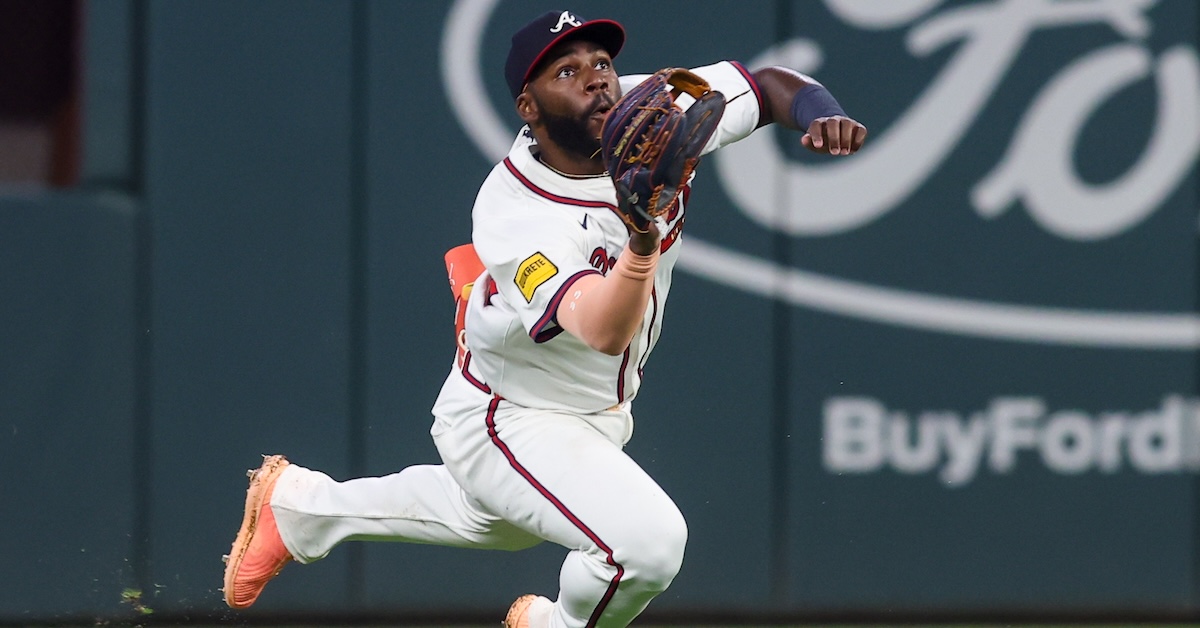
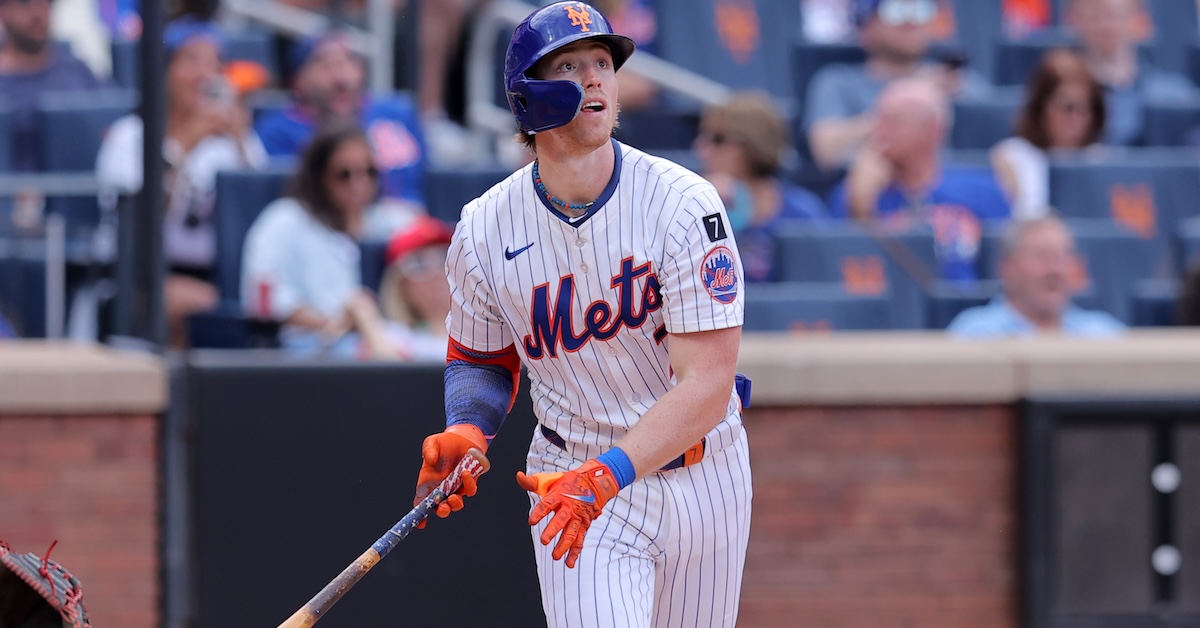
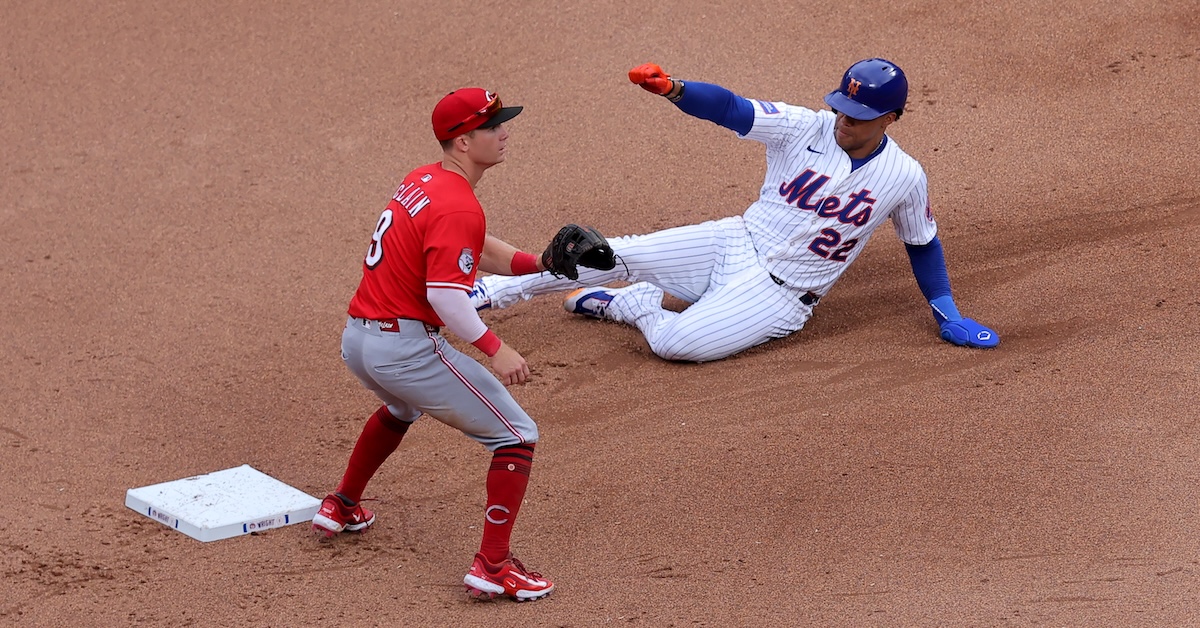
The Mets swept the Phillies this week, which made headlines for two reasons: First, the Mets have now won 10 straight against the Phillies at Citi Field, dating back to last September, and including Games 3 and 4 of last year’s NLDS. If the Phillies don’t win a game there in the playoffs, they don’t face the Mets in New York again until the last weekend of June 2026. A potential 21-month losing streak at a divisional rival is tough to swallow, though it’s good to see that everyone’s being super normal about it.
Second, it kept the NL East race alive. The Phillies entered this division matchup seven games up with 32 to play; had they won the series, they would’ve basically had the division title in the bag. As it stands now, they’re up five, with the Mets coming to Philadelphia for a four-game set in mid-September. The Phillies are still 3-to-1 favorites, according to our playoff odds, but it’s a real pennant race now.
But this sweep is most important for a reason that went a little under the radar. While the Mets were beating seven shades of you-know-what out of the Phillies, the Dodgers were doing the same to the Reds in Los Angeles. Read the rest of this entry »
David Frerker, Brad Penner, and Michael McLoone – Imagn Images
It’s been a rough season for Francisco Alvarez — and specifically his hands. The 23-year-old catcher fractured a hamate in his left hand while taking batting practice on March 8, and after undergoing surgery, missed the first four weeks of the regular season. He scuffled upon returning, to the point that the Mets optioned him to Triple-A Syracuse in late June, but particularly since returning in late July, he hit well until he sprained the ulnar collateral ligament of his right thumb (as opposed to the UCL of his elbow) while making a headfirst slide on August 17. The injury, which requires surgery to fix, appeared to be season-ending, but to the Mets’ surprise, Alvarez has been able to swing the bat without pain, so he began a rehab assignment with Triple-A Syracuse on Wednesday. Unfortunately, in his third plate appearance of the game, he was hit on the left pinkie by an 89-mph sinker and had to leave the game.
Alvarez, who also missed seven weeks last year due to surgery to repair a torn UCL in his left thumb, was sent for testing after being removed. At this writing, the Mets have yet to reveal his prognosis, but this may set back his return, and he’ll still need another surgery this offseason. When available, he’s been one of the Mets’ more productive hitters, a big step up from the team’s other catchers on the offensive side. In 56 games, he’s hit for a career high 125 wRC+ (.265/.349/.438) with seven homers in 209 plate appearances, good for 1.4 WAR. Luis Torrens, who hit well while serving as the team’s regular catcher during Alvarez’s early-season absence, has slumped to the point that he’s batting .218/.282/.320 (73 wRC+) in 245 PA, and third-stringer Hayden Senger has been even less productive, hitting .180/.227/.197 (22 wRC+) in 67 PA.
[Update: On Thursday afternoon, Alvarez revealed that his pinkie is fractured. He said he hopes to play again this season, but a timeline for that has yet to be determined.]
The Mets, who are now 72-61, just swept a three-game series against the Phillies (76-57) at Citi Field to pull within four games of the NL East leaders. They’ve won eight of their last 11 games after losing 14 of 16 from July 28 to August 15, a skid that bumped them down to third in the NL Wild Card race, though they now have a 4 1/2-game cushion over the Reds (68-66). They’ve got some other injuries that could affect their drive for a playoff spot, but in that, they’re not alone. What follows here is a roundup of fairly recent injuries among NL contenders, some that slipped through the cracks in our coverage during recent weeks and others that merit mention so long as we’re on the topic; an alarming number of these involve fingers. I’ll go division-by-division, and follow this with a similar AL roundup. Read the rest of this entry »
The Mets are the best Rorschach test in baseball right now. You can see almost anything you want to when you look at them. A band of high-paid underachievers? Sure. A great team in a rough stretch? Yup. A triumph of pitching development? Sure thing, but also a cautionary tale about what happens when you don’t have enough starters to get through the season. Each of those topics – and plenty more – are worth a closer look. But in watching the Mets in recent weeks, I’ve been struck by the same observation every time I watch a game. That observation? Man, Francisco Lindor is good.
Lindor has been right at the center of the Mets’ mid-summer meltdown. After starting the season as hot as he ever has, he posted two straight abysmal months in June and July while the team swooned in sympathy. I’m not sure you understand quite how bad it was, so let’s look at the numbers. He hit a desultory .205/.258/.371 over those two months, good for a 77 wRC+. So imagine my surprise when I looked at this year’s hitting leaderboard and saw Lindor’s 4.7 WAR in 11th place.
Now, am I writing an article to tell you that Francisco Lindor is good? I mean, kind of. More than that, though, I’m thinking of this as an appreciation post. Lindor’s year-to-year consistency is otherworldly. He’s putting the finishing touches on his fourth straight five-win campaign, all with wRC+ marks between 121 and 137. He’s doing it without it ever feeling like it’s unsustainable. So let’s appreciate that greatness and take a look at what this year’s roller coaster says about Lindor’s time in Queens more broadly. Read the rest of this entry »
Most of the time, you don’t really have to squeeze your glove when you catch the ball. At least, you don’t have to think about squeezing it. It’s an instinctual thing, and while it’s different if you’re a catcher, the whole point of the glove is to corral the baseball. It was designed just for that. The ball tends to stick in there.
That’s most of the time. Sometimes you really do have to think about squeezing the ball, though. Sometimes there’s geometry involved. I love the geometry.
I love thinking about the angles. How do I position myself so I can catch this throw and apply the tag in one motion? Should I wait on this ball, or should I circle around it so I can charge it and field it on a short hop? At what point do I give up on picking this throw and step back to catch it on the long hop? Read the rest of this entry »
We spend a lot of time here at FanGraphs writing about breakouts. A player who’s suddenly figured it out represents both an exciting piece of news and a chance to dive into the nuances of pitching or hitting. Reading and writing about that subject so often makes you pick up on certain patterns. Today, our subject is Mets infielder Brett Baty, who hasn’t played enough to qualify and who hasn’t broken out in a big way, yet who is fascinating because his breakout doesn’t quite match the patterns we’re used to seeing.
A former 55 FV prospect who ranked 19th on our 2023 Top 100 list, Baty came into the season with a 71 wRC+ over three seasons and 602 total plate appearances. He’s 25, and he’s had an up-and-down career, mashing his way up the Mets system and then struggling upon his promotion to Flushing. He’s got an .889 OPS in the minors and .654 in the majors. If you were to ask a Mets fan what Baty needed to do in order to succeed this season, they probably would have said he needed to put the ball in the air more and he needed to stop striking out so much.
Over 326 plate appearances this season entering play Thursday, Baty has 15 home runs, matching his career total from the start of the year, and a 107 wRC+. These are huge improvements. But he’s done that despite continuing to strike out too much and running a career-low launch angle. That’s not the only mystery. Baty is hitting the ball harder, going from an average exit velocity of 88.8 mph from 2022-24 to 90.8 mph in 2025. Adding two ticks of EV is huge. His hard-hit rate has also jumped from 40% to nearly 47%. But once again, his increased contact quality doesn’t fit the patterns we’re used to seeing. Read the rest of this entry »
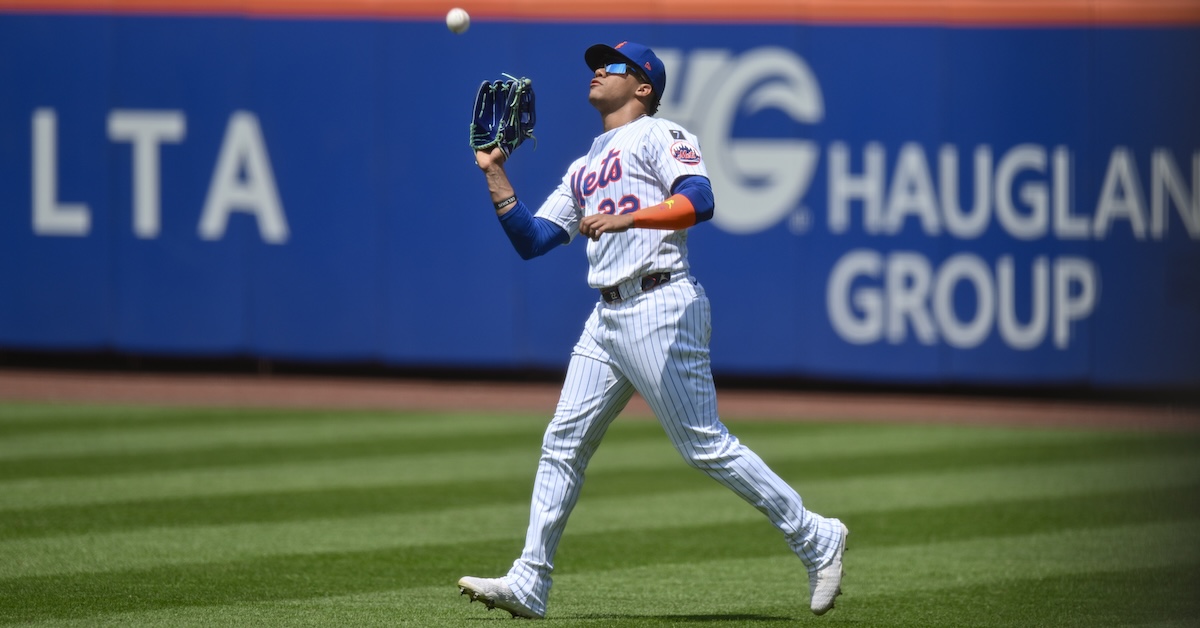
Juan Soto is going to hit. This year, his first of many in Queens, his bat has come around nicely after a rough start; he’s slashing .251/.385/.495 for a 146 wRC+. That line is good for 10th in the majors, even if it’s a bit light by his standards. Offense is the main and most important part of Soto’s game, but it’s not the only thing. He has also played 120 games and 1,053 innings in right field for the Mets. On that end, he has struggled, and the most concerning part is related to his speed.
Soto has never been more than an average runner. Even in his early 20s, he peaked at only a 60th-percentile sprint speed, and from 2020-2024, he hovered around the mid-30s. Not the slowest in the league, but not speedy by any means. That’s not necessarily a problem; there are plenty of not great runners who are above average in the outfield. But when you’re near the bottom of the speed spectrum, you have very little room for error. Your reads, routes, and footwork have to be precise in pretty much every direction, and, well, Soto’s are not.
With -10 Outs Above Average and -10 Fielding Run Value, Soto has been the second-worst right fielder in baseball this season, behind only Nick Castellanos (-11). Overall, Soto falls into the first percentile by both OAA and FRV. He grades out a little better according to Defensive Runs Saved; with -3 runs, he is tied for 19th among the 25 players with at least 400 innings in right field. Read the rest of this entry »
Back in late June, I wrote about something weird happening in Flushing. In spite of being slow, and in spite of not being great at the other parts of baserunning, the Mets were threatening to become the most efficient base-stealing team of all time.
Well, exactly seven weeks later, the Mets are still slow. According to Statcast, they’ve got an average sprint speed of 27 feet per second, which puts them in a five-way tie for the slowest team in baseball. And they are also still not good at taking the extra base: Statcast ranks them 20th, while Baseball Prospectus has them at 15th. But if you’ve been watching the Mets for the last couple months, you know very well that they can still steal bases.
This week, I took another look at the numbers because a reader named Kevin submitted a mailbag question about Juan Soto’s newfound proclivity for stealing bases. We’ll get to Soto a bit later, but let’s start with the team as a whole. I wrote that article on June 26. At the time, the Mets had 62 stolen bases, which ranked 11th in the majors, and they’d been caught just 10 times. That was a lot of baseball ago, so now seems like a good time to give you an update. The Mets have 93 stolen bases, the 11th-most swipes in the game, and they’ve been caught just 10 times. They haven’t been caught since June 17! They’re 34 for their last 34! Read the rest of this entry »
The Mets had the day off on Monday, and thank God. In any other line of work, they’d have called in sick with one of those mysterious 24-hour stomach bugs after the week they had. Close the blinds, get some sleep, hope everyone at the office has forgotten you existed by the time you clock in on Tuesday.
See, the Mets have spent the past two months in a real doozy of a race for the NL East title. On June 16, the Phillies beat the Marlins 5-2 while the Mets were idle, cutting New York’s lead in the division to two games. From that day until Tuesday, August 5, the division lead swung back and forth, but neither team could forge an advantage of more that two games. Read the rest of this entry »
Katie Stratman, Orlando Ramirez, Steven Bisig-Imagn Images
Now that the deadline dust has settled – or at least, started to settle – it’s time to start making sense of it. The Padres, Twins, and Orioles were everywhere. Top relievers flew off the board. Both New York teams spent all day adding. But who did well? Who did poorly? Who was so frenetic that they probably belong in both categories more than once? I tried to sort things out a little bit. This isn’t an exhaustive list. There were 36 trades on deadline day, a new record, and more than a dozen before it. Nearly every team changed its trajectory at least a little, and this is just a brief look into the chaos. Here are the trends that most stood out to me.
Winner: Teams Trading Top Pitchers
This year’s crop of rental players was lighter than usual, but deadline activity didn’t slow. Instead, it simply spilled over into relievers under contract for a while. Mason Miller, Jhoan Duran, Griffin Jax, and David Bednar are under contract for a combined nine more years after 2025. That drove the prospect priceup onallfour. Having long-term control of relievers might be less valuable than at other positions, but it’s still valuable.
Most of the best prospects who swapped teams at the deadline were involved in a trade for top pitching. Leo De Vries, the consensus best player of the 2024 international signing period, was the big name here, but both the Phillies and Yankees offered up multiple good minor leaguers in exchange for Duran and Bednar. Taj Bradley, whom the Twins got back for Jax, is a former top prospect who won’t be a free agent until 2030. Read the rest of this entry »
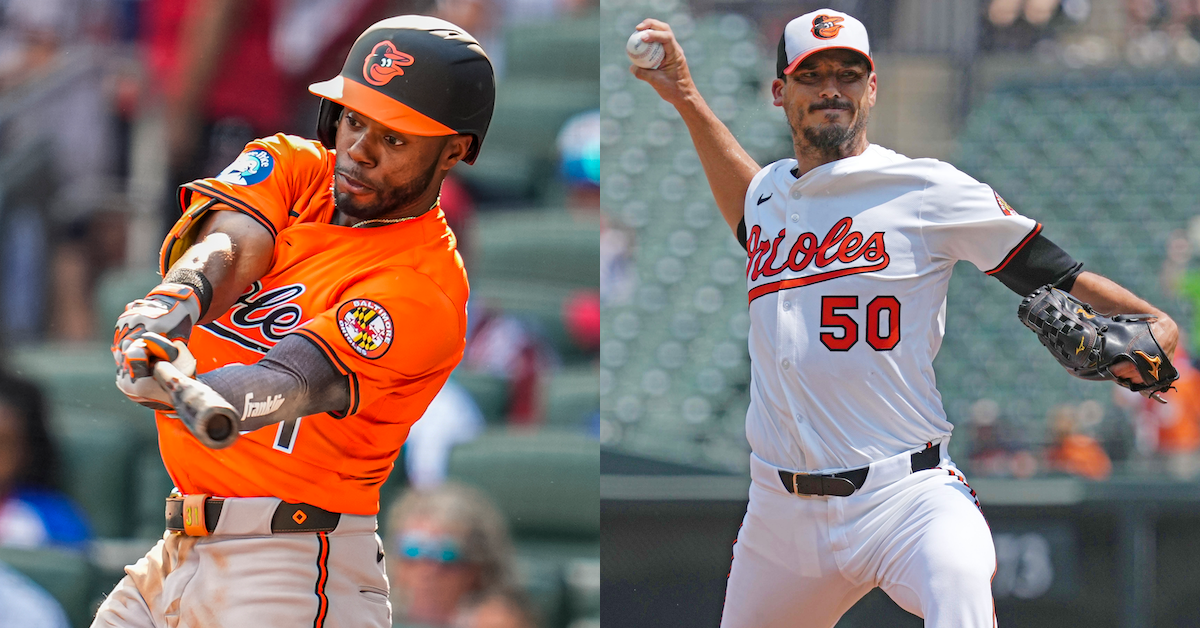
Though many predicted heading into the 2025 season that the Orioles’ weak starting rotation and general inactivity over the offseason would come back to haunt them, even Baltimore’s biggest skeptics weren’t prognosticating that the team would sit well under .500 and 7.5 games out of playoff position at the end of July. Such as it is, the Orioles spent this year’s trade deadline turning over roughly a third of their roster. Over the last week or so, the O’s have traded relievers Gregory Soto, Seranthony Domínguez, and Andrew Kittredge, along with infielders Ryan O’Hearn and Ramón Urías. Then on Thursday afternoon, Anthony DiComo reported that Cedric Mullins was on his way to the Mets; a few hours later, Jeff Passan broke the news that Charlie Morton would be joining the Tigers. The only healthy pending free agent who wasn’t traded out of Baltimore is Tomoyuki Sugano, and with Zach Eflin hitting the IL mere hours before the deadline, Sugano is now a load-bearing member of the rotation. Read the rest of this entry »