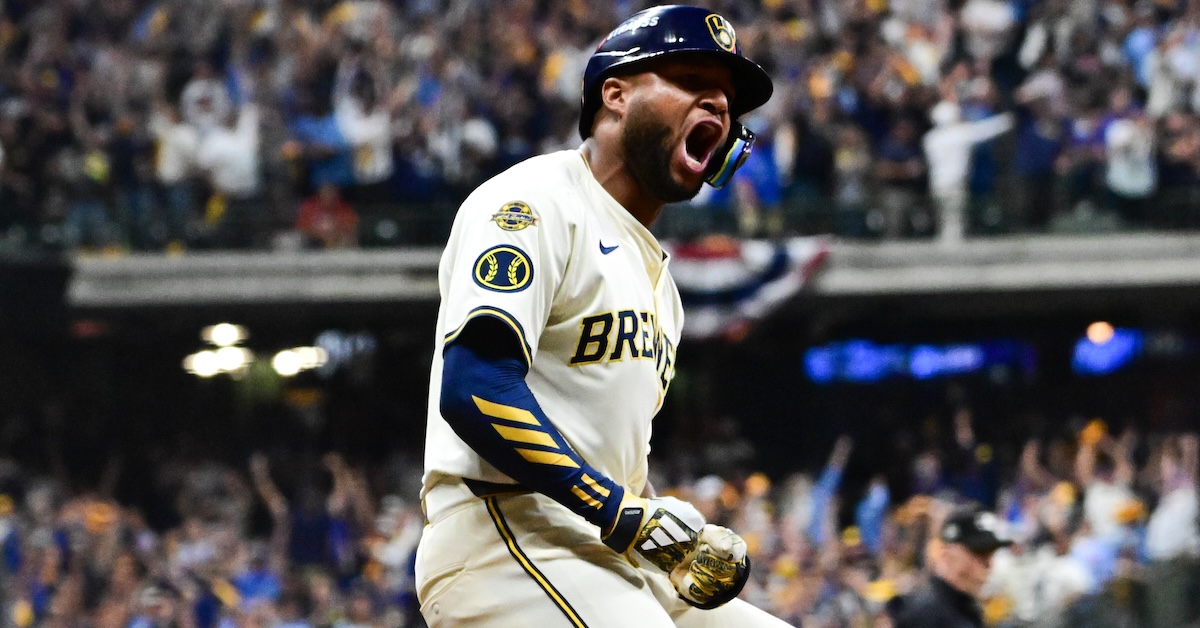
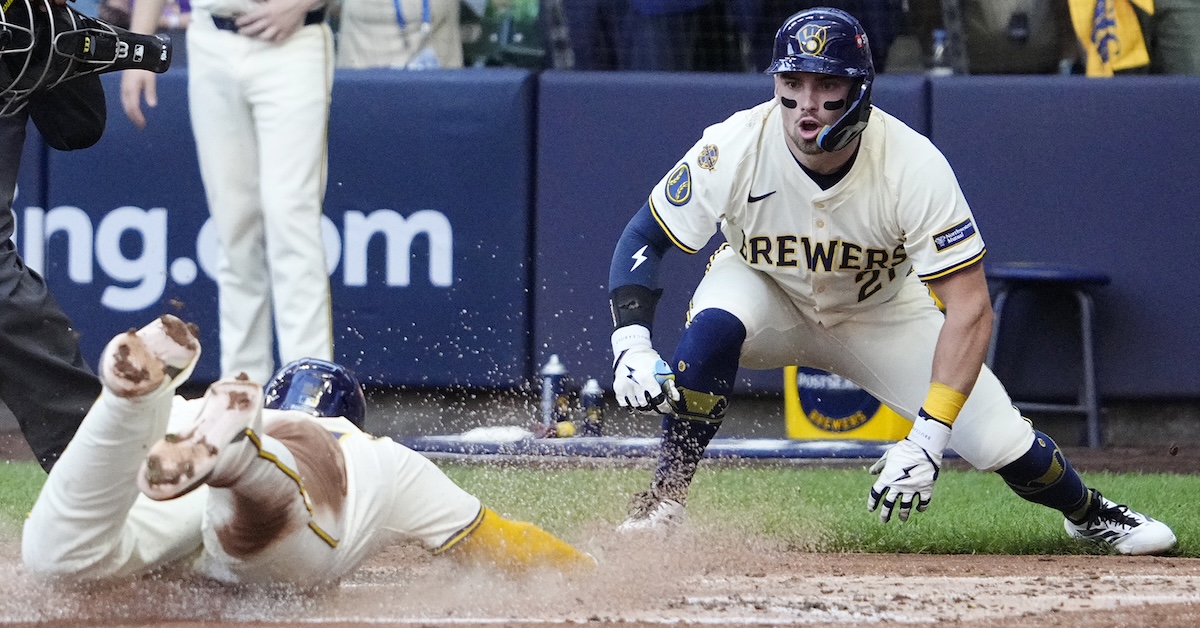
Home-field advantage has been a bit of a booby prize this postseason, with the home team losing all five LCS games heading into Thursday evening’s action. The Dodgers’ Game 3 starter, Tyler Glasnow, is arguably the closest thing this rotation has to a weak link. So maybe the Brewers weren’t as dead as the series standings made it seem. Win one and you’re back in it.
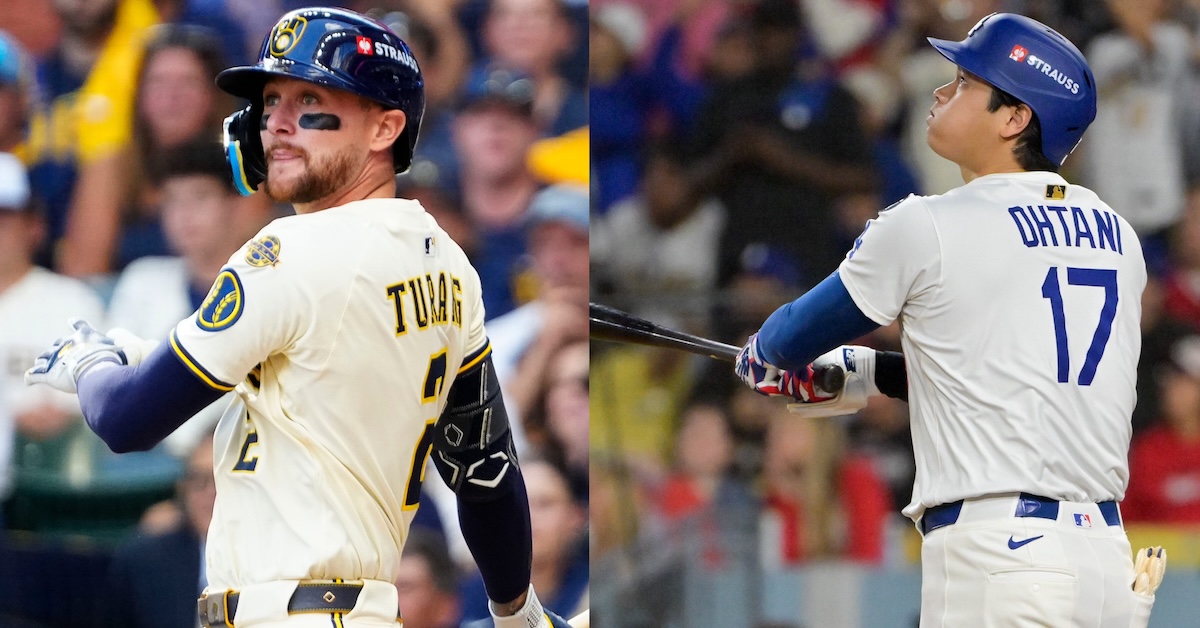
Unfortunately for the Brewers, and for neutrals hoping for this series to go six or seven exciting games, that wasn’t in the cards. The Dodgers put a run on the board within their first two batters of the game, and while Milwaukee tied it the next inning, Glasnow shut the door afterward. A couple singles, a walk, and a throwing error in the sixth inning were all the Dodgers needed to win the game, 3-1, and take a 3-0 lead in the series. You already know what the odds are at this point. Read the rest of this entry »
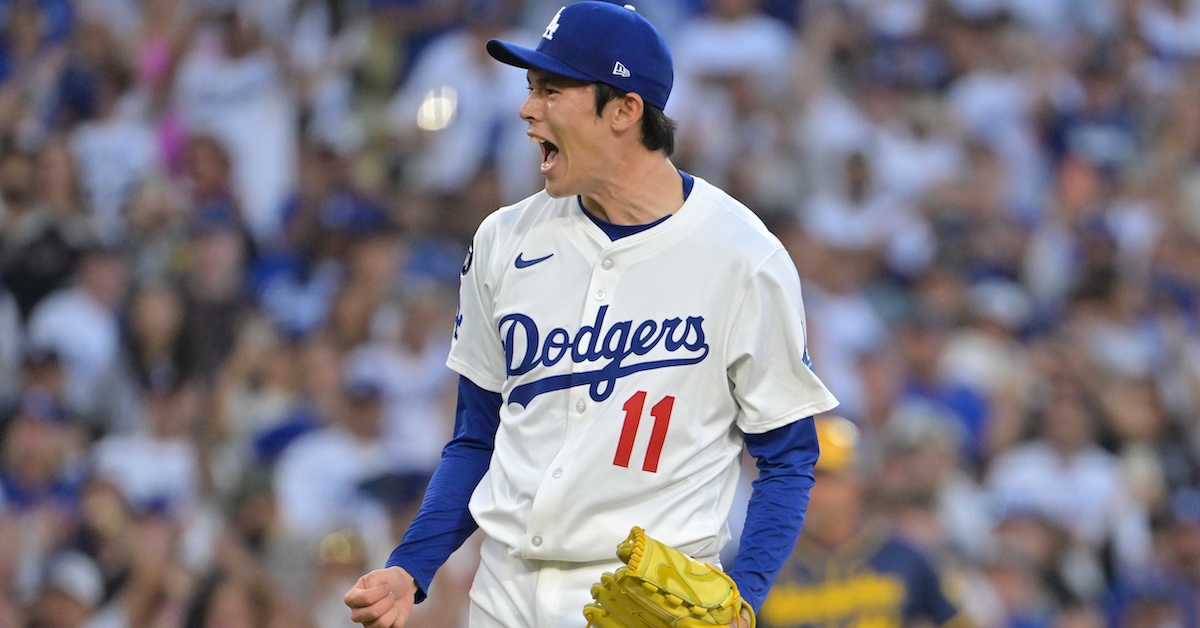
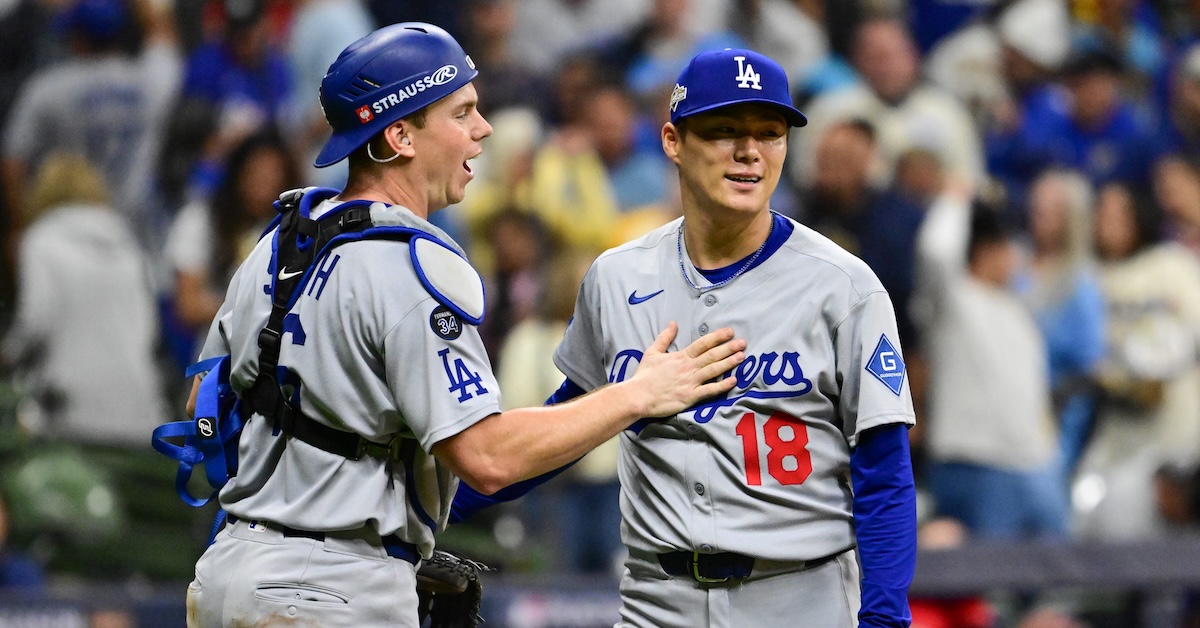
It could not have started worse. Yoshinobu Yamamoto’s first pitch of NLCS Game 2 was a 97-mph four-seam fastball to Jackson Chourio, the Brewers’ powerful leadoff hitter. Chourio promptly hammered it 389 feet into the Dodgers’ bullpen. It landed like a signal to the relievers milling out on the berm: Be alert, you might be needed sooner than you thought.
They would not be necessary. It’s hard to imagine a better pitching performance than that of Yamamoto’s teammate, Blake Snell, who delivered 10 strikeouts over eight innings the previous night. But Yamamoto managed to one-up him.
Over 111 magnificent pitches, Yamamoto rendered the Brewers’ bats rudderless, holding them to that single run over a three-hit complete game. It was the first in the playoffs in eight years, and it certainly offered one possible solution to the Dodgers’ bullpen woes: What if you just didn’t need those guys? Read the rest of this entry »
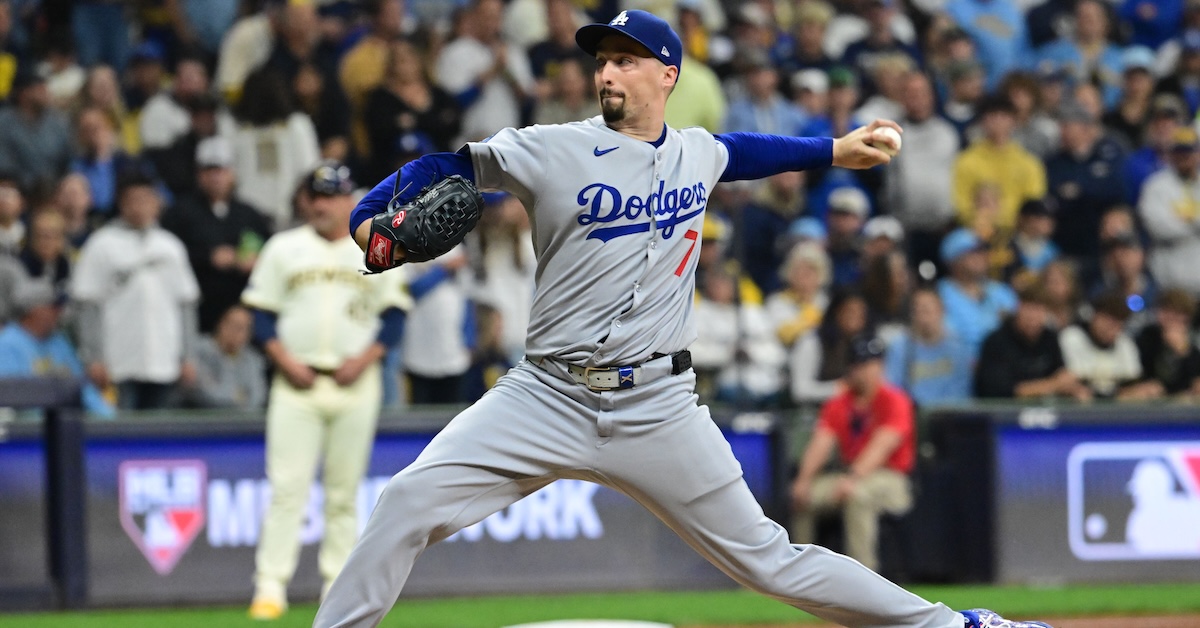
Say what you want about Blake Snell. You may not find his Only Use Strike Zone in Case of Emergency pitching style fun to watch, but in Game 1 of the National League Championship Series, the Brewers found it even less pleasant to hit against. Snell carved through a Milwaukee lineup that scored 22 runs in the NLDS like a knife through nothing at all, ending his night by retiring 17 straight. He faced the minimum over eight innings in an absolutely dominant performance as the Dodgers beat the Brewers, 2-1, to take a 1-0 lead in the NLCS.
A prolonged bout of shoulder inflammation limited Snell to just 11 starts and 61 1/3 innings this season, but over those 11 starts, he was excellent, running a 2.35 ERA and 2.69 FIP. He’d been even better in the playoffs, earning wins against the Reds and Phillies and allowing just two runs, five hits, and five walks while striking out 18. On Monday night, he made those performances look like warmup outings. Snell went eight innings for just the second time in his entire career, and finished with 10 strikeouts, no walks, and one hit. That one hit was a weak line drive that third baseman Caleb Durbin dumped into center field in the third inning. Durbin then broke for second way too early, allowing Snell to throw over to first and catch him easily at second. “You gotta disrupt it,” said Milwaukee manager Pat Murphy between innings. “You gotta do something. He looks really sharp.” The Brewers didn’t do anything.
It wasn’t surprising to see Snell dealing, but it was surprising to see him not walking anyone. The game plan for the Brewers was simple, if difficult to execute. They had the lowest chase rate and the sixth-highest walk rate in baseball this season. They needed to be patient and force Snell to throw the ball in the zone. The Dodgers wanted the same thing. “I can’t have him nibble,” said Los Angeles manager Dave Roberts before the game. Snell didn’t nibble. He hit the zone 50% of the time, well above his regular season rate of 44%, and only a hair under the major league average of 51%. It was just the third time in the past two seasons that he’d gone without a base on balls. His changeup was particularly devastating, and he threw it 37% of the time, the second-highest rate of his entire career. Between innings, he sat on the bench and flipped through a half-inch three-ring binder that held either scouting reports or notes for an AP chemistry midterm. Read the rest of this entry »
Jovanny Hernandez, Milwaukee Journal Sentinel, and Jayne Kamin-Oncea, Imagn Images
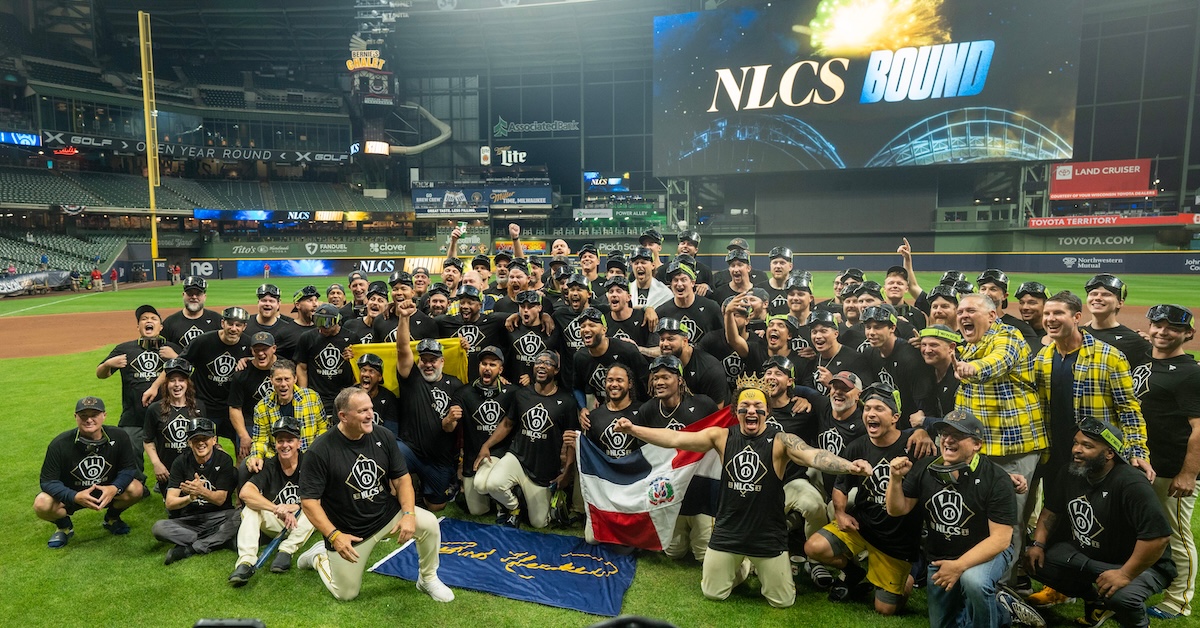
The matchup for the National League Championship Series is set, and it will feature the team with the best record in baseball and the team everyone thought would have the best record in baseball. The battle between the Milwaukee Brewers and the Los Angeles Dodgers will be a clash of styles. It’s big market versus small market. Superstars versus Average Joes. But make no mistake, even though Los Angeles has the name recognition (and all the money and resources in the world), Milwaukee’s scrappy roster is one of the most talented in baseball; the Brew Crew’s 6-0 record against the Dodgers during the regular season is evidence of that.
The Brewers’ win over the Chicago Cubs in the NLDS was their first postseason series victory since 2018, when they reached the NLCS only to lose to the Dodgers in seven games. This is their fourth appearance in the Championship Series, and they’re playing for a chance to advance to the World Series for just the second time in franchise history. As for the Dodgers, they’re the defending champions; this will be their eighth NLCS appearance in the last 13 years, making this well-trod ground for them. Read the rest of this entry »
Mark Hoffman/Milwaukee Journal Sentinel/USA TODAY NETWORK via Imagn Images
The house always wins. In the National League Divisional Series between the Brewers and the Cubs, the home team won every game. Game 5, in which both teams ran out of trusted starters and turned to their bullpens, ended up being the lowest scoring game of the series. The scoring was limited to four solo home runs, and although the Cubs hit 57 more homers than the Brewers during the regular season and two more during this NLDS, the Brewers powered up when it counted. With home runs from William Contreras, Andrew Vaughn, and Brice Turang, they beat the Cubs, 3-1, and will host the Dodgers in Game 1 of the National League Championship Series on Monday.
Just as they’d done during the regular season, the two teams came as close as they possibly could to splitting the series. The Cubs took the regular season series, 7-6, and the Brewers have now taken the Divisional Series, 3-2, leaving the teams tied at nine. The Cubs will return to Chicago and ponder how to improve a roster that now has a massive, Kyle Tucker-shaped hole in the outfield. The Brewers are headed to the Championship Series for the fourth time in franchise history and the first time since 2018, when they lost to the Dodgers. After seven years, they’ll have the chance for revenge.
Although bullpen games involve plenty of mixing and matching, the early plans seemed pretty well scripted. Milwaukee came out of the gate with the big guns, hoping Trevor Megill could be the first pitcher of the entire series to hold the Cubs scoreless in the first inning, before Pat Murphy looked to Jacob Misiorowski for four. After that, the Brewers had the rest of their bullpen ready to match up, thanks to an off day on Friday. “The pitching guys, myself and Matt Arnold, we just sat in a room and just talked about the possibilities and considered a ton of factors,” said Murphy in the pregame press conference. “But we settled on Megill. He’s going to pitch tonight, regardless.” Read the rest of this entry »
Ethan Petry Photo: Ken Ruinard/USA TODAY NETWORK via Imagn Images
A lot of different types of players get sent to the Arizona Fall League by their parent clubs: prospects who have lost time due to injury, org arms there to soak up enough innings for the league to function, guys eligible for the Rule 5 Draft whose teams aren’t yet sold on putting them on the 40-man roster, and, quite often, the most talented and exciting players in minor league baseball. It’s a rich and robust tapestry.
Now that the league’s action has commenced, one use of the AFL is to provide a sort of decontextualized look at some of the players whose strong performance in 2025 was already cause for some re-evaluation. Here’s one player from each AFL roster who arrived with some helium, prompting us to ask if they’ve changed their scouting report, or are just progressively improving into the player we expected.
Glendale Desert Dogs Sam Antonacci, 2B, White Sox 2025 FV: Honorable Mention
Not only did the White Sox trade for Chase Meidroth months after giving Antonacci a slightly over-slot bonus in the fifth round of the 2024 draft, their Double-A Birmingham affiliate won the Southern League while slotting Antonacci in as the third straight feisty little bat-to-ball maven at the top of their lineup behind Rikuu Nishida and William Bergolla. At six feet, he’s a bit taller, but similar to Meidroth, below-average thump and a dearth of the athleticism necessary to drive a shortstop projection cooled early scouting reads for Antonacci, and he was an honorable mention for us on the White Sox list in April. Despite only playing his junior season there after two years of Division II ball, Antonacci is so Coastal Carolina-pilled that 35 hit by pitches form a substantial part of the .433 OBP he held over his first full pro season. (That he has yet to be plunked in his first three AFL games has to be, one would imagine, a source of deep personal disappointment.) Read the rest of this entry »
Jeez, I thought the Cubs were dead. These guys got torched both games in Milwaukee, then nearly contrived to blow Game 3 after jumping out to a 4-1 first-inning lead.
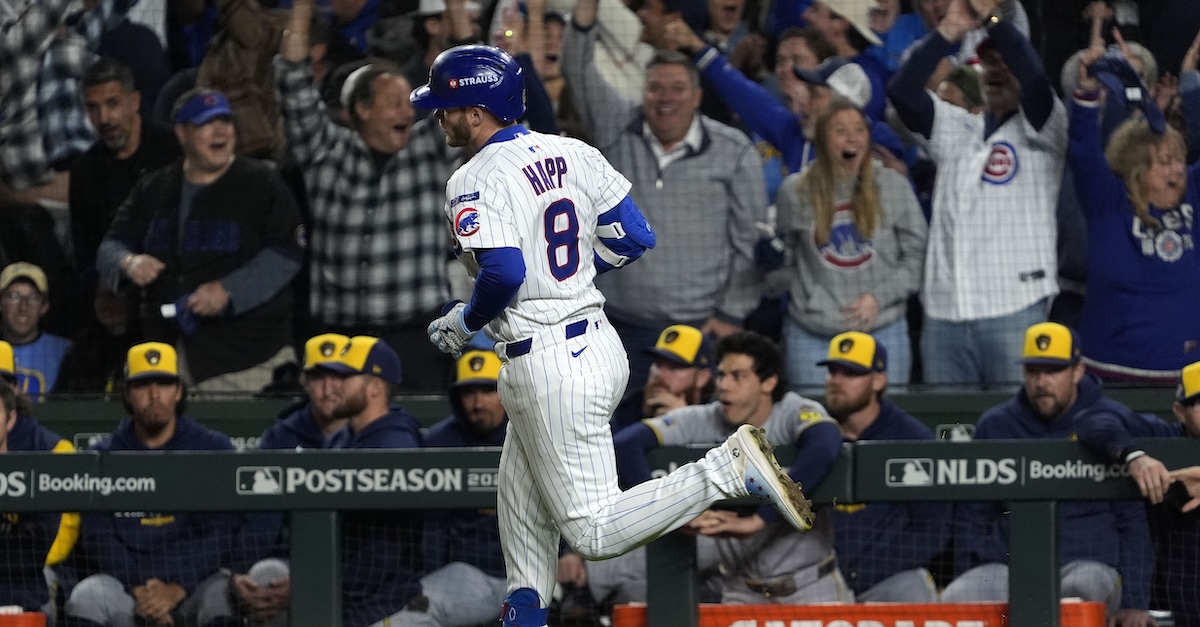
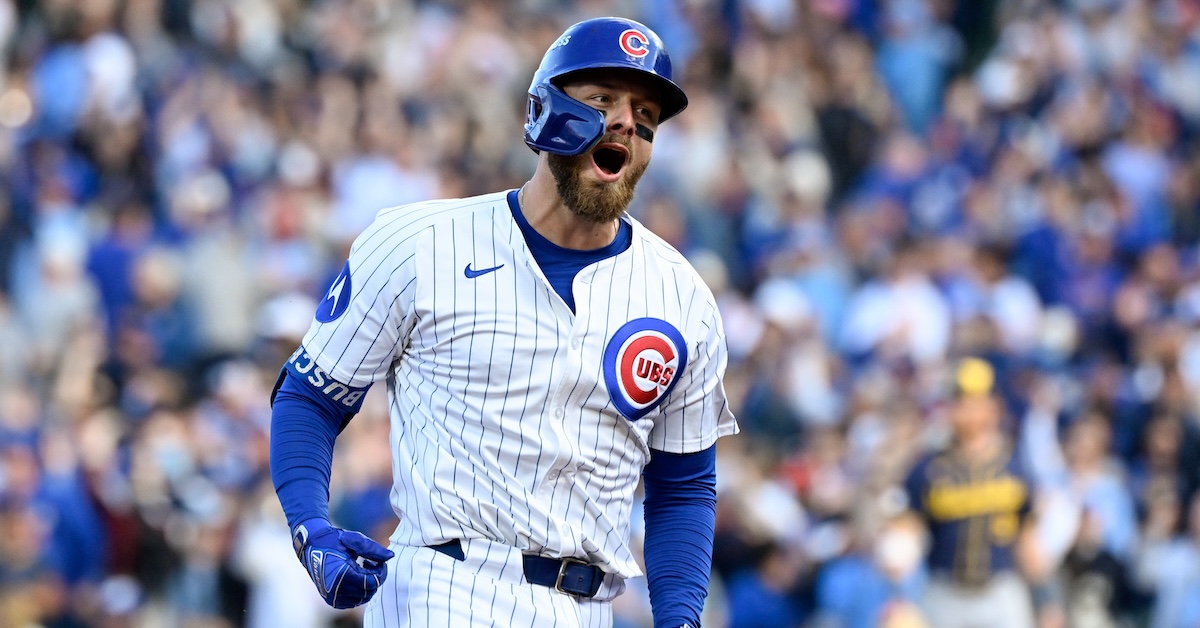
Game 4 started much the same way for Chicago, with a three-run first-inning homer by Ian Happ, only this time they didn’t let up. Matthew Boyd slung breaking balls around Milwaukee bats for 4 2/3 scoreless innings, and rather than rest on their first-inning output, as they did in Game 3, the Cubs put up a late-inning picket fence to stretch the final score to a serene 6-0. A decisive Game 5 in Milwaukee awaits. Read the rest of this entry »
The Cubs stayed alive in the National League Division Series on Wednesday, narrowly beating the Brewers in a 4-3 Game 3 squeaker. Neither starting pitcher went long, with both teams needing to go relatively deep into their bullpens to finish out the contest; a combined 10 relievers were used.
Carlos Zambrano threw out the ceremonial first pitch, 13 years after his final game in the majors — Big Z’s former teammate, Rich Hill, appeared for the Royals in 2025 and is older than him — but things got off to an inauspicious start for the Cubs after that, as a lazy curve from starter Jameson Taillon was far less lazily lashed down the first base line into right field for a Christian Yelich double. After a Jackson Chourio groundout, Taillon lost the strike zone a bit, walking Brice Turang to put runners on first and second for William Contreras. Contreras hit an infield single to load the bases. Of course, that’s burying the lede a bit, but you couldn’t see that I was making the air quotes gesture with my fingers while I was writing that sentence. The “infield single” was anything but; it was a popup on the infield that Michael Busch lost in the sun while his sunglasses remained unused on his cap. Both Carson Kelly and Nico Hoerner ran over, but they weren’t in time to salvage the play. Dansby Swanson ran over as well, which became a problem when Kelly picked up the ball but had nobody to actually throw to for an attempted forceout of Turang. Read the rest of this entry »
Some playoff games flow like beautiful novels. Two ace starters might have a duel – narratively satisfying. Maybe one pitcher is trying to hold off the opposing offense – who doesn’t like a siege story? Or, perhaps a superstar slugger is on an absolute tear – the great man theory of postseason baseball is alive and well. But Monday night, the Brewers and Cubs played a game that doesn’t fit any of those tropes. The Brewers bullpenned it. The Cubs answered with Shota Imanaga, who gave up 15 homers over his final nine regular season starts, on a short leash. The result? A disjointed game, which can best be captured by a disjointed recap.
Justin Turner, Leadoff Hitter
Justin Turner doesn’t hit leadoff. In his lengthy major league career, he’s racked up exactly 69 plate appearances in the leadoff spot, and only one in the past decade. He’s never hit leadoff in the playoffs. He was well below average at the plate this year – a 71 wRC+ and negative WAR. Naturally, he hit leadoff in the most important game of the Cubs season so far.
Why? Because Chicago manager Craig Counsell is no dummy. The Brewers started Aaron Ashby, who astute observers will note pitched in Saturday’s Game 1. Ashby was just in there as an opener, a southpaw option against Kyle Tucker and the rest of the Cubs lefty contingent. Counsell’s counter-move was straightforward. The other guy starts with a lefty reliever? He’ll start with a lefty-killing righty as more or less a pinch-hitter.
The move didn’t pan out right away; Turner flied out softly to open the game. But the rest of the Chicago lineup immediately went to work – single, walk, massive home run from Seiya Suzuki. It was 3-0 in a blink. Brewers manager Pat Murphy tried to stretch Ashby through a second inning even after the setback, but it just wasn’t happening. Ashby needed 43 pitches just to get through 10 hitters. That’s right, 10 – his last batter was Turner a second time, and Turner flared an easy single to left to chase Ashby. Counsell’s gambit worked to perfection; he somehow got two straight good platoon matchups for Turner in a series where high-octane righties abound.
Bombs Away
Imanaga ended the year in poor form. All those homers ballooned his September ERA to a nasty 6.51. His 6.68 FIP was somehow worse. He appeared against San Diego in the opening round of the playoffs, as a bulk innings option behind opener Andrew Kittredge, and gave up another blast en route to an uneven appearance (four innings, three strikeouts, two walks, one homer, two earned runs). But what was Counsell going to do, not start him?
The Brewers aren’t necessarily a home run-hitting team, but they’re open to the idea if invited. Imanaga’s arsenal is nothing if not inviting; after a pair of two-out singles, Andrew Vaughn turned on a belt-high sweeper and tucked it into the left field stands. It was 3-3 before we left the first inning, but it wouldn’t stay that way long. When the top of the order came up again in the third inning, Willson Contreras demolished a 91-mph fastball to put Milwaukee on top 4-3. Christian Yelich followed with a hard-hit single, and Counsell had seen enough. He went to the pen after 46 pitches and eight outs.
The Miz!
Jacob Misiorowski must eat sugary cereal for breakfast. I say that because I know how I act after I’ve had a bowl of Frosted Flakes, and he was exhibiting similar symptoms when Murphy turned to him to start the third inning. Think his fastball is fearsome at its usual 101 miles an hour? It’s downright terrifying when he ramps it up to 104, as he repeatedly did in his first inning of work.
Misiorowski is pretty much unhittable when he’s on. In the third, he tallied two weak groundouts, an overpowering strikeout – and a four-pitch walk. The second of the groundouts ended the inning, but also showed Misiorowski’s mindset. After fielding it cleanly, he ran to first base himself on a full sprint, perhaps a little too amped up to trust himself with an underhand toss. Then he flexed and roared, exulting in the playoff atmosphere.
The next inning brought more of the same – an amped-up Miz, two strikeouts, and a five-pitch walk where he got increasingly wild with each pitch. Oh yeah, the last of those batters was Michael Busch, in the game for Turner now that the leadoff spot came up with a righty on the mound. Again, though, you don’t so much beat Misiorowski when he’s this keyed up as wait him out. Nico Hoerner finally tallied a hit against him in the fifth, an opposite-field line drive, but there’s just no headway to be had when you’re trying to time up 103-mph fastballs and 95-mph sliders. The other three Cubs that inning managed a strikeout and two weak foul pops.
When Misiorowski finally departed at the start of the sixth, the Brewers led comfortably. The Cubs never looked particularly close to stringing anything together against him. I’m not sure how long he’ll be able to go in his next October appearance, or how many days of rest the Brewers will want to give him after 57 adrenaline-pumping pitches. I am confident that it’s going to be electric to watch, and that the Cubs are desperately hoping that they can somehow pull off a reverse sweep in this series without having to face any more 104-mph heaters. What a performance.
Action Jackson
Jackson Chourio missed almost the entirety of August with a hamstring strain. He looked less explosive upon his return, with less power and a less-adventurous approach to baserunning. Then he aggravated the injury in the first game of this series, putting his availability for Monday night in at least a bit of doubt. His first two at-bats produced two outs against the otherwise reeling Imanaga. His third time up? A towering, 419-foot homer to dead center that put the Brewers up 7-3 in the fourth inning.
Is Chourio back? It depends on how you’d define back. He’s still limping around at times, and it’s clear that the hamstring is bothering him. He bumped into Busch while rounding first base on a sixth-inning play and looked meaningfully slower as he continued to second (speed wasn’t an issue; Dansby Swanson had just sailed a throw into foul territory and there was little chance of a play at the base). But on the other hand, he’s blasting huge home runs and making nifty plays in foul territory, where he turned a foul ball into an out with a smooth, wall-scraping grab. I don’t think he’s at full strength, but he’s still a dangerous hitter, and even if his baserunning prowess is down, the Brewers will happily keep running him out there.
We’ve Got Ice
Caleb Durbin’s batting line in this game doesn’t look particularly impressive. He recorded no hits or walks. He hit into a double play. But in that fateful fourth inning, he saw a Daniel Palencia fastball headed in his general direction and heroically tossed his elbow at it. He caught the ball as flush as you can imagine, a direct hit on his arm, one of those “act like you’re getting out of the way but make sure to do the opposite” moves that grind-and-grit hitters have been using to accrue free bases since time immemorial.
It’s no accident that Durbin led the NL with 24 hit-by-pitches this year, only three off the major league lead. It’s more impressive than that, even; Durbin did it in 506 plate appearances, while leader Randy Arozarena needed 709 to get to 27 HBPs. You might not like this skill, but it’s real, and Durbin is the best in the majors at it right now.
Those free bases don’t always matter. This time, they did. Durbin’s spot in the lineup produced a baserunner instead of an out, which means that when Blake Perkins struck out immediately afterwards, there were two outs instead of three. That meant more pitches for Palencia, and also that Joey Ortiz’s line drive single turned the lineup over. You’ve already read what happened next – Chourio hit the ball to Wauwatosa (a wonderful suburb of Milwaukee, I promise) and gave the Brewers an insurmountable lead.
Lockdown
The Cubs offense might have gone quiet against Misiorowski, but there was still time left. They had 12 outs to play with after Milwaukee’s scariest arm departed, but they couldn’t do anything with them, because the guys behind the Miz are pretty good too. Chad Patrick struck out two Cubs in a perfect sixth. Jared Koenig followed with four straight outs, with huge assistance from Vaughn, who made a nifty play in foul territory behind first base to turn a would-be infield single into an out. All of the sudden, there were only five outs to play with, and Milwaukee hadn’t even gone to its late-inning options.
Even a one-run deficit feels almost insurmountable against the Brewers by the time the eighth inning rolls around. Trevor Megill and Abner Uribe were both spectacular this year, with matchingly gaudy ERAs and strikeout rates. Megill’s health was a question heading into Game 2; his first appearance back from a flexor strain was the regular season finale, and he didn’t appear in the first game of this series. His stuff looked slightly diminished – slower fastball, less-biting curve – but stuff has never really been Megill’s problem. The little stuff heatmaps on our player pages? They don’t get darker red than Megill’s. He looked plenty nasty even sitting down a tick, and he pounded the strike zone with plus command. Good luck, hitters.
No one knew how good Megill would be Monday. There was no such doubt about Uribe’s form. He started 2025 strong and got stronger as the year wore on, blowing lineups away with his trademark sinker/slider duo while halving his walk rate. The Cubs were just the latest victims as he struck out the side on 13 pitches, retiring each batter with a scintillating slider below the strike zone. The Brewers didn’t need a lockdown performance from their bullpen, but with a travel day Tuesday, there was no reason to leave anything to chance; Murphy put the hammer down consistently as soon as he had a lead.
Conclusions
Don’t let the early innings fool you; the Brewers absolutely torched the Cubs today. They were constantly on base, threatening to score in nearly every inning, and only let off the gas at the very end. How in the world are you going to score seven runs against their bullpen? This one wasn’t as close as the not-very-close scoreline. Even before Chourio put things away, the Cubs didn’t seem particularly likely to put anything together against Milwaukee’s endless parade of strong relievers.
I don’t know if a bullpen game is helpful to Milwaukee’s long-term chances, but it’s pretty hard to argue with its effectiveness on a single night. Toss an in-form Misiorowski into the mix, and there just isn’t much time to score runs before the door closes. Even with the nifty Turner-leadoff gambit, the Cubs ended up with a lot of tough matchups against a lot of excellent pitchers. I can imagine a seven-game series blunting the effectiveness of the strategy, and the Brewers will probably tinker with their roster ahead of a potential championship series, but this is a really strong run prevention plan. They might be able to make the entire series out of pitching from Freddy Peralta, a to-be-announced starter (Jose Quintana or Quinn Priester), and a dominant bullpen.
On Chicago’s side, there’s not a ton of strategy to discuss; the Cubs just need to score some runs, and also to give up fewer of them. There weren’t a ton of interesting situations where a different decision might have sent us down a different path, no spots where a pivotal play could have gone Chicago’s way. The Cubs seized on their big chance with a three-run first. It just wasn’t enough. That doesn’t mean that the rest of the series will go the same way – as they always say, momentum is tomorrow’s starting pitcher – but so far, the Brewers have been thoroughly outclassing the Cubs.
The Brewers and the Cubs played nine innings of baseball on Saturday, but Game 1 of the National League Divisional Series was decided before the end of the first. Every series starts off with its share of questions. Did the Brewers have enough pitching to withstand injuries to Brandon Woodruff and Shelby Miller? Could Kyle Tucker and Pete Crow-Armstrong locate the MVP form they’d showed earlier this season? How would a Brewers offense that loves to work the count fare against a strike-throwing Cubs pitching staff? Would the Brewers be rusty after a five-game layoff? Would the Cubs regret starting Matthew Boyd on short rest after he threw just 58 pitches against the Padres on Tuesday? In Game 1, those last two questions were all that mattered.
The Brewers were not rusty, and Boyd may well have been. The Cubs jumped out to an early lead, but in the bottom of the first, the Brewers exploded on Boyd like they’d spent the past five days packing themselves into a cannon. During the regular season, the Brewers scored only 9% of their runs in the first inning, the third-lowest rate in baseball. Maybe they were saving it all up for the playoffs. Milwaukee raced to a 6-1 lead in the first and extended it to 9-1 in the second. “I’m proud they came out ready,” said manager Pat Murphy during the game. “The guys came out ready to swing, and when they’re ready to swing, a lot of good things can happen. They’re a great bunch.”
By virtue of their first-round bye, the Brewers lined up ace Freddy Peralta to pitch Game 1. After an early hiccup, Peralta looked every bit the guy who led the NL with 17 wins and notched three of them against the Cubs. He missed well outside with a 95-mph fastball on the first pitch of the game, then came back with a belt-high heater over the center of the plate, which Chicago leadoff hitter Michael Busch fouled off. Peralta repeated the pattern: four-seamer well outside, belt-high four-seamer over the middle. Busch was ready for the second one. He turned on it and sent it 389 feet over the right field fence. Four pitches in, the Cubs had a 1-0 lead. Peralta recovered quickly, retiring the next three batters in order. He’d allow just one more base hit over the next four innings.
In the bottom of the second, Jackson Chourio squared to bunt on the first pitch from Boyd, then took it for a ball inside. Looking back, it’s tempting to wonder what would have happened had Boyd put the pitch in the strike zone. Maybe if Chourio would have actually bunted the ball, and maybe the whole game would have gone differently. But it was tight and Chourio pulled the bat back, then ripped the fourth pitch he saw down the third base line for a double. Brice Turang knocked Chourio in with a double of his own, lining the first pitch he saw on a hop off the right field fence. The Brewers had tied the game at one after five pitches. William Contreras ripped the next pitch just past a diving Ian Happ for a double into left field, scoring Turang. With doubles on three consecutive pitches, the Brewers grabbed a 2-1 lead. They were far from done.
Chicago pitching coach Tommy Hottovy walked out to settle down Boyd, who induced a grounder to short from Christian Yelich, then deepened his trouble by walking Andrew Vaughn. Much earlier than the Cubs would have liked, Michael Soroka started warming up in the bullpen.
Boyd broke Sal Frelick’s bat, inducing a weak grounder to second base. Nico Hoerner, who may well end up winning his second Gold Glove this winter, charged the ball and then inexplicably biffed an easy hop. The ball kicked past him, allowing Contreras to score. The Brewers still had runners on first and second with one out, now with a 3-1 lead. Boyd struck out Caleb Durbin with a four-seamer above the zone, then got ahead of Blake Perkins, 1-2. He was one strike from ending the inning, but Perkins worked an incredible 12-pitch at-bat, fouling off pitch after pitch, then ripping a line drive right back up the middle – the thing that both he and the Brewers love the most in the world – scoring Vaughn and moving Frelick to third. The Brewers had a 4-1 lead and Boyd’s day was over after 30 pitches and two-thirds of an inning.
Soroka came into the game with a simple mandate: stop the bleeding and keep the game close. Instead, he walked ninth hitter Joey Ortiz on four pitches, loading the bases and bringing Chourio back to the plate. This might be a good time to note that Chourio ran a 307 wRC+ with two homers in last year’s Wild Card Series, his only previous playoff games. He pushed that career postseason mark even higher, rocking a single through the left side of the infield to drive in two more runs. The Brewers led 6-1. Mercifully, Soroka got Turang to chase a high fastball for strike three.
The Brewers hit for 26 minutes in the first inning. They saw 45 pitches from two pitchers. They notched five hits, walked twice, and reached once via error. They put seven balls in play with a 72% hard-hit rate. Curt Hogg of the Milwaukee Journal Sentinel pointed out that it was the first time they’d scored six runs in the first inning all season. The incomparable Sarah Langs noted that teams to score at least six runs in an inning had gone 113-1 in postseason history. With that last single off the bat of Chourio, Soroka’s job changed. It was no longer to keep the game within reach. It was to eat as many innings as possible in order to keep the Cubs from annihilating their bullpen in addition to falling behind in the best-of-five series.
Peralta allowed a single to Crow-Armstrong, but he needed just 12 pitches to retire the Cubs in the top of the second and give the Brewers the chance to get right back to hitting. After leading off the first with three straight doubles, Milwaukee led off the second with three straight singles.
Contreras singled to left, Yelich singled to right, and Vaughn singled to center. The bases were loaded and Aaron Civale got warm in the Cubs bullpen. Frelick lined out to left field on a ball that was too shallow for Contreras to tag up on, then Durbin dropped a duck snort into shallow center field, knocking in two. Seventeen Brewers had come to the plate. Thirteen had reached safely. Eight had scored. Perkins grounded out to first base, pushing the runners to second and third with two outs. Ortiz walked on four pitches, loading the bases again, and Counsell made the slow walk out to the mound. Soroka lasted just one third of an inning longer than Boyd. The job of eating innings fell to Civale, whom the Brewers traded to the White Sox for Vaughn back in June and whom the Cubs claimed off waivers at the end of August.
Chourio greeted Civale with another grounder right down the third base line, this one for an infield single to push the score to 9-1. However, it came with a price. Chourio missed nearly the entire month of August with a right hamstring strain, and he aggravated the injury as he hustled to beat the throw from Matt Shaw. Visibly distraught, he spoke to a trainer, then left the field, and walked back to the clubhouse. The Brewers announced that he would be evaluated further after the game. Turang struck out to end the inning, and the TBS broadcast announced that Brewers were the first team in playoff history with nine runs and 10 hits in the first two innings.
The Cubs and Brewers played seven more innings of more baseball. Peralta pitched brilliantly, though he surrendered another solo homer to Happ in the sixth inning. He left one out shy of a quality start, and the Milwaukee faithful rewarded him with a standing ovation. He gave up three earned runs over 5 2/3 innings, striking out nine, walking three, and allowing four hits. Civale filled his role excellently too, scattering three hits over 4 1/3 innings and allowing Counsell to ask the bullpen for just two more innings. Hoerner added another solo homer off Jared Koenig in the eighth inning before Nick Mears closed things out in the ninth.
The questions going into Game 2 will revolve around Chourio’s health and Chicago’s ability to bounce back from such a thorough drubbing. The Brewers possess a capable fill-in in Isaac Collins, who ran a 122 wRC+ as a rookie this season, but Chourio is an awfully hard player to replace. His three hits pushed his career wRC+ in the playoffs to 361, and if the hamstring injury is anywhere near as serious as it looked, it’s hard to imagine him returning in time to play against the Cubs. With the 9-3 victory, the Brewers drew the season series with the Cubs even at 7-7. The good news for the Cubs is that they’ll have a day off before Game 3, allowing their bullpen to get some rest. Although Boyd threw just 30 pitches, he seems unlikely to go on short rest in Game 4.